
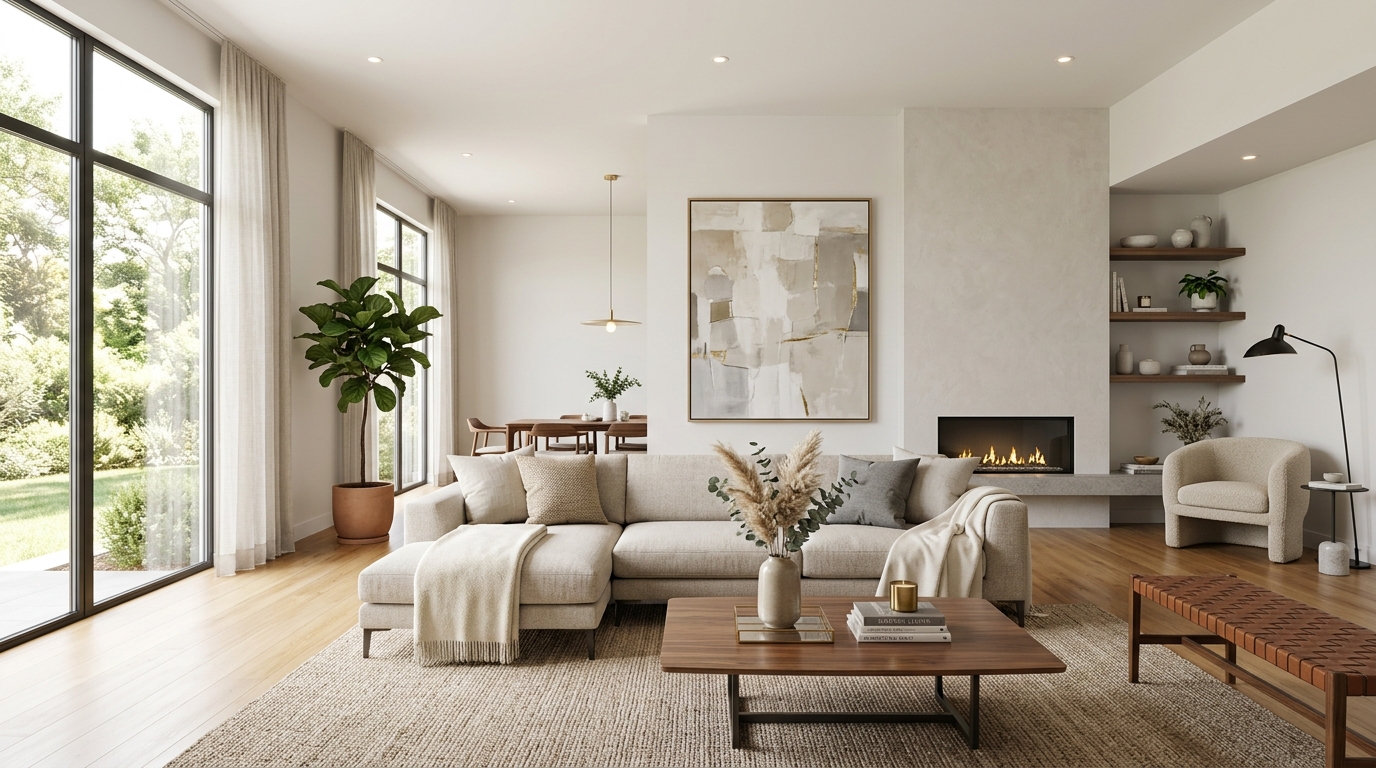
A modern living room is built on restraint and material quality in equal measure. It is not a room that is simply sparse or cold. It is a room where every object has been chosen deliberately, every surface has been considered, and the overall result feels calm and resolved because nothing in it is competing for attention without earning it. These 18 modern living room decor ideas will show you how to build that quality into your living room without stripping it of warmth or personality.
The ideas here cover furniture selection, material choices, lighting, and the finishing details that separate a modern living room that feels genuinely designed from one that is merely minimal. Below are 18 ideas that bring real modern character to a living room.
1. Choose a Sofa with a Low Profile and Clean Silhouette
The sofa is the most prominent piece of furniture in any living room and in a modern living room its silhouette determines the visual character of the entire space. A low profile sofa with straight arms, a tight back, and legs that lift it clearly off the floor reads as distinctly modern in a way that a rolled arm or a tufted back sofa cannot regardless of the fabric or the color it is upholstered in. The clean horizontal line of a low sofa keeps the visual weight of the room grounded without making it feel heavy and the clear floor plane beneath it makes the room feel more spacious than a sofa that sits directly on the floor.
Muuto, Article, and B&B Italia all produce low profile sofas with the kind of clean silhouette that defines a modern living room at a range of price points. Choose an upholstery in a natural fabric, a textured linen, a boucle, or a matte velvet, rather than a synthetic that reads as less considered regardless of its color or pattern. The fabric texture of a well upholstered modern sofa contributes to the material richness of the living room in a way that a smooth synthetic surface cannot approach.
2. Use a Single Large Format Piece of Art
One large format piece of art on the main wall of a modern living room makes a stronger and more definitively modern statement than any gallery wall arrangement regardless of how carefully the gallery is curated. A single canvas or large format print that fills a significant portion of the wall behind the sofa or above the fireplace gives the room a focal point of genuine visual authority and the empty wall space around it reads as intentional breathing room rather than as a failure to fill the wall. The scale of the single piece is what makes it modern and the confidence of the single object approach is itself a design statement.
Choose art with a scale that suits the wall it occupies rather than a piece that looks correct in a smaller context but gets lost on a large wall. A piece that spans at least two thirds of the sofa width above which it hangs reads as scaled to the room rather than as a picture placed on the wall. Abstract work in a limited palette, large format photography, or a single graphic print in bold simple forms all suit the modern living room aesthetic in ways that figurative or decorative art rarely does.
3. Build a Monochromatic Color Palette
A modern living room built on a single color family carried through the walls, the upholstery, the soft furnishings, and the accessories creates a visual coherence that polychromatic schemes cannot achieve with the same efficiency. An all warm gray living room with varying tones across the wall color, the sofa fabric, the rug, and the throw pillows reads as considered and sophisticated. An all cream and white room with material variation providing the visual interest reads as clean and precisely modern. An all charcoal and black room reads as dramatically confident. The monochromatic palette eliminates every color coordination decision and replaces it with a single disciplined choice applied with consistency.
Variation within the monochromatic palette comes from texture and material finish rather than from color contrast. A matte wall against a velvet sofa against a bouclé throw against a polished stone coffee table creates visual richness within a single color family that is more refined and more genuinely modern than a multicolor scheme of equal complexity. The material variety is what keeps the monochromatic modern living room from feeling flat and the discipline of a single color is what keeps it feeling resolved.
4. Choose a Stone or Concrete Coffee Table
A coffee table in a natural stone, a concrete, or a stone look material is the object in a modern living room that most clearly signals the material seriousness of the space. The weight, the texture, and the natural variation of a stone or concrete surface communicate a quality of material honesty that wood and glass coffee tables approach but do not quite match in the modern context. A rectangular coffee table in a honed marble, a raw concrete, or a terrazzo surface at the correct scale for the sofa it serves becomes the material anchor of the living room floor plane.
CB2, Audo Copenhagen, and West Elm all carry stone and concrete coffee tables at varying price points. Choose a form that is as simple as the material allows: a flat rectangular slab on minimal legs, a single monolithic block with no visible base, or a low square surface with chamfered edges. The simpler the form the more the material quality of the stone or concrete can read without competition from the design of the table itself and in a modern living room the material is always the point.
5. Install Recessed Lighting on Multiple Circuits
The ceiling of a modern living room should be as uninterrupted as possible and recessed lighting in a carefully planned grid achieves that quality while providing effective and adjustable illumination across the entire room. A modern living room recessed lighting plan places fixtures specifically over the seating area, over any art that benefits from directed illumination, and along the perimeter of the room for ambient washing rather than filling the ceiling with fixtures placed wherever the electrician found it convenient. Each lighting zone on its own dimmer circuit creates a room that can be adjusted from bright task level illumination to atmospheric evening light without changing any fixture.
Combine the recessed ceiling lighting with a single floor lamp in a simple geometric form beside the sofa for the reading light that recessed ceiling fixtures cannot effectively provide. The floor lamp in a modern living room should be as simple as possible in form: a slim stem, a simple shade, and a minimal base in a material that suits the room palette. Muuto, Flos, and Hay all produce floor lamps with the formal simplicity that modern living room lighting requires.
6. Use a Bouclé or Textured Upholstery for the Accent Chair
An accent chair in a bouclé, a textured weave, or a tactile fabric that contrasts with the sofa upholstery introduces material variety into the modern living room seating arrangement without introducing color variety that would disrupt the monochromatic palette. A cream bouclé accent chair beside a charcoal linen sofa creates a material contrast that is visually interesting and physically inviting without the chair reading as a different color decision than the sofa. The bouclé texture in natural and off white tones has become one of the defining textile choices of contemporary modern interior design and its warmth and tactility suits the modern living room’s need for material richness within a restrained color scheme.
Choose an accent chair with a form that complements the sofa silhouette rather than competing with it. A curved accent chair beside a straight armed sofa creates a form contrast that is visually interesting. A low slung accent chair of similar proportions to the sofa creates a more unified seating arrangement. Either approach works in a modern living room as long as the accent chair is chosen in deliberate relationship to the sofa rather than as an independent selection.
7. Add a Vertical Grain Wood Panel Feature Wall
A feature wall clad in vertical grain wood panels behind the sofa or around the fireplace introduces the warmth and the natural material quality of real wood into the modern living room in the form most appropriate to the aesthetic. The vertical grain of rift sawn or quarter sawn oak or walnut veneer applied to wall panels creates a surface that is simultaneously warm and precise and the consistent directionality of the grain gives the wall a quiet geometric rhythm that suits modern design directly. The wood panel wall reads as architectural rather than decorative and gives the living room a material depth that paint alone cannot provide.
The wood paneling should extend to the full height of the wall without chair rail interruption or partial height application that would read as wainscoting rather than as a material wall treatment. Ceiling height wood paneling behind the sofa creates a backdrop of material quality that changes how the sofa in front of it reads and makes the whole seating area feel more anchored and more considered than the same sofa against a painted wall. The panel grain should run in the same direction across the full wall width for the most precise and most resolved appearance.
8. Choose a Rectangular Rug in a Single Neutral Tone
A rug in a modern living room should be rectangular, correctly scaled to the seating arrangement, and in a single neutral tone without pattern or strong color. The absence of pattern in a modern living room rug keeps the floor plane calm and allows the furniture above it to read clearly as the visual focus of the room. A patterned rug in a modern living room competes with the furniture forms and the art for visual attention in a way that undermines the quiet authority that modern living room design depends on.
Choose a rug material with genuine tactile quality: a hand knotted wool, a flat woven viscose, or a natural fiber in a consistent neutral tone. The texture of the rug pile at the material level provides the visual interest that the absence of pattern removes at the graphic level and a high quality rug material reads as more considered than a patterned rug in a lesser material regardless of the attractiveness of the pattern. Size the rug so the front legs of every piece of seating in the arrangement sit on it and the rug extends at least six inches beyond the outermost leg on every side.
9. Style the Shelving with Negative Space
Open shelving in a modern living room should be styled with the same discipline that defines every other element of the space. Each shelf should hold no more than two or three objects and the space between and around those objects is as important to the display as the objects themselves. A modern living room shelf with too many objects looks cluttered regardless of the quality of each individual object. A shelf with three carefully chosen pieces and visible space around each one looks curated and considered in a way that a full shelf never achieves.
Choose objects for modern living room shelving based on their form, their material quality, and their relationship to each other rather than on their sentimental significance or their decorative appeal in isolation. A single ceramic vessel, a stack of two books with spines facing in, and a small sculptural object in a material that relates to the room palette create a shelf display with the right object to space ratio for a modern living room. Repeat this restrained approach on every shelf in the room and the cumulative effect is a living room that reads as edited and precise throughout rather than only in the areas that received deliberate styling attention.
10. Install a Fireplace Surround in Stone or Plaster
A fireplace surround in a natural stone, a smooth plaster, or a large format concrete tile gives the fireplace wall the material quality and the architectural presence that a standard builder grade mantel in painted wood cannot approach. The fireplace in a modern living room should read as a material object rather than as a decorative furniture piece and a surround in a genuine material, white limestone, polished concrete, honed black marble, or smooth microplaster, communicates that material seriousness from across the room. The surround material should be chosen in relationship to the countertop and flooring materials elsewhere in the home for a sense of material coherence that carries through the whole interior.
A plaster fireplace surround in a smooth matte finish is the most accessible option in terms of installation complexity and cost while delivering a genuinely modern material quality that painted wood or manufactured stone veneer cannot replicate. A plaster surround can be applied over an existing fireplace structure without the full demolition and rebuilding that a stone or tile replacement requires and the result, when professionally finished, is a fireplace wall with the architectural calm and the material authenticity that defines the modern living room at its best.
11. Use Linen Drapes in a Floor to Ceiling Configuration
Linen drapes hung from ceiling height to floor in a modern living room frame the windows as the most generous architectural elements in the room and give the space the vertical scale that standard length curtains systematically reduce. The natural texture of linen suits a modern living room material palette that includes wool, stone, wood, and cotton because it is an honest, unglamorous fabric with a quality of casual precision that synthetic alternatives cannot match. A floor to ceiling linen drape in a neutral tone, natural, warm white, or soft gray, reads as architectural rather than decorative and gives the window wall a finished, considered quality.
Mount the curtain rod at the ceiling rather than above the window frame and extend it to the full width of the wall rather than only to the width of the window opening. The full wall width installation of floor to ceiling drapes makes the windows read as floor to ceiling in scale regardless of their actual dimensions and transforms the window wall into one of the most resolved surfaces in the modern living room. Use a simple ceiling mounted track rather than a visible decorative rod for the most minimal and most modern installation approach.
12. Add a Sculptural Floor Lamp as an Object
A floor lamp in a modern living room should be chosen as a sculptural object that also provides light rather than as a light source that happens to have a visible form. A floor lamp with a genuinely interesting silhouette, an arc form in a dark metal, a tripod base in natural wood with a minimal shade, or a sculptural concrete base with a simple linen drum shade, contributes to the visual composition of the modern living room in the same way that a piece of art or a carefully chosen furniture piece does. The lamp is visible from every point in the room and its form matters as much as the quality of light it provides.
Flos Arco, Muuto Unfold, and HAY Matin are all floor lamps with the kind of sculptural quality that suits a modern living room at different price points. Position the lamp beside the sofa or beside the accent chair where it provides genuine reading light rather than positioning it for visual effect alone. A floor lamp that looks good but does not actually illuminate the seating it is placed beside is a design prop rather than a design decision and the difference is felt every evening when the lamp is switched on.
13. Choose a Media Console with Concealed Storage
Television equipment, streaming devices, game consoles, remote controls, and cables are the primary sources of visual clutter in a modern living room and a media console with genuinely concealed storage, doors that close over the equipment, drawers that contain the cables, and a surface that remains clear of visible technology when the television is not in active use, addresses all of these clutter sources in a single well designed piece of furniture. The media console in a modern living room should read as a considered piece of furniture rather than as an equipment storage solution and the difference between the two is determined by the quality of the concealment it provides.
Choosing a media console in a material that relates to other furniture in the room, the same wood tone as the coffee table legs, a lacquered finish in the wall color, or a stone or concrete surface that references the coffee table material, integrates the console into the material palette of the modern living room rather than leaving it as a category of furniture that exists outside the design scheme. The television above the console should be mounted on the wall rather than sitting on the console surface so the console remains a furniture piece with a clear horizontal top rather than a television stand.
14. Use a Single Oversized Pendant in a Seating Area
A single oversized pendant light hung above the coffee table or the main seating area of a modern living room creates a defined zone of light that gives the conversation area a sense of enclosure and intimacy without any physical boundary. The pendant light hung at the correct height, around five to six feet from the floor to the bottom of the shade, makes the seating area feel like a distinct destination within the living room rather than a section of a larger open space. The scale of the pendant, large enough to read as a design statement from across the room, is what makes it work as an architectural element rather than merely as a light fixture.
Pendant lights in smoked glass globes, geometric wire frames in dark metal, or sculptural concrete or ceramic forms all suit the modern living room aesthetic at the correct scale. The pendant should be on its own dimmer circuit so its contribution to the evening atmosphere of the seating area can be adjusted independently from the recessed lighting in the rest of the room. A pendant that cannot be dimmed is limited to a single level of illumination that suits only one kind of use and the dimmer switch is the detail that makes the pendant a genuinely functional element rather than a purely decorative one.
15. Keep Surfaces Clear as a Design Principle
Clear surfaces in a modern living room are not the result of having nothing to display. They are the result of a deliberate decision to treat the absence of objects as a design quality equal to the presence of carefully chosen ones. A coffee table with a single ceramic object and the rest of the surface clear reads as more sophisticated and more genuinely modern than the same coffee table fully styled with a tray arrangement, stacked books, a plant, and a collection of decorative objects regardless of how carefully that arrangement has been considered. The clear surface communicates confidence in the material quality of the table itself.
Apply this principle to every surface in the modern living room including the shelving, the side tables, and the media console. Each surface should hold fewer objects than feels instinctively comfortable and the discipline of removing one more object than you want to from every display is the ongoing practice that maintains the quality of a modern living room between deliberate styling sessions. The objects that survive that discipline are genuinely the right objects for the space.
16. Choose Hardware and Metal Finishes Consistently
Every metal surface in a modern living room, the curtain rod, the lamp base, the table legs, the picture frame, and any decorative hardware, should be in the same finish or in a clearly intentional pairing of two finishes used consistently throughout the room. A modern living room with matte black throughout its metal elements reads as precise and confident. A living room with brushed brass throughout reads as warm and considered. A living room with mixed metal finishes that were not deliberately chosen reads as assembled rather than designed and the inconsistency is felt even by observers who cannot identify its source.
Decide on the metal finish of the modern living room before purchasing any individual piece and evaluate every new addition against that decision before bringing it into the space. The lamp you find that is perfect except for its brushed nickel base when the rest of the room is matte black is not the right lamp for this room regardless of how well it suits every other criterion. The consistency of metal finish throughout a modern living room is one of the most impactful and most frequently neglected details in the category and its presence transforms a room from well furnished to genuinely designed.
17. Add One Organic Element to Balance the Precision
A modern living room built entirely from precise, manufactured objects without any organic material reference risks feeling cold and institutional rather than calm and considered. One organic element, a large ceramic vessel with an irregular handmade quality, a single branch in a tall narrow vase, a linen throw draped with deliberate casualness over the arm of the sofa, or a large sculptural plant in a simple pot, introduces the quality of natural imperfection that prevents the modern living room from reading as a showroom rather than a lived in space.
The organic element should be singular and significant rather than multiple and scattered. One large handmade ceramic on the shelving contributes more to the balance of the modern living room than five small organic objects distributed across multiple surfaces because the singular object has the visual authority to stand against the manufactured precision of everything around it while five small objects together read as a collection of exceptions to the modern rule rather than as a considered counterpoint to it. The balance between precision and organic warmth is what gives the best modern living rooms their quality of being both resolved and genuinely livable.
18. Design the Room as a Complete Composition
The most important modern living room idea is the one that frames all the others: approaching the room as a single composition rather than as a collection of individual furniture and decor decisions made sequentially. A modern living room designed as a complete composition has a material palette established before any purchasing begins, a furniture arrangement resolved before any piece is selected, and a lighting plan developed before any fixture is chosen. Every individual decision is made in relationship to the whole composition rather than in isolation from it.
This compositional approach is what produces the quality of coherence that the best modern living rooms possess and that is immediately perceptible when you walk into the room even when it cannot be articulated precisely. The sofa relates to the coffee table which relates to the rug which relates to the art which relates to the wall color which relates to the curtains and the result is a room where everything belongs rather than a room where everything is present. That sense of belonging is the quality that modern living room design at its best consistently achieves and that these 18 ideas give you the framework to pursue with intention and with the patience the approach requires.
Final Thoughts
A modern living room is a long term commitment to a set of design values rather than a decorating project with a defined end point. The ideas above give you the framework for those values across every category of decision in the living room from the sofa silhouette to the metal finish consistency to the surface editing discipline that keeps the room feeling resolved through daily use.
Start with the palette, the sofa, and the art because those three elements define the character of the modern living room more decisively than anything else and build everything else in deliberate relationship to those foundational choices. A modern living room designed with genuine intention from a clear starting point will always feel more complete and more considered than one assembled piece by piece without a unifying vision and these 18 modern living room decor ideas give you everything you need to build that vision from the first decision to the last.