
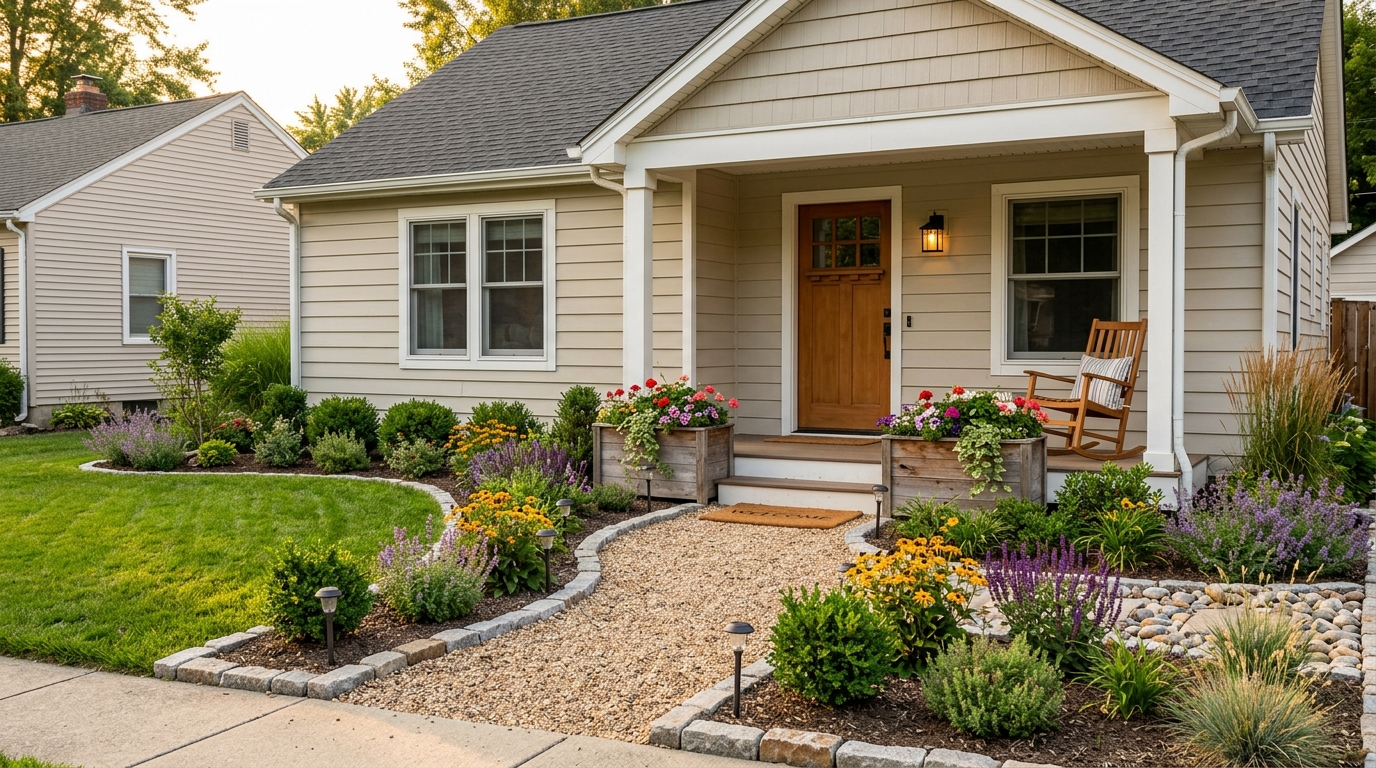
Your front yard is the first thing anyone sees when they arrive at your home and the last thing you see when you leave it every morning. Most people treat it like a chore. The lawn gets mowed, the weeds get pulled when they get bad enough, and that is about as far as the attention goes. The result is a yard that is technically maintained but completely without character.
These front yard landscaping ideas on a budget focus on the changes that build actual curb appeal: the right plants along the front beds, a walkway that makes the entry look intentional, proper mulching that ties everything together, and the specific planting decisions that make a yard look designed rather than defaulted. No backyard projects here, no porch furniture, no pergola ideas. Just the front yard, improved with specific decisions that do not require a landscape architect or a renovation budget.
You will find 21 ideas here, each one a distinct approach to a specific front yard challenge. Some cost under 30 dollars in materials. Some take a single weekend afternoon. All of them make a visible difference to how the yard reads from the street.
1. Edge Every Bed and Lawn Border Before Doing Anything Else
Clean edges between the lawn and the planting beds are the single most impactful maintenance decision available for a front yard because they create the visual impression that the whole yard is controlled and intentional, even when the planting inside the beds is simple. A crisp edge does for a front yard what a clean frame does for a painting: it signals that someone is paying attention.
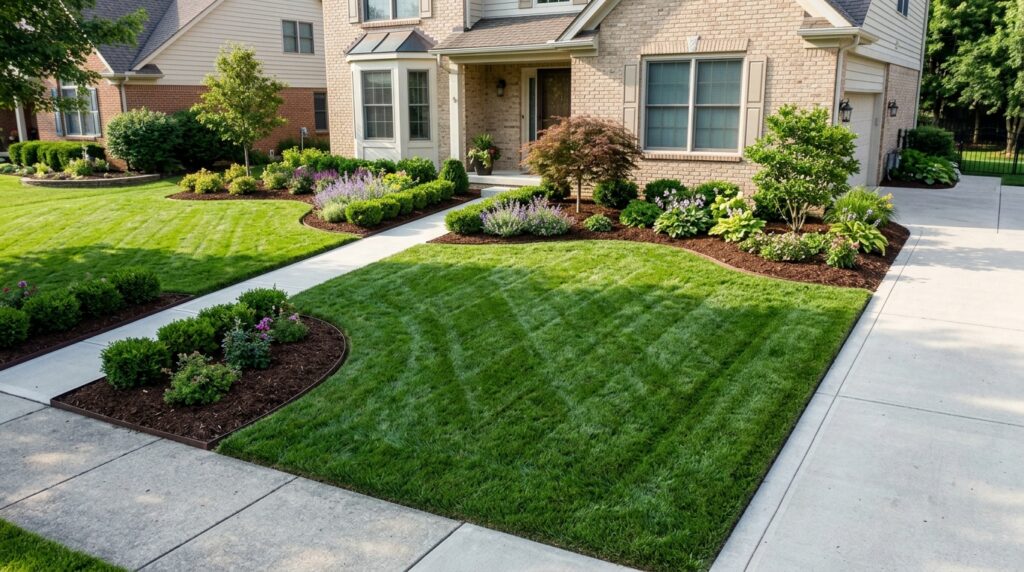
Use a half-moon edging tool or a flat spade to cut a clean 2 to 3 inch deep vertical edge along every bed border and along the lawn edge of any walkway or driveway. Re-edge every four to six weeks through the growing season to maintain the line. For a permanent edge that does not require repeated cutting, install a steel landscape edging strip from Dimex EasyFlex or Vigoro at the bed border. These steel or heavy plastic strips hold the soil in the bed and keep turf grass from creeping in over time without the weekly reedging work that an unedged border requires.
2. Front Yard Landscaping Ideas on a Budget Start with Fresh Mulch
Fresh mulch over existing beds does more for a front yard’s visual quality per dollar spent than almost any plant purchase. A bed with healthy plants but no mulch or deteriorated old mulch looks unkempt. The same bed with 2 to 3 inches of fresh dark brown hardwood mulch looks maintained, finished, and considered regardless of what is planted in it.
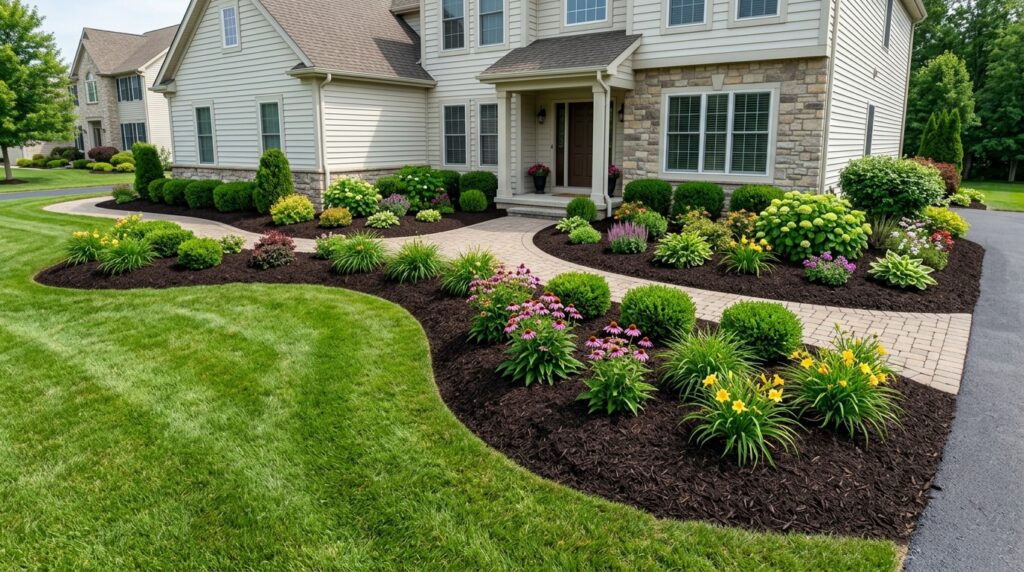
Shredded hardwood mulch in dark brown or black is the most versatile option for front beds because it suppresses weeds, retains moisture, and provides a consistent dark background that makes every plant color and foliage tone read more clearly. A cubic yard of bulk mulch from a local landscape supply yard covers approximately 100 square feet at 3 inches deep and costs between 20 and 40 dollars, which is significantly less than bagged mulch for the same volume. Avoid red or bright-colored dyed mulch, which reads as artificial and competes visually with the plant material above it.
3. Plant a Row of Ornamental Grasses Along the Front Bed Border
Ornamental grasses planted along the front edge of a bed or along a walkway add movement, texture, and seasonal interest in a way that no flowering annual or perennial replicates. They sway in any breeze, produce feathery seed heads in late summer and fall, and require almost no maintenance beyond one hard cutback in late winter. They also multiply over time, which means the initial plant investment divides into more plants for other areas of the yard.
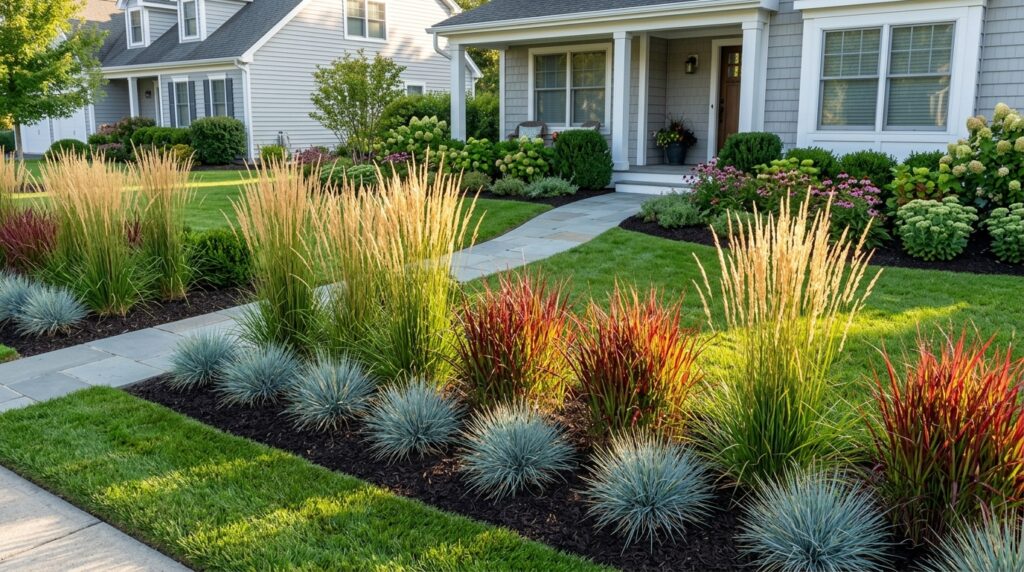
Karl Foerster Feather Reed Grass grows to 5 to 6 feet tall in a tight upright clump and suits formal or structured front yards. Blue Oat Grass at 2 feet stays compact and provides blue-green foliage color that reads well against dark mulch. Shenandoah Switch Grass produces red fall color that makes front beds look genuinely spectacular from September through the first hard frost. All three are available at most garden centers and through Proven Winners and American Meadows online for delivery directly to the door.
4. Create a Defined Walkway with Concrete Pavers
A front yard without a defined walkway from the driveway or street to the front door feels incomplete and slightly inhospitable. A clearly defined walkway with properly sized pavers signals that the approach to the home was considered rather than just worn into the grass by foot traffic over time.
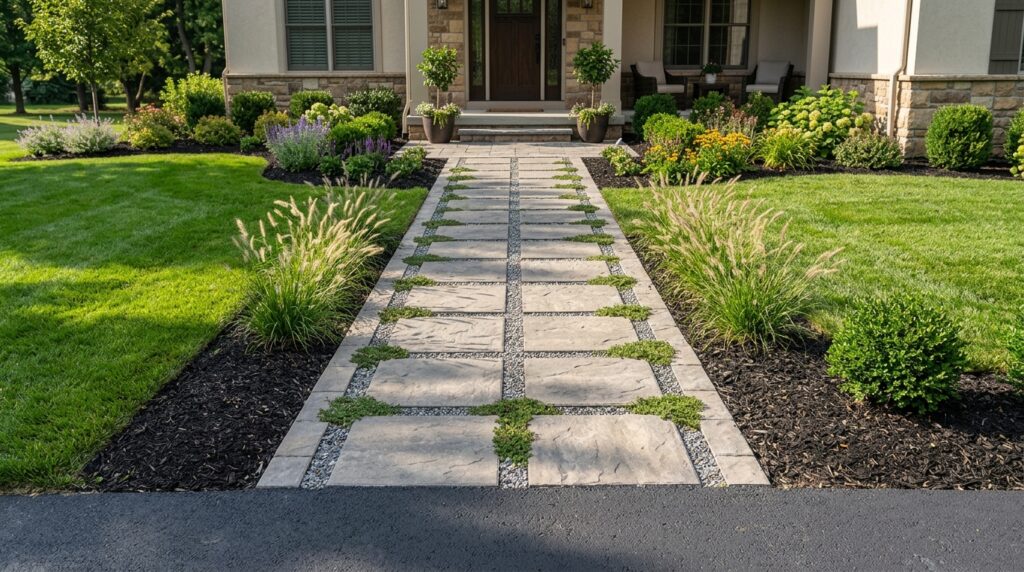
Use 12 by 12 inch or 16 by 16 inch concrete or natural stone pavers from Home Depot or Lowe’s to create a walkway at least 36 inches wide, which is the minimum comfortable walking width for a single person. Lay the pavers on a 2-inch bed of coarse sand over a tamped gravel base for stability. Space the pavers with a 2-inch gap between each one and fill the gap with pea gravel, decomposed granite, or creeping thyme planted between the stones for a softer, more organic look. The Pavestone 12 by 12 inch Red Concrete Paver at Home Depot and the Natural Flagstone selections at landscape supply yards both provide the right scale and visual quality for a front walkway at accessible prices.
5. Plant a Low Hedge Along the Front of the House
A low hedge planted 18 to 24 inches in front of the house foundation creates a visual base for the home that grounds the structure into the yard and prevents the house from appearing to float above the ground plane. Without any foundation planting, the transition from wall to ground looks abrupt. A low hedge softens that transition and gives the whole front elevation a more settled, established quality.
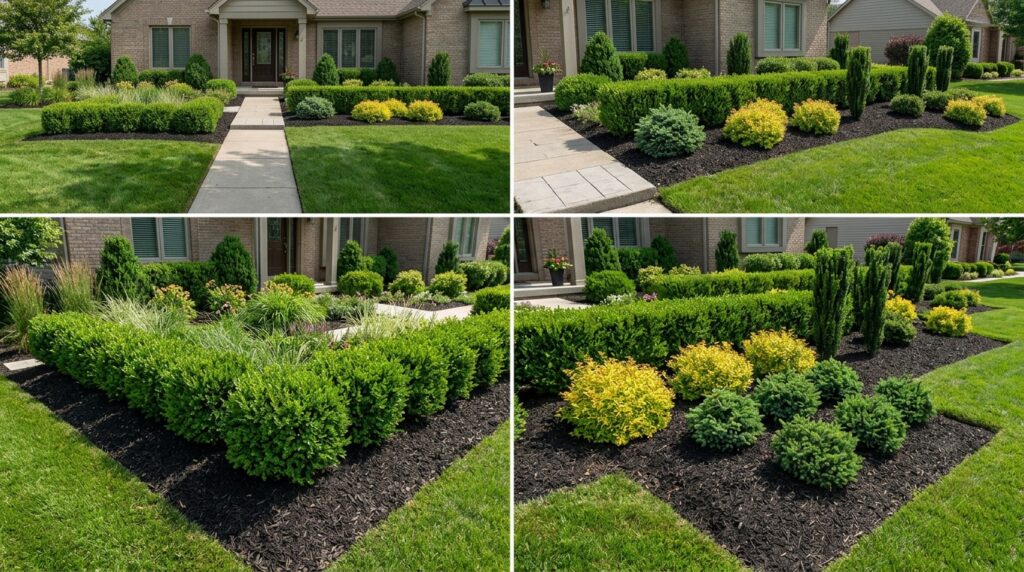
Boxwood is the classic low hedge plant and suits formal and traditional homes well. Little Gem Dwarf Alberta Spruce stays compact and evergreen for year-round structure. Spirea Goldmound provides a rounded form with yellow foliage that reads well from the street. For a lower-maintenance alternative to boxwood, Sky Pencil Holly stays narrow, evergreen, and requires very little pruning to maintain its form. Plant in a straight line at consistent spacing of 24 to 30 inches on center for a hedge that fills in evenly within two to three growing seasons.
6. Front Yard Landscaping Ideas on a Budget Include Planting Perennials Instead of Annuals
Annuals require a new purchase and replanting every spring, which accumulates into a significant ongoing cost over several years of front yard maintenance. Perennials cost more per plant initially but return every year without replanting, spread into larger clumps over time, and can be divided to fill more bed space without any additional purchase. A front yard planted primarily in perennials reaches its full, lush appearance within three years of initial planting and maintains it indefinitely with only basic care.
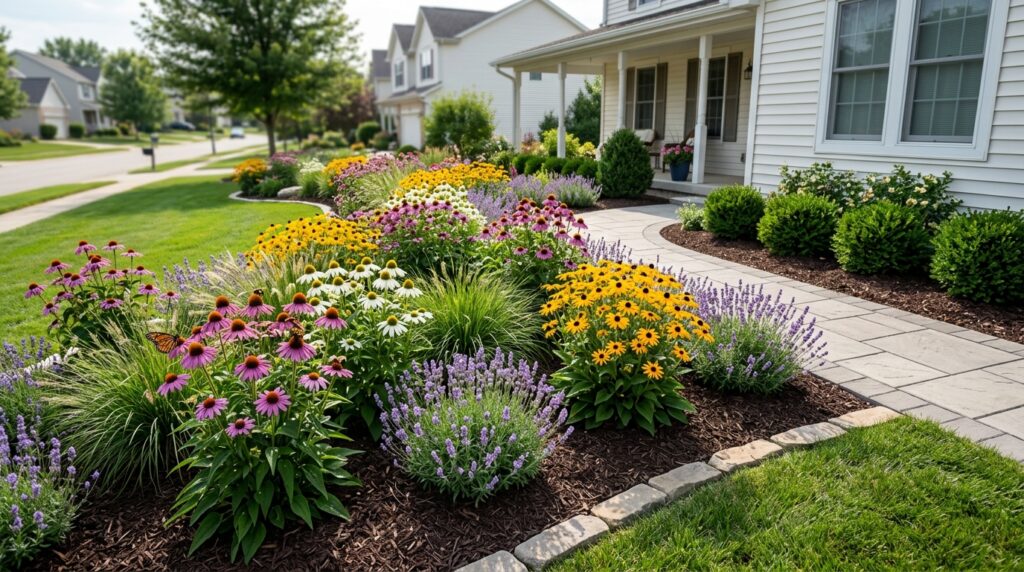
Coneflower in purple, pink, or white blooms from midsummer through fall and attracts pollinators visibly throughout the season. Black-eyed Susan provides yellow flowers through the same period and self-seeds generously. Catmint produces lavender-blue spikes from late spring through summer and has a soft, billowing growth habit that softens bed edges naturally. All three are widely available at garden centers in spring and can be ordered online in quantities through Burpee Seeds or White Flower Farm for a more economical per-plant cost.
7. Add Solar Path Lights Along the Walkway for Evening Curb Appeal
A front yard that looks good during the day but goes dark and featureless at night is only doing half its job. Solar pathway lights along the front walkway define the approach to the home after dark, add safety for anyone arriving in the evening, and give the front yard a warmth and presence that makes the home look welcoming at any hour.
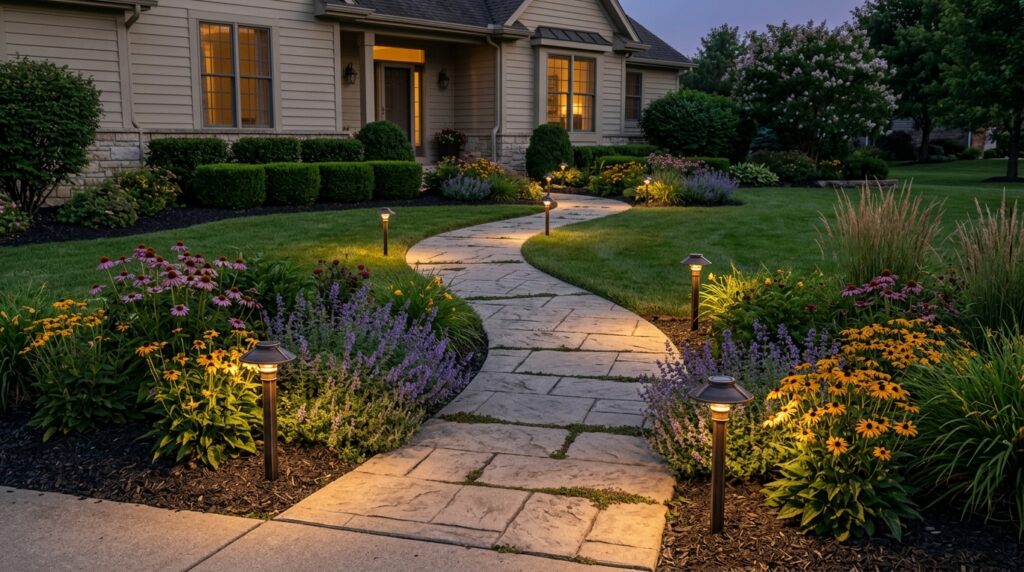
Use warm-toned solar lights in a consistent style and finish along both sides of the walkway, spaced approximately 6 to 8 feet apart. The Ring Solar Steplight, the Mainstays Solar LED Garden Lights from Walmart, and the Brightown Solar Pathway Lights all produce a warm amber glow at night and charge reliably in direct sun. Choose a stake style in a brushed bronze or dark metal finish rather than chrome or plastic, which reads as more considered. Replace the batteries in the solar units annually at the start of the season to maintain consistent output through the night.
8. Use River Rock or Pea Gravel to Fill No-Plant Zones
Front yard areas under a tree canopy, along the foundation where sun is insufficient for plants, or in corners where irrigation does not reach create problem zones where nothing grows reliably. Rather than fighting the conditions, fill these zones with river rock or pea gravel over landscape fabric, which provides a clean, intentional finish that reads as a design choice rather than a bare patch where planting failed.
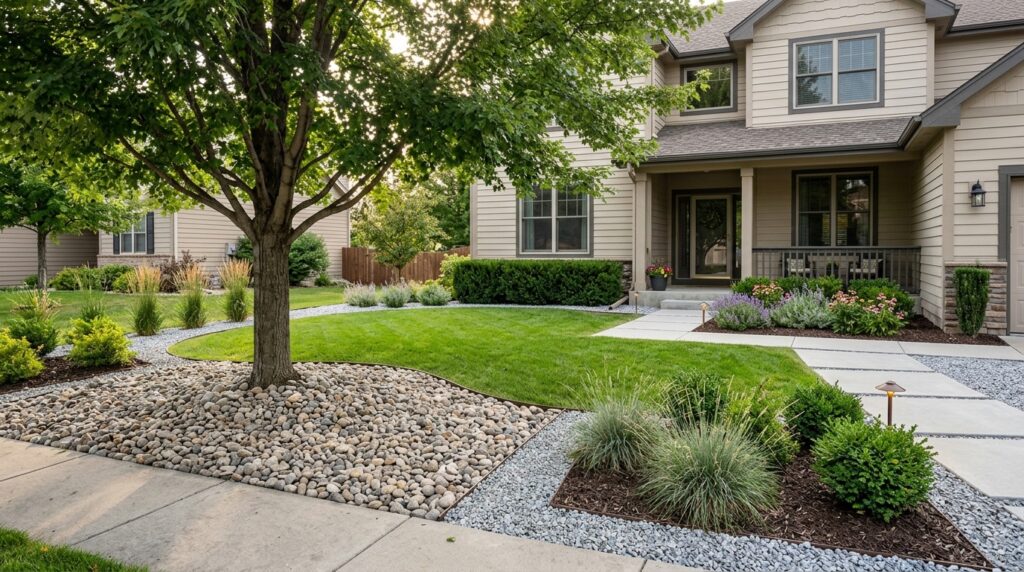
River rock in a warm gray or buff tone at 1 to 2 inches diameter provides a natural, organic look. Pea gravel in a small rounded aggregate reads more contemporary and suits modern or cottage-style homes. Lay the landscape fabric first over the prepared soil surface and secure with fabric staples from Vigoro before pouring the stone. Apply a 2-inch depth of stone over the fabric and rake it level. The fabric prevents weeds from growing up through the gravel without preventing water from passing through to the soil.
9. Plant Knockout Roses Along the Front Fence or Bed Edge
Knockout Roses are the most maintenance-free flowering shrub available for a front yard because they bloom repeatedly from late spring through hard frost, resist disease without any spraying, and require no deadheading to continue blooming. They provide reliable color and structure in a front bed for the full growing season at a plant cost of under 20 dollars each at most garden centers.
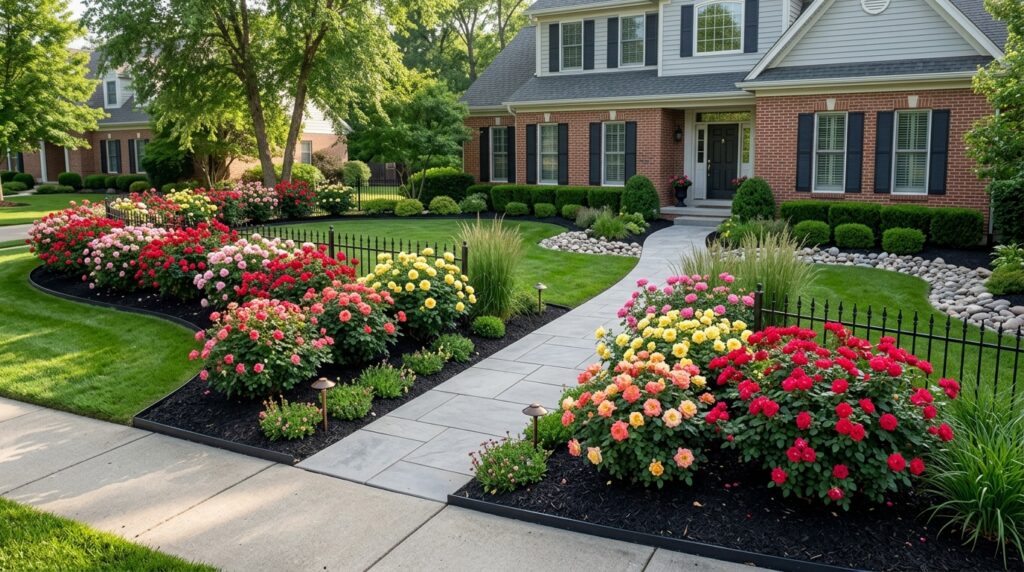
Double Knock Out Rose in red or pink grows to 3 to 4 feet tall and wide in a rounded shrub form. Sunny Knock Out Rose produces soft yellow blooms. Rainbow Knock Out Rose blooms in a coral-pink that fades to cream as the flower ages. Plant in groups of three for the fullest visual impact, in full sun with good air circulation. Feed with Espoma Rose-Tone fertilizer in spring and again in midsummer for the most consistent rebloom through the season.
10. Front Yard Landscaping Ideas on a Budget Benefit from Defined Bed Shapes
Front yard beds with undefined, irregular edges that have shifted over time due to foot traffic, erosion, or the creep of lawn grass look unplanned and slightly abandoned regardless of what is planted inside them. Reshaping the beds into clean, deliberate curves or geometric lines resets the whole yard’s visual quality before a single new plant is added.
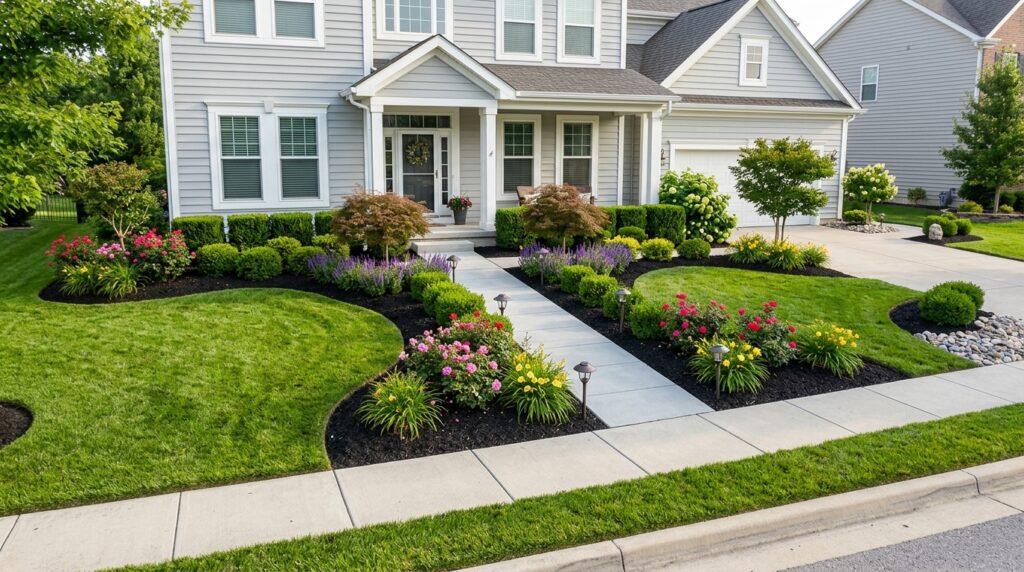
Stand at the street and look at the existing bed shapes from the perspective of the most common viewing position. Decide whether the beds should be curved and flowing or straight and geometric based on the architecture of the home: curved beds suit traditional and cottage homes while straight geometric beds suit modern and contemporary homes better. Remark the bed edges with a garden hose to visualize the new shape before cutting, photograph it from the street, adjust, and then cut the final edge with a spade or a rented bed edger.
11. Install a Low Stone or Brick Border Around Front Beds
A physical border around front beds using stacked edging stones, clay bricks, or manufactured landscape border blocks provides a clean, permanent edge that maintains the bed shape without the repeated reedging that a cut-grass edge requires. It also raises the visual definition of the bed slightly, which makes the planting inside it read more clearly from the street.
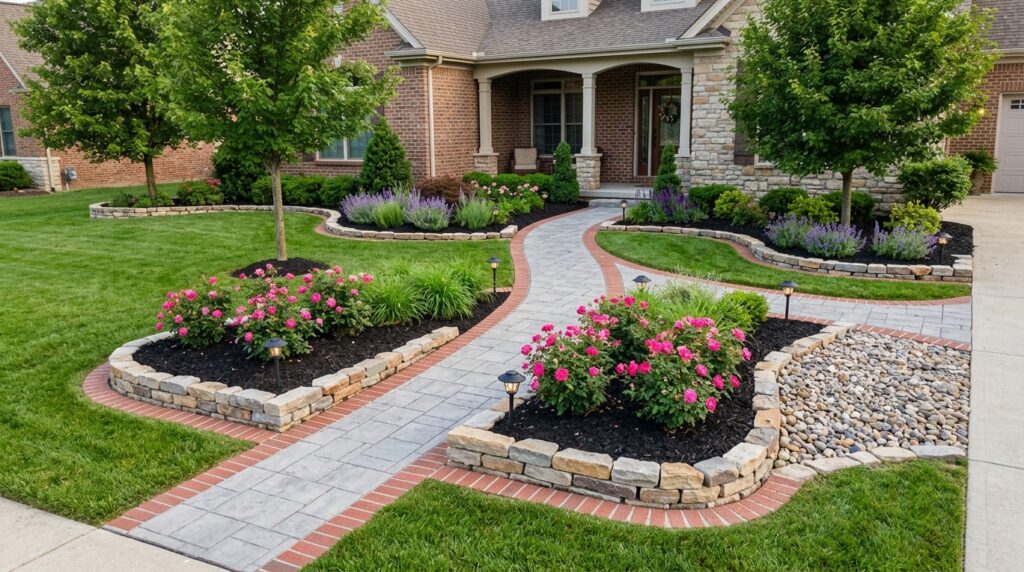
The Vigoro 36-Foot Scalloped Plastic Landscape Edging provides a clean border quickly at a very low cost. Natural field stones stacked two courses high create a more substantial, permanent edge that suits cottage or traditional styles. Clay bricks laid on end in a running pattern provide a classic bed border that suits traditional architecture specifically. Install any physical border into a shallow trench so the top edge sits flush with the surrounding lawn surface, which makes mowing along the border clean and simple.
12. Create a Low-Maintenance Front Bed with Native Plants
Native plants suited to your specific region require dramatically less water, fertilizer, and maintenance than non-native ornamentals because they evolved in the same climate, soil type, and precipitation pattern they will be growing in. A front yard planted with regional natives establishes quickly, survives drought without supplemental watering once rooted, and looks increasingly natural and settled with each passing season.
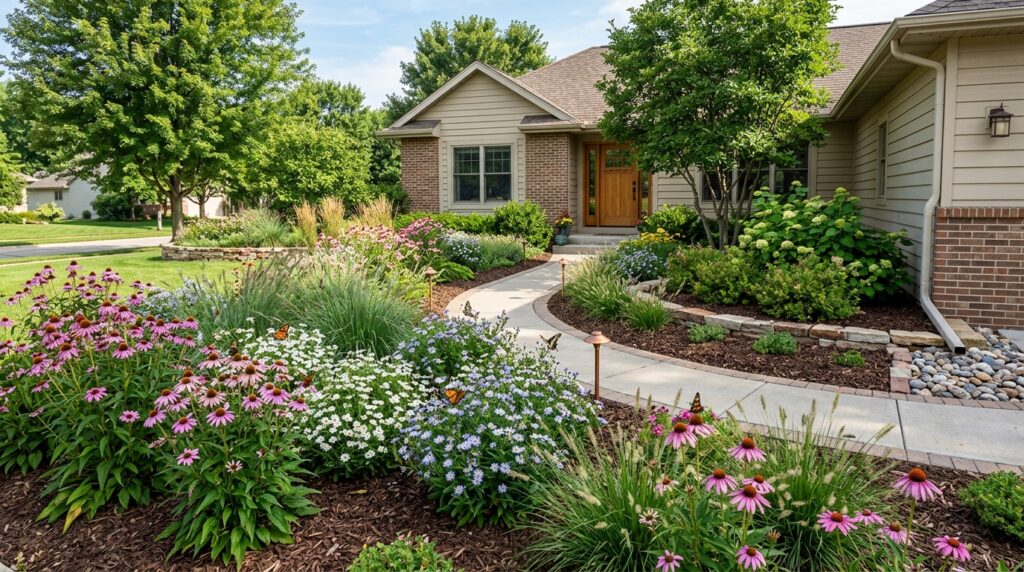
Research the native plants appropriate for your specific USDA hardiness zone and sun exposure through the American Meadows Plant Finder or the National Wildlife Federation Native Plant Finder. Most regions have native ornamental grasses, native coneflowers, native asters, and native shrubs that provide multi-season interest. Purchase from Prairie Moon Nursery, Bluestone Perennials, or a local native plant nursery for the healthiest, most regionally appropriate selections. The initial investment in native plants pays back over years of reduced watering and maintenance costs.
13. Front Yard Landscaping Ideas on a Budget Use Mulched Tree Rings
A tree sitting in the middle of a lawn with no mulch ring around its base looks like a tree in a lawn. The same tree with a 4 to 6 foot diameter mulched ring around its base looks like a landscape feature. The mulch ring also benefits the tree significantly by eliminating competition from lawn grass, retaining moisture at the root zone, and preventing lawn mower and string trimmer damage to the trunk.
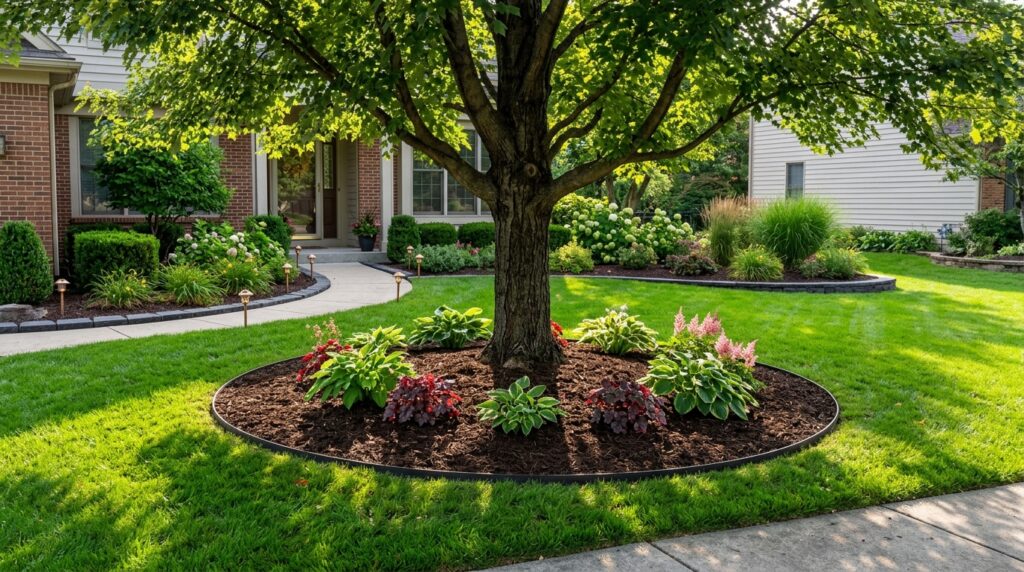
Use a spade to cut a circle around the tree at the desired radius, remove the turf inside the circle, and apply 2 to 3 inches of hardwood mulch. Keep the mulch pulled back 3 to 4 inches from the trunk itself to prevent moisture accumulation against the bark. Plant the mulch ring with low-growing shade-tolerant perennials like hostas, astilbe, or coral bells for a more finished, planted look, or leave it as a clean mulch ring which still reads as significantly more intentional than no ring at all.
14. Add Window Boxes to the Front Facade
Window boxes mounted under front-facing windows add a layer of plantings at eye level that no amount of front bed landscaping achieves because they bring color, texture, and seasonal interest directly to the face of the home rather than at ground level. Window boxes give a plain front elevation the visual complexity that makes a home look genuinely cared for from the street.
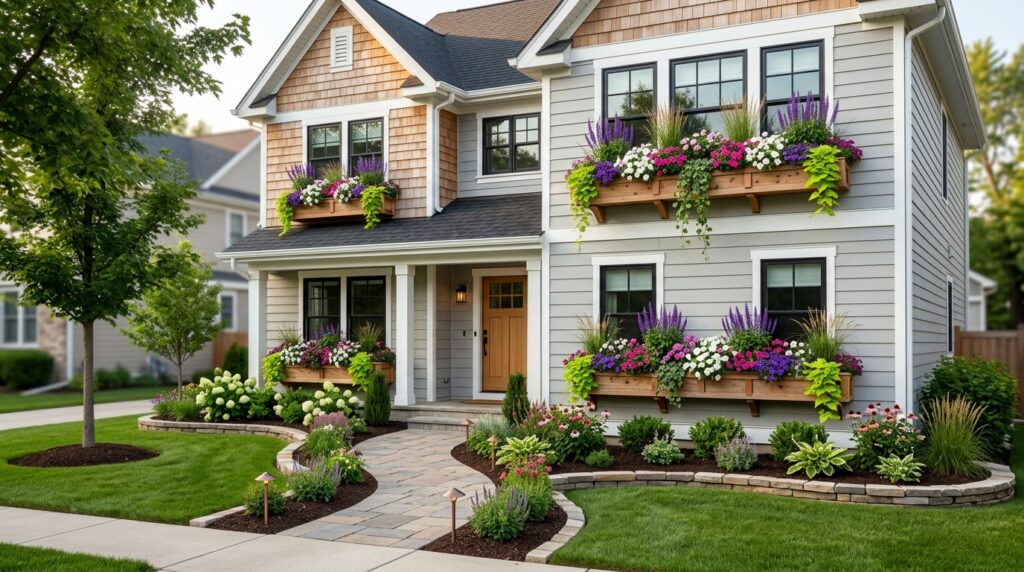
Install cedar or composite window boxes sized to match the width of the window above them or slightly wider. The H Potter Garden Trough Window Box Planter in antique copper, the Hooks and Lattice Window Box in galvanized steel, and the Classic Home and Garden Whiskey Barrel Window Box all provide good weather resistance and drainage in styles that suit a range of home types. Plant with a combination of a thriller, a filler, and a spiller: one tall or bold plant, several medium mounding plants, and at least one trailing variety that drapes over the edge of the box.
15. Plant a Flowering Crabapple or Serviceberry as a Front Yard Focal Tree
A single well-placed ornamental tree in the front yard provides more year-round visual interest than any combination of shrubs and perennials because it adds height, seasonal change, and a defined structure that grounds the entire planting around it. A flowering crabapple blooms spectacularly in spring and holds colorful fruit through fall and winter. A serviceberry blooms in early spring, produces edible berries in summer, and turns brilliant orange and red in fall.
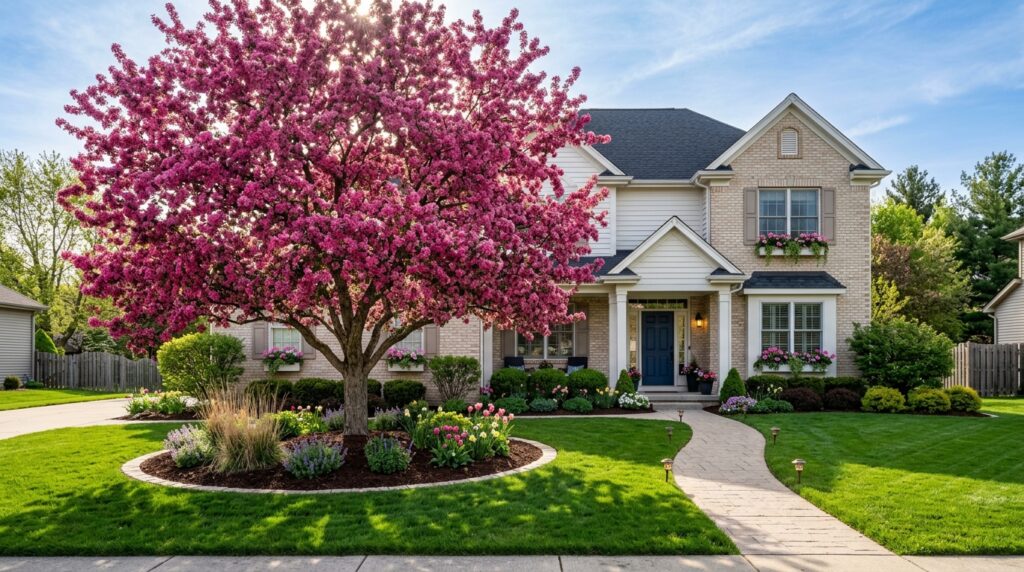
Both trees reach 15 to 25 feet at maturity depending on the variety, which is scaled correctly for most residential front yards without overwhelming the house. The Prairifire Crabapple from Proven Winners is one of the most disease-resistant varieties available and produces deep pink blooms followed by persistent burgundy fruit. The Autumn Brilliance Serviceberry from a local nursery or through Monrovia provides the multi-season interest at a similar mature scale. Plant in a location where the tree’s full mature canopy is clear of the house foundation, utility lines, and any walkway by at least 10 feet.
16. Lay a Decomposed Granite or Gravel Driveway Apron
The area where the driveway meets the front yard beds is often the most neglected zone of the front yard because it sits between the functional driveway surface and the planted bed and belongs clearly to neither. A decomposed granite or gravel apron installed along this transition zone gives it a finished, designed quality and prevents the creeping weeds that typically colonize the edge between pavement and soil.
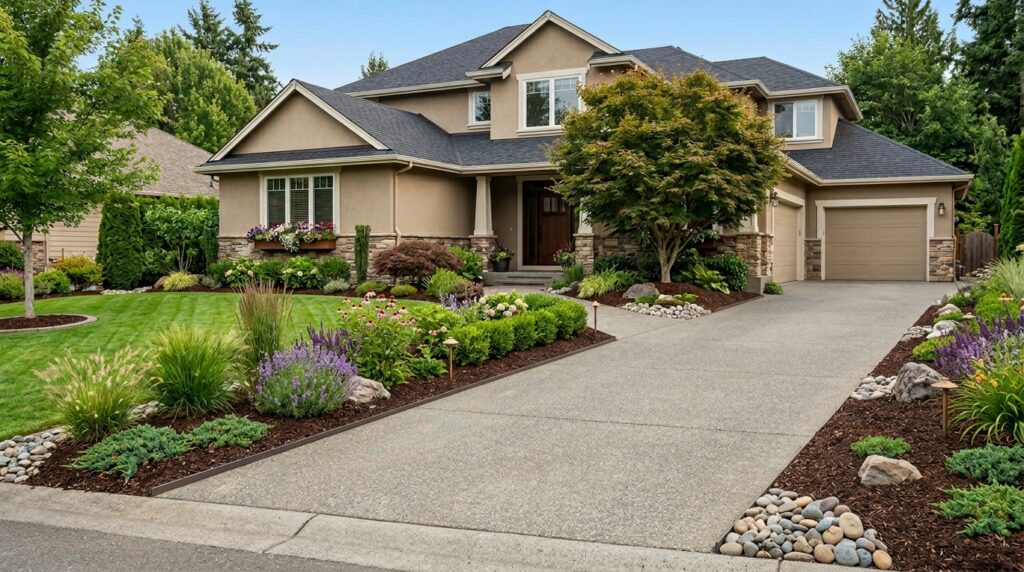
Apply a 3 to 4 inch depth of decomposed granite in a tan or buff tone, or pea gravel in a warm gray, over landscape fabric in the apron zone. The transition from the driveway surface to the gravel apron to the mulched planting bed creates a layered, deliberate material progression that reads as designed from the street. Keep the apron width consistent at 12 to 18 inches along the full driveway edge for the cleanest result.
17. Front Yard Landscaping Ideas on a Budget Include Seasonal Color Pots at the Entry
Two large planted pots flanking the front door or at the top of the walkway steps provide a focused burst of seasonal color and welcome at the entry that changes the front yard’s curb appeal immediately and can be updated every season for a relatively small ongoing cost. The pots do not need to be expensive. They need to be large enough to read clearly from the street and planted with intention.
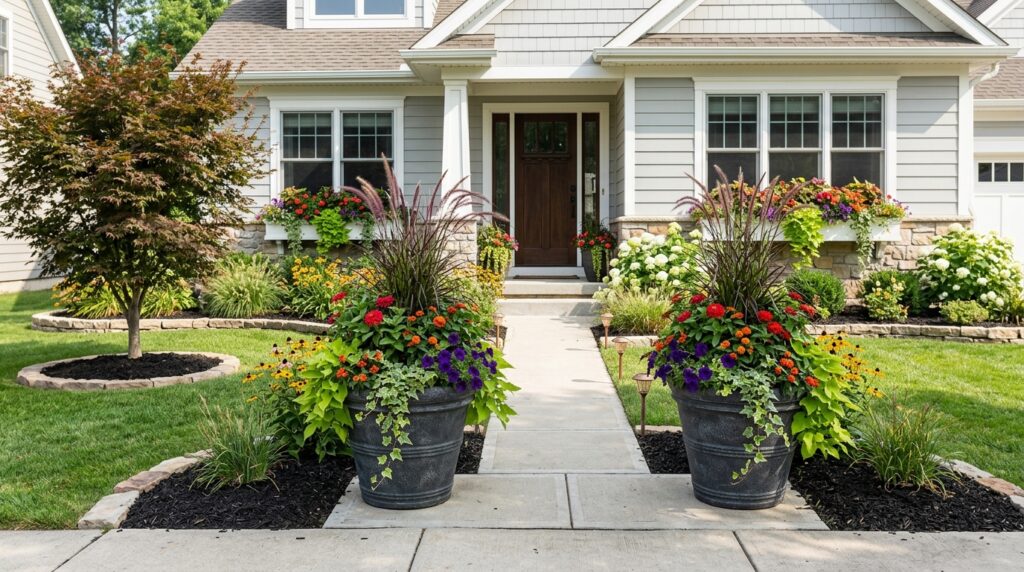
Use pots at least 16 to 18 inches in diameter for plantings that have enough visual scale to read from the street. The Southern Patio HDR Premium Resin Planter in a dark espresso finish, the Crescent Garden TruDrop Planter in gray, and the Pottery Barn Outdoor Resin Planter in stone all weather reliably and suit a range of home styles. Plant seasonally: pansies and snapdragons in spring, zinnias and lantana in summer, ornamental kale and flowering cabbage in fall, and evergreen boughs with red twig dogwood and hypericum berries in winter.
18. Sod or Overseed the Front Lawn for a Clean Turf Base
Patchy, thin, or weed-dominated lawn turf under an otherwise well-planted front yard undermines the visual quality of every bed and border decision around it because the lawn is the floor that connects everything. A clean, dense turf base makes every planting decision read more clearly and makes the yard look more cared for overall.
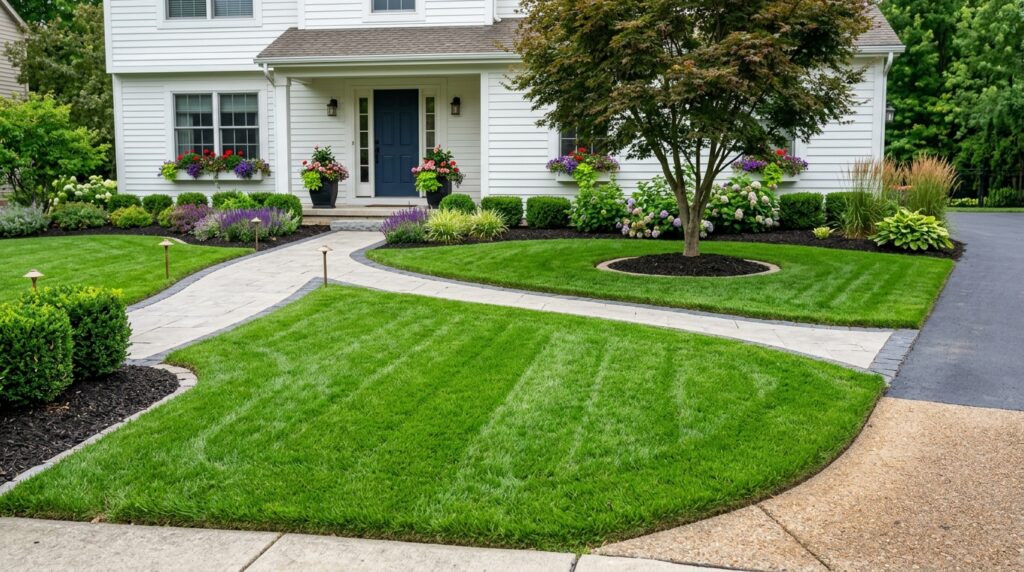
Overseeding thin areas with a quality turf seed mix appropriate for the sun exposure of the front yard is the least expensive approach: Scotts Turf Builder Grass Seed Sun and Shade Mix for yards with mixed light, Scotts Turf Builder Heat-Tolerant Blue Mix for hot, sunny yards. Rake the existing turf lightly, spread seed at the recommended rate, and keep consistently moist for three weeks until germination. For larger bare patches, sod from a local sod farm produces immediate results and establishes fully within four to six weeks of installation.
19. Use Black-Eyed Susans and Coneflowers to Fill Large Beds Cheaply
Large front beds that need substantial plant coverage represent a significant cost when filled with individual perennial purchases at standard garden center prices. Black-eyed Susans and coneflowers purchased in bulk through mail-order nurseries or in flat quantities from a wholesale garden supply fill large beds quickly at a fraction of the per-plant cost of individual container purchases.
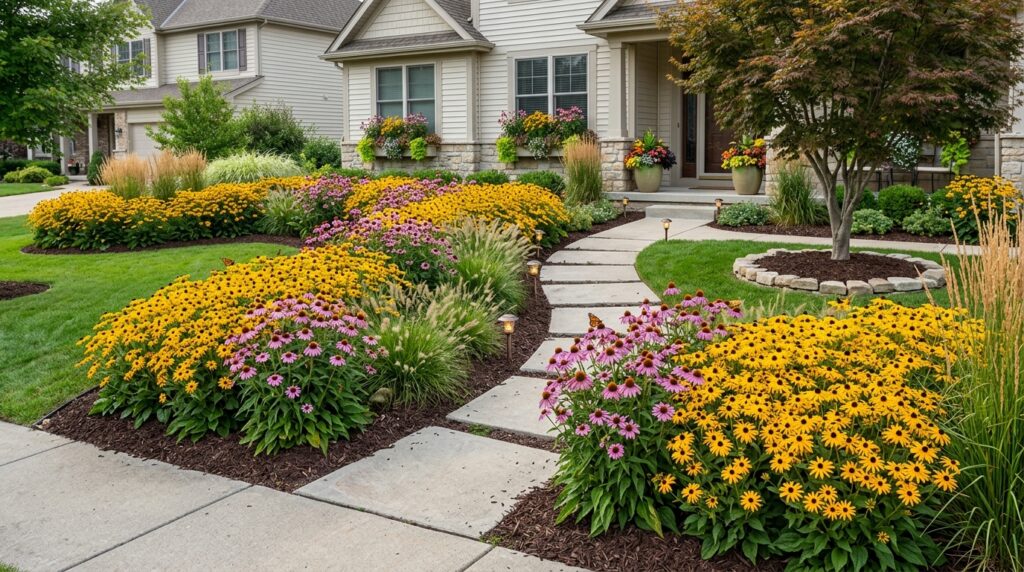
A flat of 32 black-eyed susan plugs from a mail-order nursery costs approximately the same as 4 individual container plants from a garden center, which means the same budget fills eight times more planting space. Both black-eyed Susan and purple coneflower spread by seed and by rhizome over time, which means a bed planted at 50 percent density in year one reads as fully planted by year three. American Meadows, Bluestone Perennials, and Burpee Seeds all offer plugs and bare-root perennials at significant volume discounts compared to container pricing.
20. Repaint the Front Door and Mailbox to Match
The front door color and the mailbox finish are part of the front yard’s overall visual impression and they are both frequently out of step with the landscaping decisions around them. A front door and mailbox repainted in a coordinating color with a fresh finish reads as part of a cohesive front yard design rather than as separate decisions made years apart without reference to each other.

Choose a door color that relates to the home’s exterior color without matching it exactly: a deep navy door on a white or gray house, a glossy black door on any neutral home exterior, a deep forest green door on a cream or beige home. Use Rust-Oleum Ultra Cover Exterior Paint in a semi-gloss finish for the mailbox, which provides weather resistance and a clean color that holds up to outdoor exposure. Match the mailbox finish to the door or to the door hardware rather than trying to match it to the landscaping, which changes seasonally.
21. Front Yard Landscaping Ideas on a Budget Finish with a Consistent Mulch Color Throughout
Every mulched area in the front yard, the front beds, the tree rings, the foundation border, the gravel apron transitions, should share the same mulch color and type for the finished yard to read as a unified design rather than a collection of separate landscaping decisions made at different times. Consistent mulch color is the detail that ties every other landscaping decision together.

Use the same dark brown hardwood mulch in every mulched zone of the front yard regardless of when each zone was installed or refreshed. Top-dress existing mulch annually with a 1-inch layer of fresh material to restore the color and the weed suppression capacity without the labor and waste of full replacement. Scotts Premium Mulch in Dark Brown and Vigoro Premium Mulch in Cocoa Brown are both widely available at Home Depot and Lowe’s in convenient bag quantities that allow precise application in smaller areas without the overhead commitment of a bulk mulch order.
Conclusion
A front yard that looks designed is not the product of a large budget. It is the product of consistent decisions made at the right scale. Clean edges, fresh mulch, deliberate bed shapes, plants chosen for the actual conditions of the yard, and enough repetition of material and color that everything reads as part of the same intention.
Start with the edges and the mulch because those two decisions cost the least and produce the most immediate visible change to the overall yard quality. From there, these front yard landscaping ideas on a budget build on each other naturally, each plant and walkway and seasonal pot contributing to a yard that finally reads as cared for from the street, which is the only view that matters when the goal is genuine curb appeal.