
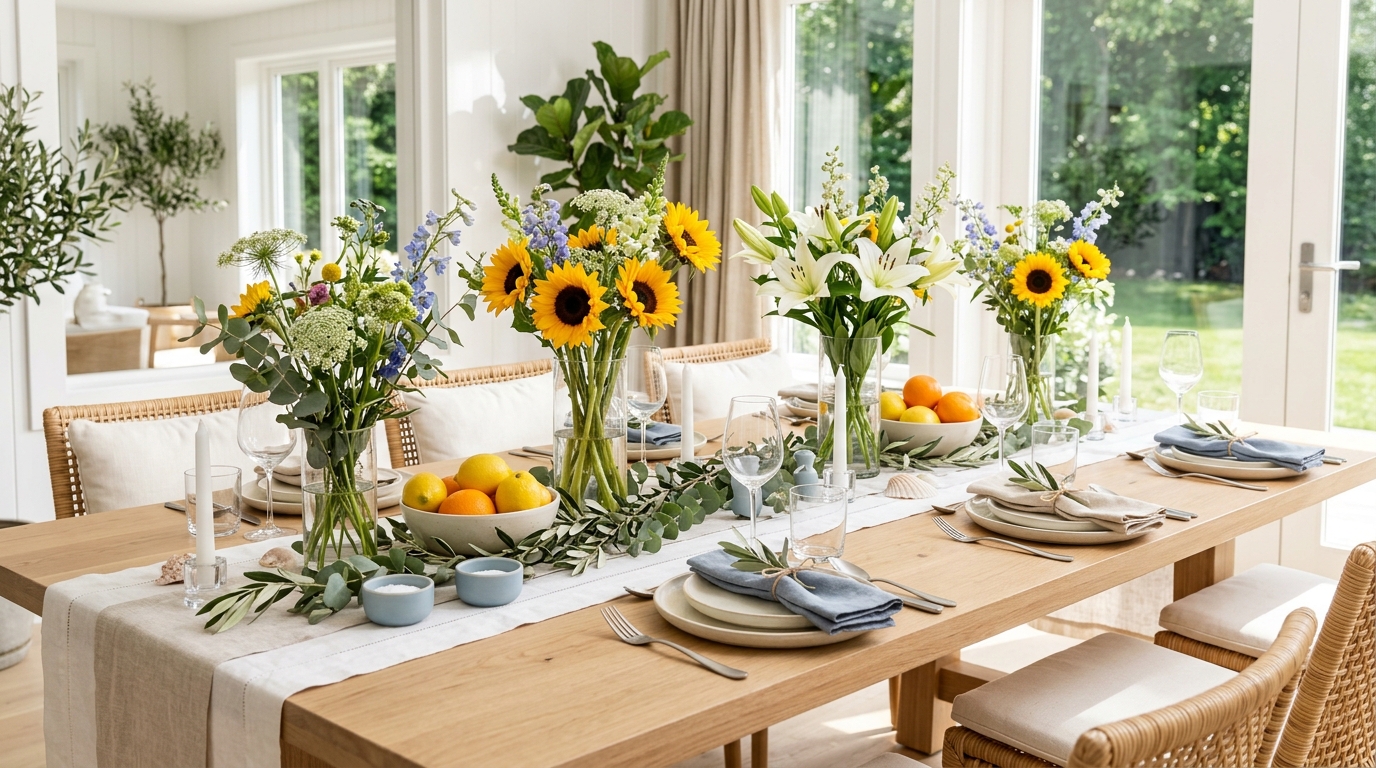
Your dining table looks different in summer and most people cannot explain why. The centerpiece that worked all winter suddenly feels heavy, overly formal, or just wrong for the season. Summer asks for something lighter, something that suggests the outdoors came inside, and the table becomes the place where that shift is most visible.
These summer decor table centerpiece ideas focus specifically on what works in the center of a dining table during the warmer months: fresh florals chosen for their casual quality, citrus and botanical arrangements that reflect the season honestly, candle and shell configurations that suit a summer evening, and the specific vessels and objects that give a summer centerpiece its relaxed, unhurried character. No heavy winter arrangements, no formal symmetry that belongs to a different season. Just the table, styled correctly for summer.
You will find 20 ideas here, each one a distinct summer centerpiece approach. Some take five minutes to assemble. Some cost almost nothing. All of them make the dining table feel like the season is being noticed and celebrated rather than ignored.
1. Float Garden Roses in a Wide Low Bowl
Three or four garden rose heads cut to one inch below the bloom and floated face-up in a wide shallow bowl create one of the most genuinely beautiful summer centerpiece ideas available at almost no cost. The water surface adds a reflective quality that a vase arrangement does not produce, and the low height keeps sightlines completely clear across the table for conversation.
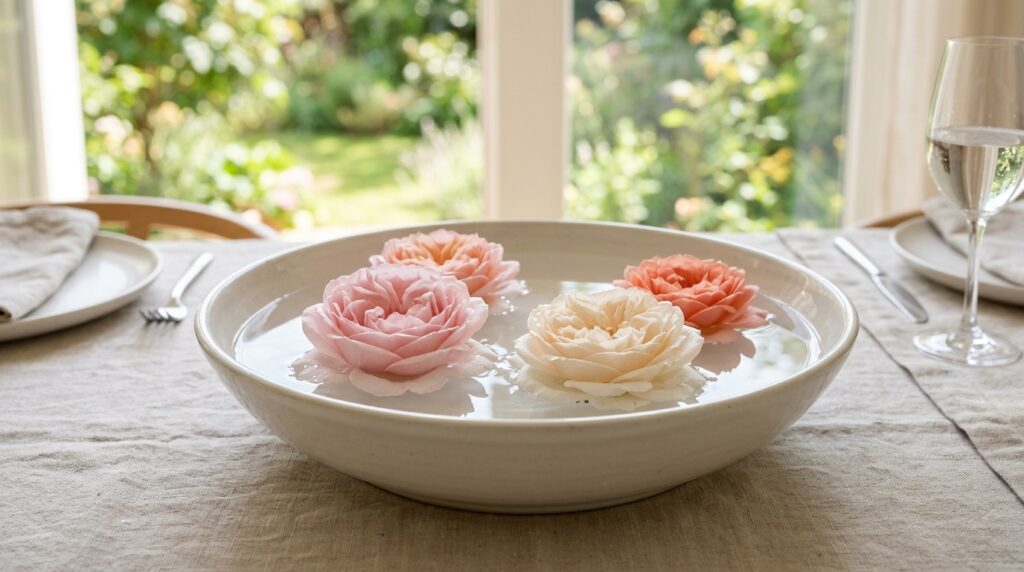
Use a white ceramic bowl, a clear glass bowl, or a shallow terracotta dish between 10 and 14 inches in diameter. Fill with two to three inches of cool water and add the rose heads just before the table is set. A few floating candles placed between the blooms for an evening dinner version add a warm flickering element at the table surface level that makes the whole arrangement feel like summer at its most effortless. Change the water daily and the blooms hold for two to three days before needing replacement.
2. Summer Decor Table Centerpiece Ideas Include a Citrus and Herb Arrangement
Lemons, limes, and a few sprigs of fresh rosemary or mint arranged loosely in a ceramic bowl or a wooden tray create a centerpiece that is as much about fragrance as it is about appearance. The citrus reads as bright and fresh, the herbs add a garden-adjacent scent that belongs specifically to summer, and the whole arrangement costs the price of a bag of lemons from the grocery store.
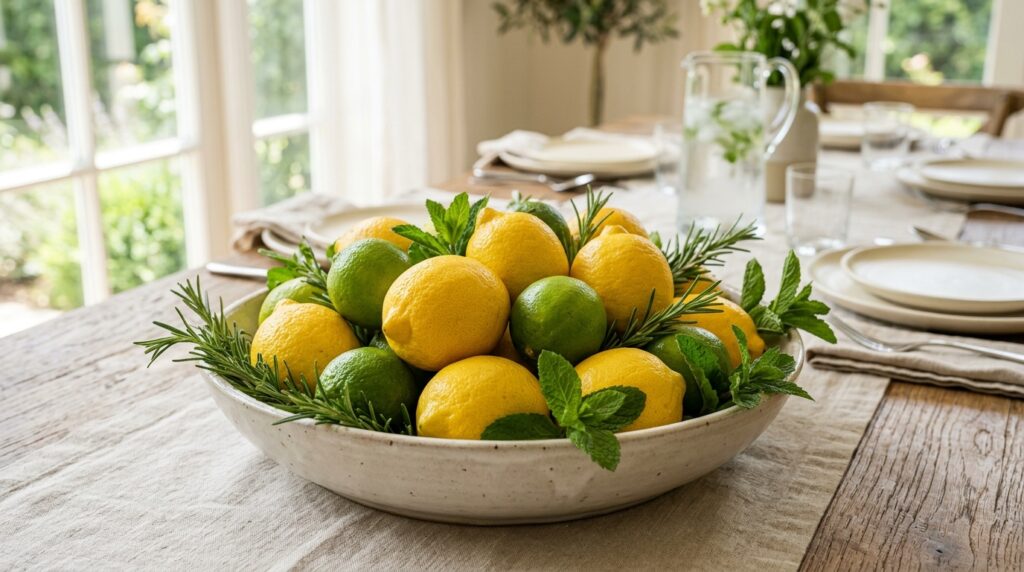
Use a wide, shallow bowl between 10 and 12 inches in diameter and fill it loosely with 8 to 10 pieces of mixed citrus. Tuck four or five fresh herb sprigs between the fruit so the green reads as part of the arrangement rather than an afterthought. Replace the herbs every few days as they begin to wilt and add fresh citrus as pieces are used. The Terrain Stoneware Serving Bowl in a natural glaze and the CB2 White Ceramic Bowl both provide the right vessel proportion for this arrangement.
3. Arrange Sunflowers in a Terracotta Pot
Sunflowers in a terracotta pot rather than a standard vase give a summer table centerpiece the most direct connection to the garden aesthetic of the season. The warm clay tone of the pot relates naturally to the golden yellow of the sunflower petals, and the combination reads as genuinely summer without any additional styling effort around it.
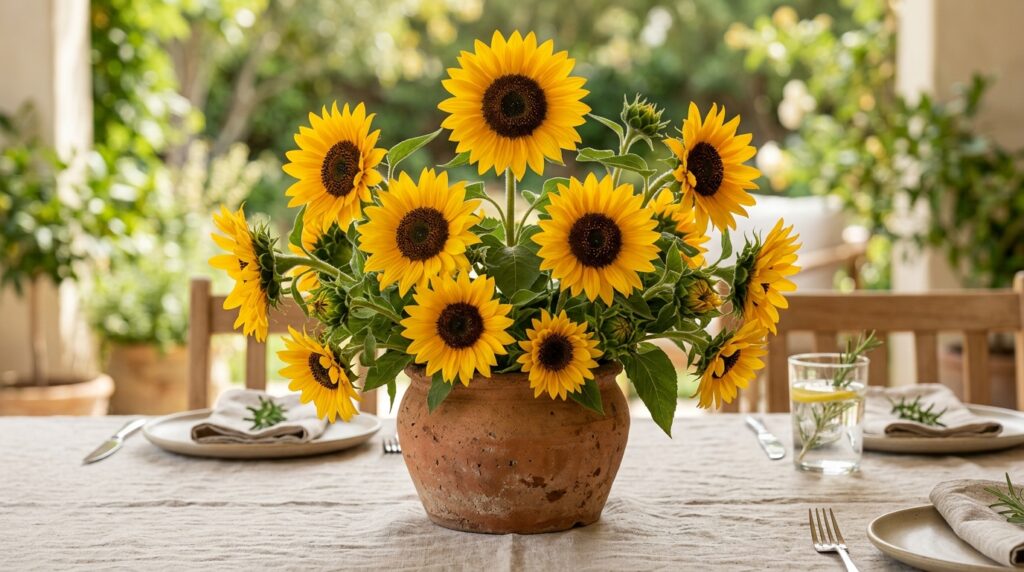
Choose a terracotta pot between 6 and 8 inches in diameter and line the inside with a plastic liner or a small inner container to hold water without damaging the clay. Cut five to seven sunflower stems at varying heights, the tallest at 14 inches and the shortest at 8 inches, and arrange them in the liner. The graduated heights create visual movement that a uniform cut arrangement does not. Deadhead any petals that begin to curl and replace the water every two days for the longest possible display life.
4. Create a Coastal Shell and Candle Vignette
A wooden or rattan tray holding three pillar candles in varying heights with a scattering of shells, sea glass, and smooth beach stones around the bases creates a summer centerpiece that reads as coastal and considered without leaning into literal nautical decoration. The shells and stones serve as the natural material that grounds the candle grouping without looking like a craft project.
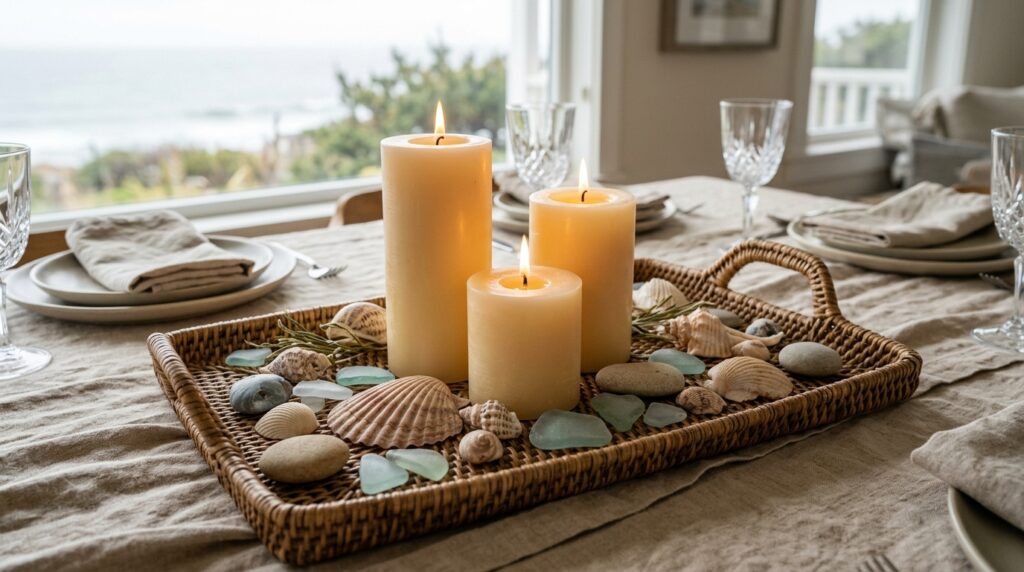
Use candles in warm ivory or natural beeswax rather than white, which reads as too formal against the organic shell material. The Boy Smells Altar Candle in an ivory tone and the Anthropologie Pillar Candle in unscented natural wax both produce the right warm flame quality. Scatter a handful of shells gathered from a beach or purchased from a craft store at the base of the candles and fill any gaps with smooth river stones in a warm gray tone. The arrangement takes five minutes to assemble and holds all summer without any maintenance.
5. Fill a Glass Pitcher with Wild-Gathered Stems
A clear glass pitcher filled with stems gathered informally from the garden or a roadside, whatever is blooming in late spring and summer in your specific region, creates the most genuinely seasonal centerpiece available because it is made from exactly what summer looks like outside the window. Queen Anne’s lace, black-eyed Susan stems, wild grasses, or garden zinnias all work beautifully in this context.
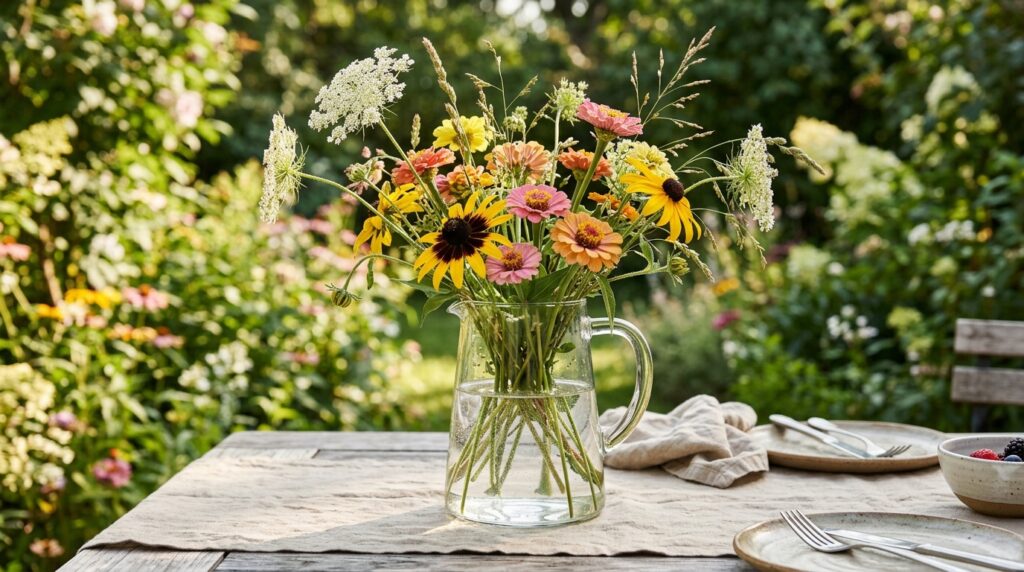
The informality of the gathering is the point. Do not arrange the stems into a formal design. Hold the gathered bunch loosely, place it in the pitcher with enough water to cover the lower stems, and adjust only to remove any stem pointing in a direction that extends beyond the visual boundary of the pitcher opening. A clear glass pitcher lets the stem structure itself read as part of the display, which gives the arrangement a depth that an opaque vessel does not provide.
6. Summer Decor Table Centerpiece Ideas Use a Terrarium as a Permanent Base
A geometric glass terrarium filled with air plants, small succulents, and a layer of decorative gravel provides a summer centerpiece that requires almost no maintenance, lasts the entire season, and reads as deliberately styled rather than assembled on a whim. The glass structure catches and refracts summer light throughout the day and changes in character from morning to evening.
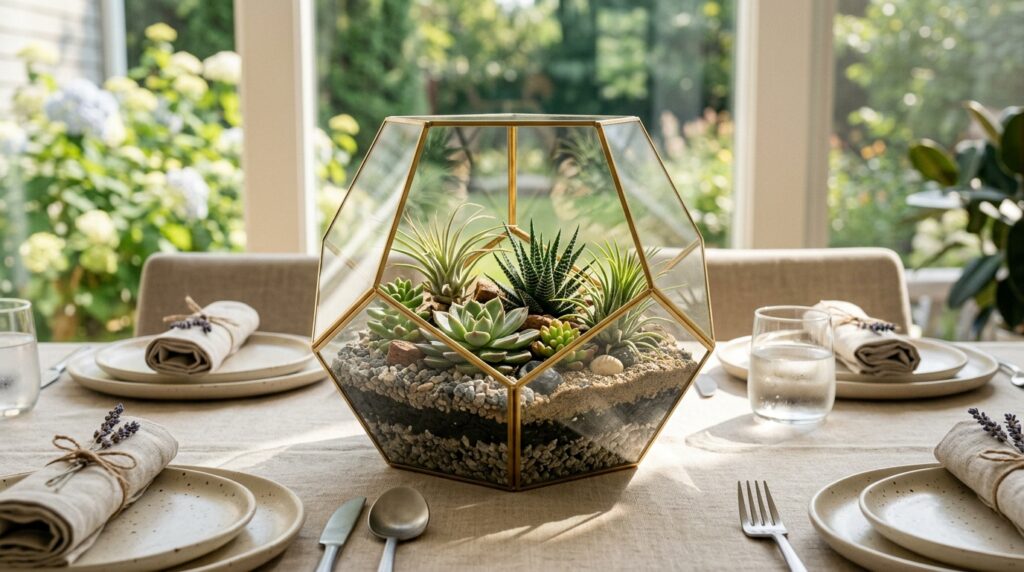
Use an open terrarium rather than a sealed one so air circulation keeps the plants healthy. Fill the base with a layer of coarse sand or pea gravel for drainage, then a thin layer of horticultural charcoal, then a mix of potting soil and coarse sand sized to the terrarium dimensions. Plant with two or three small succulents and a Tillandsia air plant placed at the surface rather than potted. The CB2 Glass Geometric Terrarium and the Terrain Glass Cloche in a wide format both provide the right vessel scale for a dining table centerpiece application.
7. Arrange White Dahlias in a Matte Black Ceramic Vase
The contrast between white dahlias and a matte black ceramic vase produces one of the most graphic and photographically clean summer centerpiece arrangements available. Dahlias have a density of petal and a fullness of bloom that reads as luxurious, and the white flower against a dark vessel gives the table a visual weight that sunflowers and daisies in pale vessels do not achieve.
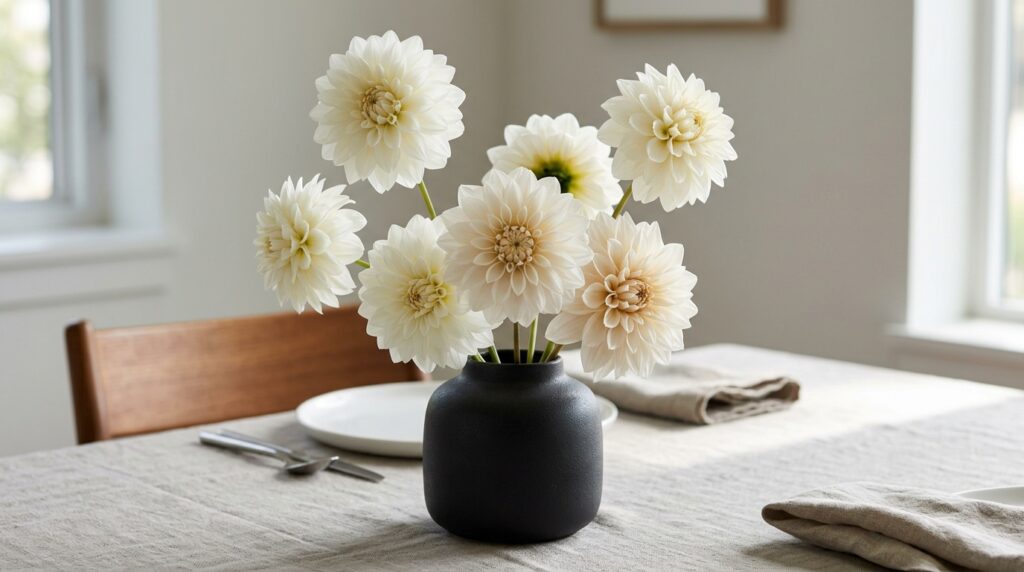
Use five to seven white dahlia stems cut to varying heights between 10 and 16 inches in a vase at least 8 inches tall. Choose the Cafe au Lait dahlia variety for a slightly warm ivory tone if pure white reads as too stark against the rest of the table styling, or the White Onesta for a clean, full bloom that holds its shape for several days. The ferm LIVING Ease Vase in dark sand and the Hawkins New York Simple Cylinder Vase in matte black both produce the right vessel quality for this high-contrast arrangement.
8. Style a Rattan Tray with Tropical Leaves and a Single Candle
Large tropical leaves, a single statement pillar candle, and two or three small decorative objects arranged on a rattan or seagrass tray create a summer centerpiece with an organic, resort-quality character. The tropical leaf does the visual work that most people spend a lot of money trying to achieve with complex floral arrangements.
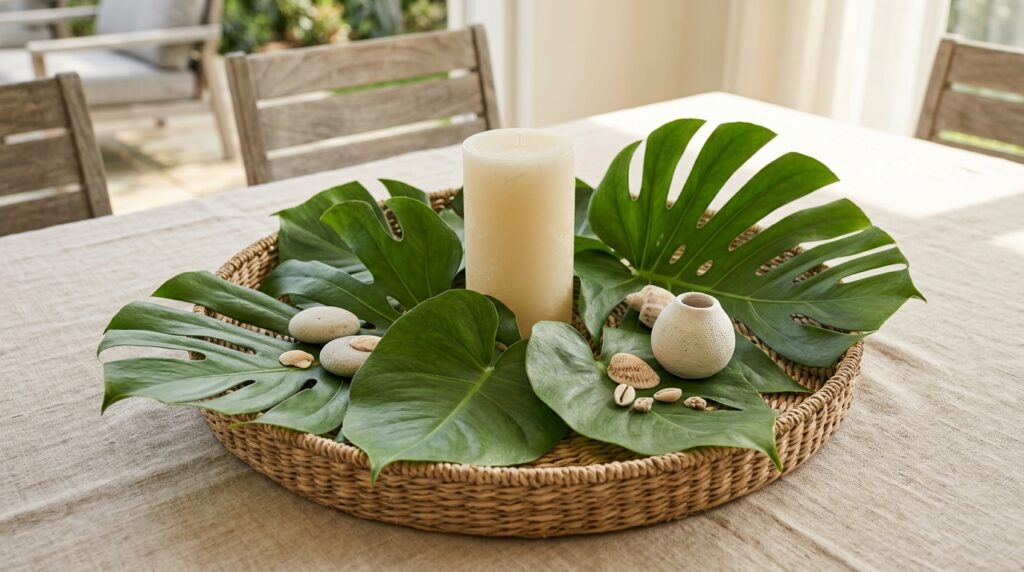
Use three or four large monstera or elephant ear leaves cut from a garden plant or purchased from a florist. Lay them flat across the tray surface with the stems overlapping at the center. Place one large pillar candle in the center of the leaf arrangement and add two or three shells, smooth stones, or small ceramic objects at the outer edges. The World Market Rattan Oval Tray and the Threshold Seagrass Tray at Target both provide the right natural base material at the right price point for this arrangement.
9. Create a Herb Garden Centerpiece in Matching Pots
Three small potted herbs in matching terracotta or ceramic pots grouped together at the center of the dining table create a centerpiece that is functional as well as visual. Basil, thyme, and rosemary are the three herbs that read best as a grouped centerpiece because their different heights, leaf shapes, and fragrances create variety within a consistent presentation.
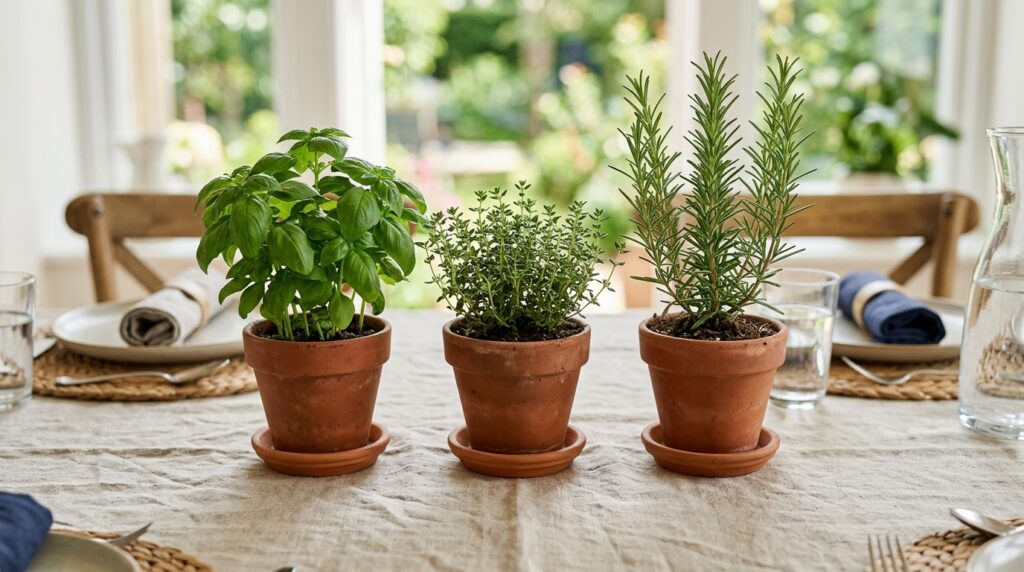
Use 4-inch pots in the same material and finish for all three. Standard terracotta pots from a garden center work well, as do small white ceramic pots from Target or a matte concrete finish pot from a home goods store. Place a small saucer under each pot to protect the table surface. The arrangement stays fresh and productive all summer with regular watering and light, and guests can pinch a sprig of herbs directly from the table for use in their meal, which makes the centerpiece genuinely interactive.
10. Build a Peonies and Eucalyptus Arrangement in a Ceramic Jug
Peonies are available in late spring and early summer for a brief window and they are the most reliably beautiful flower available during that period. Mixed with two or three eucalyptus stems for green volume and placed in a ceramic pitcher or jug, a peony arrangement creates a centerpiece that looks expensive and considered without requiring any florist skill.
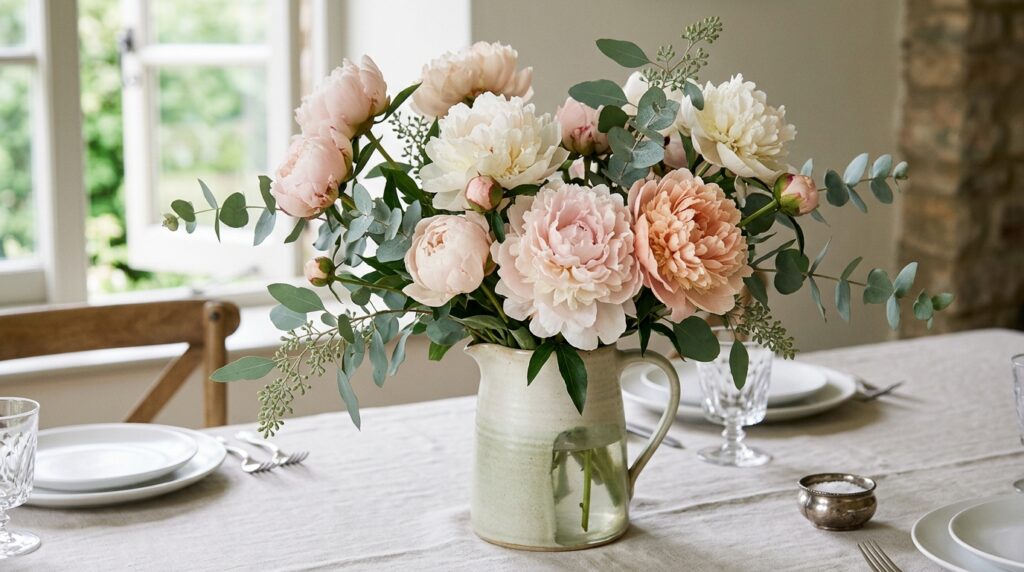
Purchase peonies two days before they are needed so they have time to open from bud to full bloom before they appear on the table. Cut stems at a 45-degree angle under running water and place immediately into the jug with warm water. Add eucalyptus stems cut to similar lengths as the peony stems and place them to fill in around the flowers rather than behind them. The arrangement peaks at full bloom on day two or three and holds for four to five days total with fresh water every day.
11. Summer Decor Table Centerpiece Ideas Feature a Lantern and Bloom Pairing
A single dark metal lantern with a flameless candle inside paired with a small vase of fresh blooms placed directly beside it creates a centerpiece with both architectural structure and organic softness. The lantern provides height and a consistent presence while the flower vase provides seasonal color and fragrance without the formality of a large floral arrangement.
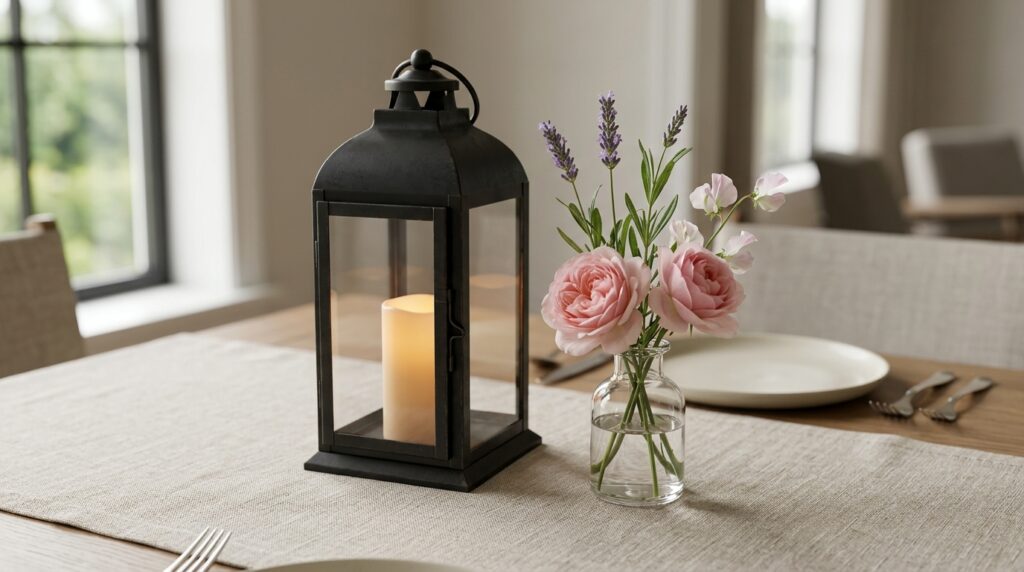
Use a lantern between 10 and 14 inches tall in a matte black or aged bronze finish. Place a small 4-inch bud vase directly beside the lantern base with two or three stems of whatever is currently blooming, a single garden rose, three stems of sweet peas, or a small bunch of lavender. The pairing reads as deliberately styled while taking almost no time to assemble and requiring minimal floral budget. The Hampton Bay Outdoor Lantern from Home Depot works in an interior setting and provides the right scale and finish.
12. Use a Long Wooden Runner Lined with Small Bud Vases
A narrow wooden board or a reclaimed wood slice running along the center of a rectangular dining table with five or seven small bud vases placed at intervals along its length creates a summer centerpiece runner that suits a longer table better than any single arrangement placed at the center. Each bud vase holds one or two stems, and the series of small arrangements reads as one cohesive display.
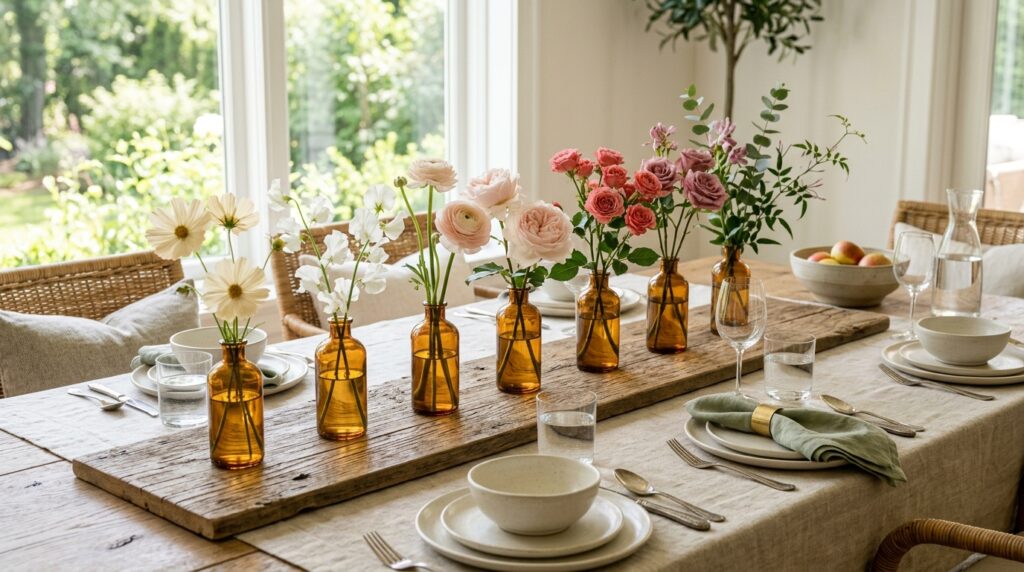
Use matching bud vases, clear glass cylinders, small ceramic bottles, or amber glass vials, all in the same form and finish for the most cohesive result. Place one stem per vase in a consistent or graduating color scheme from one end of the runner to the other. A series of all-white blooms reads cleanly and suits any table setting. A series that graduates from pale yellow to deep orange across the length of the runner adds a color story that makes the arrangement feel designed rather than repeated.
13. Arrange a Dried Flower and Wheat Stem Centerpiece
Dried flowers and wheat stems arranged in a wide-mouth ceramic vessel create a summer centerpiece that lasts the entire season without any maintenance and has the soft, muted quality of late summer fields. Dried strawflowers, dried larkspur, dried bunny tail grasses, and dried wheat stalks all work together in the same arrangement because their tones exist in the same warm, faded summer palette.
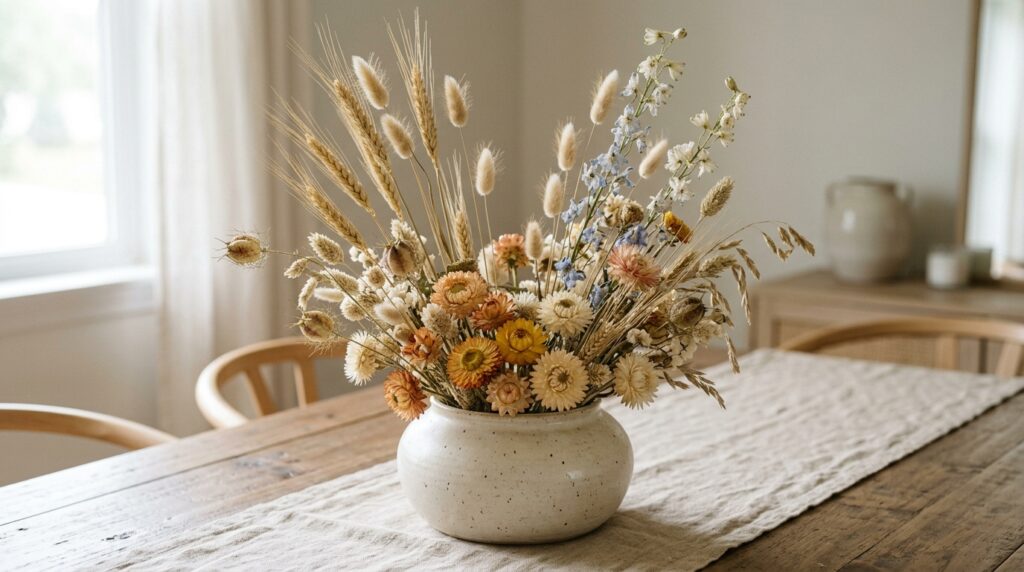
Arrange the dried stems in height order with the tallest wheat stems at the back of the arrangement and the shorter, fuller dried flowers at the front and sides. The arrangement does not need water and requires no replacement through the season. Purchased dried stem bundles from Trader Joe’s or from Etsy shops like Dried Flower Depot provide the right variety and quality for a dining table dried arrangement without requiring sourcing or pressing time.
14. Place a Potted Lavender Plant as a Fragrant Centerpiece
A single potted lavender plant in full bloom placed at the center of the dining table provides the most fragrant summer centerpiece available because lavender in bloom releases its scent passively throughout the meal without any candle or diffuser required. The purple bloom spikes, the silver-green foliage, and the warm fragrance together create a sensory dining experience that a purely visual centerpiece cannot match.
Choose a French lavender variety like Lavandula dentata for a longer bloom period than English lavender, which typically blooms once in early summer. Place in a terracotta or matte white ceramic pot at least 6 inches in diameter for adequate root space. Move the plant to a sunny outdoor spot between meals so it receives the full sun it needs to maintain its bloom and health, and return it to the table before the meal is served. With this rotation the plant stays in peak condition through the entire summer season.
15. Build a Blue and White Chinoiserie Vase Arrangement
A blue and white chinoiserie vase with a loose arrangement of white flowers and green foliage creates a summer centerpiece that reads as refined, coastal, and specifically summer in its cool color direction. The blue and white ceramic has been used in summer table settings for centuries because the color combination references the palette of sky and water that defines the season visually.
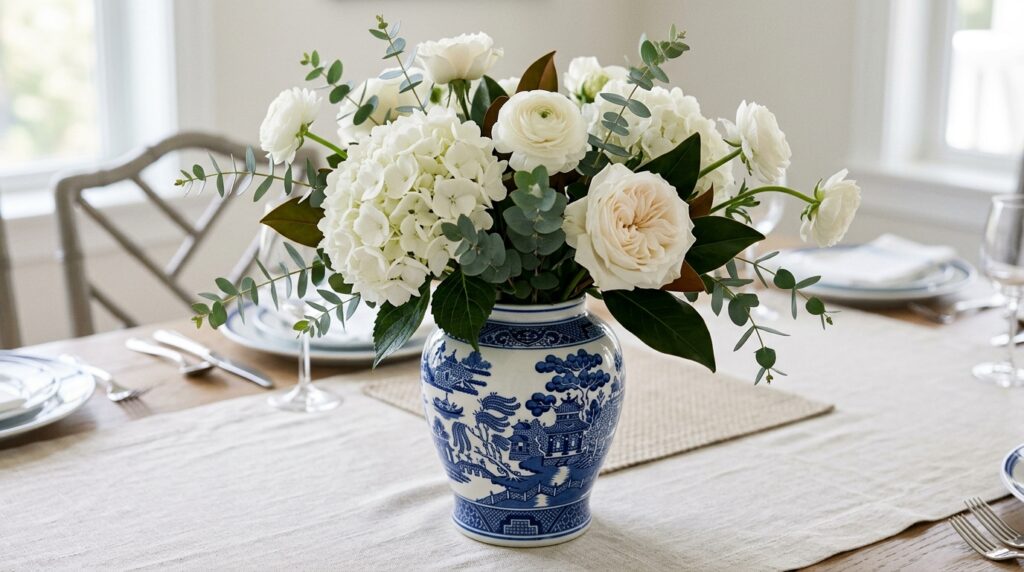
Use a vase between 8 and 12 inches tall with a meaningful blue and white pattern on its surface. Fill with white hydrangeas, white garden roses, or white ranunculus as the primary bloom, and add three or four stems of deep green foliage, eucalyptus, hosta leaf, or magnolia, to provide contrast. Pottery Barn carries blue and white ceramic vases seasonally in their summer collection, and similar options from World Market and Target in the spring and summer home sections provide accessible alternatives at lower price points.
16. Use a Glass Cloche Over a Summer Vignette
A glass cloche placed over a small summer vignette, a tiny arrangement of shells, a single perfect bloom, a sprig of dried lavender, or a small sculptural object on a round wooden base, creates a centerpiece with a preserved, curated quality that reads as genuinely designed rather than assembled. The glass dome catches and holds the light in a way that makes whatever is inside it look more significant than it would on an open surface.
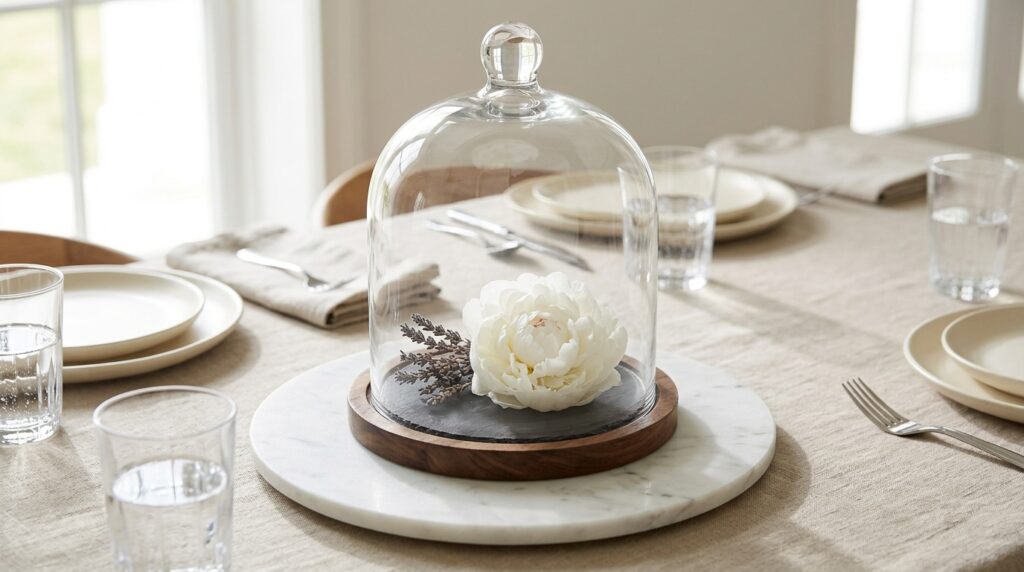
Choose a cloche between 8 and 12 inches tall for a dining table scale. The base under the cloche matters as much as the object inside it. A round marble slab, a small walnut disk, or a piece of natural slate all provide the right grounded base quality that makes the cloche read as an intentional display rather than a glass bowl placed over something. Rotate the object inside the cloche monthly throughout the summer to keep the centerpiece feeling current rather than static.
17. Summer Decor Table Centerpiece Ideas Work with Tropical Fruit Bowls
A wide wooden or ceramic bowl filled with tropical fruits, mangoes, small pineapples, passion fruits, and starfruit, creates a summer centerpiece that celebrates the specific abundance of the warm season in a way that temperate fruit arrangements do not. The vivid colors, the unusual forms, and the tropical fragrance together make the centerpiece genuinely celebratory.
Use a bowl between 12 and 16 inches in diameter and fill it generously so the fruit mounds slightly above the bowl edge rather than sitting flat at the rim. Mix sizes and colors deliberately: two or three small whole pineapples beside a cluster of mangoes in varying stages of ripeness beside a few passion fruits and a starfruit cut in half to show its interior cross section. The centerpiece is edible, which makes it interactive in the same way the herb garden arrangement is, and guests reaching for a piece of fruit becomes part of the meal experience.
18. Arrange a Pampas Grass and Wildflower Mix
A loose arrangement of dried pampas grass plumes mixed with fresh or dried wildflowers in a wide ceramic vase creates a summer centerpiece with a bohemian, outdoor quality that suits casual outdoor entertaining tables as much as formal dining room setups. The pampas grass provides a sculptural, feathery height element and the wildflowers add color and natural irregularity.
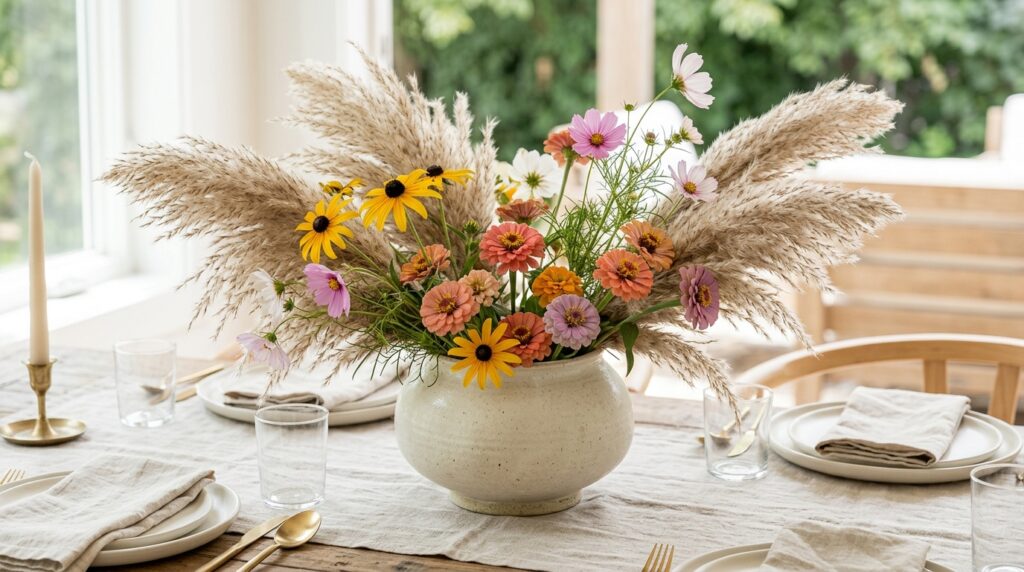
Use two or three pampas grass plumes cut to 16 to 18 inches and mix in five or six stems of whatever wildflowers or garden flowers are currently available. Zinnias, cosmos, and black-eyed Susans all mix naturally with pampas grass without looking like they were forced into the same arrangement. Place in a wide-mouth vase with a heavy base that can support the slight top-heaviness of a pampas arrangement. The finished centerpiece has a relaxed, gathered quality that suits summer entertaining specifically.
19. Create a Candle Garden with Multiple Taper Heights
Five to seven taper candles in matching candlesticks at graduating heights arranged along the center of the dining table create a summer evening centerpiece that reads as elegant and celebratory without any floral element. The multiple flame points at different heights produce a quality of light above the table surface that a single candle source cannot replicate.
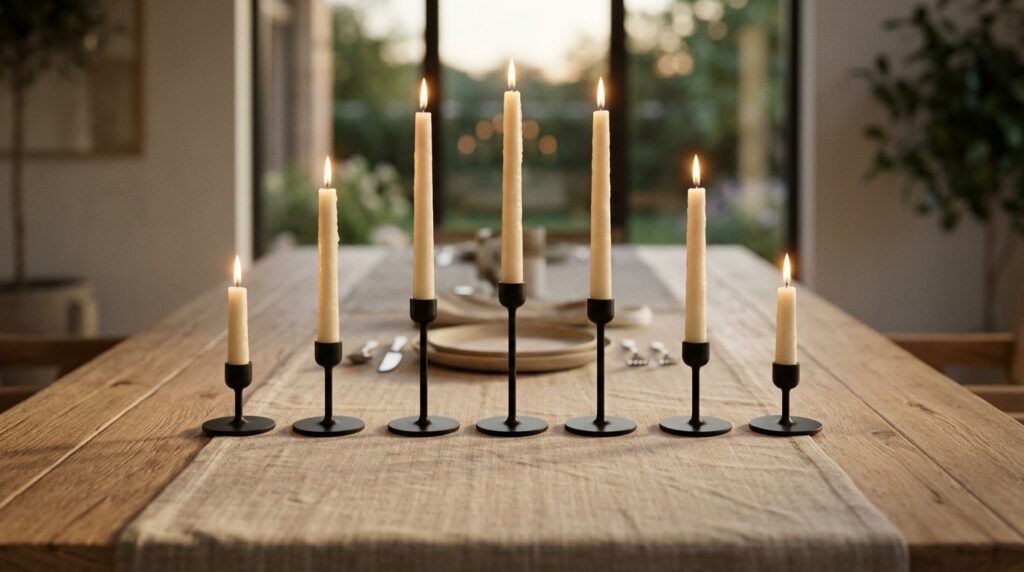
Use candlesticks in a consistent finish, all brass, all black, or all natural wood, with heights graduating from 3 inches at the outer positions to 10 or 12 inches at the center. Choose taper candles in a warm ivory or natural beeswax color rather than pure white for a softer flame effect. Space the candlesticks approximately 6 inches apart along the center of the table and ensure nothing flammable is within 12 inches of any flame. The Pottery Barn Taper Candlestick Collection in aged brass and the CB2 Column Candlestick in a graduated set both provide the right finish quality for a considered summer taper centerpiece.
20. Keep a Single Statement Branch in a Tall Narrow Vase
One branch with interesting form, whether a flowering magnolia branch in late spring, a leafy oak branch in midsummer, a branch of fruiting crabapple in August, or a copper-leafed branch in early fall, placed in a tall narrow ceramic or glass vase creates a summer centerpiece that reads as architectural and deliberately minimal. The branch is the statement. Everything else on the table reads around it.
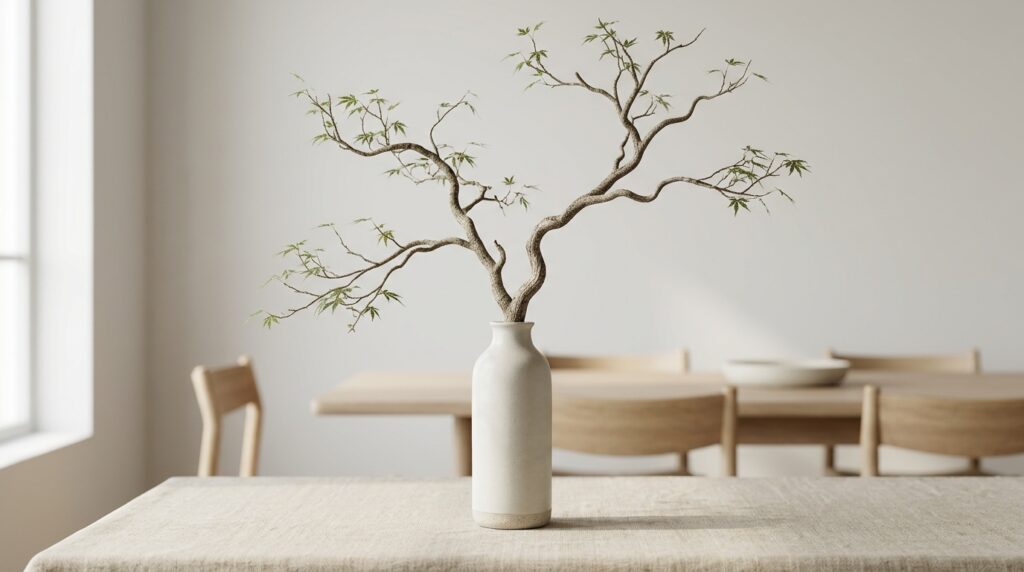
Choose a branch with at least one interesting fork or curve rather than a perfectly straight single stem. Cut the base at a 45-degree angle and score the lower inch of the bark with a knife to help the branch absorb water more efficiently in the vase. Use a vase that is heavy enough to balance the visual weight of the branch without tipping, typically a ceramic vase at least 12 inches tall with a base wider than 4 inches. Replace with a fresh branch as the season progresses to keep the centerpiece connected to what is actually growing outside at any given moment.
Conclusion
A summer dining table with a considered centerpiece reads as a home where someone is paying attention to the season. That attention does not require a florist budget or a specific design skill. It requires only the decision to put something at the center of the table that references what summer actually looks and smells and feels like in the specific moment you are in.
Start with whatever is most accessible right now: a bunch of grocery store sunflowers in a terracotta pot, three lemons in a bowl, a potted herb from the windowsill placed at the center with a candle beside it. The habit of maintaining a seasonal centerpiece is what makes the difference over time. These summer decor table centerpiece ideas give you enough starting points that the right one for today is somewhere in the list, and the right one for next week will be there too.