
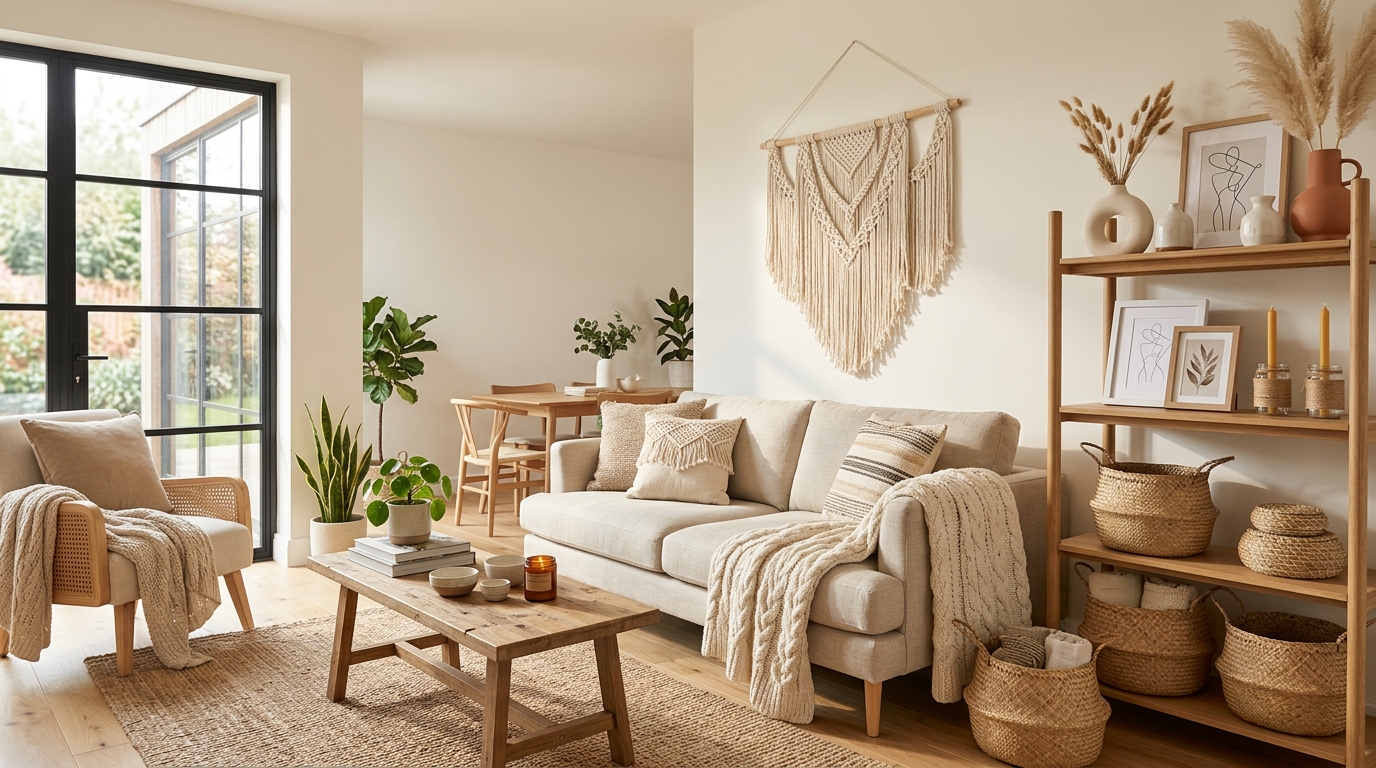
There is a quality in a handmade object that manufactured products spend enormous effort trying to replicate and never quite achieve. The slight irregularity in a hand-thrown ceramic bowl. The visible brush stroke in a painted canvas. The imperfect tension in a macrame knot. These are not flaws. They are the evidence that a person made this thing, and that evidence is exactly what makes a room feel genuinely inhabited rather than assembled from a catalog.
These home decor ideas handmade focus on the specific DIY projects that produce the most visually significant results in a home: wall art that looks considered rather than crafted, textile projects that read as intentional decor rather than hobby output, furniture and surface treatments that change the character of a room, and the small object projects that accumulate into a home with a specific handmade quality throughout. Every idea here is achievable at home with accessible materials and without advanced craft skills.
You will find 28 ideas here. Some take an afternoon. Some take a weekend. All of them add something to a home that cannot be purchased from any store because it was made specifically for the space it occupies.
1. Pour a Set of Concrete Candle Holders
Concrete candle holders made from cardboard tube molds are one of the most satisfying handmade home decor projects available because the raw concrete surface looks genuinely considered and expensive from any viewing distance while the total material cost runs under 10 dollars for a set of three.
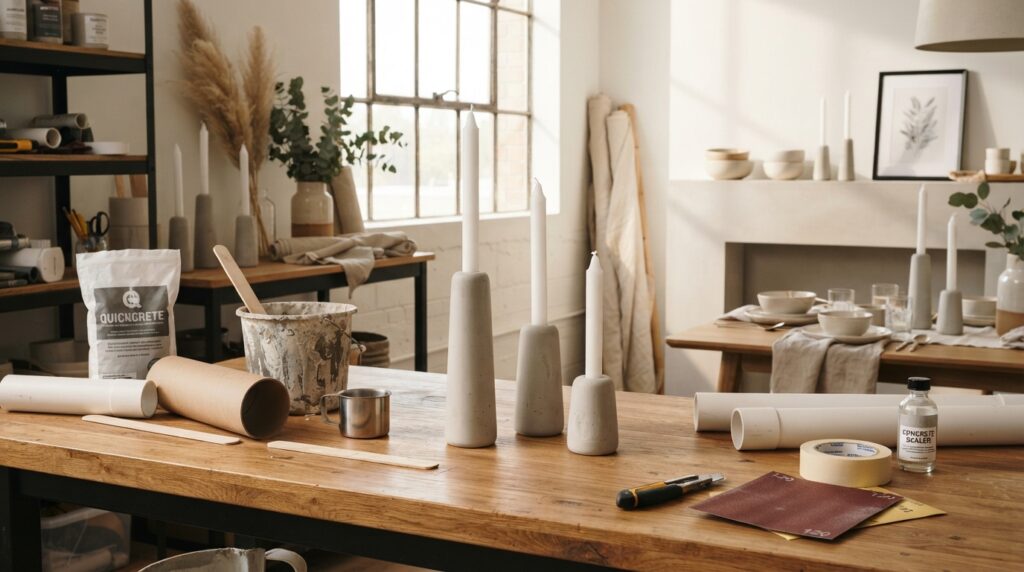
Mix Quikrete Countertop Mix at a slightly dry consistency and pour into cardboard tube sections sealed at the bottom with tape. Push a candle or a PVC pipe section of the candle’s diameter into the center of the wet mix to create the candle socket. Allow to cure for 24 to 48 hours before removing the cardboard mold. Sand the top edge smooth with 120-grit sandpaper and seal with a concrete sealer for water resistance. Three concrete candle holders at varying heights on a dining table or mantel read as a designer accessory set at a total cost of approximately 8 dollars in materials.
2. Weave a Simple Macrame Wall Hanging
A macrame wall hanging in natural undyed cotton rope is one of the most accessible handmade wall art projects available because the basic square knot and half hitch knot that produce 90 percent of macrame designs require no prior craft experience to learn and the finished piece reads as genuinely artisan quality from any viewing distance.
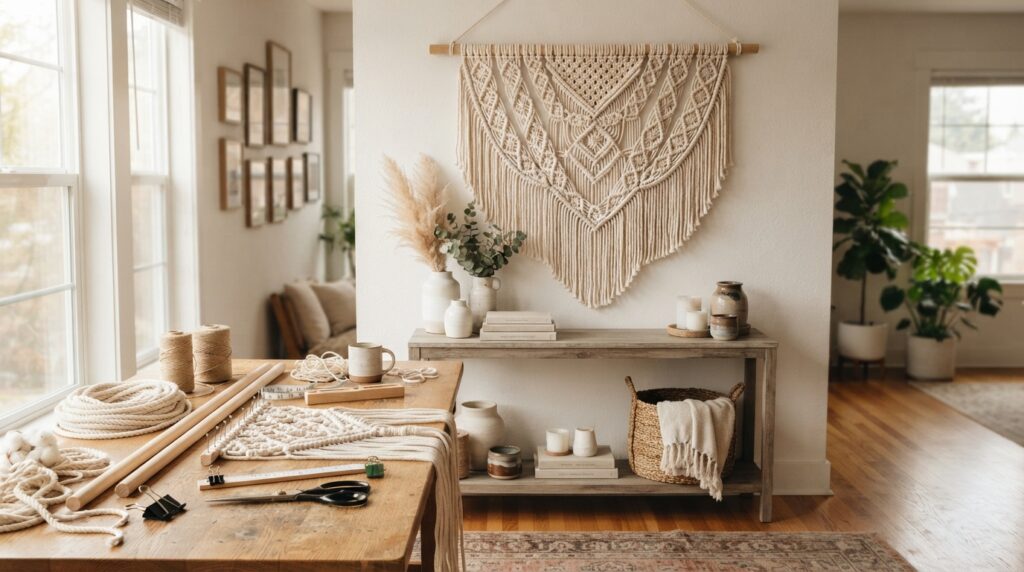
Use 5mm natural cotton rope available from Amazon or a craft store in a 100-meter spool that provides enough material for a 24-inch wide wall hanging at 36 inches in length. Cut 16 cords at 8 feet each, fold each in half, and mount to a wooden dowel using lark’s head knots. Work in groups of four cords to tie alternating square knots across the full width of the hanging. Finish with a fringe section at the bottom where all cords hang freely and trim to an even length or a V-shape. The completed piece costs approximately 15 dollars in materials.
3. Home Decor Ideas Handmade Include a DIY Limewash Accent Wall
A limewash paint treatment applied in a crosshatch technique creates an aged, textured wall surface that reads as genuinely architectural and specifically Italian farmhouse in quality. The limewash technique takes one afternoon per wall and the material cost is a fraction of professional limewash application.
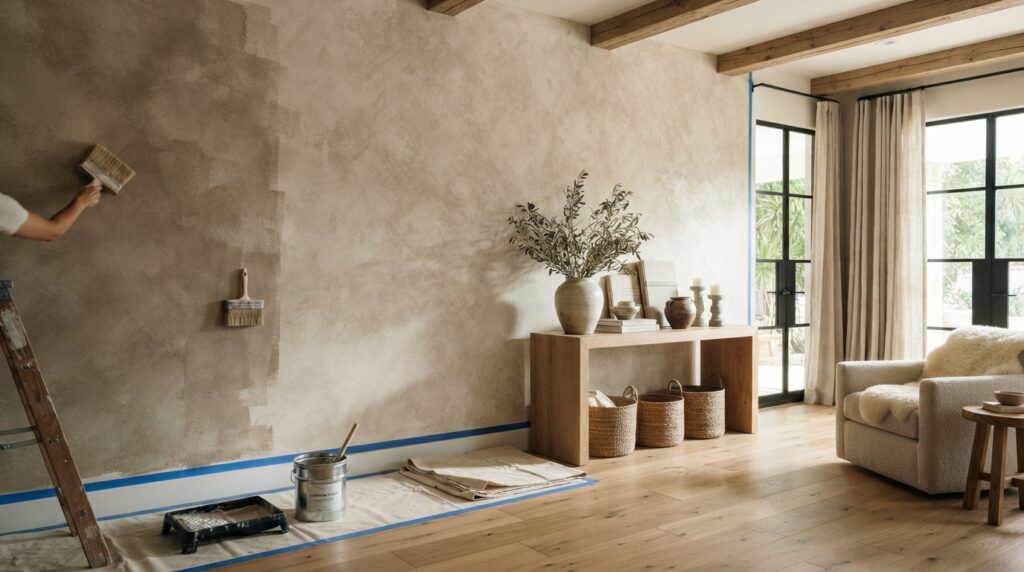
Apply Portola Paints Roman Clay or Sherwin-Williams Lime Wash with a wide masonry brush in large X-crossing strokes, allowing each layer to partially dry before adding the next. The unevenness and color variation that results from this technique is the intended outcome. Three to four layers in slightly varying wet-to-dry mixing ratios create the depth and tonal variation that makes limewash read as genuinely old rather than recently painted. The technique works on any properly primed drywall surface and costs 40 to 80 dollars per gallon in material.
4. Build a Floating Shelf from a Reclaimed Wood Plank
A single reclaimed wood plank mounted as a floating shelf using a French cleat support system reads as the most considered handmade shelf available because the character of the reclaimed wood, the nail holes, the saw marks, the weathered grain, provides a visual quality that sanded and finished new lumber cannot replicate at any cost.
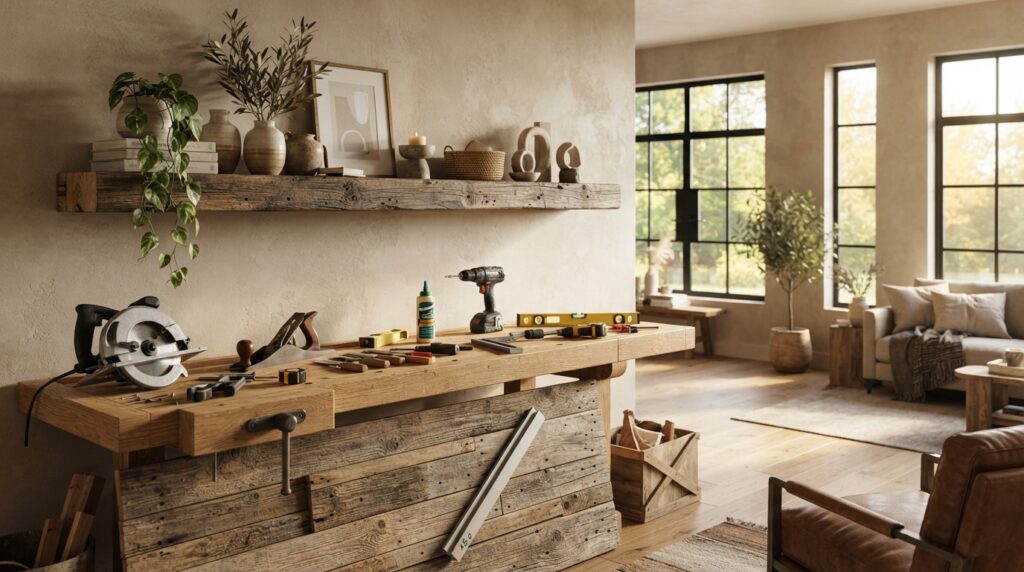
Source reclaimed barn wood planks from a local architectural salvage yard, a Facebook Marketplace listing, or an Etsy seller specializing in reclaimed wood. Cut a French cleat from a scrap 2 by 4 at a 45-degree bevel, mount the wall section into the studs, and attach the matching cleat to the underside of the plank. The finished shelf installs and removes without any visible hardware on the front face. A reclaimed wood floating shelf at 36 to 48 inches in length holds books, plants, and objects with a visual presence that a standard painted shelf cannot produce.
5. Sew a Linen Throw Pillow Cover
A linen pillow cover sewn from quality fabric in a color or texture not available in standard retail pillow covers gives a sofa or bed a specific, personal quality that mass-produced pillows never achieve because the fabric was chosen specifically for this room rather than selected from a limited product range. Basic sewing machine skills are sufficient for a standard envelope-back pillow cover.
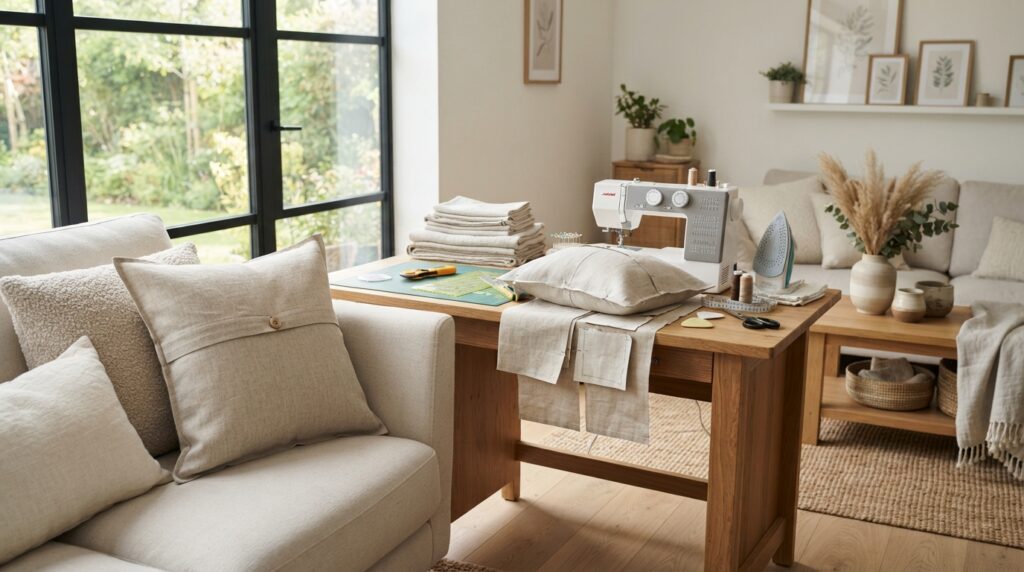
Cut two rectangles of fabric 1 inch larger on all sides than the pillow insert size. For an envelope back, cut the back panel in two overlapping sections rather than one, which eliminates the need for a zipper. Pin and sew with a 1/2-inch seam allowance on three sides and the overlapping back sections. Turn right side out and insert the pillow form. Fabric.com and Spoonflower carry linen and linen-cotton blends in colors and patterns not available in standard retail pillow cover ranges. The material cost for a 20-inch pillow cover runs 6 to 12 dollars depending on the fabric selected.
6. Press and Frame Botanical Specimens
Pressed flowers, fern fronds, and leaf specimens framed in simple glass-front frames create handmade wall art that is genuinely irreproducible because the specific specimens pressed are from a specific place and moment that no two people share. Pressed botanical art in a home reads as specifically collected rather than generically decorated.
Press specimens between sheets of parchment paper inside a heavy book for 10 to 14 days. Once fully flat and dry, arrange on a piece of watercolor paper or cream cardstock cut to the frame mat opening and secure with a tiny dot of archival PVA glue at the stem. Frame in a simple 5 by 7 or 8 by 10-inch frame with a mat in warm ivory. A cluster of three to five pressed botanical frames hung on the wall above a dresser or in a hallway creates a home decor installation with a personal, collected quality that no purchased botanical print replicates.
7. Home Decor Ideas Handmade Feature a Painted Abstract Canvas
A large abstract painting on canvas creates the most visually impactful handmade home decor available because a single 24 by 36-inch canvas at the right position on a wall reads as the room’s most important visual decision from any viewing angle. Abstract painting specifically requires no representational skill, which makes it genuinely accessible to any household member willing to engage with color and composition.
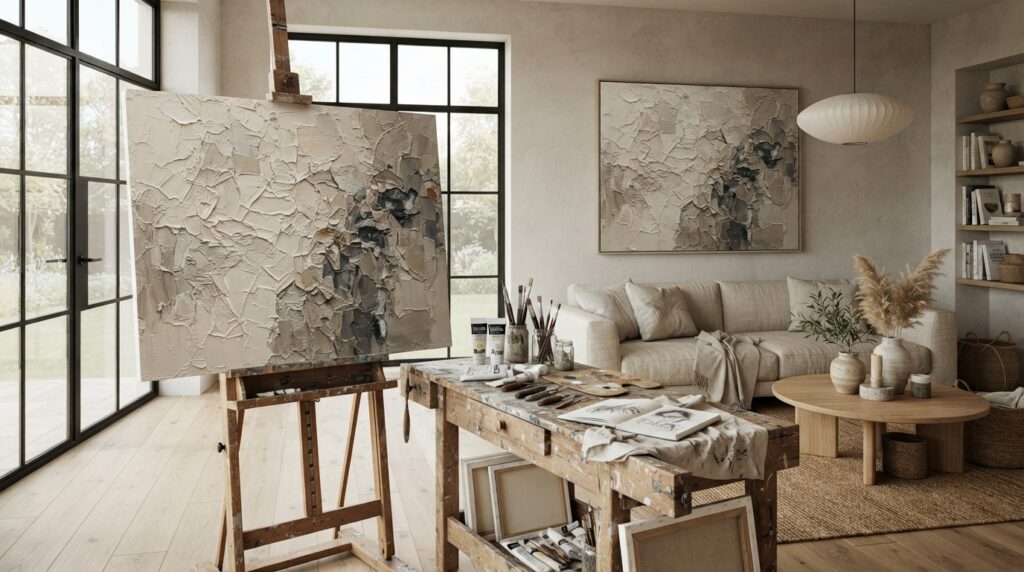
Use a pre-stretched canvas from an art supply store and acrylic paint in three to five colors that relate to the room’s palette. Apply paint with a palette knife rather than a brush for the most textural, gestural quality. Layer colors by applying a base color, allowing it to partially dry, then adding a second color with large sweeping palette knife strokes that partially blend into the layer below. The finished painting costs 30 to 60 dollars in materials for a 24 by 36-inch canvas with professional-quality acrylics and reads as a considered original artwork regardless of the technical skill level applied.
8. Create a DIY Terrarium from a Geometric Glass Frame
A geometric glass terrarium assembled from individual mirror or clear glass pieces soldered or adhered at the edges creates a handmade version of a purchased terrarium at a fraction of the cost with a completely unique form. The handmade terrarium reads as a considered decorative object on a shelf or coffee table regardless of whether plants are actually inside it.
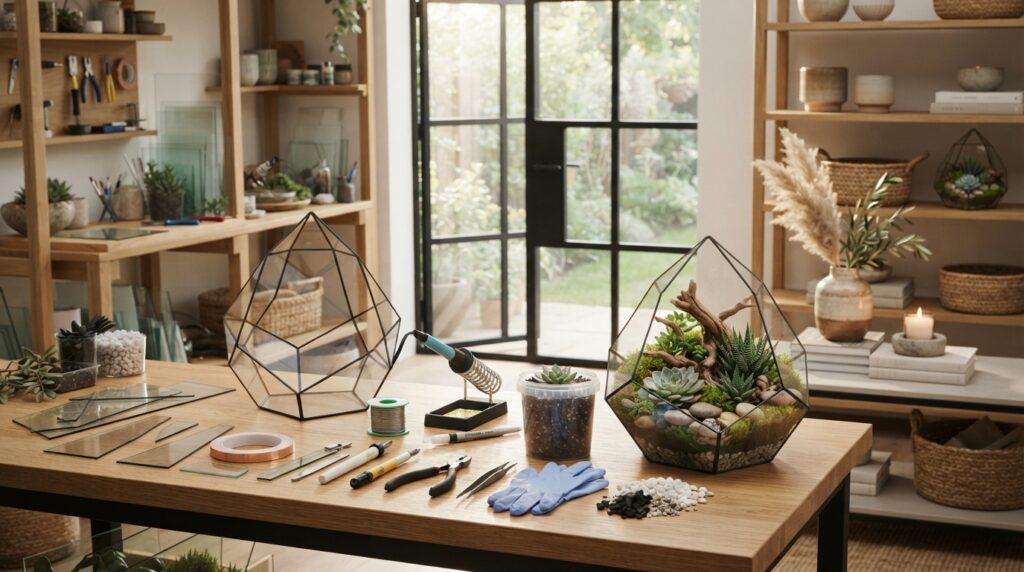
Purchase pre-cut glass shapes from a stained glass supply shop or cut your own using a glass cutter and breaking pliers. Assemble using lead-free copper tape and silver solder for a traditional stained glass construction or use E6000 clear adhesive for a simpler assembly method that does not require soldering equipment. Fill with a layer of decorative gravel, a layer of activated charcoal, potting mix, and two or three small succulent plants. The completed handmade terrarium is a home decor object with a genuinely one-of-a-kind quality.
9. Knit or Crochet a Chunky Throw Blanket
A chunky knit or crochet throw blanket draped over a sofa arm or a bed end is one of the most visually distinctive handmade home decor textile pieces available because the large-scale stitch structure of a chunky yarn throw is immediately visible as handmade from across a room in a way that finer knits and woven blankets are not. The visible handmade quality is the point.
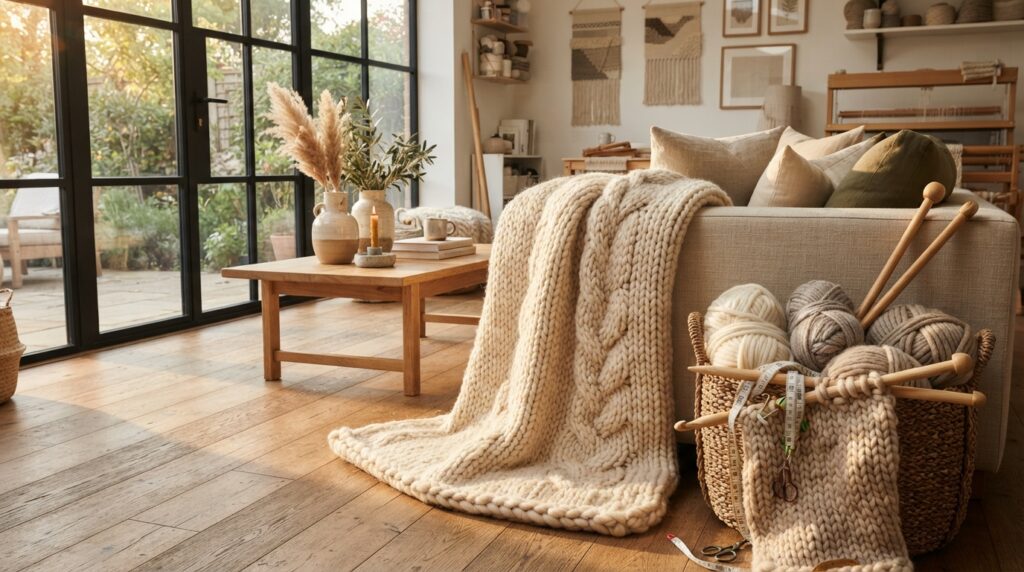
Use a super-bulky weight yarn at size 6 or higher in a natural undyed merino or a warm cream acrylic blend on 15mm or larger needles for a knit version, or a 12mm crochet hook for a simple single-crochet version. A 50 by 60-inch throw requires approximately 1000 yards of super-bulky yarn. The Lion Brand Wool-Ease Thick and Quick and the Paintbox Yarns Simply Super Chunky both provide the right yarn weight at accessible prices. The finished blanket takes 8 to 12 hours of work time and costs 40 to 80 dollars in materials.
10. Make a DIY Rope Basket
A coiled rope basket made from natural cotton or jute rope and sewn with a sewing machine or whip-stitched by hand creates a home storage and display object that reads as artisan and considered while costing a fraction of comparable handmade baskets from specialty retailers. Rope baskets suit every room in the home as plant holders, throw blanket storage, and general decorative vessels.
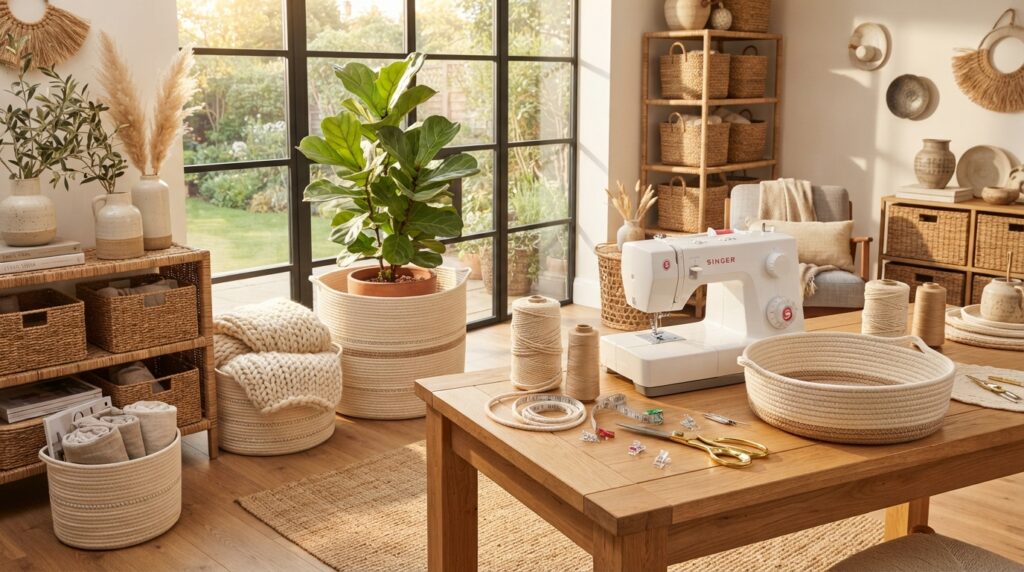
Use 6mm natural cotton rope available in 100-meter spools and coil it into a flat base disc starting from the center, stitching each round to the previous one with a zigzag stitch on a sewing machine or with hand-whip stitches in matching thread. Build the sides by angling the coils upward from the base perimeter, maintaining the stitch at each round. A 10-inch diameter basket at 6 inches tall requires approximately 40 meters of rope and takes four to six hours to complete. The material cost runs 12 to 18 dollars.
11. Home Decor Ideas Handmade Include DIY Candles in Ceramic Vessels
Candles poured in ceramic bowls, vintage teacups, or handmade ceramic vessels create home decor objects that function as scented candles while reading as considered decorative pieces even before they are lit. The vessel is as important as the candle, which is why handmade candles in quality containers read differently from standard jar candles on the same surface.
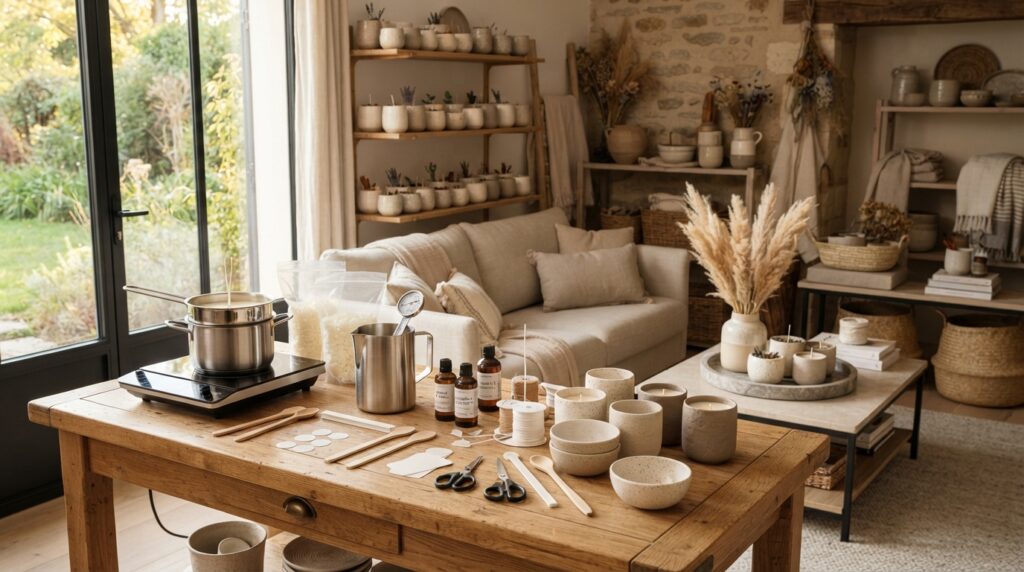
Melt soy wax flakes at 170 degrees Fahrenheit, add fragrance oil at 10 percent of the wax weight when the temperature drops to 140 degrees, and pour into the prepared vessel with a pre-waxed cotton wick held centered with a pencil across the container opening. Allow to cure at room temperature for 48 hours before trimming the wick to 1/4 inch and burning. Fragrance options from Brambleberry and CandleScience provide professional candle fragrance oils in every home decor scent direction from earthy and botanical to warm and spiced.
12. Build a Simple Wooden Tray from Scrap Lumber
A wooden serving tray made from three pieces of scrap 1 by 6 lumber, two for the side walls and one for the base, joined with wood glue and finish nails and painted or stained to suit the room, is a handmade home decor object that gets daily use while reading as a considered decorative piece. A handmade wooden tray on a coffee table or console reads as furniture-quality at a material cost of under 10 dollars.
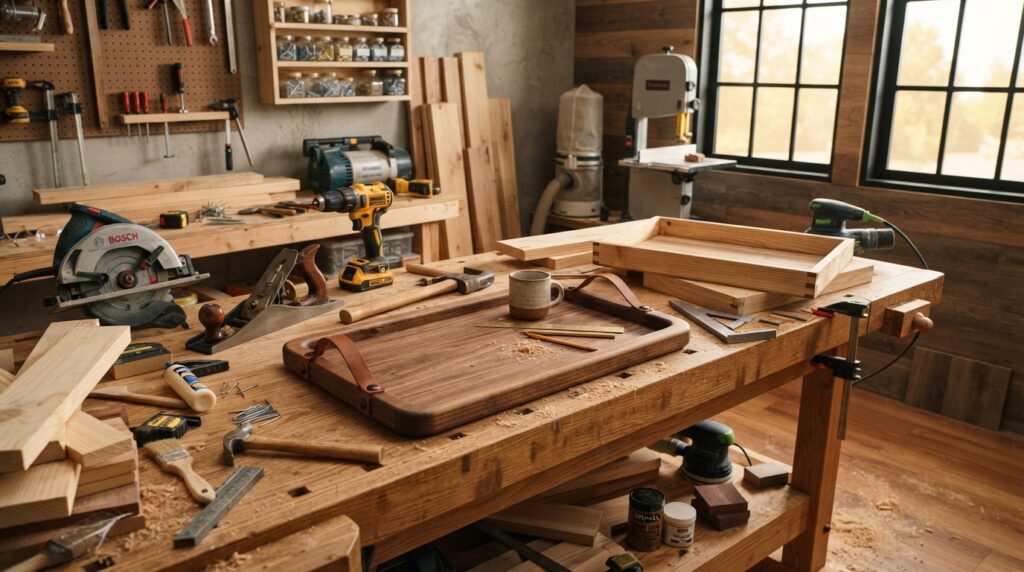
Cut one base piece at 14 by 10 inches and two side pieces at 14 by 3 inches from a 1 by 6 board. Glue and nail the side pieces to the long edges of the base. Sand all surfaces smooth with 120-grit followed by 220-grit sandpaper. Apply two coats of chalk paint in a color that suits the room followed by a coat of clear paste wax for durability, or apply a wood stain in a warm walnut or natural tone for an unpainted finish. Add handles cut from leather scraps or purchased from a hardware store for the most finished result.
13. Create a Gallery Wall of Personal Watercolors
A small gallery of personal watercolor paintings in consistent frames creates a wall installation with a specifically personal, artistic quality that purchased prints cannot replicate because the paintings are genuinely yours and genuinely imperfect in the ways that make original art read as original. Watercolor is the most forgiving medium for non-artists because its fluid, slightly unpredictable quality looks intentional even when it results from inexperience.
Use a set of basic Winsor and Newton Cotman Watercolor Pans and Canson XL Watercolor paper in 5 by 7 or 8 by 10 sheets. Paint loosely using the wet-on-wet technique, meaning applying pigment to a pre-wet paper surface, for the most organic, flowing color effects. Frame in matching simple frames in a consistent finish and hang as a cluster of six to eight paintings above a dresser, desk, or on a hallway wall. The collection of paintings reads as a curated body of personal work rather than decoration.
14. Dip-Dye Curtains or Throw Pillows in a Natural Dye
Natural dye applied in a dip-dye or ombre technique to white linen curtains or throw pillow covers creates a handmade textile with a soft, graduated color that reads as specifically artisan and considered. Natural dye from plant sources produces colors with a characteristic warmth and slight variation that synthetic dyes do not replicate.
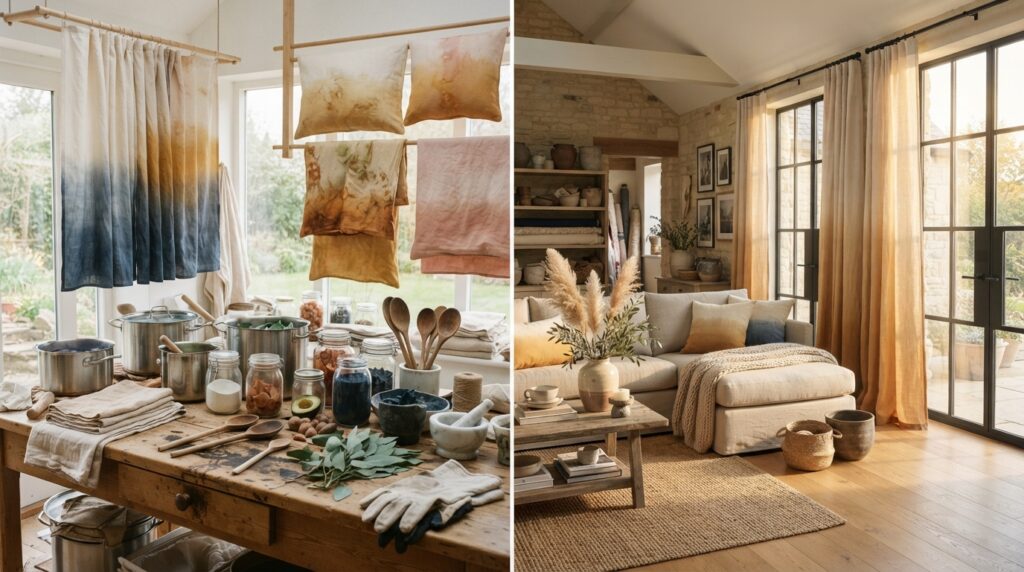
Use natural indigo powder from a craft supply store for blue tones, onion skin for amber and gold tones, or avocado pits and skins for dusty pink tones. Prepare the dye bath in a large stainless pot and pre-mordant the fabric in an alum mordant solution for color fastness. Dip the lower third of the curtain or pillow into the dye bath and allow to soak for 15 to 30 minutes, then rinse with progressively cleaner water from the bottom up for the most gradual ombre effect. The color washes and fades slightly with each washing, which deepens the aged, natural quality of the dyed textile.
15. Home Decor Ideas Handmade Feature a Woven Wall Tapestry
A woven tapestry made on a simple cardboard loom or a small wooden frame loom creates a handmade textile wall piece with a dimensional, fabric quality that printed textiles cannot achieve. The weaving process creates a reversible, double-sided textile with visible structure that reads as genuinely crafted from any viewing distance.
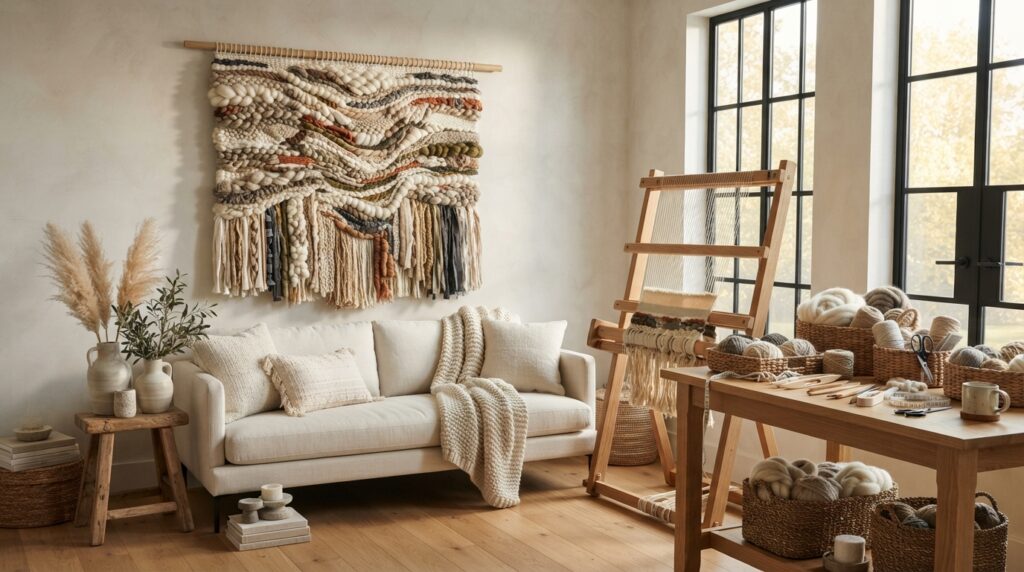
Build a simple frame loom from four pieces of 1 by 2 lumber at the desired tapestry dimensions and install finishing nails or small screws at 1/4-inch intervals along the top and bottom rails for the warp threads. String the loom with natural cotton warp thread, then weave horizontal weft passes of yarn, roving, fabric strips, and other materials through the warp using a shuttle or a simple wooden stick. Mix textures within the weft by alternating smooth yarn sections with fluffy wool roving sections and natural fiber bundles. The completed tapestry can be left on the loom as a frame or removed and hung from a wooden dowel.
16. Make a DIY Concrete Side Table
A concrete side table cast in a round plastic container mold on a simple hairpin leg base creates a handmade furniture piece with a genuinely designer aesthetic at a material cost under 60 dollars. The rough concrete surface and the thin metal legs together read as specifically considered industrial modern, which is the furniture direction most associated with concrete as a material.
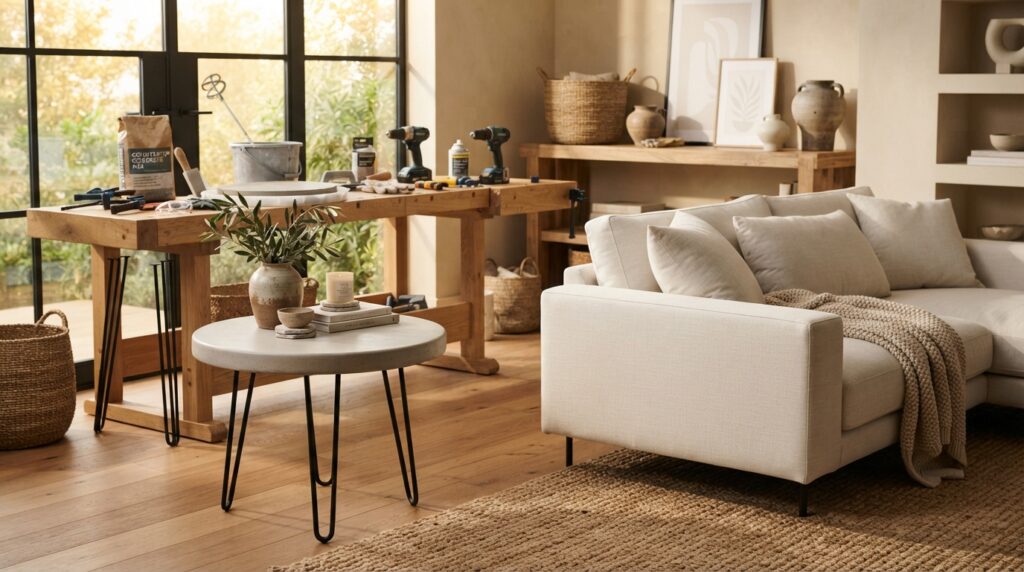
Use a 12-inch diameter round plastic tray as the top mold and a smaller container as the center void to reduce material weight. Mix Quikrete Countertop Mix and pour to a depth of 1.5 inches in the mold. Insert four threaded inserts at the tabletop positions before the concrete cures for the leg attachment screws. After a 48-hour cure, remove the mold and sand the surface with 400-grit wet/dry sandpaper for the smoothest possible concrete finish. Attach 28-inch hairpin legs from a metalworking supplier or from Amazon and the finished table is ready for use.
17. Create a Hand-Stamped Linen Table Runner
A linen table runner stamped with a repeating block print pattern in a natural pigment or fabric ink creates a handmade table textile with a specifically artisan, hand-printed quality that manufactured table runners cannot replicate. Block printing is one of the most accessible handmade textile techniques because it requires no specialized equipment beyond a carved foam or linoleum block and fabric ink.
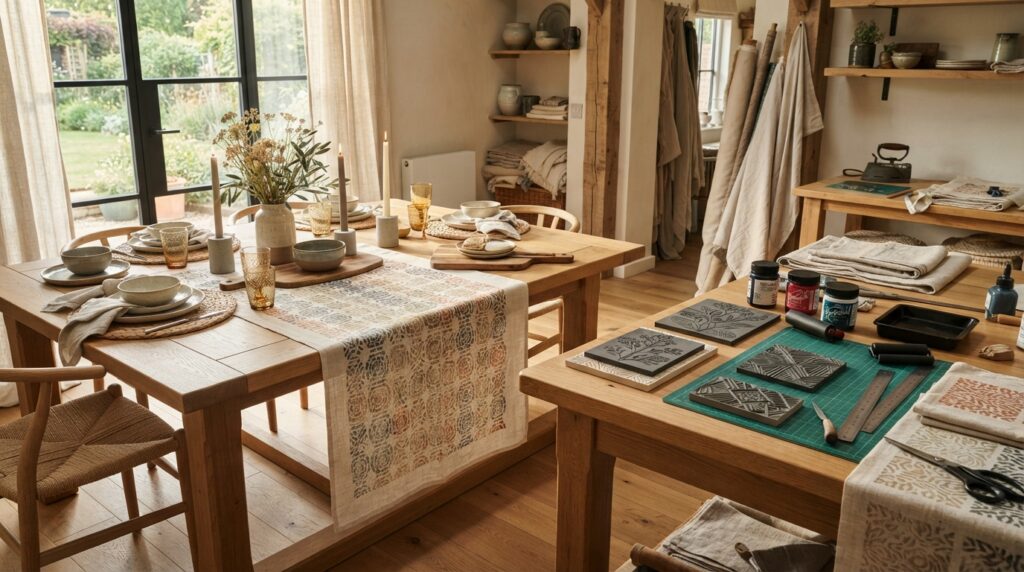
Cut a table runner from a yard of natural undyed linen at 14 inches wide and hem the short ends with a 1/2-inch double-fold hem. Carve a simple geometric or botanical design into a 4 by 4-inch linoleum block using a linoleum cutting tool. Apply Speedball Fabric Ink in a neutral or earthy tone to the block surface and stamp at regular intervals down the length of the runner, reapplying ink before each impression. Heat set the finished print with an iron on the cotton setting for permanent washability.
18. Build a Pegboard Organizer Panel
A painted pegboard panel mounted on a home office, kitchen, or entryway wall and fitted with a custom arrangement of pegs, shelves, hooks, and organizer accessories creates a handmade wall organization system that reads as a considered design element rather than a utilitarian afterthought. The pegboard’s visual quality depends entirely on how it is finished and installed.
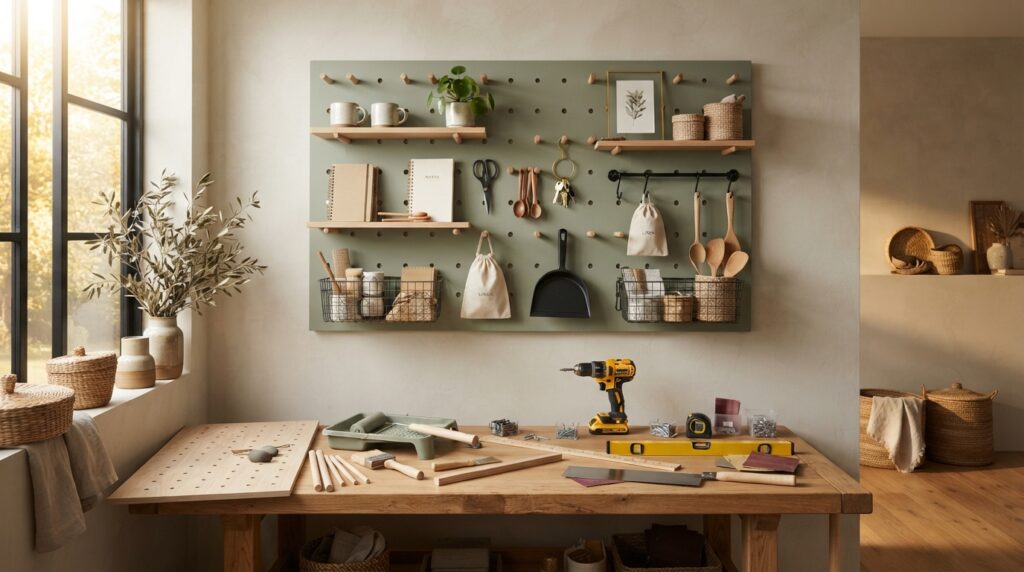
Mount the pegboard panel on 1 by 2 spacer strips screwed to the wall studs so the panel stands 3/4 inch away from the wall surface, which is required for the pegs and hooks to insert from behind. Paint the pegboard in a flat matte tone, white, black, sage green, or any color that suits the room. Install a combination of standard wooden dowel pegs, small shelf brackets, and S-hooks in an arrangement specific to the storage needs of the space. The complete installation for a 2 by 4-foot pegboard panel costs 30 to 50 dollars in materials.
19. Home Decor Ideas Handmade Include Ceramic Hand-Building Projects
Hand-built ceramic objects, meaning vessels, bowls, vases, and dishes shaped by hand rather than on a pottery wheel, produce handmade home decor with a specific clay quality that commercial ceramics never replicate because the fingermarks, the slight asymmetry, and the organic form of a hand-built piece are evidence of its origin that no machine process can produce.
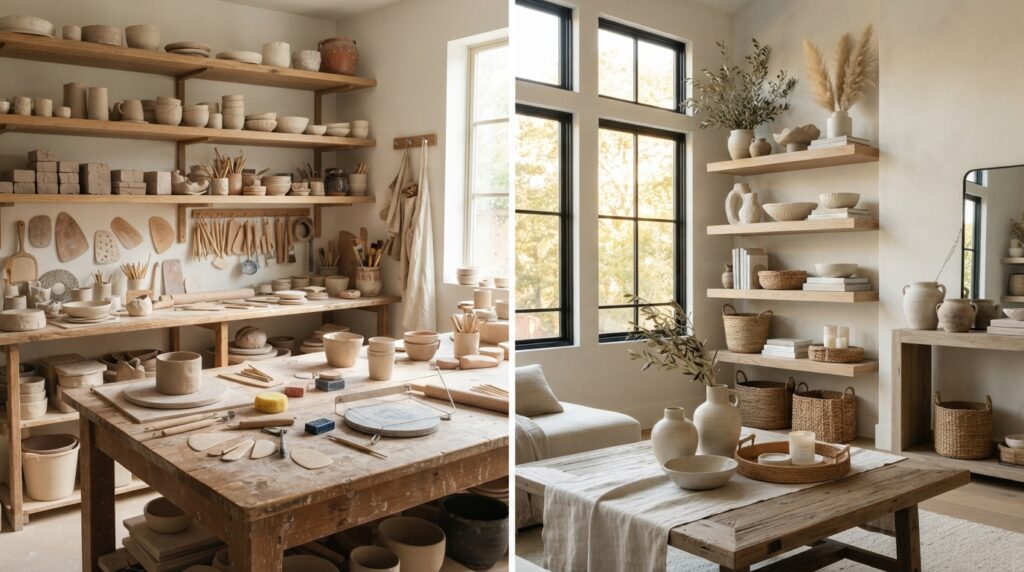
Air-dry clay available from Amaco and DAS provides a ceramic-quality material that does not require kiln firing, which makes hand-building accessible at home without specialized equipment. Pinch pot techniques, slab construction, and coil building all work with air-dry clay. After shaping and drying, apply two coats of Mod Podge or a similar sealant for water resistance and paint with acrylic paint in any color. Alternatively, purchase a bag of low-fire earthenware clay and pay for firing at a local pottery studio for a genuinely ceramic result.
20. Stencil a Pattern onto a Jute Rug
A plain natural jute rug stenciled with a geometric or botanical pattern in a matte floor paint creates a handmade rug with a custom printed quality that reads as purchased from a specialty rug retailer at a fraction of the cost. The stenciled pattern on a natural jute base reads as designed and considered from across any room.
Lay the rug flat on a hard floor surface and secure the stencil to the rug surface with painter’s tape. Apply Rust-Oleum Chalked Paint or a dedicated floor stencil paint in a matte finish using a dense foam stencil brush in a stippling motion rather than a sweeping stroke, which prevents paint from bleeding under the stencil edges. Work in sections across the rug in a consistent pattern repeat. Seal the finished design with a matte clear sealant rated for textile use for durability through foot traffic.
21. Create a DIY Resin Art Tray or Coasters
Resin art coasters or serving trays made with pigment inks, dried flowers, or metallic flakes suspended in a clear epoxy pour create handmade home decor objects with a genuinely unique visual quality because the resin pour produces an unrepeatable result each time. No two resin art pieces are identical regardless of how similar the technique and materials.
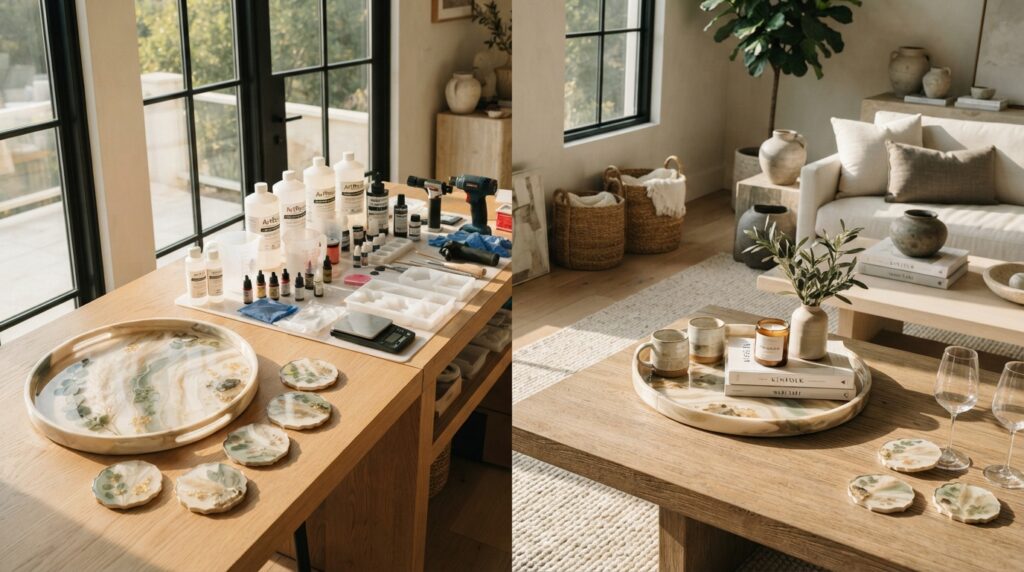
Use ArtResin or Total Boat Tabletop Epoxy in a 1:1 mix ratio for the clearest, most yellowing-resistant result available in consumer epoxy resins. Pour into silicone molds for coasters or onto a pre-sealed wooden tray surface. Add Alcohol Ink from Ranger in two or three colors and a few drops of silicone oil, then use a heat gun or a torch to create cell patterns in the ink as it floats on the surface of the wet resin. Allow to cure for 24 hours in a dust-free environment. The finished pieces read as genuinely designed decorative objects.
22. Build a Simple Ladder Bookshelf from 2 by 4 Lumber
A leaning ladder bookshelf built from two 2 by 4 uprights and five shelf boards at graduating widths is one of the most useful handmade furniture pieces available because it provides significant book and object storage in a small floor footprint while reading as a considered, intentionally designed piece when finished correctly.
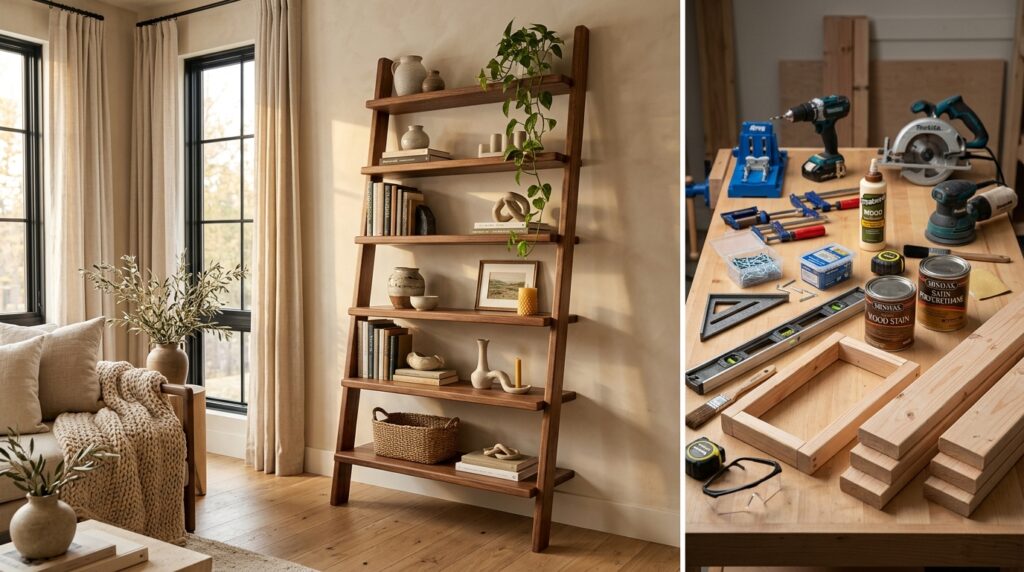
Cut two upright 2 by 4s at 72 inches each, angled at the floor end so they lean against the wall at approximately 10 degrees from vertical. Attach five shelf boards at 12, 14, 16, 18, and 20-inch widths from top to bottom using pocket hole screws from the Kreg Pocket Hole Jig system. Sand all surfaces through 220-grit and finish with two coats of Minwax Wood Finish stain in a warm walnut or natural tone followed by a clear polyurethane topcoat. The complete ladder shelf costs approximately 40 to 60 dollars in materials.
23. Home Decor Ideas Handmade Feature a Block-Printed Wallpaper Panel
A single large sheet of kraft paper or a continuous roll of white paper block-printed with a repeating pattern and hung as a wallpaper panel on one wall section creates a handmade wall treatment that reads as a custom printed wallpaper from any normal viewing distance. The block-printed paper panel gives a rental wall a designed, personal quality without any permanent wall modification.
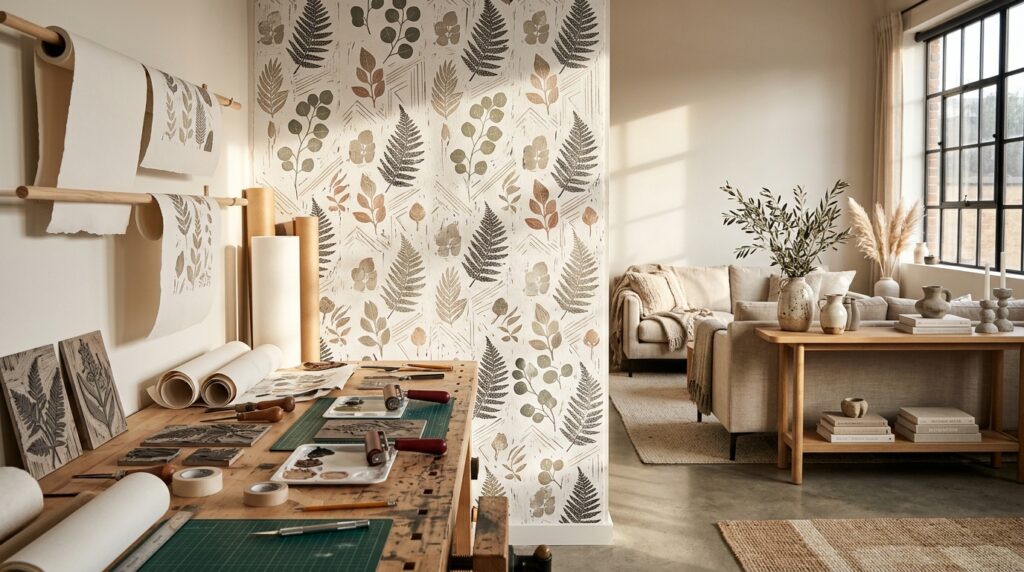
Use a 24 by 36-inch sheet of heavyweight kraft paper or multiple sheets of white drawing paper joined with washi tape to create the panel dimensions needed for the wall section. Block print in a repeating pattern using a carved foam or linoleum block and acrylic paint thinned slightly with water for better coverage on paper. Hang the finished panel with removable poster strips or a simple wooden dowel mounted at the top edge for a fully damage-free wall installation.
24. Make a Batik-Dyed Throw Pillow Cover
Batik dyeing uses hot wax applied to fabric as a resist before the fabric is dipped in dye, creating a crackle-patterned, richly colored textile with the characteristic veining that appears where the wax cracks and allows dye to penetrate in fine lines. A batik pillow cover reads as specifically artisan and specifically handmade in a way that is immediately visible and immediately impressive.
Melt batik wax from a craft supply store and apply to a natural cotton or linen fabric panel using a tjanting tool for fine line work or a broad brush for larger wax resist areas. Dip the waxed fabric in a cold fiber reactive dye bath in a deep indigo, terra cotta, or sage green color. Rinse thoroughly and remove the wax by sandwiching the fabric between newspaper and pressing with a hot iron. Sew the finished fabric panel into a standard envelope-back pillow cover for a handmade textile that reads as genuinely exceptional.
25. DIY a Photo Transfer Wood Panel
A personal photograph or a vintage print transferred to a wood panel using a gel medium transfer technique creates a handmade wall piece that combines the warmth of wood grain with the personal content of a photographic image in a way that a framed photograph on a standard mount never achieves. The wood grain showing through the transferred image gives it a specifically handmade, organic quality.
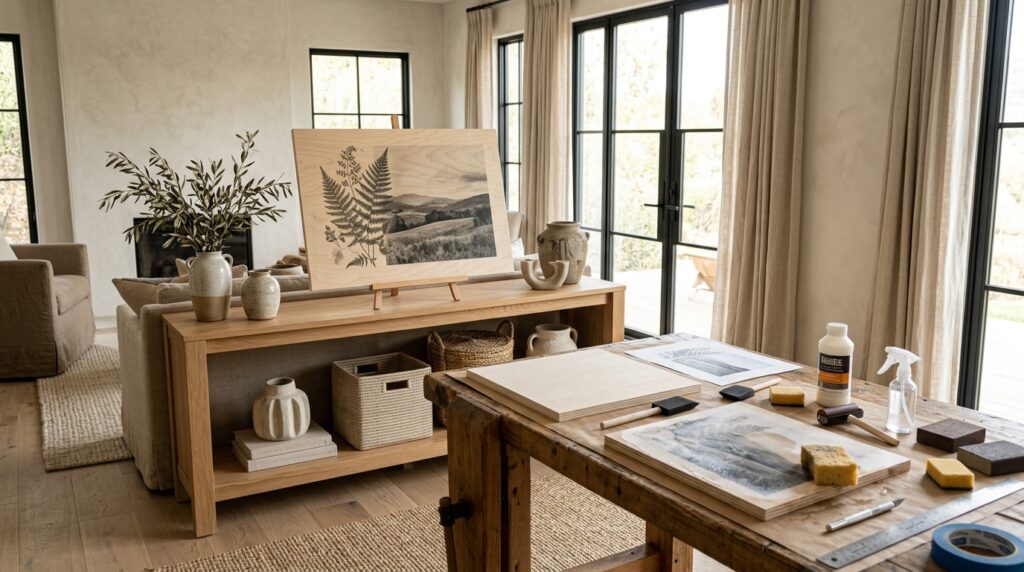
Print the image using a laser printer onto standard copy paper and apply a thick coat of Liquitex Gel Medium to the wood panel surface. Press the image face-down into the wet medium, smooth out air bubbles, and allow to dry completely for 24 hours. Wet the paper backing and rub away with fingers until only the transferred image remains in the gel medium layer. Seal with a final coat of gel medium over the transferred image for durability. The wood grain visible through the transferred image is what makes the piece read as genuinely handmade rather than as a mounted print.
26. Build a Wooden Planter Box for Indoor Plants
A wooden planter box built from 1 by 6 cedar or pine boards creates an indoor plant display piece that reads as furniture-quality and considered while providing a unified home for a collection of small plants that would otherwise appear as a scattered group of individual nursery pots on a shelf or windowsill.
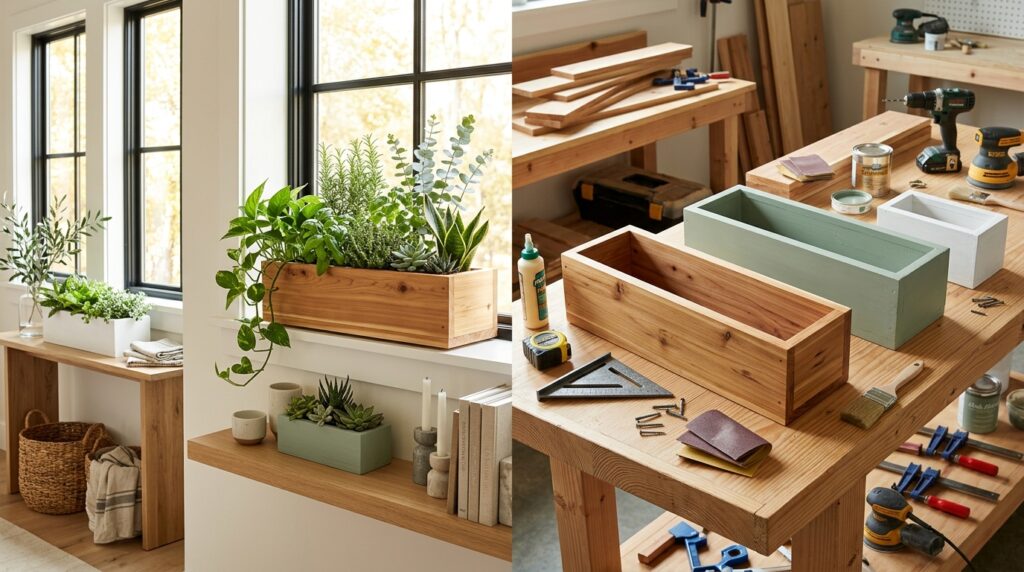
Cut four side pieces and one base piece from 1 by 6 board in the desired planter dimensions. Join with wood glue and 1.5-inch screws at each corner. Drill three drainage holes in the base panel and line the interior with a plastic liner or a sheet of pond liner material before planting. Apply two coats of exterior chalk paint in white, black, or sage green for indoor durability, or leave in a natural wood finish sealed with a clear exterior polyurethane. A 24-inch cedar planter box housing three small herb plants or succulents on a kitchen windowsill reads as both a functional plant container and a handmade furniture piece.
27. Create a Dried Flower Arrangement Under a Glass Cloche
A handmade dried flower arrangement assembled from flowers pressed, dried, and gathered specifically for the display vessel creates a home decor piece with a preserved garden quality that reads as specifically curated and personal. The glass cloche contains and frames the arrangement in a way that gives the handmade flowers a museum-quality presentation.
Gather and dry a selection of flowers and botanicals using the hang-dry method over two to three weeks. Arrange the dried stems in a small block of floral foam cut to fit the base of the cloche, starting with the tallest stems and working outward and downward to the shortest. Place the finished arrangement on a round wooden disk or a marble slab as the base and lower the cloche over it. The completed display changes the quality of any surface it occupies, from coffee table to bookshelf to dining room sideboard.
28. Stitch a Simple Cross-Stitch or Embroidery Hoop Art
A cross-stitch or hand embroidery piece displayed in a wooden embroidery hoop creates a handmade textile art object that reads as personal, considered, and specifically skilled in a way that other handmade decor forms do not. The visible stitch work at close range communicates the time and hand that went into the piece even when the design itself is simple.
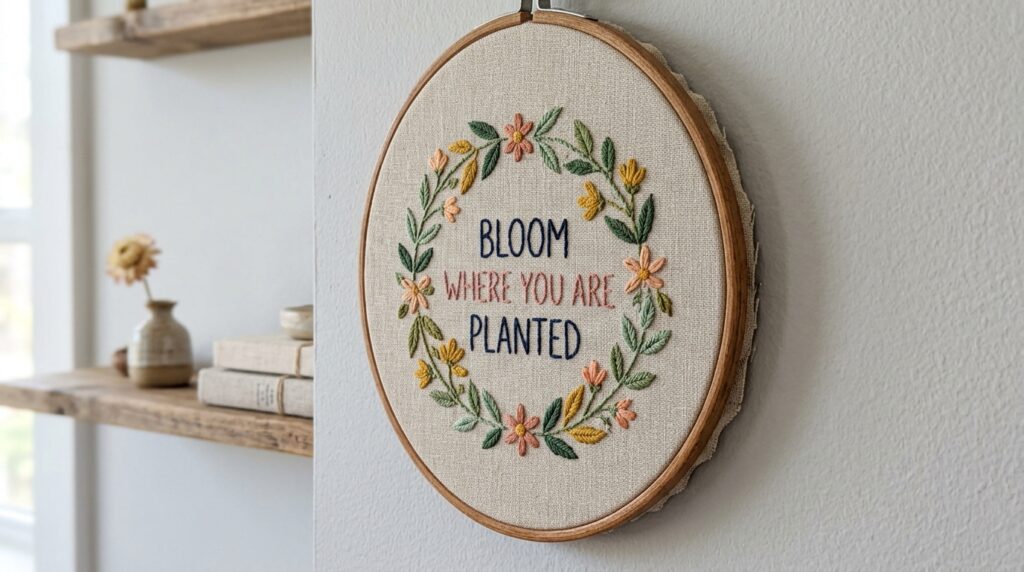
Use a 6 or 8-inch wooden embroidery hoop stretched with natural linen or white cotton Aida cloth for a cross-stitch piece. Choose a simple botanical, geometric, or typographic design from a pattern source like the DMC Pattern Library or Etsy cross-stitch pattern sellers. Stitch with DMC embroidery floss in two to four coordinating colors. The finished piece displayed in the hoop with the excess fabric trimmed and glued to the back of the inner hoop reads as a finished circular textile art piece that suits a wall or shelf display position in any room of the home.
Conclusion
A home with handmade objects in it reads differently from a home where everything was purchased. The difference is not about quality in the conventional sense. It is about evidence. Handmade objects carry the evidence of the person who made them in ways that change how every other object in the same room reads. One genuinely handmade piece on a shelf full of purchased objects changes the quality of the whole shelf.
Start with the project that requires the least equipment and the most immediate visual result. A concrete candle holder, a pressed botanical frame, a painted abstract canvas. These home decor ideas handmade are not about craft skill or creative ability. They are about the decision to make something for the specific room it will occupy, which is the decision that no amount of purchasing can replicate.