
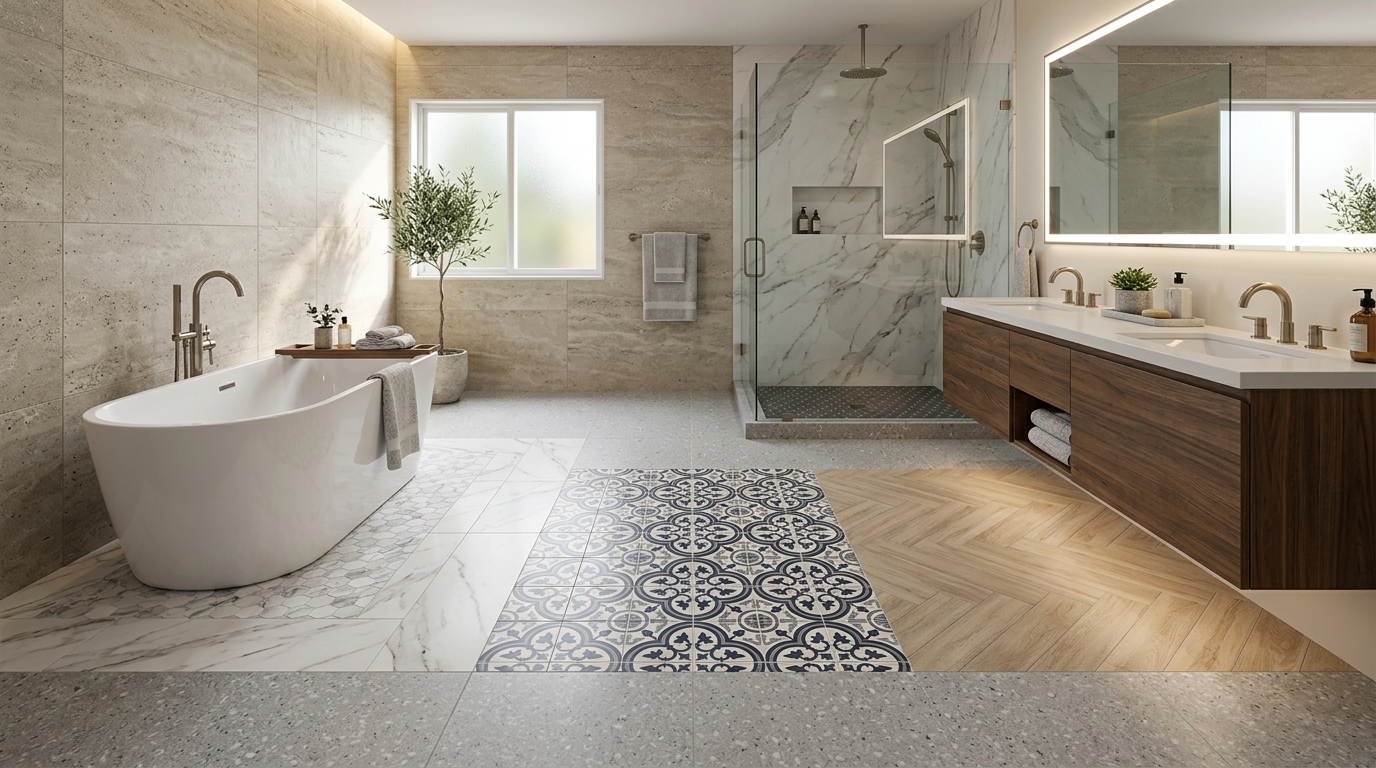
The floor sets the tone for a bathroom more than almost anything else in the room. It is the largest continuous surface, it takes the most visible wear, and it is usually the first thing that gives away whether a bathroom feels dated or fresh. Tile remains the standard for bathroom floors for good reason, but within that one word there is an enormous range of looks, from sleek and modern to warm and vintage.
This article walks through nineteen ways to approach bathroom flooring with tile, covering the materials, patterns, and layout choices that change how a bathroom feels underfoot and at first glance.
Whether you are planning a full renovation or just thinking through options for a future project, these ideas cover a wide range of styles and budgets.
1. Classic Subway Tile in Herringbone Layout
Subway tiles are usually associated with walls, but laid on the floor in a herringbone pattern, they take on a completely different character. The angled layout adds movement and visual interest that a straight grid pattern does not, while keeping the familiar rectangular shape.
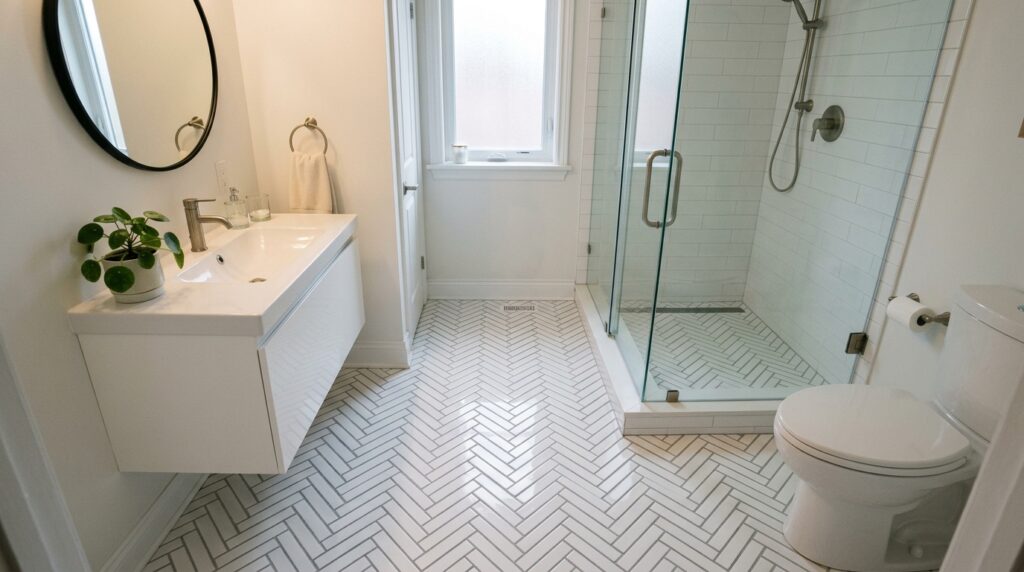
White subway tile in herringbone with a contrasting grout color reads as classic but slightly more detailed than expected. This layout works especially well in smaller bathrooms, where the diagonal lines can make the space feel a bit larger.
2. Large Format Tiles for Fewer Grout Lines
Large format tiles, often 24 by 24 inches or bigger, cover more floor with fewer seams, which creates a cleaner, more streamlined look. Fewer grout lines also means less grout to clean and maintain over time, which matters in a room that deals with constant moisture.
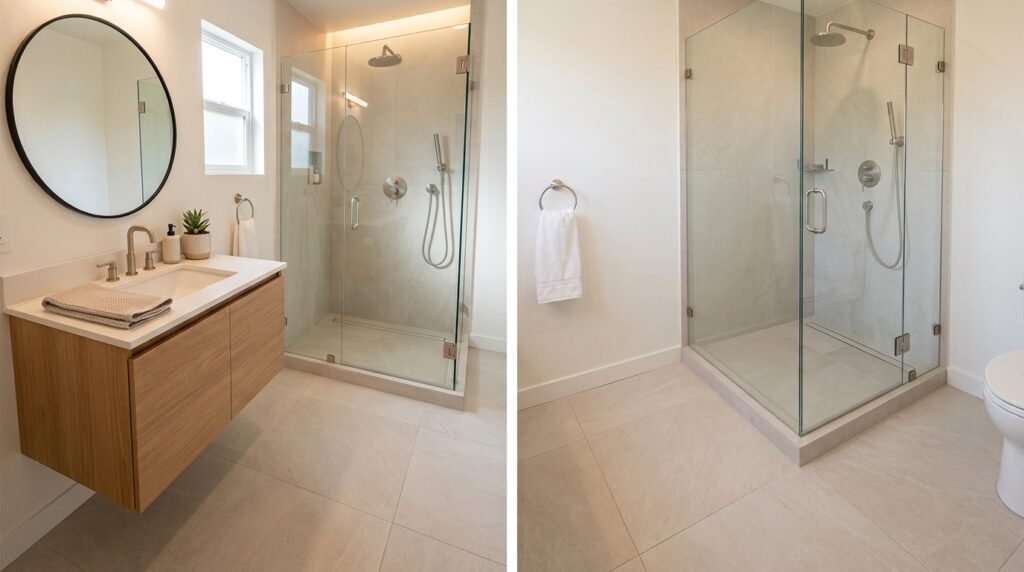
This option works particularly well in bathrooms aiming for a minimalist or spa like feel, where the goal is a calm, uninterrupted surface rather than a lot of pattern or texture.
3. Penny Round Tile for a Vintage Touch
Small circular penny tiles, typically arranged in a grid, have a distinctly vintage character that brings to mind older homes and classic bathroom design. The tiny tiles create a lot of grout lines, which adds texture and a sense of detail at floor level.
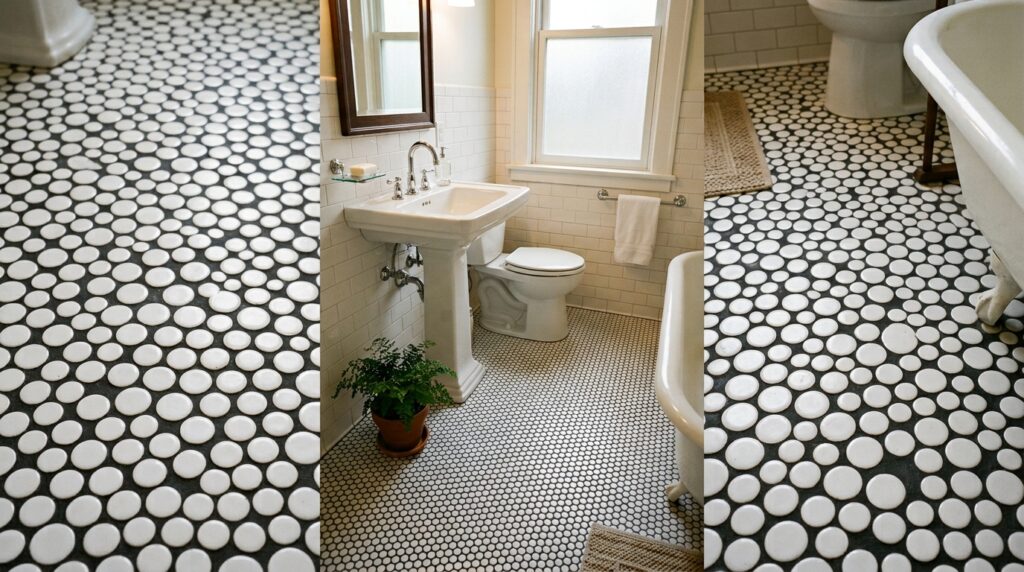
White or black penny tile with contrasting grout is the most traditional combination, but penny tile also comes in mixed colors for a slightly more playful, retro look.
4. Hexagon Tiles for Geometric Pattern
Hexagon tiles bring a geometric quality to a floor without needing a complicated installation pattern, since the shape itself does most of the visual work. They come in sizes ranging from small mosaic hexagons to larger statement sized pieces.
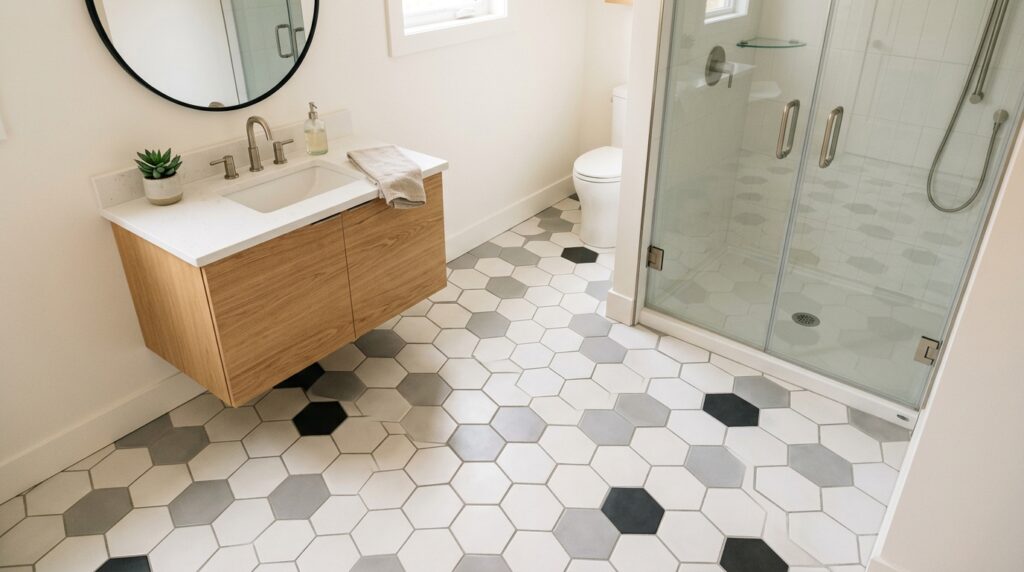
A floor in solid white or gray hexagon tiles feels understated, while mixing in a few black or patterned hexagons among plain ones creates a more deliberate design moment without overwhelming the space.
5. Marble Look Porcelain for an Elevated Feel
Porcelain tiles that mimic the veining and color variation of real marble give a bathroom floor a high end look without the maintenance concerns that come with natural stone. Porcelain resists staining and etching far better than marble does, making it a practical choice for a room that sees daily water exposure.
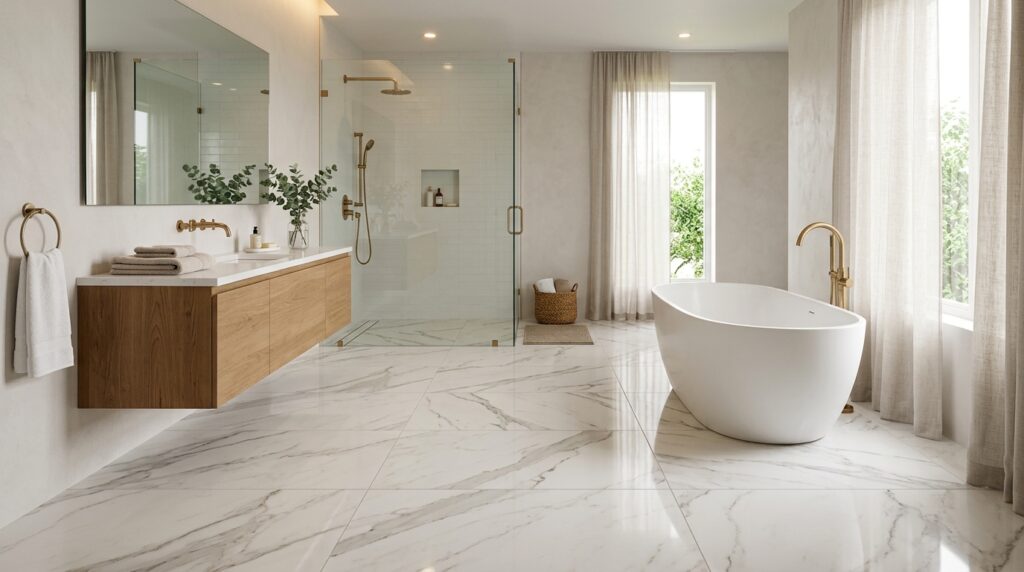
These tiles work especially well in larger formats, where the marble pattern can flow across the floor with fewer visible seams interrupting the veining.
6. Patterned Encaustic Style Tiles
Encaustic style tiles, with their bold geometric or floral patterns built directly into the tile rather than printed on top, bring a strong decorative element to a bathroom floor. These patterns were originally common in older European bathrooms and have become popular again for the character they add.
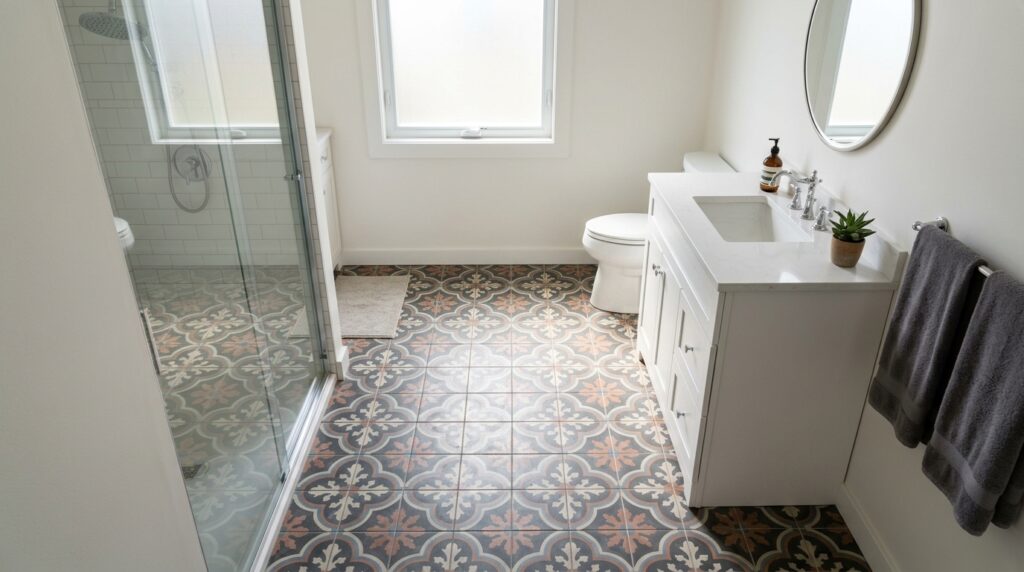
A patterned tile floor pairs best with simple, plain walls and fixtures, letting the floor act as the main design feature in the room rather than competing with other busy elements.
7. Wood Look Plank Tile for Warmth
Wood look tiles, made from porcelain or ceramic but designed to resemble the grain and tone of real wood planks, bring warmth to a bathroom floor without the water damage risk that actual hardwood would face. These tiles have become realistic enough that they are often mistaken for wood at a glance.
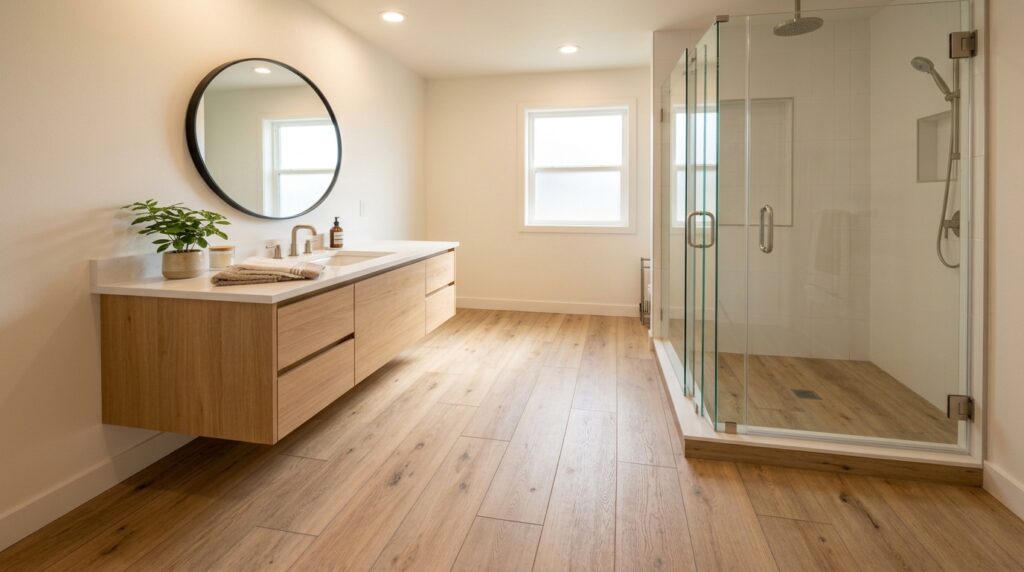
A wood look floor pairs particularly well with white or neutral walls, creating a contrast between the warmth of the floor and the cleanness of the rest of the room.
8. Black and White Checkerboard Floor
A checkerboard pattern in black and white tile is one of the most recognizable bathroom floor styles, with roots in classic and mid century design. The strong contrast and clear pattern make it a focal point on its own, regardless of what else is in the room.
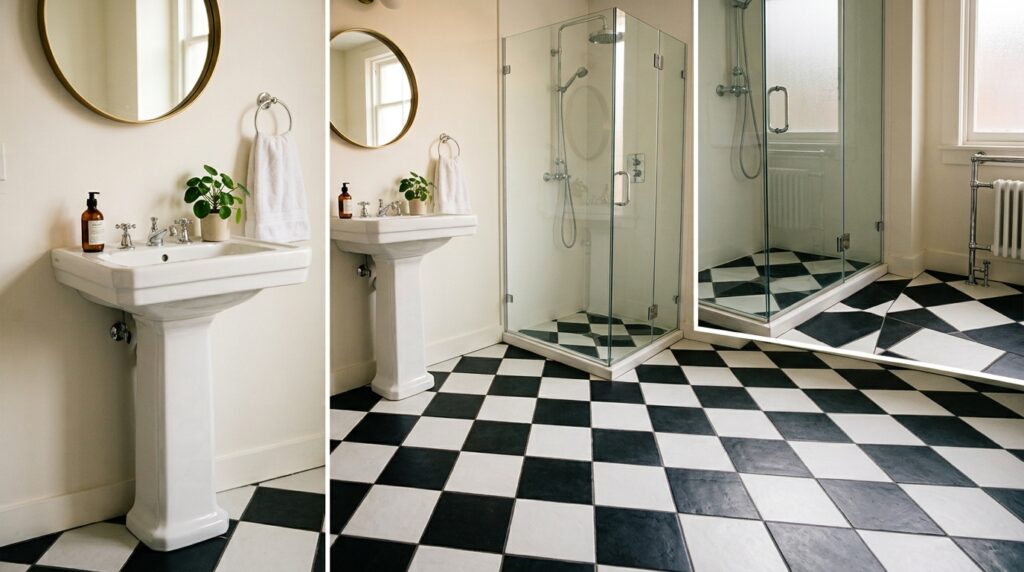
This pattern can be done with square tiles in a straight grid for a bold, graphic look, or with the squares set on a diagonal for a slightly softer, more dynamic feel.
9. Terracotta Tile for an Earthy Tone
Terracotta tile brings a warm, reddish brown tone to a bathroom floor that feels grounded and natural, often associated with Mediterranean or Southwestern style homes. The slightly varied tones within terracotta tiles add depth that more uniform materials do not have.
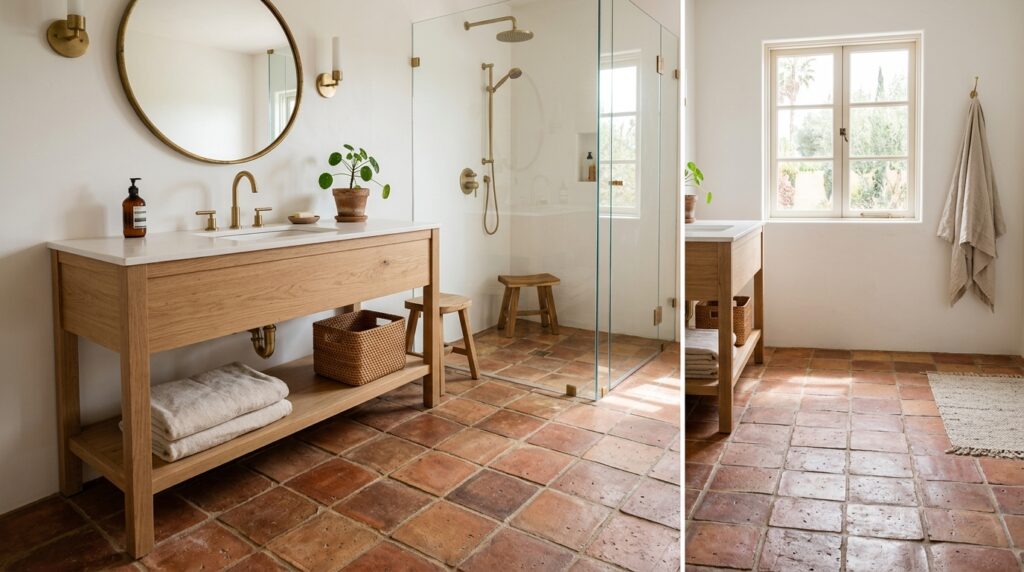
This option pairs especially well with white walls and natural materials like wood or rattan elsewhere in the bathroom, creating a warm contrast against typically cool bathroom finishes like porcelain fixtures and mirrors.
10. Mosaic Border Strip Along the Edge
Rather than tiling an entire floor in a mosaic pattern, a border strip of mosaic tile along the edge of the room or around the base of the tub adds detail without the cost or complexity of covering the whole floor in small pieces.
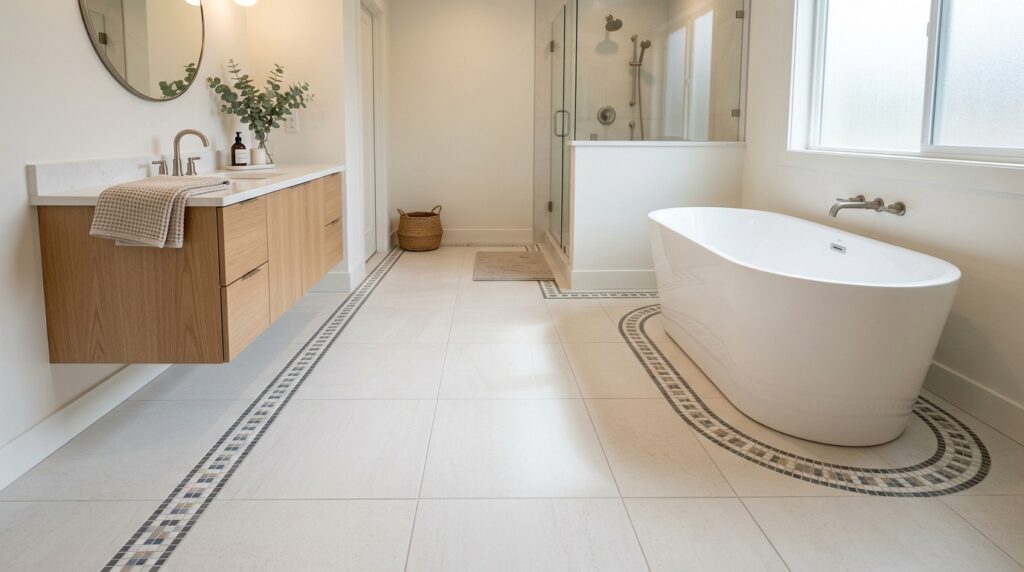
This works well as a way to introduce a pattern or color accent into an otherwise simple tile floor, framing the room in a way that feels intentional rather than incomplete.
11. Matte Finish Tile for a Modern Look
Matte tiles, as opposed to glossy ones, have become a defining feature of modern bathroom design. The non reflective surface gives the floor a softer, more grounded appearance, and matte finishes also tend to show water spots and footprints less than glossy tiles.
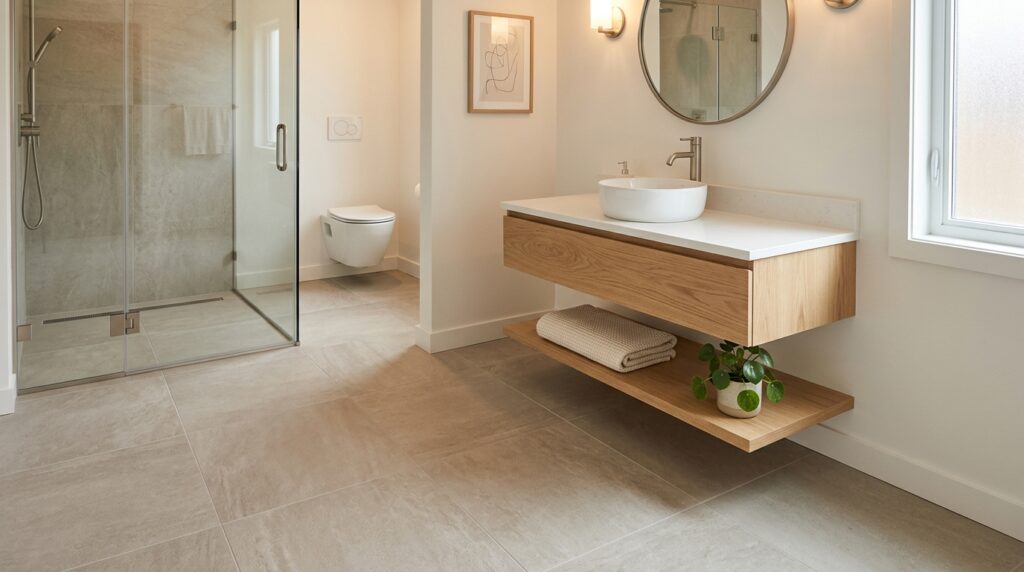
A matte tile floor in a single neutral tone, paired with warm lighting, creates a calm, understated base that lets other elements in the bathroom, like fixtures or art, stand out more.
12. Textured Tile in Wet Areas for Grip
In shower areas or around tubs, a textured tile surface provides better grip underfoot than a smooth one, which matters for safety as much as it does for design. These tiles often have a slightly raised pattern or a more matte, sandy finish.
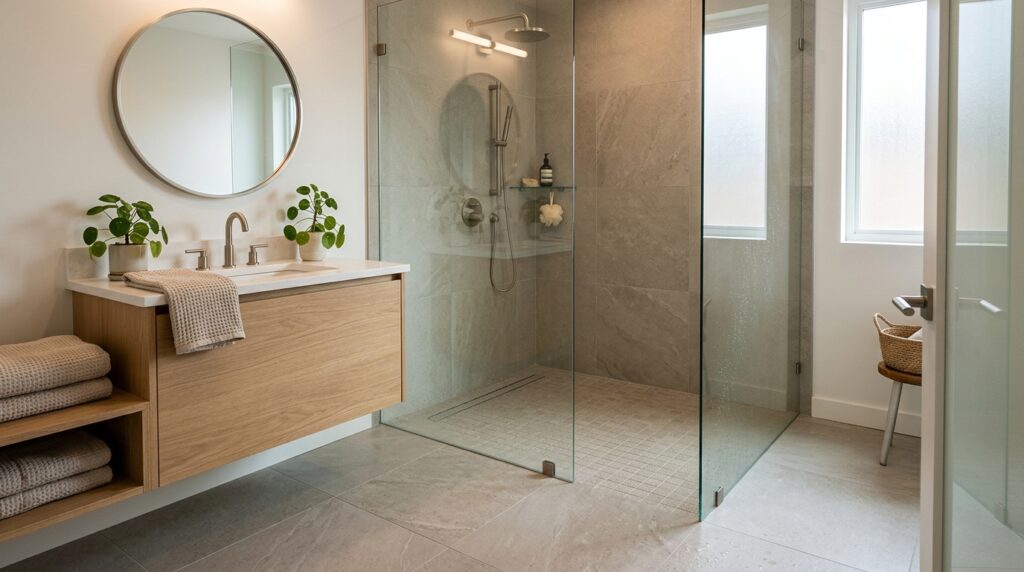
Using a textured tile in the wet zone and a smoother tile in the dry area of the same bathroom, in a coordinating color, balances safety with a consistent overall look.
13. Continuous Tile from Floor onto Shower Walls
Running the same tile from the floor up the walls of a shower, without a visual break at the threshold, makes a bathroom feel larger and more cohesive. This continuous look removes the visual line that usually separates floor from wall.
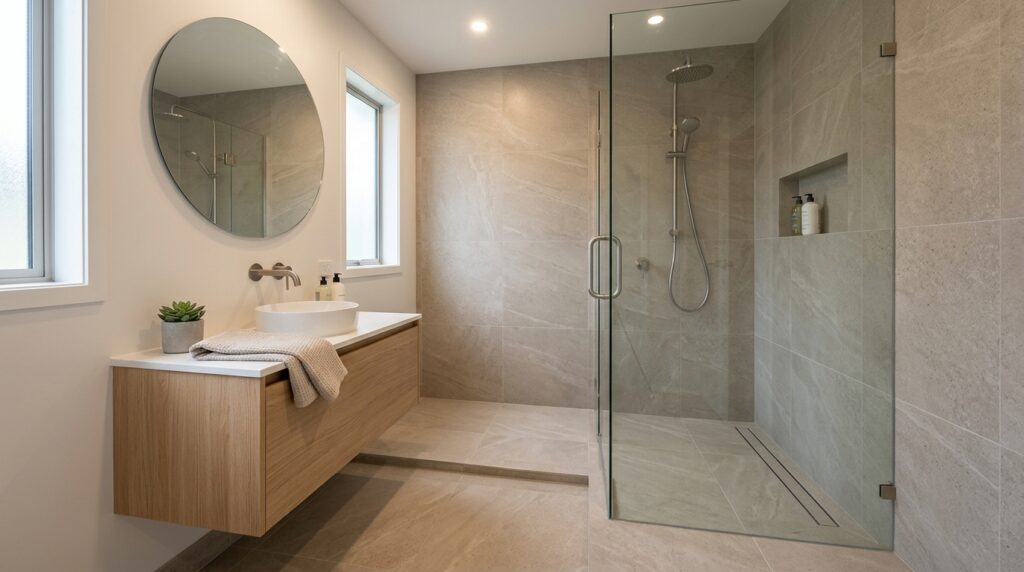
This approach works best with tiles that suit both horizontal and vertical use, like large format porcelain, and it tends to make small bathrooms in particular feel more open since the eye does not stop at a transition point.
14. Diagonal Layout to Open Up a Small Floor
Laying square tiles on a 45 degree angle rather than in a straight grid can make a small bathroom floor feel larger, since the diagonal lines draw the eye toward the corners of the room rather than across it in straight rows.
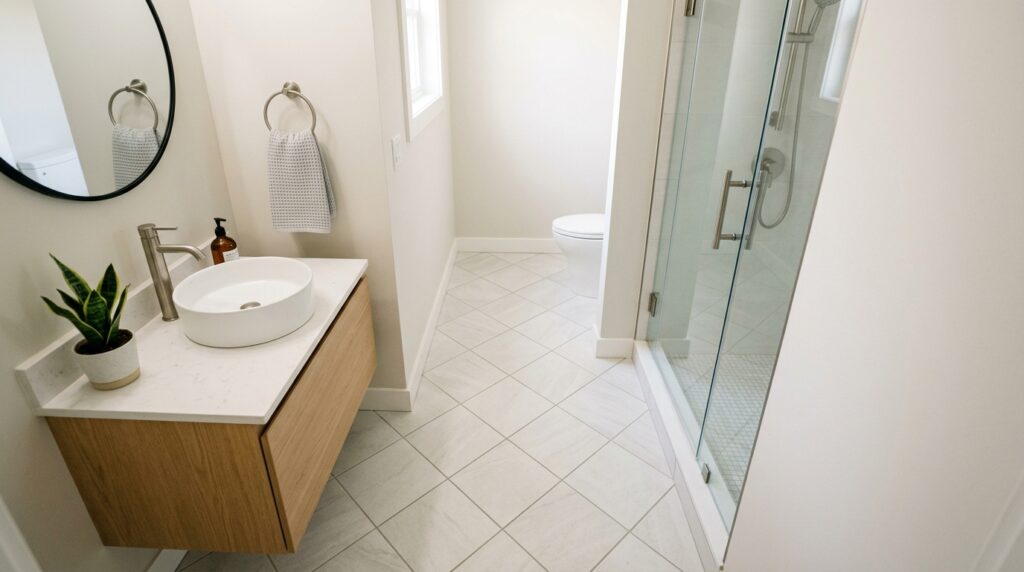
This layout works with almost any square tile, and it is often used specifically in narrow bathrooms where a straight grid pattern would emphasize how tight the space actually is.
15. Two-Tone Tile Split Down the Middle
A floor split into two different tile colors or patterns, divided by a straight or curved line, creates a deliberate design moment that feels custom even with standard tiles. One half might be a solid neutral, the other a pattern or contrasting color.
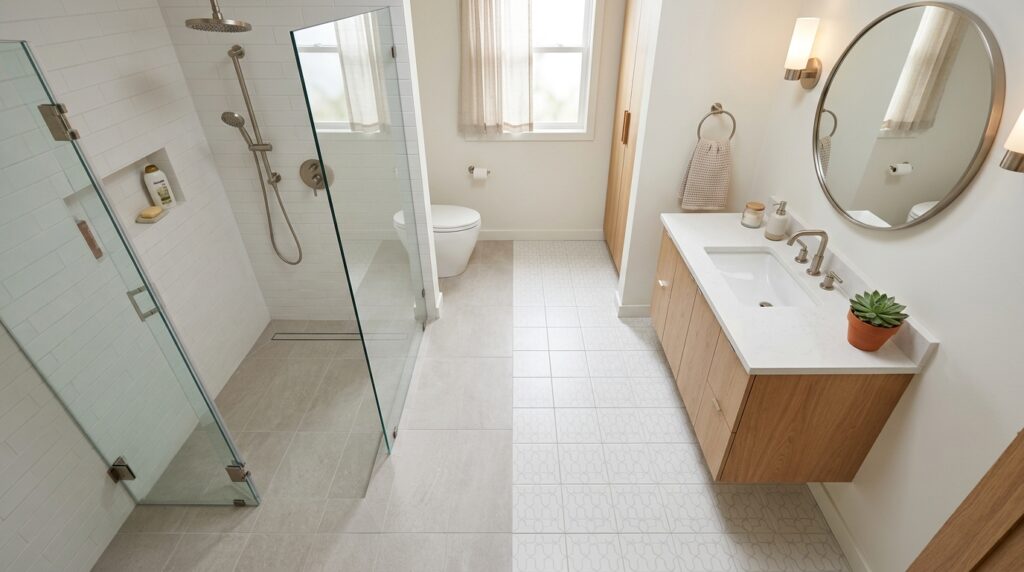
This approach works particularly well in bathrooms with distinct zones, like separating a wet area from a vanity area, using the tile change to mark that division visually.
16. Pebble Tile for a Spa-Like Texture
Pebble tile, made from small rounded stones set into sheets, brings a natural, organic texture to a bathroom floor that mimics the feel of a riverbed or natural spa setting. The uneven surface also provides natural grip underfoot.
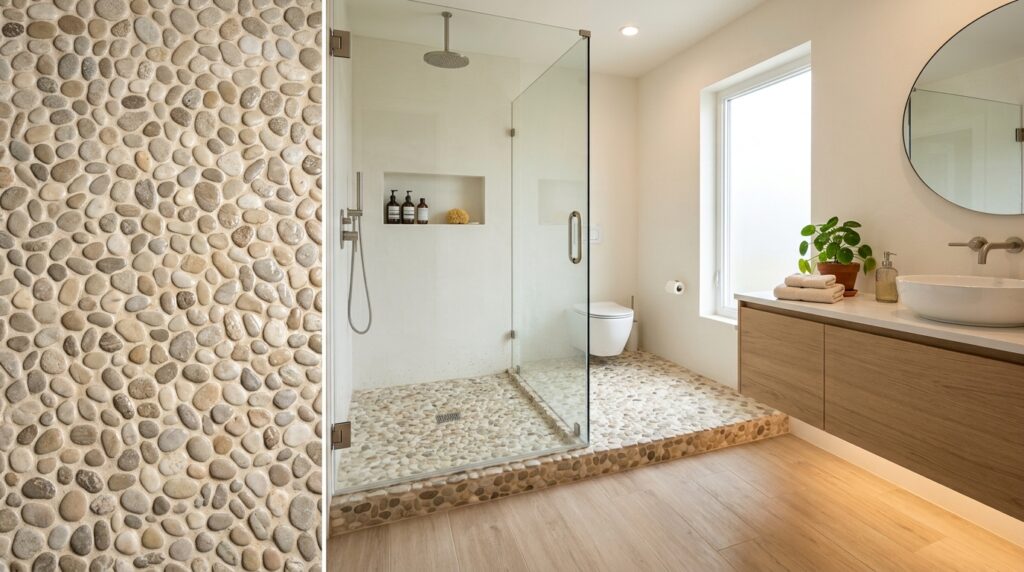
This option is most often used in shower floors specifically, where the texture and drainage work well together, though it can extend into other parts of the bathroom for a more immersive natural feel.
17. Geometric Star and Cross Pattern
A pattern combining star and cross shaped tiles, often associated with Moroccan or Spanish tile traditions, creates an intricate floor design from a relatively simple repeating shape. The pattern emerges from how the two tile shapes interlock.
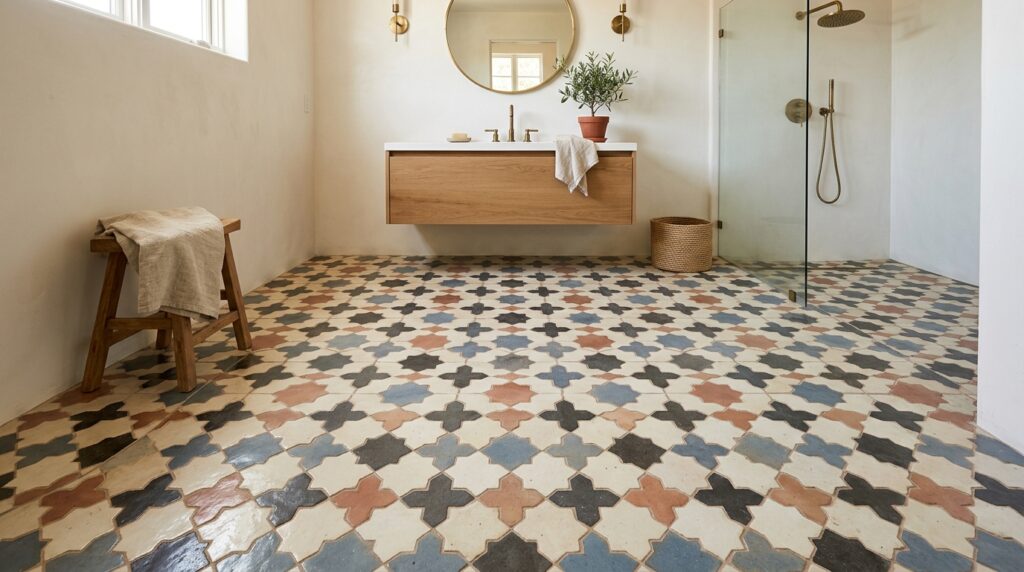
This kind of floor works as a strong design statement on its own, and pairs best with simple fixtures and walls so the pattern itself remains the clear focus of the room.
18. Contrasting Grout Color for Definition
Sometimes the biggest change to a tile floor does not come from the tile at all, but from the grout. A contrasting grout color, dark grout with light tiles or light grout with dark tiles, makes the shape and layout of each tile much more visible, turning even a simple square tile into a graphic pattern.
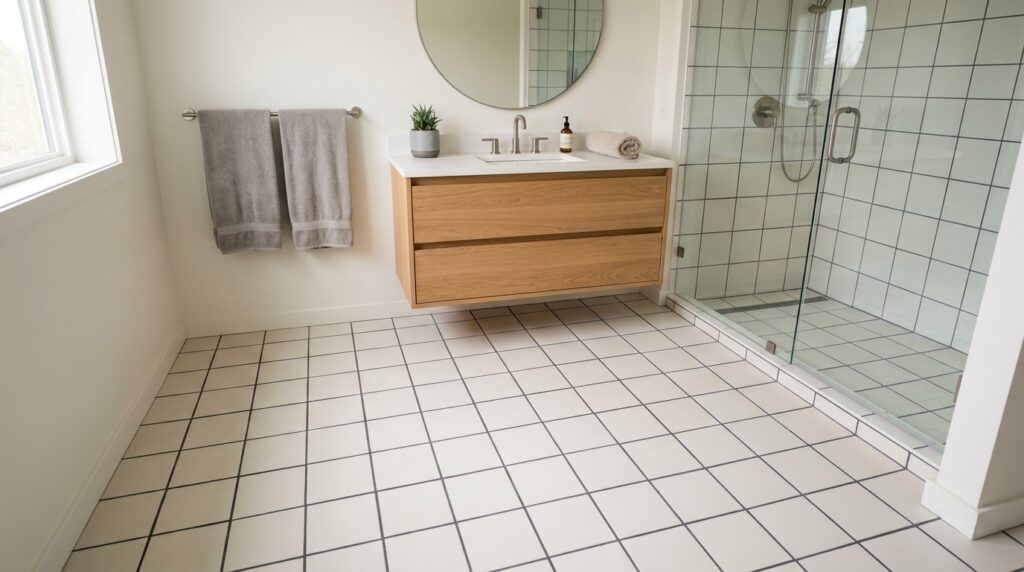
This is also one of the easiest ways to update an existing tile floor during a renovation, since changing grout color can dramatically shift the look without replacing the tile itself.
19. Zellige Tile for Handmade Character
Zellige tiles, traditionally handmade in Morocco, have a slightly irregular shape and a glossy, variegated glaze that gives each tile subtle differences from the next. On a floor, this creates a surface that catches light unevenly and has a depth that machine made tiles do not replicate.
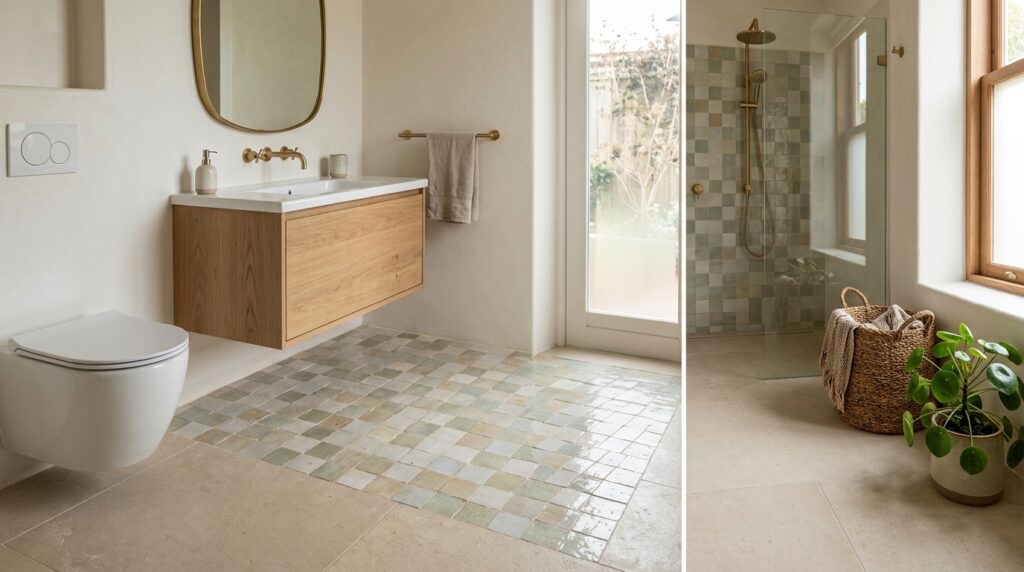
Because of their irregularity, zellige tiles are often used in smaller areas or as accents rather than across an entire large floor, where their handmade quality can really stand out without becoming overwhelming underfoot.
Final Thoughts
Bathroom flooring with tile offers more range than most people realize, from the shape and size of the tile itself to the layout, the grout color, and how it transitions into walls or shower areas. Each of these choices changes not just how the floor looks, but how the whole room feels.
If you are planning a bathroom project, start with the overall feeling you want, warm, modern, vintage, or natural, and let that guide the tile choice rather than picking a tile first and trying to make the room fit around it.
A well chosen tile floor often ends up being the detail people remember most about a bathroom, long after they forget the color of the walls or the style of the faucet.