
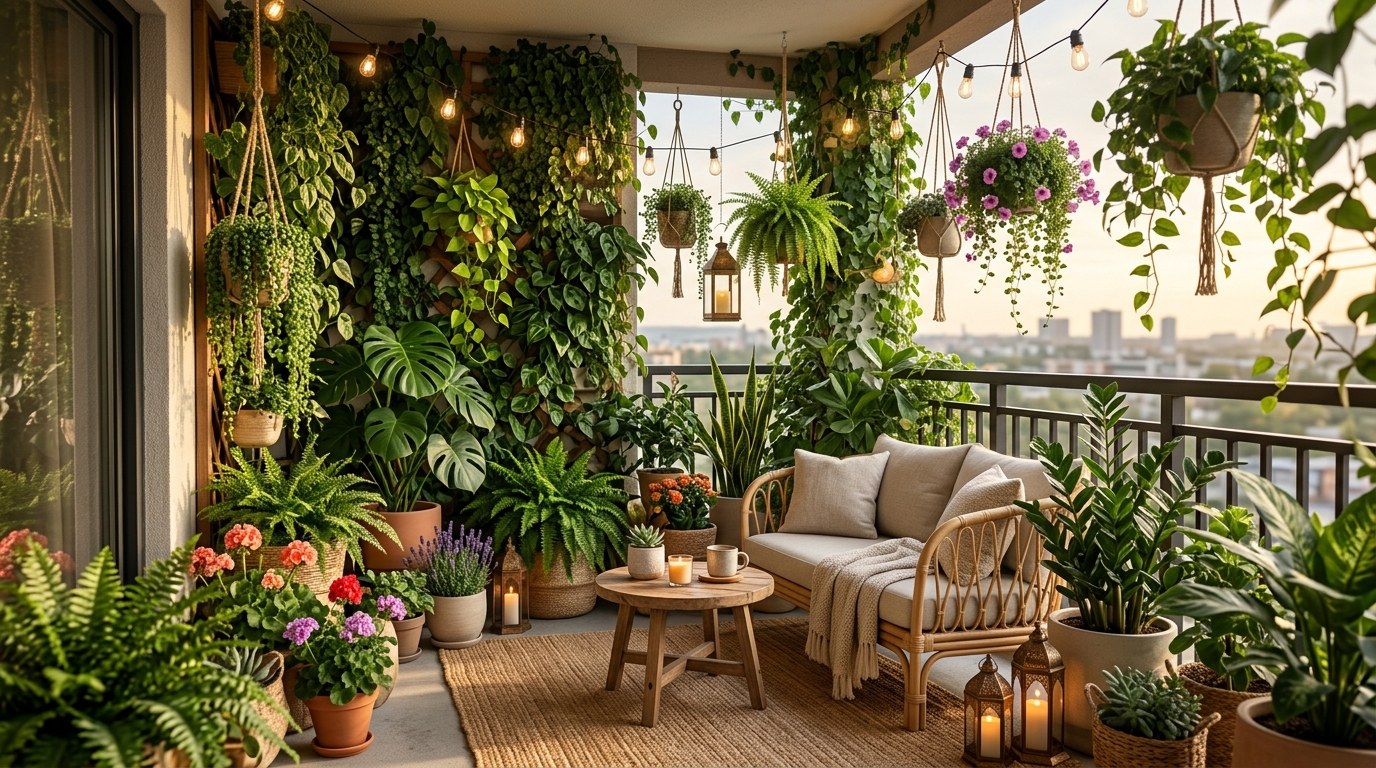
Plants are the easiest way to make a balcony feel alive, but most people end up with the same two or three pots placed wherever there happens to be room. A balcony filled with plants does not have to look random or overcrowded. With a little planning around variety, color, and placement, even a handful of plants can look like a small garden someone actually designed.
This article focuses on the plants themselves, how to choose them, group them, and style them, rather than the furniture or lighting around them. Every idea here is about getting more out of the greenery you already have or are thinking about adding.
Below are twenty five ways to turn a balcony into a plant filled space that feels intentional, not just busy.
1. Mix Trailing and Upright Plants for Contrast
A balcony full of plants that all grow the same way, straight up, ends up looking flat no matter how many you have. Pairing upright plants like snake plants or palms with trailing ones like pothos or ivy creates movement and depth.
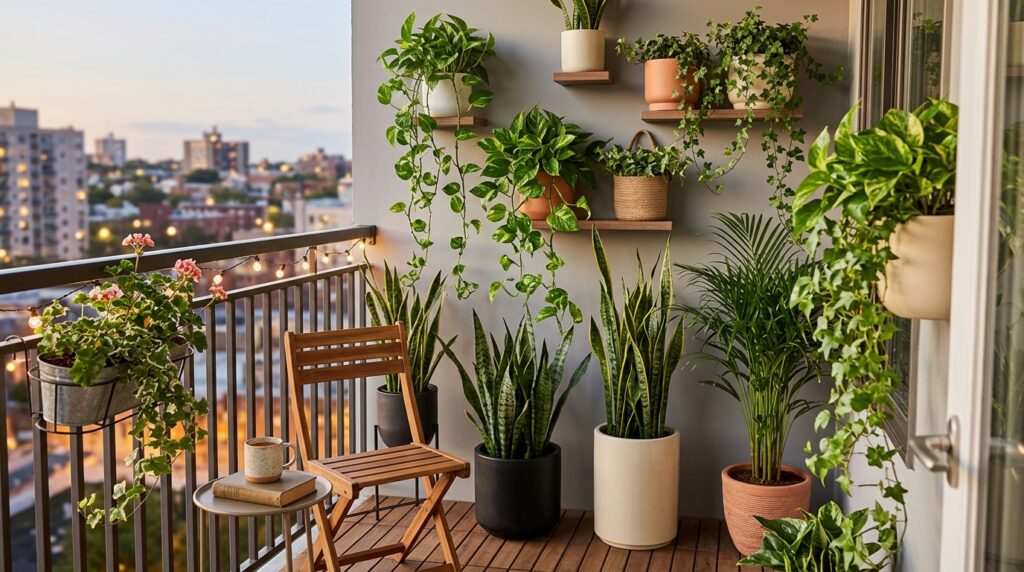
Place the trailing plants where their vines can spill over the edge of a shelf or pot, while keeping the upright plants behind or beside them. This contrast between vertical and cascading growth is what makes plant groupings look designed rather than just collected.
2. Choose Terracotta Pots for a Warm, Natural Look
Plastic pots in bright colors can work in some settings, but terracotta has a warmth and texture that almost always looks good against greenery. The slightly rough, earthy tone of terracotta pairs well with nearly every plant, from succulents to leafy tropicals.
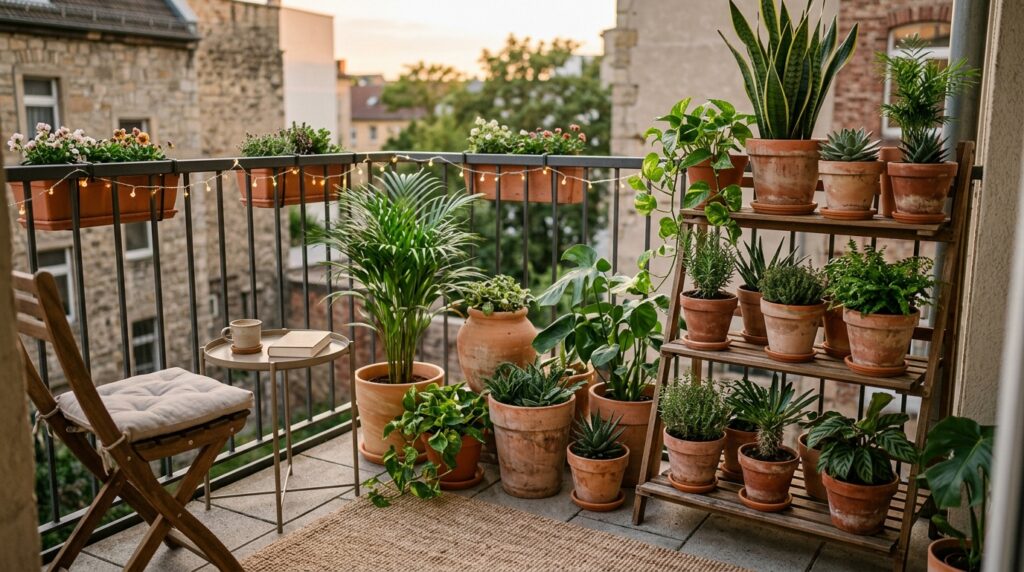
Terracotta also ages beautifully outdoors, developing a slightly weathered patina over time that plastic pots never get. If your pots are currently a mix of random colors and materials, swapping even half of them for terracotta can pull the whole collection together.
3. Group Plants in Odd Numbers
Plants arranged in twos or fours often look like they were placed without much thought, while groups of three or five feel more balanced to the eye. This is a simple design principle that applies to almost any kind of grouping, plants included.
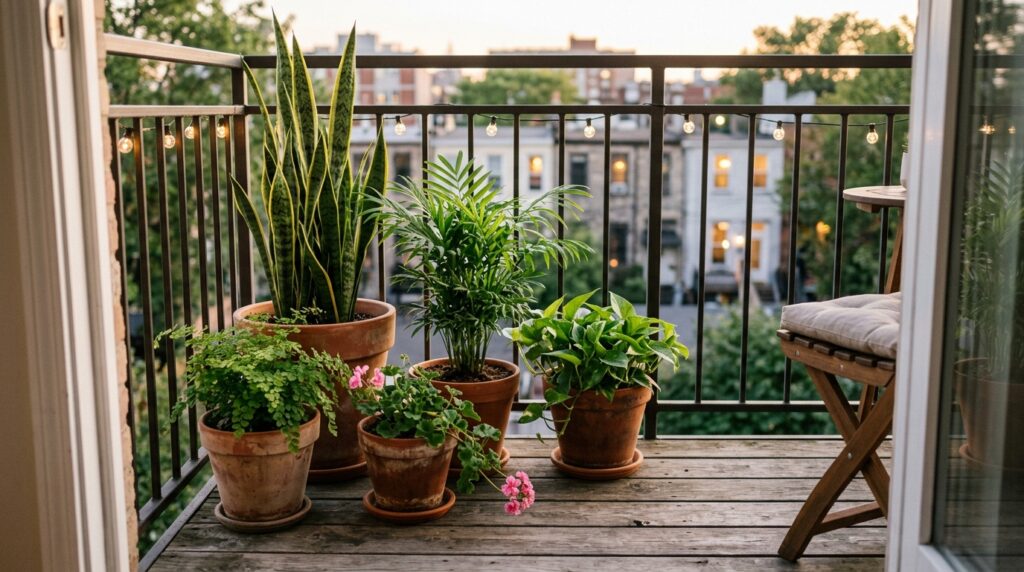
When arranging a cluster, vary the heights within the group as well. A tall plant, a medium one, and a low spreading one together will look more interesting than three plants of similar size and shape.
4. Pick Plants by Foliage Color, Not Just Flowers
Flowers are temporary, but foliage color is there all year. Plants with deep purple, silver, or variegated leaves can do more for a balcony’s look than flowering plants that bloom for a few weeks and then sit green for months.
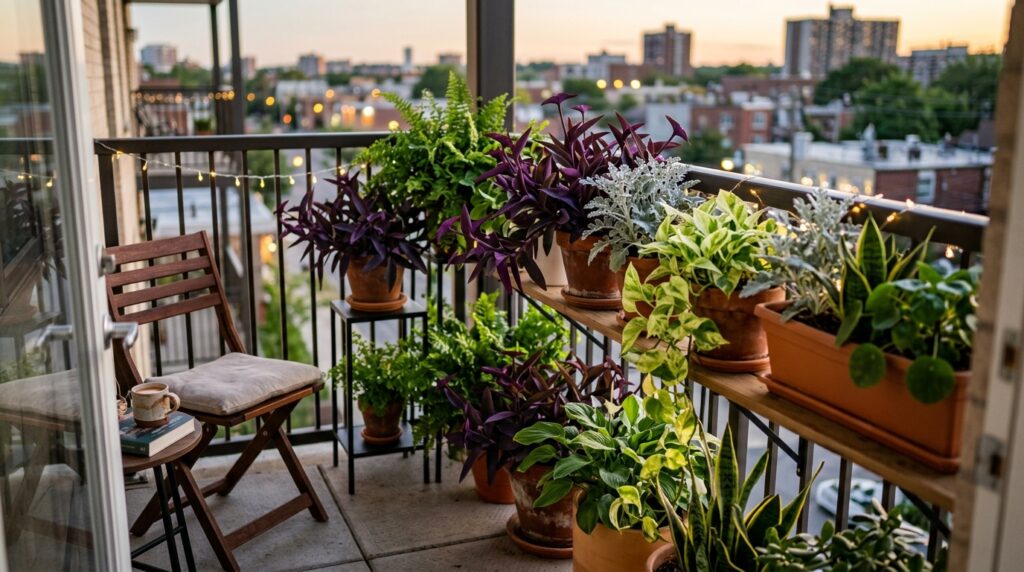
Look for varieties like purple heart, dusty miller, or variegated pothos to add color without relying on flowers. Mixing a few foliage colors among mostly green plants gives the whole collection a more curated feel.
5. Grow a Mini Herb Garden in Matching Pots
A small collection of herbs, basil, mint, thyme, and rosemary, planted in matching pots looks tidy and serves a purpose beyond decor. Lined up along a sunny edge of the balcony, they create a uniform look while also giving you something to actually use in the kitchen.
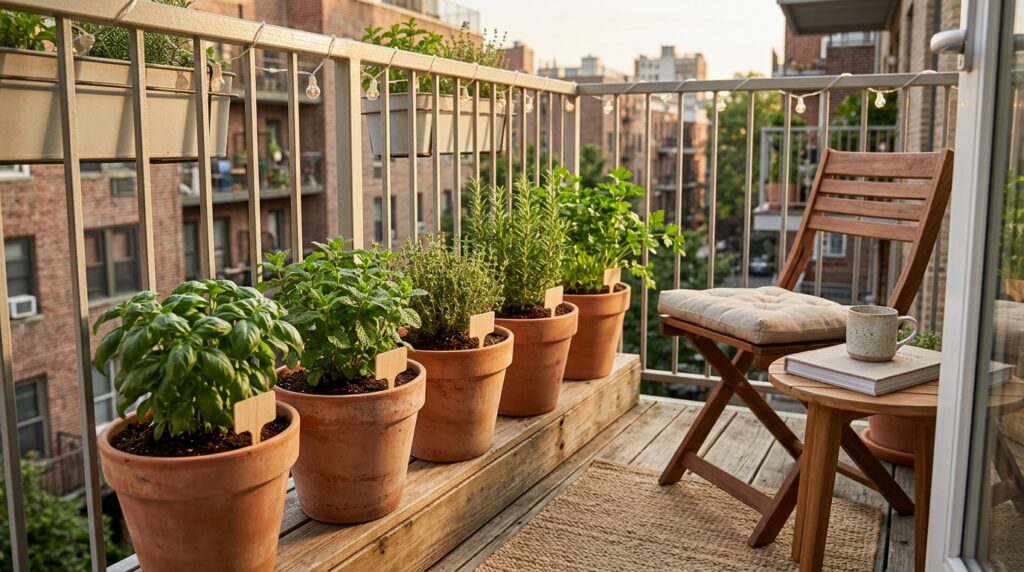
Matching pots in a single color or material make even a mismatched set of herb varieties look like a cohesive collection rather than a random assortment of plants.
6. Mix Real and Faux Plants for Low-Light Corners
Not every corner of a balcony gets enough light for real plants to thrive, and that is where a high quality faux plant can fill the gap. Placed among real plants, a good faux plant in a similar pot style is often impossible to tell apart at a glance.

This approach lets you fill out a planting scheme evenly, even in spots where real plants would struggle, without leaving an obvious gap in your layout.
7. Use Macrame Hangers for Trailing Plants
A macrame plant hanger adds texture through its knotted rope pattern while also lifting a trailing plant up and away from other pots on the floor. The combination of the woven hanger and the cascading vines creates a layered look in a single spot.
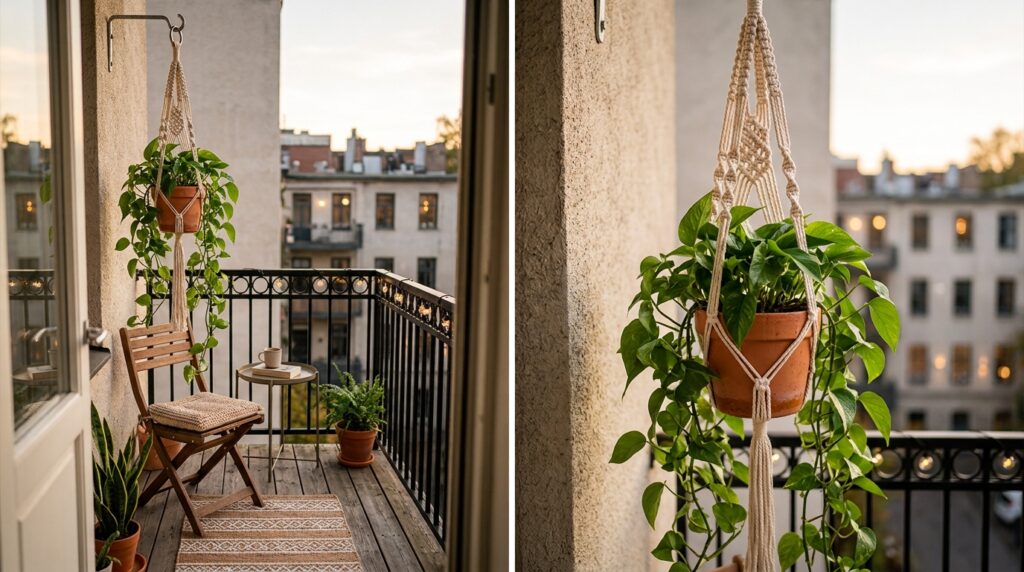
Hang one from a hook near a corner or beside a window, and let the vines grow long over time. A pothos or string of pearls in a macrame hanger tends to fill out beautifully within a season or two.
8. Choose Plants with Varied Leaf Textures
Smooth, glossy leaves next to fuzzy or ruffled ones create visual interest even without any flowers at all. A fiddle leaf fig’s broad smooth leaves next to a fern’s delicate fronds, for example, gives a planting area a sense of richness.
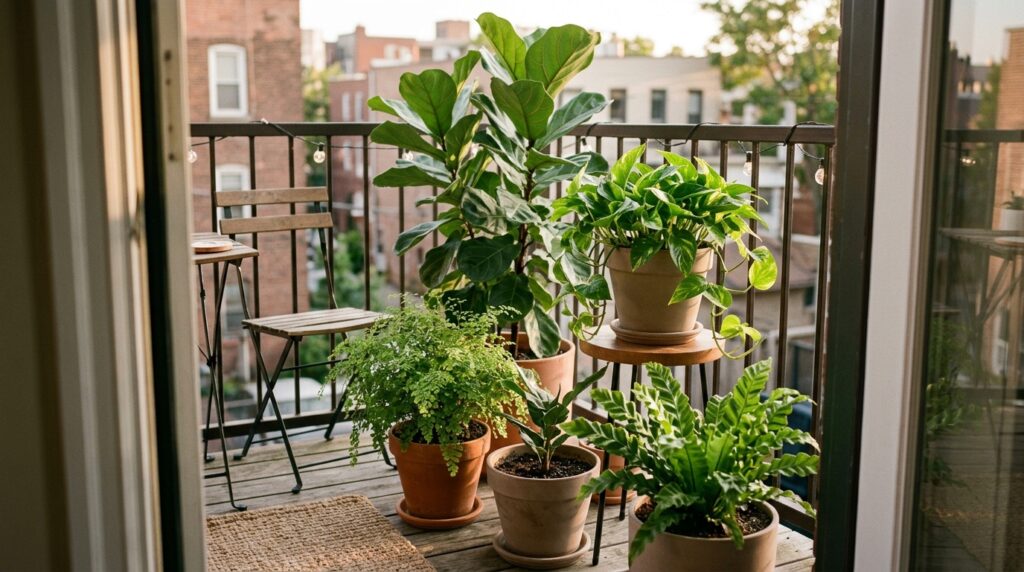
When picking new plants, think about texture the same way you would think about color. A balcony full of plants with identical leaf shapes, even in different sizes, can start to look repetitive after a while.
9. Build a Mini Succulent Garden in a Shallow Dish
Succulents in a variety of shapes and colors, planted together in one shallow dish with good drainage, create a tiny landscape that takes up very little space. Mix rosette shaped succulents with trailing ones like string of pearls for contrast within the dish itself.
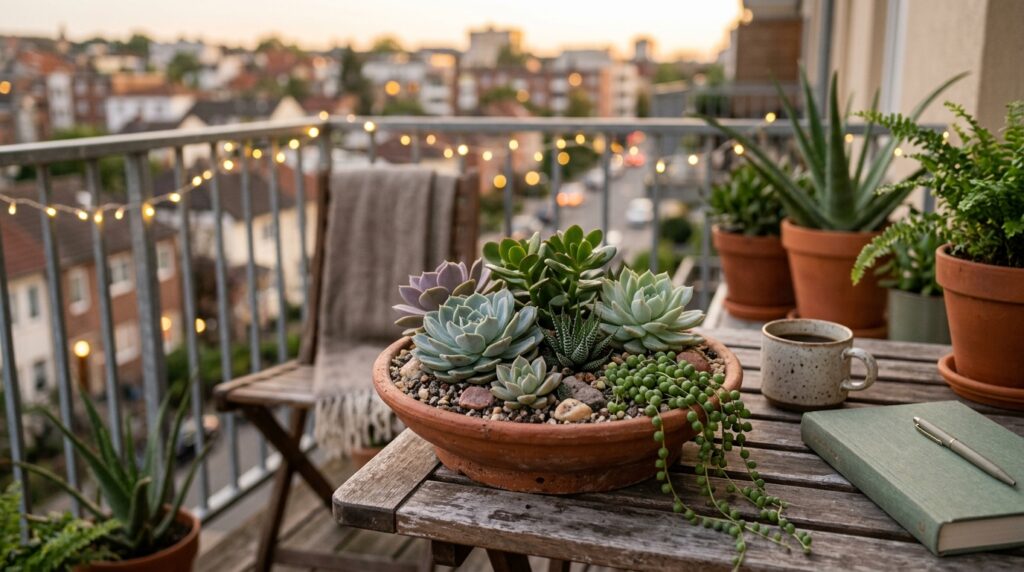
This kind of arrangement works well on a small table or ledge where a full sized pot would feel too large, and it requires very little water once established.
10. Use a Rolling Plant Cart for Flexibility
A small cart with wheels, designed to hold several potted plants on different shelves, lets you move your entire plant collection to follow the sun or to make room for guests. Tiered carts also group plants vertically in one footprint.
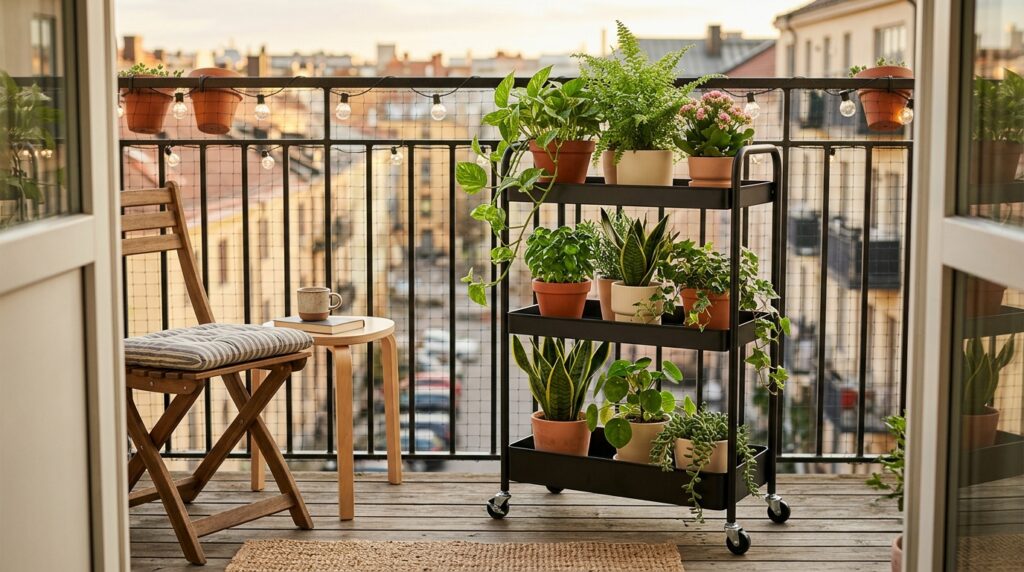
This is especially useful for plants with different light needs, since you can roll the whole cart to a sunnier or shadier spot depending on the season, rather than moving each pot individually.
11. Train a Climbing Vine Up a Trellis
A trellis gives a climbing plant like a jasmine, clematis, or even a climbing rose somewhere to grow upward, turning a flat wall or railing section into a living backdrop over time. This adds height and greenery without taking up floor space for the plant itself.
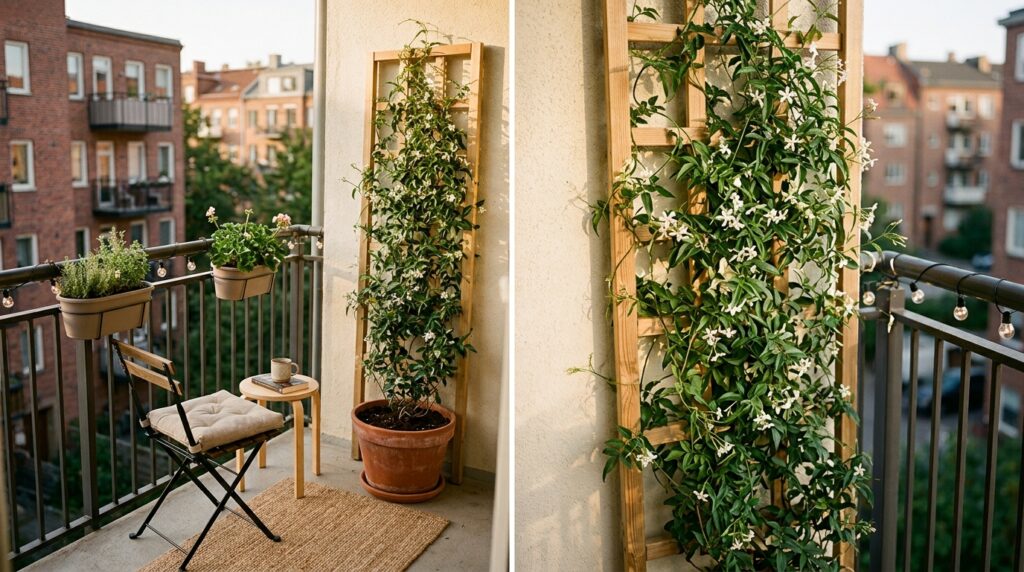
Position the trellis against the sunniest wall available, and be patient. Climbing plants take a season or two to fill in, but once established, they create one of the most striking features a balcony can have.
12. Switch to Self-Watering Pots for Easier Care
Self-watering pots have a water reservoir at the base that the plant draws from as needed, which means less frequent watering and more consistent moisture for the roots. This is especially helpful for balconies that get a lot of direct sun and dry out quickly.

These pots come in styles that look identical to regular pots, so switching to them does not change the look of your balcony, just how often you need to think about watering.
13. Attract Birds with a Small Feeder Among the Greenery
A small bird feeder tucked among your plants brings life and movement to the balcony beyond the plants themselves. Birds visiting for seed add an element that no amount of decor alone can replicate.
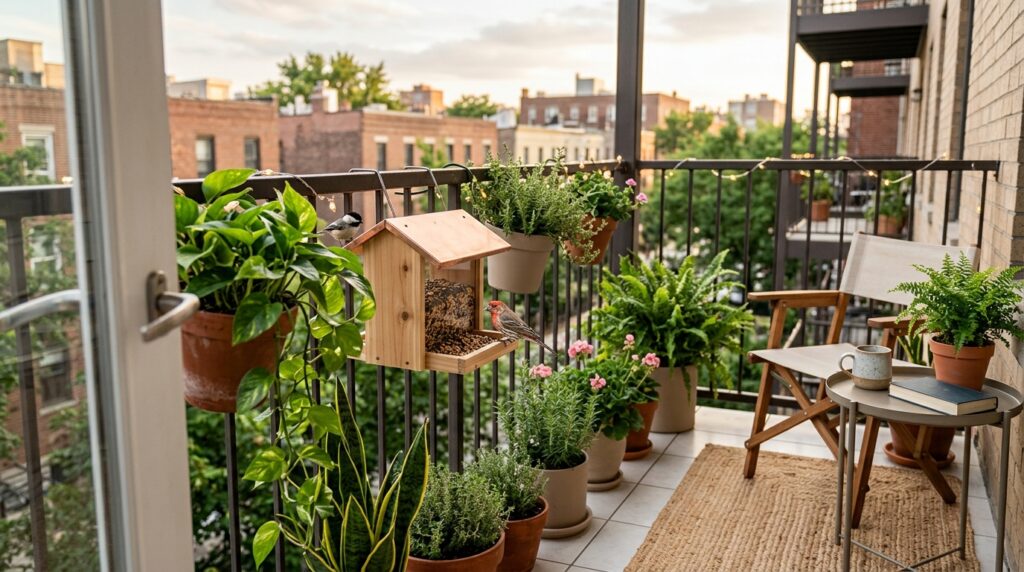
Hang the feeder somewhere it will not create a mess directly below seating areas, and refill it regularly. Over time, the same birds tend to return, making your plant filled balcony feel like part of a small ecosystem.
14. Color Coordinate Pots with Your Outdoor Decor
If your balcony has a color scheme in its cushions, rugs, or accessories, extending that palette to your pots ties the whole space together. A balcony with navy and white textiles, for example, looks more cohesive with pots in white, navy, or natural tones rather than a random mix of bright colors.
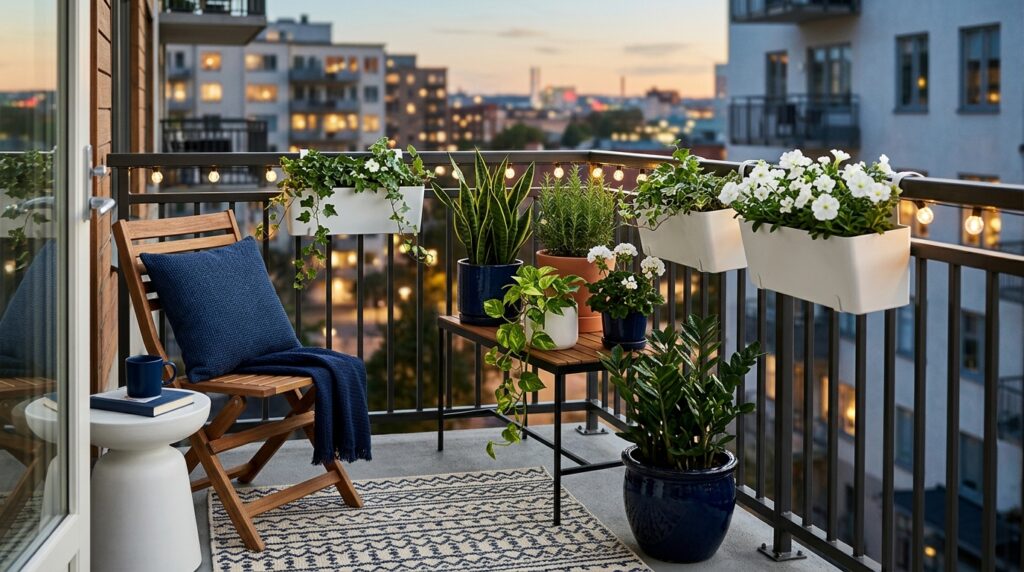
This does not mean every pot needs to match exactly. Even repeating one or two colors across a few key pots creates enough visual connection to make the space feel planned.
15. Add a Tower Planter for Vertical Herbs
A tower planter, with multiple planting pockets stacked in a spiral or column, lets you grow a surprising number of herbs or strawberries in a single vertical footprint. These are designed specifically for small spaces where horizontal growing room is limited.
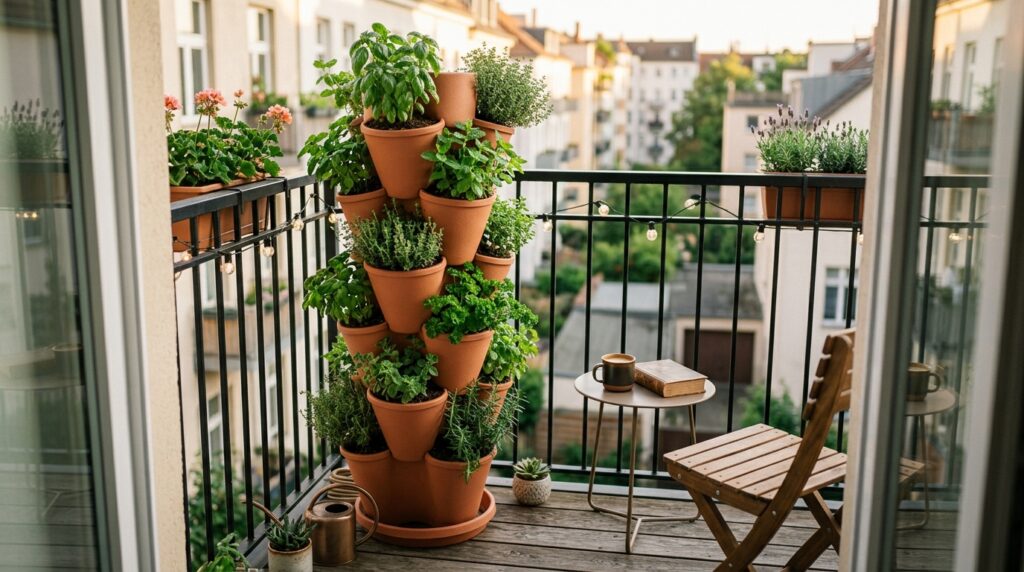
Place it in the sunniest spot available, since the plants on different levels will all need similar light. Rotating the tower occasionally helps all sides get even sun exposure.
16. Add Ornamental Grasses for Movement and Sound
Ornamental grasses sway in even a light breeze, adding movement to a balcony that mostly static plants cannot provide. Varieties like fountain grass or feather reed grass also add height and a softer, more natural texture than typical leafy plants.

A single pot of ornamental grass near seating brings a subtle rustling sound on breezy days, adding a sensory layer to the space beyond just visual interest.
17. Hang Plants from Ceiling Hooks at Different Lengths
Ceiling hooks holding pots on chains or cords at staggered lengths create a layered, cascading effect overhead, different from the look of a single macrame hanger. Vary the lengths so the plants sit at different heights rather than all in one row.
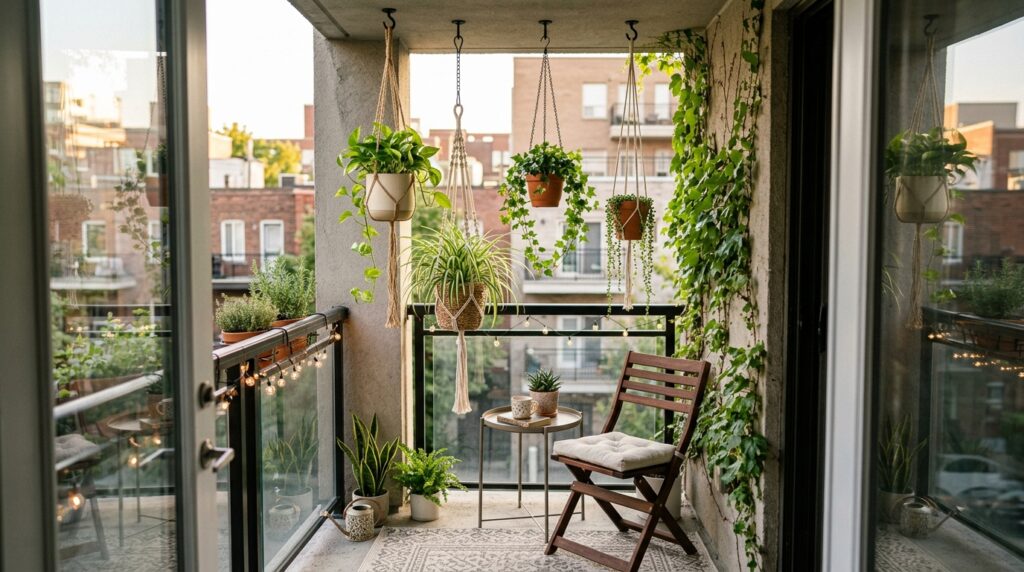
This works particularly well over a seating area, where looking up reveals greenery rather than a blank ceiling. Choose lightweight plants for hanging pots, since heavier ones put more strain on the hooks over time.
18. Weave String Lights Through Plant Leaves
Rather than running string lights along a railing, weave a strand through the branches and leaves of a larger plant. The light filters through the foliage, creating a soft glow that looks completely different from lights strung in open air.
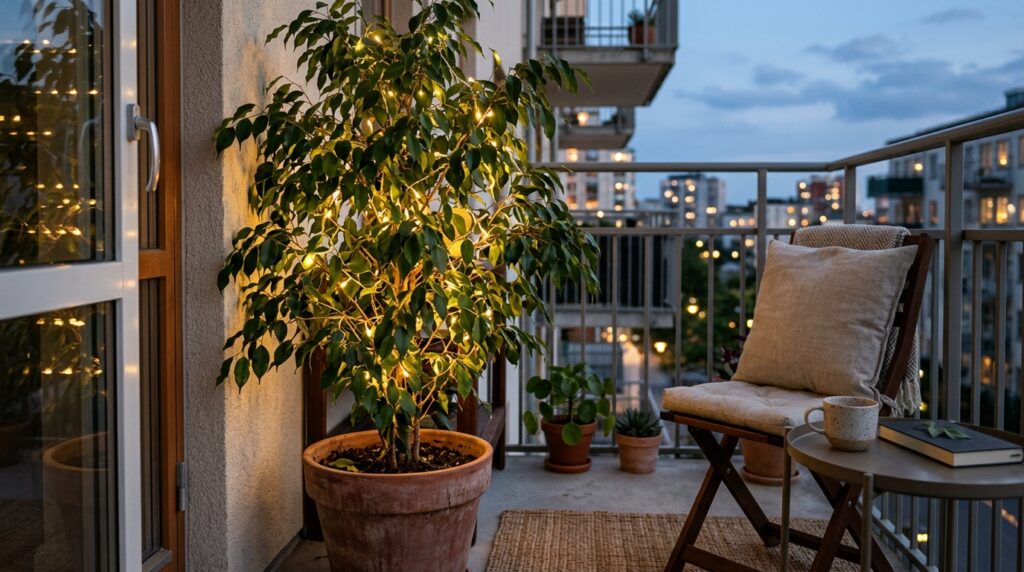
This works especially well with plants that have larger leaves or a fuller shape, like a ficus or a large fern, where the lights can tuck in and peek through naturally.
19. Rotate Flowering Plants by Season
Keeping a few pots specifically for seasonal flowers, separate from your permanent greenery, lets you swap in whatever is blooming without disturbing your main plant collection. Pansies in cooler months, petunias or marigolds in summer, and mums in fall keep the balcony feeling current.
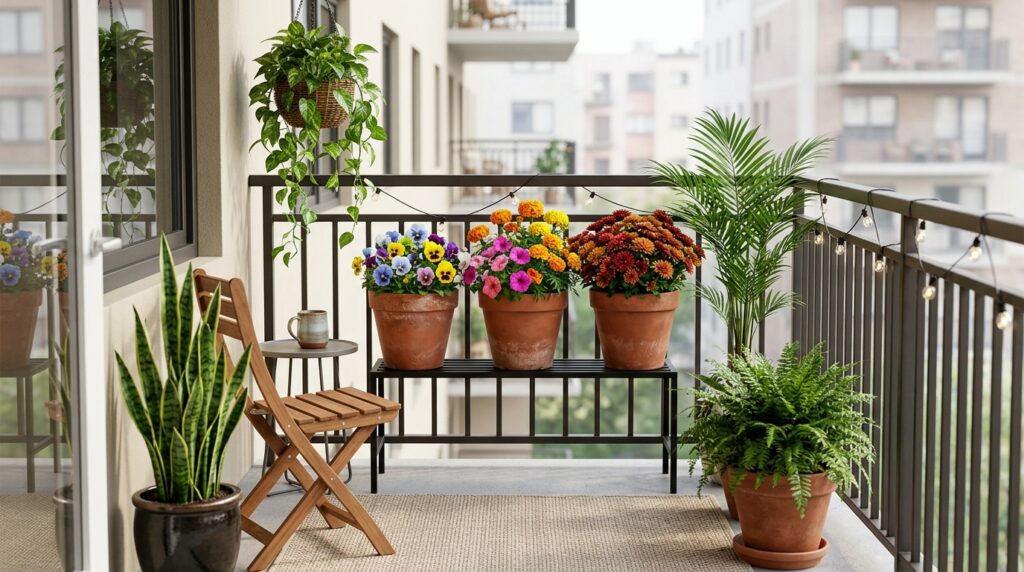
This approach means most of your plants stay put year round, while just a couple of pots do the work of keeping things visually fresh throughout the year.
20. Use a Wall Pocket Planter for a Living Wall
A fabric or felt wall pocket planter, mounted flat against a wall, holds a row of small plants in individual pockets, creating a living wall effect with a soft, textile based look rather than a wooden or structural one. Each pocket can hold a different small plant, herb, or succulent.
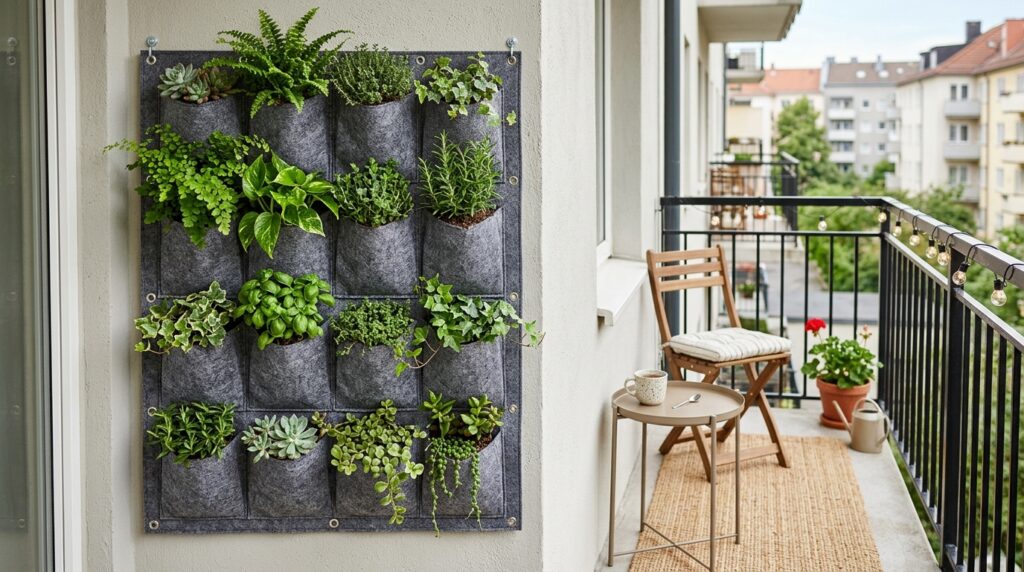
This style works particularly well for adding greenery to a wall that gets partial shade, since smaller plants in individual pockets are easier to swap out if one is not thriving in that spot.
21. Add a Small Tabletop Water Feature Near Plants
A small tabletop fountain placed among potted plants adds the sound of water to the space, which pairs naturally with greenery in a way few other additions can. Even a compact, battery operated fountain creates a calming background sound.
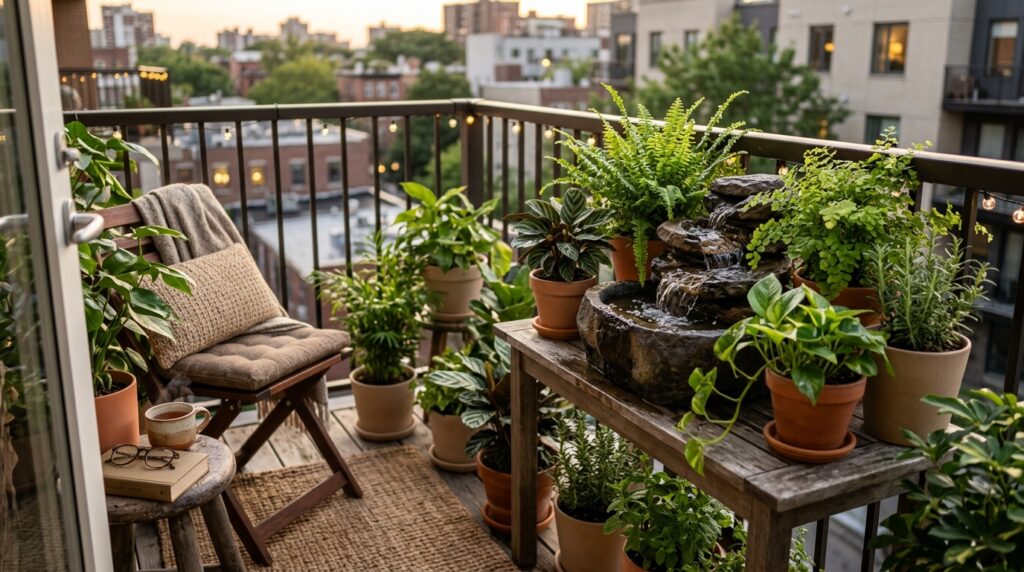
Position it where you can hear it from your main seating spot, and surround it with a few plants so it feels like part of the greenery rather than a separate gadget sitting on its own.
22. Repurpose Vintage Containers as Plant Pots
An old teapot, a tin canister, or a chipped enamel pot, once you drill a drainage hole or add a layer of gravel at the bottom, can become a planter with character that store bought pots rarely have. Mixing a few of these among your regular pots adds personality and a collected over time feel.

Thrift stores and flea markets are good sources for these kinds of containers, and the imperfections that make them unsuitable for their original use are often what make them interesting as planters.
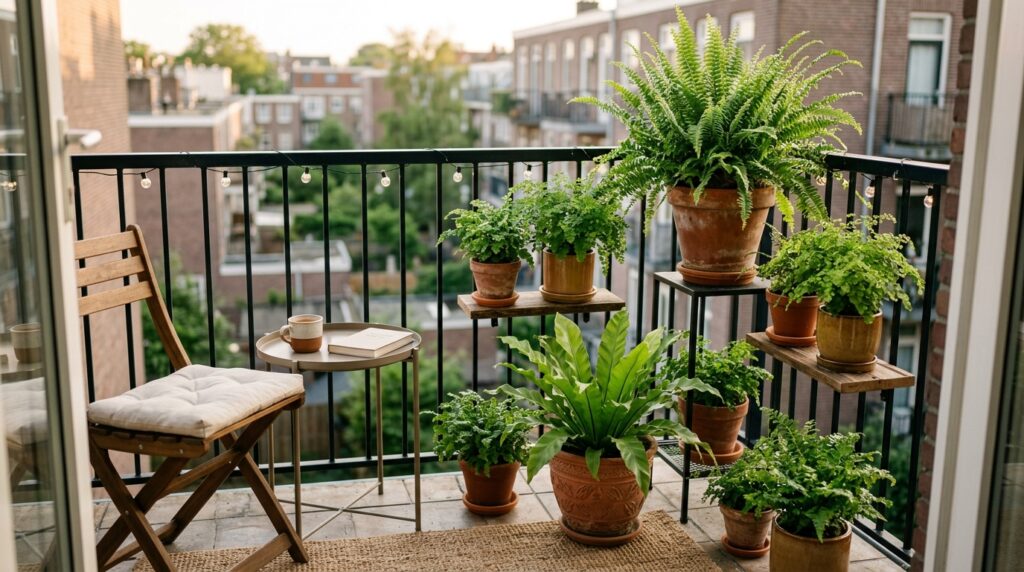
23. Create a Themed Corner with One Plant Family
Dedicating one section of the balcony to a single type of plant, all ferns, all succulents, or all flowering tropicals, creates a focal point that feels curated rather than scattered. The variety within the family, different fern shapes or different succulent forms, still provides visual interest.

This works especially well in a corner that gets consistent light, since plants from the same family often have similar care needs, making it easier to keep that whole area thriving together.
24. Add Plant Markers for a Curated Garden Look
Small wooden or metal plant markers, labeling each pot with the plant’s name, add a detail that most home balconies do not bother with, but that instantly gives the space a more considered, almost botanical garden feel.
Beyond the visual touch, markers are genuinely useful if you have several similar looking plants with different care needs, helping you remember which pot needs more water or shade than the others.
25. Pair Tall and Short Plants to Create Layers
When arranging multiple pots together, place taller plants toward the back or center and shorter ones in front, similar to how a garden bed is layered. This creates depth even in a space where everything is technically on the same level.
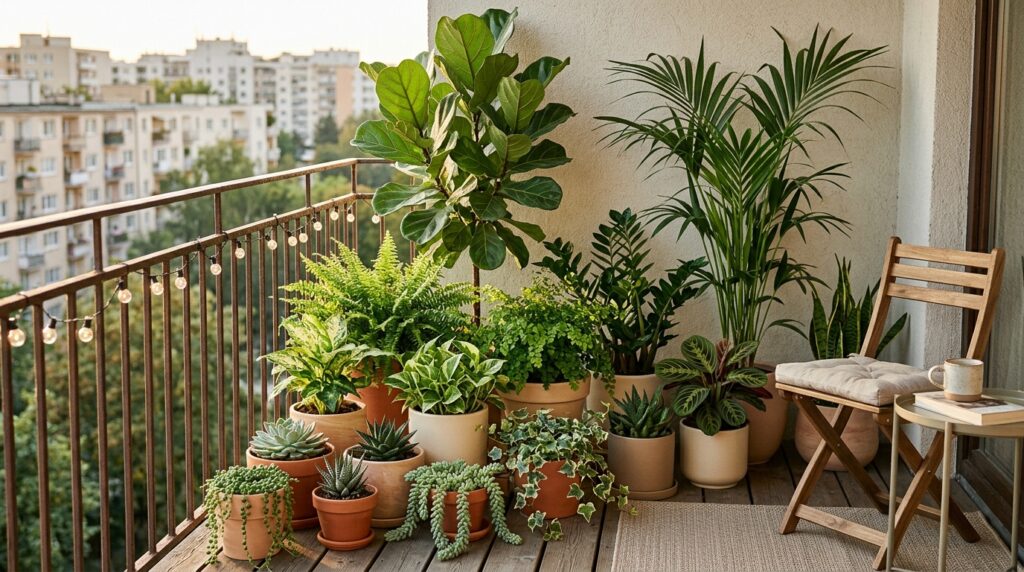
A tall palm or fiddle leaf fig behind a row of smaller succulents or trailing plants gives the eye something to travel through, rather than landing on a flat row of pots all the same height.
Final Thoughts
A balcony full of plants does not need to mean a balcony full of clutter. The difference between a jumble of pots and a space that feels like a small garden usually comes down to variety, in color, texture, height, and placement, rather than the number of plants themselves.
Start with what you already have. Look at your current pots and plants through the lens of contrast and grouping before buying anything new, and you may find that rearranging what is there does more than adding more would.
A balcony with plants chosen and placed thoughtfully becomes a space that changes with the seasons and grows more interesting over time, which is something no amount of furniture or lighting alone can offer.