
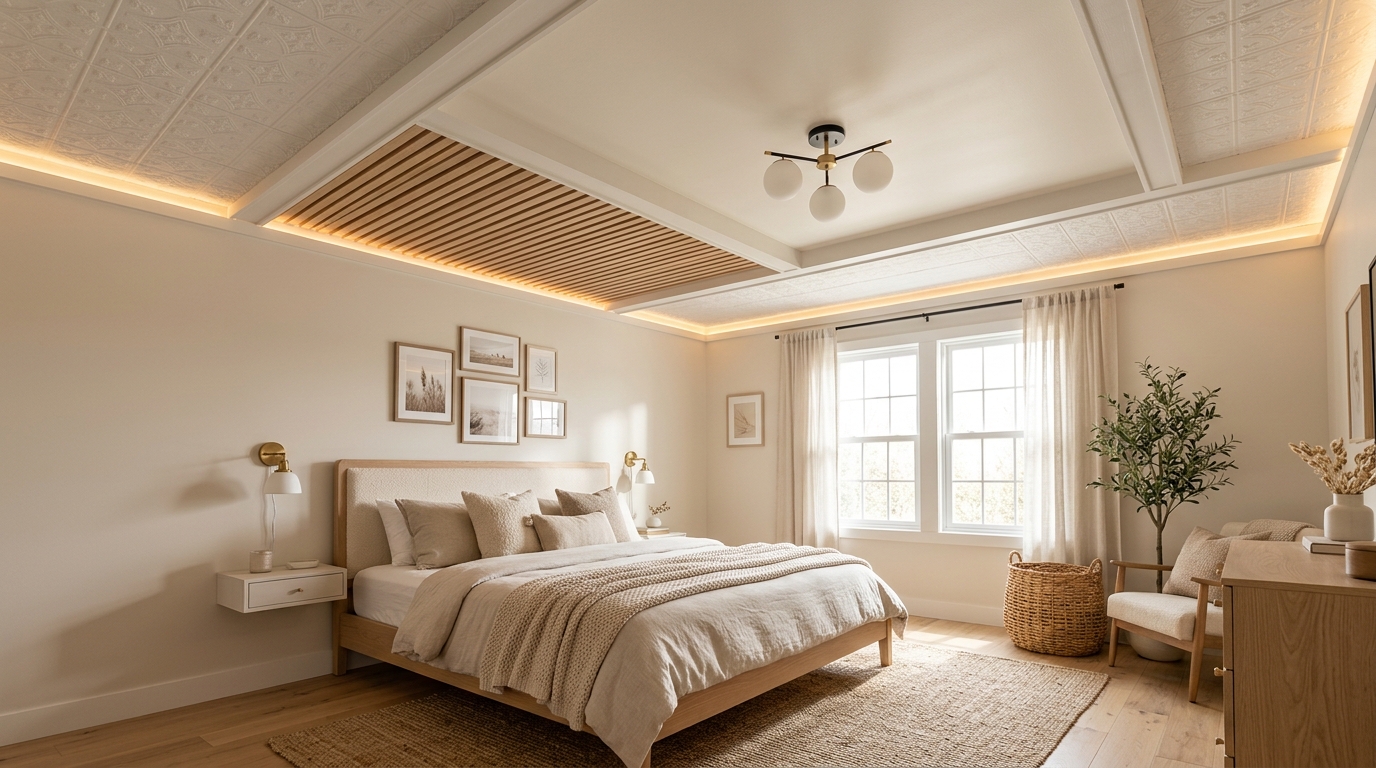
The ceiling is the largest surface in most bedrooms that almost never gets any attention, left plain white while everything below it gets decorated, painted, and styled. A few inexpensive changes overhead can completely shift how a bedroom feels, often for very little money.
This article focuses on budget friendly DIY ideas for bedroom ceilings, the kind of projects that use leftover materials, basic tools, or a single afternoon to make the most overlooked surface in the room feel intentional. Below are sixteen ideas for transforming a bedroom ceiling without spending much at all.
1. Paint the Ceiling a Soft Color Instead of Plain White
A ceiling painted in a soft color, a pale blue, sage, or warm beige, instantly makes a room feel more finished, since most ceilings default to plain white regardless of the wall color below. Even a subtle shift in tone changes how the whole room reads.
This is one of the simplest projects on this list, requiring only paint and the tools most people already have from painting walls. Choosing a color a shade or two lighter than the walls keeps the ceiling from feeling heavy while still adding warmth that plain white cannot.
2. Add a Stenciled Pattern Across the Ceiling
A repeating stencil pattern, painted in a tone close to the base ceiling color, adds texture and detail overhead without requiring a bold color change. Simple geometric shapes or small repeating motifs work well at this scale.
Because the pattern sits on the ceiling rather than the walls, it tends to be noticed gradually rather than dominating the room immediately, which suits people who want detail without a strong visual statement. A single can of paint and a stencil are usually enough to cover an average sized bedroom ceiling.
3. Hang Removable Wallpaper Overhead
Removable wallpaper, normally used on walls, works just as well on a ceiling and brings pattern or texture to a surface that almost never gets wallpapered. Smaller scale patterns tend to read better overhead than very large ones, since the whole ceiling is viewed from a distance while lying down.
Installation does take more effort than wall application, since working overhead is less comfortable, but the material itself behaves the same way and removes cleanly when it is time to change the look again.
4. Create Faux Beams With Painted Wood Strips
Thin strips of wood, painted or stained and attached across the ceiling in a grid or parallel pattern, mimic the look of exposed structural beams without any actual construction. Lightweight wood like pine keeps the strips easy to install with basic adhesive and a few small nails.
This project adds architectural interest to a flat ceiling, and choosing a finish that contrasts with the ceiling color, like dark stained wood against a white ceiling, makes the beams read as a deliberate feature rather than an afterthought.
5. Drape Fabric for a Canopy Effect
Lengths of lightweight fabric, attached at a few points across the ceiling and allowed to drape softly between them, create a canopy effect that adds softness and a sense of coziness overhead. This works particularly well above a bed.
Sheer fabrics in white or a soft neutral tend to look the most intentional, since heavier fabrics can sag or look bulky once draped. A few small hooks or adhesive anchors are usually all that is needed to hold the fabric in place.
6. String Lights in a Pattern Across the Ceiling
Battery operated or plug in string lights, arranged in a grid, wave, or radial pattern across the ceiling, add a soft glow that transforms a bedroom at night without needing any electrical work. Small adhesive clips hold the lights in place along the desired pattern.
This project works especially well in rooms where the main light is too bright for evenings, since the string lights provide a dimmer alternative. Warm white lights tend to create a cozier effect than cool white or multicolored options for this kind of overhead arrangement.
7. Paint a Contrasting Border Around the Edge
A painted border running around the perimeter of the ceiling, in a color slightly different from both the ceiling and the walls, creates a defined edge that frames the room from above. This detail is subtle but adds a sense of intention to where the wall meets the ceiling.
Taping off a straight line and painting a band a few inches wide is usually all this project requires. A color picked up from elsewhere in the room, like an accent pillow or a piece of art, helps the border feel connected to the rest of the space.
8. Use Washi Tape for a Geometric Design
Washi tape, a decorative tape that removes cleanly, can be arranged directly on the ceiling in geometric lines, creating a graphic pattern without any paint at all. Straight lines in a grid, chevron, or radiating pattern from a central point all work well with tape.
This is one of the most temporary and least committal options on this list, since the tape can be removed or repositioned easily if the pattern does not work as expected. It also requires no drying time, making it possible to complete and enjoy immediately.
9. Hang Paper Lanterns for Texture and Light
A cluster of paper lanterns in varying sizes, hung at slightly different heights from the ceiling, adds dimension and softens the light in the room when used with simple bulb fixtures inside each one. The lanterns themselves also add visual interest even when not lit.
Grouping a few lanterns together, rather than spacing them evenly across the ceiling, creates a more intentional focal point. White or natural paper lanterns tend to suit most bedroom styles, while colored versions can introduce a playful accent.
10. Build a Faux Skylight With a Light Box
A shallow box frame mounted on the ceiling, with a frosted acrylic or fabric panel and lights installed inside, mimics the soft glow of a skylight without any structural changes to the roof or ceiling itself. The light behind the frosted panel diffuses evenly, similar to overcast daylight.
This project requires a bit more building than most on this list, but the materials are relatively inexpensive, and the resulting effect adds a unique focal point that few bedrooms have, especially useful in rooms without windows that get much natural light.
11. Create an Ombre Effect With Leftover Paint
Blending two or three leftover paint colors in a gradient across the ceiling, lighter near the center and darker toward the edges or in one direction, creates a soft ombre effect using paint that might otherwise go unused. The blending happens while the paint is still wet, using a brush or roller to feather the transition.
This project works best with colors that are relatively close to each other in tone, since a gradual transition between similar shades looks intentional, while very different colors can end up looking more like an uneven paint job than a deliberate effect.
12. Add a Simple Painted Mural Overhead
A basic painted design, clouds, stars, or simple shapes, on the ceiling adds a personal, handmade element that store bought decor cannot replicate. This does not need to be elaborate, even a few scattered shapes in a tone close to the base color can add interest.
This project suits anyone comfortable with basic painting and a steady hand, and starting with a small section or a simple repeating shape keeps the project manageable, even for a first attempt at this kind of overhead painting.
13. Hang a Macrame or Fabric Mobile From the Center
A single hanging piece, whether a macrame design, a fabric mobile, or a cluster of paper shapes, suspended from the center of the ceiling adds a focal point overhead, particularly above a bed where it becomes the first thing seen when lying down.
This project requires only a single hook and the piece itself, making it one of the quickest additions on this list. Choosing a piece in a neutral tone keeps it from clashing with other colors in the room, while a bold color makes it a clear statement piece.
14. Use Peel and Stick Tiles for Texture
Peel and stick tiles, normally used on walls or floors, can be applied to a ceiling to add texture, whether a subtle pattern, a metallic finish, or a faux tin tile look reminiscent of older buildings. The application process is the same as on any other surface, just upside down.
This project works particularly well on a smaller ceiling area, like a closet or a nook, where the cost and effort of covering a full bedroom ceiling would be more significant, but the textural impact of the tiles is still clearly visible.
15. Add Thin Wood Lath Strips for a Plank Look
Thin strips of wood lath, attached across the ceiling with small gaps between each strip, create the look of a planked ceiling without the weight or cost of full wood planks. The strips can be left natural, stained, or painted depending on the desired look.
This project adds noticeable texture and warmth, particularly in rooms with otherwise flat, featureless ceilings. Working in sections, rather than trying to cover the whole ceiling in one session, makes the project more manageable for a single person working alone.
16. Create a Two Tone Ceiling With a Painted Divide
Splitting the ceiling into two sections, each painted a different color with a straight line dividing them, adds a graphic element that works particularly well in rooms with sloped or angled ceilings, where the natural break in the ceiling’s shape provides a logical dividing line.
In rooms with flat ceilings, the divide can follow a structural element, like a beam or a change in the room’s layout below, to keep the line feeling purposeful rather than arbitrary. Two colors that are close in value tend to look more cohesive than a stark contrast for this kind of treatment.
Final Thoughts
A bedroom ceiling does not need a renovation to feel different, and most of the ideas in this article rely on paint, tape, fabric, or small additions that can be completed in a weekend or less. The impact of these changes tends to be larger than expected, simply because ceilings so rarely get any attention at all.
Starting with one project, whether that is a soft paint color or a simple string light pattern, often makes the rest of the room feel different too, since the ceiling sets a kind of unspoken tone for everything beneath it.