
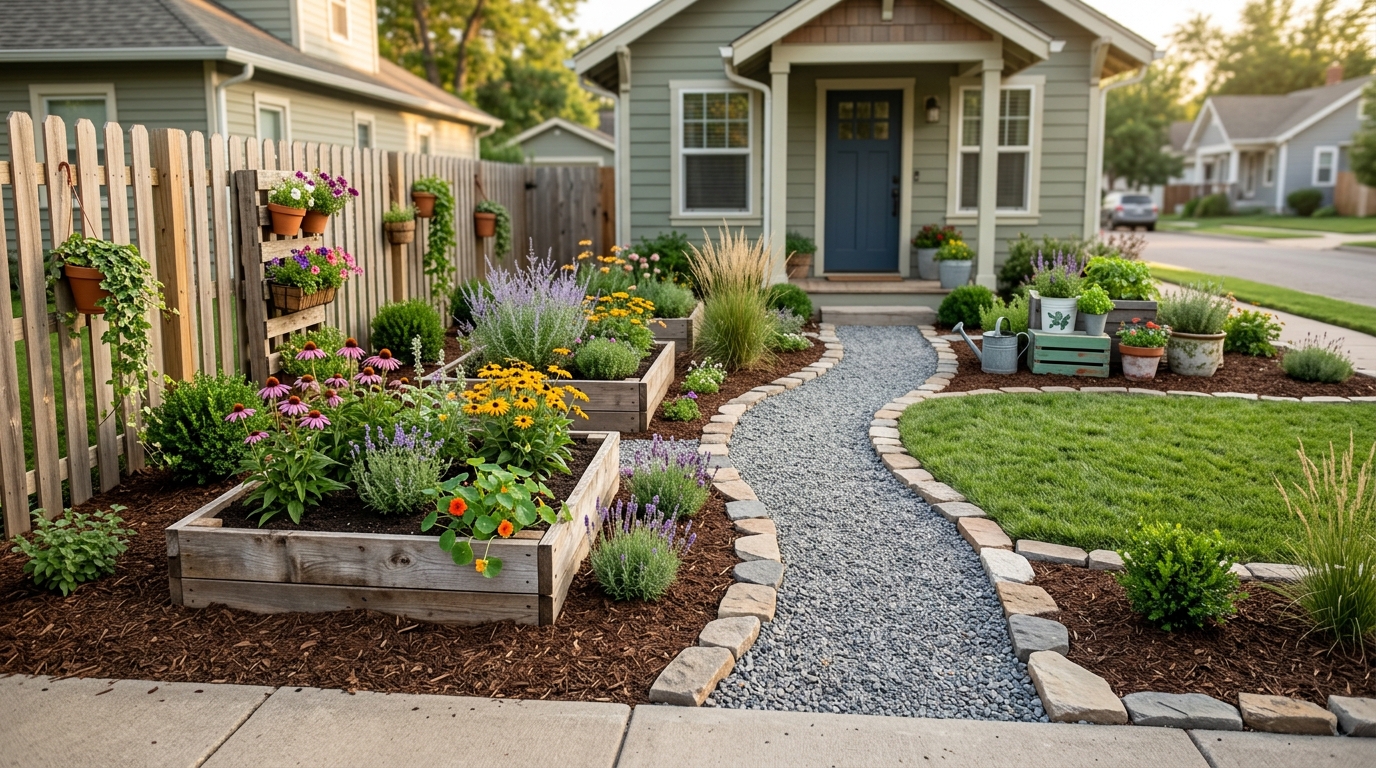
Gardening is one of those hobbies where spending more money does not automatically mean better results. Some of the most beautiful gardens out there were built almost entirely on patience, propagation, and smart shopping rather than trips to an expensive nursery. These 19 garden ideas on a budget will show you how to create a garden worth being proud of without draining your wallet in the process.
The ideas here work in backyards, side yards, small urban plots, and container setups alike. Most of them cost under twenty dollars to execute and some of them cost nothing at all. Below are 19 ways to build a genuinely beautiful garden on a budget.
1. Grow Everything from Seed
Buying established plants from a nursery is convenient but it is also the most expensive way to fill a garden. A single packet of seeds costs one to three dollars and contains enough to fill an entire bed with the same plant a nursery would charge eight to twelve dollars per pot for. Tomatoes, zinnias, sunflowers, basil, lettuce, and cosmos are all easy to start from seed directly in the ground or in small pots on a sunny windowsill.
Start seeds six to eight weeks before your last frost date indoors using basic seed starting mix from Home Depot and any small container with a drainage hole. Egg cartons, yogurt cups, and takeout containers all work perfectly as seed starting vessels. The cost per plant drops to almost nothing and you end up with far more plants than you could ever afford to buy.
2. Propagate Plants from Cuttings
Many of the most popular garden plants root easily from cuttings taken from existing plants. Hydrangeas, salvias, lavender, rosemary, sedums, and most houseplants can be propagated by snipping a four to six inch stem, removing the lower leaves, and placing it in a glass of water or directly into moist potting mix. Within two to four weeks most cuttings develop roots strong enough to transplant.
Ask neighbors, friends, or local gardening groups if you can take cuttings from their plants. Most gardeners are happy to share and this method of expanding a garden costs absolutely nothing. A single established hydrangea in a neighbor’s yard can give you a dozen new plants for your own garden in a single season.
3. Divide Perennials to Multiply Your Plants
Perennials need to be divided every three to five years to stay healthy and productive. This means that any established garden is essentially a free plant source for anyone willing to dig. Hostas, daylilies, coneflowers, black eyed Susans, ornamental grasses, and astilbes all divide easily in early spring or fall. Dig up the clump, separate it into sections with a sharp spade, and replant each division as an individual plant.
Join a local gardening club, neighborhood Facebook group, or app like Nextdoor and ask if anyone has perennials to divide and share. Plant swaps happen regularly in most communities and you can walk away with dozens of established perennials for the cost of a few hours on a Saturday morning. This single habit can fill an entire garden over two to three seasons without spending anything on plants.
4. Use Compost Instead of Bagged Fertilizer
Bagged fertilizer and soil amendments are a recurring garden expense that adds up quickly over a season. Starting a compost pile costs nothing and produces a continuous supply of rich organic material that improves soil structure, feeds plants slowly over time, and reduces the amount of kitchen and yard waste going to landfill. Kitchen scraps, grass clippings, fallen leaves, and cardboard are all compost ingredients that most households already produce.
A basic compost pile needs nothing more than a corner of your yard and a little patience. If you want to contain it tidily, four wooden pallets wired together at the corners make a free compost bin that holds a large volume of material. Within three to six months your first batch of finished compost will be ready to dig into your beds and the improvement in plant growth is immediate and noticeable.
5. Sheet Mulch to Kill Weeds for Free
Clearing a new garden bed usually means renting a sod cutter, buying herbicide, or spending hours digging by hand. Sheet mulching does the same job for free using materials you either already have or can get at no cost. Lay overlapping sheets of plain cardboard directly over the grass or weeds you want to kill, wet it thoroughly, and cover it with four to six inches of wood chip mulch or compost. The cardboard smothers everything underneath and breaks down into the soil over six to twelve months.
Many municipalities offer free wood chip mulch from their tree trimming operations. The website ChipDrop connects homeowners with arborists who need to drop loads of fresh wood chips and will deliver them to your driveway for free. A new garden bed created this way costs nothing except the time it takes to lay the cardboard and spread the chips.
6. Buy Plants at End of Season Sales
Garden centers discount their remaining stock heavily at the end of the growing season, sometimes by fifty to seventy five percent. Perennials, shrubs, and trees bought in late summer or early fall are often root bound and slightly stressed looking but they establish quickly once planted and come back the following spring as full, healthy plants indistinguishable from ones bought at full price in May.
Shop end of season sales at Home Depot, Lowe’s, and local nurseries in August and September. A shrub that cost forty dollars in spring often sells for eight to ten dollars in late August. Plant it promptly, water it well through fall, and mulch the root zone before winter. The following spring it will be a fully established plant that cost you almost nothing.
7. Make Your Own Plant Markers
Store bought plant markers cost anywhere from ten to thirty dollars for a set of ten. You can make better looking ones for free from materials already in your home. Flat river stones painted with the plant name in white paint marker look beautiful and last for years. Wooden popsicle sticks or coffee stir sticks work for temporary markers during seed starting. Lengths of wine bottle cork pushed onto bamboo skewers make surprisingly elegant markers for a kitchen herb garden.
Bamboo skewers from the kitchen drawer, paint markers from a craft store, and smooth stones from any driveway or riverbed are all the materials you need. Making your own markers is one of those small creative tasks that makes the garden feel more personal and considered without costing anything worth mentioning.
8. Collect and Save Rainwater
Water is a significant ongoing cost for any garden, particularly during dry summers. A basic rain barrel connected to a downspout collects hundreds of gallons of free water during a single moderate rainfall. That stored water keeps your garden irrigated during dry spells without adding anything to your water bill. Many municipalities offer subsidized or free rain barrels to encourage water conservation and it is worth checking your local government website before buying one at retail.
A basic rain barrel from Home Depot or Amazon costs around thirty to fifty dollars and pays for itself within a single growing season in reduced water bills. Position it on a slight elevation so gravity feeds water into a hose or watering can without needing a pump. Add a fine mesh screen over the top to keep mosquitoes from breeding in the standing water.
9. Grow Vegetables in Containers
A vegetable garden does not require dedicated in ground beds. Tomatoes, peppers, lettuce, herbs, cucumbers, and bush beans all grow successfully in containers, which means you can start a productive food garden on a patio, balcony, or driveway without any ground preparation or bed building. Five gallon buckets from Home Depot cost around four dollars each and work perfectly for most vegetables when drilled with drainage holes in the bottom.
Fill containers with a mix of bagged potting mix and homemade compost to keep costs down. Grow what your family actually eats and you will see a return on your investment within the first harvest. A single cherry tomato plant in a five dollar bucket can produce enough fruit over a summer to more than cover the cost of the container, the soil, and the plant combined.
10. Use Newspaper and Cardboard as Weed Barrier
Landscape fabric from a garden center costs ten to twenty dollars per roll and breaks down within a few seasons, often making weed problems worse rather than better as it degrades. Plain newspaper laid five to ten sheets thick between plants and covered with mulch does the same job at no cost and breaks down into the soil cleanly without leaving behind plastic fragments. Cardboard works even better for heavier weed pressure.
Collect newspaper from neighbors or pick up free boxes from a grocery store or liquor store. Wet the paper before laying it so it conforms to the ground and does not blow around while you work. Cover immediately with two to three inches of mulch and weeds underneath will be suppressed for an entire growing season.
11. Trade Plants with Neighbors and Community Gardens
A plant you have too many of is exactly what someone else has been looking for and vice versa. Organizing or participating in a neighborhood plant swap costs nothing and consistently produces more variety than any single budget can buy. Bring divisions of your own perennials, extra seedlings you have started, or rooted cuttings you have taken and leave with plants that would have cost you thirty to fifty dollars at a nursery.
Local community gardens, master gardener programs, and social media gardening groups all facilitate informal plant trading throughout the growing season. The relationships you build through plant sharing often lead to ongoing exchanges of seeds, cuttings, and gardening knowledge that benefit your garden for years beyond any single swap event.
12. Build Raised Beds from Free or Salvaged Materials
New cedar raised bed kits from garden centers cost sixty to one hundred fifty dollars each. Salvaged materials produce the same result at little to no cost. Untreated wooden pallets broken down into boards, logs from a fallen tree, large rocks collected from a construction site or riverbed, or concrete blocks sourced from a demolition site all make functional and attractive raised bed walls.
Check Facebook Marketplace, Craigslist, and neighborhood apps regularly for free building materials. People give away concrete blocks, old landscaping timbers, and surplus stone constantly and are often happy to have someone haul it away. A raised bed built entirely from salvaged materials costs nothing except the soil to fill it and the time to build it.
13. Collect Leaves for Free Mulch and Soil Amendment
Fallen leaves are one of the most valuable free resources available to any gardener and most people put them in bags at the curb. Shredded leaves used as mulch around garden beds insulate roots in winter, suppress weeds in summer, and break down into a rich humus that improves soil structure over time. Run your lawn mower over a pile of leaves to shred them quickly before spreading.
If you do not have enough leaves of your own, put a note on Nextdoor offering to collect bagged leaves from neighbors before the municipal pickup. Most people will happily let you take them. A single fall afternoon of leaf collection can produce enough free mulch and compost material to cover an entire garden and feed the soil through the following growing season.
14. Install Drip Irrigation from a Basic Kit
Hand watering a garden is time consuming and inconsistent. An inground sprinkler system costs thousands of dollars to install. A basic drip irrigation kit from Home Depot or Amazon costs twenty to forty dollars and can be assembled in a few hours without any plumbing knowledge. Drip irrigation delivers water directly to plant roots where it is needed, reducing water use by up to fifty percent compared to overhead watering and virtually eliminating the time you spend holding a hose.
Run the main line from an outdoor tap, connect distribution tubing to each bed or container, and set a basic timer to water automatically at the most efficient time of day which is early morning before heat and evaporation set in. The water savings alone pay back the cost of the kit within a single summer and your plants will grow better with the consistent, targeted moisture delivery.
15. Grow a Three Sisters Garden
The three sisters planting method, developed by Native American agricultural traditions, grows corn, beans, and squash together in a mutually beneficial combination that reduces the need for fertilizer, irrigation, and pest management. The corn provides a trellis for the beans to climb, the beans fix nitrogen into the soil that feeds the corn and squash, and the large squash leaves shade the ground to retain moisture and suppress weeds.
This traditional system produces three different vegetables from a single planting area without any purchased inputs beyond the seeds themselves. It is one of the most resource efficient planting methods available and the yield from a well managed three sisters bed is remarkable for the amount of effort and cost it requires.
16. Use Kitchen Scraps to Regrow Vegetables
Many common vegetables regrow from scraps that would otherwise go in the compost. Green onions placed root end down in a glass of water on a sunny windowsill regrow within days and can be harvested repeatedly for months. Lettuce stumps, celery bases, and herb stems with nodes all produce new growth when placed in shallow water or moist soil.
Ginger, turmeric, and garlic all regrow from pieces of the root or bulb planted directly in a pot or in the ground. Sweet potatoes planted in the garden produce slips that grow into full plants. Starting from kitchen scraps costs nothing and produces a steady supply of fresh produce from material that was already in your home.
17. Make Organic Pest Spray at Home
Commercial pesticides and organic pest control sprays cost ten to twenty dollars per bottle and need to be replaced regularly throughout the season. A basic neem oil spray made from neem oil concentrate, a few drops of dish soap, and water in a reused spray bottle handles most common garden pests and fungal issues for a fraction of the cost. Neem oil concentrate from Amazon costs around fifteen dollars and makes dozens of applications.
A simple garlic spray made from blended garlic cloves strained into water repels aphids, caterpillars, and many other soft bodied pests. Diluted dish soap spray handles aphids and spider mites effectively on most plants. These homemade solutions work as well as most commercial alternatives and cost almost nothing to make once you have the basic ingredients.
18. Light Your Garden with Solar Stake Lights
Outdoor lighting dramatically changes how a garden looks in the evening and extends the time you spend enjoying it after dark. Wired landscape lighting requires trenching and electrical work that costs hundreds of dollars. Solar stake lights from Amazon or Home Depot cost around twenty to thirty dollars for a set of eight, require no wiring, and charge automatically during the day.
Place them along path edges, tucked into the base of a mixed border, or positioned to uplight a specimen plant or garden focal point. Warm white solar lights with a color temperature around 2700K look the most natural and flattering in a garden setting. The quality of solar lighting has improved dramatically in recent years and current options are reliable enough to run all night from a single day of reasonable sunlight.
19. Be Patient and Let the Garden Fill In
The most expensive habit in gardening is impatience. A newly planted garden always looks sparse in its first season and the temptation to fill every gap with more plants leads to overcrowding within two or three years and a significant amount of unnecessary spending along the way. Plants that look small and widely spaced in year one will be touching and competing for space by year three if you plant them at their mature spacing.
Resist the urge to fill gaps immediately. Use annuals as temporary fillers in the first season if the empty space bothers you and let the permanent plants establish and spread naturally. A garden that fills in gradually over two to three seasons from a modest initial investment looks and performs far better than one that was planted at full density from the start at three times the cost.
Conclusion
A beautiful garden and a large garden budget are not the same thing and the best gardeners have always known this. Seed saving, plant sharing, composting, and making use of free materials are practices that go back as far as gardening itself and they produce results that no amount of money spent at a garden center can replicate.
Start with two or three of these garden ideas on a budget this season and build from there. The habits you develop around propagating, composting, and trading plants will serve your garden better over the long term than any single purchase ever could.