
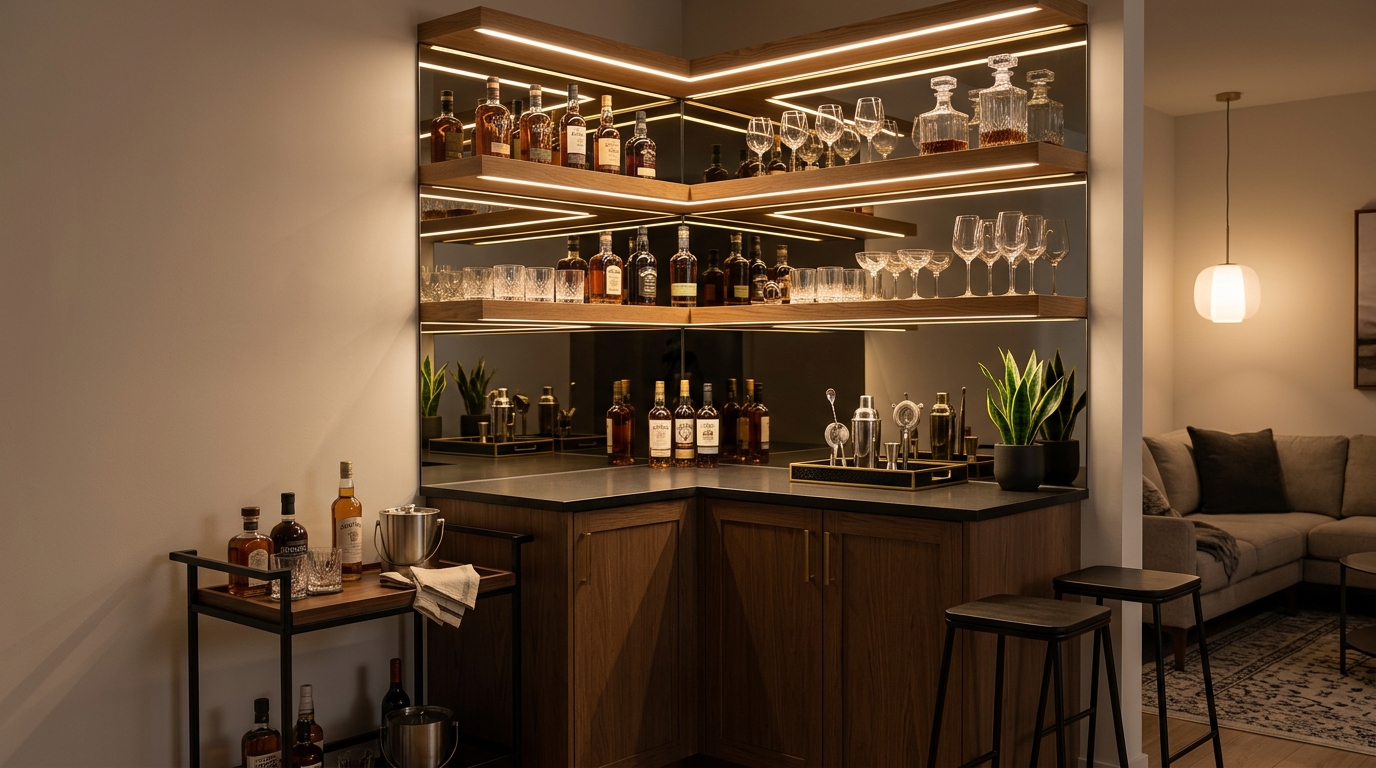
Having a dedicated bar in your home does not require a basement the size of a restaurant or a budget that makes you wince. Some of the most functional and good looking home bars out there are tucked into corners, closets, and spare walls that most people walk past without a second thought. These 20 home bar ideas for small spaces will show you how to create a bar setup that actually works in a real home with real space constraints.
Whether you have an awkward alcove, a unused corner of your living room, or a narrow stretch of kitchen wall, there is a setup here that fits. Below are 20 ideas that prove a small footprint does not mean compromising on style or function.
1. Convert a Floating Shelf into a Bar
A set of two or three floating shelves mounted on a single wall is one of the simplest and most space efficient home bar setups you can create. The top shelf holds your spirit bottles arranged by type or height, the middle shelf displays glassware, and the bottom shelf holds mixers, a small ice bucket, or bar tools. The whole setup takes up zero floor space and looks intentional and styled rather than improvised.
Mount the shelves on a wall that already has visual interest, a brick wall, a painted accent wall, or a wall with good ambient lighting nearby, and the bar becomes a genuine feature of the room rather than something tucked apologetically in a corner. Black metal brackets with natural wood shelves, white shelves with brass hardware, or dark walnut with matte black brackets are all strong combinations that work in most living room or dining room setups.
2. Use a Bar Cart
A bar cart is the most flexible home bar solution available for small spaces because it goes wherever you need it and disappears when you do not. Style it with a curated selection of spirits, a few pieces of glassware, a small ice bucket, and one or two decorative objects like a small plant or a candle and it looks like a deliberate design choice rather than a storage solution.
CB2, West Elm, and Wayfair all carry bar carts at a range of price points from around sixty dollars to several hundred. A gold or brass finish cart in a living room corner catches light beautifully and photographs well. A matte black cart reads as more industrial and modern. Either way, the mobility means you can roll it to wherever people are gathering and roll it back out of sight when you want the space back.
3. Transform a Closet into a Bar
A closet bar, sometimes called a cloffice bar or a bar closet, is one of the most satisfying small space transformations available in a home. Remove the hanging rod, add shelving at varying heights, install a small countertop at the base, and line the interior with wallpaper or paint in a contrasting color. Close the doors and it disappears completely. Open them and you have a fully equipped bar that looks like it belongs in a boutique hotel.
The interior of a standard coat closet is large enough to hold a full bottle collection, a complete set of glassware, a small under counter wine fridge, and all the tools and accessories a home bar needs. Add a strip of LED lighting inside and the whole setup glows when the doors are open. This is the home bar idea that generates the most reaction from guests because the reveal moment is genuinely impressive every single time.
4. Build a Murphy Bar
A Murphy bar is a fold down bar surface mounted to the wall that folds flat when not in use and opens into a functional bar top with storage when needed. It is the wall bed concept applied to a home bar and it works brilliantly in small spaces where every square foot counts. Closed, it looks like a simple cabinet or decorative panel. Open, it gives you a full bar surface with space for bottles and glasses built into the cabinet above.
Murphy bar kits are available on Etsy and Amazon starting around two hundred dollars for a basic version. A more custom built version from a local carpenter or a DIY build using cabinet components from IKEA can be done for similar money with more control over size and finish. This is the best option for anyone who wants a genuine bar experience in a space that cannot accommodate any permanent footprint.
5. Style a Vintage Dresser as a Bar
A vintage dresser or sideboard from a thrift store or estate sale makes an excellent bar cabinet with almost no modification. Use the top surface as your bar area for mixing drinks, store bottles and glassware in the drawers, and keep mixers, tools, and napkins in the lower drawers or cabinet sections. A piece with interesting hardware, a carved front, or an unusual shape brings far more character to a home bar than anything purpose built for the job.
Sand it lightly, paint it in a color that works with your room, and line the drawer interiors with a patterned contact paper for a finished look that goes all the way through. A thrift store dresser that costs twenty dollars and an afternoon of work becomes a bar cabinet that looks custom and considered. The storage capacity of a full dresser also far exceeds what a dedicated bar cart or shelf setup can provide.
6. Install an Under Stair Bar
The space under a staircase is one of the most underused areas in any home and it is a natural fit for a compact home bar. The angled ceiling creates a built in nook quality that makes the bar feel intentional and architectural rather than added as an afterthought. Install open shelving along the back wall, add a small countertop at bar height, and finish with lighting above and below the shelves.
The footprint under most staircases is large enough to comfortably hold a full bottle collection, glassware for eight to ten people, and a small under counter refrigerator for wine or beer. Finish the space with the same materials used in the rest of the room so it reads as an integrated part of the home rather than a conversion project. This is one of those home bar setups that adds genuine value to a house beyond its immediate function.
7. Create a Dedicated Bar Tray on a Console Table
If you have a console table in your hallway, living room, or dining room, dedicating a styled tray on its surface to bar use gives you a functional bar without any additional furniture. A large round tray in marble, wood, or lacquered metal holds three to five spirit bottles, a set of glasses, a small cocktail shaker, and a few bar tools in a self contained arrangement that looks styled rather than functional even though it is both.
The key is keeping the selection edited. Four bottles, four glasses, and two tools look curated. Ten bottles and a full set of accessories look cluttered. Rotate the bottles based on what you are currently drinking and replace empty bottles immediately so the display always looks full and intentional. A bar tray on a console table costs nothing beyond the tray itself if you already have the furniture and takes five minutes to set up.
8. Mount a Pegboard Bar Wall
A pegboard mounted on a kitchen or dining room wall and fitted with hooks, small shelves, and hanging racks creates a highly functional and visually interesting bar storage solution that takes up no floor space. Hang wine glasses upside down from hooks, store spirits on small shelves, and keep bar tools hanging within easy reach. Paint the pegboard in a color that contrasts with your wall for maximum visual impact.
A full sheet of pegboard from Home Depot costs around fifteen dollars and the hooks and accessories run about ten to twenty dollars more. Paint it in matte black, deep green, or warm terracotta for a bar wall that looks designed rather than functional. The modular nature of a pegboard setup means you can reconfigure it easily as your collection grows or your storage needs change.
9. Use a Tall Bookcase as a Bar
A tall narrow bookcase, particularly one with glass doors or an open front, converts into an excellent home bar cabinet with minimal effort. Dedicate the top two shelves to spirit bottles arranged by height or spirit type, use the middle shelves for glassware and a small selection of bar books, and keep the lower shelves for mixers, a cocktail shaker, and bar accessories.
IKEA Billy bookcases with glass door attachments work extremely well for this purpose and cost around one hundred fifty to two hundred dollars fully fitted. The glass doors keep dust off your glassware between uses and the enclosed storage means the bar can live in a dining room or living room without visually dominating the space. A tall bookcase bar uses vertical space efficiently and works in any room that already has bookcases in it.
10. Build a Narrow Bar Cabinet with Plywood
A simple plywood bar cabinet with a depth of just twelve inches can hold a significant bottle and glass collection without projecting far enough into a room to interfere with traffic flow. Twelve inches is shallower than most furniture but deep enough to store bottles upright, stack glasses, and keep bar tools accessible. Paint it in a high gloss finish or wrap it in contact paper for a clean, finished look that belies the straightforward construction underneath.
Basic plywood construction requires only a circular saw, a drill, and wood glue to assemble and the materials for a four foot wide by six foot tall cabinet run around sixty to eighty dollars in materials. Add simple metal pulls from Home Depot and a coat of cabinet paint and the finished piece looks like something that cost four times what it actually did.
11. Dedicate a Kitchen Cabinet to Bar Storage
In a small apartment or home without a separate dining room or living room wall to spare, an upper kitchen cabinet dedicated entirely to bar use is a practical and invisible solution. Remove everything else from one upper cabinet near the kitchen counter and organize it specifically for bar use: spirits on the top shelf, glassware on the middle shelf, and mixers and tools on the bottom shelf. When the cabinet is closed the bar simply does not exist.
Add an under cabinet LED strip light that illuminates the counter below the bar cabinet when open for a subtle but effective ambient detail. A pull out drawer organizer on the bottom shelf keeps small bar tools from rolling around and makes the interior look organized and intentional. This solution costs nothing if you already have the cabinet and the kitchen counter already provides the mixing surface.
12. Create a Bar Nook in a Dining Room Alcove
Many dining rooms have a small alcove, a recessed wall, or a bump out that sits empty because it is too small for furniture. A built in bar nook in one of these spaces turns an architectural dead zone into one of the most used and admired spots in the home. Install a countertop at bar height, add open shelving above it, and finish the back wall with tile, wallpaper, or a contrasting paint color to give the nook a distinct identity within the room.
Even a shallow alcove twelve to sixteen inches deep is sufficient for a fully functional bar setup. The recessed quality of an alcove bar means it does not protrude into the room at all and the built in appearance adds a sense of permanence and craftsmanship that freestanding furniture cannot replicate. This is the kind of addition that makes a dining room feel genuinely complete.
13. Hang a Wine Glass Rack Under a Cabinet
An under cabinet wine glass rack mounts directly to the underside of a kitchen or bar cabinet and holds glasses suspended upside down by their stems, completely off the counter and out of a drawer. A rack that holds twelve glasses costs around fifteen to twenty five dollars on Amazon and installs in about ten minutes with four screws. The glasses are accessible, protected, and on display in a way that looks intentional and professional.
Combine an under cabinet glass rack with a mounted bottle opener, a magnetic knife style strip for bar tools, and a small wall mounted bottle rack beside it and you have a fully functional bar zone on a single kitchen wall that uses exclusively vertical and underside space. The counter below stays completely clear for mixing.
14. Style a Bar in a Kitchen Island End Cap
If your kitchen has an island, the short end facing the living or dining area is prime real estate for a small bar setup. Mount two open shelves on the end cap of the island, add a wine rack insert below, and you have a bar that is integrated directly into existing kitchen architecture without adding any footprint to the room. Guests can help themselves to drinks from the living room side without entering the kitchen work zone.
This works particularly well in open plan layouts where the kitchen and living room share a single space. The island end cap bar serves both areas simultaneously and keeps the hosting flow easy and natural. Finish the shelves in a material that matches the island cabinetry and the addition looks like it was always part of the original design.
15. Use a Ladder Shelf as a Bar
A leaning ladder shelf requires no wall mounting, no tools, and no permanent installation which makes it ideal for renters or anyone who wants a flexible bar setup that can move between rooms. Style the rungs with spirit bottles at various heights, glassware on one level, and a small tray with bar tools and a candle on another. The angled leaning form takes up minimal floor space and the open structure keeps everything visible and accessible.
Target, Wayfair, and Amazon carry leaning ladder shelves starting around forty to sixty dollars in finishes from natural wood to matte black to white. The inherent casualness of a ladder shelf suits a home bar perfectly since the best home bars always feel relaxed and approachable rather than formal and intimidating.
16. Add a Mirrored Back Panel to Any Bar Setup
A mirrored panel mounted behind a floating shelf bar, inside a closet bar, or at the back of an alcove bar does two things simultaneously. It reflects light and makes the space feel significantly larger than it is, and it doubles the visual impact of your bottle collection by showing the back labels and the full shape of every bottle. Bars in restaurants and hotels have used this trick for decades and it works just as effectively in a home.
Mirror tiles from Home Depot cost around thirty to fifty dollars for a set that covers a standard shelf back. Self adhesive versions require no tools and can be removed without damage if you are renting. The addition of a mirrored back panel is one of those details that immediately makes a home bar look more considered and designed without requiring any structural changes.
17. Incorporate a Mini Fridge into Your Bar Setup
A bar without cold storage means warm beer, room temperature white wine, and no ice without a trip to the kitchen. A compact under counter mini fridge built into or positioned beside your bar setup solves all of these problems and makes your home bar genuinely functional rather than just decorative. Models designed for bar use have a glass door that displays the contents and fits neatly under a countertop height surface.
Danby and Newair both make compact bar refrigerators in widths as narrow as fifteen inches that fit under most bar countertops. Prices start around one hundred fifty dollars for a basic model. Position it at the end of a bar cabinet, built into a closet bar, or freestanding beside a bar cart and your setup immediately handles everything a home bar needs to handle.
18. Light Your Bar with Targeted Accent Lighting
Lighting transforms a home bar from a storage area into an atmosphere. Under shelf LED strips, a small pendant light hung above a bar cart, Edison bulbs inside a bar closet, or a small table lamp placed at the end of a console bar all shift the mood dramatically. A well lit bar looks inviting and warm in the evening in a way that overhead room lighting simply cannot replicate.
Govee and Philips Hue both make LED strip lights that can be cut to length and controlled with a smartphone for color and brightness. Stick them to the underside of bar shelves or along the back of a bar cabinet interior for a glow that highlights your bottle collection without harsh direct light. The difference between a lit bar and an unlit one at nine in the evening is the difference between a feature and a piece of furniture.
19. Keep the Selection Edited and Intentional
The biggest mistake in a small space home bar is trying to stock it like a commercial bar. A home bar with eight well chosen bottles of spirits, a few mixers, and the tools to make a handful of cocktails well is significantly more impressive and functional than a bar overloaded with thirty mediocre bottles and no system. Edited selection is a mark of confidence and taste in a home bar the same way restraint is a mark of good design everywhere else.
Decide on three to five cocktails you genuinely enjoy making and stock specifically for those. Everything in the bar earns its place by being used. Rotate bottles as they empty rather than accumulating a collection of things you tried once and never opened again. A small bar done with intention and maintained with discipline will serve you and your guests better than any amount of additional square footage ever could.
20. Make the Bar a Visual Feature of the Room
A home bar in a small space works best when it is treated as a design element of the room rather than a functional addition that needs to blend in. Choose a finish, a color, or a material that stands out slightly from the surrounding decor. Light it deliberately. Style the bottles and glassware with the same care you would give to a shelf display or a coffee table arrangement. Let it be the thing people notice when they walk into the room.
The bars that get the most compliments in small homes are always the ones where someone made a clear visual decision about what the bar should look like and then executed it with confidence. Whether that is a matte black wall with brass accents and backlit shelves or a whitewashed cabinet with rattan details and warm Edison bulbs, a point of view carried through consistently makes a small bar look like a considered design choice rather than something squeezed into whatever space was left over.
Final Thoughts
A home bar in a small space is less about square footage and more about intention. The ideas above cover every budget and every type of small space, from a single floating shelf to a full closet conversion, and all of them come back to the same principle: edit ruthlessly, light it well, and treat it as a feature rather than an afterthought.
Pick the idea that fits your space and your budget and start there. A well executed small home bar will get more use and more compliments than a sprawling one that was never quite finished, and these 20 home bar ideas for small spaces give you everything you need to build something genuinely worth gathering around.