
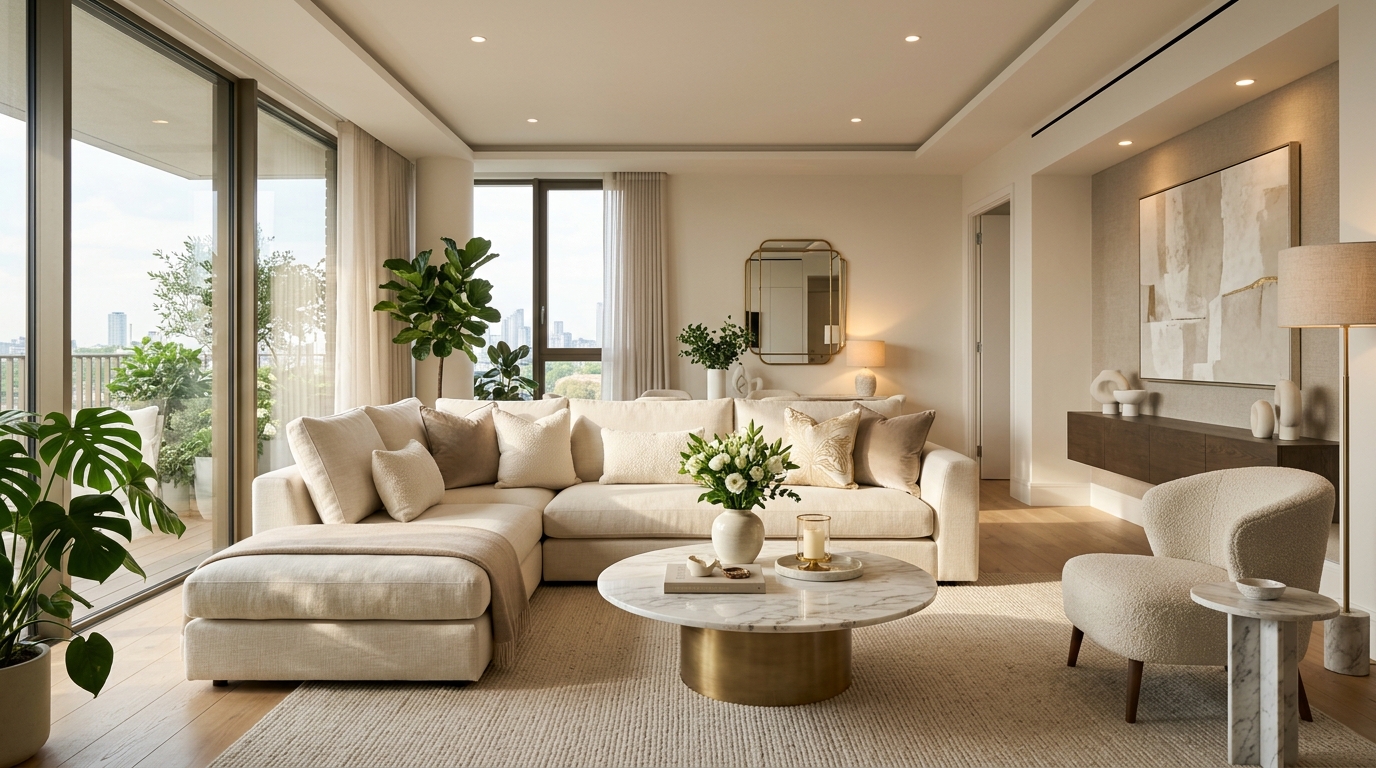
Your living room is small. That is not the problem. The problem is that nobody told you how to make a small space feel like the coziest room in the house instead of the most frustrating one.
Most people try to fix a small living room by buying more things, rearranging furniture every few weeks, or waiting until they can afford a bigger place. None of that works. What actually works is understanding how warmth is built in a room, and it has very little to do with square footage. Cozy living room ideas for small spaces are about the right textures, the right light, and the right choices placed with intention.
Here are 23 ideas that actually work, tested in real homes, not just styled for a photoshoot.
Paint the Walls a Warm Neutral
Walk into any room that feels instantly warm and nine times out of ten the walls are not white. They are a soft greige, a warm linen, a creamy off-white, or a muted terracotta. Cool whites and grays reflect light in a way that feels sharp and cold in small spaces. Warm neutrals absorb and soften it.
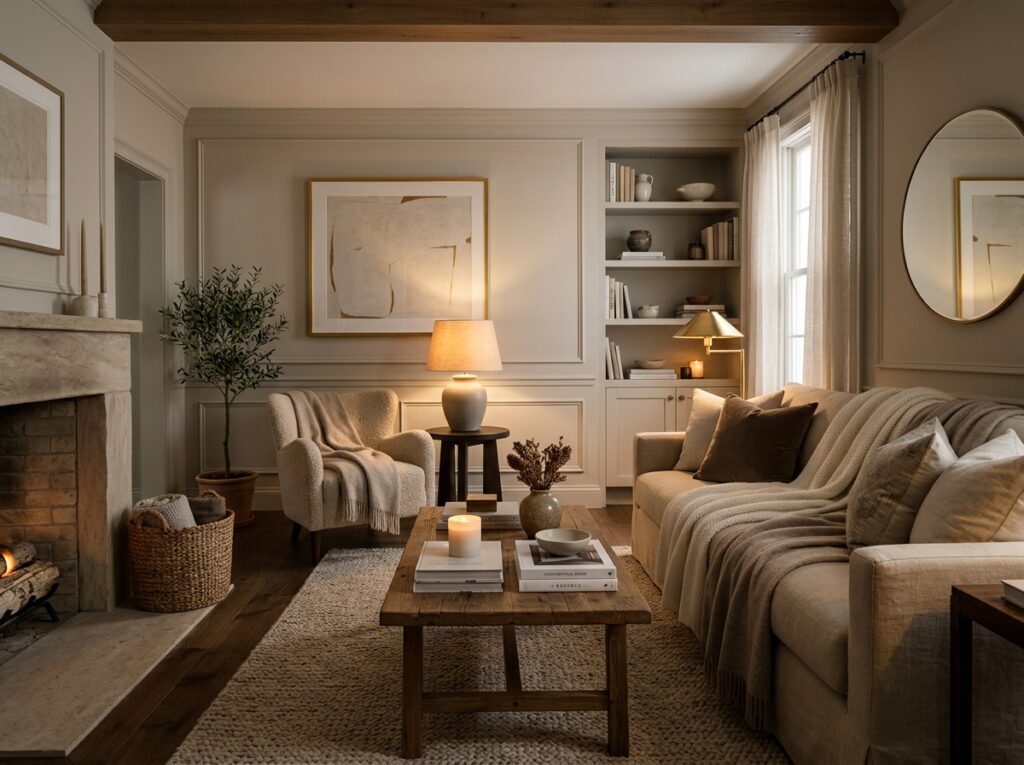
Benjamin Moore Pale Oak, Sherwin-Williams Accessible Beige, and Farrow and Ball Elephant’s Breath are three shades that consistently work in small living rooms with different light conditions. Test your chosen color at three different times of day before committing. What looks warm at noon can look cold and flat by evening under artificial light.
Lay Down a Rug That Is Bigger Than You Think You Need
This is the single most common mistake in small living rooms. The rug is too small, it sits only under the coffee table, and the whole seating area looks like furniture floating on an island. A properly sized rug should have the front legs of every piece of seating sitting on it.
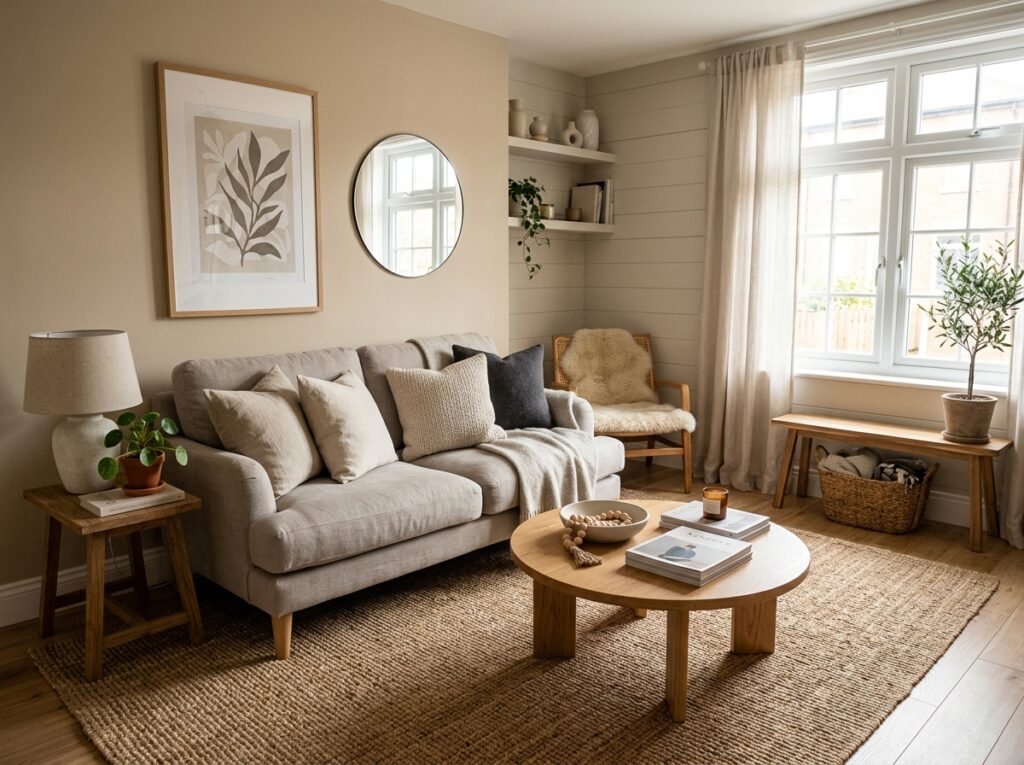
For most small living rooms an 8×10 is the minimum. If you can stretch to a 9×12 do it. The larger the rug the more unified and intentional the space looks. Go for wool, jute, or a thick cotton flatweave in a warm tone. The texture underfoot changes how a room feels in a way you notice even before you look around.
Layer Two Throw Blankets on Your Sofa
One throw blanket looks like an afterthought. Two throws in different textures look like a room someone actually lives in and loves. Drape a chunky wool knit over one armrest and fold a waffle-weave cotton throw over the back of the sofa. Do not fold them neatly. Let them look relaxed.
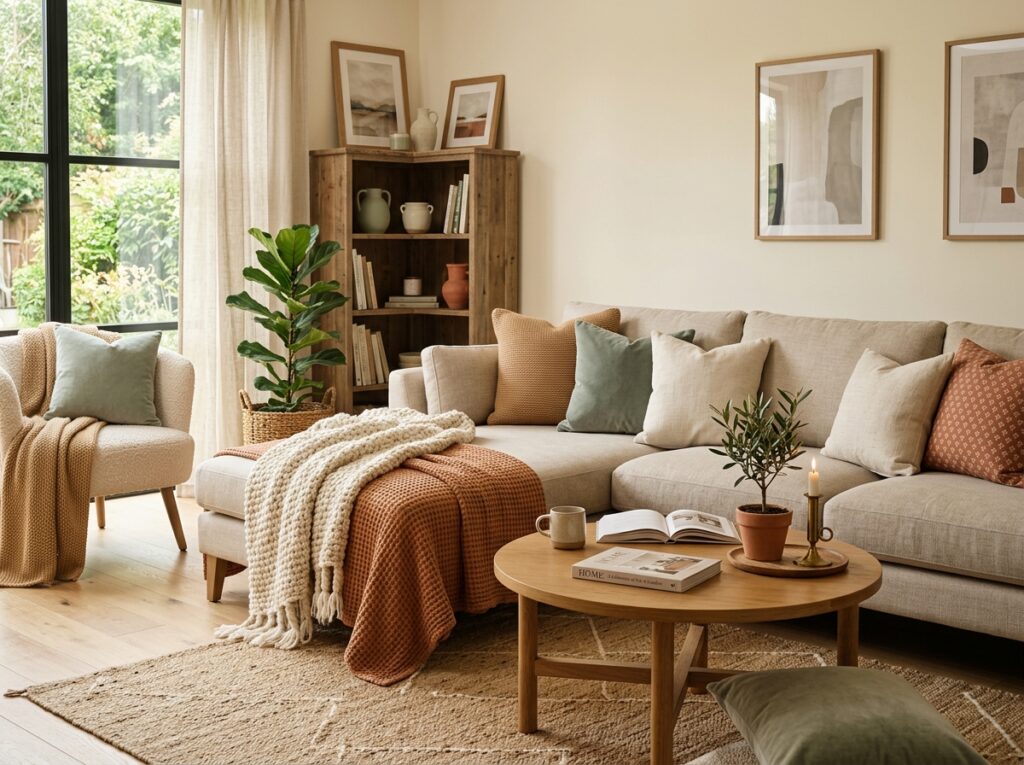
The combination of textures is the point. Smooth against chunky, light against heavy. Stick to colors that already exist somewhere in the room so they feel pulled together rather than random. Terracotta, cream, dusty sage, and warm camel are combinations that feel even better in person than they look in photos.
Replace Your Overhead Light With Layered Lamps
Overhead lighting is the fastest way to kill the cozy atmosphere in a small living room. A single ceiling light flattens everything and makes the room feel like a dentist waiting area. Turn it off in the evenings. Replace it with at least three light sources at different heights.
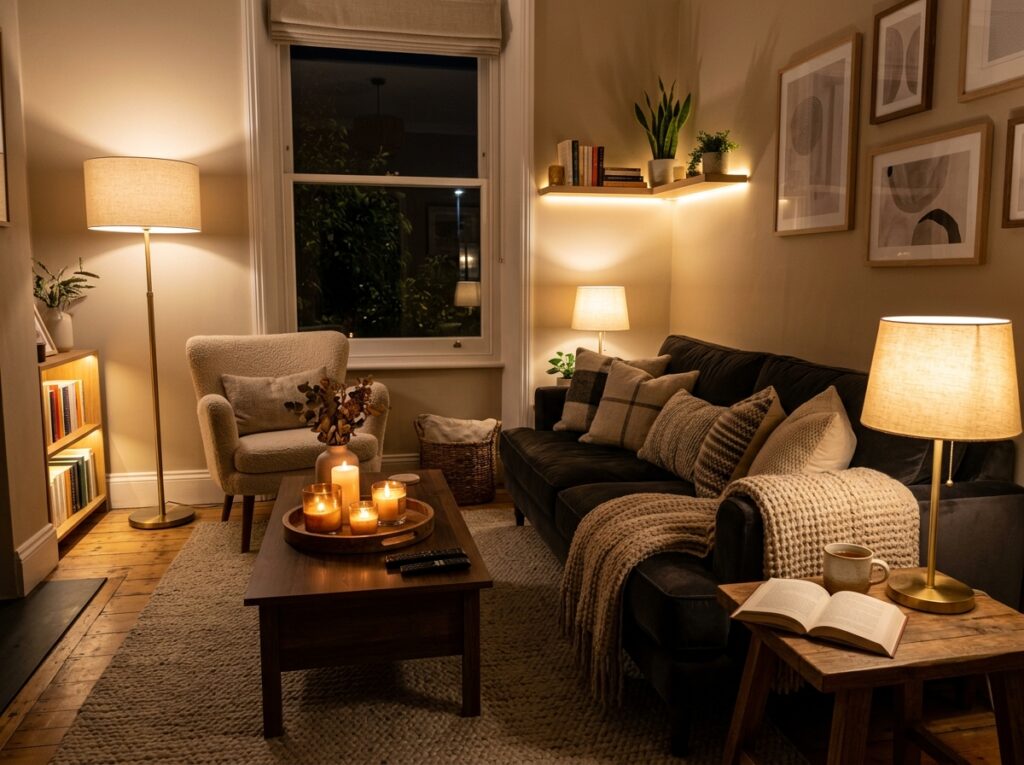
A floor lamp in one corner, a table lamp on a side table, and candles on the coffee table tray give you warm light at every level. Switch to bulbs around 2700K. That specific color temperature is the closest to candlelight without actually setting everything on fire, and it changes the entire mood of a room.
Put a Floor Lamp in Your Darkest Corner
Every small living room has a corner that just sits there doing nothing. A floor lamp in that corner does two things at once. It fills the dead space with presence and it throws a warm circle of light that makes the whole room feel softer and more intentional.
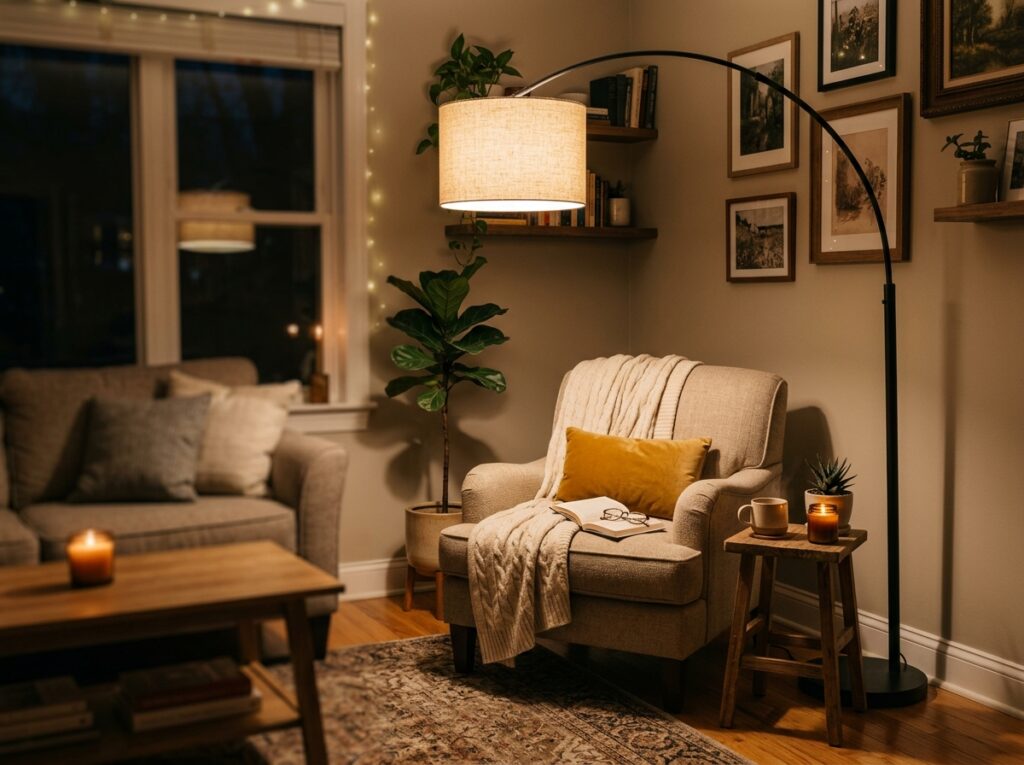
An arched floor lamp works especially well because the arm extends over a nearby seat and doubles as a reading light without needing a side table. Choose a linen or cream shade. Avoid white shades because they push out cooler light. Warm shade, warm bulb, and that corner becomes the best spot in the room.
Choose a Sofa With Visible Legs
A sofa that sits flat on the floor visually anchors the room to its lowest point. Everything feels heavier. A sofa raised on legs, even just five or six inches off the ground, lets the eye travel underneath and makes the space feel lighter and more open without changing a single thing about the actual size of the room.
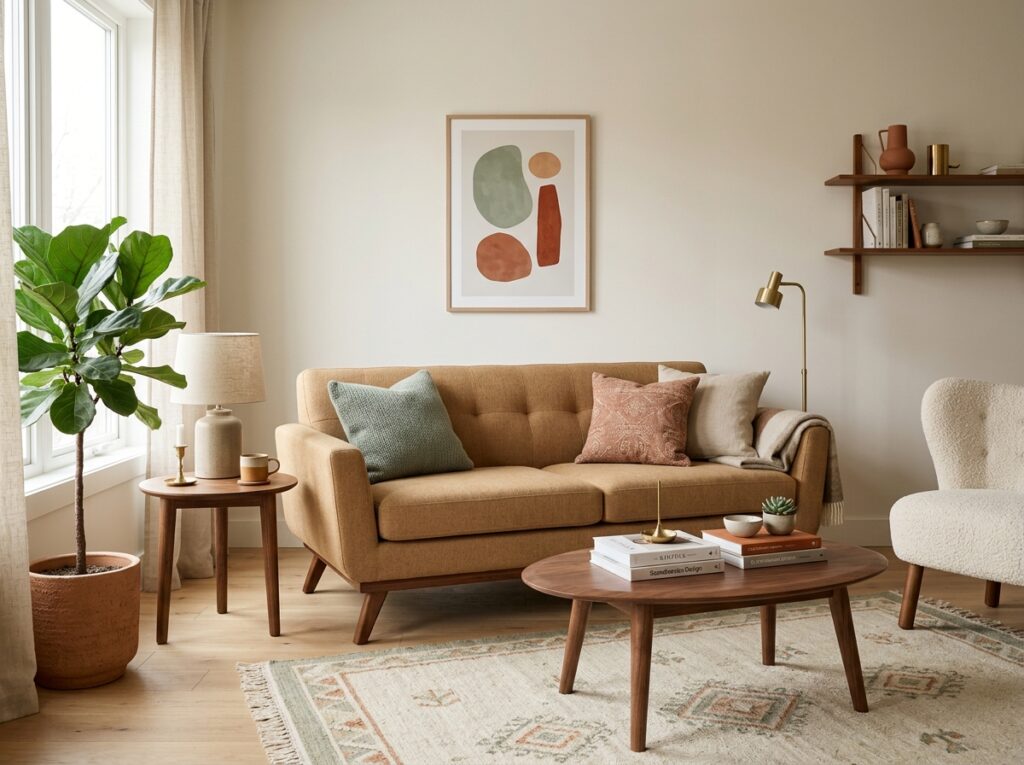
Mid-century modern sofas naturally have this leg detail. So do many Scandinavian-style pieces. Look for legs in natural wood or brushed brass for the warmest feel. The sofa color matters too. Warm camel, dusty sage, or a deep terracotta fabric adds to the coziness while the legs keep the space from feeling heavy.
Swap Your Coffee Table for a Round One
Square and rectangular coffee tables have corners. In a small living room those corners catch your shins, break the visual flow, and make the seating area feel more cramped than it is. A round table removes all of that. The space around it feels more open and the whole seating arrangement looks softer.
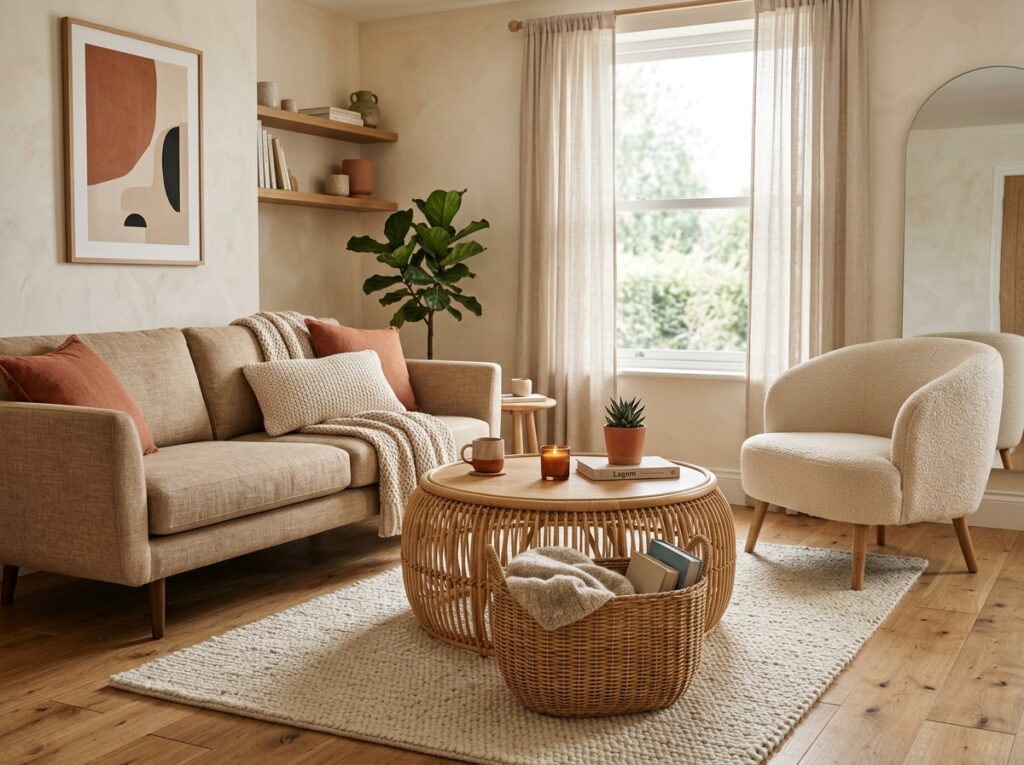
Rattan is the warmest material choice for a small cozy living room. Light wood works too. A lower table height keeps the sightlines clear across the room. If you need storage underneath, look for a round table with a lower shelf. A woven basket on that shelf adds texture and hides everything you want out of sight.
Use an Ottoman Instead of a Second Chair
A second armchair sounds like a good idea until it is physically in the room taking up space and blocking the flow. An oversized fabric ottoman gives you somewhere to put your feet, somewhere for guests to sit, and a coffee table surface when you add a wooden tray on top.
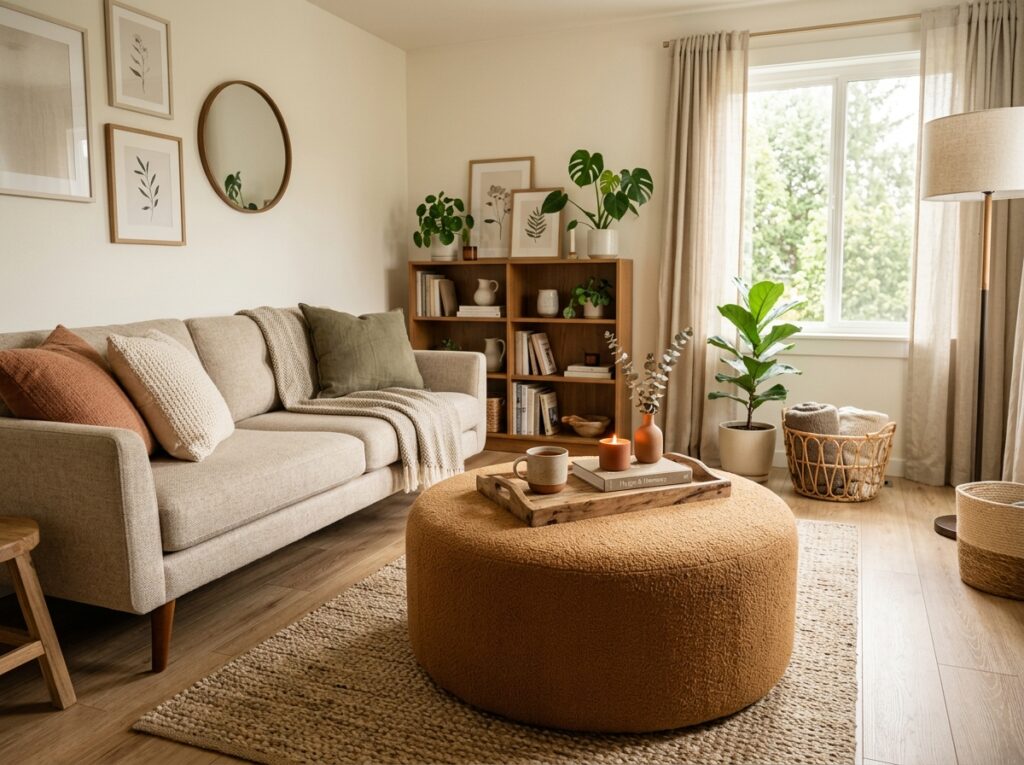
Choose a boucle, velvet, or chunky woven fabric in a warm neutral. An ottoman in a warm caramel, deep rust, or soft olive adds a color moment without the visual weight of a full chair. This single swap makes a small living room feel more flexible and more relaxed at the same time.
Hang Your Curtains at Ceiling Height
Most windows in small living rooms are not that impressive on their own. But when you hang curtain rods as close to the ceiling as possible, even if the window is much lower, the curtains draw the eye straight up. The ceiling feels higher. The room feels taller. The whole space feels more considered.
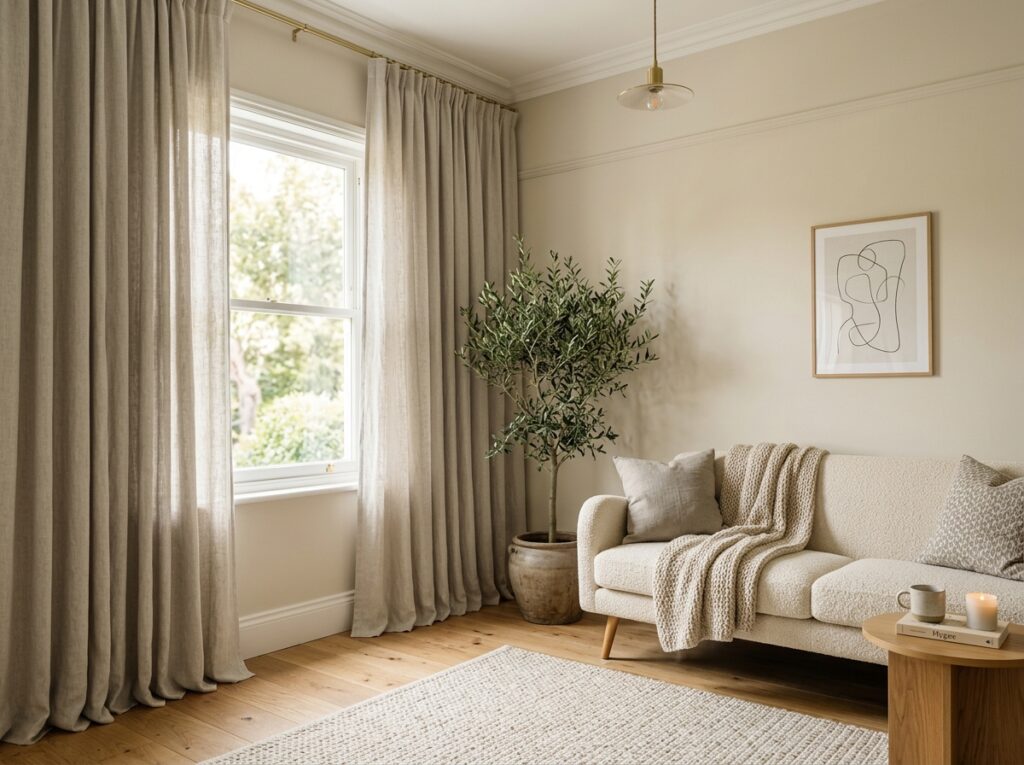
Use curtains in a fabric that is close to your wall color. Linen in a warm natural, cream, or greige works in almost every small living room. Floor-length curtains that just graze the floor complete the look. This is one of those changes that costs very little and makes visitors ask what you did differently without being able to identify it.
Place a Large Mirror Across From a Window
A mirror does not just reflect what is in front of it. Positioned across from a window it bounces natural light around the room and creates the visual impression that the space continues beyond the wall. The room does not get bigger but it stops feeling like it ends so abruptly.
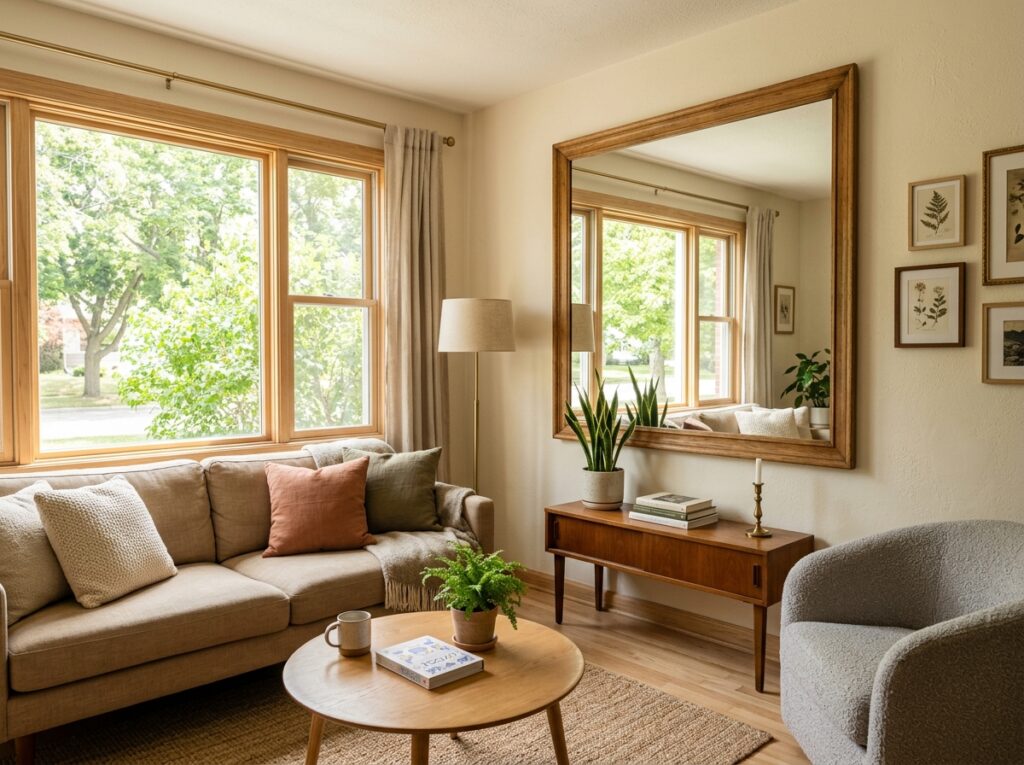
Choose a mirror with a warm-toned frame. Brass, aged gold, natural wood, or rattan all work beautifully in a cozy small living room. Avoid frameless mirrors because they read cold. Go large rather than small. A mirror that is too small looks lost on the wall and does nothing for the space.
Add One Large Plant in a Corner
A room with no plants feels finished but not alive. One large plant in a corner, a fiddle leaf fig, a monstera, or a tall snake plant, adds height, fills dead space, and brings a natural warmth that no decorative object quite replicates. It also softens the hard lines of furniture and walls.
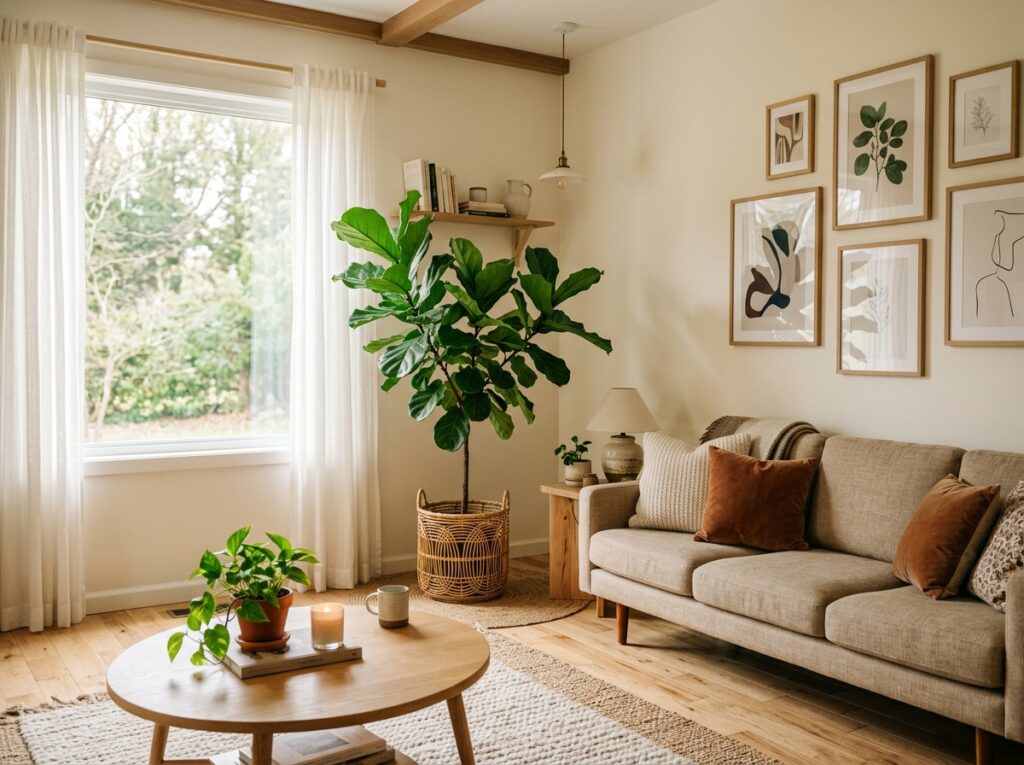
Place it in a warm-toned pot. Terracotta, matte black, or a woven basket planter all ground the plant in the room rather than making it look like it was left there by accident. If natural light is limited, a snake plant or a ZZ plant will survive and still look lush.
Style Your Bookshelf Like a Designer Would
A bookshelf stuffed with books spine out from edge to edge looks like a storage unit. A bookshelf with books, objects, plants, and negative space looks like a room with a story. Remove half the books. Turn some facing backward for a clean neutral texture. Group the rest by color or height.
Add small plants between the book stacks. Place a candle or two on the shelves. Use a small framed photo or a piece of ceramic as a focal point on each shelf. A warm wood bookshelf styled this way becomes one of the coziest features in a small living room and costs nothing beyond the time it takes to rearrange.
Mix Cushion Textures on Your Sofa
Matching cushions look tidy. Mixed cushions look lived in, and lived in is what cozy actually means. Put a velvet cushion next to a linen one next to a chunky knit one. The different textures catch light differently and the whole sofa looks inviting rather than staged.
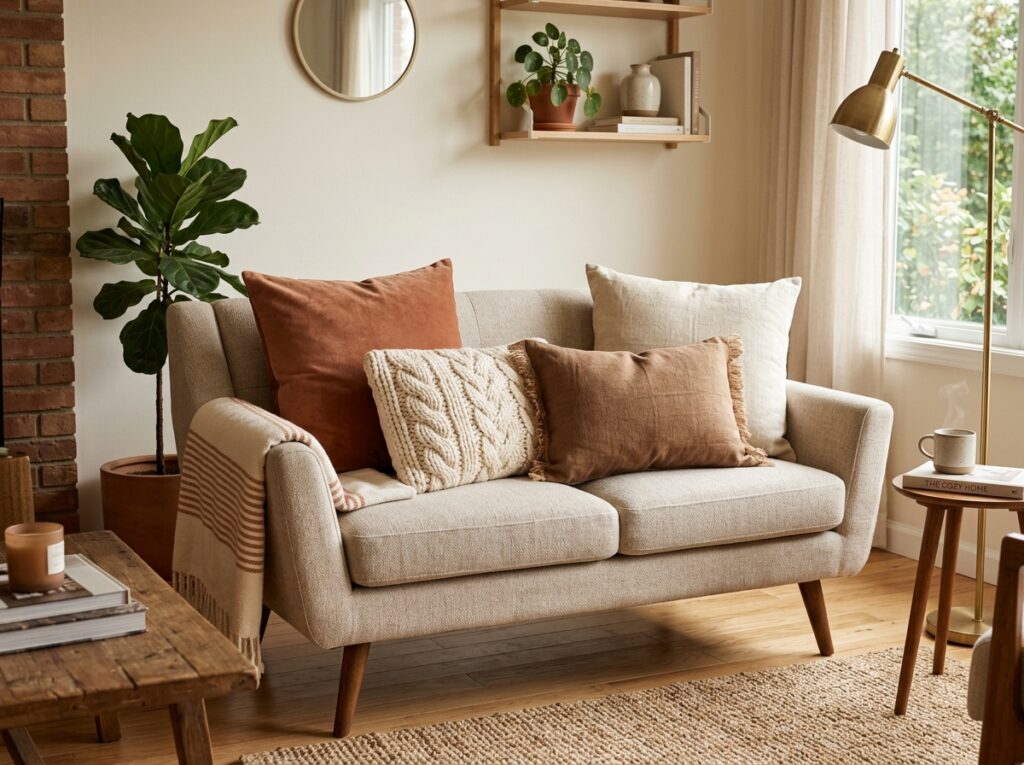
Stick to a palette of three colors maximum. Warm neutrals mixed with one deeper accent color work in almost every living room. Terracotta with cream and warm brown. Dusty sage with camel and ivory. Two large cushions and two smaller ones is usually the right number for a standard three-seat sofa without tipping into overwhelming.
Create One Statement Wall and Leave the Rest Calm
Decorating every wall in a small living room creates visual noise. One wall with intention and three walls kept simple gives the eye somewhere to focus and makes the room feel designed rather than decorated. Your statement wall could be a gallery of frames, a single large piece of art, a panel of warm wallpaper, or a deep paint color.
Everything on the other walls stays minimal. One small piece of art maximum. This restraint is what separates a room that feels curated from one that feels cluttered, and in a small space that distinction matters more than anywhere else.
Use Candles as Part of Your Everyday Decor
Candles are not just for when guests come over. A group of three candles in different heights on your coffee table tray, lit or unlit, adds warmth and texture to a small living room every single day. The scent matters too. Warm scents like amber, cedar, sandalwood, and vanilla do something to a room that visual styling alone cannot achieve.
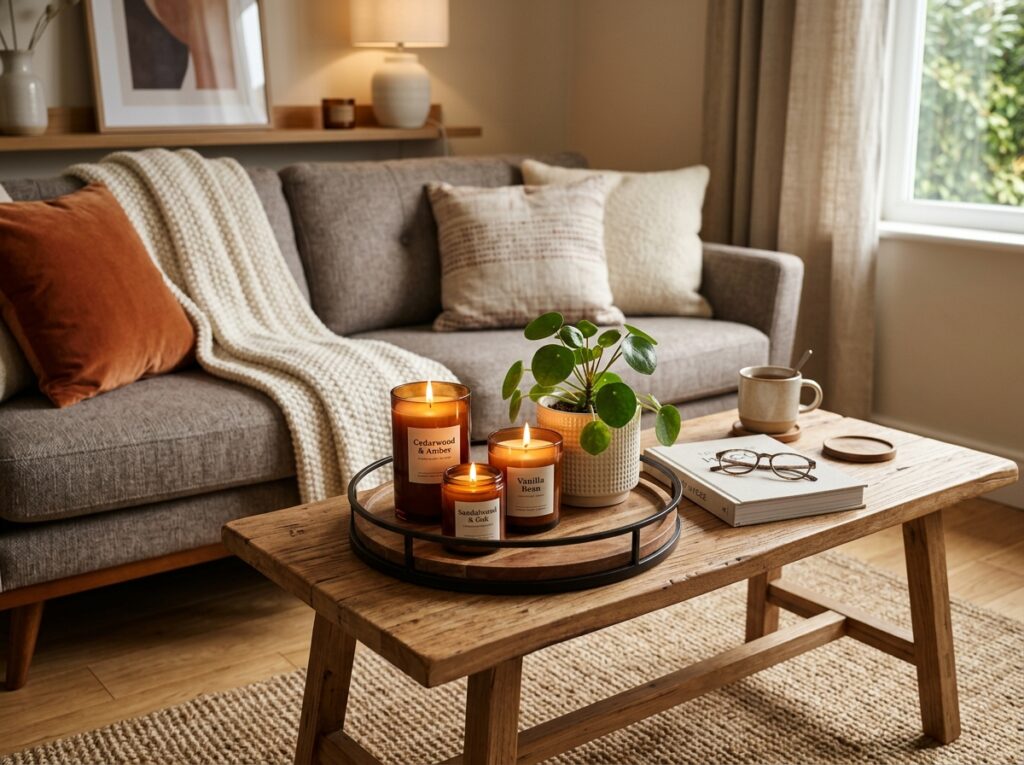
Real wax candles cast the warmest, most flattering light. Even when they are not lit they add visual softness. Group them on a tray with a small plant and a book for a coffee table setup that always looks intentional and always feels inviting.
Choose Low-Profile Furniture Throughout
High furniture in a low-ceilinged small room makes the space feel compressed from every direction. Low-profile sofas, low media units, and low side tables keep the sightlines clear and give the room visual breathing room. The ceiling feels higher. The walls feel further apart. The space feels more open.
Scandinavian furniture design naturally tends toward this lower, cleaner profile. Look for pieces where the seat height is around 16 to 17 inches from the floor. Pair this with floor-length curtains and a ceiling-height bookshelf to contrast the low furniture with vertical elements and the room gains real dimension.
Give Every Seat a Surface
A seat without somewhere to put a cup of tea feels incomplete. When every seat in your living room has a side table or surface within reach the room feels genuinely considered and comfortable rather than just furnished. It is a small detail but it is one of those things you notice in rooms that feel good without knowing why.
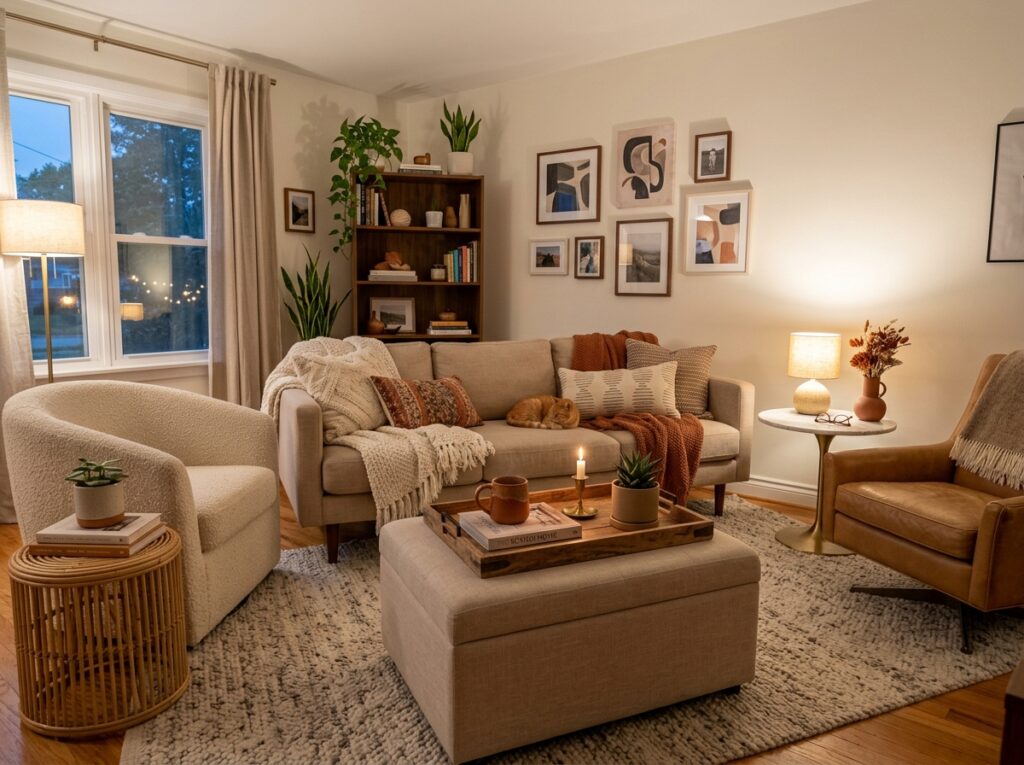
Side tables do not need to match. A rattan drum stool next to the sofa, a small marble-top accent table next to the armchair, and a wooden tray on the ottoman covers every seat without the room looking like a showroom. Variety in materials adds warmth. Matching sets can look cold.
Use Woven Baskets for Visible Storage
A small living room with nowhere to put things always ends up cluttered. Woven baskets solve this without sacrificing the warmth of the room. Place two or three on the lower shelf of your bookshelf or under a console table. Use them for throws, magazines, remote controls, or anything else that would otherwise sit on a surface.
Seagrass, water hyacinth, and rattan baskets all add natural texture while keeping the room tidy. A tidy room with warm natural materials everywhere feels cozy. A messy room with expensive furniture does not. The baskets do both jobs at once.
Float Your Sofa and Add a Console Behind It
Pushing every piece of furniture against the wall is a reflex in small rooms but it often makes things worse. Floating your sofa slightly away from the wall and placing a slim console table directly behind it defines the seating zone and creates a layer of depth in the room.
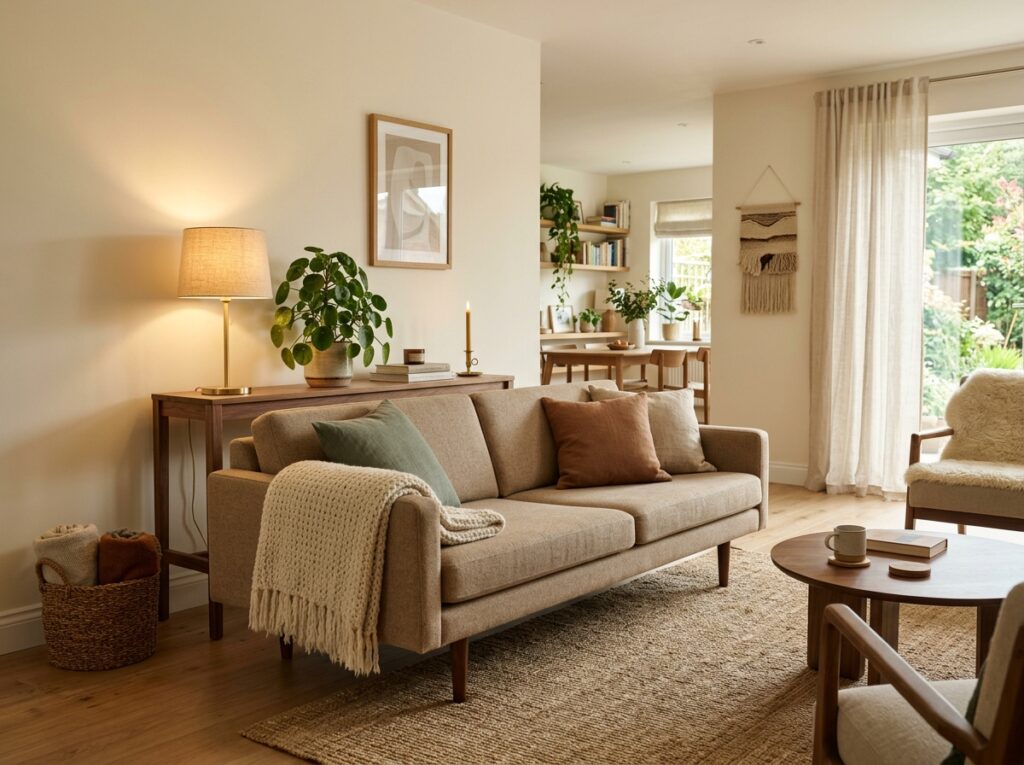
Style the console with a lamp, a plant, and one or two objects. This turns the back of the sofa into a feature rather than dead space and makes the room feel like it has been thoughtfully arranged rather than just filled. It works especially well when the living room is part of an open-plan space.
Add Warm Metallic Accents in Small Doses
Brass, aged gold, and warm bronze catch light in a way that cool metals like chrome and nickel never do. A brass lamp base, a few gold-toned picture frames, and a bronze candle holder on the coffee table tray is enough to add a warm glow to a small living room without it looking overdone.
You do not need to replace large pieces. Swap out small hardware, light switch covers, curtain rod finials, and decorative objects for warm metallic versions. The cumulative effect of these small changes is a room that feels richer and more polished without looking like you tried too hard.
Keep the Floor Visible at the Edges
The floor is part of the design in a small room. A rug that covers every inch of floor from wall to wall makes the space feel like a padded cell. Let the floor breathe at the edges. The rug defines the seating area, the visible floor around it frames the room, and the whole space feels more open and intentional.
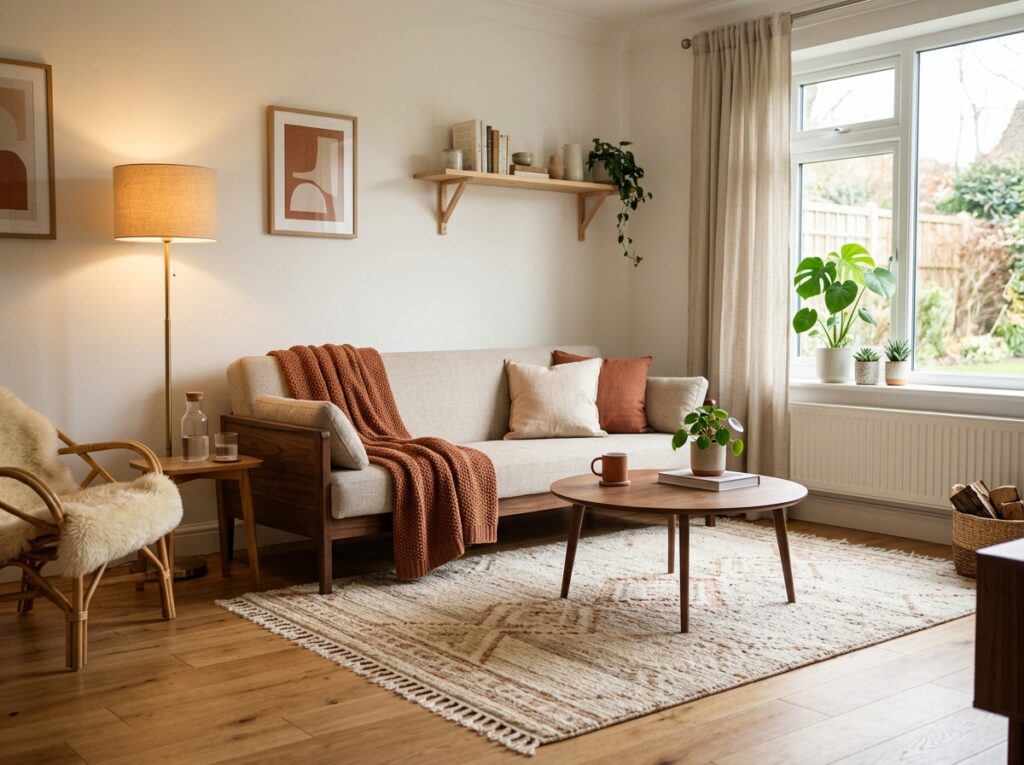
Hardwood floors with warm undertones do this beautifully. Even a light-colored tile or a pale laminate looks more spacious when it is partially visible. This framing technique makes a room feel larger without changing anything structural.
Hang a Personal Gallery Wall
A gallery wall made up of photos you actually love makes a living room feel personal in a way that generic art prints never quite do. Frame some of your favorite memories in warm wood or black frames and arrange them in a relaxed grid or organic cluster on your main wall.
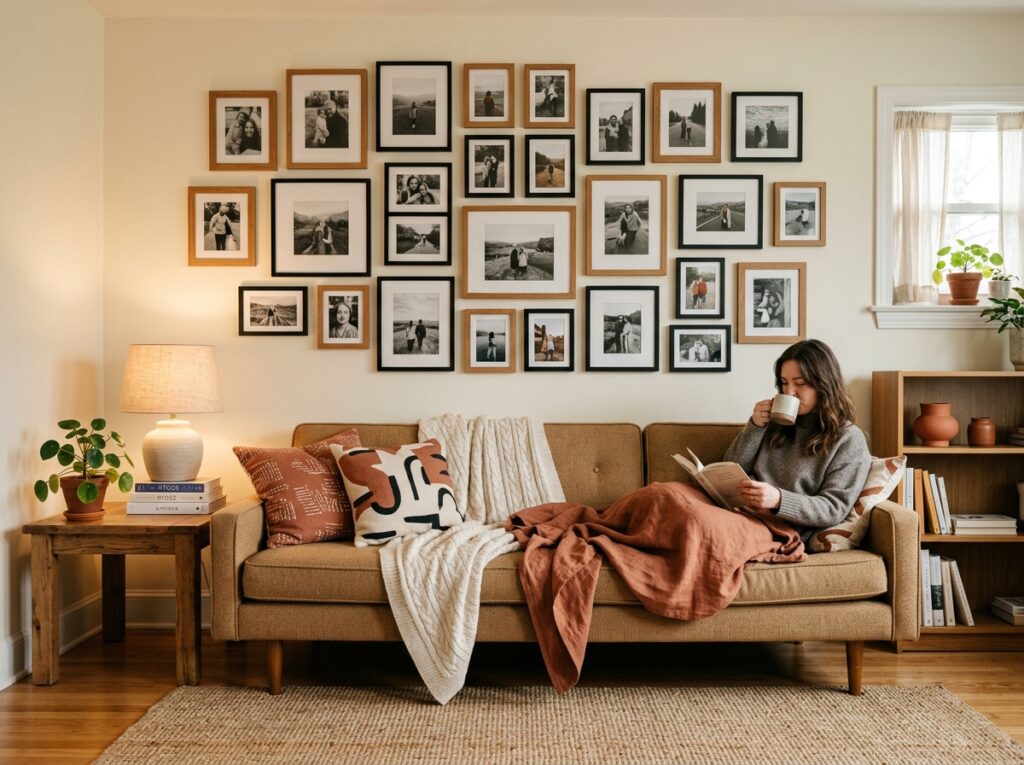
Keep the frame styles consistent even if the photos vary. A mix of black and white photos with one or two color shots looks clean and intentional. Personal photos make guests feel welcomed and make the space feel genuinely yours rather than assembled from a catalog.
Edit the Room Down to What You Actually Love
The coziest living rooms are not the fullest ones. They are the most edited ones. A small living room tips from cozy into chaotic very quickly when there are too many objects, too many cushions, and too many things competing for attention on every surface.
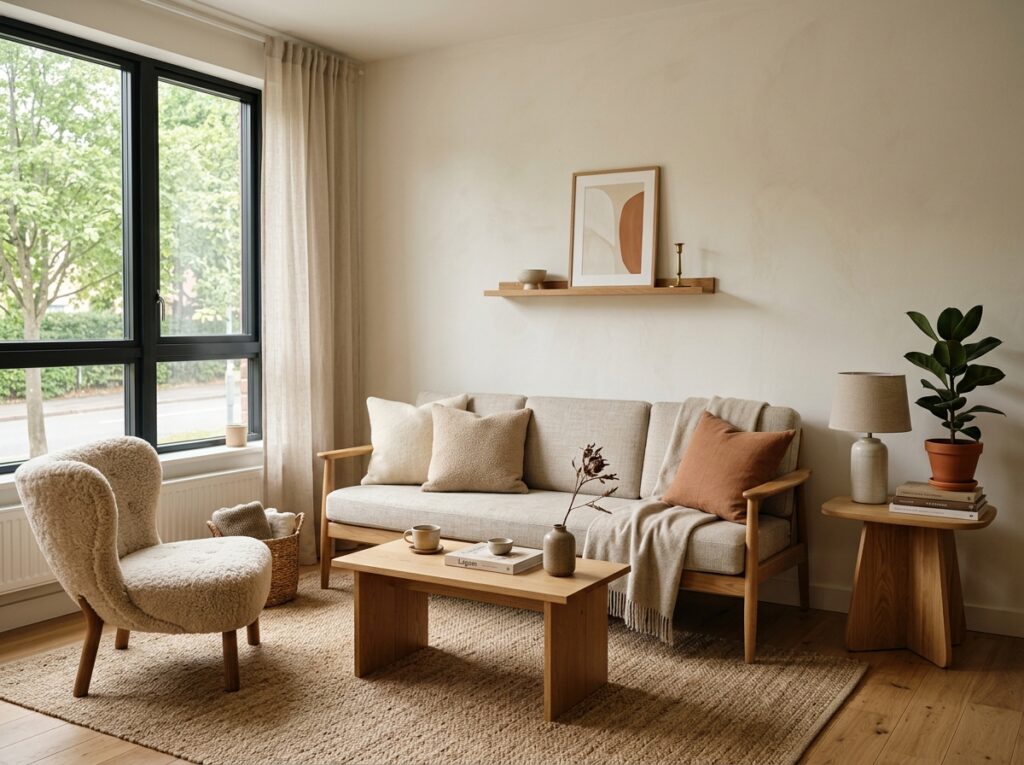
Go through every decorative object in the room and ask whether it earns its place. If it does not make you feel something or serve a purpose, store it or let it go. Swap out cushion covers and small objects seasonally to keep the room feeling fresh. A room that reflects exactly what you love and nothing else always feels warmer.
Final Thoughts
A small living room is one of the most satisfying spaces to get right because every single decision shows. There is nowhere to hide a bad choice and no way to miss a good one. These cozy living room ideas for small spaces are not about a complete overhaul. They are about building warmth one layer at a time.
Start with the light. Then the rug. Then the textures. Give yourself permission to make changes slowly and pay attention to how each one shifts the feeling of the room. Your small living room does not need to be bigger. It needs to be yours.