
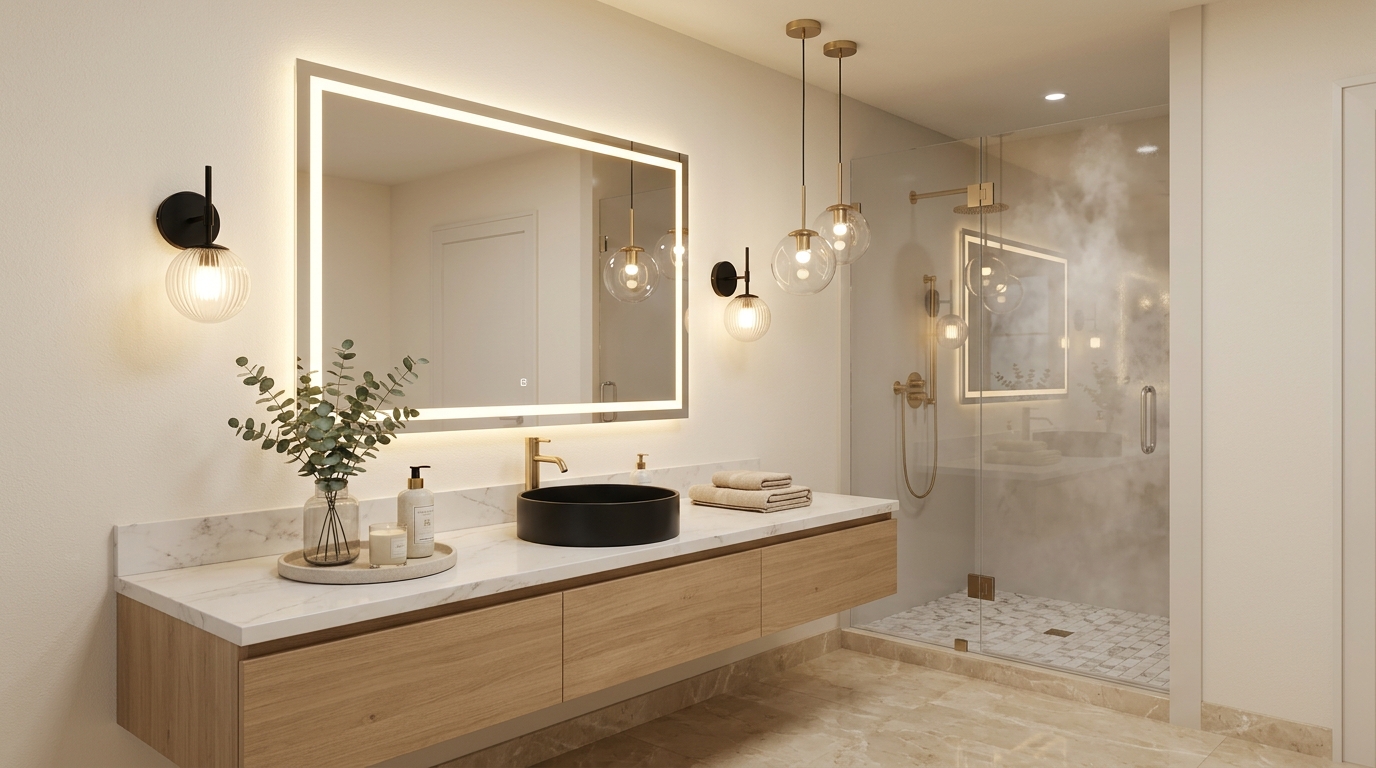
The lighting around a bathroom vanity affects almost everything that happens there, from how a room reads first thing in the morning to how flattering the mirror feels at the end of a long day. A vanity with the wrong lighting can leave shadows across the face or wash out the whole space, while the right setup makes the area both functional and pleasant to use.
This article focuses on lighting fixtures and placements specifically for the vanity area, covering a range of styles and approaches that go beyond the standard single bar light most builder grade bathrooms come with.
Below are sixteen ideas for lighting a bathroom vanity.
1. Wall Sconces Flanking the Mirror
A pair of sconces mounted on either side of the mirror, at roughly eye level, provides light from both sides of the face, which helps reduce the shadows that overhead lighting alone tends to create. This placement is one of the most reliable ways to get even lighting for everyday tasks like shaving or applying skincare.
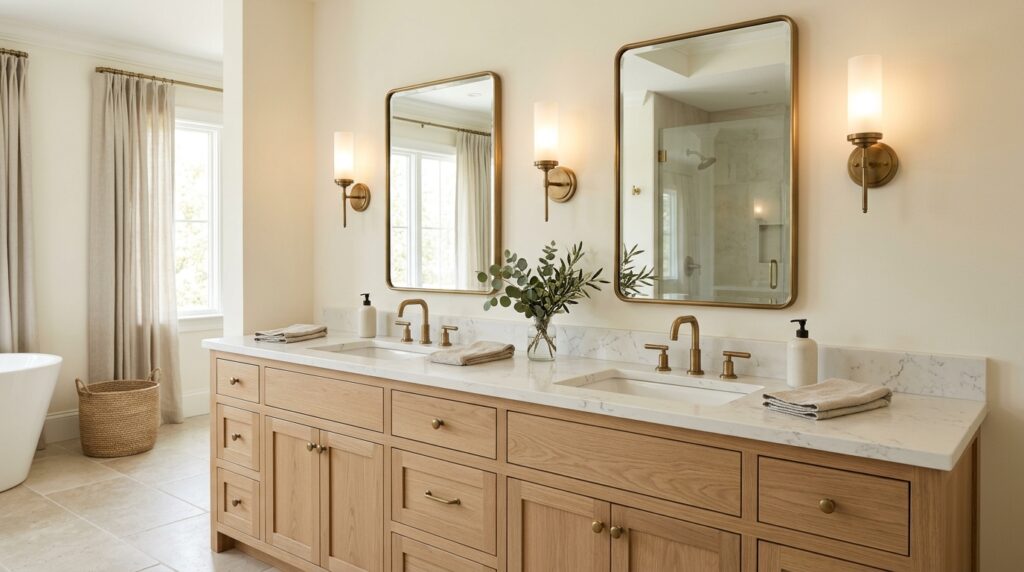
Choosing sconces with an exposed bulb or a simple shade depends largely on the rest of the bathroom’s style, but the key detail is positioning them at a height that lines up with the face when standing at the sink, rather than centered on the mirror itself regardless of where that places the light.
2. Vertical LED Strips Beside the Mirror
Thin strips of LED lighting mounted vertically along both sides of the mirror create a continuous band of light rather than a single point source, spreading illumination more evenly across the face than a couple of bulbs would. This style has become common in more modern bathroom designs.
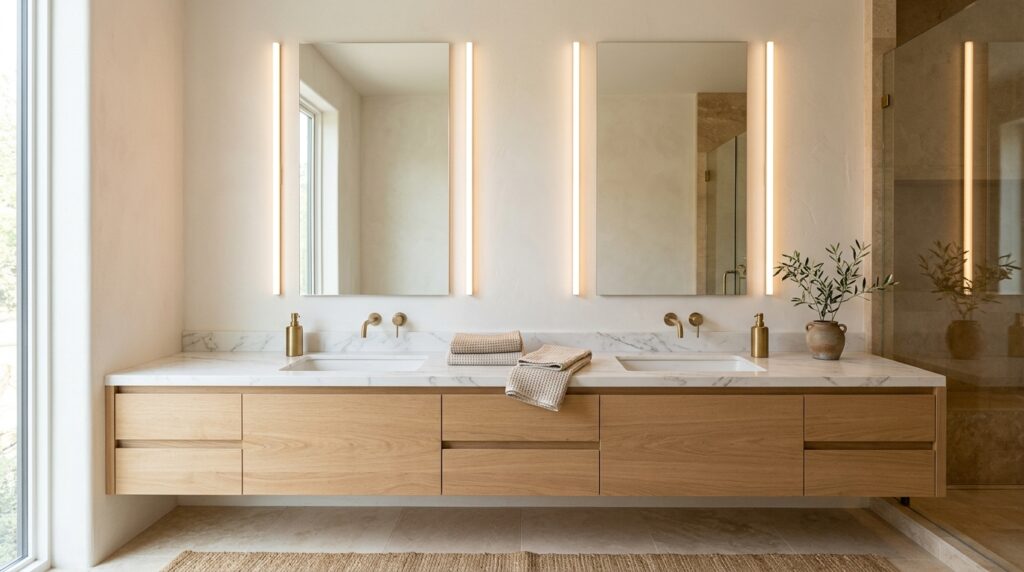
The strips can often be dimmed or adjusted in color temperature, and because they sit flush or nearly flush against the wall, they take up very little visual space compared to traditional fixtures. This option works particularly well in bathrooms with a minimal aesthetic, where visible hardware would interrupt an otherwise clean look.
3. Horizontal Light Bar Above the Mirror
A single horizontal fixture mounted above the mirror, often with multiple bulbs spaced evenly along its length, provides broad, even light across the whole vanity area. This is one of the most common vanity lighting styles, and updating an older version of this fixture can make a noticeable difference on its own.
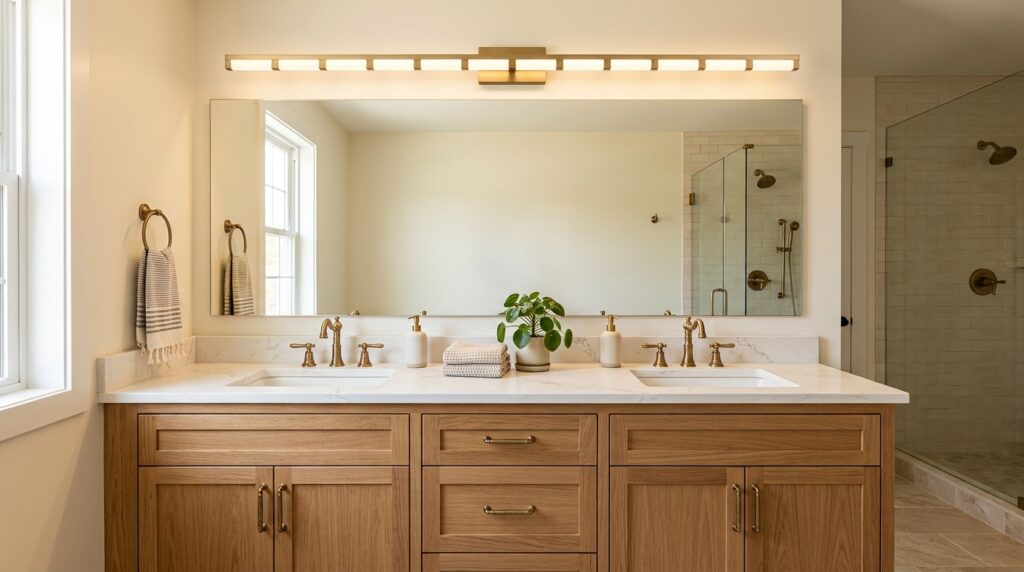
The width of the light bar should generally match or slightly exceed the width of the mirror beneath it, since a bar that is too narrow can leave the edges of the mirror dimmer than the center. Choosing bulbs with a warm white color temperature helps avoid the harsh, clinical look that fluorescent versions of this fixture are known for.
4. Recessed Ceiling Lights Angled Toward the Vanity
Recessed lights installed in the ceiling directly above the vanity, sometimes angled slightly toward the mirror rather than pointing straight down, add overhead illumination that complements lighting at mirror height rather than competing with it.
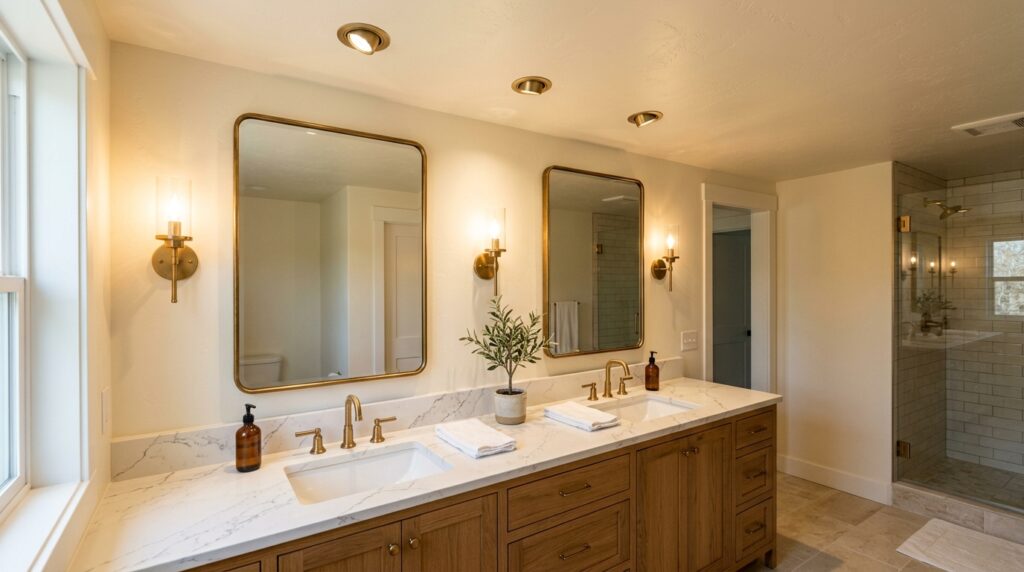
This option works well as a secondary light source, filling in general room brightness while sconces or a light bar handle the more direct lighting needed for tasks at the mirror. Angled recessed lights in particular can help reduce shadows that straight down lighting tends to cast beneath the chin and eyes.
5. Small Chandelier Style Fixture Over the Vanity
A compact chandelier, scaled appropriately for a bathroom rather than a dining room, positioned above and slightly in front of the vanity, adds a decorative element that most bathrooms do not have. This works particularly well in larger bathrooms with higher ceilings, where the fixture has room to hang without feeling crowded.
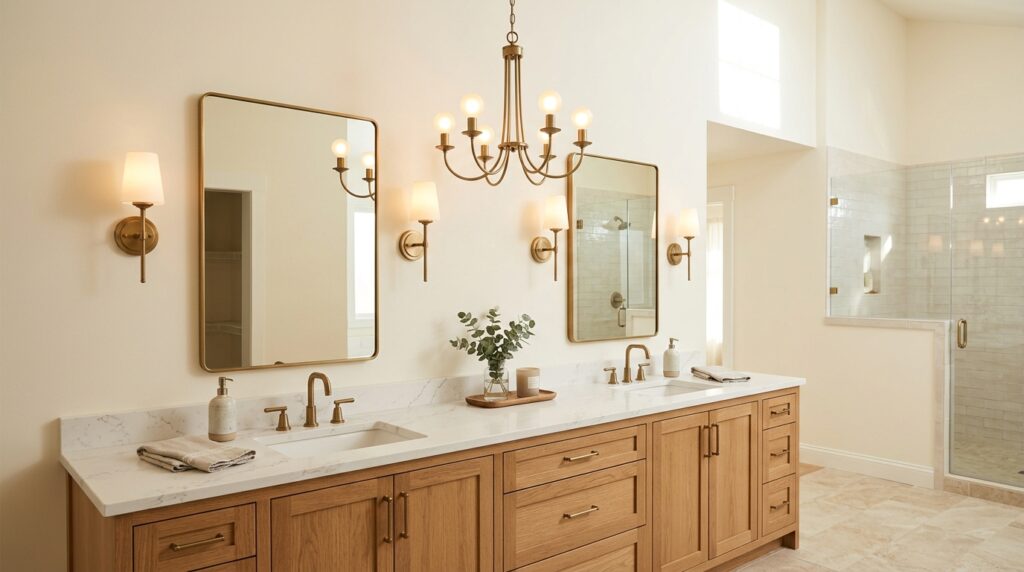
While a chandelier alone is unlikely to provide enough direct light for detailed tasks at the mirror, pairing it with sconces or another fixture at eye level allows the chandelier to serve as a decorative and ambient layer rather than the sole light source.
6. Picture Light Mounted Above the Mirror
A picture light, the kind of fixture typically used to illuminate artwork, mounted above a vanity mirror creates a softer, more focused pool of light than a full width bar, often with a slightly industrial or vintage look depending on the style chosen.
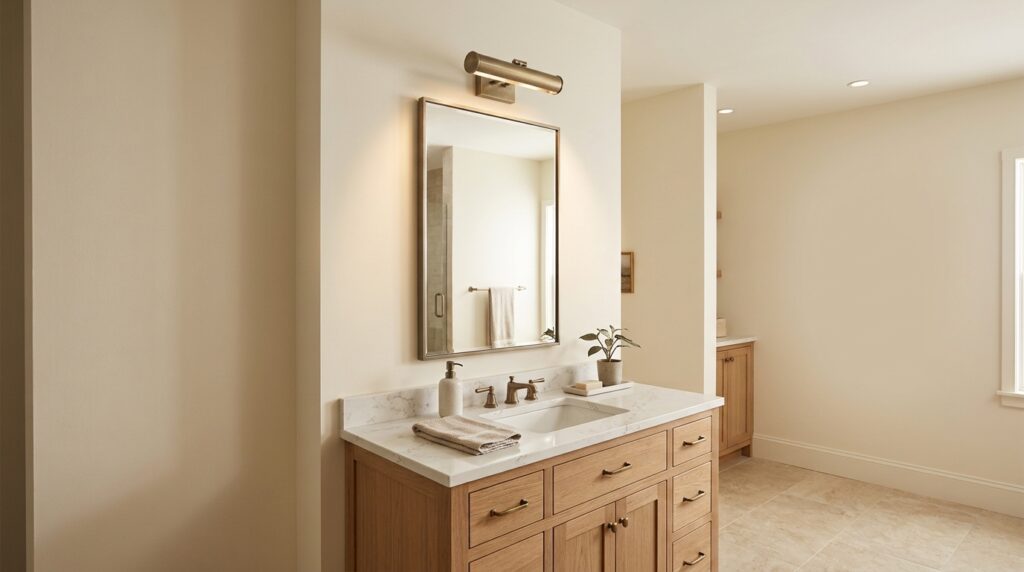
This option suits smaller mirrors or bathrooms where a full horizontal bar would feel oversized. Because picture lights are designed to direct light downward and outward rather than spreading evenly in all directions, positioning matters more than with diffused fixtures, and a slight forward angle usually works best.
7. Frosted Glass Wall Lights for Diffused Glow
Wall mounted fixtures with frosted or opal glass shades soften the light from the bulb inside, spreading it more evenly and reducing glare compared to fixtures with exposed or clear bulbs. This diffusion can make a real difference in how comfortable the lighting feels at close range.
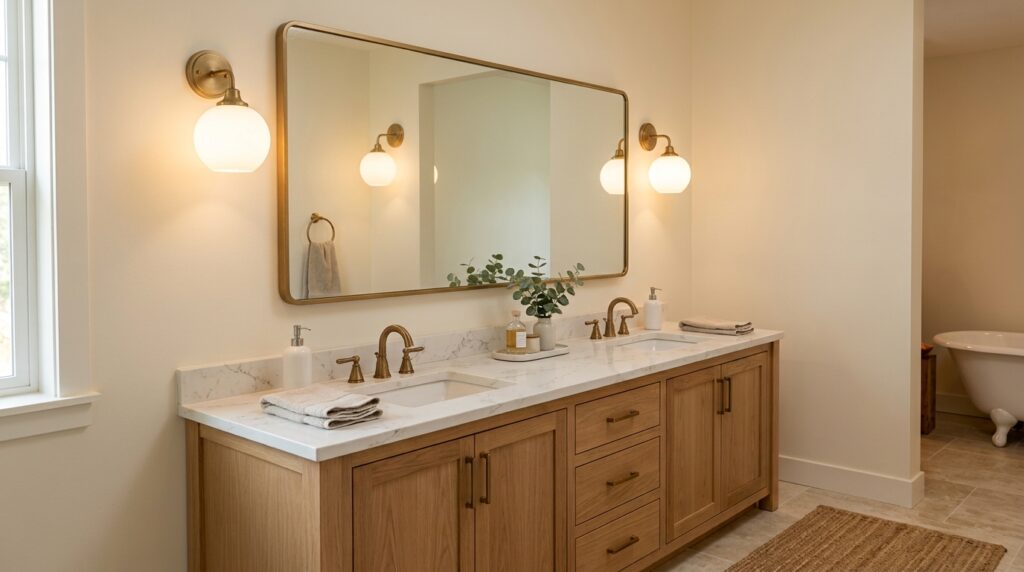
These fixtures work well in pairs flanking the mirror, similar to sconces, but the frosted glass changes the quality of light significantly, trading some brightness for a gentler overall effect. This option suits bathrooms aiming for a softer, more relaxed feel rather than bright, task focused lighting.
8. Color Changing LED Lights for Mood Lighting
LED fixtures capable of shifting between different colors, often controlled through a remote or app, add a flexible layer of lighting that goes beyond simple bright or dim settings. While not typically the main light source, these can be used for evening routines or simply for a change of atmosphere.
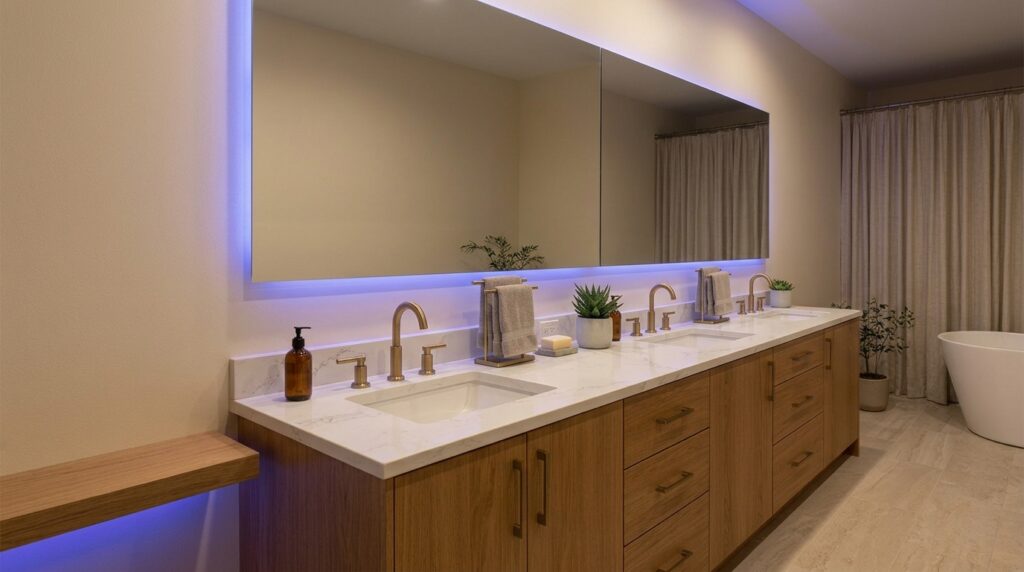
Positioning color changing lights along the edges of a mirror or beneath a shelf, separate from the main task lighting, keeps them as an optional layer rather than something that interferes with everyday use when bright, neutral light is needed.
9. Globe Bulb Fixture for a Retro Look
A fixture with exposed round globe bulbs, arranged in a row or cluster above the mirror, brings a retro or vintage character to the vanity area, often associated with old style dressing room lighting. The visible bulbs themselves become part of the design.
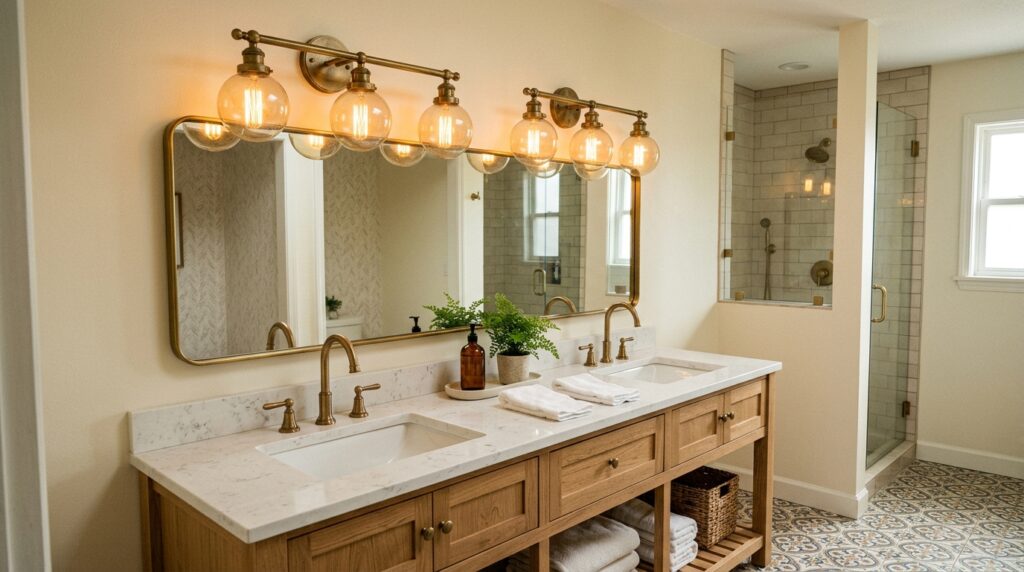
Because the bulbs are exposed, choosing ones with a warm filament glow rather than a stark white tone keeps the look consistent with the vintage feel this fixture style usually aims for. This option works particularly well in bathrooms with other retro details, like patterned tile or vintage fixtures elsewhere in the room.
10. Fixture with a Fabric Shade for Softer Light
A vanity light with a fabric shade, rather than glass or metal, filters light through the fabric itself, creating a warm, slightly textured glow that differs noticeably from the harder light most bathroom fixtures produce. This brings a more residential, less clinical feel to the space.
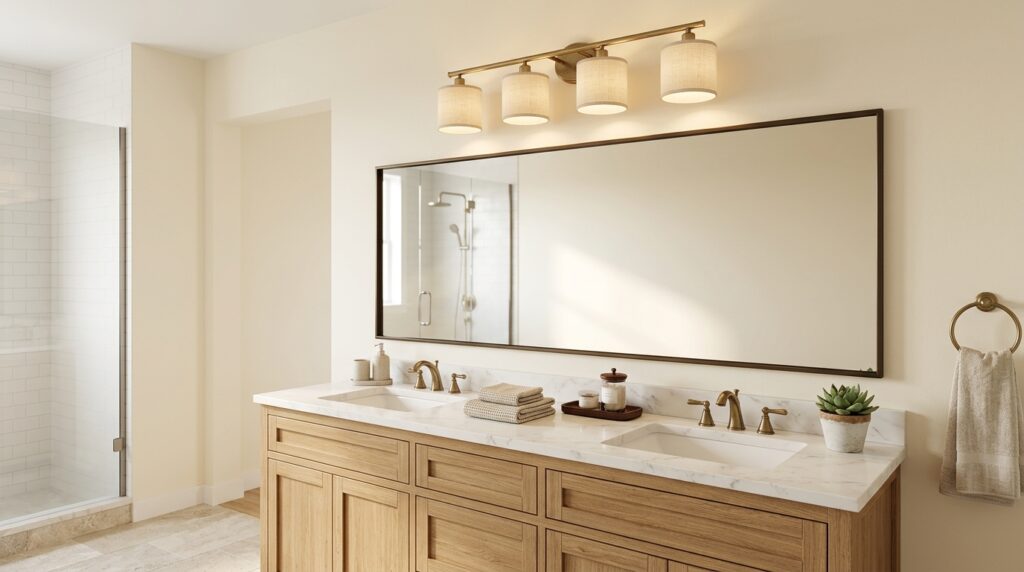
Fabric shades do require more care in a humid environment than glass or metal options, so choosing a shade material rated for bathroom use, or positioning the fixture away from direct splash zones, helps it hold up over time.
11. Toe Kick Lighting Beneath the Vanity Cabinet
A strip of low level lighting installed along the base of the vanity cabinet, often called toe kick lighting, provides a soft glow near the floor without illuminating the whole room. This is particularly useful for nighttime visits to the bathroom where full lighting would be too bright.
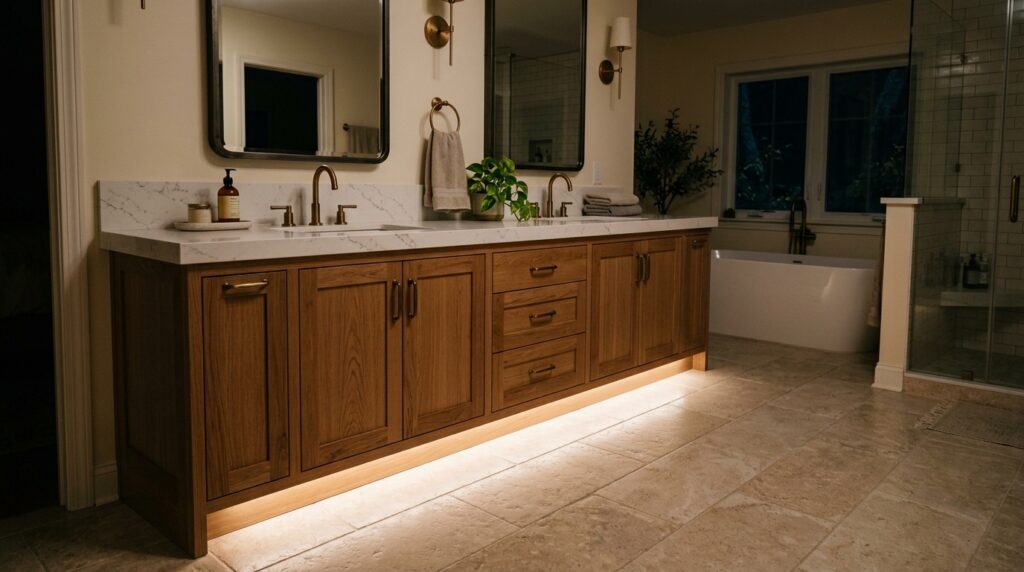
Beyond its practical use, this lighting also adds a subtle visual effect, making the vanity appear to float slightly above the floor even if the cabinet itself sits directly on it. Motion activated versions of this lighting add convenience without requiring a switch to be found in the dark.
12. Dimmer Switches Paired with Vanity Lights
Adding a dimmer to existing or new vanity lighting allows the same fixture to serve multiple purposes, bright for tasks like applying makeup or shaving, and dimmer for a relaxed evening routine or middle of the night use. This single addition increases the flexibility of almost any fixture.
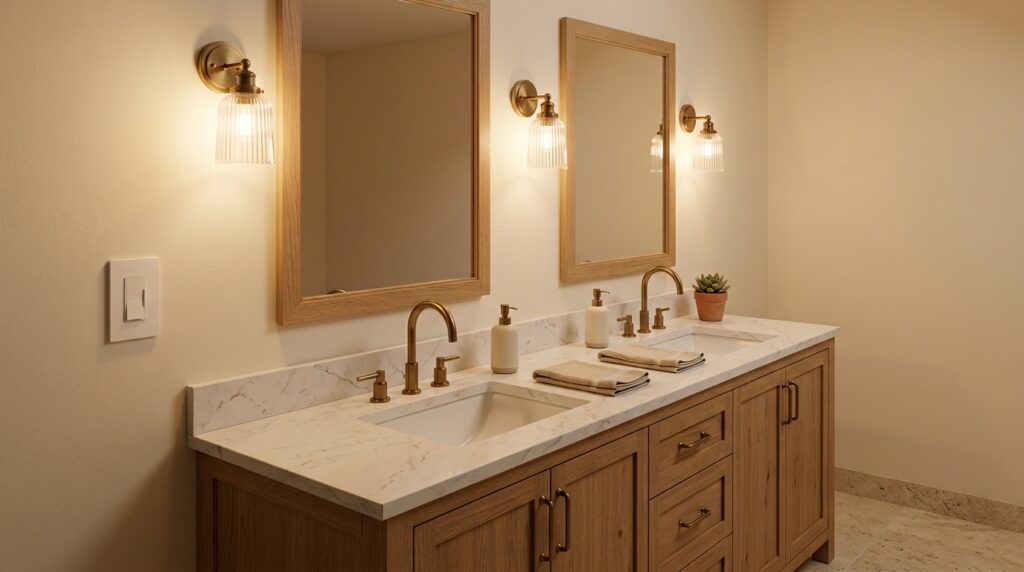
Dimmers are relatively simple to add during a lighting update and work with most bulb types, though checking compatibility with LED bulbs specifically is worth doing, since not all LEDs dim smoothly with every dimmer switch.
13. Motion Sensor Lights for Nighttime Use
A small motion activated light, separate from the main vanity fixture, turns on automatically when someone enters the bathroom at night, providing just enough light to move around safely without needing to turn on brighter overhead or vanity lights.
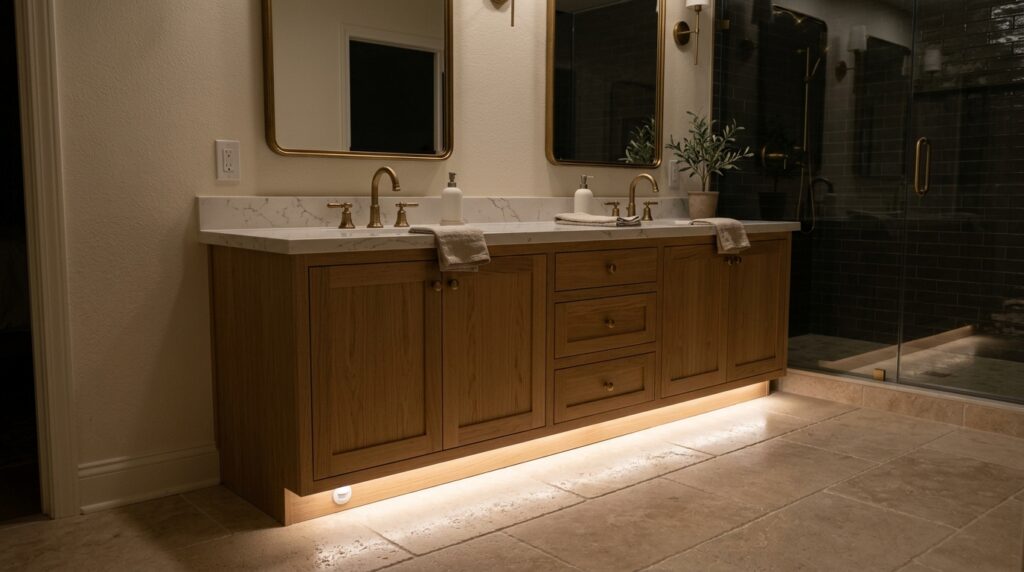
This works particularly well combined with toe kick or under shelf placements, where the light naturally points toward the floor or a lower area rather than directly at eye level. Many of these fixtures run on batteries, which makes them simple to add without any wiring changes.
14. Skylight or Solar Tube Above the Vanity
For bathrooms with access to roof space above, a skylight or a smaller solar tube positioned above the vanity brings natural daylight directly to the area used most for grooming tasks. Natural light tends to be more accurate for things like checking makeup or hair color than most artificial bulbs.
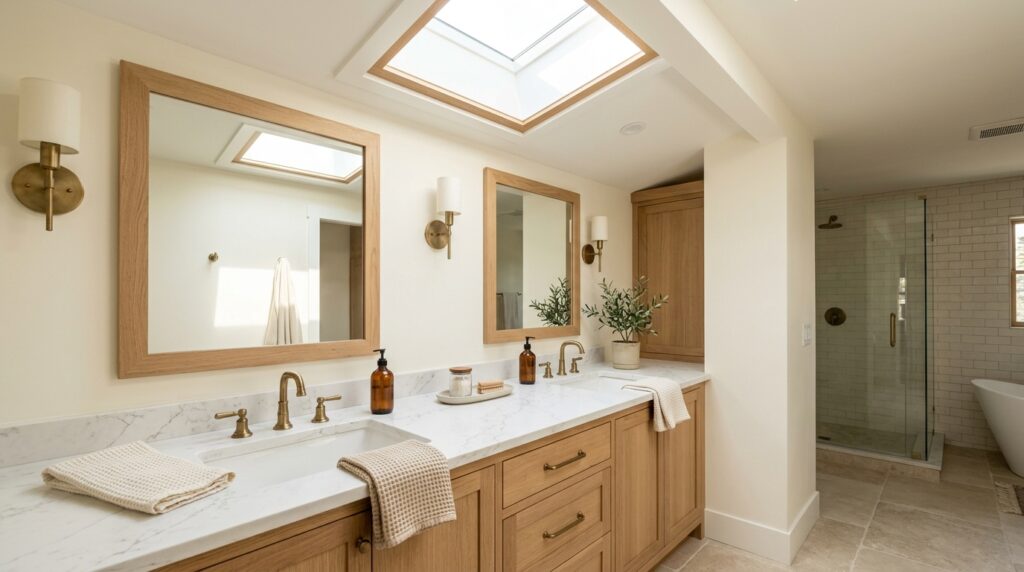
This option requires construction work and is not something that can be added casually, but in bathrooms where it is feasible, it changes the vanity area significantly during daylight hours, often reducing the need for artificial lighting entirely during the day.
15. Task Lighting Built Into Open Shelving
If open shelving sits near the vanity, small integrated lights along the underside of each shelf can illuminate the contents below while adding a layered lighting effect to the wall. This works as a secondary light source rather than the main vanity lighting.
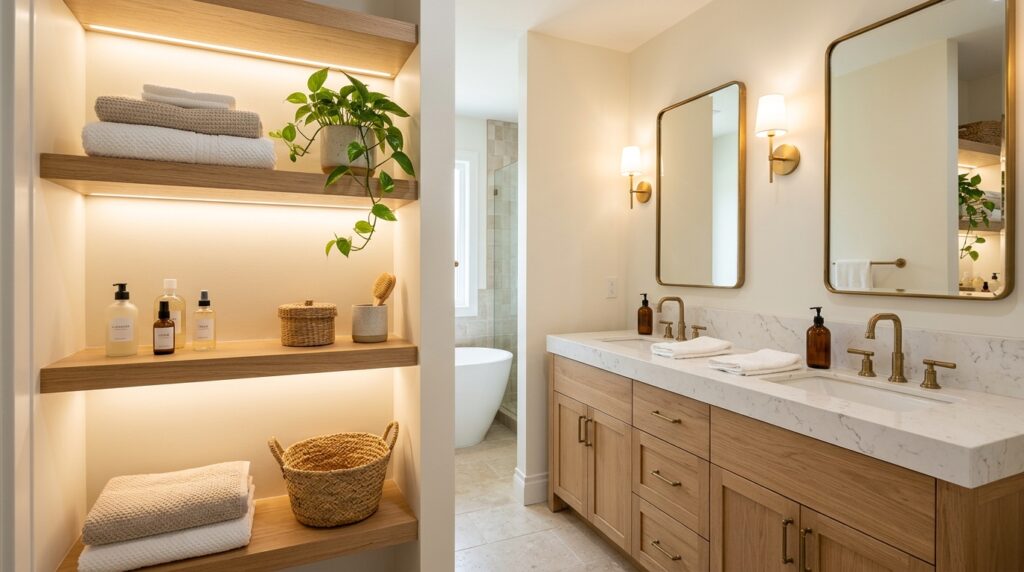
This kind of lighting also highlights whatever is stored on the shelves, making it a practical choice for shelves holding items that benefit from being easy to see, like skincare products or folded towels, while contributing to the overall ambiance of the space.
16. Smart Lighting with App Controlled Settings
Smart bulbs or fixtures connected to an app allow brightness, color temperature, and sometimes color itself to be adjusted without needing physical switches or dimmers, and settings can be saved and recalled for different times of day or routines.
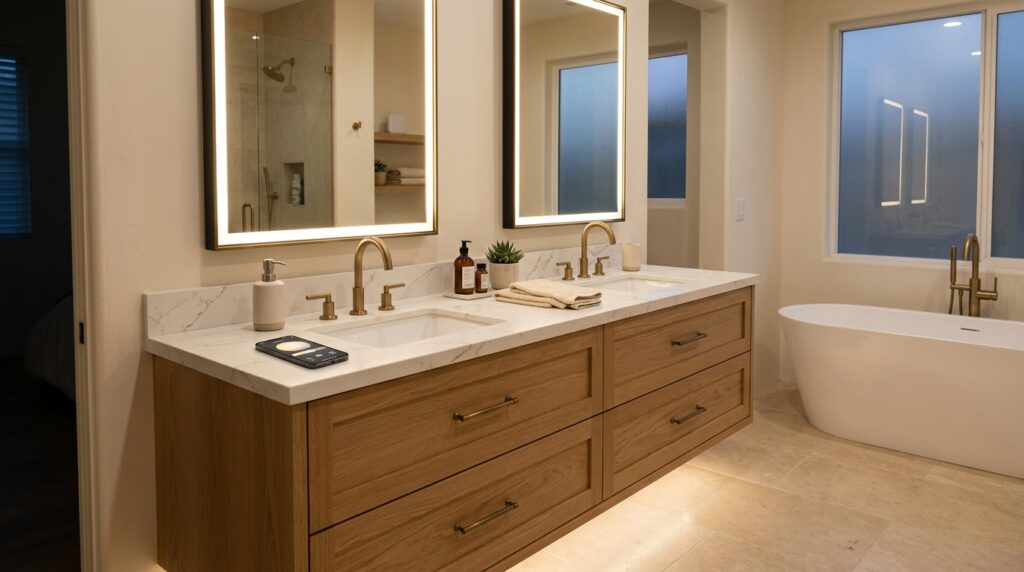
This option works well for households that already use smart home systems elsewhere, since vanity lighting can be integrated into existing routines, like gradually brightening in the morning or dimming automatically in the evening, without any additional manual adjustment.
Final Thoughts
Vanity lighting works best when it comes from more than one direction, since light from the side reduces the shadows that overhead fixtures alone tend to create, and combining a few of these approaches usually produces better results than relying on a single fixture.
Whether the priority is better everyday visibility through sconces or LED strips, a bit of personality through a retro globe fixture or small chandelier, or simply more flexibility through dimmers and smart controls, the right combination depends on how the vanity actually gets used throughout the day and into the evening.