
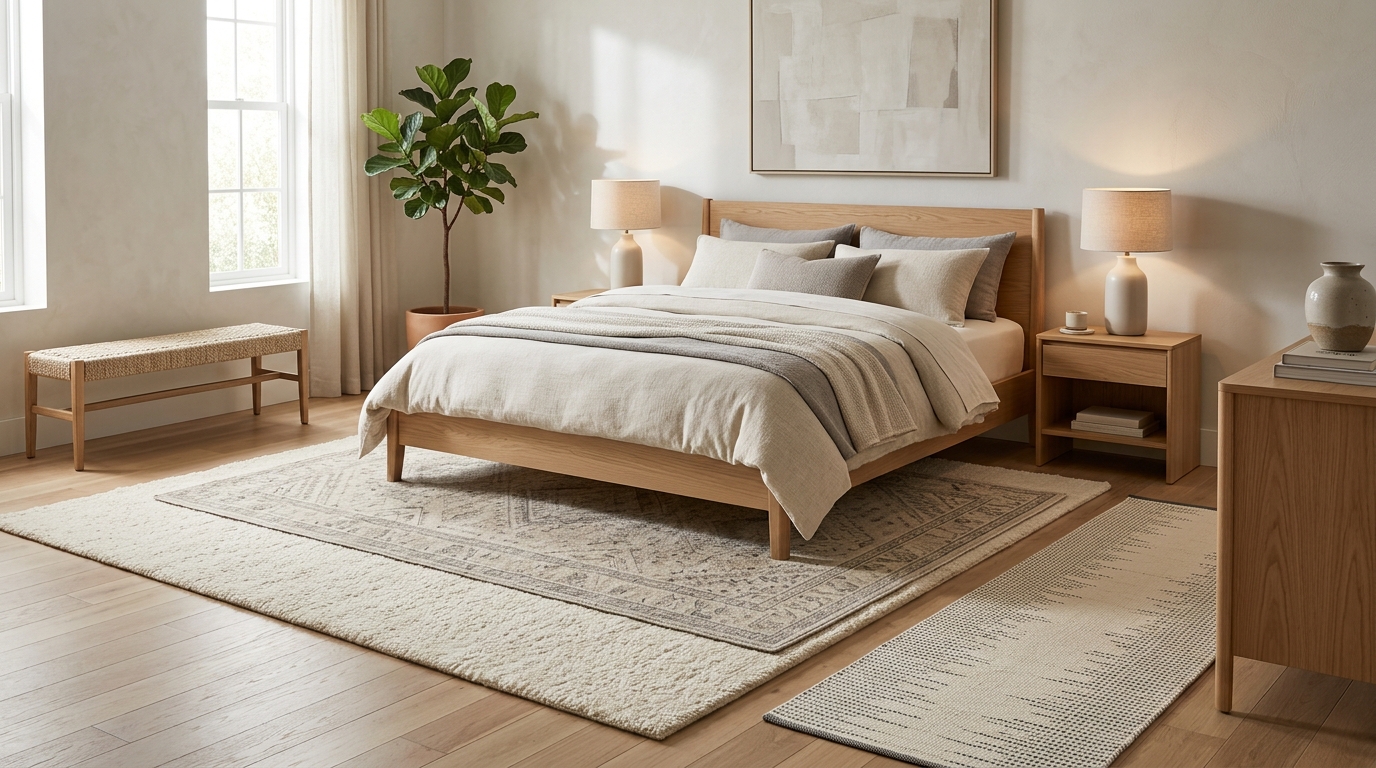
A rug placed under the bed does more than add softness underfoot, it anchors the entire sleeping area and pulls the room together in a way few other decor choices can. The trouble is that most people either choose a rug that is too small, leaving it floating awkwardly, or skip the placement details that make an under bed rug actually work.
This article focuses specifically on rugs positioned under the bed, covering sizing, placement, materials, and styling choices that make the rug feel intentional rather than like an afterthought. Below are seventeen ideas for choosing and placing a rug under the bed.
1. Oversized Rug Extending Well Beyond the Bed
A rug large enough to extend two to three feet beyond the sides and foot of the bed creates a soft border of rug visible all the way around, which is one of the most reliable ways to make a bedroom feel finished and intentional. This approach means stepping onto a soft surface no matter which side of the bed you get out of, which is a real comfort first thing in the morning.
Choosing a rug this large does require measuring carefully, since an oversized rug that fits a king bed will be quite different from one sized for a queen or full. The general goal is for the rug to feel like a foundation the bed sits on top of, rather than a small mat that the bed happens to partially cover, so erring slightly larger usually produces better results than going too small.
2. Two Runners on Either Side of the Bed
Rather than a single large rug, placing two narrow runners along each side of the bed provides the soft landing underfoot where it matters most, while using less material than a full sized rug. This works particularly well in rooms where a single large rug would be difficult to fit or too expensive.
This approach suits bedrooms where the foot of the bed is close to a wall or other furniture, since the runners focus the softness on the sides where people actually step out of bed. Choosing two matching runners keeps the look symmetrical and intentional, while the gap beneath the bed itself stays uncovered, which can also make the room easier to clean under the bed.
3. Rug Placed Two Thirds Under the Bed
Positioning the rug so it sits under the lower two thirds of the bed, leaving the area under the nightstands and headboard uncovered, is a common designer approach that balances coverage with practicality. The rug extends out from under the foot and sides of the bed, framing the most visible portion of the sleeping area.
This placement works well because it provides soft footing where you step out of bed while not wasting rug material under the headboard where it would never be seen or felt. It also keeps the nightstands sitting directly on the floor rather than on the rug, which can make them more stable and prevents the rug from bunching beneath their legs.
4. Layered Rugs for Added Texture
Layering a smaller, textured rug on top of a larger, flatter one under the bed adds depth and visual interest that a single rug cannot achieve. A sheepskin or shag rug layered over a flat woven jute base, for example, combines two textures while also defining a cozy zone within the larger rug area.
This approach works particularly well in bedrooms with a boho or eclectic style, where mixing textures and patterns is part of the overall look. The smaller top rug can be positioned at the foot of the bed or along one side, drawing attention to a specific area, while the larger base rug provides the foundational coverage underneath the whole arrangement.
5. Jute Rug for a Natural Neutral Base
A jute rug under the bed brings natural texture and a warm, neutral tone that works with almost any bedroom color scheme. The woven plant fiber adds an organic, slightly rustic quality that softens a room without introducing a bold color or pattern that might compete with other elements.
Jute does have a coarser texture than wool or synthetic rugs, so for those who want softness directly underfoot, layering a softer rug on top or placing it where bare feet land less often can address that. As a base layer or a standalone rug in a room that leans natural or coastal, jute provides a grounding foundation that pairs well with wood furniture and linen textiles.
6. Plush Shag Rug for Maximum Softness
A plush shag rug under the bed delivers the most comfort underfoot, making those first steps out of bed feel genuinely luxurious. The deep pile also adds a sense of coziness and warmth to the room, both visually and physically, which suits bedrooms designed around comfort and relaxation.
Shag rugs do require more maintenance than flat woven options, since the long fibers trap dust and need regular vacuuming or shaking out. Placing a shag rug under the bed, where foot traffic is lighter than in a hallway or living room, helps it stay looking good longer, while the softness is most appreciated exactly where you step out of bed each morning.
7. Patterned Rug to Add Visual Interest
A rug with a bold pattern under the bed can become the main visual feature of the room, especially when the bedding and walls are kept relatively simple. Geometric patterns, traditional medallions, or abstract designs all add personality to the floor, which is often the largest uninterrupted surface in a bedroom.
This works particularly well when one or two colors from the rug’s pattern are picked up elsewhere in the room, in throw pillows, curtains, or art, so the rug feels connected rather than isolated. Keeping other patterns in the room minimal lets the rug carry the visual weight, preventing the space from feeling busy or chaotic with too many competing designs.
8. Cowhide Rug for an Unexpected Shape
A cowhide rug under or beside the bed introduces an irregular, organic shape that breaks up the straight lines of the bed frame and other furniture. Unlike rectangular rugs, a cowhide’s natural shape adds a more relaxed, unstructured element to the room.
This works particularly well in bedrooms with a rustic, western, or eclectic style, where the natural hide fits the overall aesthetic. Because of its irregular shape, a cowhide is often best placed partially extending out from one side or the foot of the bed, rather than centered underneath, so its distinctive outline remains visible and becomes part of the room’s character.
9. Round Rug at the Foot of the Bed
A round rug placed at the foot of the bed, rather than a rectangular one underneath it, creates a soft circular zone that contrasts with the angular shapes of the bed and other furniture. This works as an alternative to full coverage when the goal is to define a specific area rather than anchor the whole bed.
This approach suits bedrooms with a reading chair or a small seating area near the foot of the bed, where the round rug can define that secondary zone. The curved shape also adds visual softness to a room dominated by straight lines, and a round rug in a contrasting color or texture draws the eye to that part of the room as a deliberate feature.
10. Vintage Persian Rug for Character
A vintage or Persian style rug under the bed brings rich color, intricate patterns, and a sense of history that new rugs often lack. The detailed designs and slightly worn quality of a genuine vintage rug add character and warmth that feels collected rather than purchased all at once.
This works particularly well in bedrooms that mix old and new elements, where the vintage rug grounds the room with its history while modern furniture keeps the look current. The typically darker, richer colors of Persian rugs also hide wear and dust well, making them practical as well as beautiful, and their patterns work as a foundation that other decor can build around.
11. Faux Fur Rug for Cozy Warmth
A faux fur rug under the bed adds a soft, plush layer that feels warm and inviting, particularly in colder climates or bedrooms designed for maximum coziness. The texture provides a luxurious feel underfoot while also adding visual softness to the room.
This works particularly well in bedrooms with a glamorous or cozy aesthetic, where the fur texture complements velvet, satin, or other soft materials. Faux fur is easier to maintain and more ethical than real fur, and placing it where bare feet land most, along the sides of the bed, ensures the soft texture is enjoyed exactly where it matters most each morning and night.
12. Bold Color Rug to Anchor a Neutral Room
In a bedroom with neutral walls, bedding, and furniture, a rug in a bold color under the bed introduces a single strong element that anchors the entire space. A deep teal, rust, or emerald rug, for example, provides a focal point that a neutral room might otherwise lack.
This works particularly well when the bold color is repeated in one or two small accents elsewhere, a throw pillow or a piece of art, so the rug feels intentional rather than random. The neutral surroundings let the colorful rug stand out clearly, while the rug itself prevents the room from feeling flat or lacking personality, which can happen when everything stays in the same neutral range.
13. Matching Rug to the Curtains for Cohesion
Choosing a rug that shares a color or pattern with the bedroom curtains creates a sense of cohesion that ties the floor and windows together. This repetition of color or pattern across two different areas of the room makes the overall design feel deliberate and well planned.
This works particularly well when the matching element is subtle rather than an exact match, a shared color in a different pattern, or a similar tone in a different shade, so the room feels coordinated without being overly matched. The connection between the rug under the bed and the curtains draws the eye around the room in a way that feels intentional, reinforcing the sense that every element was chosen to work together.
14. Washable Rug for Easy Maintenance
A washable rug under the bed offers the look of a traditional rug with the practicality of being able to throw it in the washing machine when it gets dirty. This is especially useful in bedrooms shared with children or pets, where spills and accidents are more likely.
These rugs have improved significantly in recent years, with many now available in styles and patterns that look just as good as non washable options. Choosing a washable rug under the bed combines the aesthetic benefit of anchoring the sleeping area with the peace of mind that maintenance will be simple, making it a practical choice for busy households without sacrificing the finished look.
15. Flatweave Rug for a Low Profile Look
A flatweave rug, with its thin, tightly woven construction, sits low to the floor and works well under a bed where a thick pile rug might cause furniture to sit unevenly. The low profile also makes it easier to open and close drawers on furniture sitting partially on the rug.
This works particularly well in bedrooms with a minimalist or modern aesthetic, where the clean, flat texture suits the overall simplicity. Flatweave rugs are also typically reversible and easier to clean than thicker options, and their low height means doors and furniture clear them easily, avoiding the bunching or catching that can happen with a thicker rug under heavy bedroom furniture.
16. Symmetrical Placement for a Balanced Look
Centering the rug precisely under the bed so that equal amounts extend on each side creates a sense of balance and order that makes the room feel calm and intentional. This symmetry is especially noticeable when the bed is the clear centerpiece of the room.
This works particularly well in bedrooms with a formal or traditional style, where balance and symmetry are central to the overall look. Taking the time to measure and center the rug, rather than placing it approximately, pays off in how settled the room feels, since an off center rug under a centered bed can create a subtle sense of imbalance that the eye notices even if the cause is not immediately obvious.
17. Rug Color Matched to Wood Floor Tones
Choosing a rug in tones that complement the existing wood floor, warmer rug tones with warm wood, cooler tones with gray washed wood, creates a harmonious relationship between the rug and the floor it sits on. This consideration ensures the rug enhances the floor rather than clashing with it.
This works particularly well when the rug is partially transparent in coverage, allowing some of the wood floor to remain visible around its edges, since the colors then sit directly next to each other. Matching the rug to the wood tones creates a layered, intentional look where the visible floor and the rug feel like they belong together, rather than the rug appearing to fight against the floor underneath and around it.
Conclusion
A rug under the bed is one of those details that makes a bedroom feel complete, softening the floor, anchoring the bed, and tying the room’s colors and textures together. The most common mistake is choosing a rug that is too small, so when in doubt, sizing up and ensuring the rug extends well beyond the bed almost always produces a better result.
Beyond size, the material, color, and placement all shape how the rug functions and feels, from a plush shag for morning comfort to a flatweave for a clean modern look. Whatever direction suits the room, a well chosen rug under the bed rewards the effort every single morning, the moment bare feet touch something soft instead of a cold, bare floor.