
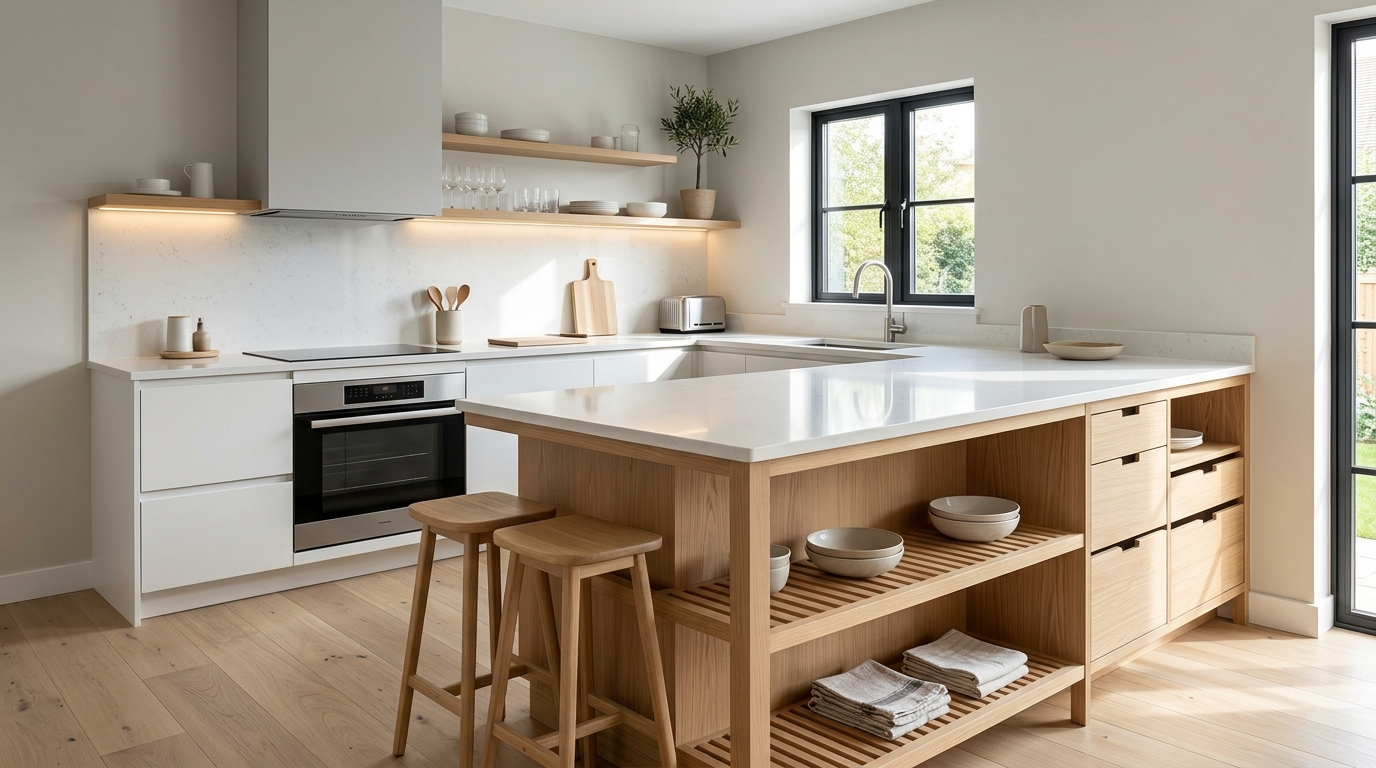
Most people think a kitchen island is something you earn with square footage. A big open kitchen gets the island. A small kitchen makes do without one. That thinking is wrong, and it costs a lot of small kitchens the extra counter space, the extra storage, and the casual seating that would make them genuinely more functional every single day.
These small kitchen island ideas are built entirely around islands that fit, function, and earn their place in a kitchen that does not have room to waste. Island types, storage configurations, and seating options that work specifically within tight dimensions. Nothing about backsplashes, lighting, or cabinet paint colors. Just the island itself, chosen and set up correctly.
You will find 17 ideas here, each one a different approach to getting an island into a small kitchen and making it work harder than a standard kitchen counter. Some are purchased ready to go. Some take a weekend afternoon to build. All of them add meaningful counter space and storage to a kitchen that had neither before.
1. Use a Rolling Kitchen Cart as a Moveable Island
A rolling kitchen cart is the most practical island solution available for a small kitchen because it gives you a work surface and storage when you need both and rolls out of the way when you need the floor space back. On a busy cooking night it parks in the center of the kitchen. When you need room to move, it goes against the wall, into a corner, or into an adjacent room entirely.
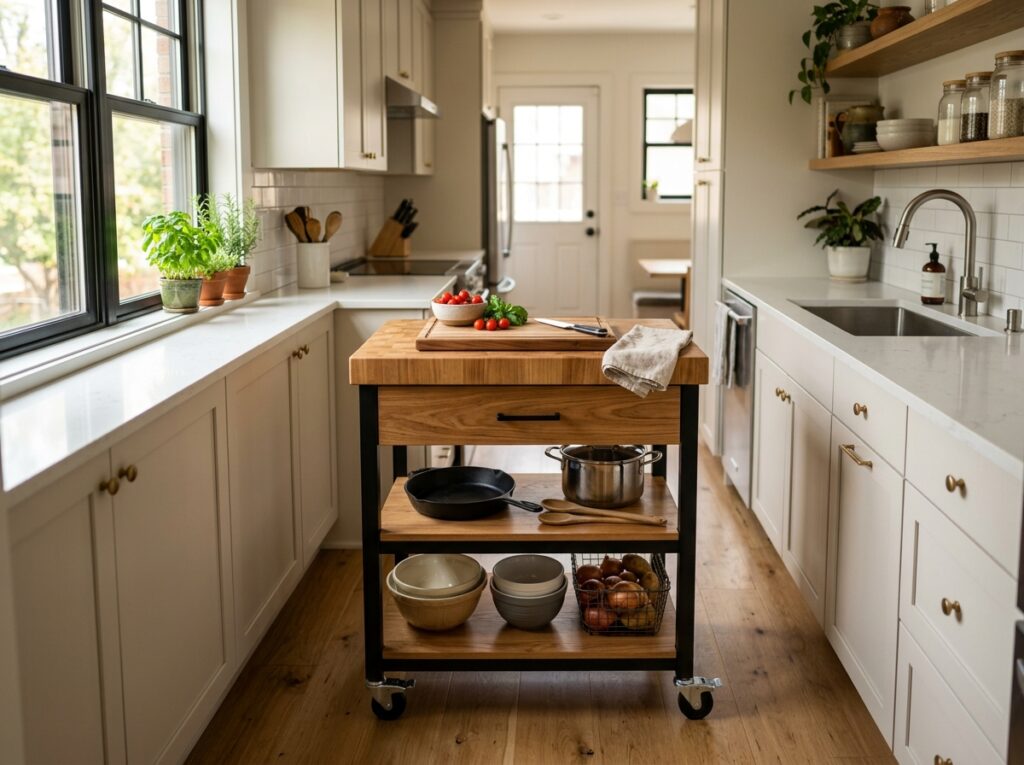
Look for a cart with a solid wood or butcher block top for a genuine work surface, at least one drawer for utensils, and open or closed shelving below for pots, bowls, or dry goods. The John Boos Maple Top Kitchen Cart, the Catskill Craftsmen Rolling Kitchen Island, and the IKEA RÅSKOG cart at the lower price point are all well-proportioned options that function as proper islands rather than just side tables. Choose a cart with locking casters so it stays fixed in place during meal prep and releases quickly when you need to move it.
The rolling cart is the only island option that gives a small kitchen full flexibility without committing permanently to any single layout.
2. Small Kitchen Island Ideas for Small Kitchens Start with the Right Dimensions
Before buying or building anything, measure the kitchen clearance carefully. A kitchen island works functionally only when there is at least 36 inches of clear walkway on each side it faces. In a small kitchen, that number governs everything. It tells you exactly how wide the island can be, which determines almost every other decision that follows.

Measure the total width of the kitchen at the narrowest point and subtract 72 inches, which accounts for 36 inches of clearance on each side. What remains is the maximum width your island can be. Most small kitchens land between 18 and 24 inches of available island width, which rules out standard 36-inch-wide islands but works perfectly for narrow butcher block carts, slim custom builds, and purpose-designed small space islands. Write that number down before looking at anything. It saves significant time and avoids the common mistake of buying an island that fits in the store and blocks the kitchen at home.
3. Build a Simple Butcher Block Island from Two Base Cabinets
Two standard kitchen base cabinets placed back to back and topped with a butcher block countertop create a custom island that looks built-in, provides drawer and cabinet storage on both sides, and costs significantly less than a purpose-made kitchen island of the same size. The cabinets come pre-assembled from IKEA or Home Depot and the butcher block top from any lumber yard or home improvement store.
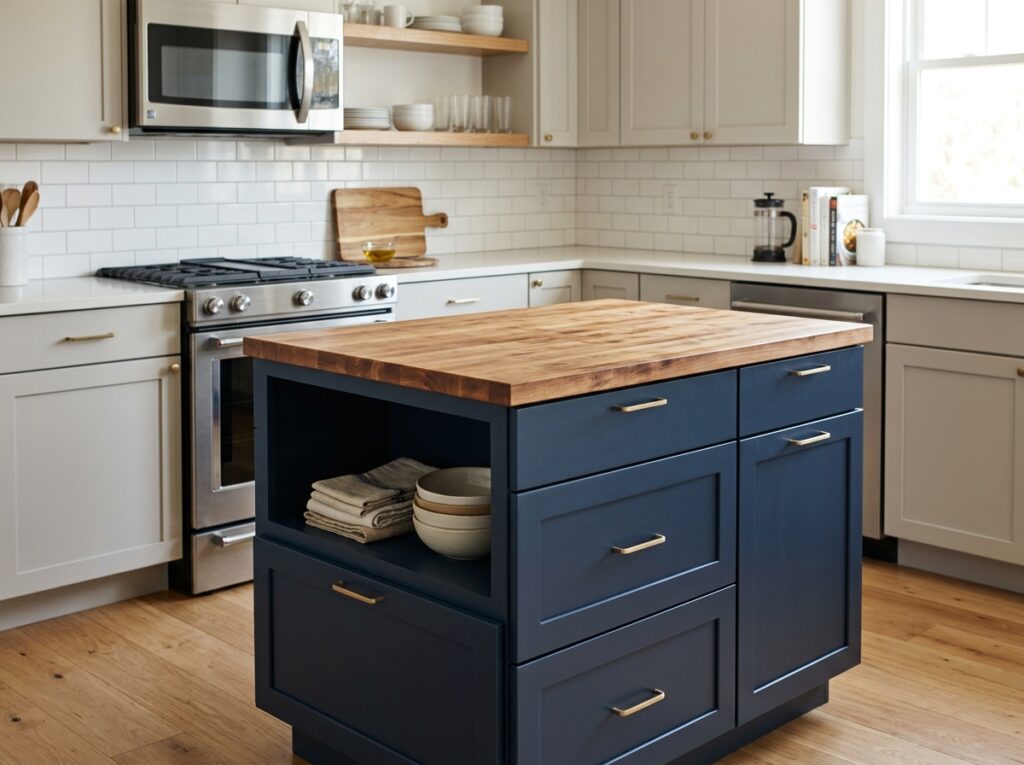
Use two IKEA SEKTION base cabinets in the 18 or 24-inch width depending on your clearance measurement. Place them back to back so doors and drawers face outward on both sides, giving you storage access from either end of the island. Top them with a John Boos butcher block or an IKEA BADELUNDA butcher block panel cut to the finished island dimensions. Secure the top with cabinet mounting clips from underneath and the whole structure reads as a custom built-in from across the room.
Paint the cabinets a contrasting color from the existing kitchen cabinetry to give the island a visual identity that reads as intentional rather than added after the fact.
4. Add Seating to One Side of the Island with an Overhang
A kitchen island that provides seating on one side solves two problems at once: it adds a casual dining spot that keeps people out of the cook’s way and it eliminates the need for a separate kitchen table in a small space where a table would crowd the room significantly. The seating works only when the countertop overhangs far enough on one side for knees to clear underneath.
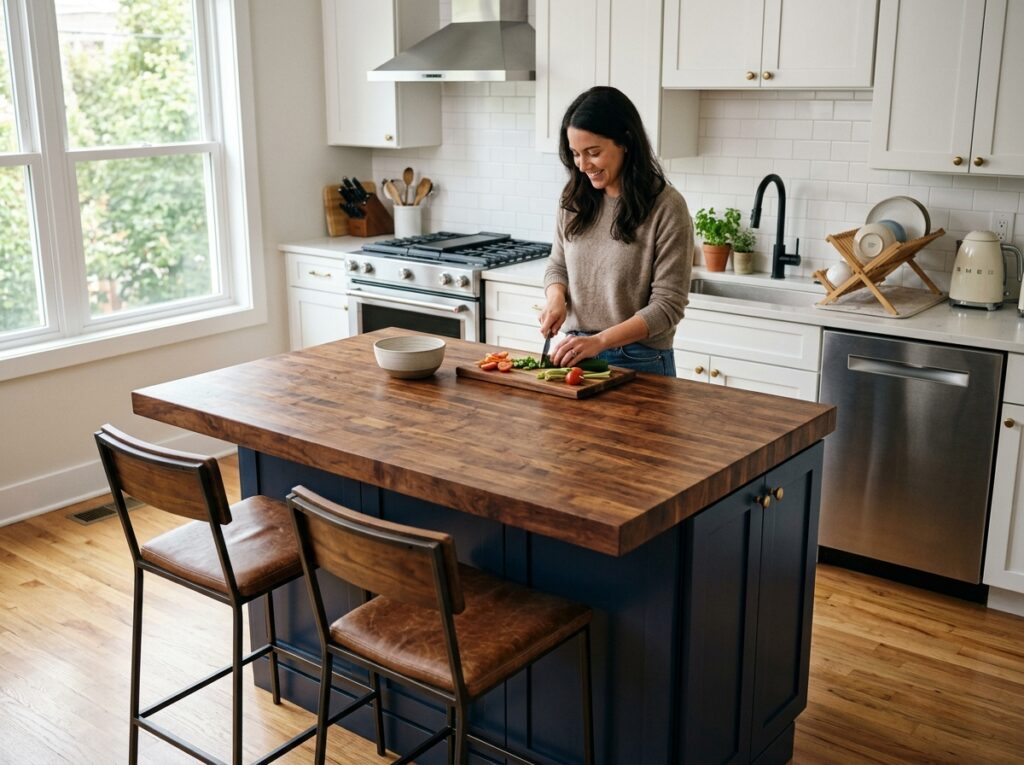
A minimum 12-inch overhang accommodates standard counter-height stools, which sit at 24 to 26 inches from the floor. An 18-inch overhang is more comfortable and allows for a fuller range of seating options. When building or modifying an island to add seating, extend the countertop on the side that faces away from the cooking area so diners face the kitchen rather than a wall. The IKEA INGOLF counter stool, the Amazon Basics Adjustable Height Bar Stool, and the Target Project 62 Counter Stool all work well at standard counter-height islands at reasonable price points.
5. Choose a Narrow Island Under 20 Inches Deep for Maximum Clearance
A standard kitchen island runs 24 to 30 inches deep front to back. In a small kitchen, that depth consumes clearance that the kitchen cannot afford to lose. A narrow island under 20 inches deep provides a work surface and storage while preserving the walking room that makes a small kitchen actually functional rather than technically having an island.
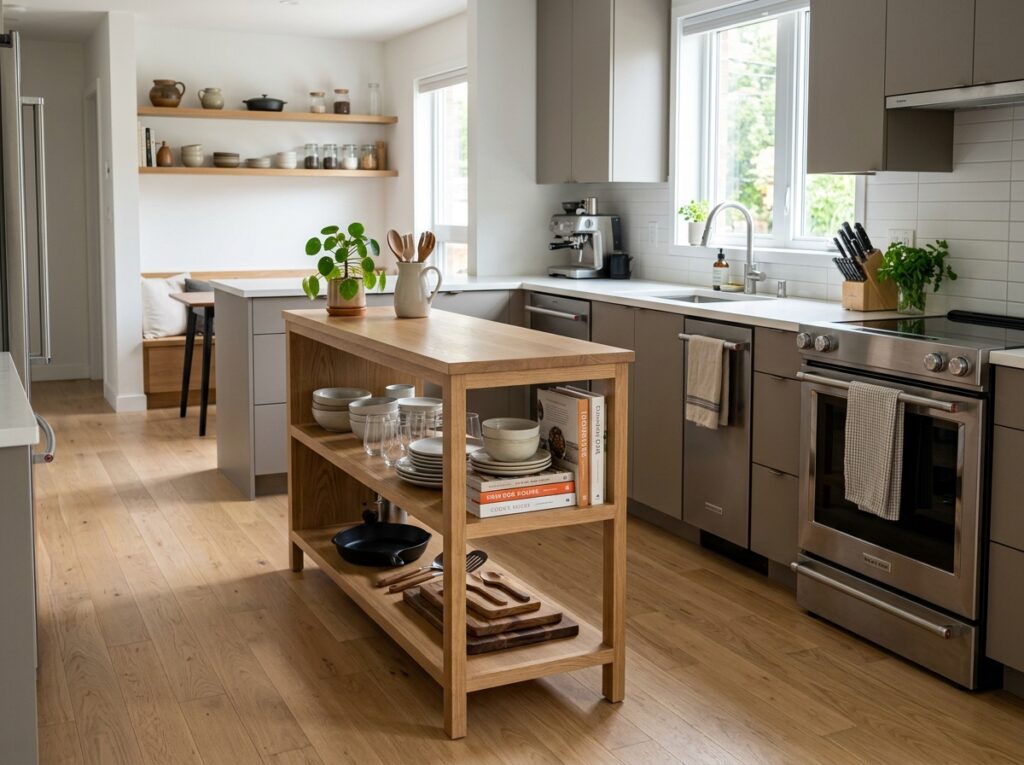
Several purpose-designed narrow kitchen islands fit this specification. The Crosley Brennan Kitchen Island at 18 inches deep, the Linon Cameron Kitchen Island at 16 inches deep, and the Sauder Harvey Park Kitchen Island at 17.5 inches deep all deliver genuine storage and counter surface in a footprint shallow enough for kitchens where depth is the limiting constraint. At this depth, open shelving rather than cabinet doors on the lower section works better because doors swing out into the clearance zone and reduce the usable floor space on the working side.
6. Use a Farmhouse Table as a Kitchen Island
A narrow farmhouse table placed in the kitchen functions as an island with character that a cart or cabinet base cannot match. The legs keep the visual weight low and make the kitchen feel open rather than blocked. The table surface provides a full prep area and the space underneath holds baskets, a rolling bin, or extra storage without any cabinetry at all.
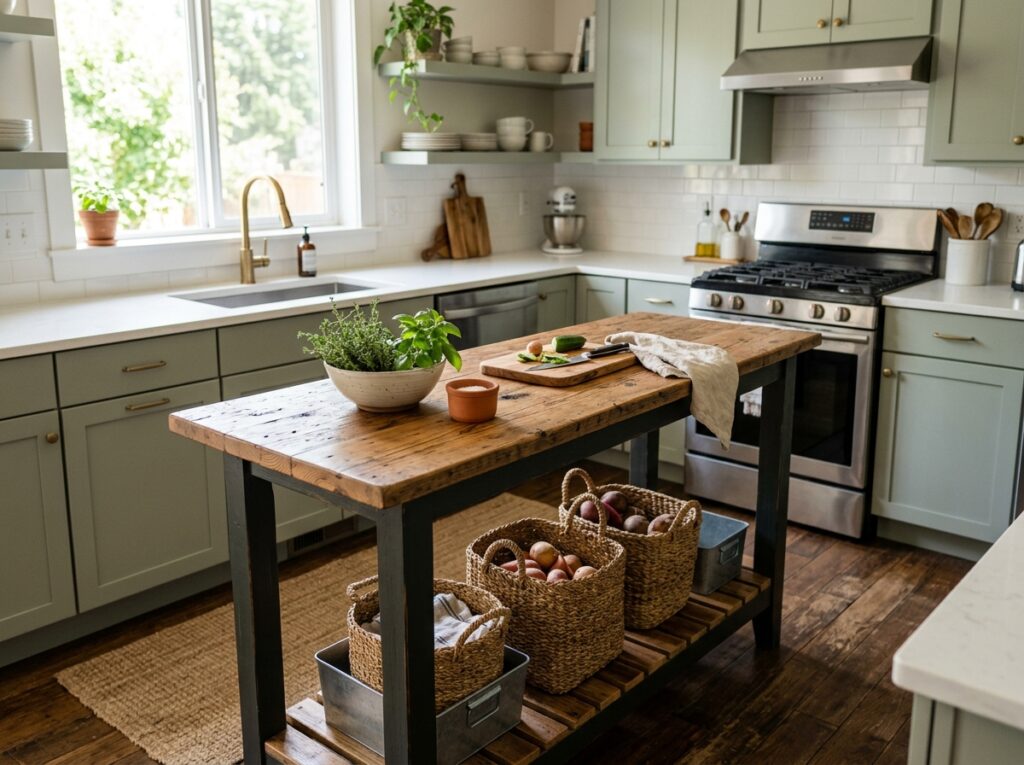
Look for a farmhouse table in the 24 to 30-inch width range and a height between 34 and 36 inches, which matches standard kitchen counter height. A table that sits at standard dining height of 30 inches works as a prep surface only with taller stools or as a seated prep area, which some cooks prefer. Source a secondhand farmhouse table from Facebook Marketplace or a thrift store and refinish the top with food-safe mineral oil or a coat of Waterlox Original Sealer Finish for a surface that handles daily kitchen use without damage.
7. Small Kitchen Island Ideas That Double as Storage Prioritize Drawers Over Doors
A kitchen island with drawers gives faster, easier access to stored items than one with cabinet doors because everything in a drawer is visible at a glance from above without crouching, moving items, or swinging anything open into the walkway. In a small kitchen where every movement matters, drawers are the more functional choice for island storage.
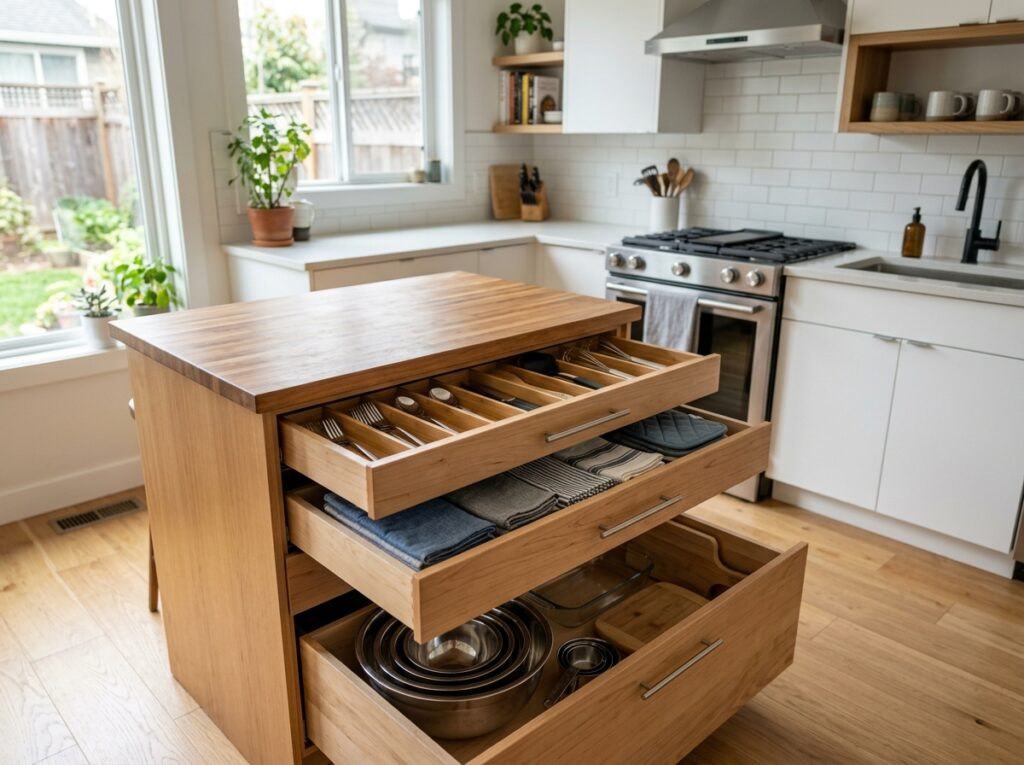
When choosing a premade island or designing a custom one, prioritize two to three drawers over lower cabinet doors wherever the footprint allows. Use the drawers for utensils in the top drawer, dish towels and oven mitts in the middle drawer, and bulkier items like mixing bowls or pot lids in the deepest bottom drawer. If the island has one cabinet section alongside the drawers, use it for items that are accessed less frequently rather than for daily cooking tools that benefit from the faster pull-and-grab access a drawer provides.
8. Install a Drop-Leaf Extension on One End of the Island
A drop-leaf extension adds counter space when you need it and folds flat when you do not, which makes it one of the most practical modifications available for a small kitchen island. With the leaf raised, the island has a full extended work surface or seating area. With the leaf down, the island returns to its compact footprint and the kitchen reclaims the clearance around it.
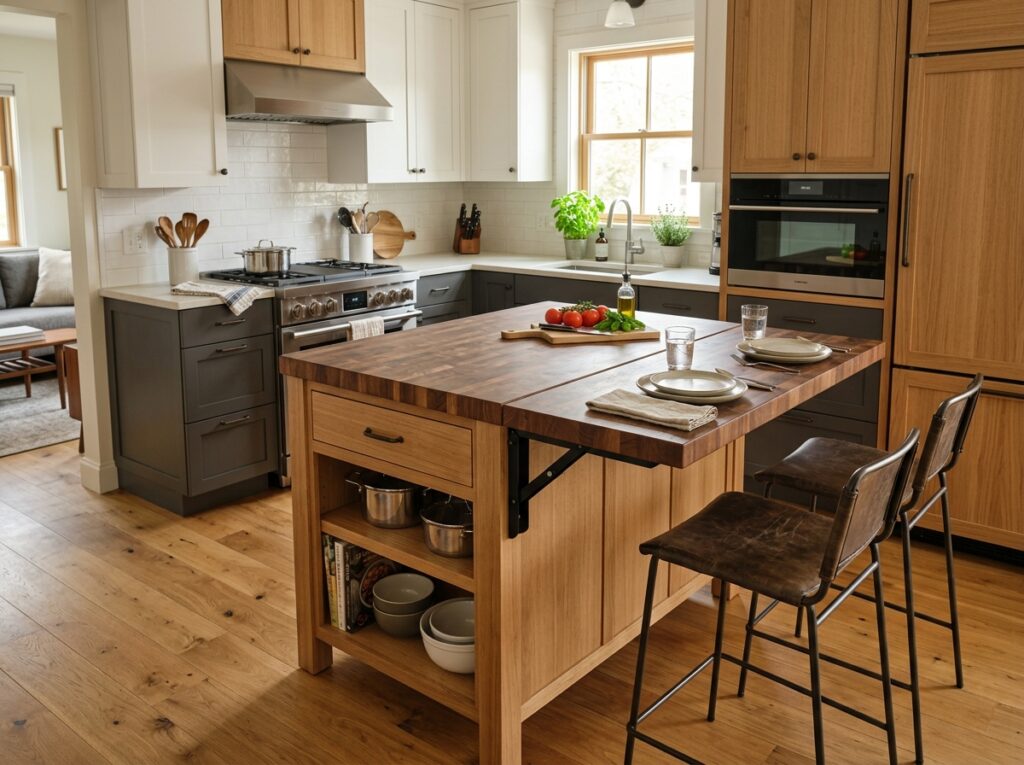
Attach a drop-leaf bracket to one end of an existing island or incorporate one into a custom build using a folding table bracket from Rockler or a standard drop-leaf hinge from any hardware store. The leaf itself can be cut from the same butcher block or countertop material as the island top for a seamless matched look. Size the leaf to add 10 to 14 inches of additional surface when raised, which provides enough room for two place settings or a dedicated prep zone without requiring a leaf so large it throws the kitchen balance off.
9. Place a Freestanding Baker’s Rack as a Kitchen Island Alternative
A baker’s rack with a solid lower shelf and a full-width top surface functions as a kitchen island in a space too narrow for a cart or cabinet-based structure. The open wire or metal construction keeps the visual weight low, the legs preserve sightlines through the kitchen, and the multiple shelf levels provide the kind of layered storage that a solid base cabinet cannot offer in the same footprint.
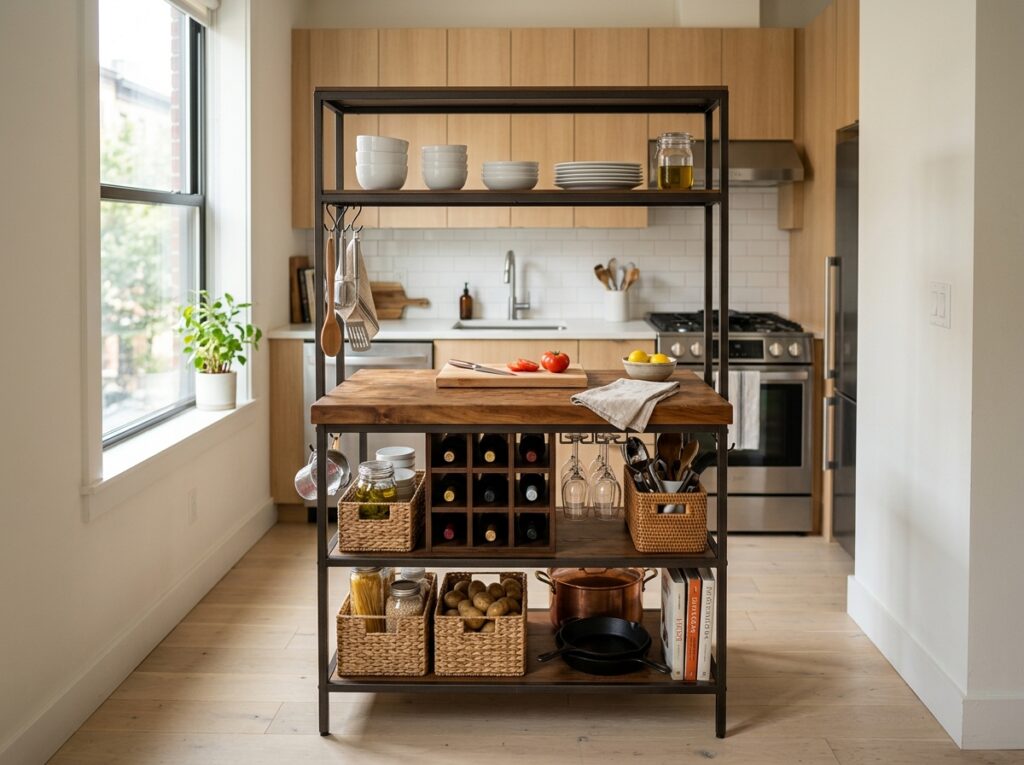
The Origami Folding Steel Baker’s Rack folds completely flat for storage when not in use, which makes it genuinely useful in a kitchen that needs the island only during active cooking sessions. For a more permanent arrangement, the Seville Classics Commercial-Grade Baker’s Rack and the Home Styles Solid Black Steel Baker’s Rack both provide stable platforms that hold a butcher block insert on the top surface for a proper prep area. Add S-hooks to the top rail for hanging utensils and a wine rack insert to the middle shelf for bottle storage.
10. Build a Rolling Island from a Single Sheet of Plywood
A kitchen island built from a single 4 by 8 foot sheet of 3/4 inch plywood costs about 40 to 60 dollars in materials and can be cut to exactly the dimensions the kitchen needs rather than adapting to the fixed sizes that premade options offer. The build requires a circular saw, a drill, wood glue, and a set of heavy-duty locking casters.
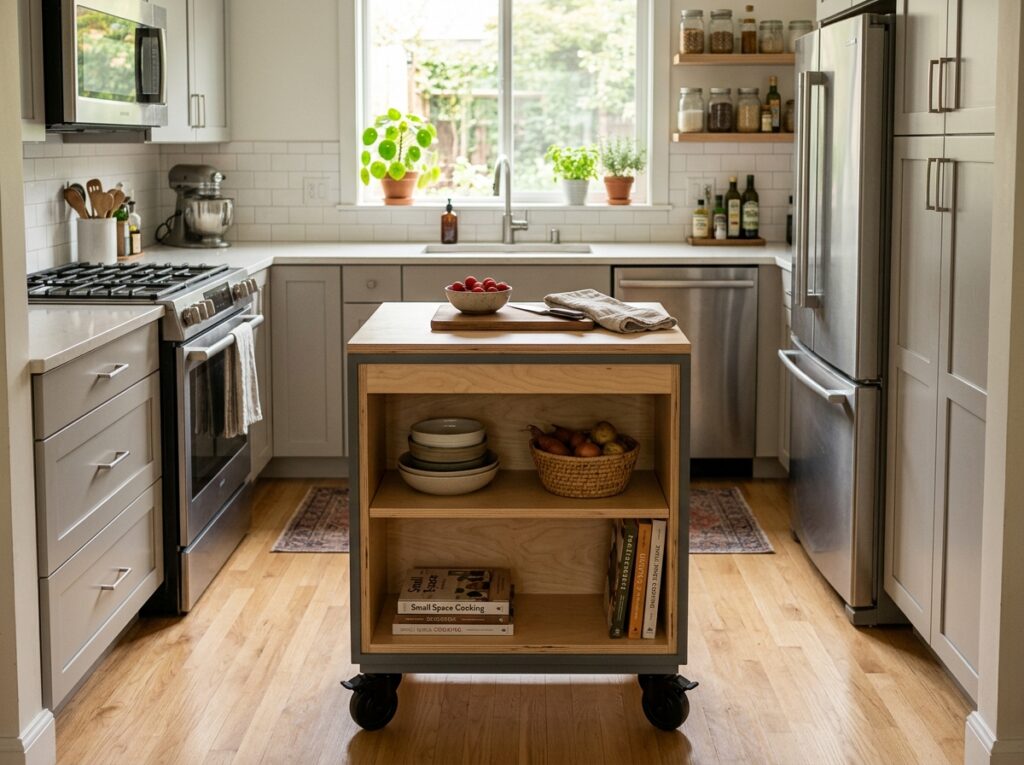
Cut the plywood into a top panel, two side panels, a bottom shelf, and a back panel at whatever dimensions fit the clearance measurement from idea 2. Assemble with wood glue and 2-inch screws, sand all surfaces smooth with 120-grit sandpaper, and finish with two coats of Rust-Oleum Chalked Paint in a matte tone that suits the kitchen color scheme. Attach four locking casters to the bottom corners rated for at least 100 pounds each. The finished island is sturdy, mobile, and sized precisely for the space it lives in.
11. Use a Secondhand Dresser as a Kitchen Island Base
A solid wood dresser from a thrift store or estate sale costs 20 to 50 dollars, refinishes easily with chalk paint, and converts into a kitchen island with storage that has far more character than anything available at a similar price point from a furniture retailer. The drawers provide organized storage for kitchen tools, the solid construction handles daily use, and the finished piece looks like a deliberate design choice rather than a workaround.

Choose a dresser that is approximately counter height, between 34 and 36 inches tall, or plan to add casters to raise it to that level. Remove the mirror if one is attached, refinish the exterior in Behr Chalk Decorative Paint or Rust-Oleum Chalked Paint in a tone that contrasts the existing cabinetry, and top it with a butcher block panel cut to the dresser dimensions plus a 1-inch overhang on all sides. Seal the top with food-safe mineral oil applied in three coats and the dresser becomes a functional, beautiful kitchen island for a fraction of what purpose-made options cost.
12. Small Kitchen Island Ideas Include a Built-In Seating Bench on One End
A kitchen island with a built-in bench seat extending from one end creates an eating nook that uses the island itself as one side of the seating arrangement, eliminating the need for chairs on that side and reducing the footprint of the dining zone significantly. The bench tucks under the island overhang when not in use and the seat surface adds additional sitting room beyond what stool seating alone provides.
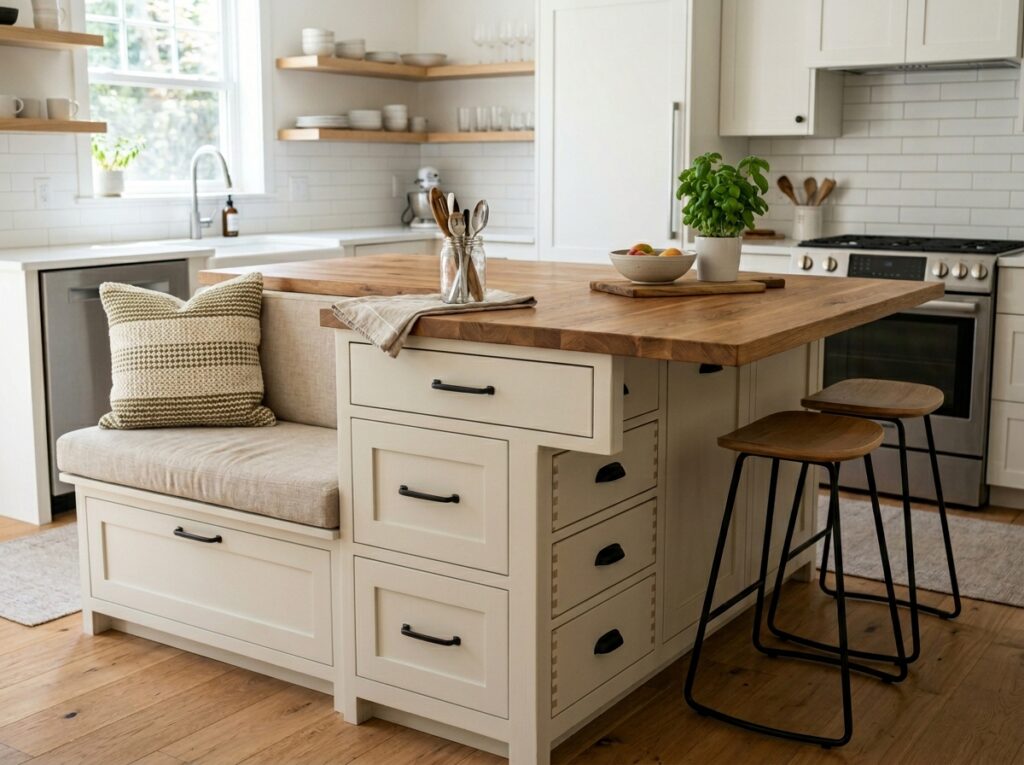
Build the bench from 2 by 4 framing and 2 by 6 seat boards at a height of 18 inches from the floor, which matches standard bench seat height. Attach the bench structure to the island end panel with screws through the inside framing so the bench and island move as a single unit. Upholster the seat surface with outdoor-grade foam and fabric in a tone that suits the kitchen color scheme, or leave it as a painted wood surface with a cushion tied in place for a softer, more casual look.
13. Choose a Waterfall Edge Countertop for a High-Impact Island Top
A waterfall edge countertop wraps the island top material down one or both vertical end panels to the floor, creating a continuous surface that makes a small island look significantly more architectural and considered than a standard topped base. The effect reads expensive and custom without necessarily costing more than a standard countertop of the same material.
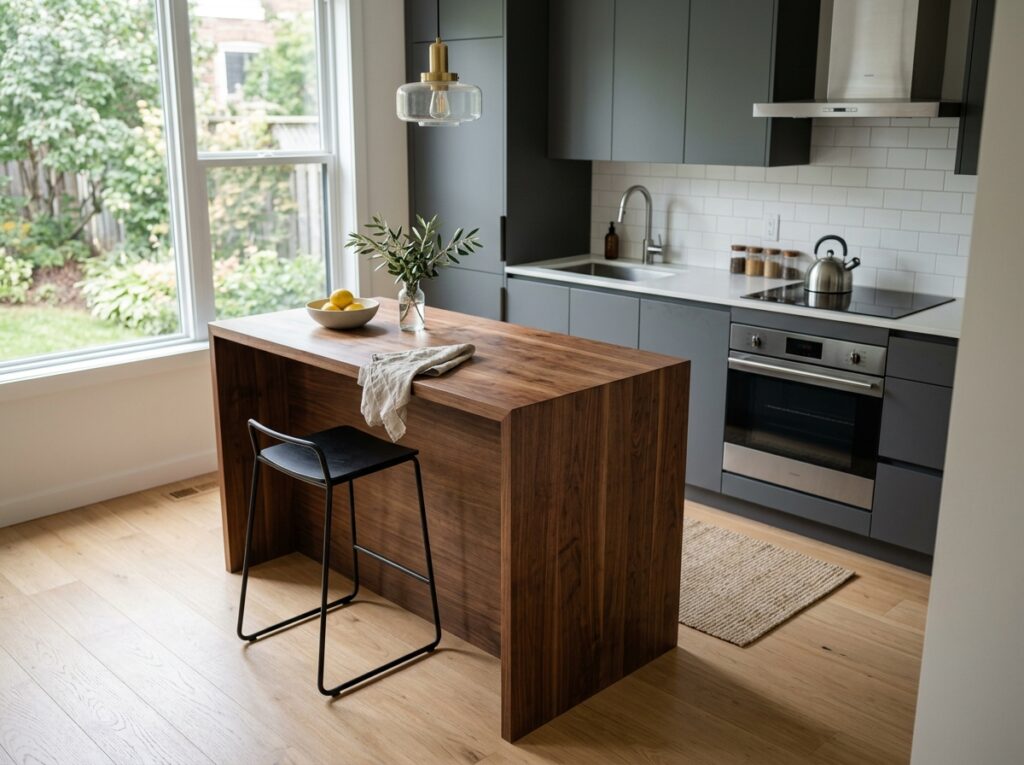
Quartz and butcher block are the two most practical materials for a waterfall edge on a small kitchen island because both cut and join cleanly at the 90-degree corner required for the waterfall detail. A butcher block waterfall edge uses a mitered corner joint where the top and side panels meet at 45 degrees, which requires a table saw or a skilled cut with a circular saw and a straightedge guide. The visual payoff is significant. A plain 18-inch cart with a butcher block waterfall end reads as something from a design-forward kitchen rather than a small space workaround.
14. Add Open Shelving Below the Island Top Instead of Cabinet Doors
Open lower shelving on a kitchen island keeps the space visually lighter than closed cabinet doors, makes stored items immediately accessible without opening anything, and works better in a small kitchen where every visual pound of weight in the center of the space makes the room feel tighter. The right items on open shelves look organized and intentional. The wrong items make the island look like a storage problem.
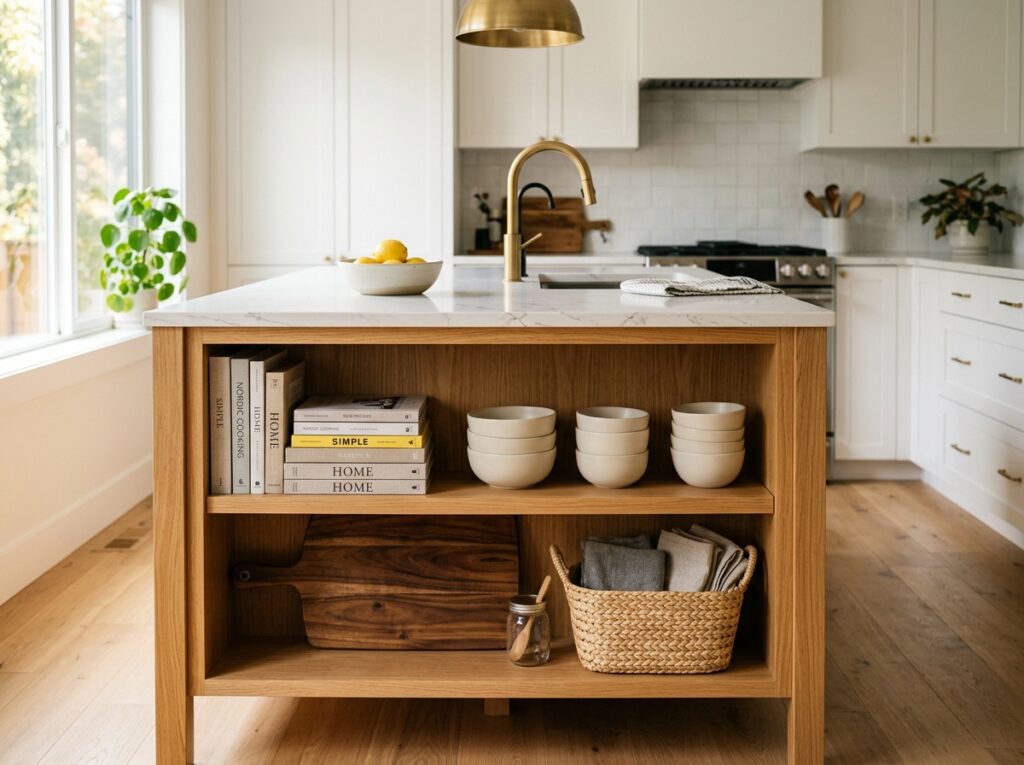
Use the open shelves below the island for items that look good and get used frequently: a row of matching cookbooks, a set of uniform ceramic bowls, a wooden cutting board leaned upright against the back, and a small basket for kitchen linens. Keep items grouped by category with some breathing room between groups so the shelves read as curated rather than packed. Everything that is not visually appealing goes in a drawer or behind the one closed cabinet panel the island may have on the less-visible side.
15. Install Hooks on the Island Sides for Hanging Storage
The vertical side panels of a kitchen island are storage surfaces that most people leave completely empty. A row of S-hooks or fixed hooks mounted to the side panel closest to the stove holds pot lids, oven mitts, a kitchen timer, small utensils, and other frequently used items in a position where they are accessible without opening a drawer or a cabinet.

Use a horizontal rail mounted to the side panel rather than individual hooks drilled directly into the panel surface, which allows the hooks to be repositioned as the storage needs change. The IKEA KUNGSFORS rail in stainless steel and the OXO Good Grips Wall-Mounted Utensil Holder both mount cleanly to a flat panel surface and accept S-hooks in varying sizes. Keep the hanging items limited to things that are used at the stove during active cooking so the side of the island looks purposeful rather than overloaded.
16. Use a Kitchen Island with a Built-In Wine Rack Section
A kitchen island with a dedicated wine rack section built into the lower structure stores bottles in a space that would otherwise hold a shelf of miscellaneous items and makes the island look more considered and purposeful in the process. A wine rack that holds 6 to 12 bottles fits into a section as narrow as 14 inches wide and 14 inches tall and keeps the bottles accessible without requiring a separate storage piece elsewhere in the kitchen.
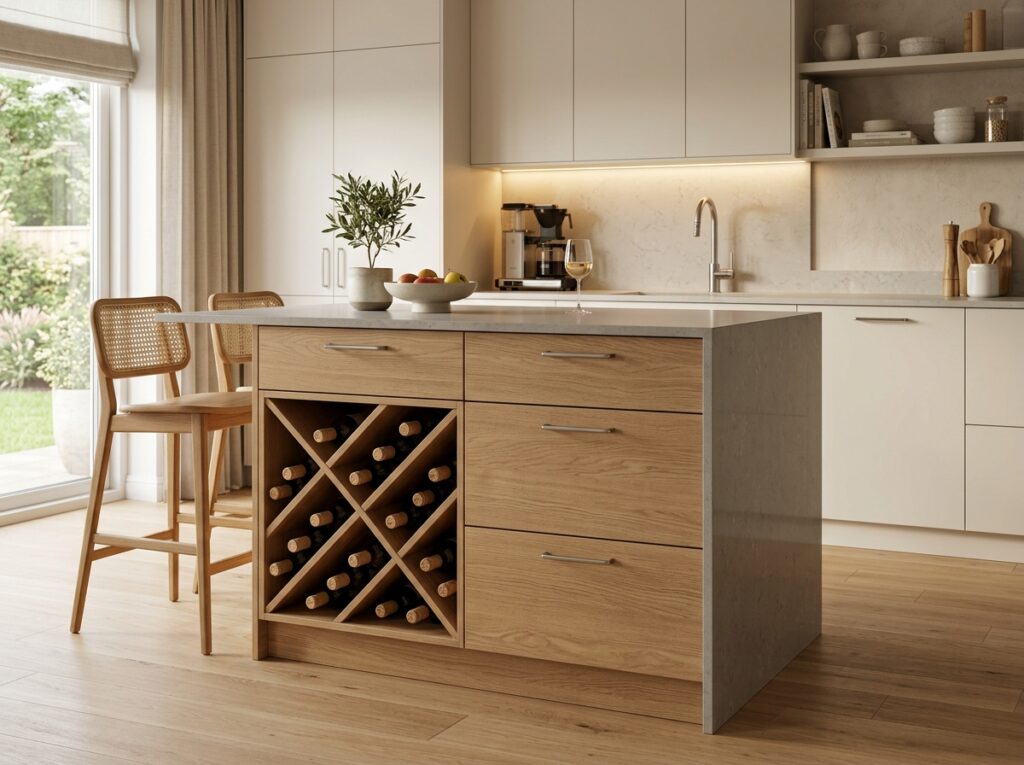
Several premade islands include a wine rack as a built-in feature. The Crosley Furniture Vintner Kitchen Island, the Home Styles Bermuda Kitchen Island, and the Linon Wentworth Kitchen Island all incorporate wine storage into an otherwise compact island footprint without sacrificing drawer or shelf space in a way that makes the overall storage feel compromised. If building a custom island, incorporate a diagonal slot wine rack from a woodworking supply retailer like Rockler into the end panel of the structure where it adds visual interest without consuming the primary storage space.
17. Paint the Island a Contrasting Color from the Kitchen Cabinets
An island painted in a contrasting color from the surrounding kitchen cabinetry visually separates it from the kitchen as a distinct piece of furniture rather than a fixed cabinet section, which is exactly the quality that makes a small kitchen island feel intentional rather than crowded. The color contrast also draws the eye to the island as a feature rather than letting it disappear into the existing cabinet layout.
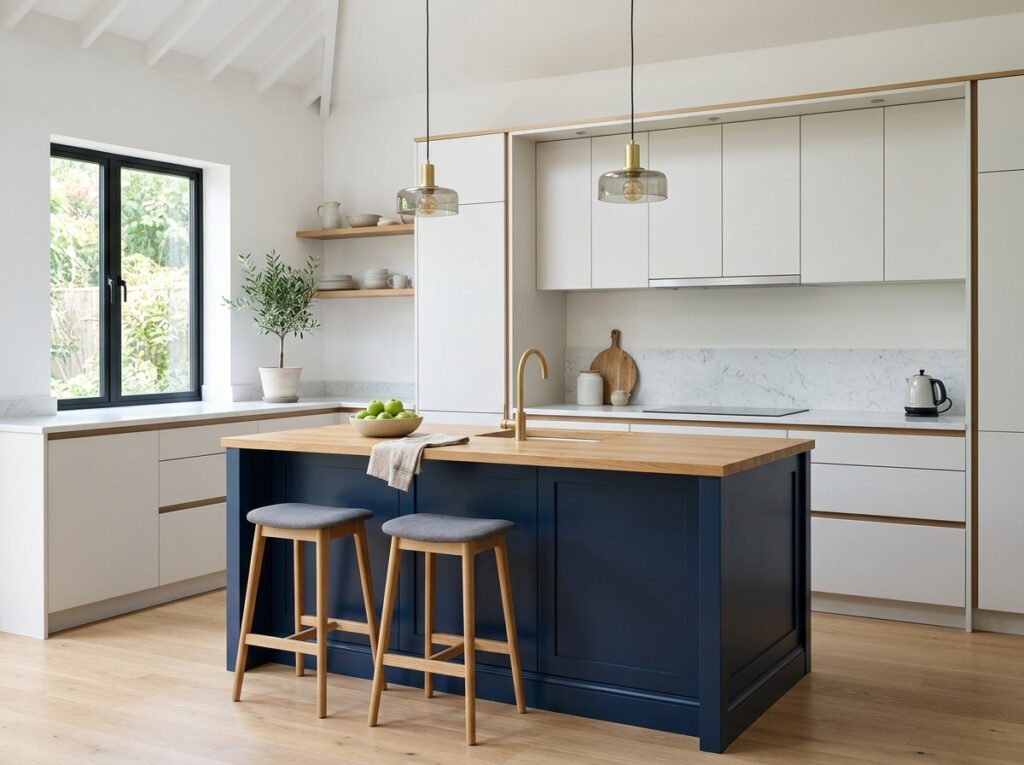
Choose a color that relates to the kitchen’s existing palette without matching it. If the cabinets are white, the island works in navy, forest green, warm charcoal, or deep terracotta. If the cabinets are gray, the island works in a warm cream, a dusty sage, or a bold black. Sherwin-Williams Anchors Aweigh, Benjamin Moore Newburyport Blue, and Behr Cracked Pepper are all well-regarded island colors that read confidently without overwhelming a small kitchen. Apply two coats of cabinet-grade paint in a satin finish for a surface that handles daily wiping and the occasional scrape without chipping.
Final Thoughts
A small kitchen island is not about having enough space. It is about choosing the right type of island for the space you actually have and setting it up to do real work every day. The kitchens that function best are not always the largest ones. They are the ones where every surface, every drawer, and every inch of counter has a clear purpose.
Start by measuring the clearance. That one number tells you which ideas on this list are available to you and which ones are not. From there, pick the island type that fits your cooking habits and your storage gaps and build or buy accordingly. These small kitchen island ideas give you enough options that the right one exists regardless of how tight the kitchen actually is.