
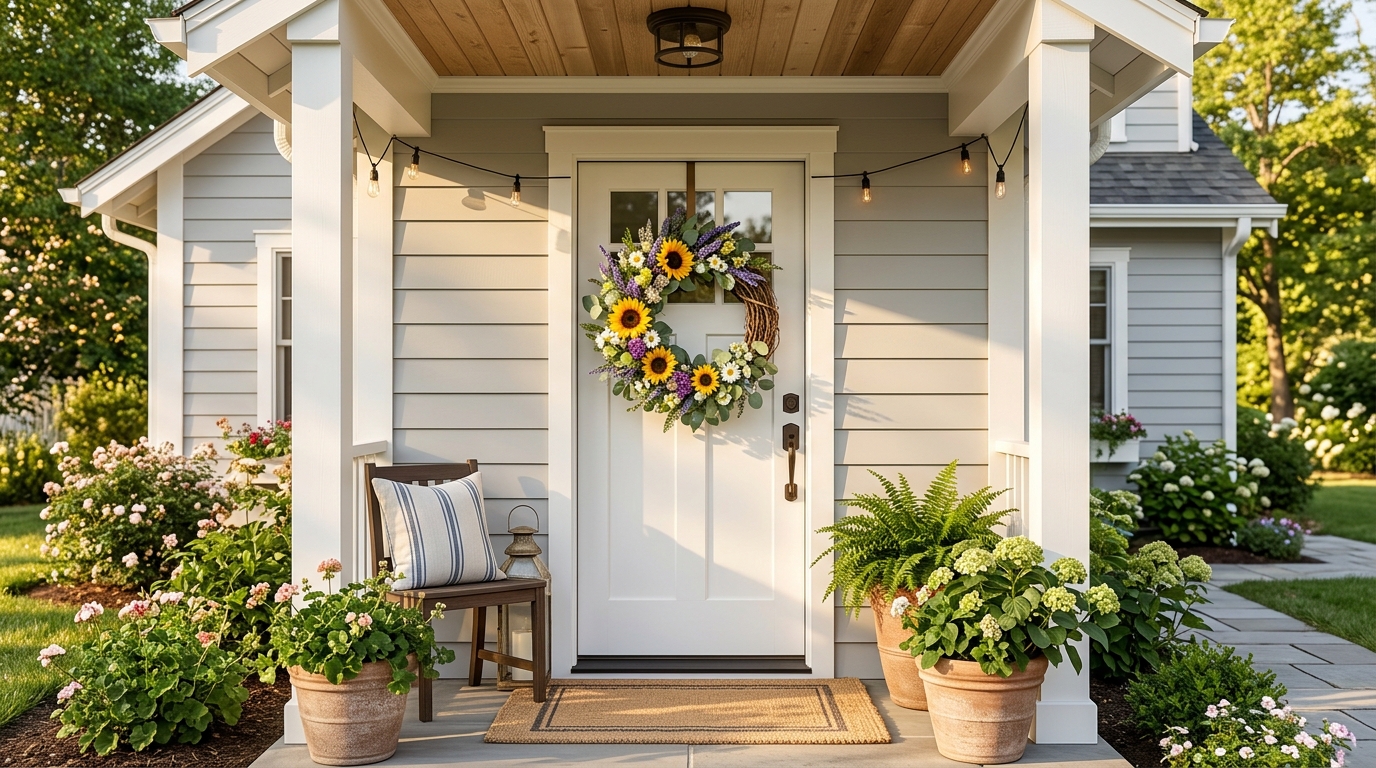
The front door wreath is the one decoration that greets everyone who arrives at the house and the one that most people forget to change between January and October. A fall wreath in July, a winter berry garland in August, or a plain year-round wreath that communicates nothing specific about the season all tell the same story: nobody thought about the door this summer.
These summer wreath ideas DIY front doors focus on what actually makes a summer wreath work: the specific botanicals that read as warm-season rather than generic, the color palettes that suit summer light and summer door colors, the forms beyond the standard grapevine ring that make a summer wreath feel genuinely designed, and the specific DIY methods that produce a wreath that looks as good as anything from a specialty store at a fraction of the price. Everything here is summer-specific and door-specific.
You will find 17 ideas here. Some require a craft store run. Some can be made from the garden in 20 minutes. All of them make the front door read as a home where summer is actually being paid attention to.
1. Build a Eucalyptus and Lemon Slice Wreath
Fresh or preserved eucalyptus stems wired onto a round grapevine or wire base with dehydrated lemon slices attached at intervals create a summer wreath that reads as botanical, fragrant, and specifically seasonal. The eucalyptus produces a soft herbal fragrance and the lemon slices add a warm citrus tone and a textural detail that dried flowers alone do not provide.
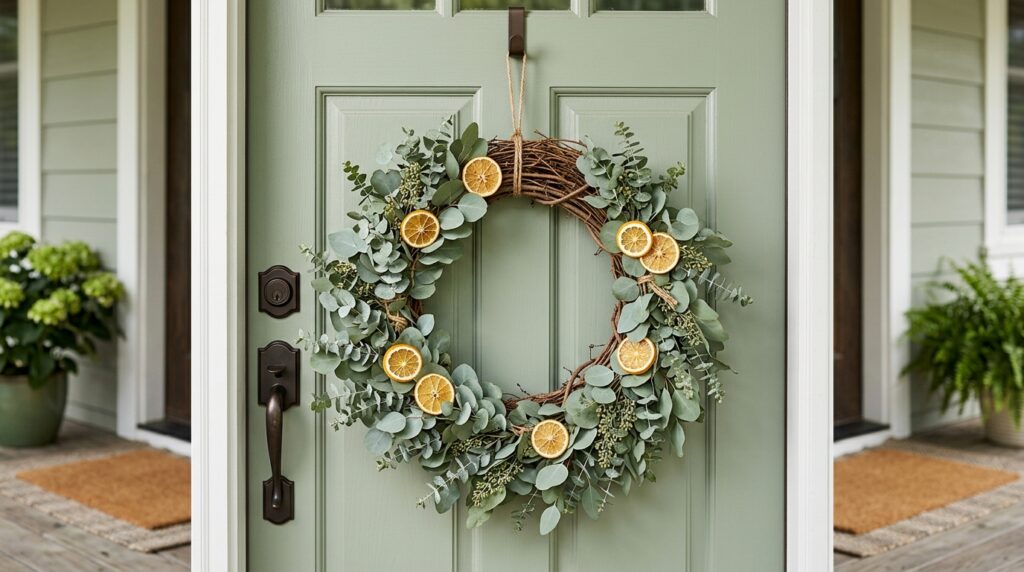
Dehydrate lemon slices in the oven at 170 degrees for four to six hours until fully dry and firm. Attach eucalyptus stems to the base with floral wire, working in one direction around the ring and overlapping each stem to cover the wire attachment of the previous one. Wire the lemon slices at even intervals around the wreath using a thin gauge floral wire threaded through the slice and twisted behind the base. The wreath holds for four to six weeks on a covered door before the eucalyptus begins to dry fully, at which point it transitions to a dried version with a longer lifespan.
2. Create a Sunflower and Wheat Stem Wreath
Faux sunflowers in a warm golden yellow wired onto a straw or grapevine base with dried wheat stalks filling the gaps between the blooms create a summer wreath that reads as harvest-adjacent without crossing into fall territory. The golden tones of the sunflower and the natural wheat read as specifically late summer and early September in a way that appeals across a wide range of front door styles.
Use faux sunflowers from Michaels or Hobby Lobby rather than fresh, since a fresh sunflower wreath wilts within two days in summer heat. Choose faux sunflowers with a realistic center detail and a petal structure that does not read as plastic from the typical door viewing distance of 8 to 12 feet. Wire three to five flowers onto the base at varied positions rather than equally spaced, and fill the gaps with dried wheat stems cut to 6-inch lengths and inserted between the flowers. Finish with a wide natural jute ribbon bow at the base of the arrangement.
3. Summer Wreath Ideas DIY Front Doors Use a Lavender Bundle Base
A wreath base built entirely from bundled dried lavender stems creates the most fragrant summer wreath available and one that photographs beautifully with its consistent purple-gray stem color and soft feathery texture. Lavender wreaths are the one wreath form that improves with time as the stems dry fully and the fragrance concentrates.
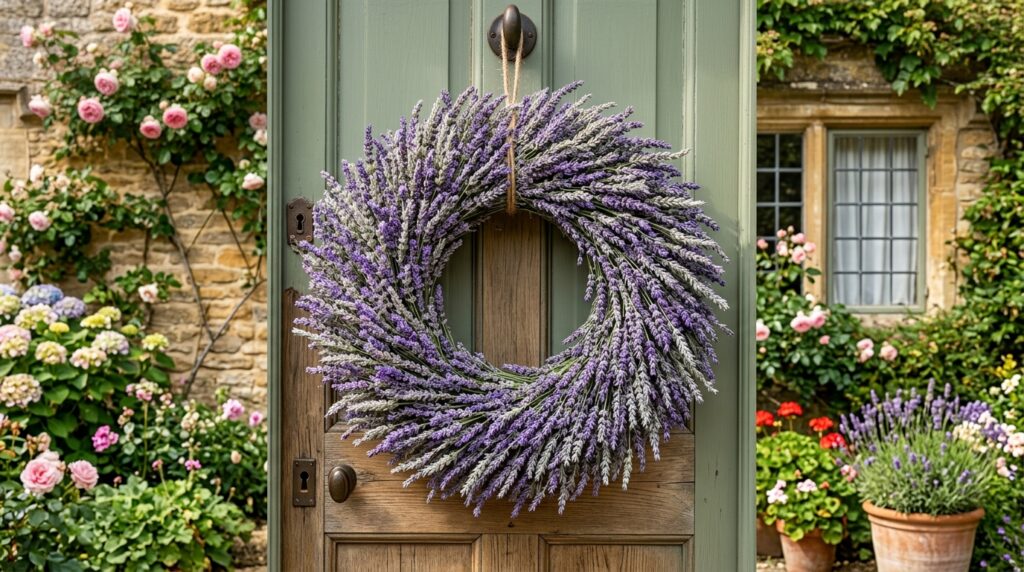
Bundle fresh lavender stems in groups of 10 to 15 and secure each bundle tightly with a rubber band at the cut end. Wire the bundles onto a wire or grapevine ring base, working in one direction and overlapping each bundle to cover the wire attachment of the previous one. Use the full circumference of the base rather than leaving any gaps. The wreath starts as a fresh purple when made with fresh lavender and dries to a soft gray-purple over two to three weeks. Dried lavender bundles from Terrain or from a local farmers market produce the same result without the waiting period.
4. Wire Tropical Leaves onto a Grapevine Ring
Large tropical leaves wired onto a grapevine ring create a summer wreath with a lush, resort-like quality that no dried botanical wreath achieves. Monstera leaves, bird of paradise leaves, large hosta leaves from the garden, or banana leaves from a craft store all work on this base and produce a wreath that reads as distinctly tropical and summer-specific.
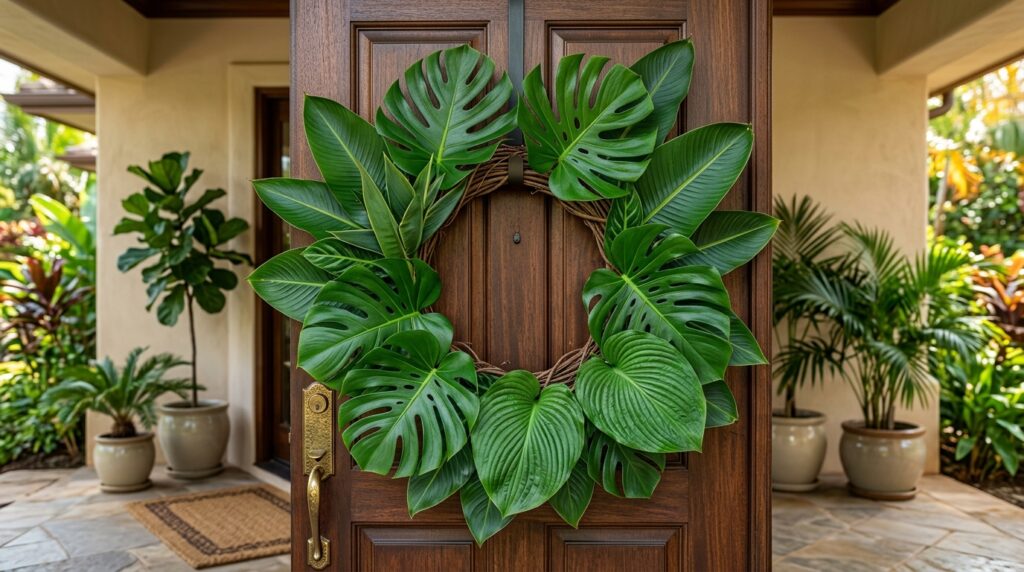
Use a 16 to 18-inch grapevine ring as the base. Attach large leaves at the outer edge of the ring using thin floral wire threaded through the leaf stem and twisted around the ring. Layer smaller leaves over the wire attachment points of the larger ones to conceal the mechanics. The finished wreath looks best on a door in partial shade where the leaves stay hydrated longer. Mist the leaves with water every two to three days to extend the fresh quality of the display.
5. Make a Dried Wildflower Wreath from Garden Cuttings
A wreath made from dried wildflowers and grasses gathered from the garden or a nearby field costs nothing in botanical materials and creates a wreath with a handmade, genuinely local quality that purchased materials never produce. The specific combination of wildflowers available varies by region and by week, which means every wreath made this way is unique.
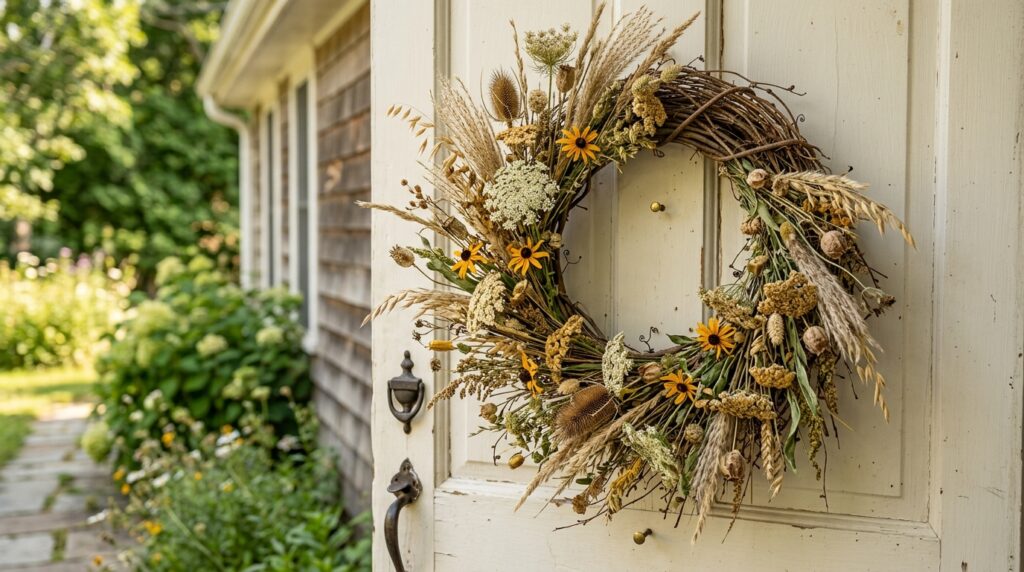
Gather stems of Queen Anne’s lace, black-eyed Susan, dried grasses, seed pods, and any other interesting stems currently blooming or going to seed. Hang the gathered stems upside down in a warm, dry location for 7 to 10 days until completely dry. Wire dried bundles of mixed stems onto a grapevine ring using the same overlapping technique as the lavender wreath. The dried wildflower wreath holds its quality for the full summer season and beyond.
6. Create a Cotton Stem and Greenery Summer Wreath
Cotton stems wired onto a preserved boxwood or faux greenery base create a summer wreath with a clean, modern farmhouse quality that reads as specifically summer without being overtly seasonal in a way that limits the wreath’s use window. The white cotton bolls against the green base produce a high-contrast, graphic quality that suits modern and farmhouse door styles equally well.
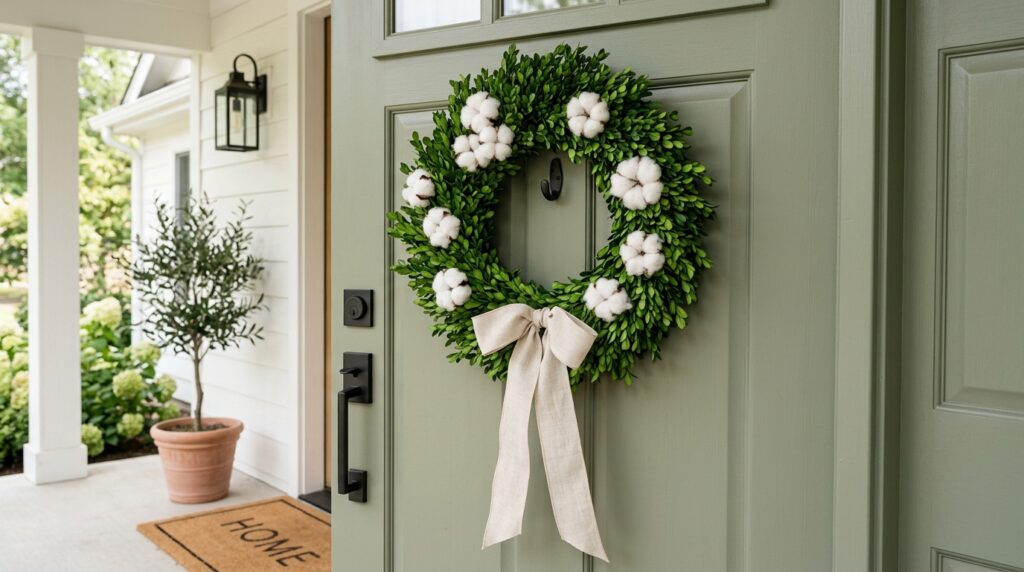
Use faux cotton stems from Hobby Lobby or Michaels, which are available year-round in the floral section. Wire five to seven stems at distributed positions around a 20-inch preserved boxwood wreath base from the same retailers. The cotton stems should appear at irregular intervals rather than equally spaced for a more natural look. Finish with a wide white or natural linen ribbon tied at the bottom of the wreath in a loose bow with long tails.
7. Summer Wreath Ideas DIY Front Doors Include a Seashell Wreath
Seashells hot-glued to a foam or grapevine wreath base create a specifically coastal summer door wreath that reads as both decorative and as a display of collected objects with personal history. The combination of different shell shapes, sizes, and surface textures creates a visual complexity that single-material wreaths do not achieve.
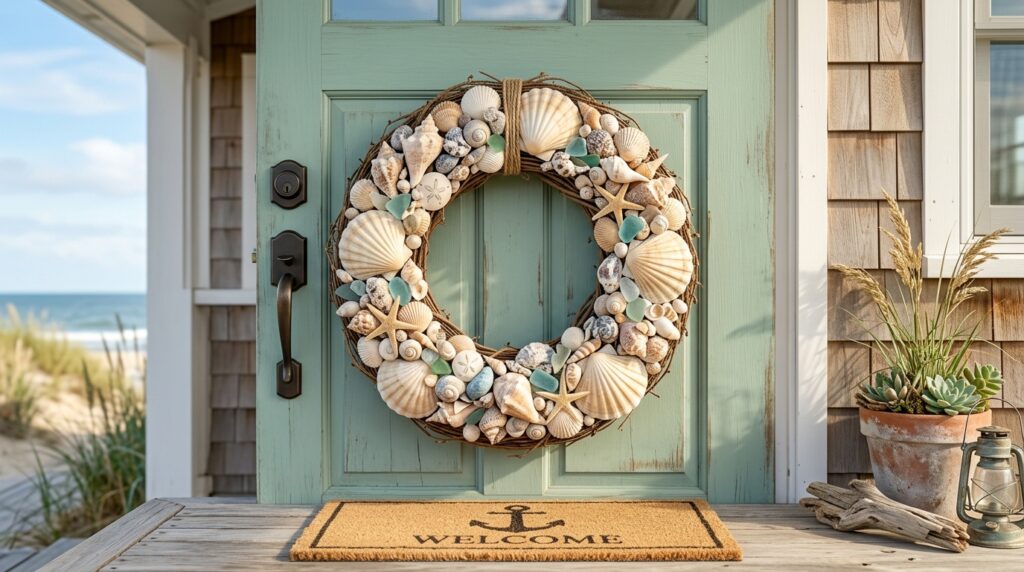
Sort shells by size before beginning and plan the arrangement so larger shells anchor the outer edge of the wreath and smaller shells fill the gaps between them. Use a hot glue gun to attach shells directly to a foam ring base, starting with the largest pieces and filling in with progressively smaller ones. Add a few pieces of sea glass, a few small dried starfish, and a handful of small sand dollars at the final fill stage. The wreath holds indefinitely outdoors in covered porch conditions.
8. Build a Zinnia Wreath from Garden Blooms
Zinnias are the most productive summer cutting flower available for a garden wreath because they bloom prolifically from July through September and come in a range of saturated colors that read as specifically summer in intensity and warmth. A fresh zinnia wreath made from garden cuttings takes about 20 minutes to assemble and looks as good as anything from a specialty florist.

Cut zinnia stems with at least 4 inches of stem length early in the morning when the blooms are at peak hydration. Work quickly once cut. Bundle three to five stems together and wire them onto a wet floral foam ring base, working in one direction around the ring and overlapping each bundle slightly. Mist the finished wreath with water and hang immediately. The wreath lasts two to four days on a door in partial shade and can be refreshed by misting twice daily.
9. Make a Preserved Magnolia Leaf Wreath
Magnolia leaves preserved in glycerin maintain their deep green color and leathery texture for months and produce a summer wreath base with a botanical, garden-quality that fresh leaves provide briefly and faux leaves never quite replicate. The preservation process takes two to three weeks but the finished leaves hold their quality through the full summer season and beyond.
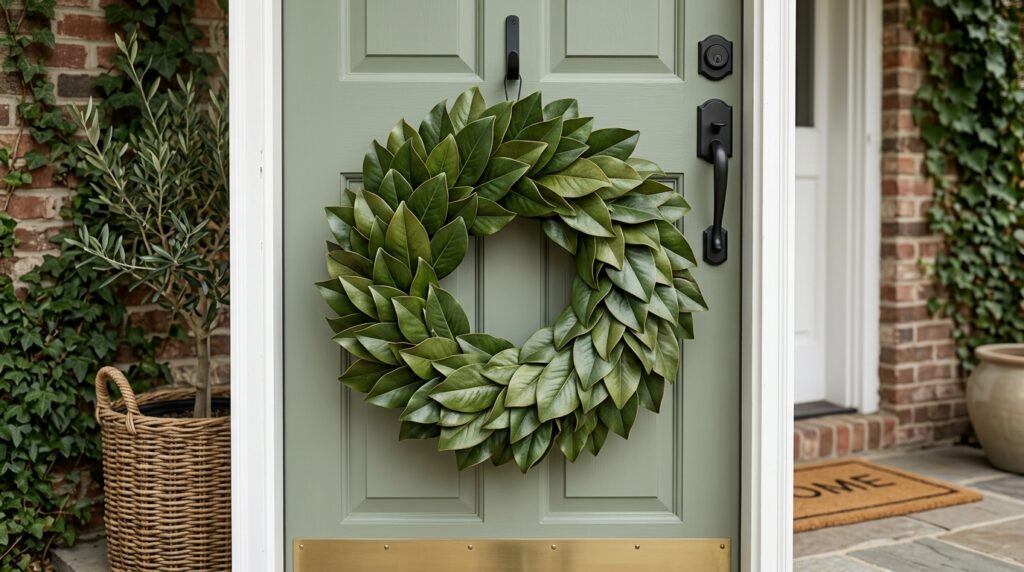
Submerge magnolia leaf branches in a solution of one part glycerin to two parts water in a tall container. Leave for two to three weeks, checking periodically, until the leaves have absorbed the glycerin solution and feel supple rather than crisp. Attach the preserved branches to a wire ring base using floral wire, overlapping each branch section to create a full, dense coverage around the ring. The preserved magnolia wreath can also be purchased ready-made from online botanical supply retailers for a shorter path to the same result.
10. Create a Boho Summer Wreath with Pampas and Dried Blooms
A wreath base built from small pampas grass plumes, dried bunny tail grass, and two or three dried blooms in a warm summer palette creates a bohemian summer door wreath with a soft, feathery texture that reads as intentionally relaxed rather than formally composed. The asymmetry of the pampas grass is part of the aesthetic.
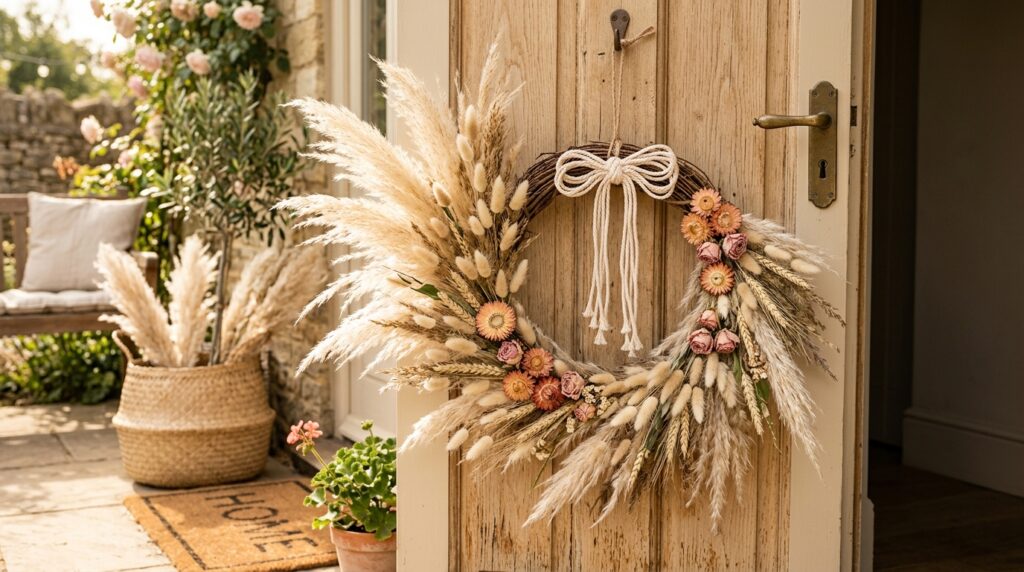
Use a wire ring base at 16 to 18 inches and attach small pampas plumes, dried bunny tails, and dried grasses using floral wire at irregular positions rather than in a uniform ring. The arrangement should extend beyond the wire base on some sides and sit within it on others, creating an organic, asymmetrical silhouette. Add two or three dried strawflowers or dried roses at concentrated positions rather than distributed evenly. Finish with a thin ribbon or macrame cord bow at the top.
11. Summer Wreath Ideas DIY Front Doors Feature a Greenery and Berry Wreath
Fresh or faux greenery combined with faux summer berries in coral, red, and blush tones creates a summer wreath that reads as garden-fresh and specifically warm-season without any obvious floral reference. Hypericum berries, faux bittersweet, and small faux blueberries all work well as berry elements in a summer greenery wreath.
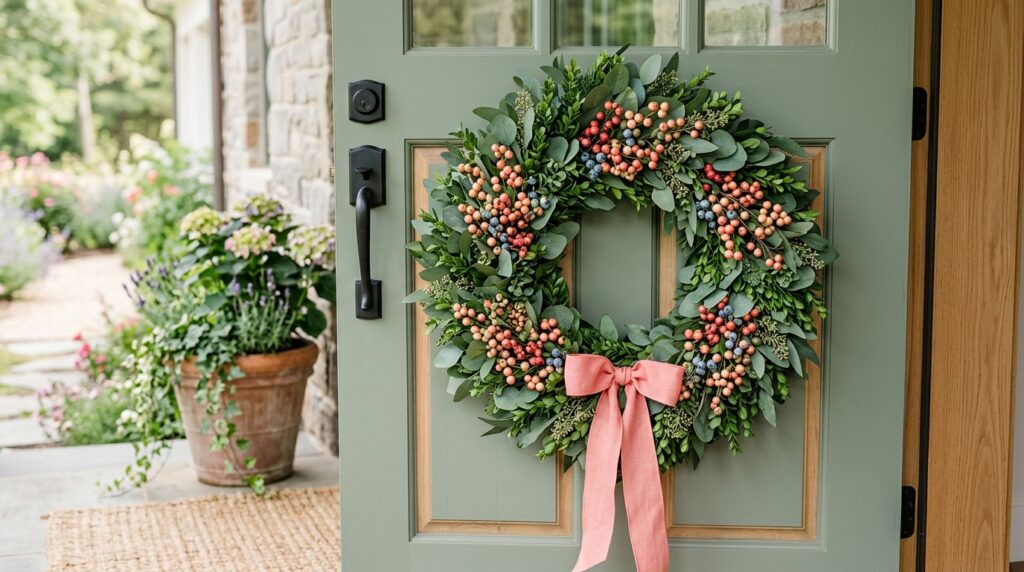
Start with a full faux boxwood or preserved eucalyptus base wreath and wire or hot-glue clusters of berry stems at three to five positions around the ring. Use an odd number of berry clusters for the most natural-looking distribution. The berry clusters should contain two to three different berry varieties rather than one type for visual complexity. A wide ribbon in a coordinating coral or blush tone tied at the base of the wreath completes the arrangement and adds a color reference that reads clearly at the street viewing distance.
12. Build a Succulent Wreath on a Moss Base
A living succulent wreath planted on a moss-stuffed wire ring base creates a summer door wreath that continues to grow and change throughout the season as the succulents establish and begin to flourish. The living quality of the succulent wreath makes it the most genuinely garden-referencing door decoration available.
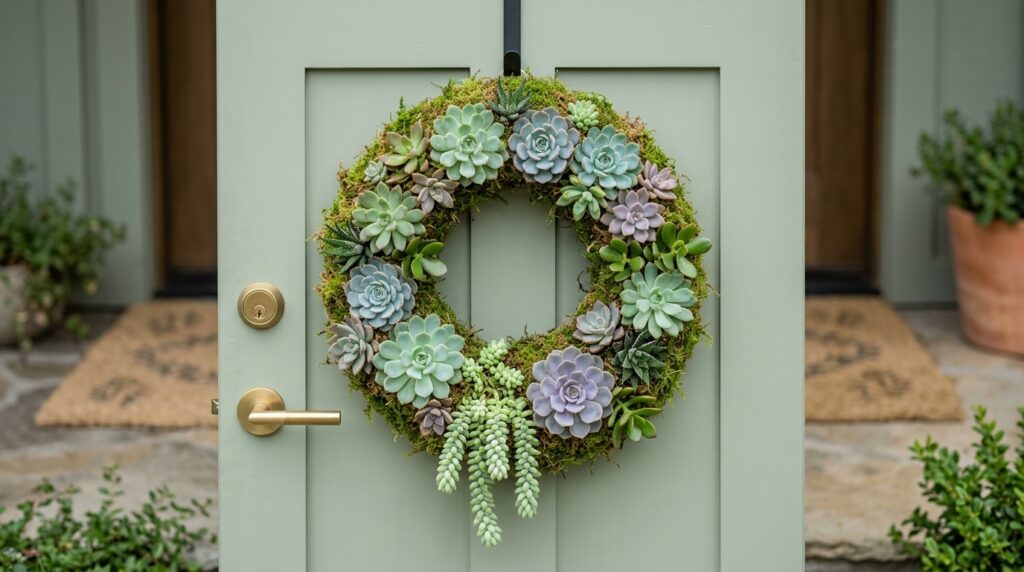
Fill a 14 to 16-inch moss-filled wire wreath form from a craft store with damp sphagnum moss and firm it tightly. Use a pencil to create holes in the moss at 2-inch intervals around the ring and insert succulent cuttings, stem end first, into the holes. Mist with water after planting and lay flat for two weeks while the succulents root into the moss. Once rooted, the wreath can be hung vertically. Water once a week by soaking in a basin of water for 20 minutes and hanging to drip-dry before returning to the door.
13. Make a Sunburst Wreath from Natural Raffia
A sunburst wreath made from bundles of natural raffia arranged in a starburst pattern around a small central grapevine ring creates a textural, graphic summer wreath with a specifically tropical quality. The natural pale gold tone of dry raffia reads as warm and summer-specific and the radiating spoke pattern reads as a sunburst from the street.
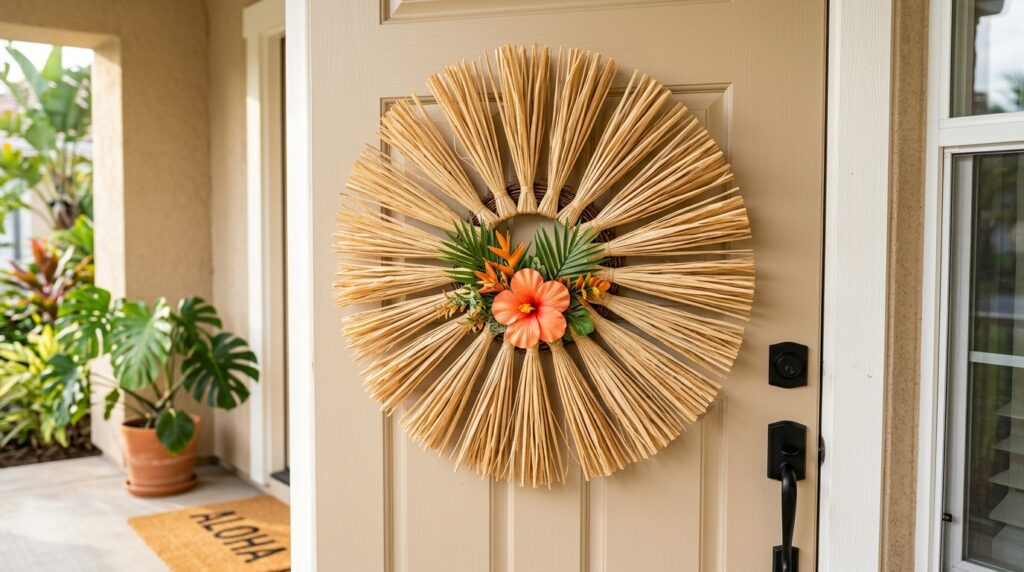
Fold 10-inch lengths of natural raffia into bundles of 15 to 20 strands each and wire each bundle at its center onto a 6-inch grapevine ring at equal intervals around the full circumference. Fan the raffia ends outward at each attachment point to create the radiating spoke effect. Thread additional single raffia strands through the outer ring of the arrangement to fill any gaps and vary the length slightly for a natural, slightly irregular sunburst silhouette. Add a few faux tropical flowers or palm leaves at the center for a color accent.
14. Weave a Summer Wreath from Paper Cord or Rope
A wreath woven or wrapped from natural paper cord, cotton rope, or jute twine in a consistent color creates a summer door wreath with a handcrafted, artisanal quality that reads as specifically designed rather than assembled from standard wreath-making components. The rope or cord material is the visual statement and the form is secondary.
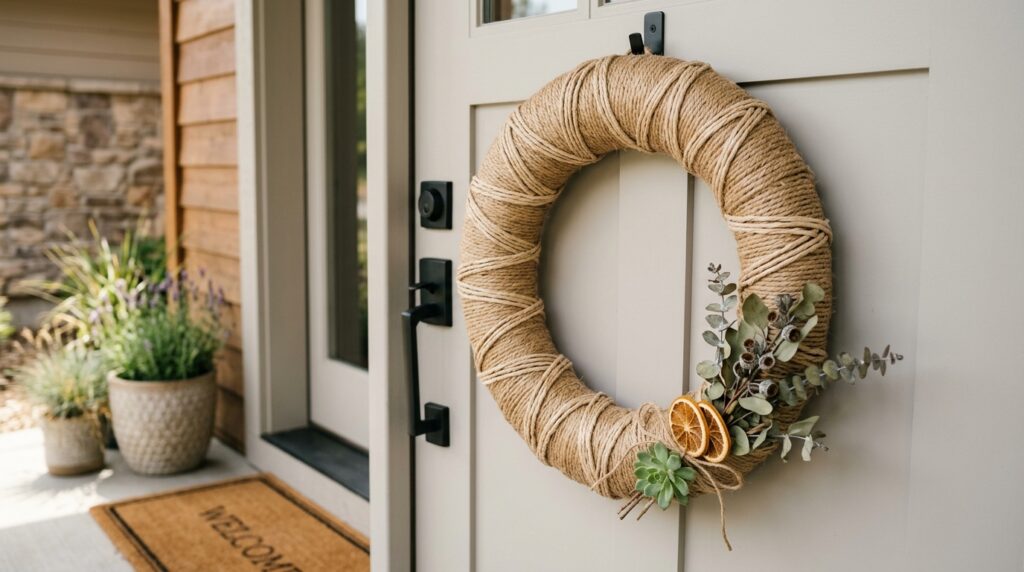
Wrap a foam ring base completely with a base layer of natural jute twine, securing the starting and ending points with hot glue. Over the twine base, wrap a second layer in a contrasting natural paper cord in a zigzag or spiral pattern for visual texture. Attach a few dried botanical elements, two or three stems of dried eucalyptus, a small succulent, or a few dried orange slices, at one section of the wreath as a botanical accent. The rope-wrapped wreath is one of the most durable summer door wreath options because the materials are completely weatherproof.
15. Summer Wreath Ideas DIY Front Doors Work with a Wildflower Seed Packet Wreath
Seed packets attached to a grapevine ring at intervals with small ribbon ties create a summer wreath that serves as both a door decoration and a practical gift for any visitor who arrives. The seed packet wreath reads as uniquely garden-focused and specifically generous in a way that no other wreath form produces.
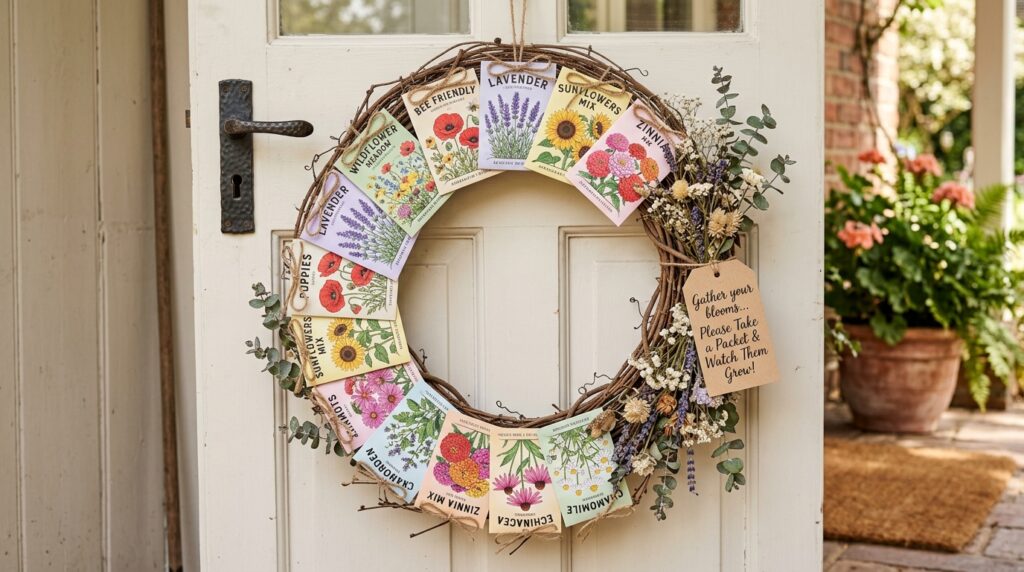
Use wildflower or herb seed packets from Renee’s Garden Seeds, Burpee, or Baker Creek Heirloom Seeds. Choose packets with attractive illustrated covers that contribute to the visual quality of the wreath. Attach each packet to the grapevine ring using a short length of natural jute twine looped through the packet top and tied around the ring. Fill the spaces between packets with small dried flower stems or sprigs of preserved eucalyptus. Write a small tag for the wreath indicating that visitors may take a seed packet if they wish.
16. Create an Asymmetrical Stem Wreath with a Single Focal Flower
An asymmetrical wreath design where the botanical material is concentrated on one side of the ring rather than distributed evenly around it creates a modern, editorial quality that a traditional full wreath does not have. One large focal flower, a peony, a dahlia, or a sunflower, placed at the most concentrated point gives the asymmetrical wreath its visual anchor.

Use a plain wire ring at 18 to 20 inches and attach greenery and smaller botanical elements to only the lower two thirds of the ring, leaving the upper third as bare wire or minimal coverage. Place the focal flower at the transition point between the densely covered section and the bare section, which reads as the composition’s turning point. The asymmetrical form reads as intentionally modern rather than incomplete, which makes it the right choice for contemporary and transitional door styles where a full traditional wreath reads as too formal.
17. Make a Herb and Flower Fresh Market Wreath
A wreath assembled from fresh herbs and flowers that reads like something purchased from a summer farmers market, loose, fragrant, slightly informal, and genuinely alive, requires only a wire ring, a bunch of fresh rosemary, and whatever flowers are at the grocery store that week. The market wreath is made to be temporary, lasting four to seven days before the flowers fade, which means it refreshes itself naturally every week.
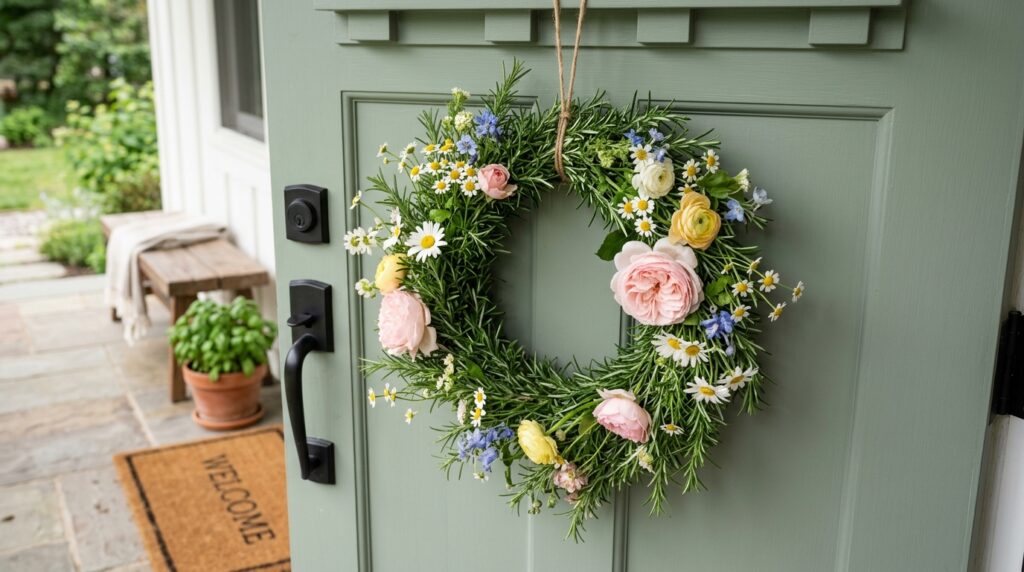
Wire three or four rosemary branches to a wire ring as the base, overlapping to cover the ring fully. Add the fresh cut flowers into the rosemary base by inserting stems through the wire and rosemary structure without any additional attachment. The stems hold in place from the friction of the rosemary against them. Change the flower stems every four to five days as they begin to wilt while the rosemary structure continues to hold. The wreath produces a garden and herb fragrance at the door that welcomes anyone who arrives through the whole summer season.
Final Thoughts
A summer wreath on the front door communicates that someone inside the house is paying attention to the season rather than simply living through it. That quality of seasonal attention is visible from the street in a way that most interior decorating decisions are not, which makes the door wreath one of the highest-impact decorating decisions available for the amount of effort and cost involved.
Start with whatever botanical material is most immediately available: herbs from the garden, wildflowers from a nearby field, or a bunch of eucalyptus from the grocery store. These summer wreath ideas DIY front doors work best when the materials come from the actual summer environment around the house rather than from a craft store shelf, because that connection to the specific season and place is exactly what makes a summer wreath feel genuinely right on a front door.