
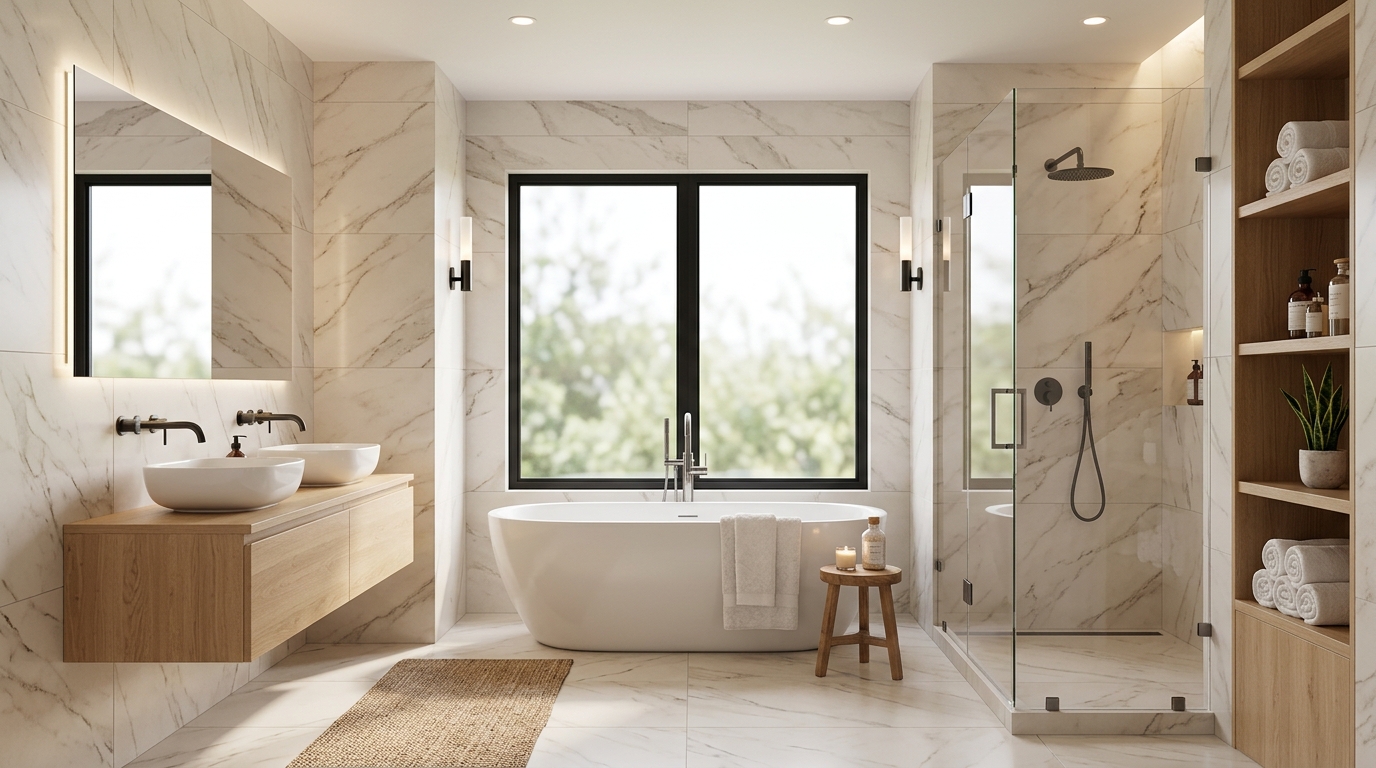
A bathtub is often the largest single fixture in a bathroom, which means it has an outsized influence on how the whole room looks and feels. Whether the goal is a quiet soaking tub for unwinding after a long day or a tub and shower combination that works for a busy household, the choices around the tub itself shape the entire remodel.
This article focuses specifically on the tub, the styles, surroundings, and details that turn it from a basic fixture into the centerpiece of the bathroom.
Below are twenty ideas for remodeling a bathroom around a tub, covering tub types, surrounding materials, lighting, and the small touches that complete the look.
1. Freestanding Soaking Tub as a Focal Point
A freestanding tub, positioned away from the walls rather than built into a surround, immediately becomes the visual center of the room. Oval or slipper shaped tubs in particular have a sculptural quality that works well even in a relatively simple, otherwise minimal bathroom.
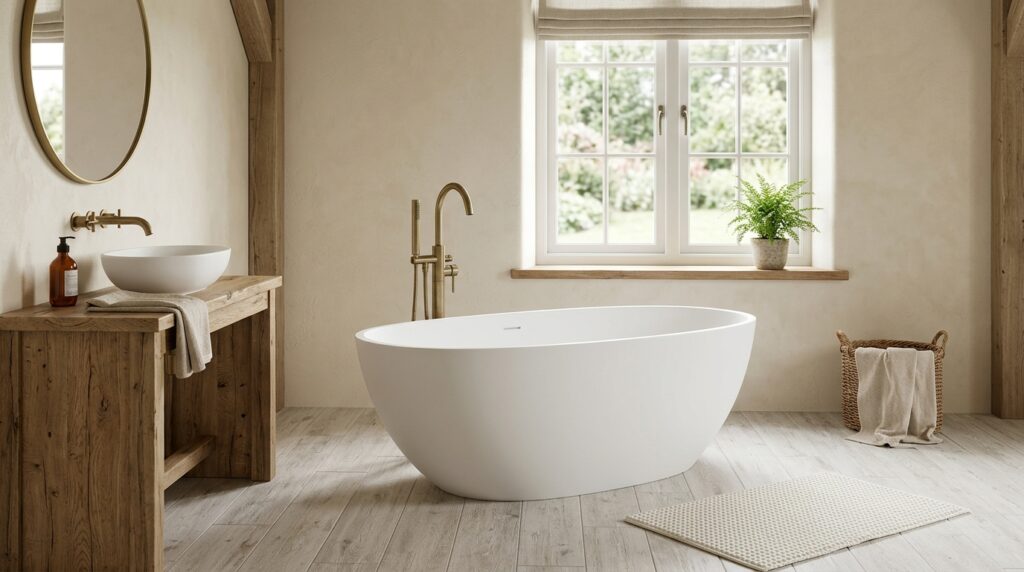
Because the tub stands on its own, the floor and wall finishes around it matter even more, since there is nothing to break up the view of them. A simple, uncluttered surrounding area lets the tub itself do most of the visual work.
2. Drop-In Tub with a Tile Surround
A drop-in tub sits within a built frame that can be finished in tile, giving you a wide, flat surface around the tub’s edge for towels, candles, or bath products. The tile surround also extends the design of the floor or walls into the tub area itself.
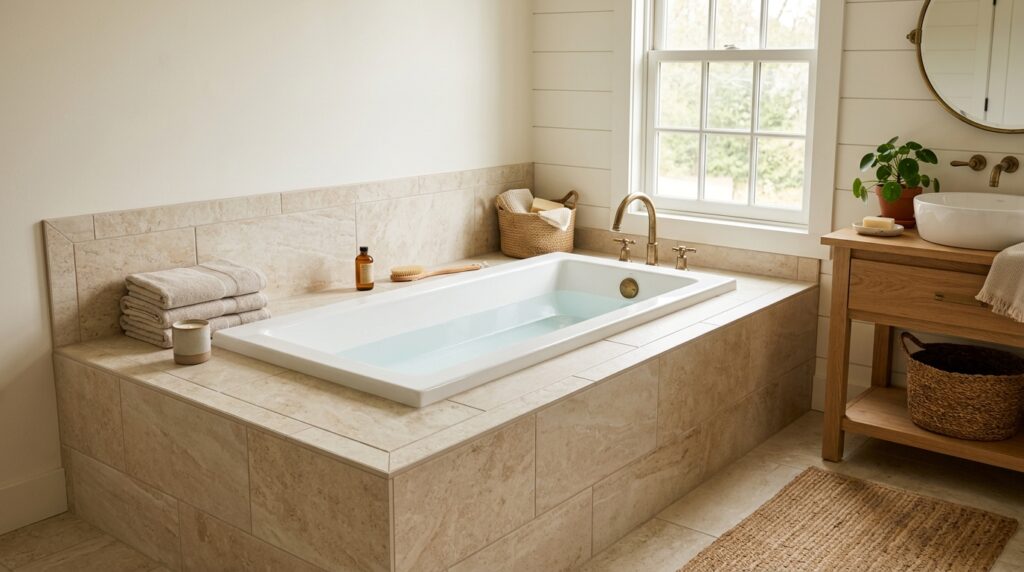
This option works well in bathrooms where you want the tub to feel integrated into the room’s overall design rather than standing apart from it. The width of the surround matters too, since a wider edge gives more usable space for everyday items, while a narrower one keeps the focus more on the tub itself.
3. Clawfoot Tub for Vintage Charm
A clawfoot tub, with its raised feet and curved profile, brings a strong vintage character to a bathroom, often associated with older homes and classic design. These tubs work well as a focal point in bathrooms that lean toward farmhouse, cottage, or traditional styles.
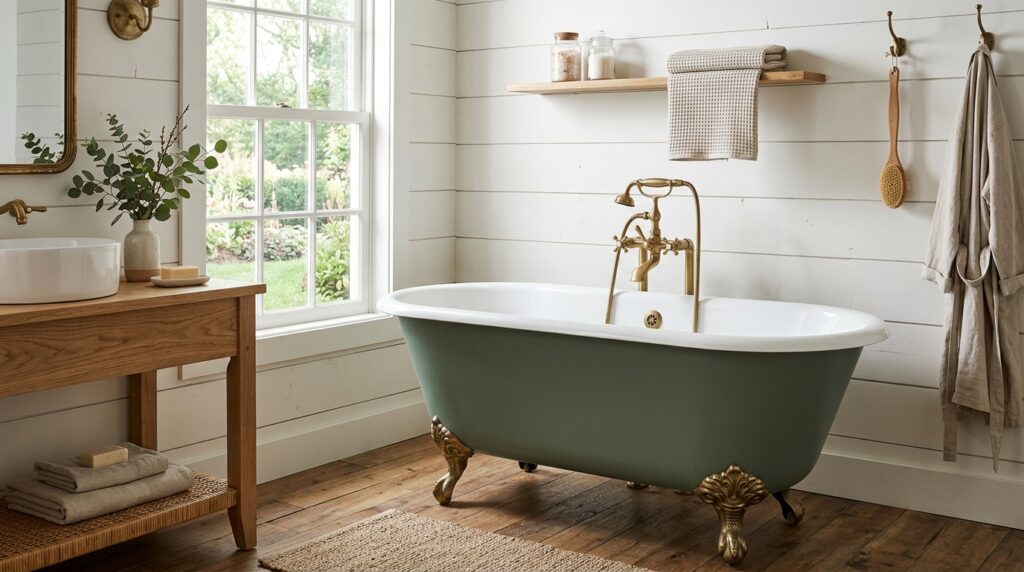
Painting the exterior of a clawfoot tub in a color that contrasts with the walls, rather than leaving it white, can make it stand out even more as a deliberate design choice rather than simply an older style of tub.
4. Built-In Tub with a Wood Paneled Front
Rather than tiling the front panel of a built-in tub, a wood paneled front adds warmth and texture in a spot that is usually finished in plain tile or fiberglass. Wood that has been properly sealed for moisture resistance can hold up well in this application.
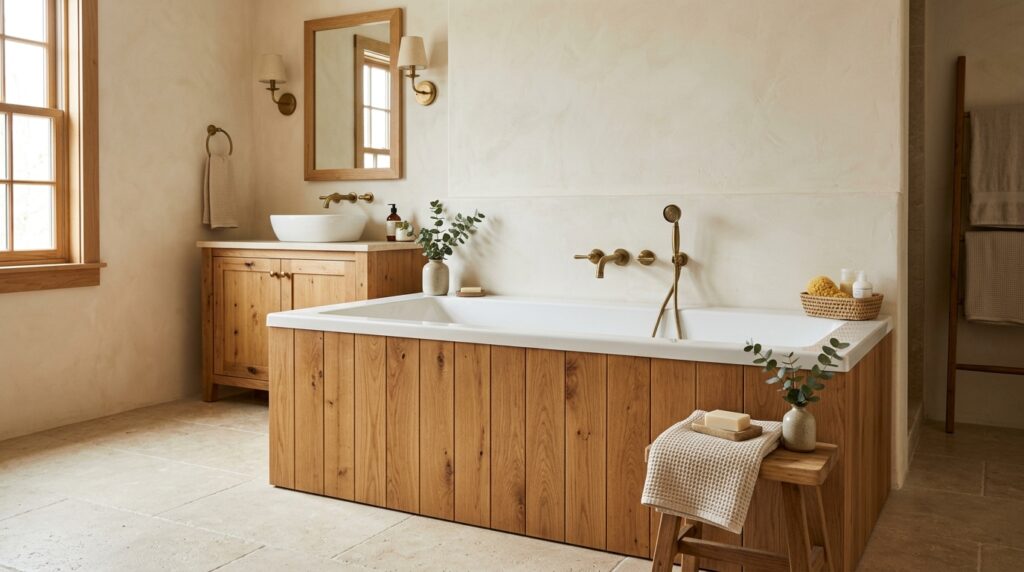
This detail works particularly well in bathrooms with a more natural or organic palette, where the wood front echoes other wood tones used elsewhere in the room.
5. Tub Surrounded by Floor-to-Ceiling Tile
Extending tile from the floor up the walls around the tub, all the way to the ceiling, creates a cohesive, enclosed feel that makes the tub area read as its own defined zone within the bathroom. This also simplifies maintenance, since there is no painted wall surface near the tub to worry about moisture damage.
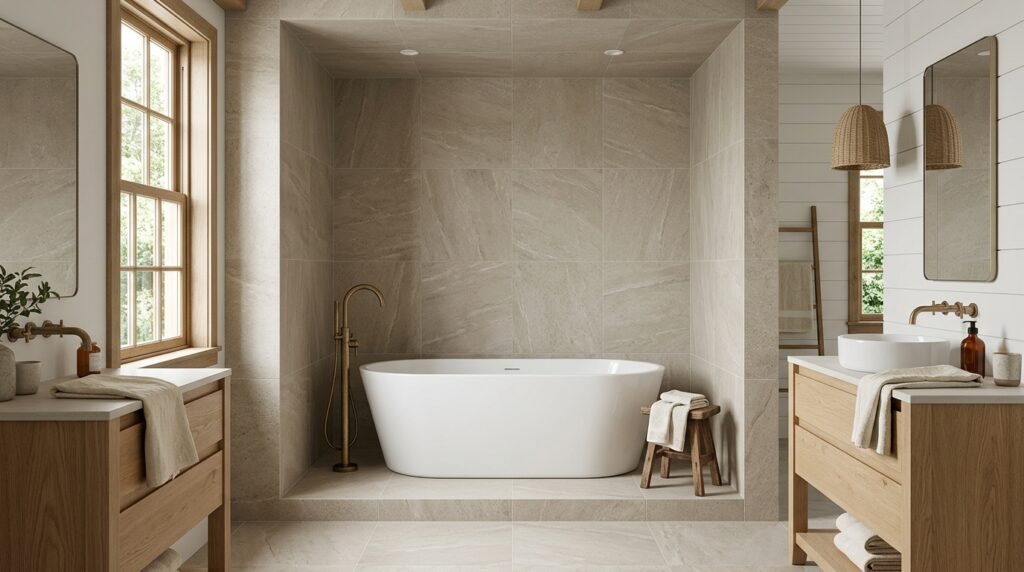
This approach works especially well with large format tile, where fewer seams across both the floor and walls keep the look clean and uninterrupted. A single tile choice carried from floor to ceiling also makes a smaller bathroom feel taller, since the eye is not interrupted by a change in material partway up the wall.
6. Add a Tub Filler Faucet Mounted on the Wall
A wall mounted tub filler, positioned above the tub rather than at deck level, creates a cleaner look around the tub’s rim and often allows for a more dramatic faucet style, including waterfall or freestanding floor mounted fillers for freestanding tubs.
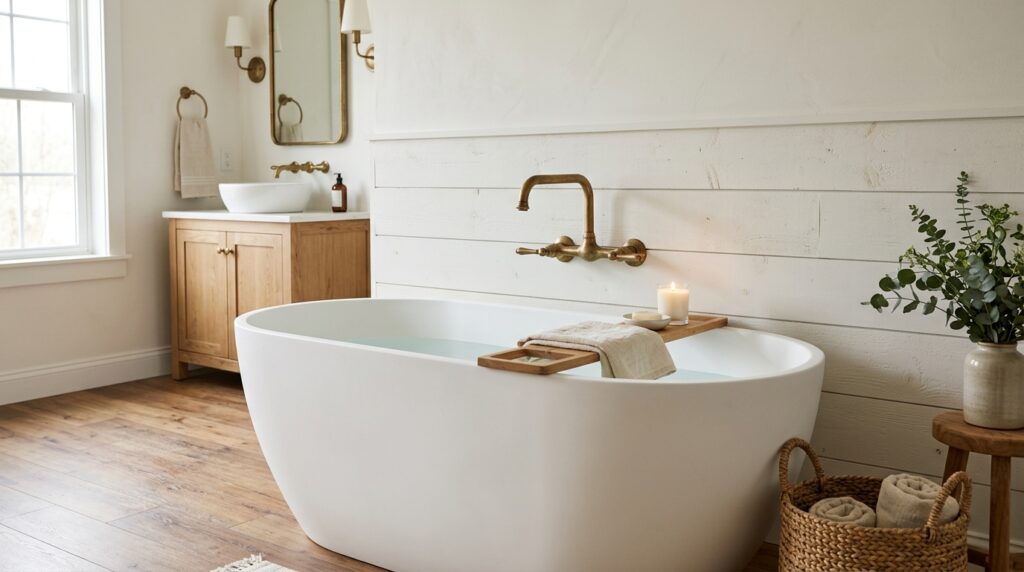
This choice also keeps the area around the tub itself free of fixtures, which matters if you are using that space for candles, a tray, or other styling details.
7. Create a Tub Nook with an Arched Alcove
An arched alcove built around the tub adds architectural interest and creates a defined, slightly enclosed feeling for the tub area, almost like a small room within the room. The curve of the arch softens what is often a very rectangular space.
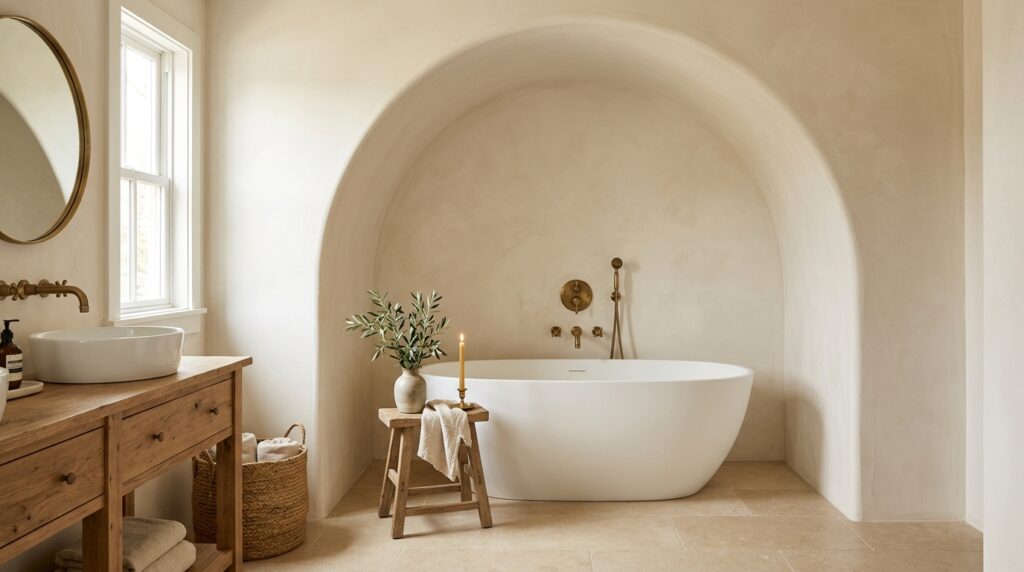
This works particularly well with a freestanding or built-in tub positioned centrally within the alcove, where the arch frames the tub from the doorway or the rest of the bathroom.
8. Add a Window Above the Tub for Natural Light
A window positioned above or beside the tub brings natural light directly to the area where you are most likely to spend time relaxing. Frosted or textured glass maintains privacy while still letting light through.
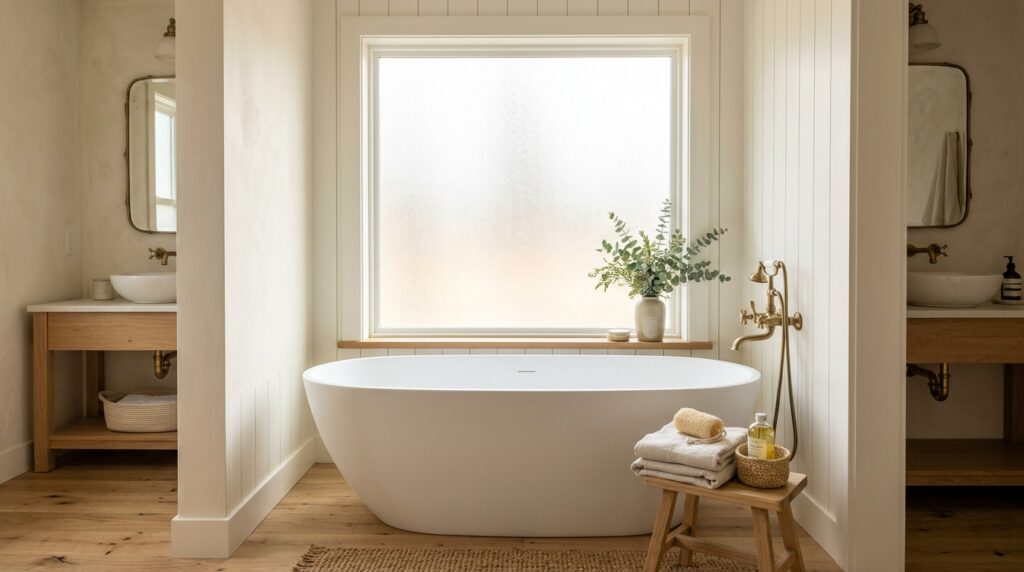
This is one of those features that is much easier to plan during a full remodel than to add later, but if your bathroom already has a window near the tub, positioning the tub to take advantage of it makes a noticeable difference in how the space feels during the day.
9. Pair the Tub with a Statement Pendant Light
A single pendant light hung above the tub, rather than relying only on overhead recessed lighting, adds a focal point and a softer quality of light directly where it matters most. This works especially well above freestanding tubs, where the pendant echoes the tub’s standalone presence.
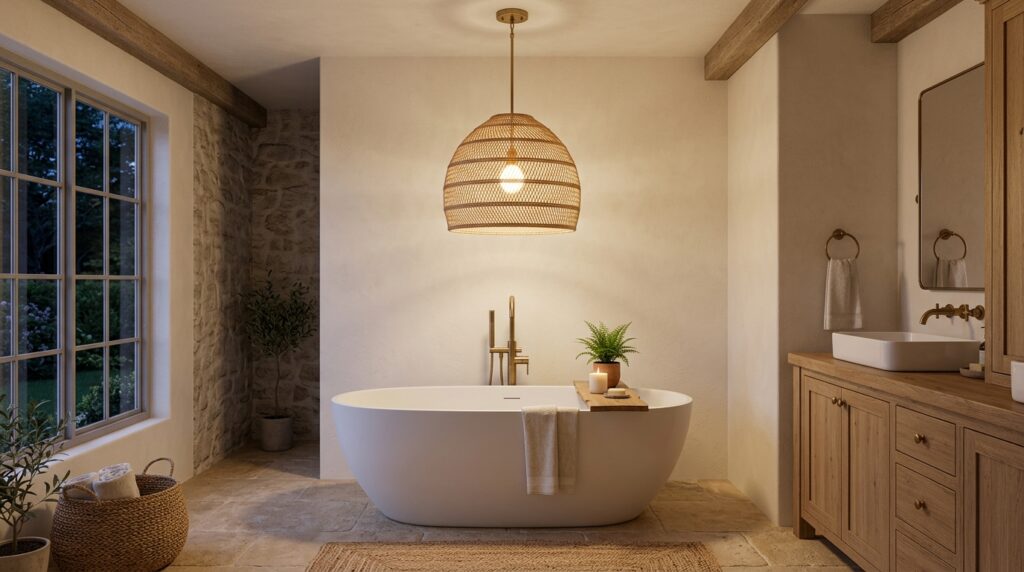
Choose a pendant rated for use in bathrooms, particularly if it will be positioned directly above the tub, since proximity to water requires fixtures designed for that environment. A dimmer switch paired with this fixture also lets the same light work for both a bright morning routine and a dimmer, more relaxing evening soak.
10. Add a Ledge Around the Tub for Candles and Decor
A built-in ledge running along one or more sides of the tub gives you a permanent spot for candles, a book, or a small plant without needing a separate side table. This is especially useful for built-in or alcove tubs where a freestanding table would not fit well.
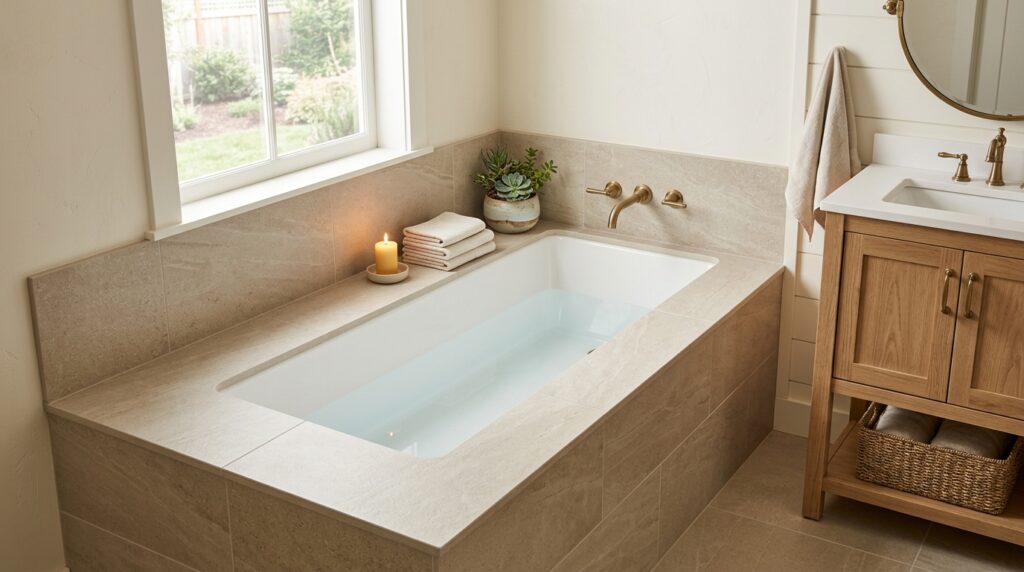
Keeping the ledge styled simply, a candle, a small stack of folded washcloths, and one decor object, keeps it functional without becoming cluttered.
11. Choose a Tub-to-Shower Combo with a Sleek Divider
For bathrooms that need both a tub and a shower in one footprint, a combo unit with a minimal glass divider rather than a full shower curtain keeps the area feeling open and modern. The divider only needs to cover the portion of the tub where water splashes during showering.
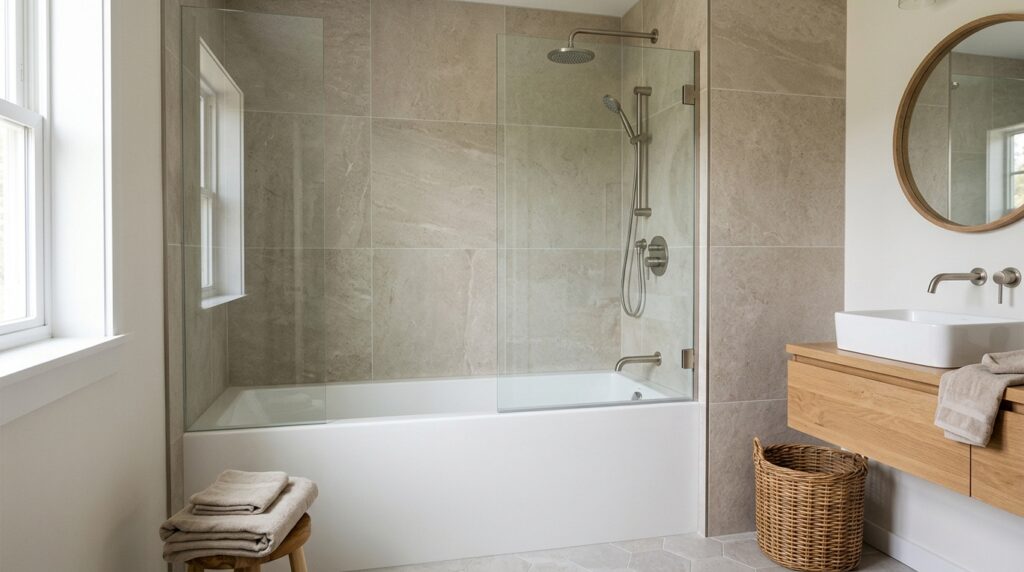
This option works well for households that use the shower function daily but still want the option of a bath occasionally, without dedicating separate space to two fixtures.
12. Add a Chandelier Above a Freestanding Tub
A small chandelier, scaled appropriately for the space, above a freestanding tub adds a sense of luxury and makes the bathing area feel like a destination rather than just part of the bathroom’s layout. This works particularly well in larger bathrooms with higher ceilings.
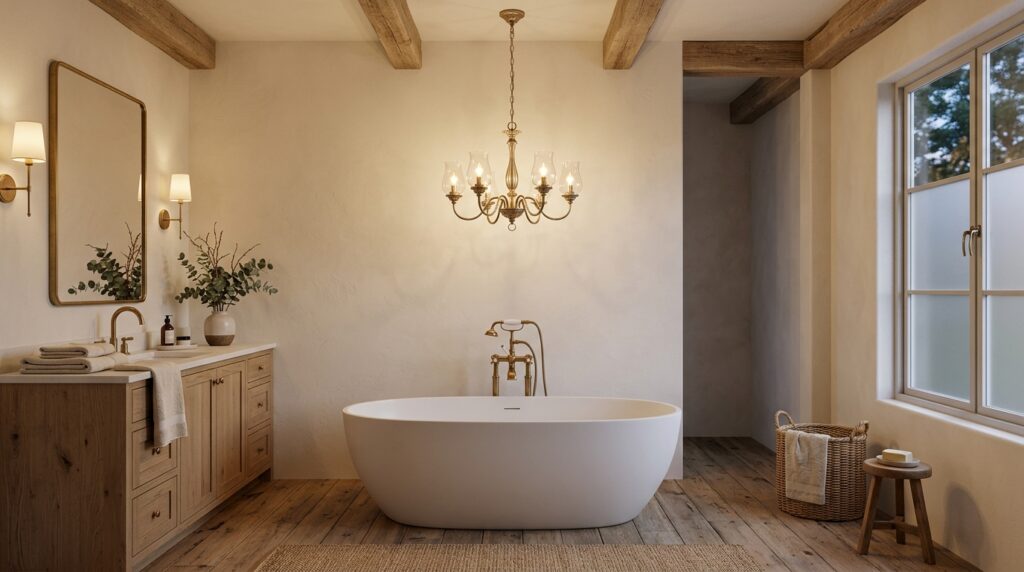
The contrast between a more formal lighting fixture and the otherwise practical nature of a bathroom is part of what makes this detail feel special.
13. Use a Contrasting Tile Band Around the Tub Area
A band of contrasting tile, in a different color or pattern than the rest of the bathroom, run around the tub area at a specific height, draws attention to the tub and creates a sense of a defined zone without enclosing it completely.
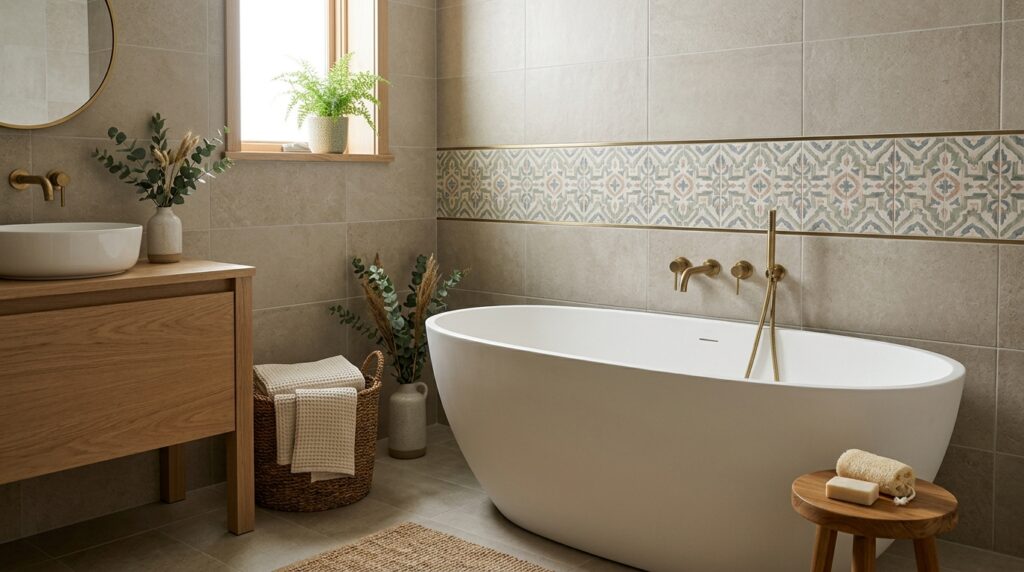
This works well as a way to add color or pattern in a controlled way, especially in bathrooms where the rest of the tile is kept simple and neutral.
14. Add a Bench Beside the Tub for Towels
A small bench or stool placed beside the tub gives you somewhere to set towels, clothes, or bath products within easy reach while in the tub. This is a practical addition that also adds a furniture element to what is often an otherwise fixture-only area.
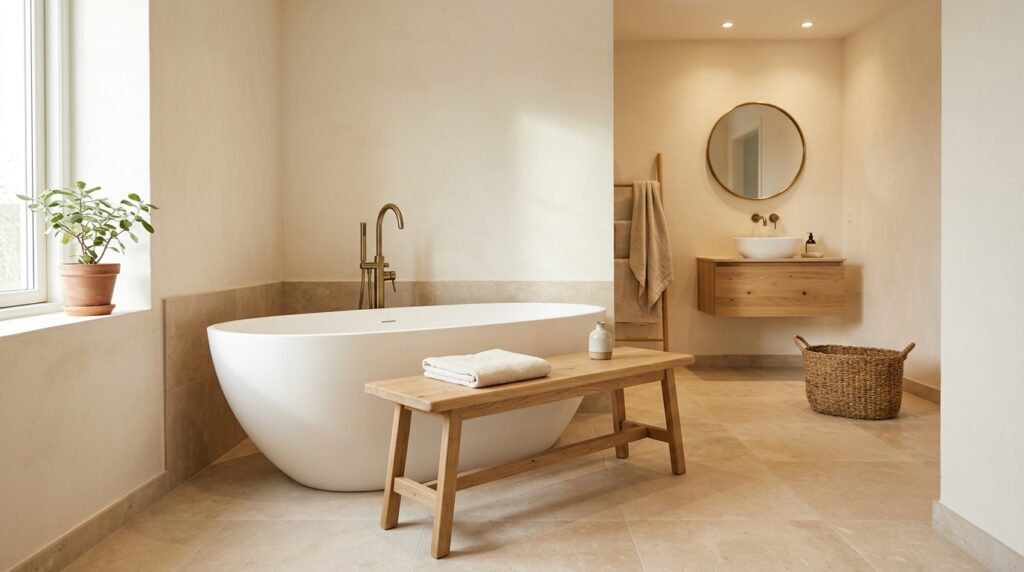
A bench in a material that matches or complements the tub’s surround, whether that is wood, stone, or tile, helps it feel like part of the planned design rather than an afterthought. Choosing one with a slightly lower profile than a standard chair also keeps it from competing visually with the tub.
15. Install a Tub with a Built-In Backrest
Some tub designs include a sloped or contoured backrest built into the shape of the tub itself, making it more comfortable for longer soaks without needing extra cushions or accessories. This feature is worth considering specifically if relaxation, rather than just bathing, is a priority for the space.
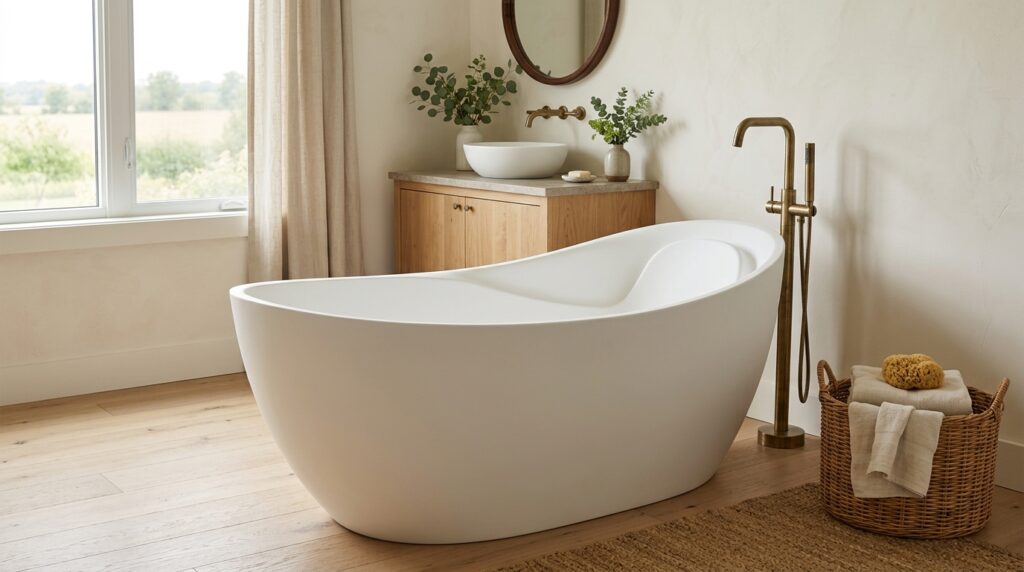
A built-in backrest also means the tub looks finished and complete on its own, without needing additional elements to make it comfortable.
16. Add Floating Shelves Above the Tub for Storage
A pair of floating shelves on the wall above or beside the tub gives you a place for bath products, folded towels, or decor, using wall space that would otherwise go unused. Unlike a full shelving unit, floating shelves keep a light, open feel near the tub.
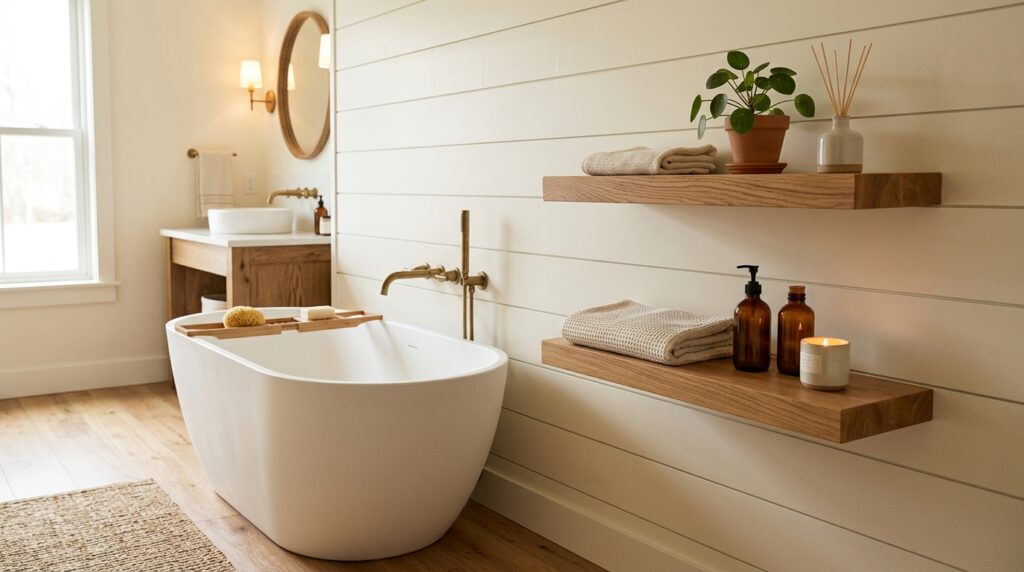
Styling these shelves with a mix of practical items and a plant or candle keeps them useful while still contributing to the overall look of the tub area.
17. Create a Step-Up Platform for the Tub
Raising the tub on a low platform, finished in matching or contrasting tile, adds a sense of occasion to the tub and visually separates it from the rest of the floor. Even a step of just a few inches changes how the tub reads within the room.
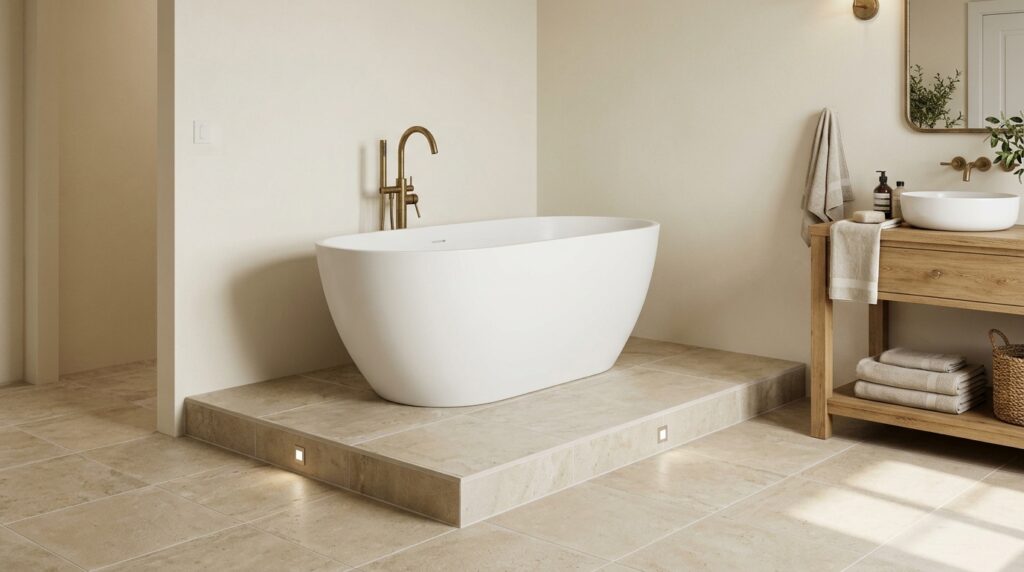
This approach works particularly well with deeper soaking tubs, where the platform also makes it easier to step in and out compared to a tub set directly into a lower floor level. A small recessed light along the edge of the platform can also help mark the step safely at night.
18. Add Curtains Around a Clawfoot Tub for Privacy
A curtain hung from a ceiling mounted track around three sides of a clawfoot tub provides shower privacy while preserving the open, freestanding look of the tub itself when the curtain is pulled back. This is a common solution for clawfoot tubs that double as showers.
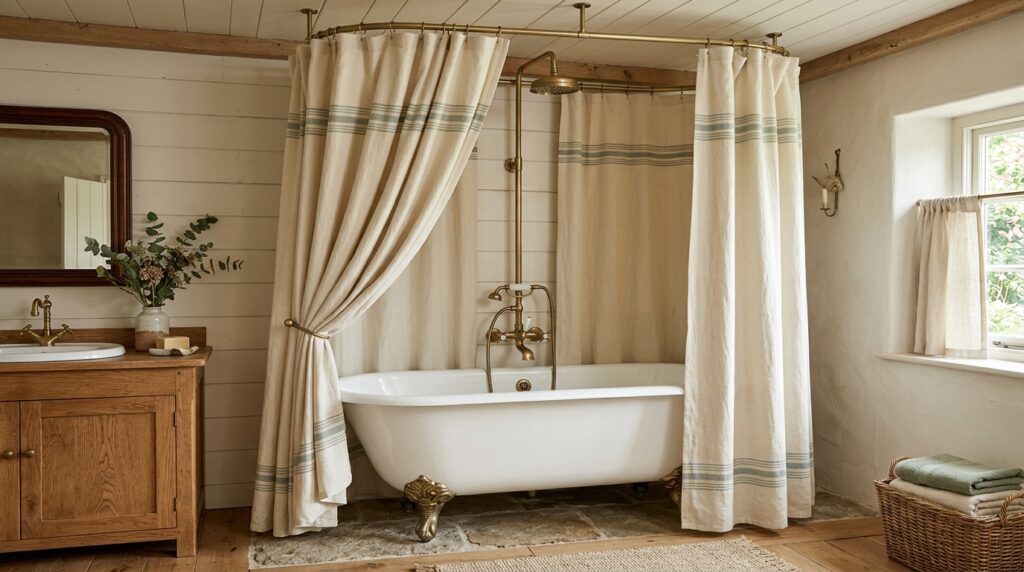
Choosing a curtain fabric that complements the room’s overall palette, rather than a plain white liner on its own, keeps this practical addition from looking purely utilitarian.
19. Pair the Tub with a Bold Accent Wall
The wall behind or facing the tub is a natural place for a bold choice, whether that is a deep paint color, a patterned tile, or wallpaper rated for bathroom use. Because the tub area often has the least foot traffic and the most uninterrupted wall space, it can handle a stronger design statement than busier parts of the room.
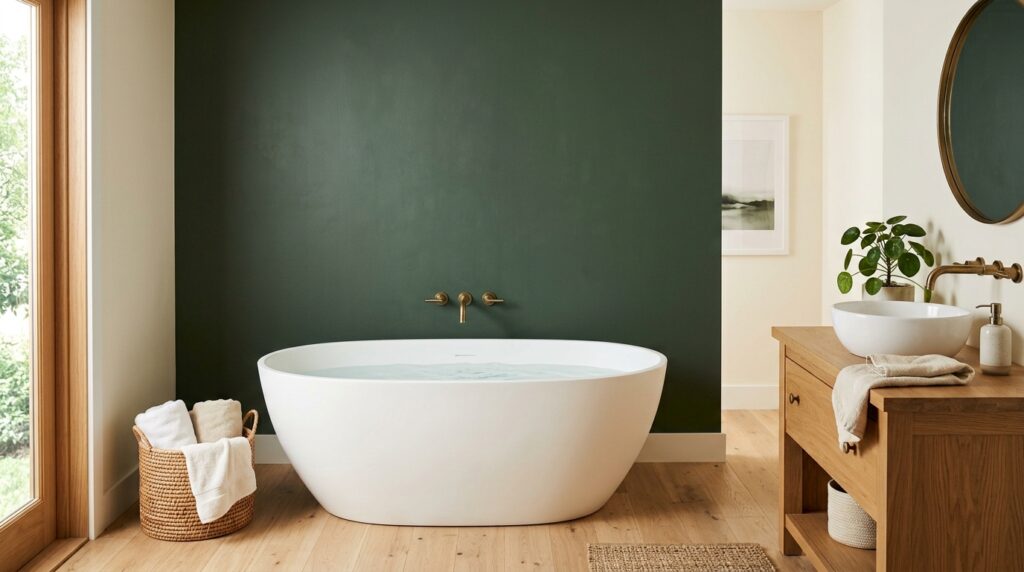
This approach gives the tub a clear backdrop and makes the whole area feel like a considered design choice rather than just where the tub happened to fit.
20. Add Plants Around the Tub for a Spa Feel
A few plants positioned near the tub, on a ledge, a small stand, or hanging from above, bring a sense of calm and greenery that pairs naturally with the idea of soaking and relaxing. Plants that tolerate humidity well, like ferns or peace lilies, are well suited to this spot.
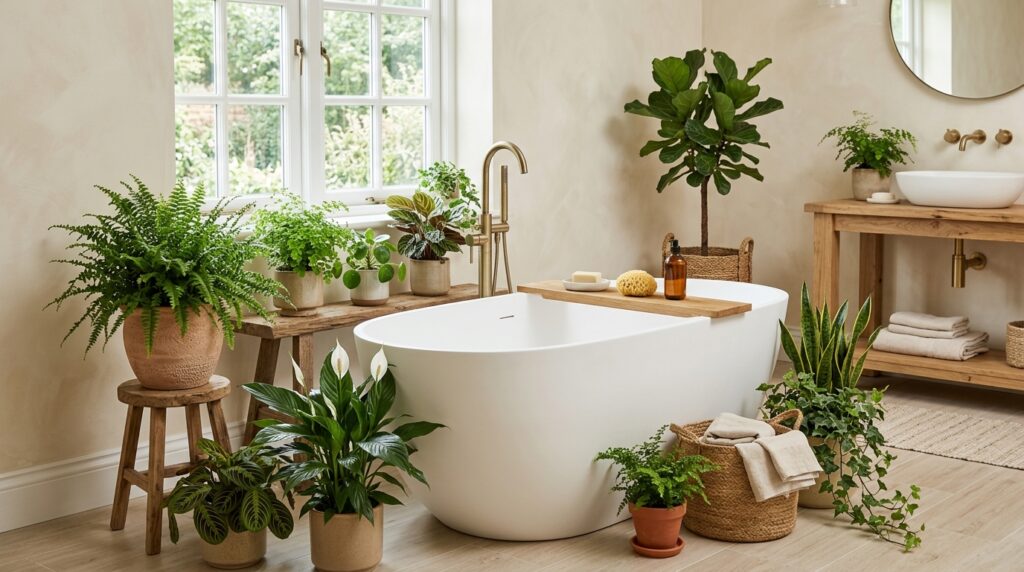
This is one of the simplest additions on this list, but it does a lot to make the tub area feel like a retreat rather than just another fixture in the bathroom.
Final Thoughts
A tub does more for a bathroom remodel than just provide a place to bathe. Its style, its surroundings, and the details around it set the tone for how the whole space feels, whether that is a sleek modern retreat or a warm, vintage inspired corner.
When planning around a tub, think about how it will actually be used. A tub meant for quick showers benefits from practical additions like a sleek divider or a bench, while a tub meant for long soaks deserves the lighting, ledges, and small luxuries that make it feel like a destination.
Either way, the tub is rarely just a fixture. With the right surroundings, it becomes the part of the bathroom that the rest of the room is built around.
No matter which combination of these ideas fits your space, the goal is the same: a tub that feels like it was planned as the heart of the room, not just placed wherever the plumbing allowed.