
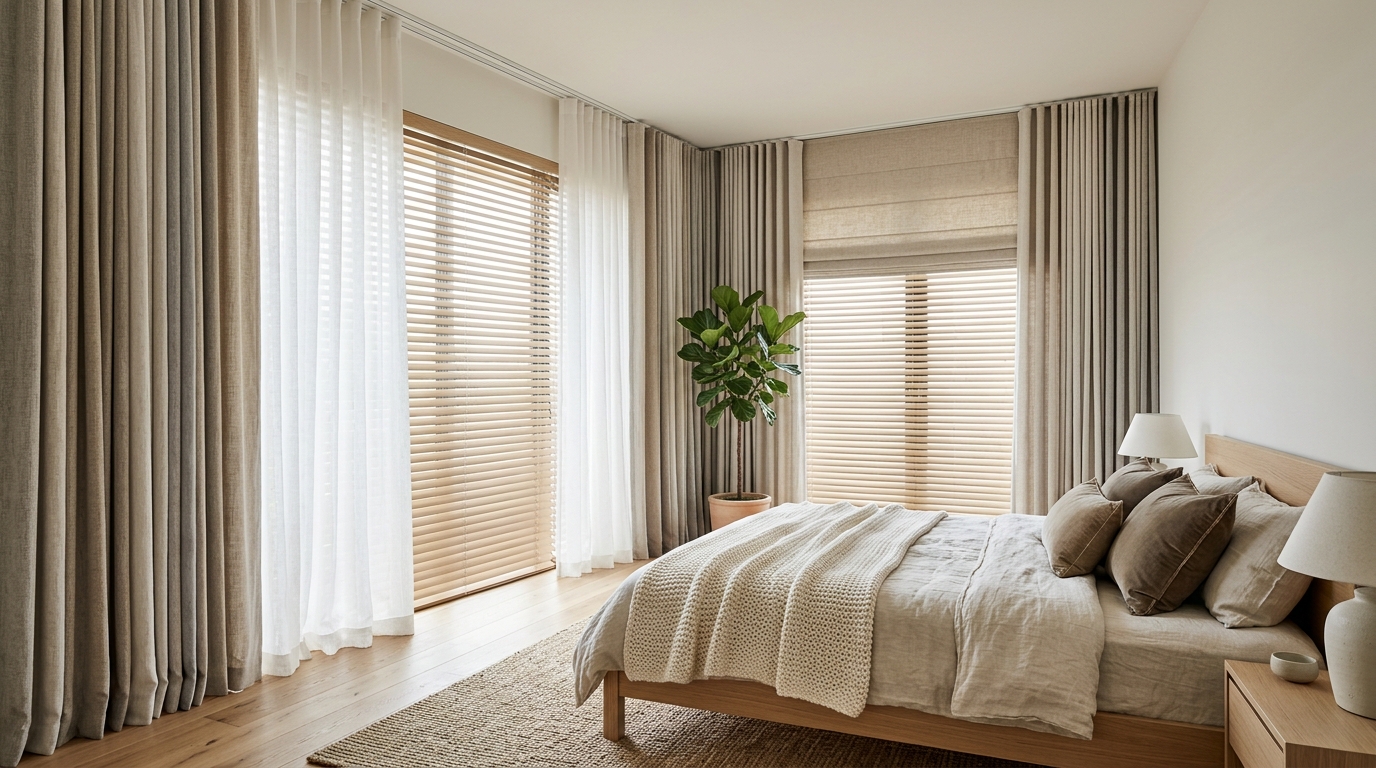
Master bedroom windows often go ignored beyond basic blinds, even though they have an outsized effect on how the room feels at every hour of the day. The right window treatment shapes how morning light enters, how cozy the room feels at night, and how complete the overall design looks, while the wrong one can leave even a beautifully decorated bedroom feeling unfinished.
This article focuses on window treatment ideas specifically suited to master bedrooms, where the priorities tend to differ from other rooms in the house. Below are twenty one ideas for treating master bedroom windows in ways that balance light control, privacy, and style.
1. Floor to Ceiling Curtains for Drama and Height
Hanging curtains from just below the ceiling rather than directly above the window draws the eye upward and makes the entire wall feel taller. The extra fabric pooling slightly at the floor reinforces the sense of luxury and adds the kind of dramatic, polished quality that distinguishes master bedrooms from other rooms in the house.
This approach works regardless of the actual window size, since the curtains create the impression of a much larger window than may actually exist. Choosing rich fabrics like linen, velvet, or heavy cotton enhances the effect, while installing the rod a few inches wider than the window frame on each side ensures the window itself is fully exposed when the curtains are open, maximizing the natural light during the day.
2. Blackout Curtains for Better Sleep
Blackout curtains are particularly valuable in master bedrooms, where uninterrupted sleep matters most. These curtains have a special lining or thicker fabric construction that blocks nearly all incoming light, creating the dark conditions that promote deeper, more restorative sleep.
This option works especially well for anyone whose sleep is disrupted by streetlights, early morning sun, or working night shifts that require sleeping during daylight hours. Modern blackout curtains come in a wide range of styles and colors, so the functional benefit does not require sacrificing aesthetics, with many options looking identical to regular decorative curtains while delivering significantly better light blocking performance.
3. Layered Sheers Behind Heavy Drapes
Layering sheer curtains beneath heavier drapes provides two distinct levels of light control and privacy. The sheers diffuse daylight gently while maintaining privacy, while the heavier drapes can be drawn at night for complete darkness and additional insulation.
This setup works particularly well in master bedrooms with large windows, where flexibility in light control matters throughout the day. Choosing sheers in white or a very pale neutral tone keeps them from competing with the heavier drapes, which can be in a richer color or pattern, letting each layer serve its purpose without one feeling redundant against the other.
4. Roman Shades for a Clean Tailored Look
Roman shades fold up neatly when raised and lie flat against the window when lowered, providing a clean, tailored appearance that suits master bedrooms aiming for a more polished look. The structured folds give the window a finished quality without the volume of full curtains.
This option works particularly well in bedrooms with limited wall space around the windows, since Roman shades sit within the window frame rather than extending out to either side. Choosing a Roman shade in a textured fabric like grasscloth, linen, or jute adds natural warmth, while a patterned shade can introduce visual interest without the fullness of patterned curtains that might feel overwhelming in a smaller space.
5. Plantation Shutters for Timeless Style
Plantation shutters with their wide louvers provide adjustable light control while adding architectural detail to the window itself. The shutters become a permanent design feature, lending a sense of established quality that fabric treatments cannot match.
This option works particularly well in master bedrooms aiming for a classic, timeless aesthetic that will not feel dated as design trends shift. White plantation shutters in particular suit nearly any color scheme and provide bright, defined frames around the windows, while wood toned shutters add warmth and pair well with bedrooms featuring natural materials throughout the rest of the space.
6. Motorized Window Treatments for Convenience
Motorized curtains, blinds, or shades operated by remote control or a smartphone app bring practical convenience to master bedroom windows. Opening curtains from bed in the morning or closing them at bedtime without getting up addresses one of the small daily inconveniences of traditional manual window treatments.
This option works particularly well for tall windows or hard to reach treatments, where manually operating cords or pulling fabric multiple times a day becomes tedious. Programming the motorized treatments to open and close at set times also creates a consistent daily rhythm, helping with morning wake up routines when curtains open gradually with the sunrise, or providing automatic privacy at dusk.
7. Cafe Curtains for Lower Window Privacy
Cafe curtains cover only the lower half of the window, providing privacy where it matters most while leaving the upper portion exposed to natural light. This unusual configuration works especially well in master bedrooms facing close neighbors or busy streets where lower window privacy is the main concern.
This option suits older homes with double hung windows where the architectural details deserve to remain visible, since the upper window exposure preserves the window frame’s character. Adding a valance or simple rod above the cafe curtains keeps the upper window from looking unfinished, while the partial coverage maintains a brighter, more open feel than full length curtains would provide.
8. Velvet Drapes for Luxurious Texture
Velvet drapes bring a rich, plush texture to master bedroom windows that lighter weight fabrics cannot match. The fabric absorbs light differently across its surface, creating depth and a sense of luxury that elevates the entire room’s atmosphere.
This option works particularly well in master bedrooms aiming for a glamorous, romantic, or sophisticated feel, where the velvet contributes substantially to the overall mood. Deeper colors like emerald, sapphire, or burgundy work especially well in velvet, with the fabric’s natural sheen catching light and adding visual interest even when the drapes hang completely still during the day.
9. Linen Curtains for an Airy Casual Feel
Linen curtains have a natural, slightly textured drape that feels casual and effortless rather than formal. The fabric filters light beautifully, creating a soft glow throughout the room during the day while maintaining a relaxed atmosphere that suits bedrooms designed for rest and comfort.
This option works particularly well in master bedrooms with a coastal, farmhouse, or organic modern style, where the natural fiber complements wood furniture and other natural materials. Linen does wrinkle naturally, but the slight wrinkles become part of the relaxed aesthetic rather than appearing untidy, contributing to the overall casual, lived in quality that defines this kind of bedroom design.
10. Roller Shades Hidden Behind Curtains
Combining functional roller shades with decorative curtains gives master bedroom windows both serious light blocking ability and a finished, soft look. The shades handle the practical needs of privacy and darkness, while the curtains provide the visual softness and design element.
This option works particularly well when the roller shades are chosen in a neutral color that disappears when the curtains are drawn, since the visible elements remain only when the curtains are open. The combination essentially gives you two different window treatments to choose between based on the time of day or mood, with the shades alone during the day and both layers at night for full coverage.
11. Bay Window Custom Curtain Configuration
Master bedrooms with bay windows benefit from custom curtain configurations that follow the angles of the window architecture. A single curtain rod that bends to follow the bay’s shape, or separate panels at each window section, ensures the curtains drape properly along the unique geometry.
This option works particularly well when the bay window includes a built in seating area or a place where someone might sit and look out, since the curtains can be drawn back fully on each side to maximize the view and natural light. Customizing the curtain length for each section of the bay, accounting for any built in elements below, ensures the curtains hang correctly and look intentional rather than ill fitted.
12. Top Down Bottom Up Cellular Shades
Cellular shades that operate from both the top and bottom let you customize exactly which portion of the window remains covered or exposed. Lowering only the top section provides natural light while maintaining lower window privacy, an arrangement that works well for master bedrooms.
This option works particularly well in bedrooms facing close neighbors where lower privacy matters but upper light exposure is desired. The cellular construction also provides insulation, helping keep the bedroom cooler in summer and warmer in winter, which is an additional practical benefit alongside the flexible coverage options that the dual operation provides.
13. Patterned Drapes as a Focal Point
Drapes in a bold pattern can become the room’s main visual focal point, particularly when surrounding decor stays relatively simple. The pattern at the window draws the eye and adds personality without requiring patterned wallpaper, busy bedding, or multiple smaller decorative elements scattered throughout the space.
This option works particularly well when the pattern color palette is echoed in small accents elsewhere in the room, like a throw pillow or a piece of art, creating connection without competition. Large scale patterns tend to work better in master bedrooms than small ones, since the larger pattern fills the visual space of the drapes properly without looking busy or chaotic.
14. Sheer Curtains Alone for a Soft Romantic Look
In master bedrooms with sufficient privacy from the outside, like upper floor rooms or those facing a private yard, sheer curtains alone create a soft, romantic atmosphere without the weight of heavier window treatments. The light filtering through the sheer fabric brightens the entire room with a gentle glow.
This option works particularly well in bedrooms with romantic or vintage inspired design, where the soft sheers contribute to the overall dreamy quality. White or cream sheers tend to suit most bedroom palettes, while dyed sheers in soft pastel tones can add subtle color without sacrificing the airy, light filtering quality that makes this treatment so distinctive.
15. Window Seat with Built In Curtain Track
A window seat at the master bedroom window, combined with curtains that close in front of it, creates a private reading or sitting nook within the larger bedroom. The curtains can be drawn back during use or closed for privacy and a sense of enclosure.
This option works particularly well in master bedrooms with deep window wells or bay windows, where a window seat fits naturally within the architecture. The curtains adapt the space to different uses, open for daytime reading with natural light, closed for an intimate, sheltered feeling, with the dual function adding versatility to what might otherwise be a single purpose corner.
16. Wooden Blinds for Natural Warmth
Wooden blinds bring natural warmth and texture to master bedroom windows that metal or vinyl blinds cannot match. The wood grain adds visual interest, while the adjustable slats provide flexible light control similar to other blind types.
This option works particularly well in master bedrooms with wood furniture or wood floors, since the matching natural material creates a cohesive look throughout the space. Choosing wooden blinds in a stain that matches or complements the bedroom’s existing wood tones reinforces this connection, while a contrasting wood tone can also work intentionally as an accent element that stands out from the rest of the room.
17. Curtains Mounted Inside the Window Frame
Curtains mounted inside the window frame, rather than on the wall above and around it, create a tailored, contained appearance that emphasizes the window itself rather than the surrounding wall space. This treatment style works well in master bedrooms with architecturally interesting windows worth highlighting.
This option works particularly well for windows with attractive trim or unique shapes, where extending the curtains beyond the frame would actually hide the architectural detail. The inside mount also takes up less wall space, leaving room for other decor or furniture immediately beside the window without competing with curtain rods or fabric extending outward.
18. Dual Layered Curtain Rods for Flexibility
A dual curtain rod system allows two separate curtain layers, often a sheer and a heavier drape, to operate independently. This provides maximum flexibility in controlling light and privacy throughout the day without compromising either treatment.
This option works particularly well in master bedrooms where the same window needs to serve different functions at different times, bright and private during the day, fully dark at night. Each layer can be opened or closed independently based on the moment’s needs, with the dual layered approach essentially giving you two complete window treatments combined into one cohesive setup that adapts to changing requirements.
19. Color Coordinated to Bedding for Harmony
Choosing curtains in a color that matches or complements the bedding creates a sense of harmony throughout the master bedroom. This coordination ties the two largest fabric elements in the room together, making the overall design feel deliberate and cohesive rather than coincidental.
This option works particularly well when the connection is subtle rather than identical, the same color in a different shade or pattern, or a closely related tone, so the room feels coordinated without being overly matched. The visual link between window and bed draws the eye comfortably around the room, reinforcing the sense that every element was chosen to work together as part of a unified design.
20. Sliding Panel Track Blinds for Wide Windows
Sliding panel track blinds work particularly well for wide windows or sliding glass doors common in some master bedroom layouts. Large fabric panels slide along a track, providing coverage with a clean, modern appearance that traditional blinds or curtains cannot easily match.
This option works particularly well in master bedrooms with contemporary design, where the clean lines and large panels suit the overall aesthetic. The panels can be moved easily to allow access to doors or to open a portion of the window while keeping others covered, with the sliding mechanism offering flexibility that swinging or stacking treatments do not provide for these specific window types.
21. Cordless Treatments for Safety and Cleaner Look
Cordless window treatments eliminate dangling cords that can be safety hazards while also creating a cleaner, more streamlined appearance. Modern cordless designs operate through gentle pulling, push button mechanisms, or smart controls instead of traditional cord systems.
This option works particularly well in households with children or pets, where dangling cords pose real safety concerns. Beyond safety, the cordless design also creates a more refined, finished appearance at the window, since the absence of visible cords removes one of the small visual distractions that traditional treatments include, contributing to the polished overall look most master bedrooms aim for.
Conclusion
Master bedroom window treatments deserve more attention than they typically receive, since they affect both how the room functions, sleep quality, light control, privacy, and how it feels at every moment of the day. The most effective approach often involves combining two treatments, like sheers with heavier drapes, to handle different needs at different times rather than relying on a single solution.
Whatever combination suits the room best, the goal is treatments that disappear into the background when not needed and provide exactly the right amount of light, privacy, or warmth when called upon. A master bedroom with thoughtful window treatments feels noticeably more complete and intentional, the kind of room that supports both rest and the broader rhythms of daily life rather than working against them.