
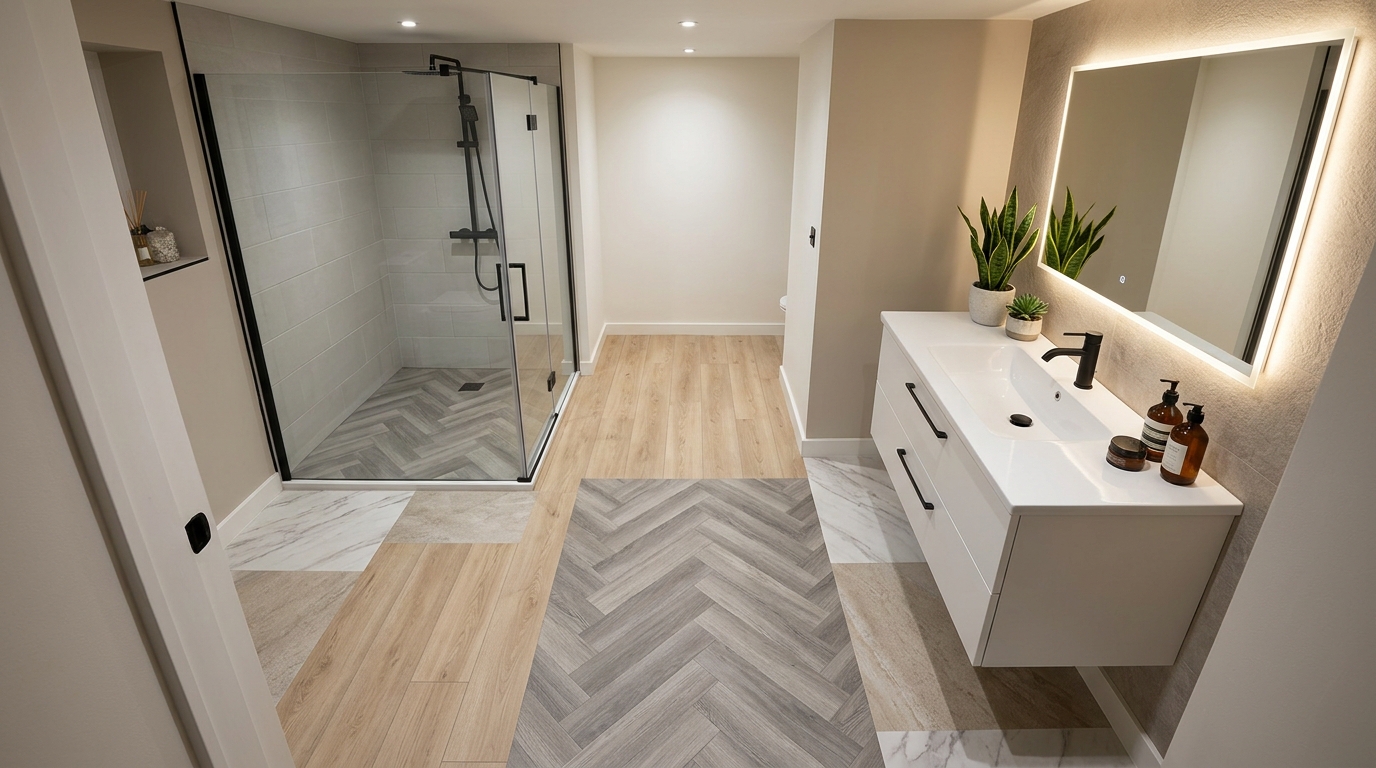
Vinyl has become one of the most practical choices for bathroom floors, and not just because it is affordable. Modern vinyl flooring handles water better than almost any other material, installs faster than tile, and comes in a range of looks that go far beyond the plain sheet vinyl most people picture.
This article focuses on what vinyl specifically brings to a bathroom, the installation methods, the waterproof construction, the comfort underfoot, and the design options that make it a strong choice whether you are renovating, renting, or just looking for something more budget friendly than tile.
Below are twenty one ways to think about vinyl flooring for a bathroom, covering both the practical side and the design side of this material.
1. Peel and Stick Vinyl Tiles for an Easy DIY Update
Peel and stick vinyl tiles are one of the most accessible flooring updates available, since they require no special tools, no adhesive mixing, and no professional installation. Each tile has a backing that you remove before pressing it into place.
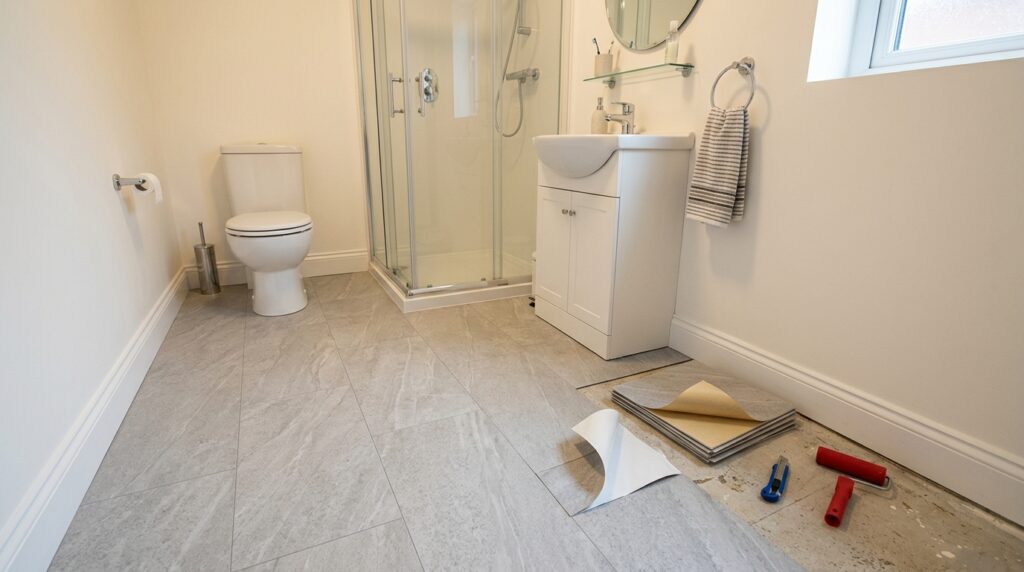
This option works especially well for renters or anyone updating a bathroom on a tight timeline, since a small bathroom floor can often be covered in a single afternoon.
2. Luxury Vinyl Plank for a Realistic Wood Look
Luxury vinyl plank, often shortened to LVP, has reached a point where the printed wood grain texture is difficult to distinguish from real wood at a glance, while remaining fully waterproof underneath. This makes it possible to get a warm, natural floor look in a room where actual hardwood would not survive.
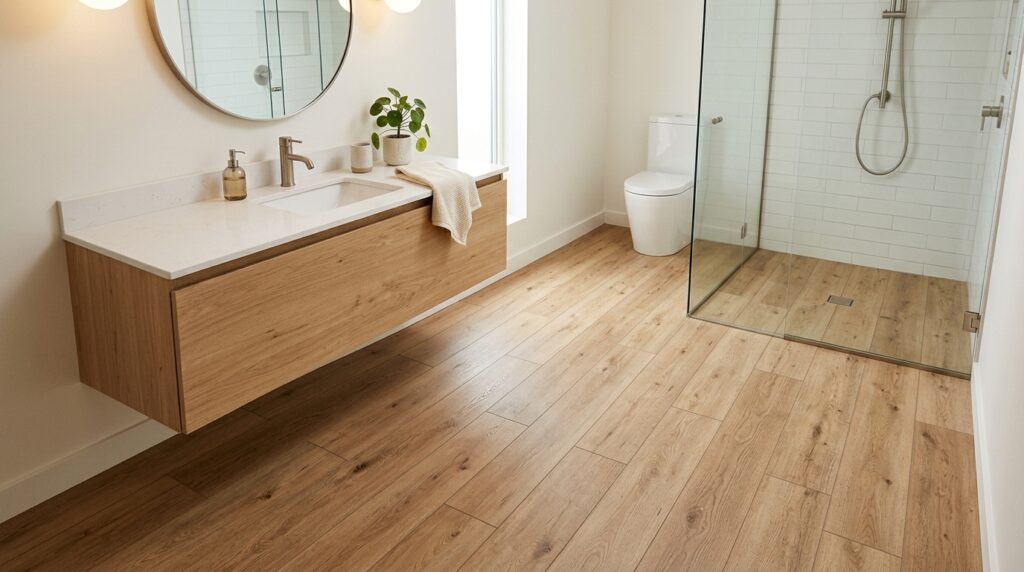
The planks typically have a textured surface that mimics wood grain by feel as well as appearance, adding to the realism beyond just the printed pattern.
3. Click-Lock Vinyl Plank for a Floating Floor
Click-lock vinyl planks snap together along their edges without glue, creating a floating floor that sits on top of the subfloor rather than being bonded to it. This installation method is faster and more forgiving of an uneven subfloor than glue-down options.
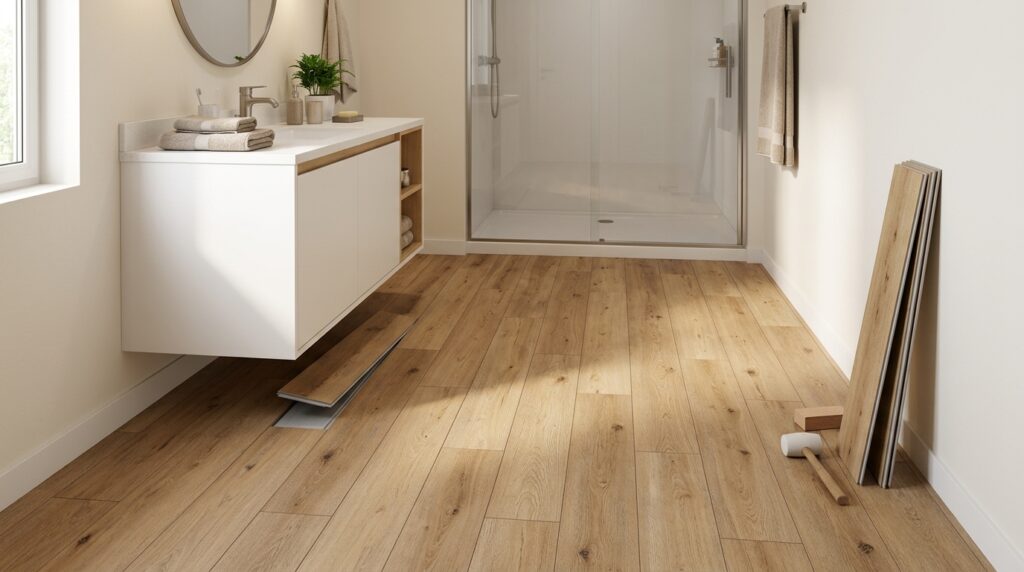
Because the floor floats, it can also be removed and reinstalled if needed, which is useful if a section ever needs replacing due to damage.
4. Sheet Vinyl for a Seamless, Joint-Free Surface
Sheet vinyl comes in large rolls that can cover an entire bathroom floor with minimal or no seams, depending on the room’s dimensions. Without seams, there are fewer places for water to seep underneath, making this one of the most water resistant flooring options available.
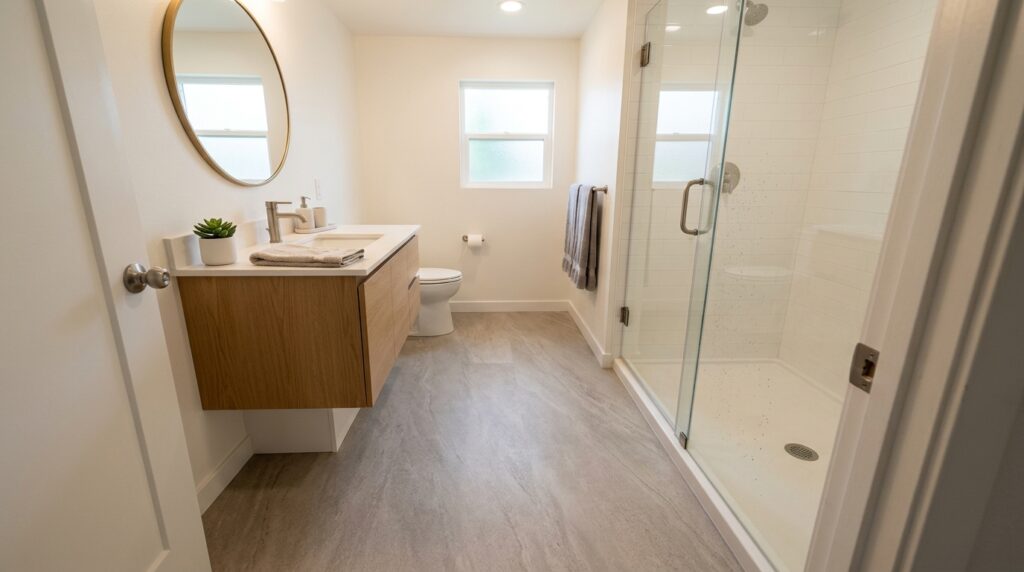
This option works particularly well in smaller bathrooms, where a single sheet can often cover the whole floor in one piece.
5. Stone Look Vinyl as a Budget Marble Alternative
Vinyl printed with marble or stone patterns gives a bathroom the visual weight of natural stone at a fraction of the cost and weight. The printed veining can be remarkably convincing, especially in larger plank or tile formats.
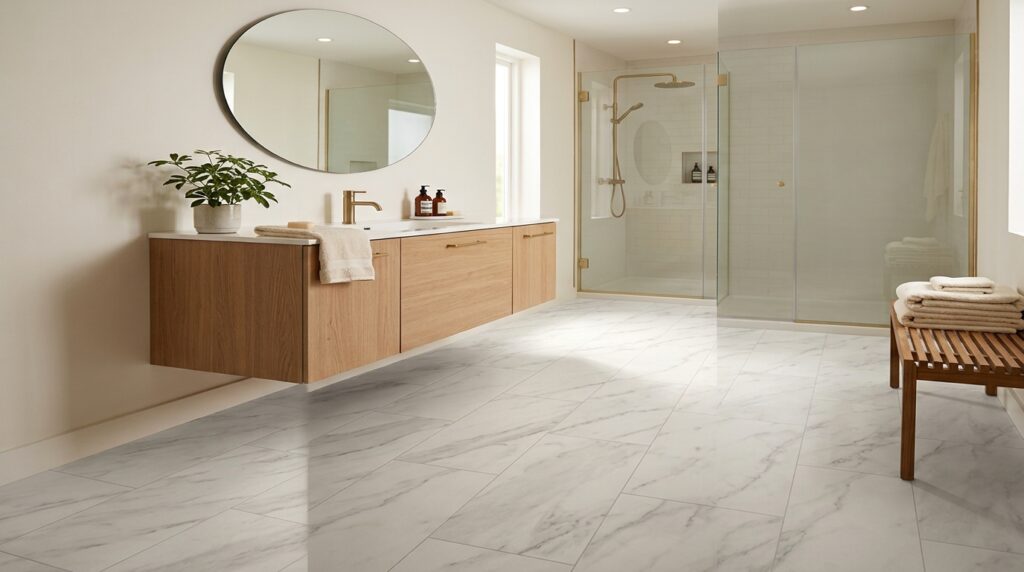
Unlike real marble, this type of vinyl will not etch from acidic products or stain from standing water, which matters in a room where both happen regularly.
6. Cushioned Vinyl for a Softer Feel Underfoot
Cushioned vinyl has a foam backing layer that adds a slight give when you step on it, making it noticeably more comfortable to stand on for long periods compared to tile or hard vinyl. This can matter a lot in a bathroom where you might spend time at the sink getting ready each morning.
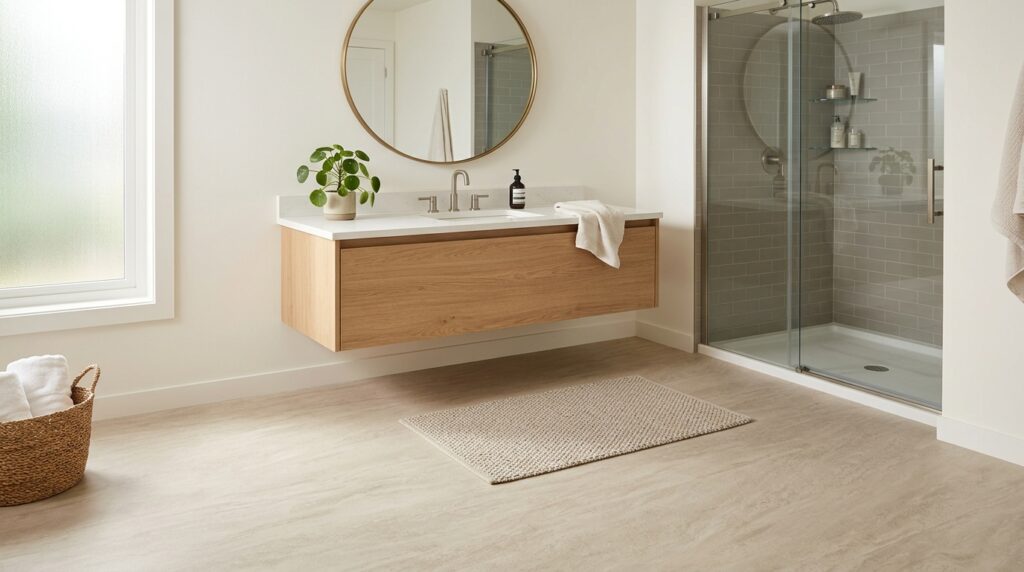
This type of vinyl also tends to feel warmer underfoot than tile, since the cushioned layer does not conduct cold the way hard surfaces do.
7. Vinyl Tile with Printed Grout Lines for a Tile Look
Some vinyl tiles are printed with grout lines built into the design, so once installed, the floor reads as a tiled surface even though it is a single material with no actual grout to clean or reseal. This combines the look of tile with the lower maintenance of vinyl.
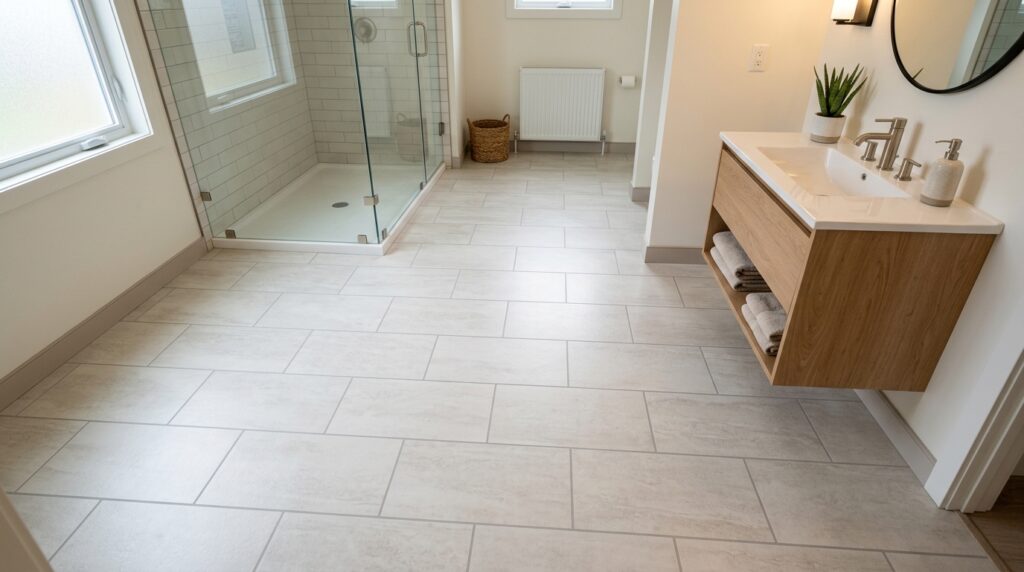
This option works well for anyone who likes the appearance of a tiled floor but wants to avoid the upkeep that comes with real grout in a wet environment.
8. Patterned Vinyl for a Retro Bathroom Feel
Vinyl flooring has a long history in bathrooms, and patterned vinyl in bold geometric or floral designs can lean into that history rather than away from it. These patterns range from subtle to genuinely bold, depending on how much of a statement you want the floor to make.
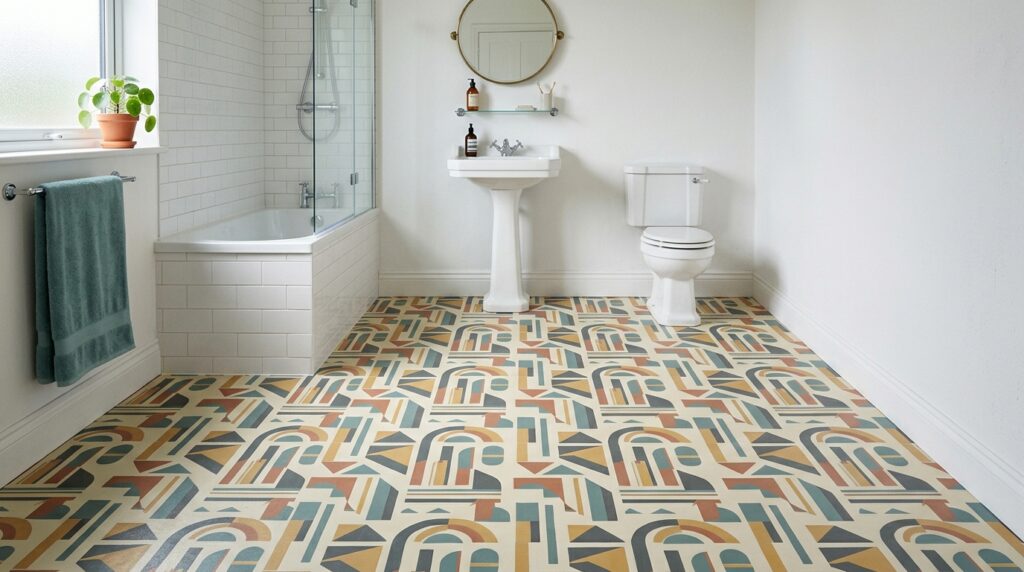
A patterned vinyl floor pairs well with simple white fixtures and walls, letting the floor carry the personality of the room.
9. Waterproof Core Vinyl for Wet Areas
Vinyl with a fully waterproof core, sometimes made from rigid plastic composite materials, can handle standing water without swelling or warping, which matters most directly around tubs, showers, and toilets where splashing is constant.
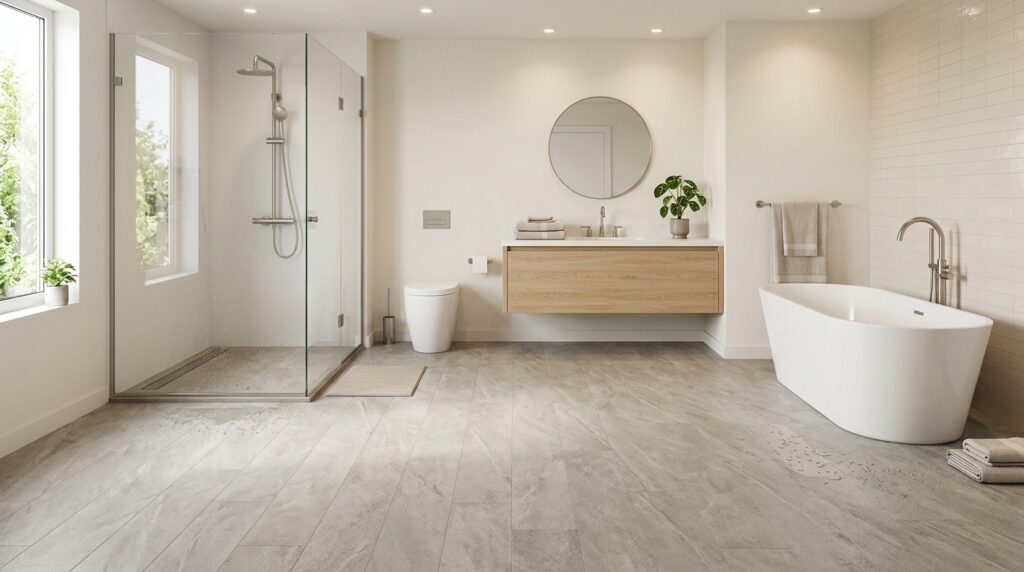
This type of vinyl is worth prioritizing in bathrooms specifically, even if it costs slightly more than basic vinyl, since the core construction is what determines how the floor holds up over years of daily use.
10. Textured Vinyl for Better Grip When Wet
Vinyl flooring with a textured surface, rather than a smooth glossy one, provides more traction when the floor gets wet, which is a real safety consideration in a bathroom. The texture can range from a subtle matte finish to a more pronounced embossed pattern.
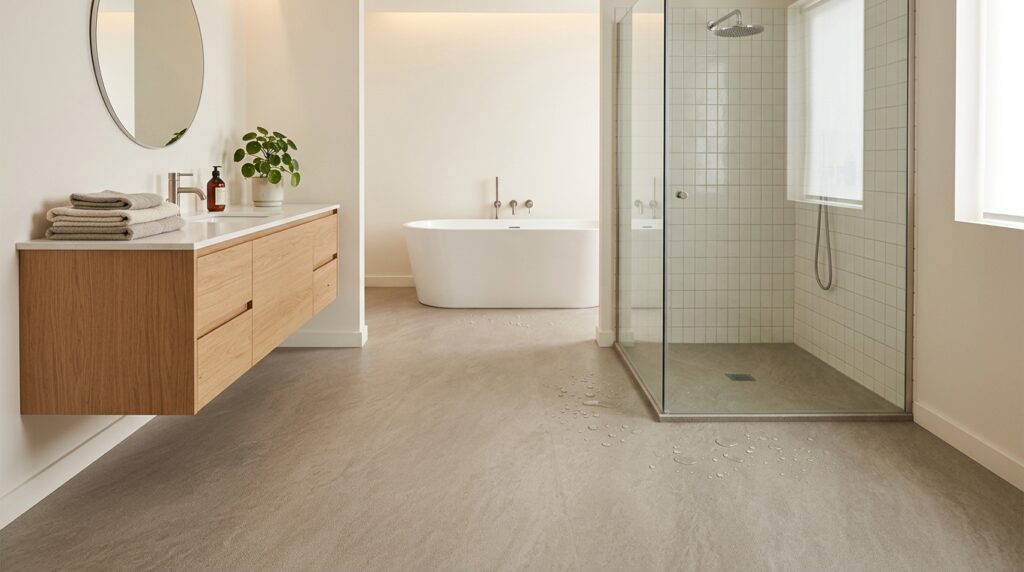
This is worth considering especially for the area directly around a shower or tub, where water on the floor is most likely.
11. Vinyl Roll Flooring for Larger Bathrooms
For bathrooms larger than a standard size, vinyl roll flooring can cover more square footage efficiently, often with fewer total seams than smaller tiles or planks would require. Rolls come in varying widths, and a skilled installer can often plan the layout to minimize visible seams entirely.
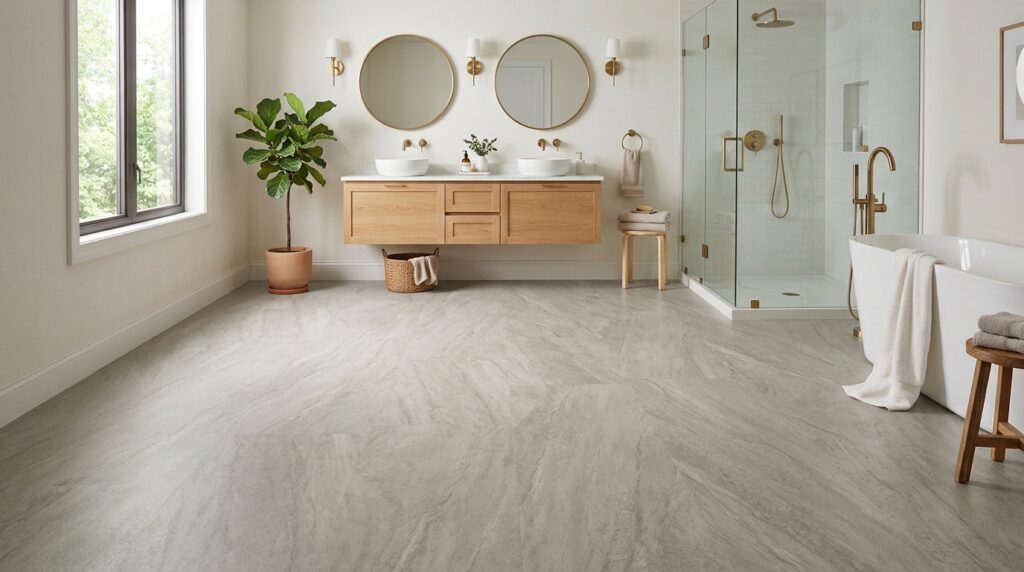
This option tends to be one of the more cost effective choices for larger bathrooms specifically, since the material itself is generally less expensive per square foot than plank or tile formats.
12. Bold Colored Vinyl Tile as a Statement Floor
Vinyl tile is not limited to neutral tones or natural material looks. Bold solid colors, deep green, navy, terracotta, or even black, are available in vinyl tile formats and can turn the floor into the most colorful element in the room.
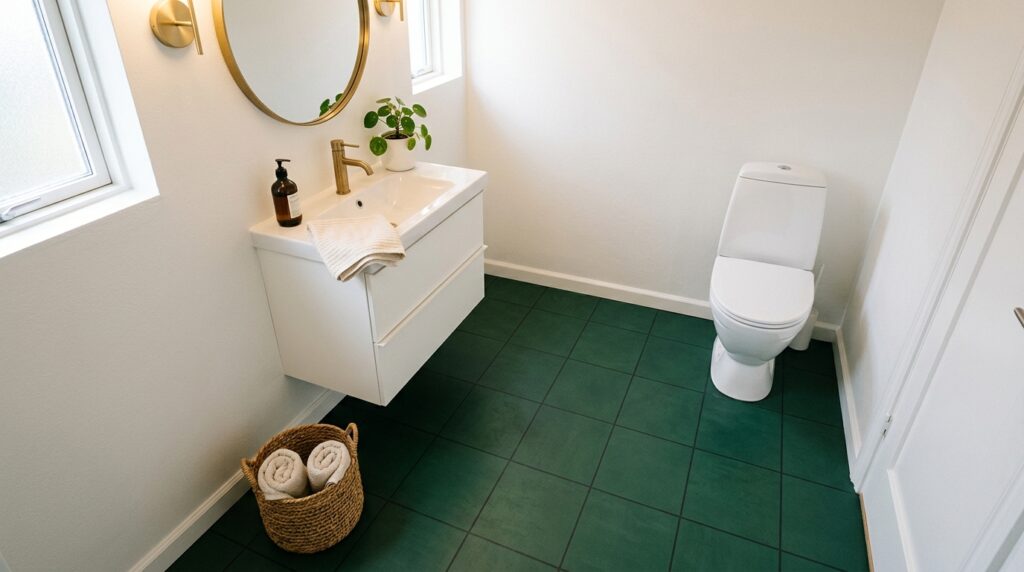
A bold colored vinyl floor works especially well in a small powder room, where the floor’s color has a big visual impact relative to the size of the space, without needing to commit to that color on walls or fixtures.
13. Concrete Look Vinyl for an Industrial Feel
Vinyl printed to resemble polished or raw concrete brings an industrial edge to a bathroom without the cold, hard surface that real concrete would create. The look pairs well with black fixtures, exposed pipe shelving, and minimal decor.
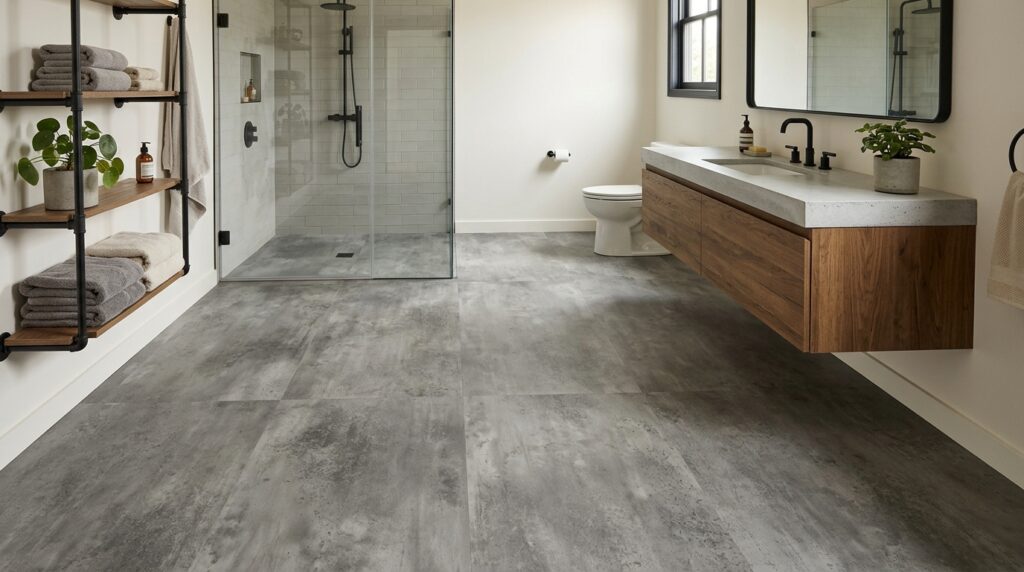
This option tends to work best in bathrooms with a more modern or loft style aesthetic overall, where the concrete look feels consistent with the rest of the design rather than out of place.
14. Vinyl Flooring for Renters Who Cannot Make Permanent Changes
Several vinyl options, particularly peel and stick tiles and certain click-lock planks, can be installed without any permanent alteration to the existing floor and removed later if needed. This makes vinyl one of the few flooring materials genuinely suited to rental bathrooms.
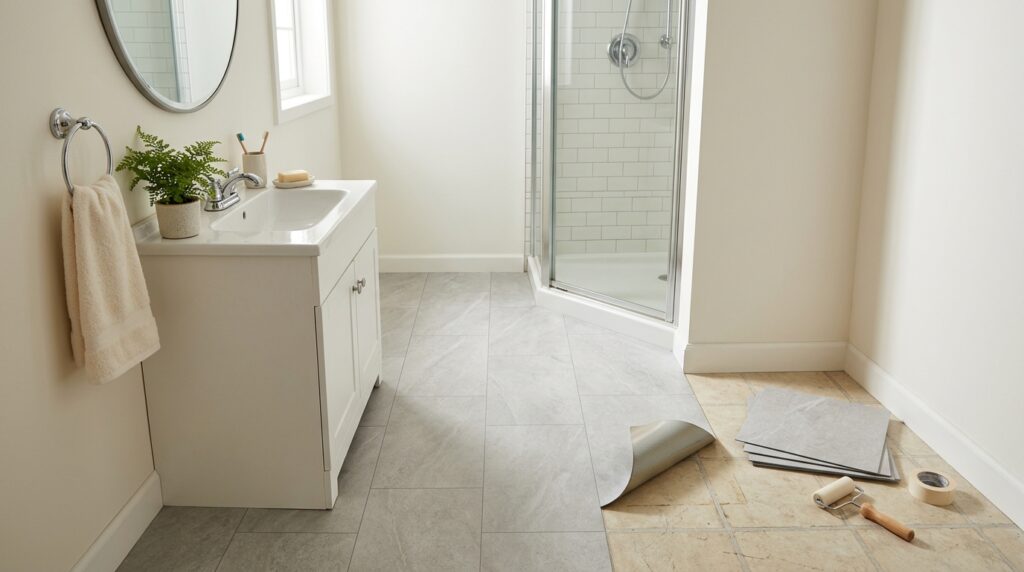
Installing vinyl over existing tile or linoleum, as long as the surface is flat and clean, is often possible without removing what is already there, which simplifies both the installation and eventual removal.
15. Vinyl Tile in a Basketweave Layout
A basketweave pattern, where rectangular tiles are arranged in alternating horizontal and vertical pairs, creates a woven appearance on the floor using a relatively simple repeating layout. This pattern works well with plank shaped vinyl tiles specifically.
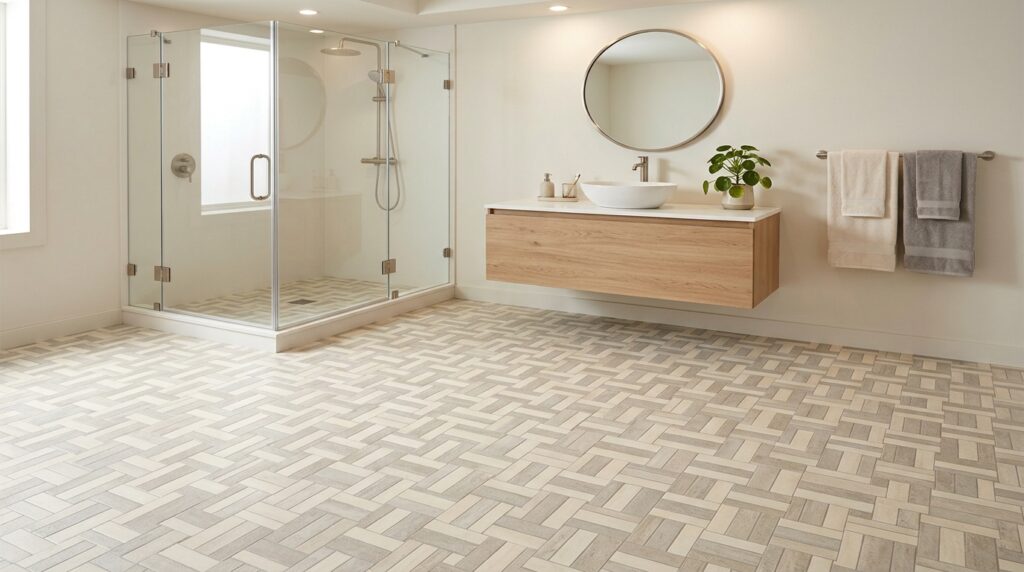
The visual texture from this layout adds interest to a floor without requiring a patterned material, since the pattern comes entirely from how plain tiles are arranged.
16. A Temporary Vinyl Mat Over Existing Flooring
For situations where a full flooring change is not practical, a large vinyl mat cut to fit the bathroom floor can sit on top of existing flooring, covering it entirely without any installation at all. These mats can be rolled up and removed whenever needed.
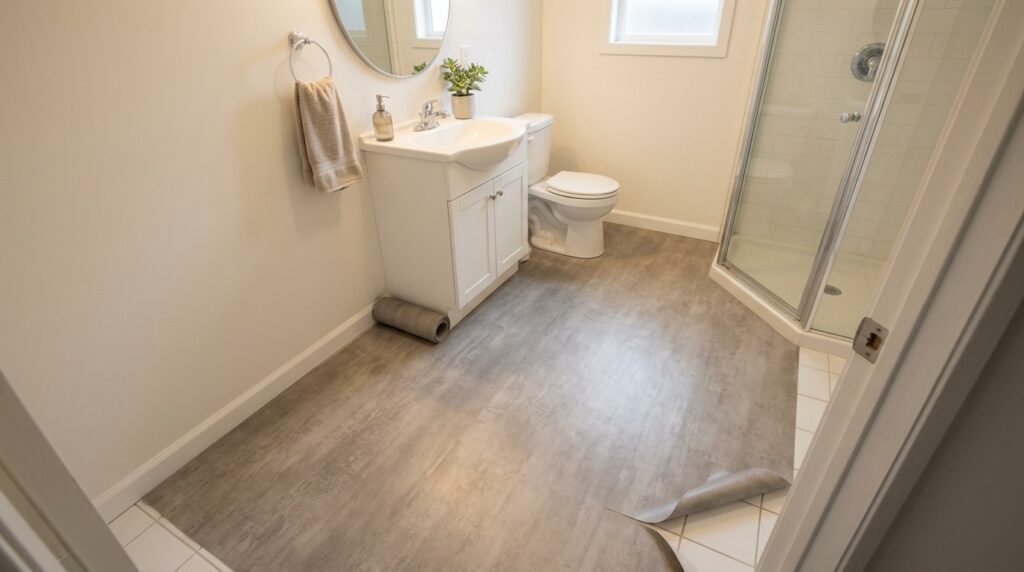
This is more of a short term or rental friendly solution than a permanent flooring choice, but it can completely change the look of a bathroom floor in minutes with zero commitment.
17. Matte Finish Vinyl Plank for a Modern Look
Matte finish vinyl planks avoid the slightly artificial shine that glossier vinyl options can have, giving the floor a more grounded, contemporary appearance. The matte surface also tends to show water spots less obviously than a glossy one.
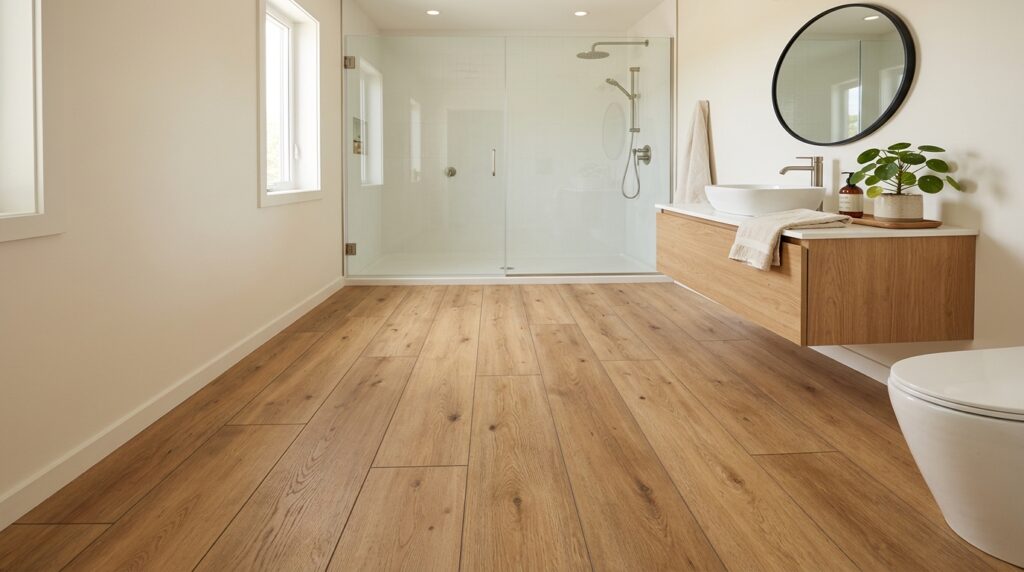
This finish pairs particularly well with wood look or stone look vinyl, since a matte surface makes the printed texture feel more believable than a glossy one would.
18. Warm Toned Vinyl for a Cozy Bathroom
Vinyl in warm tones, honey, caramel, or terracotta shades, can make a bathroom feel cozier than the cooler grays and whites that dominate a lot of bathroom flooring. This is especially noticeable in bathrooms without much natural light, where warm tones underfoot help balance out cooler wall colors or fixtures.
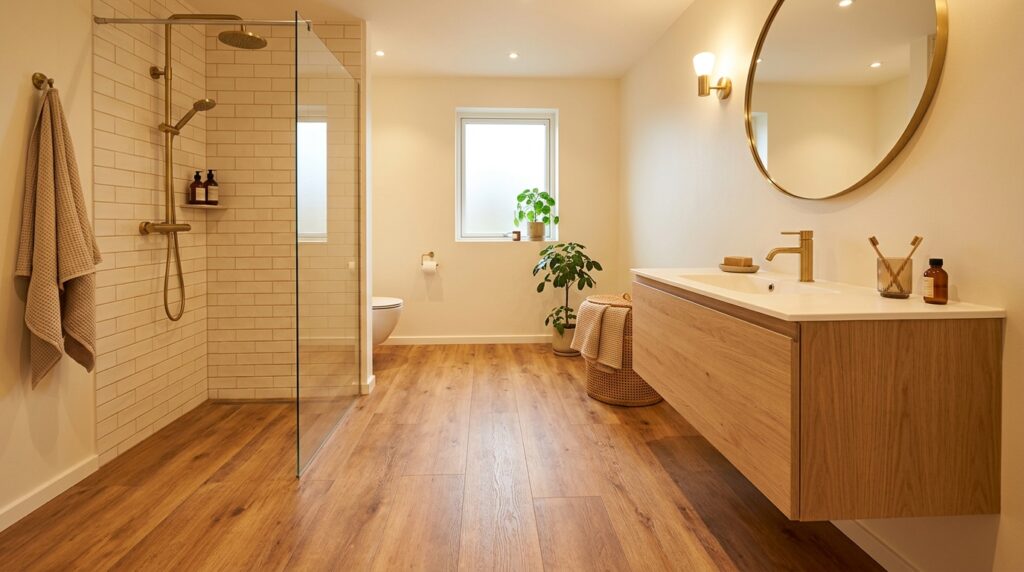
Pairing a warm toned vinyl floor with brass or warm metal fixtures ties the whole room together around that warmth.
19. Heated Vinyl Flooring for Cold Mornings
Certain vinyl flooring systems are compatible with radiant floor heating installed beneath them, unlike some other flooring types that either insulate too much or do not handle heat changes well. This combination gives you a warm floor underfoot during cold mornings without sacrificing the water resistance vinyl provides.
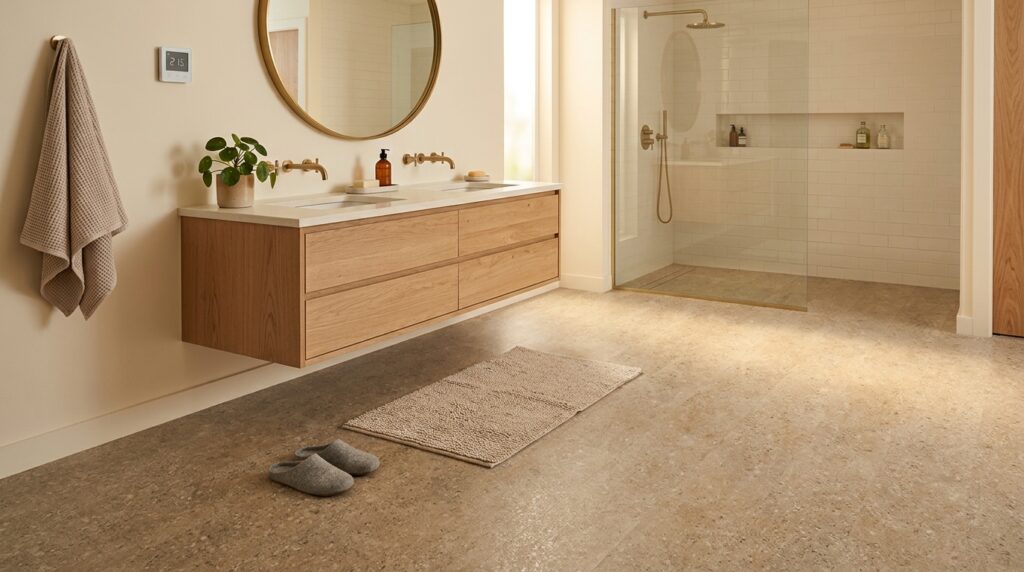
This option requires planning at the installation stage, since the heating elements go beneath the vinyl, but it is one of the more comfort focused upgrades available for a bathroom floor.
20. Mixed Width Vinyl Planks for a Custom Look
Using vinyl planks in two or three different widths, laid out in a randomized pattern, creates a look similar to reclaimed or custom milled wood flooring. This breaks up the uniformity that comes from using a single plank size across an entire floor.
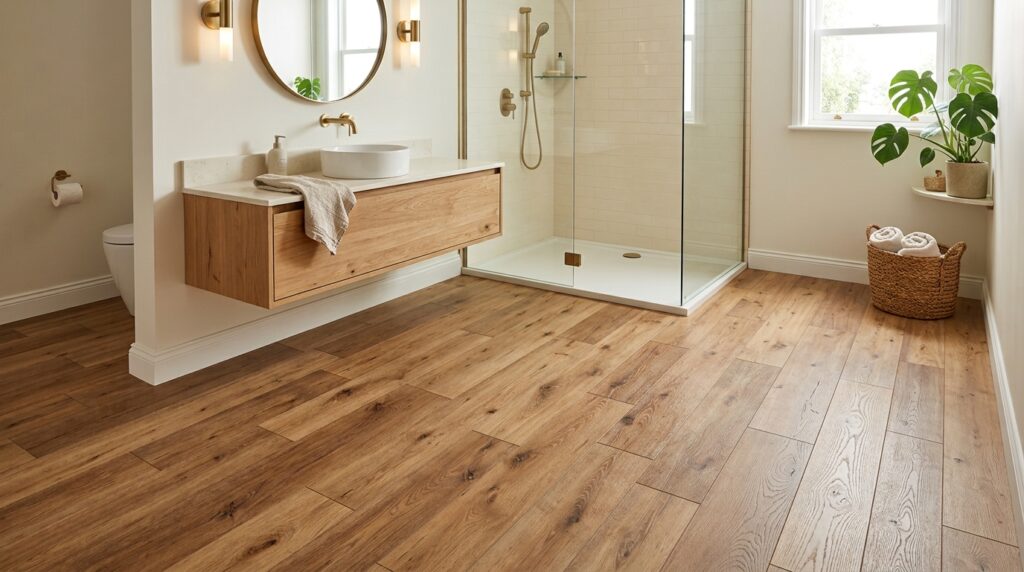
This approach takes a bit more planning during installation to keep the pattern looking random rather than repetitive, but the result feels more custom than a standard single width layout.
21. Vinyl Edging Trim for a Finished Transition
Where a vinyl bathroom floor meets another flooring type in a hallway or bedroom, an edging trim strip creates a clean, finished transition rather than an abrupt change in height or material. These trims come in colors and finishes that can match either floor or blend in neutrally.
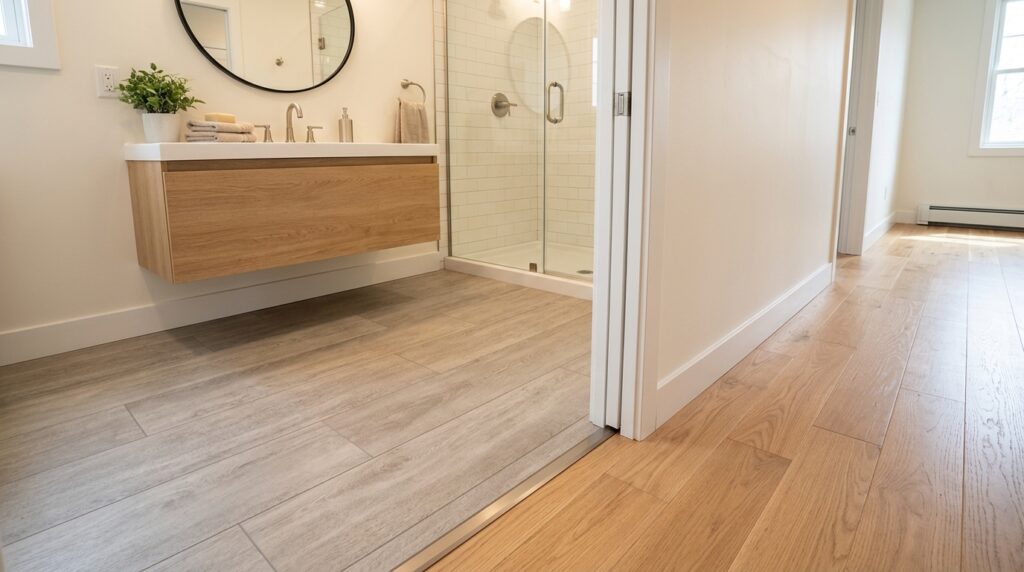
This small detail is easy to overlook during planning, but a poorly finished transition can make even a well installed vinyl floor look unfinished at its edges.
Conclusion
Vinyl flooring for bathrooms has moved well past the basic sheet options most people associate with the word vinyl. Between waterproof cores, realistic textures, and a wide range of looks from wood to stone to bold solid colors, vinyl now covers a lot of the same ground that tile does, often with easier installation and a lower price point.
Whether the priority is a quick DIY update, a renter friendly option that can come back out, or simply a softer, warmer floor to stand on, vinyl has a version suited to that need.
Choosing the right vinyl comes down to matching the construction, waterproof core, cushioning, texture, to how the bathroom actually gets used, then layering the look you want on top of that foundation.