
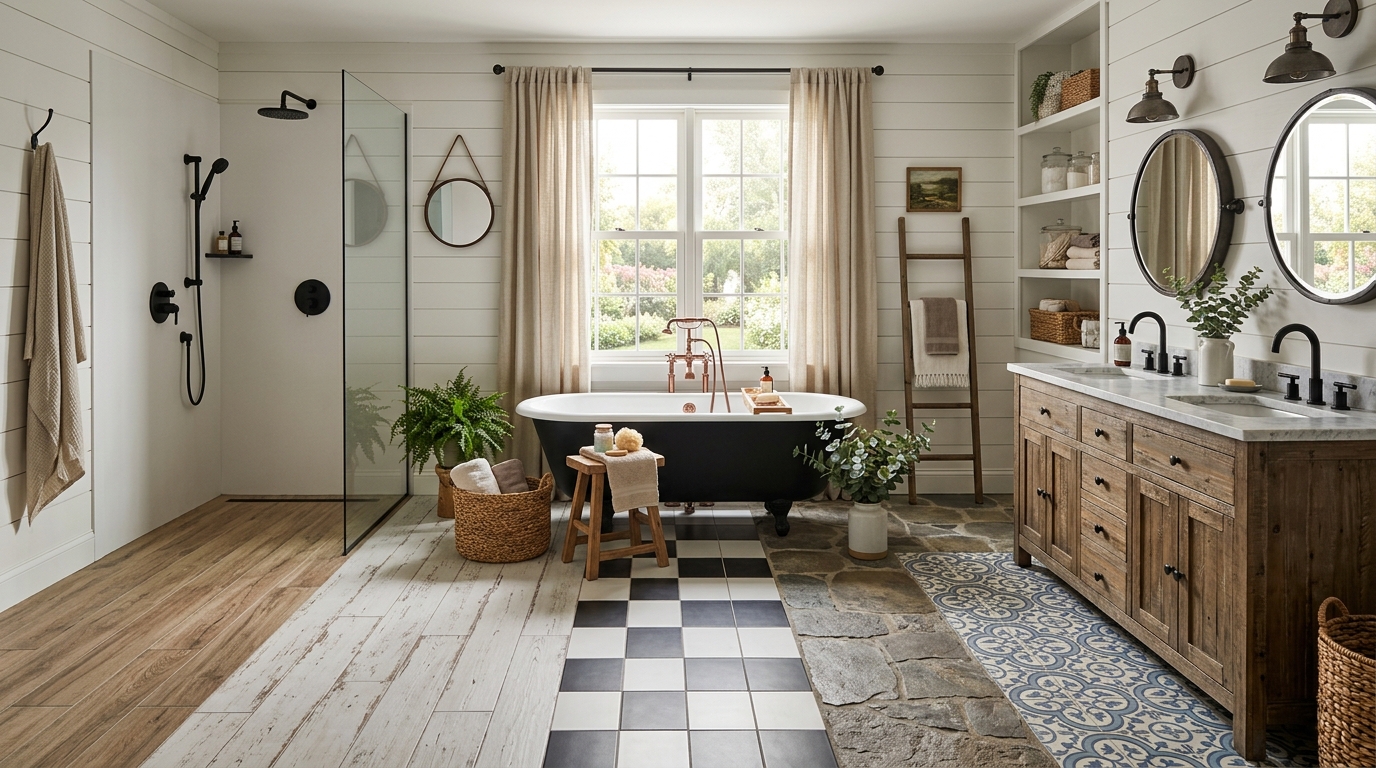
Farmhouse style has a way of making a bathroom feel warm and worn in, even when everything in it is brand new. A lot of that feeling comes from the floor, since farmhouse design leans on natural materials, soft faded colors, and a sense that the space has history, even if it does not.
This article focuses on flooring choices that bring that farmhouse character into a bathroom, from painted wood planks to aged tile finishes to small styling touches that layer on top of whatever floor is already there.
Below are twenty two ideas for farmhouse style bathroom flooring, covering materials, finishes, colors, and a few details that pull the whole look together.
1. Whitewashed Wood Plank Flooring
Whitewashed planks let the natural wood grain show through a thin layer of white or cream paint, giving the floor a soft, slightly faded appearance rather than a solid painted look. This is one of the most recognizable farmhouse flooring finishes.
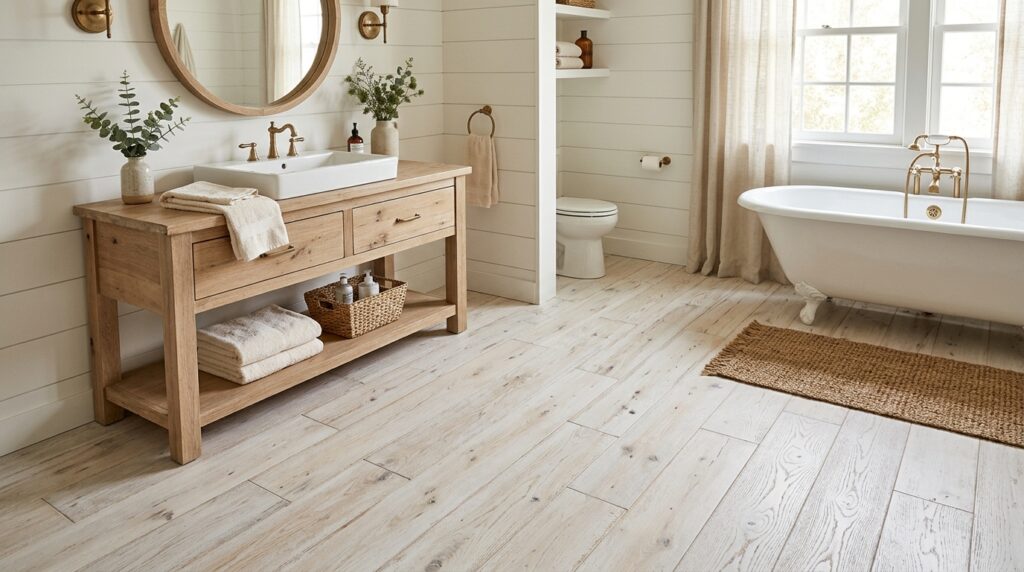
The effect works because some of the wood’s original character remains visible, which keeps the floor from looking flat or artificial the way a fully opaque white paint job might.
2. Wide Plank Flooring for an Airy Feel
Wider planks than a standard floor use fewer total boards across the same area, which creates a calmer, less busy look. In a farmhouse style bathroom, wide planks also echo the kind of flooring found in older farmhouses, where wood was milled in larger sizes.
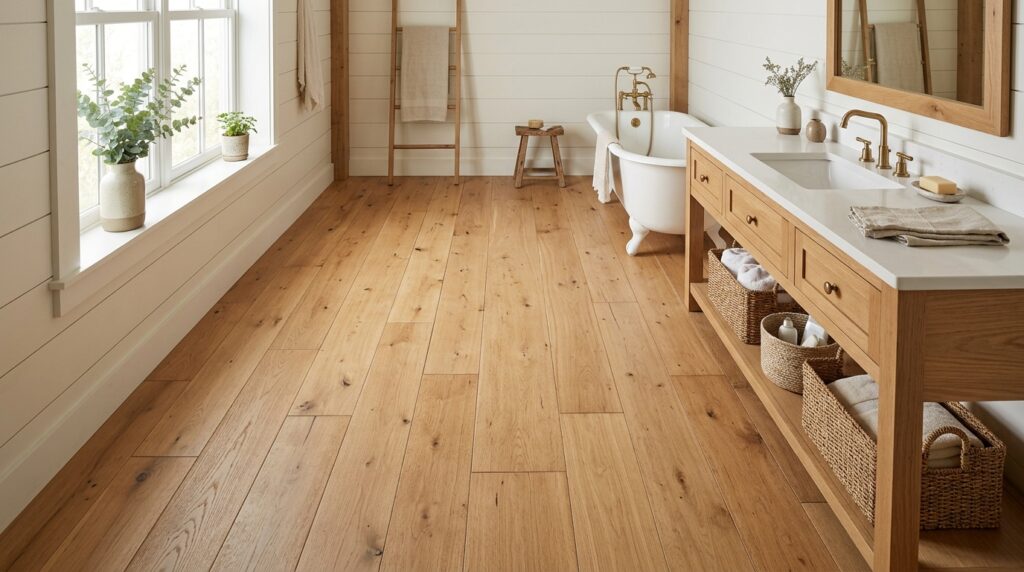
This option works particularly well in bathrooms aiming for a more open, less cluttered feel, since fewer seams across the floor reduce visual noise.
3. Reclaimed Barn Wood Style Flooring
Flooring designed to look like reclaimed barn wood carries visible nail holes, weathering, and color variation from board to board, mimicking wood that has been salvaged from old structures. This look brings genuine history into a space, even when the material itself is new.
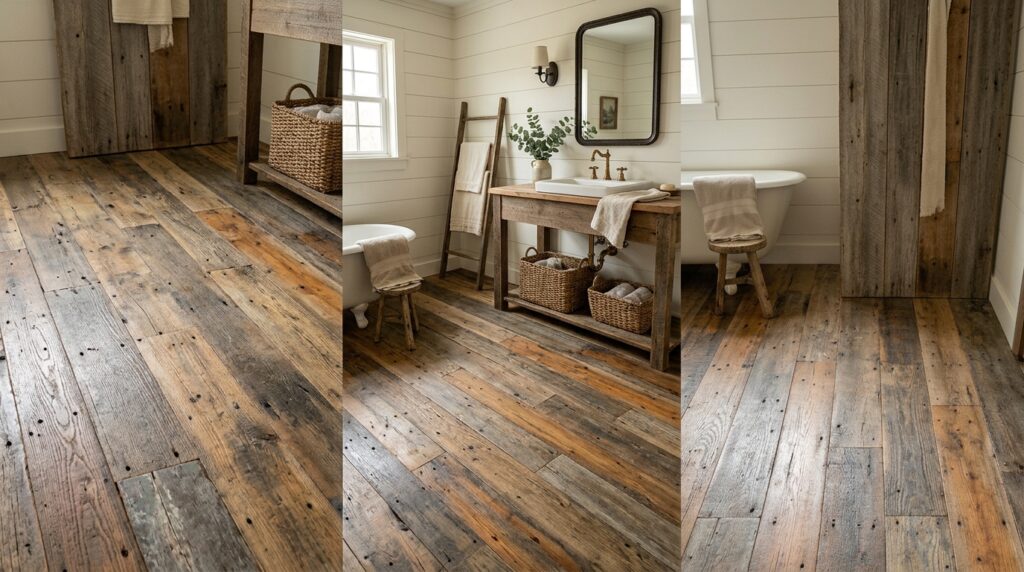
The variation between boards is the key detail here. A floor where every plank looks identical loses the reclaimed feel, while one with noticeable differences in tone and texture feels authentic.
4. Heavily Distressed Wood for a Time-Worn Look
Distressing goes a step further than reclaimed style, adding visible scratches, dents, and worn patches that suggest decades of use. This finish works well in farmhouse bathrooms that lean more rustic than refined.
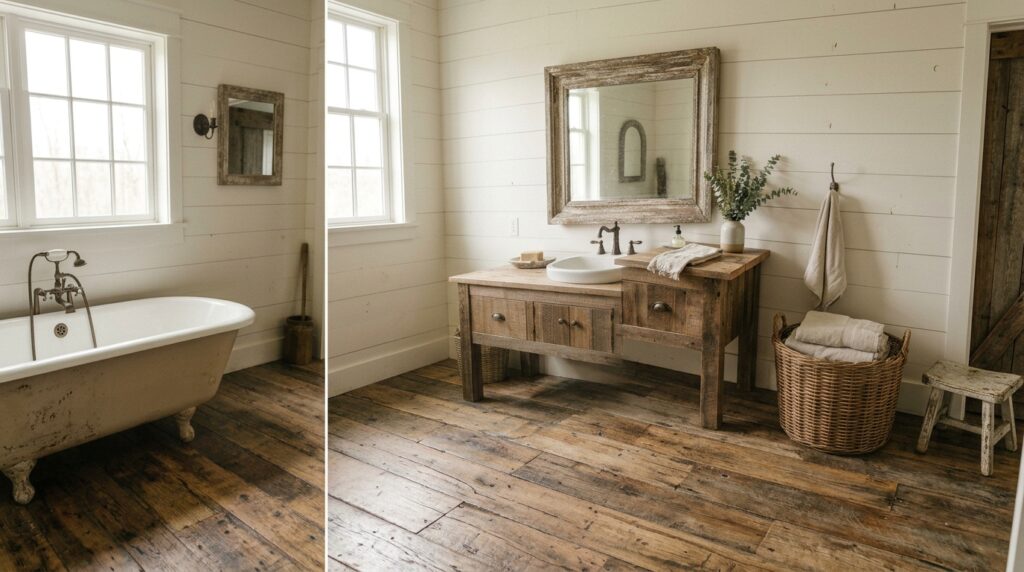
A heavily distressed floor pairs naturally with other worn elements in the room, like an antique mirror or aged hardware, creating a consistent sense that everything has been there a long time.
5. Painted Plank Floor in Soft Sage Green
A painted floor in a muted sage green brings color to a farmhouse bathroom without straying from the soft, slightly faded palette the style is known for. Sage works particularly well against white shiplap walls or cream fixtures.
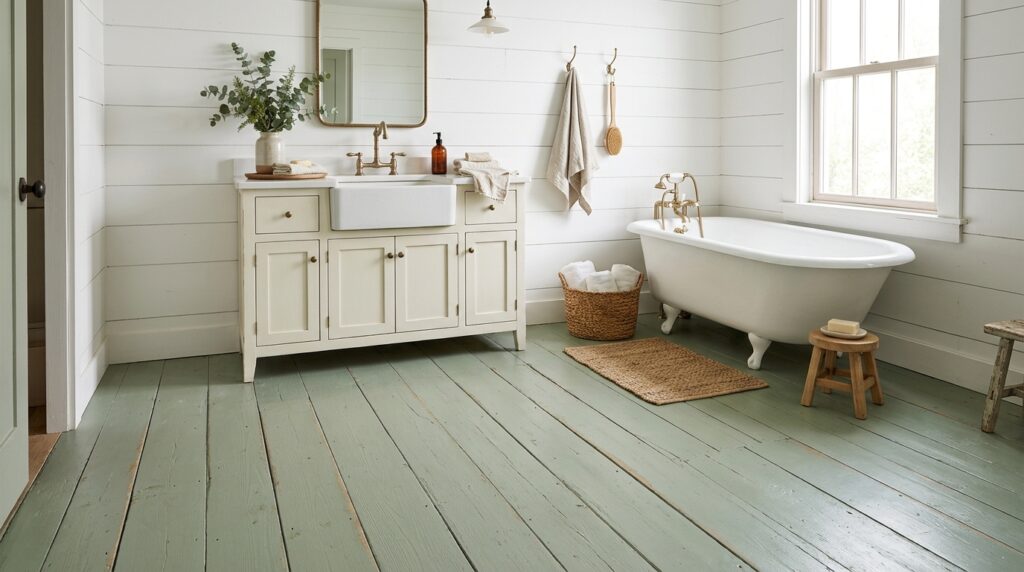
This option also makes the floor a quiet focal point, since painted floors are less common than wood toned ones, while still staying within the calm color range farmhouse design typically uses.
6. Painted Plank Floor in Warm Cream
A cream painted floor reflects light well, which helps in smaller bathrooms that do not get much natural sunlight. The warmth of cream, compared to a stark white, keeps the floor feeling soft rather than clinical.
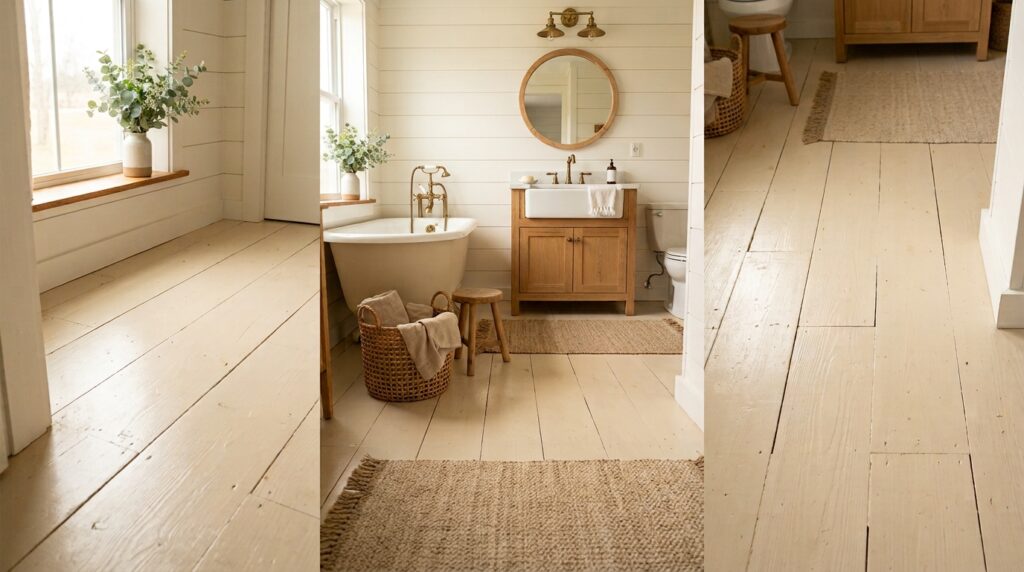
This works especially well as a base for layering in other farmhouse details, since cream is neutral enough to pair with almost any other color or material elsewhere in the room.
7. Stenciled Star Pattern on a Painted Floor
A simple star pattern stenciled across a painted floor, usually in a slightly contrasting tone, adds a handmade, folk art quality that fits naturally within farmhouse design. The pattern can cover the whole floor or just a section, like the area in front of a vanity.
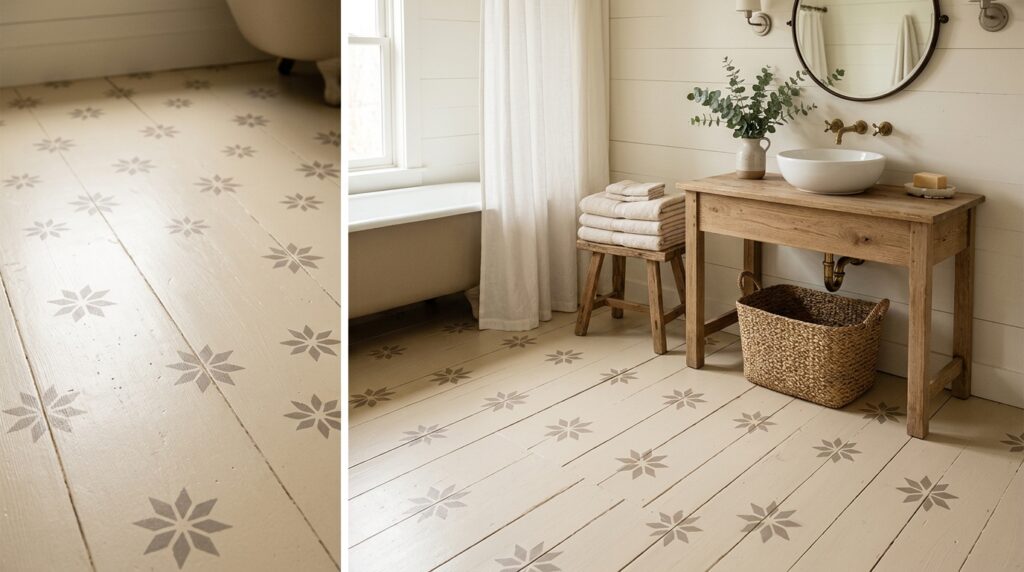
This kind of detail works best when the stencil color is close in tone to the base paint, creating a subtle pattern that reveals itself gradually rather than announcing itself immediately.
8. Knotty Pine Plank Flooring
Pine flooring with visible knots brings a rustic, slightly imperfect quality that fits well with farmhouse design. The knots add natural variation across the floor, and pine tends to develop a warm amber tone over time, especially with a natural finish.
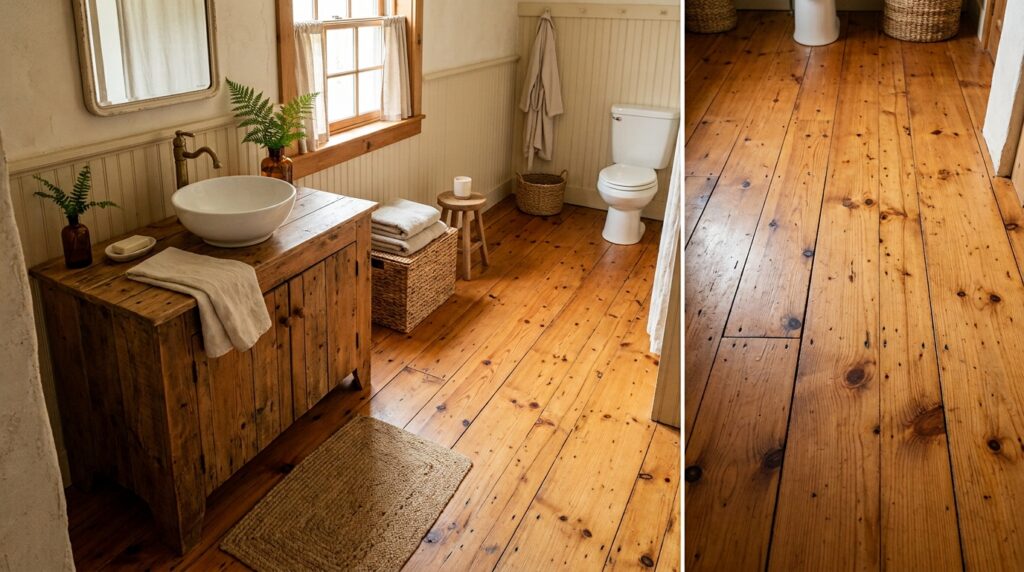
This option works particularly well in bathrooms that lean toward a cabin or cottage feel within the broader farmhouse style, where natural wood textures play a bigger role than painted surfaces.
9. Soft Gray Weathered Wood Look
A gray weathered finish, whether on real wood or a wood look material, gives a farmhouse bathroom a slightly more modern edge while still keeping the worn, faded quality central to the style. This tone works especially well in bathrooms with cooler color palettes overall.
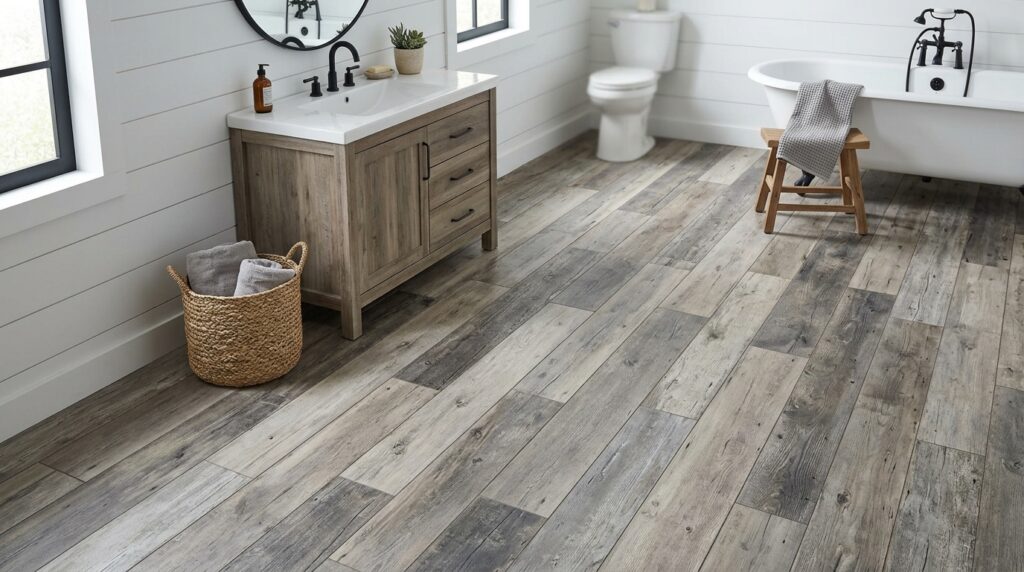
The weathered effect should look uneven rather than uniform, with some boards appearing slightly lighter or darker than others, mimicking how real wood ages unevenly with sun exposure and use.
10. Cream and Charcoal Mixed Tone Planks
Mixing planks in cream and charcoal tones, rather than using a single uniform color, creates a floor with built in contrast and visual movement. This combination also works well if you want the floor to read as a design feature rather than just a neutral base.
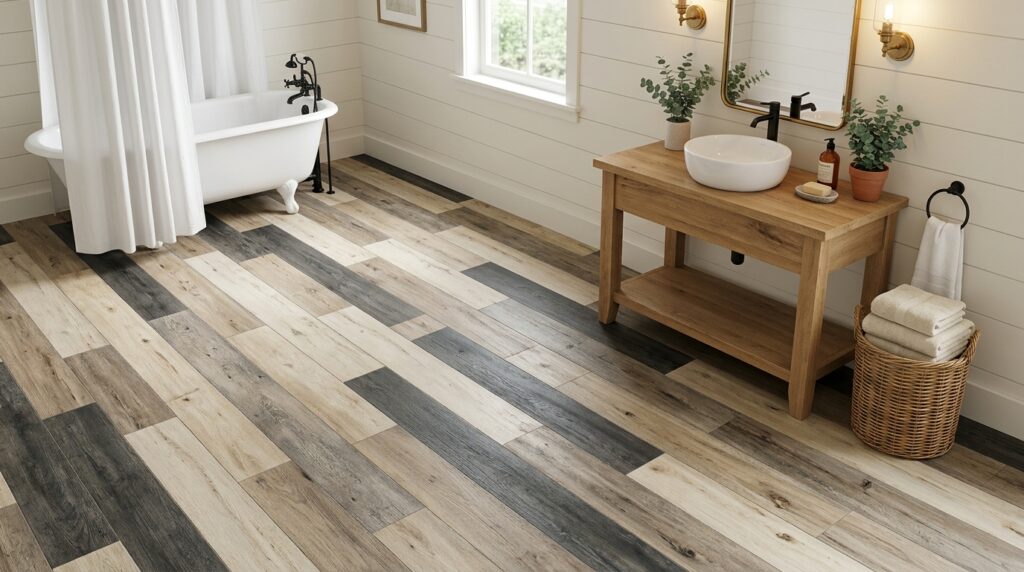
Distributing the darker planks somewhat randomly across the floor, rather than in an obvious pattern, keeps the look feeling organic rather than overly planned.
11. Antique Brick Floor for Old World Charm
Brick flooring, particularly in reclaimed or antique style finishes, brings a sense of age and texture that few other materials match. The slightly irregular shapes and color variation between bricks add a handmade quality.
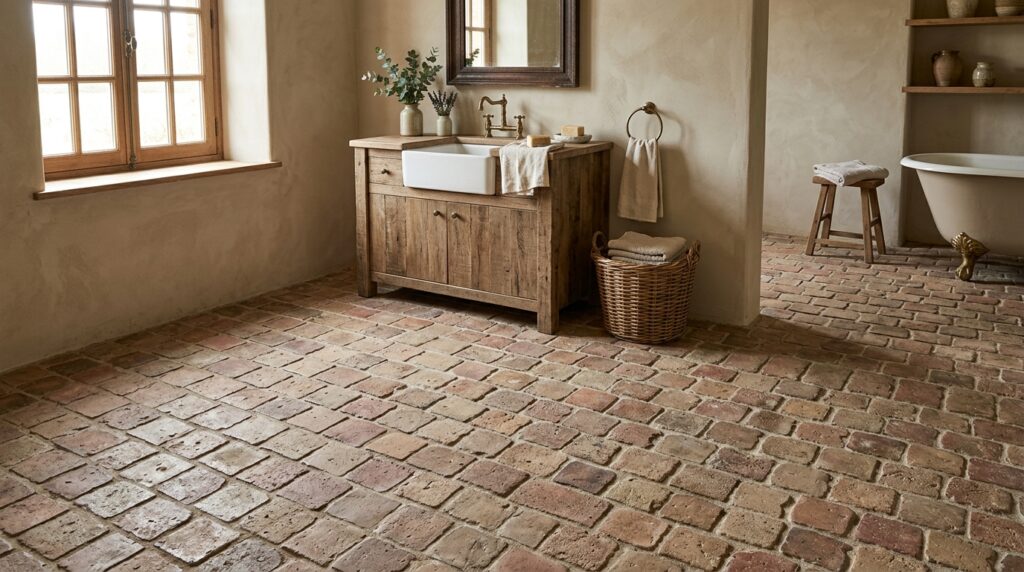
This option works especially well in farmhouse bathrooms with a more rustic, almost European countryside feel, where brick floors have a long history in utility spaces and kitchens.
12. Limewashed Stone Tile for a Faded Finish
Limewash applied to stone tile softens its natural color, giving it a chalky, faded appearance that feels aged in a gentle way rather than rough or worn. This finish works particularly well on lighter colored stones, where the limewash creates subtle variation rather than covering the stone entirely.
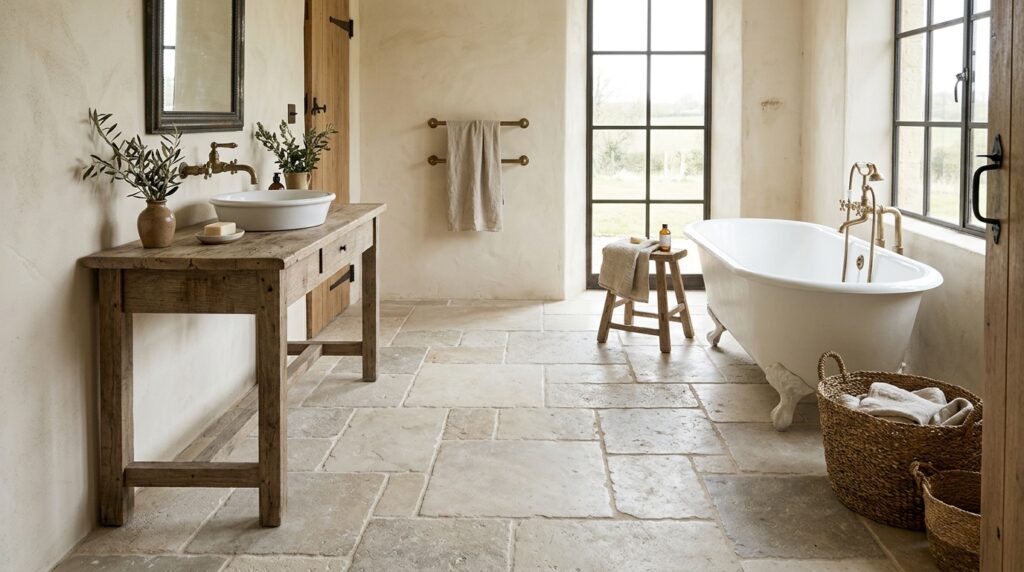
The result sits somewhere between a painted floor and a natural stone floor, carrying qualities of both.
13. Salvaged Wood Mix with Multiple Tones
Rather than choosing a single wood tone, a floor made from a mix of salvaged or salvage style boards in varying colors, light, medium, and dark, creates a patchwork effect that feels collected over time. No single tone dominates, which keeps the floor visually interesting.
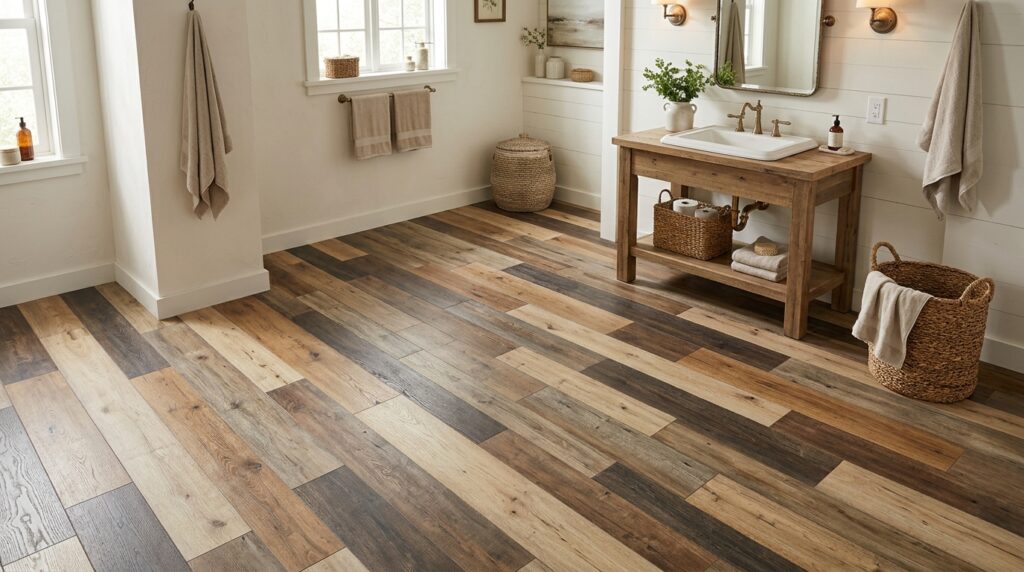
This approach works best when the variation feels balanced across the room rather than clustered in one area, so the eye does not land on one section as noticeably different from the rest.
14. Galvanized Tin Look Accent Strip
A strip or border of tile or material designed to look like galvanized tin, with its characteristic silvery, slightly mottled surface, adds an unexpected farmhouse detail often associated with old roofing or feed troughs repurposed into decor.
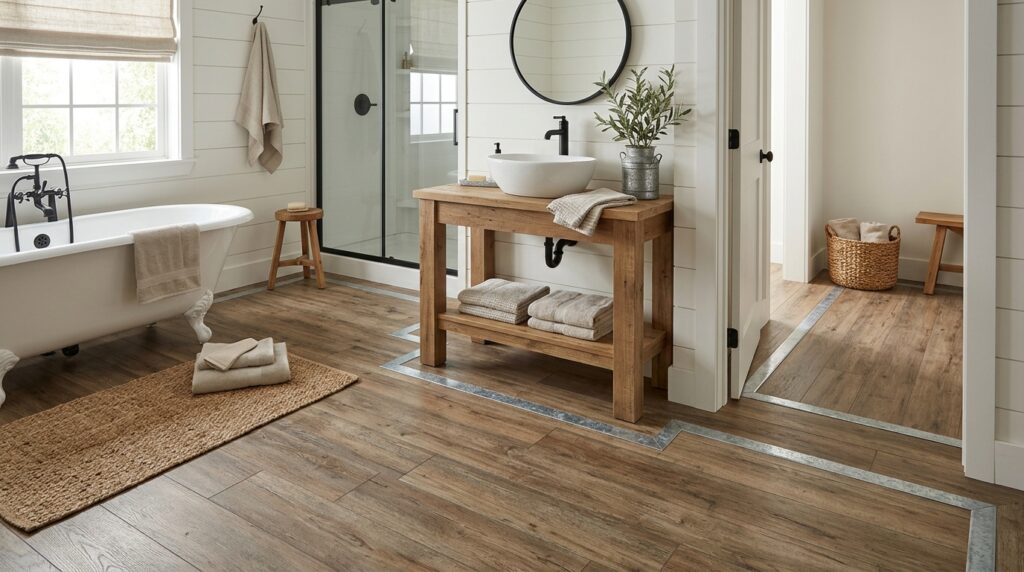
Used sparingly, as a border around the room or a transition strip, this material adds an industrial farmhouse touch without overwhelming the rest of the floor.
15. Crackle Glaze Tile for a Vintage Patina
Tile with a crackle glaze finish has a network of fine surface cracks running through the glaze itself, creating a vintage, almost antique appearance even on a brand new tile. The effect catches light differently depending on the angle, adding subtle texture.

This finish pairs well with farmhouse color palettes in soft whites, creams, or pale blues, where the crackle pattern becomes more visible against a light base color.
16. Aged Terracotta with a Worn Edge Look
Terracotta tile with deliberately worn or rounded edges, rather than crisp factory cut corners, mimics the look of tile that has been walked on for generations. The slightly uneven edges between tiles add to this aged effect.
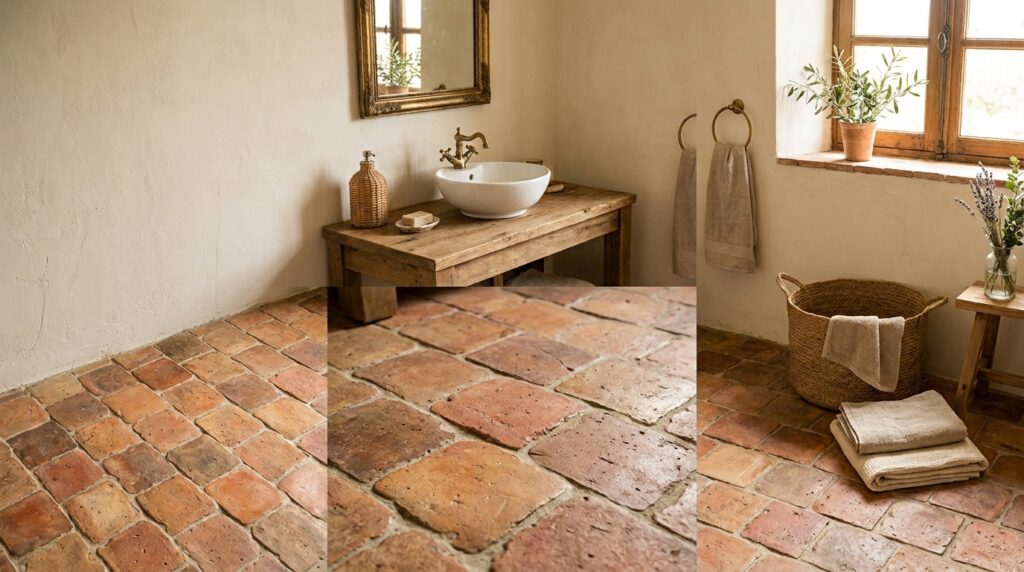
This option brings warmth to a farmhouse bathroom floor while leaning into the idea that the space has a long history, even in a newly built home.
17. Soft Putty Colored Tile for a Neutral Base
A putty or greige colored tile, somewhere between beige and gray, provides a neutral base that works with almost any farmhouse color scheme layered on top, from sage greens to soft blues to warm creams.
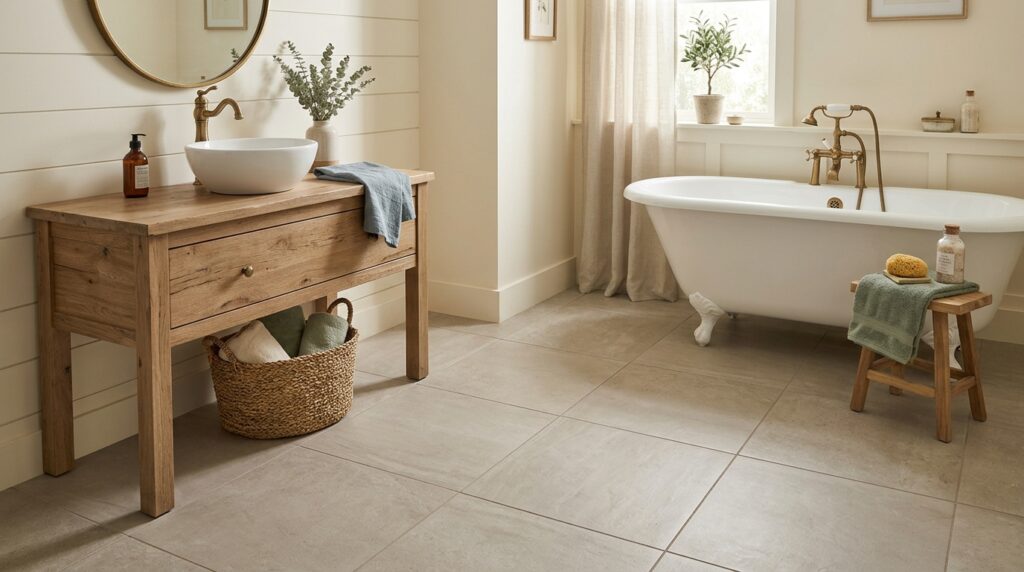
This kind of tile tends to read as calm and understated, letting other elements in the bathroom, like a wood vanity or vintage fixtures, stand out more against it.
18. Cow Hide Rug Layered Over Wood Flooring
A cow hide rug placed over a wood or wood look floor adds texture and a distinctly farmhouse touch, even in a fairly small bathroom. The irregular shape of the hide also breaks up the straight lines of plank flooring underneath it.
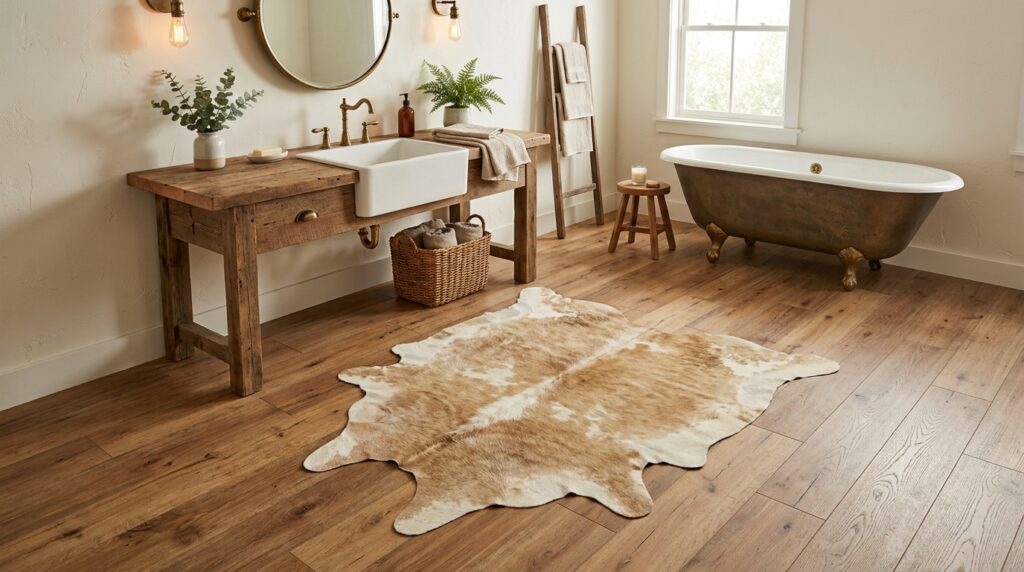
Placing it in front of the vanity or beside the tub gives it a clear purpose while adding softness underfoot in the spots used most often.
19. Vintage Style Runner Rug Along the Vanity
A long, narrow runner rug with a faded vintage pattern, placed along the length of a vanity, adds color and softness without covering the whole floor. These rugs often work especially well in farmhouse bathrooms because their slightly worn look matches the overall aesthetic.

A runner also helps define the vanity area as its own zone within the bathroom, especially in larger spaces where the floor might otherwise feel undivided.
20. Wood Plank with Visible Saw Marks for Texture
Some wood look flooring is manufactured with visible saw marks across the surface, mimicking the texture left by older milling equipment. This adds a tactile, slightly rough quality to the floor that smoother finishes do not have.
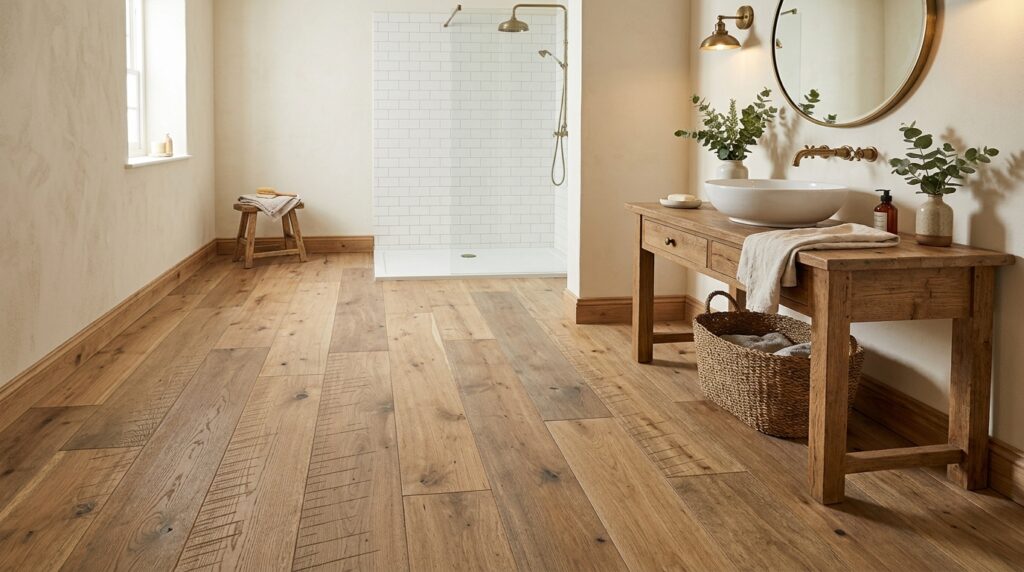
This detail is subtle from a distance but becomes noticeable up close, adding another layer of authenticity to a farmhouse style floor.
21. Black Iron Grate Vent Cover as a Floor Detail
A black iron grate style vent cover, even if it is purely decorative or covers a small functional vent, adds a farmhouse detail at floor level that most bathrooms do not have. The dark color and grid pattern contrast nicely against lighter wood or tile floors.
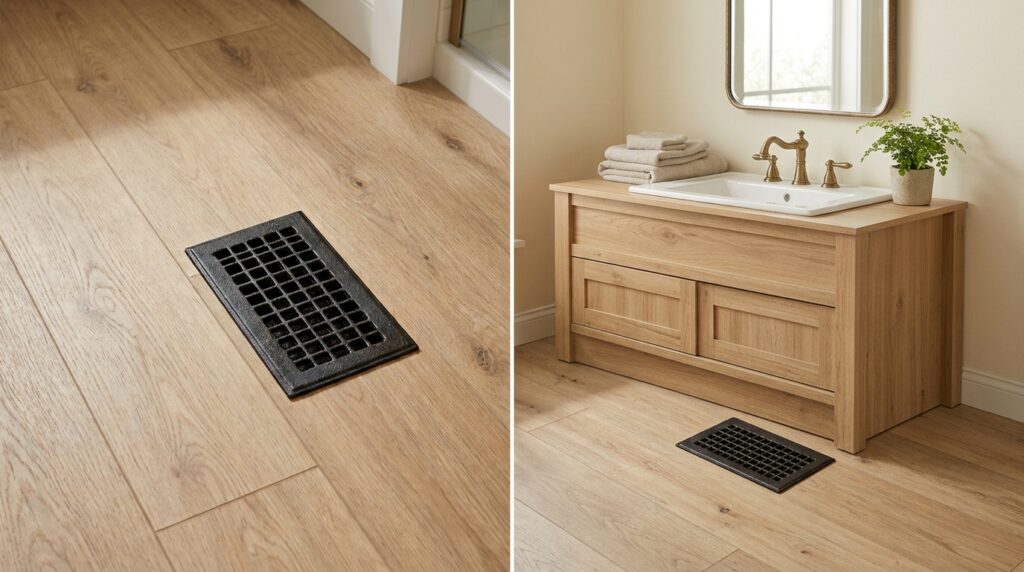
This is a small detail, but small farmhouse details like this one are often what make a floor feel considered rather than generic.
22. Aged Copper Tile Accents for Warmth
Small copper toned tile accents, whether as a border, a few scattered tiles, or a small inset detail, bring warmth and a slightly aged metallic quality to a farmhouse floor. Copper tones develop a patina over time, and tiles designed to mimic that already aged look fit the farmhouse aesthetic well.
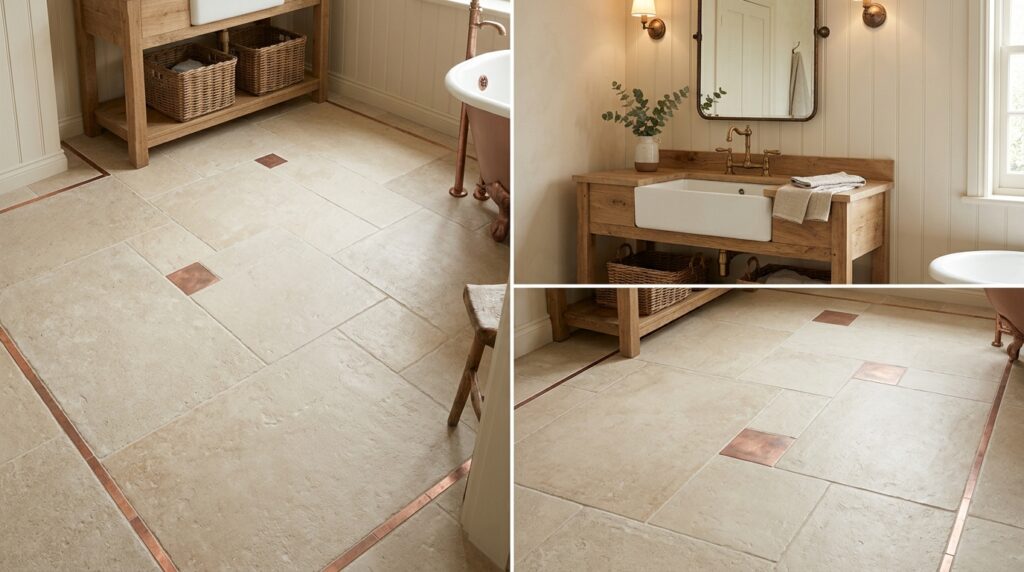
Used sparingly, these accents catch the light differently than the surrounding floor material, adding a small but noticeable detail to an otherwise simple floor.
Final Thoughts
Farmhouse bathroom flooring is less about a single material and more about a feeling, soft colors, visible texture, and the sense that the floor has some history to it, whether real or designed in. Wood, tile, and even rugs all play a part in building that feeling.
When planning a farmhouse floor, think about contrast and variation rather than uniformity. A floor with some tonal variety, a bit of texture, and maybe one small detail like an iron grate or a runner rug will usually feel more authentic than one that is perfectly even and matched.
The goal with farmhouse flooring is a floor that feels like it has always belonged in the space, even if everything about it is new.