
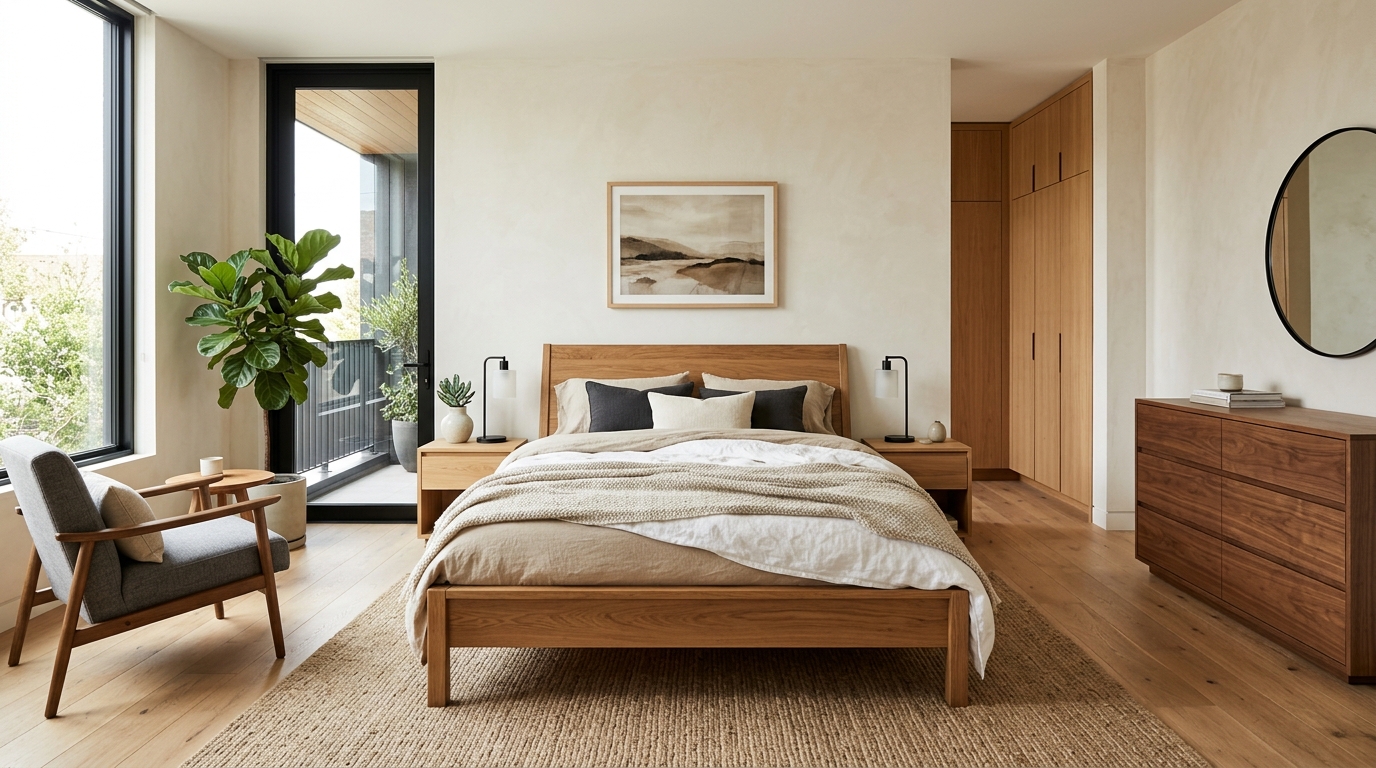
Wood remains one of the most versatile materials for bedroom furniture, capable of looking rustic, modern, formal, or casual depending on the species, finish, and shape chosen. A bedroom built around wood furniture tends to feel warm and grounded in a way that other materials rarely match on their own.
This article focuses on different types of wood, finishes, and furniture styles that work well in a bedroom setting. Below are twenty three ideas for incorporating wood furniture into a bedroom, covering everything from bed frames to small accent pieces.
1. Solid Oak Bed Frame for Durability and Character
Oak has long been a favorite for bed frames because of its strength and the visible grain pattern that gives each piece a sense of natural texture. A solid oak frame holds up well over years of daily use, and the wood often develops a slightly richer tone as it ages.
Choosing oak in a natural or lightly stained finish lets the grain remain the main visual feature, rather than covering it with a heavy stain or paint. This works particularly well in bedrooms aiming for a timeless look that does not feel tied to a specific trend, since oak furniture has remained popular across many different design eras.
2. Reclaimed Wood Headboard with Visible History
A headboard built from reclaimed wood, with nail holes, weathering, and color variation left visible, brings a sense of history into the bedroom even if the headboard itself is newly constructed. Each board tells its own story through marks that cannot be replicated in new lumber.
This option works particularly well in bedrooms with a rustic or industrial leaning style, where the imperfections in the wood become part of the design rather than something to hide. Pairing a reclaimed headboard with simpler, cleaner furniture elsewhere in the room keeps the headboard as the clear focal point.
3. Walnut Dresser for Rich Depth of Color
Walnut’s deep brown tones, often with subtle reddish or purple undertones depending on the piece, bring a sense of richness and weight to a bedroom that lighter woods cannot replicate. A walnut dresser tends to stand out even in a room with otherwise neutral colors.
This wood pairs particularly well with brass or gold hardware, since the warm metal tones complement walnut’s depth rather than competing with it. A walnut dresser also works well as a single statement piece in a room where the rest of the furniture is lighter, letting the dresser anchor the space.
4. Pine Furniture for a Light Casual Look
Pine, with its pale color and visible knots, brings a relaxed, casual quality to bedroom furniture that heavier or darker woods do not have. Pine furniture often feels approachable and unfussy, making it a good fit for bedrooms that prioritize comfort over formality.
Because pine is relatively soft compared to hardwoods, it can show wear over time, which some people find adds character while others prefer to choose pieces with a protective finish. Either way, pine furniture tends to suit cottage, farmhouse, or simple modern styles equally well, depending on how it is finished.
5. Cedar Chest at the Foot of the Bed
A cedar chest placed at the foot of the bed provides storage while also adding the natural scent and reddish tone that cedar is known for. Traditionally used for storing blankets and linens, cedar chests have a long history as functional bedroom furniture.
The aromatic qualities of cedar also help repel moths and other pests, which adds a practical benefit beyond the visual appeal. A cedar chest works particularly well in bedrooms with a traditional or vintage feel, where its classic shape and warm tone fit naturally alongside other wood furniture.
6. Bamboo Furniture for a Natural Sustainable Choice
Bamboo grows much faster than traditional hardwood trees, making furniture built from it a more sustainable option for anyone prioritizing environmental considerations. Despite growing quickly, bamboo is surprisingly strong and durable when properly treated.
The light color and visible segmented pattern of bamboo give it a distinct look that differs from typical wood furniture, often associated with coastal, tropical, or natural design styles. Bamboo nightstands, headboards, or even full bed frames bring a lighter, airier feel to a bedroom compared to denser hardwoods.
7. Live Edge Wood Nightstand
A nightstand made from a slab of wood with its natural, uneven edge left intact, rather than cut into a perfect rectangle, showcases the tree’s original shape as part of the design. Each live edge piece is unique, since no two slabs of wood are identical.
This style works particularly well as a single accent piece rather than throughout the whole room, since the organic shape stands out most when surrounded by simpler, more conventional furniture. A live edge nightstand often becomes a talking point on its own, especially when the wood grain or edge shape is particularly striking.
8. Carved Wood Details on a Headboard
Hand carved details, whether intricate patterns across the entire headboard or simpler carved accents along the edges, add texture and craftsmanship that flat panel headboards do not have. The depth created by carving catches light differently throughout the day.
This option suits bedrooms with a more traditional, ornate, or global inspired style, where the carved details echo similar craftsmanship in other pieces around the room. A carved headboard in a darker wood tone tends to emphasize the depth of the carving more than a lighter finish would.
9. Wood Slat Bed Frame for Airflow and Style
A bed frame built with horizontal or vertical wood slats, rather than solid panels, creates a more open, lighter looking structure while also allowing better airflow to the mattress. The repeating slat pattern adds a graphic, linear quality to the frame.
This style works well in bedrooms with a modern or Scandinavian inspired look, where the simplicity of repeated lines fits the overall aesthetic. Slat frames also tend to look less bulky than solid wood frames, which can help a bed feel less dominant in a smaller room.
10. Mahogany Furniture for a Formal Traditional Look
Mahogany’s deep reddish brown color and fine grain have made it a long standing choice for formal bedroom furniture, often associated with traditional or colonial style interiors. Furniture made from mahogany tends to feel substantial and refined.
This wood pairs well with rich fabric choices, like velvet or damask, on bedding or upholstered pieces, reinforcing the formal feel. Mahogany furniture also tends to be heavier than many other wood options, which contributes to its sense of permanence and quality within a room.
11. Whitewashed Wood Furniture for a Coastal Feel
Whitewashing involves applying a thin, semi transparent white finish over wood, allowing the grain to remain visible while lightening the overall color significantly. This technique gives furniture a faded, sun bleached appearance often associated with coastal or beach style interiors.
Whitewashed furniture works particularly well in bedrooms with a light, airy color palette, since the furniture itself contributes to that brightness rather than introducing dark tones. This finish can be applied to a wide range of furniture types, from bed frames to dressers, giving an entire room a consistent coastal feel.
12. Wood Canopy Bed Frame for a Cohesive Look
A canopy bed frame built entirely from wood, with four posts rising from the corners of the bed and connecting at the top, creates a strong architectural presence in the room without relying on fabric drapes for its structure. The wood itself becomes the main visual feature.
This style works particularly well in bedrooms with higher ceilings, where the height of the canopy frame has room to make an impact without feeling cramped. Choosing a wood tone that matches or complements other furniture in the room helps the canopy bed feel like part of a cohesive set rather than an isolated statement piece.
13. Teak Furniture for Warm Outdoor Inspired Tones
Teak’s golden brown tone and natural oils, which make it highly resistant to moisture and wear, have traditionally made it popular for outdoor furniture, but the same warm color works beautifully indoors as well. Teak furniture brings a sense of warmth that feels both natural and slightly tropical.
This wood pairs well with neutral, earthy color palettes, where its golden tones can stand out without clashing with surrounding colors. Teak nightstands or dressers in a bedroom with a natural, organic theme tend to feel like a seamless extension of that overall style.
14. Wood and Cane Combination Furniture
Furniture that combines a wood frame with woven cane panels, often used on headboards, dresser fronts, or cabinet doors, brings texture and lightness to what might otherwise be a solid, heavy looking piece. The cane sections let light pass through slightly, softening the overall look.
This combination has become especially popular in furniture with a vintage or midcentury inspired design, where cane detailing was common. A wood and cane headboard, paired with simpler furniture elsewhere in the room, lets the textured cane panels stand out as the main detail.
15. Floating Wood Shelves as Nightstands
Rather than traditional nightstands with drawers, floating wood shelves mounted at bedside height provide a surface for a lamp, a book, and a phone, while keeping the floor area beneath the bed completely open. This works particularly well in smaller bedrooms.
Choosing a wood tone for the shelves that matches the bed frame or other furniture ties the floating shelves into the room’s overall material palette, even though they function differently from a standard nightstand. The open space beneath also makes the room feel less crowded, especially next to a larger bed frame.
16. Wood Storage Bench at the End of the Bed
A wooden bench placed at the foot of the bed provides a spot to sit while getting dressed, along with storage space if the bench includes a lift up seat or built in shelving underneath. The bench also adds a furniture element to a part of the room that often sits empty.
Choosing a bench in a wood tone that complements the bed frame, even if it does not match exactly, helps the piece feel coordinated with the rest of the room. A cushioned top on an otherwise wooden bench adds a bit of softness to balance the surrounding hard surfaces.
17. Hand Carved Wood Armoire
A large wooden armoire with hand carved details across its doors or frame brings both storage and significant visual presence to a bedroom. Armoires were traditionally used before built in closets became standard, and they remain useful for clothing, linens, or even a hidden television.
This piece works best as a focal point in a room with enough space to let it stand without feeling cramped against other furniture. The carved details add a sense of craftsmanship that pairs well with other traditional or vintage pieces, particularly when the wood tones across the room are similar.
18. Wood Frame with Upholstered Panel Insert
A bed frame or headboard that combines a wood outer frame with an upholstered fabric panel set into the center brings together the warmth of wood with the softness of fabric in a single piece. The wood frame provides structure, while the fabric panel adds comfort and texture.
This combination works particularly well for headboards, where the fabric panel sits at the height where someone might lean back while sitting up in bed. Choosing a fabric color that complements the wood tone, rather than contrasting sharply, keeps the piece feeling like one cohesive design rather than two separate materials forced together.
19. Bentwood Chair as an Accent Piece
A bentwood chair, made from steamed wood bent into curved shapes, brings a distinctive silhouette to a bedroom, often used as a small accent seat in a corner or beside a vanity. The curved lines of bentwood furniture contrast with the straighter lines common in most bedroom furniture.
This style works well as a single accent piece rather than a primary furniture item, since its distinctive shape stands out most against simpler surroundings. A bentwood chair in a wood tone that appears elsewhere in the room, even subtly, helps it feel connected rather than randomly placed.
20. Wood Ladder Used as a Blanket Rack
A wooden ladder, leaned against the wall near the bed, provides a casual spot to drape blankets, throws, or even clothing, while adding a relaxed, slightly rustic element to the room. This repurposed use of a ladder has become a popular alternative to traditional blanket storage.
Choosing a ladder in a wood tone that complements the bed frame or other furniture helps it feel like an intentional addition rather than a leftover tool brought indoors. The angled shape of the ladder also adds a different line to the room, breaking up the more vertical and horizontal shapes of typical furniture.
21. Wood Tone Gradient Across a Matching Set
Rather than choosing a single uniform wood tone for every piece, selecting furniture within the same wood family but with slightly varying tones, lighter on the dresser, slightly darker on the bed frame, for example, creates subtle depth while still feeling like a coordinated set.
This approach works best when the variation is gradual rather than stark, so the pieces still read as belonging together even though they are not identical. This subtle gradient can make a room feel more layered and considered than furniture that is either perfectly matched or dramatically mismatched.
22. Wood Furniture with Brass Inlay Details
Thin strips or patterns of brass inlaid into wood furniture, along drawer fronts, edges, or as decorative accents, add a touch of shine and detail without covering the wood itself. The contrast between the warm metal and the wood grain creates a refined, slightly luxurious look.
This detail works particularly well on darker wood tones, where the brass stands out clearly against the deeper color. Furniture with brass inlay tends to suit bedrooms with a more glamorous or eclectic style, where small metallic details appear in other places as well, like lighting or mirror frames.
23. Sustainable Wood Furniture from Certified Sources
Furniture made from wood sourced through certified sustainable forestry programs ensures that the material comes from responsibly managed forests, addressing environmental concerns without requiring a specific look or style. This certification can apply to many different wood types and finishes.
Choosing certified sustainable wood furniture does not limit design options significantly, since the certification relates to sourcing rather than appearance. For anyone prioritizing environmental impact alongside aesthetics, looking for this certification allows wood furniture choices, from oak to walnut to pine, to align with those values without compromising on style.
Conclusion
Wood furniture offers an enormous range of looks depending on the species, finish, and shape chosen, from the pale casualness of pine to the deep richness of walnut or mahogany. A bedroom built around wood does not need to feel like a single style, since wood itself adapts to rustic, modern, traditional, and coastal aesthetics equally well.
Choosing a primary wood tone or two, and letting other details, hardware, fabric, or finish, provide variation within that range, tends to create a bedroom that feels both warm and cohesive. Wood remains a foundation that most other design choices can build on, regardless of the specific direction a bedroom ultimately takes.