
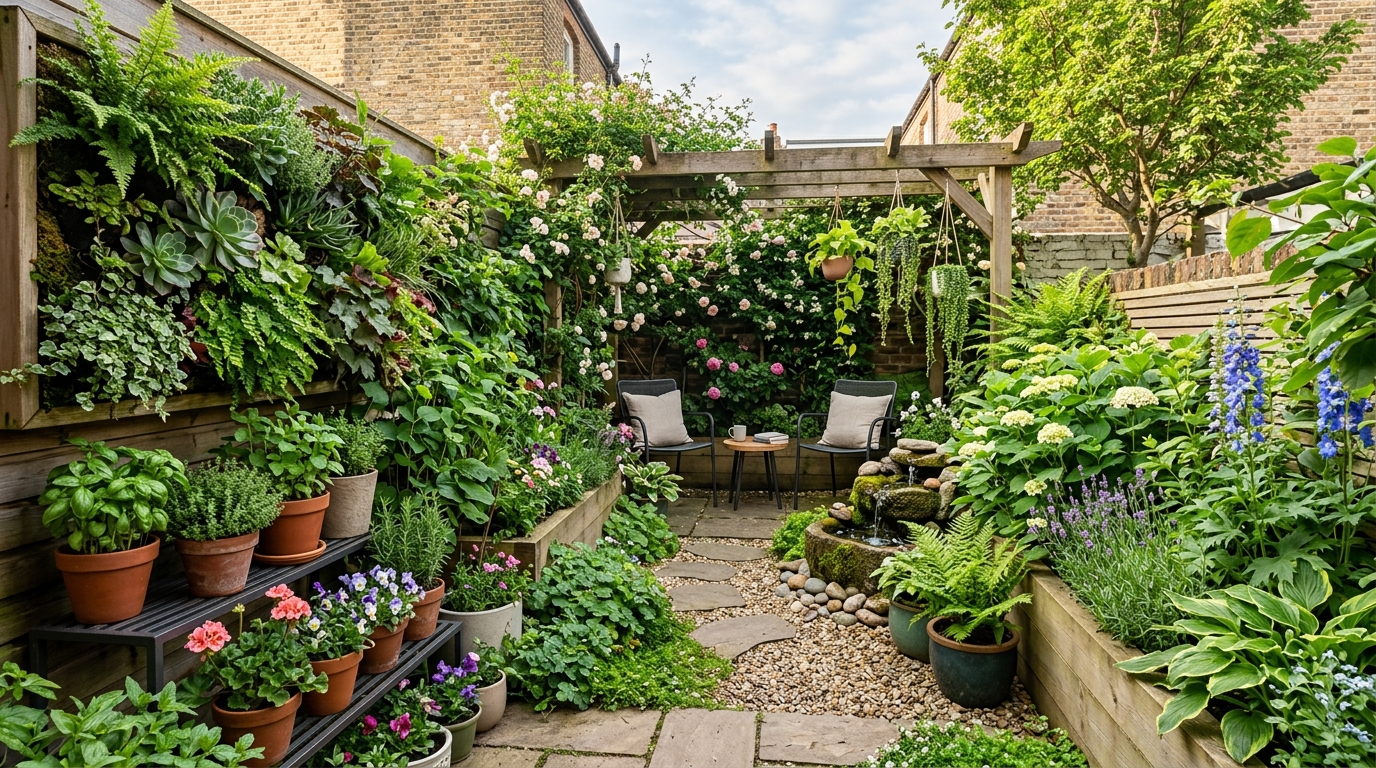
Most people look at a small outdoor space and see a limitation. A narrow balcony. A tight side yard. A concrete patio with barely enough room for two chairs. What they are actually looking at is a garden waiting for the right approach. Small spaces do not need more room. They need smarter planting and a layout that uses every vertical and horizontal inch on purpose.
These garden ideas for small spaces are built entirely around compact growing. Vertical gardens, container setups, raised beds scaled to fit tight footprints, balcony planters, hanging baskets, and trellises that turn a blank wall into something green and alive. No sprawling flower beds, no wide-open lawn to work with. Just practical ideas that work in exactly the kind of space most people actually have.
You will find 19 ideas here, each one specific to small-space gardening. Some work on a balcony with no ground soil at all. Some work in a 4 by 4 foot corner of a yard. Read through and pick the one that fits your space first. The rest will follow naturally.
Build a Vertical Pallet Garden for a Fence or Wall
A wooden shipping pallet mounted vertically on a fence or wall becomes an instant planting structure that uses zero floor space. Staple landscape fabric across the back and between the slats to hold soil in place, fill each pocket with potting mix, and tuck in small plants or herbs. The whole thing hangs flat against the surface and grows outward.
What grows best in a pallet garden? Herbs like basil, thyme, oregano, and mint do extremely well in the shallow pockets. So do strawberries, lettuce, and small trailing flowers like lobularia and bacopa. Choose plants that do not develop deep root systems and you will have a productive, full-looking wall garden within a few weeks of planting.
Source pallets marked HT for heat-treated, which means they are safe for food growing. Sand the surface lightly before mounting to remove splinters and apply a coat of exterior stain if you want the wood to last more than one season outdoors.
Use a Tiered Plant Stand to Stack Multiple Containers
A tiered plant stand takes up the footprint of a single pot but holds four to six plants at different heights. That vertical stacking means you can grow a meaningful collection of plants in a space as small as 18 by 18 inches of floor area. On a balcony or small patio, this is one of the most efficient structures available.
Look for a three or four-tier wrought iron or powder-coated steel stand in black or white. The Achla Designs Tiered Plant Stand and the FOPAMTRI 4-Tier Outdoor Plant Stand both hold up to weather reliably and come in sizes that work for most container widths. Place the stand in the spot with the best light and rotate the pots weekly so every plant gets even sun exposure.
Garden Ideas for Small Spaces Work Best When You Go Vertical with a Trellis
A trellis mounted against a fence or wall turns two-dimensional surface area into three-dimensional growing space. Climbing plants travel upward instead of outward, which means you get a substantial amount of foliage and flowers without using more than a few inches of ground depth.
Choose a trellis that fits the height of your fence or wall. A fan-shaped trellis in cedar or powder-coated steel works beautifully for climbing roses, jasmine, or passionflower. A flat grid-style trellis works better for vegetables like cucumbers, pole beans, or indeterminate tomatoes that need even support across their full width. The Mr. Stacky Vertical Trellis and the Gardman Steel Trellis Panel are both well-rated for outdoor durability.
Plant at the base of the trellis and train the stems upward weekly by loosely tying new growth to the frame with soft garden twine. Within one growing season, a blank fence becomes a full living wall.
Grow Herbs in a Window Box Mounted Outside
A window box mounted on a railing, fence top, or exterior wall brings gardening to spaces that have no soil at all. A single 24-inch window box holds four to six herb plants comfortably and produces enough fresh basil, parsley, chives, and mint to supply a kitchen through the full growing season.
Use a window box with built-in drainage holes and fill it with a high-quality potting mix rather than garden soil, which compacts too much in containers. Miracle-Gro Potting Mix and Fox Farm Ocean Forest are both reliable options that support strong herb growth. Mount the box in the spot that receives at least 6 hours of direct sunlight per day, which most culinary herbs require to produce well.
Harvest from the outer stems and leave the inner growth intact. The more you harvest, the more the plant produces.
Plant in Galvanized Metal Stock Tanks
A galvanized metal stock tank is one of the best containers available for small-space vegetable gardening. The 100-gallon oval tank from Tractor Supply measures about 2 by 4 feet and sits at a comfortable working height when placed on casters or a low platform. It holds enough soil volume to grow tomatoes, peppers, eggplant, or zucchini successfully without the root restriction that smaller containers create.
Drill 6 to 8 drainage holes in the bottom with a metal drill bit before filling. Add a layer of coarse gravel at the base for drainage, then fill with a mix of topsoil, compost, and perlite in roughly equal parts. The metal surface heats up quickly in spring and extends the growing season at both ends by keeping root zone temperatures warmer than the surrounding air.
One stock tank in a sunny corner of a balcony or small patio can produce a meaningful vegetable harvest through the full summer.
Hang Baskets at Multiple Heights on a Blank Wall
Hanging baskets do not have to hang from a single hook on a porch ceiling. Mounted at staggered heights on a blank exterior wall using heavy-duty bracket hooks, three or four baskets create a layered planting display that reads as a living installation rather than a row of pots.
Space the brackets about 18 to 24 inches apart vertically and offset them slightly so the baskets at different levels do not block each other. Plant trailing varieties in the upper baskets so the growth cascades downward: sweet potato vine, trailing petunia, string of pearls, or creeping Jenny all work beautifully for this effect. Use compact upright plants in the lower baskets to fill the base of the display.
Water hanging baskets more frequently than ground-level containers since they dry out faster, especially in warm weather.
Create a Raised Bed Sized to Fit Your Exact Space
Most raised bed plans are designed for standard yard dimensions. If your space is not standard, build the bed to fit your actual measurements rather than forcing a standard size into an awkward footprint. An L-shaped bed that wraps around a corner, a narrow 18-inch-wide bed along a fence line, or a short 2 by 3 foot bed for a small patio corner are all legitimate configurations that work as well as a standard rectangle.
Use 2 by 10 cedar lumber for the sides and cut it to whatever dimensions match your space. Cedar resists rot naturally and is safe for food growing without any chemical treatment. Keep the bed no wider than 24 inches if it sits against a wall so you can reach the back without stepping in the soil.
A custom-sized bed that fits perfectly into your space looks intentional and uses every inch of available room.
Grow Strawberries in a Vertical Tower Planter
A vertical strawberry tower is exactly what it sounds like: a tall cylindrical planter with pockets or openings around the outside that each hold one plant. A tower about 24 inches tall and 10 inches in diameter holds 10 to 12 strawberry plants and occupies the floor space of a single pot.
The Mr. Stacky 5-Tier Strawberry Planter and the Greenstalk Vertical Planter are both well-designed options that distribute water evenly to every level, which is the main challenge vertical planters have to solve. Fill with a mix of potting soil and slow-release fertilizer granules like Osmocote Plus, which feeds the plants steadily through the growing season without requiring weekly liquid feeding.
Strawberry towers also work for herbs, small lettuce varieties, and compact annual flowers if strawberries are not what you are after.
Train a Climbing Rose Up a Single Post
A single 6-foot cedar post set in a small container or anchored in a narrow planting bed can support a climbing rose that grows upward and slightly outward, taking up almost no horizontal space while producing abundant flowers from late spring through fall. This is one of the most elegant garden ideas for small spaces because the result looks architectural and intentional rather than improvised.
Choose a repeat-blooming climbing rose variety like New Dawn, Fourth of July, or Zephirine Drouhin for consistent color through the season. Tie the main canes loosely to the post as they grow using soft garden twine. Do not wrap them tightly. You want the canes to have a little movement so they do not snap in wind.
One climbing rose on a single post can fill a narrow 2 by 2 foot corner with structure, fragrance, and color from June through October.
Use Self-Watering Containers for Low-Maintenance Growing
Self-watering containers have a water reservoir built into the base that feeds moisture upward to the root zone through capillary action. You fill the reservoir every few days instead of watering daily, which makes container gardening genuinely manageable even during hot summer weeks when standard pots dry out in 24 hours.
The Lechuza Balconera and the Earthbox Original are both well-designed self-watering containers that work for vegetables, herbs, and flowers equally well. The Earthbox in particular has enough soil volume to grow full-size tomato plants, which is remarkable for a container that fits on a 2 by 3 foot section of balcony.
Self-watering containers also reduce fertilizer runoff because the nutrients stay in the soil rather than washing out through the drainage holes with every watering.
Build a Simple Cold Frame to Extend the Growing Season
A cold frame is a low box with a transparent lid that traps heat from the sun and protects plants from frost. In a small space, a cold frame that sits on top of a raised bed or directly on the ground lets you start plants weeks earlier in spring and keep them growing weeks longer in fall, effectively extending your productive season on both ends.
Build a simple frame from four pieces of 2 by 8 cedar lumber screwed into a rectangle sized to fit your space. Hinge an old storm window, a sheet of polycarbonate greenhouse panel, or a piece of tempered glass across the top as the lid. The polycarbonate panels from Palram or Suntuf are lightweight, shatter-resistant, and cut easily with a utility knife.
Prop the lid open on warm days so plants do not overheat. Close it at night when frost is in the forecast.
Grow a Dwarf Fruit Tree in a Large Container
A dwarf apple, dwarf Meyer lemon, or dwarf fig tree grows comfortably in a 25 to 30 gallon container and produces real fruit on a patio or balcony with enough direct sun. These trees stay under 6 feet tall, respond well to container growing, and add a genuinely productive and beautiful vertical element to a small outdoor space.
Use a heavy ceramic or thick-walled plastic container with drainage holes and fill with a mix designed for trees and shrubs rather than standard potting mix. The Proven Winners Premium Tree and Shrub Mix or a blend of topsoil, compost, and perlite at a 2:1:1 ratio both work well. Feed monthly from spring through late summer with a balanced slow-release fertilizer.
Move the container to a sheltered spot in winter if temperatures in your area drop below 20 degrees Fahrenheit for extended periods.
Line a Narrow Side Yard with Columnar Plants
A side yard that is too narrow for furniture or raised beds is not useless. Planted with columnar trees or tall narrow shrubs along one or both sides, it becomes a green corridor that adds privacy, absorbs noise, and makes the space feel purposeful. Sky Pencil Holly, Italian Cypress, and Slender Hinoki Cypress all grow tall and narrow, staying under 2 feet wide at full maturity.
Plant columnar trees about 18 to 24 inches from the fence line and space them 3 to 4 feet apart along the length of the yard. Fill the base of each tree with a low groundcover like creeping thyme or sweet woodruff to cover the soil and suppress weeds without requiring regular maintenance.
A narrow side yard planted this way takes about one afternoon to establish and does the rest of the work on its own.
Make a Balcony Herb Wall with Mounted Terracotta Pots
Terracotta pot wall hangers made from powder-coated steel or wrought iron mount directly to a balcony railing or exterior wall and hold standard 4 or 6-inch terracotta pots. A row of six to eight pots at eye level creates a compact, fragrant herb garden that takes up no floor space at all.
Plant each pot with a single herb variety. Rosemary in one, thyme in another, basil, chives, flat-leaf parsley, and lemon verbena filling the rest. The GROWNEER Wall-Mounted Plant Holder and the Mkono Wall Hanging Planter Bracket both fit standard terracotta sizes and install with screws or heavy-duty adhesive strips depending on your wall surface.
Label each pot with a small wooden stake so the wall reads as curated rather than random.
Garden Ideas for Small Spaces Include a Corner Trellis Archway
A freestanding corner trellis arch placed in the corner of a patio or small yard creates a vertical focal point and a sense of entrance or enclosure without requiring any wall attachment. Two trellis panels connected at a 90-degree angle form a self-supporting corner structure that climbing plants fill in within a single growing season.
Use obelisk-style wooden or metal trellis panels at least 5 feet tall. Connect them at the corner with cable ties or small hinges so they hold the angle independently. Plant a fast-growing annual climber like morning glory, black-eyed Susan vine, or scarlet runner bean at each base. These varieties grow 8 to 10 feet in one season and cover the structure completely by midsummer.
The corner takes up about 2 square feet of floor space and becomes the most visually interesting part of the garden.
Grow Lettuce and Greens in a Shallow Window Box Ladder
A wooden ladder painted in a solid exterior color and fitted with window boxes on each rung creates a compact vertical salad garden that holds six to eight planting boxes in the footprint of a single piece of furniture. Each box grows a different lettuce variety or mix of greens, giving you a productive, colorful display that gets harvested continuously through the growing season.
Use a wooden stepladder from a thrift store or hardware store and paint it with exterior chalk paint in a color that suits your space. Mount plastic window boxes to each rung using zip ties or small brackets. Fill with potting mix and sow cut-and-come-again lettuce varieties like Buttercrunch, Oak Leaf, or a mixed mesclun blend directly from seed.
Harvest the outer leaves and leave the center growing. A single box sown every two weeks gives you a continuous supply without gaps.
Plant a Shade Garden Under a Tree or Overhang
A small space that sits in shade is often treated as a dead zone where nothing will grow. The truth is that shade gardening opens up a completely different plant palette that is often lusher and more textural than what grows in full sun. Hostas, ferns, astilbe, bleeding heart, and coral bells all thrive in partial to full shade and fill a dim corner with layered, interesting foliage.
Work a generous amount of compost into the soil before planting since shade gardens under trees compete with tree roots for nutrients. Use a 2-inch layer of shredded bark mulch around the plants to retain moisture and keep the root zone cool. Choose hosta varieties in different leaf sizes and colors for contrast: the giant Sum and Substance next to the compact Halcyon Blue creates a naturally layered look without any additional structure.
A shade garden requires almost no watering once established and almost no maintenance beyond a single spring cleanup.
Grow a Dwarf Vegetable Variety in Every Container You Own
Standard vegetable varieties are bred for ground gardens with generous spacing. Dwarf and compact varieties are specifically developed for container growing and limited spaces, and they produce just as well in a fraction of the room. Cherry tomatoes like Tumbling Tom and Tiny Tim, compact pepper varieties like Lunchbox or Redskin, and patio cucumber varieties like Bush Pickle all deliver full harvests in 5-gallon containers.
Do not buy whatever is available at the garden center without checking the label. Look specifically for words like patio, bush, compact, or dwarf on the plant tag or seed packet. These words indicate a variety bred to stay small and produce in confined soil volumes.
One 5-gallon bucket. One compact tomato plant. Enough fruit to eat fresh from the garden every few days through July and August.
Add a Water Feature in a Single Container
A small container water feature adds sound, movement, and a completely different sensory element to a small garden without requiring any plumbing or professional installation. A ceramic pot, a half wine barrel, or a galvanized tub filled with water and fitted with a small submersible pump creates a self-contained fountain that runs on a standard outdoor outlet.
Choose a container that holds at least 10 gallons of water for stability and temperature regulation. Add a small submersible pump rated for the water volume, a length of flexible tubing to direct the flow, and a decorative spout or stacked stone arrangement at the surface. The VicTsing Submersible Water Pump and the Ankway Mini Fountain Pump both work reliably in small container setups and cost under 20 dollars.
Add a few water hyacinth or water lettuce plants on the surface to keep the water clear and the container looking finished.
Conclusion
A small outdoor space stops feeling like a compromise the moment it has plants growing in it at multiple levels. One trellis, one vertical planter, one container vegetable growing quietly in a sunny corner changes the way the whole space feels to be in.
The ideas in this list are not about making a small garden look bigger than it is. They are about making it genuinely productive and alive within the dimensions it actually has. That is a different goal and a more honest one.
Start with the single idea that fits your space today. These garden ideas for small spaces compound quickly once you begin, because each plant that thrives makes you want to add one more.