
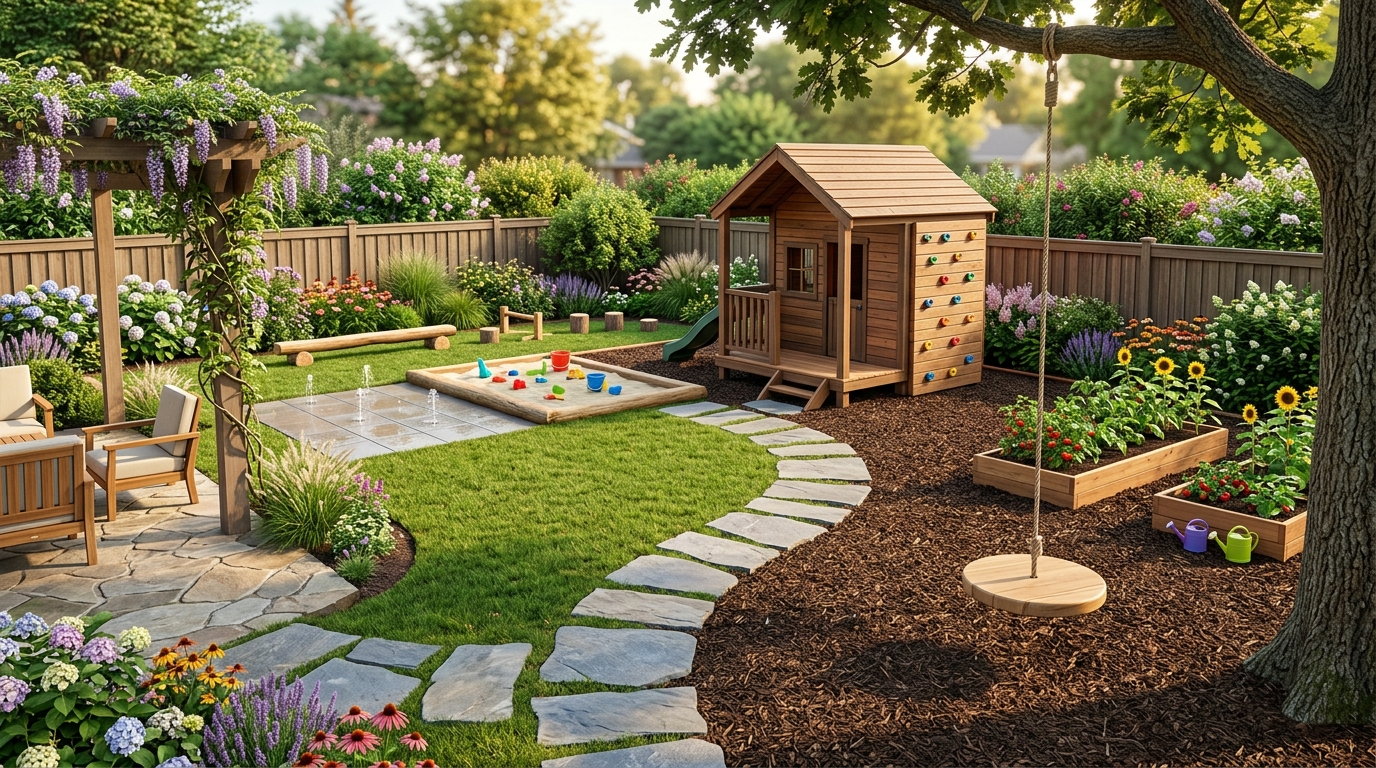
A backyard with nothing specifically designed for kids is a backyard that kids leave within 10 minutes. They need something to do, somewhere to be, and a specific reason to stay outside rather than returning to a screen. The parents who figure this out early have children who spend entire summer days in the yard. The ones who do not wonder why the backyard investment never gets used.
These backyard ideas for kids focus on the outdoor play structures, sensory zones, garden activities, and water features that actually hold kids’ attention through a full afternoon rather than novelties that peak in the first week and sit unused by August. Everything here is designed around how kids actually play, which is to say messily, repetitively, with complete physical commitment, and with a strong preference for anything involving water, dirt, or building something.
You will find 23 ideas here. Some require a full weekend build. Some require an afternoon and 20 dollars. All of them give kids a reason to be outside and stay outside.
1. Build a Simple Raised Sandbox with a Plywood Lid
A raised sandbox built from landscape timbers and filled with washed play sand is one of the most used outdoor play features available for young children because digging and building with sand is a form of play that does not require any instruction or facilitation. Kids who would not stay in the yard for 20 minutes will stay at a sandbox for two hours.
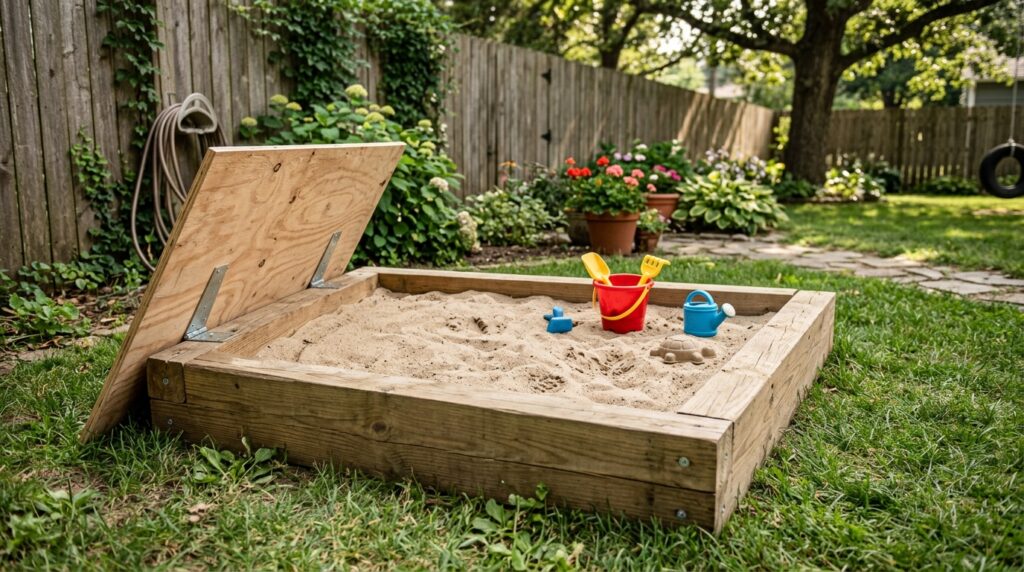
Build a 4 by 4 foot square frame from two-stack landscape timbers screwed at the corners. Line the interior with landscape fabric to prevent weeds from growing up through the sand without preventing drainage. Fill with 400 pounds of washed play sand available at Home Depot or Lowe’s in 50-pound bags. Cut a plywood lid to fit the frame top and secure with two hinges at one side so it opens and closes easily. The lid keeps cats and rain out of the sand between uses and extends the usable life of the play sand significantly.
2. Install a Backyard Water Table for Summer Play
A water table at toddler height, meaning 22 to 24 inches from the ground to the play surface, is the single most used warm-weather play feature for children aged 1 to 5 because water play at standing height is accessible, sensory-rich, and produces the kind of focused, absorbed play that parents are specifically hoping outdoor time provides.
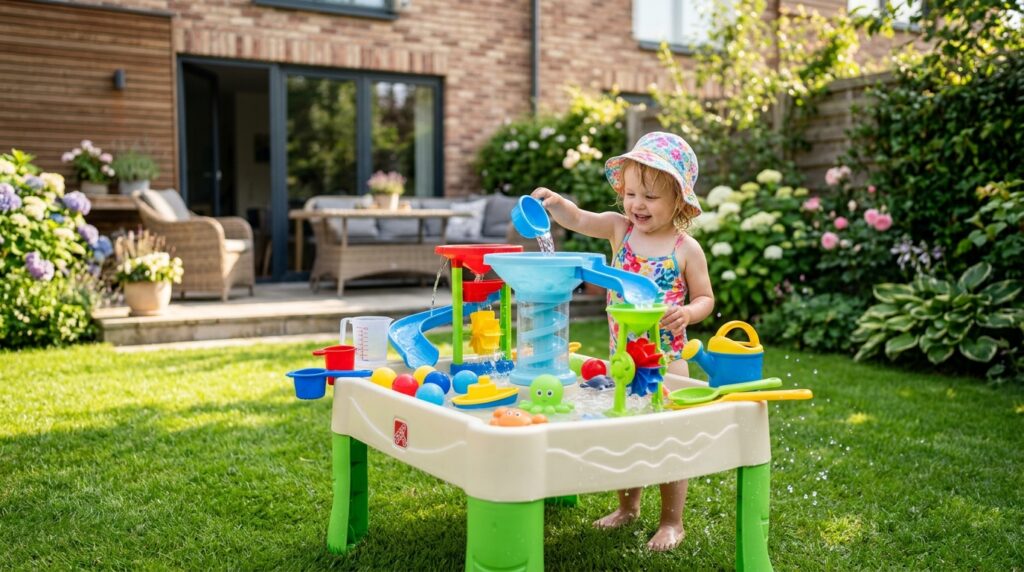
The Step2 Play and Store Busy Ball Waterfall Table and the Little Tikes Spiralin Seas Waterplay Table both provide generous play surface area and multiple water flow features at the right height for toddler standing play. Position the table on a flat, level section of yard near the house for easy supervision. Add kitchen measuring cups, small plastic pitchers, funnels, and plastic sea creatures to the water table accessories for extended play value beyond the table’s built-in features.
3. Backyard Ideas for Kids Include a Mud Kitchen from Scrap Lumber
A mud kitchen built from scrap pallet wood or leftover lumber gives children a dedicated outdoor play kitchen where mixing dirt, water, leaves, and whatever else is available in the yard into pretend food and potions is not only permitted but specifically facilitated. Kids who use a mud kitchen play outside longer and with more sustained creativity than those with only passive yard space.
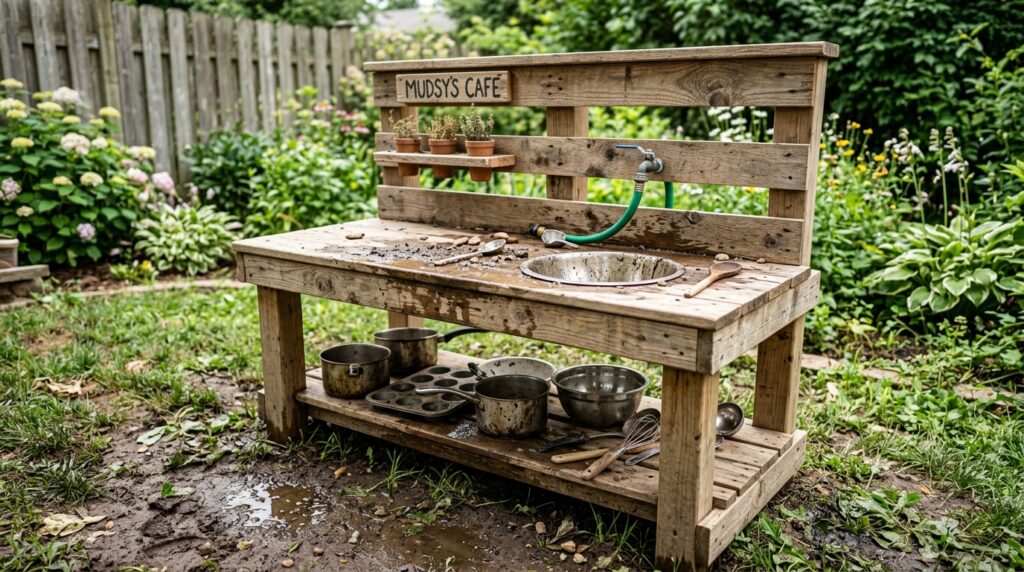
Build a simple counter-height frame from 2 by 4 lumber at approximately 26 inches tall for younger children and 32 inches for older ones. Add a lower shelf for storage of pots and utensils and cut a hole in the counter surface to drop in a round metal bowl as a sink. Add a short garden hose with a ball valve as the faucet. Stock with a collection of old pots, pans, bowls, spoons, muffin tins, and utensils sourced from thrift stores for one to two dollars each. The mud kitchen setup costs under 50 dollars in materials and produces years of outdoor play.
4. Set Up a Backyard Obstacle Course with PVC Pipe
A backyard obstacle course built from PVC pipe hurdles, pool noodle slalom poles, hula hoop ground targets, and rope crawl sections gives kids a physical challenge course that can be rearranged into a new configuration every week and suits children from age 4 through early teens at different difficulty settings.
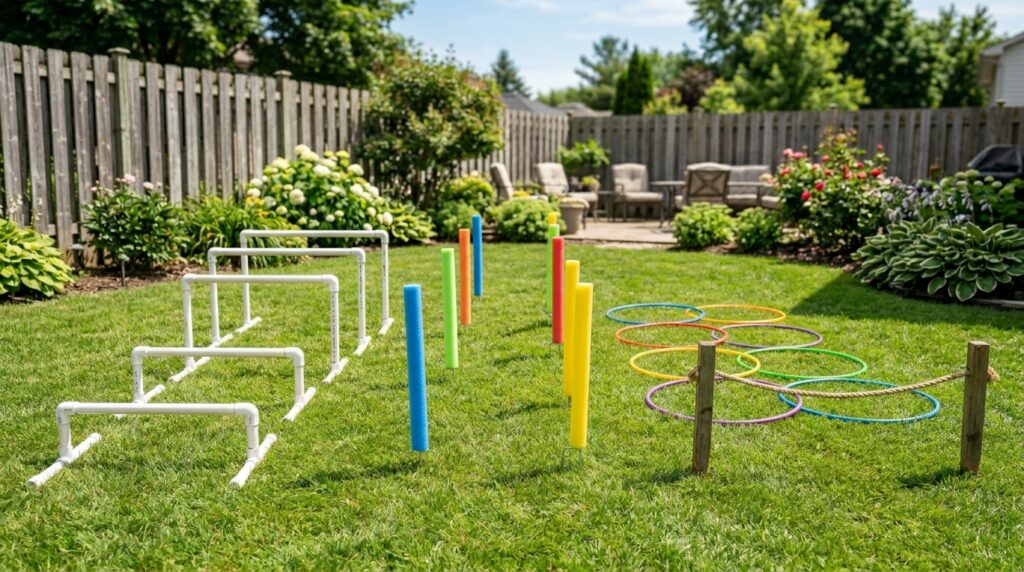
Build low hurdles from 3/4-inch PVC pipe in a simple H-frame at 8 to 12 inches for younger kids and 16 to 20 inches for older ones. Insert pool noodles into the ground on tent stakes for slalom poles. Lay hula hoops flat on the ground as target landing spots. Tie a rope between two stakes at 12 inches above the ground as a low crawl section. Set up a timer and challenge children to beat their own time on the course, which extends the play value significantly beyond the initial novelty period.
5. Create a Backyard Digging Zone for Exploration
A dedicated digging zone where children are specifically permitted and encouraged to dig, a 4 by 4 foot area of loosened soil where plastic dinosaur bones, gemstones, or hidden objects are buried for discovery, gives kids the outdoor exploration experience without the destruction of the garden beds that unsanctioned digging inevitably produces.
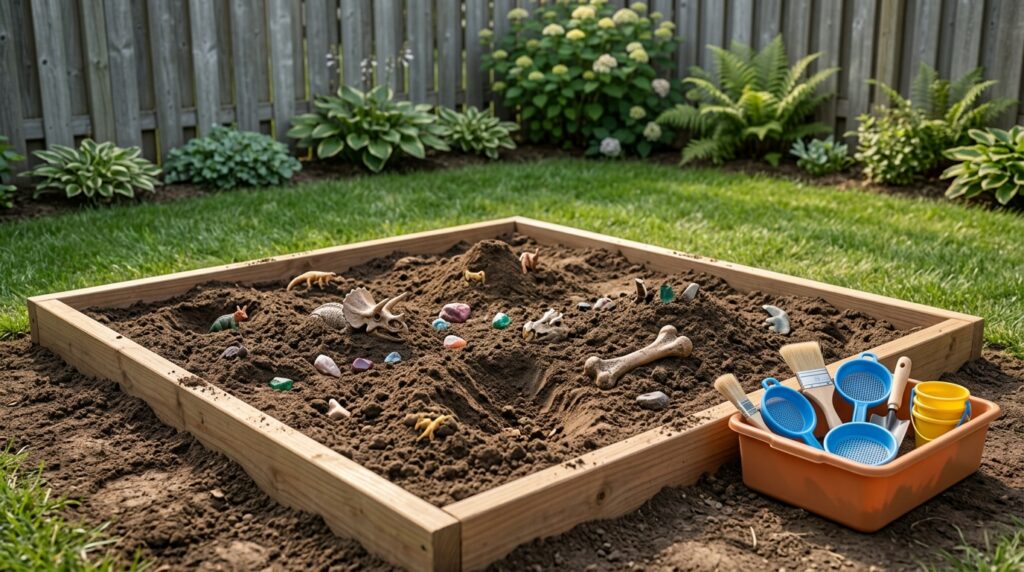
Designate a corner section of the yard and loosen the soil to 12 inches deep using a garden fork. Bury plastic dinosaur fossil sets, rock and mineral samples, small plastic animals, or any other objects the children are interested in discovering. Re-bury items after each discovery session so the zone remains active for the next play session. Mark the boundary clearly with a low timber border so children know where digging is permitted. A plastic container near the zone for brushes, sifting screens, and buckets completes the archaeological dig setup.
6. Backyard Ideas for Kids Feature a Rope Swing from a Tree Branch
A rope swing hung from a strong tree branch is the most time-tested outdoor play feature available and the one that generates the most hours of use per dollar of investment. Kids from age 3 to 12 use rope swings consistently and the play value does not diminish with familiarity the way most novelty play features do.
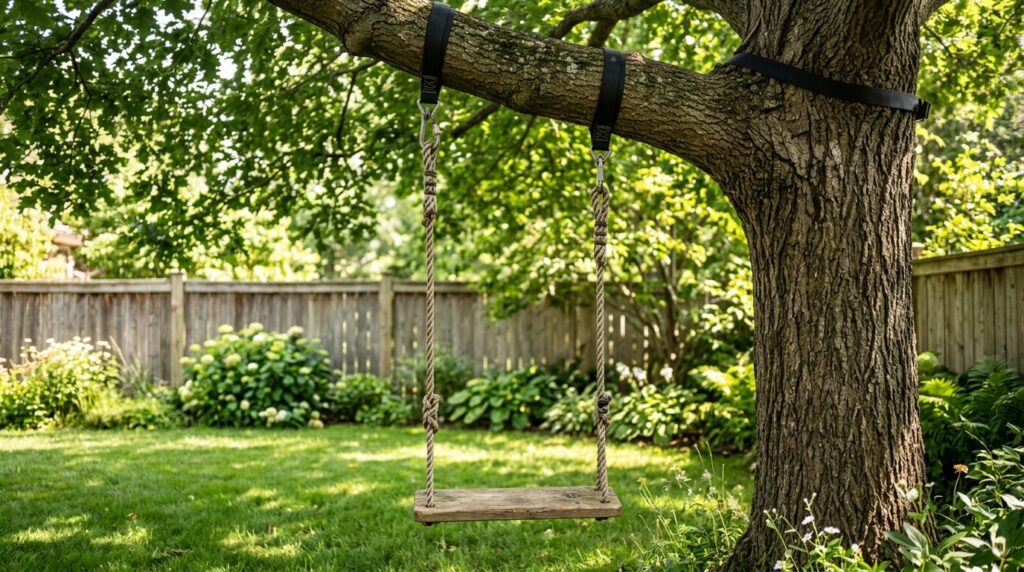
Use a branch at least 8 inches in diameter and certified as structurally sound by a tree professional or through personal inspection for obvious decay, cracks, or hollow sections. Hang the swing from a tree swing strap system rather than rope directly around the branch, which protects the bark and distributes the load properly. The Blue Ox Swing Hanging Kit and the Schildkrot Tree Swing Mounting Straps both provide the right rated load capacity and bark-safe contact for a residential rope swing installation. Use a minimum 1-inch diameter solid braid polyester rope for the swing itself.
7. Build a Backyard Fairy Garden for Imaginative Play
A dedicated fairy garden section of the backyard, a small raised bed or a large container filled with miniature plants, small-scale furniture, pathways, and structures, gives children a specific zone for imaginative small-world play that functions as both a garden activity and an extended fantasy play environment.
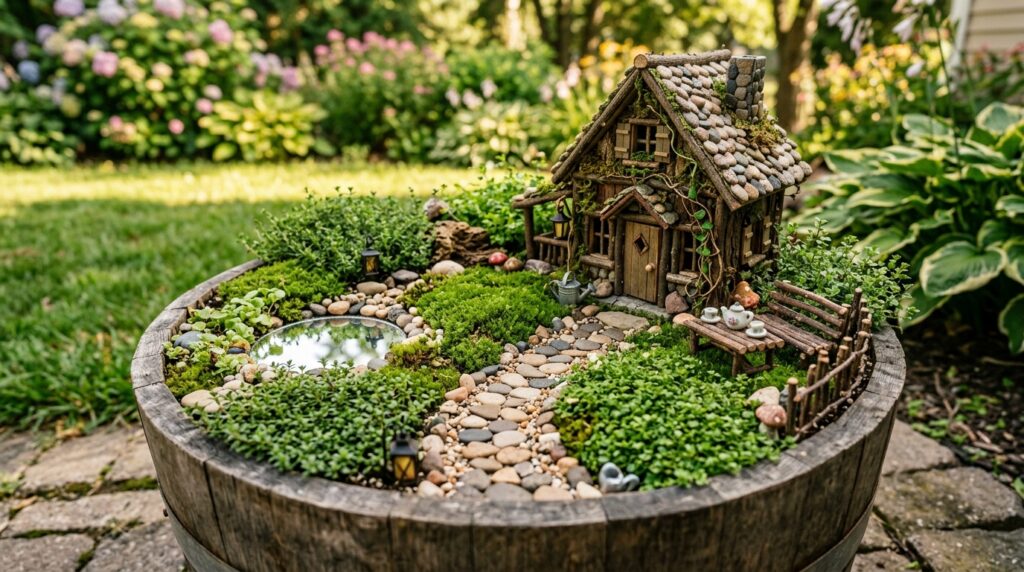
Use a 24 by 24-inch raised planter or a large half-barrel container filled with a mix of potting soil and coarse sand. Plant with low-growing ground cover plants like Irish moss, creeping thyme, or baby tears as the garden floor. Add a miniature stepping stone path made from small flat stones, a tiny wooden bench or table from a craft store, a small mirror as a fairy pond, and a small house structure. Michaels and Hobby Lobby both carry extensive fairy garden accessory ranges that give children the props needed to build and rebuild the fairy world through the full summer season.
8. Install a Backyard Zipline Between Two Trees or Posts
A backyard zipline strung between two trees or two wooden posts is the outdoor play feature that produces the most genuine physical excitement for children aged 5 and above and the one that older children specifically seek out at other kids’ houses when they have experienced it. The investment pays back in outdoor use time faster than almost any other backyard addition.
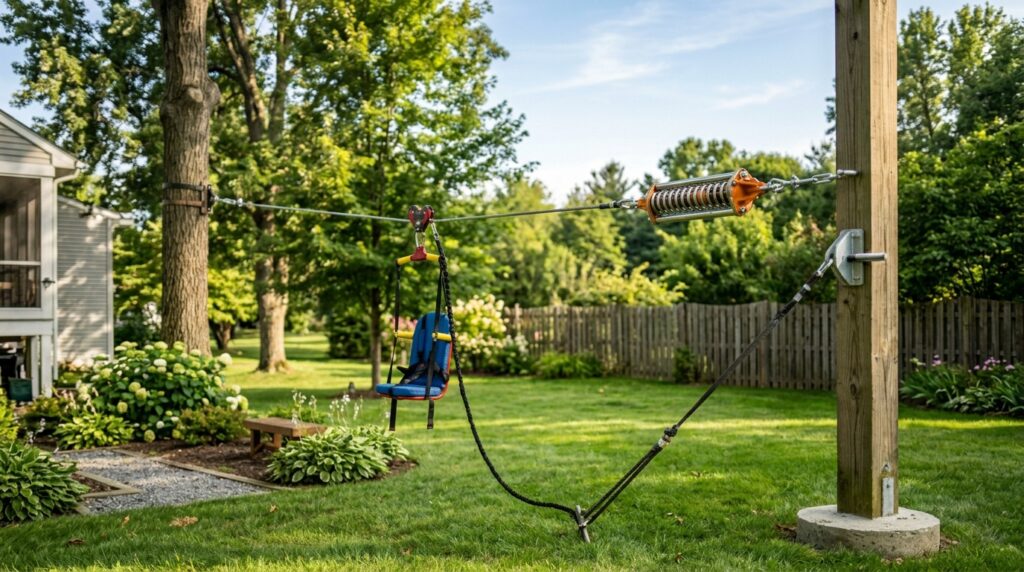
The Alien Flier Kids Zipline Kit and the Slackers Zip Line Kit for Kids both provide complete installation hardware rated for child use with a bungee braking system at the landing end that prevents impact with the end post. Install between two trees at least 50 feet apart or between two 6 by 6 pressure-treated posts set in concrete at the same spacing. The cable should slope from 6 to 7 percent, meaning 3 to 4 feet of drop over 50 feet of run, for the right speed and a clean stop at the brake end.
9. Set Up a Backyard Movie Night Area for Summer Evenings
An outdoor movie setup in the backyard gives children a summer evening experience that they talk about with their friends and that makes the backyard the destination for neighborhood playdates. A white sheet stretched between two trees or posts, a portable projector, a bluetooth speaker, and a pile of blankets and pillows transforms the yard into a cinema after dark.
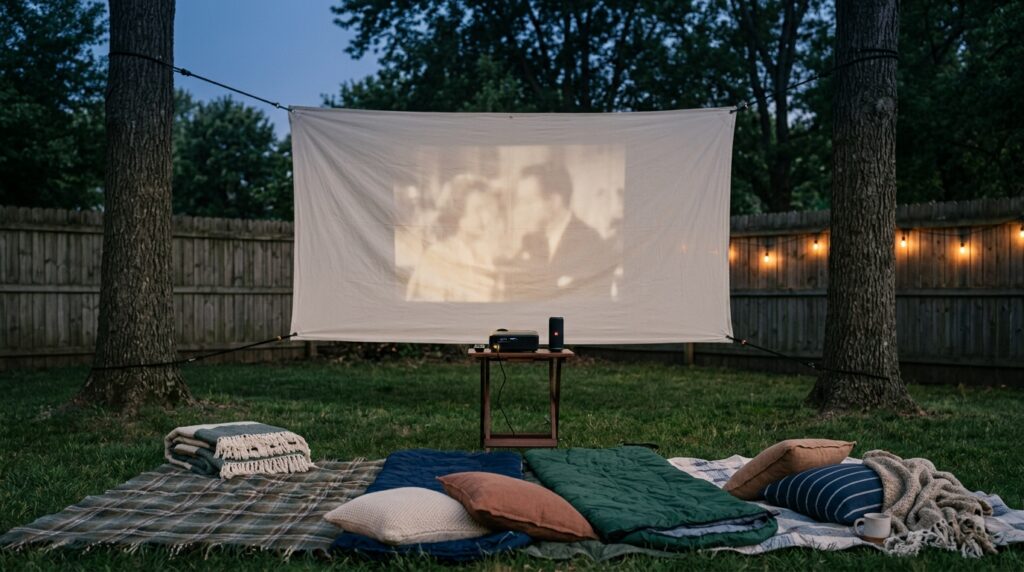
Use a flat white or off-white sheet with no pattern stretched tight using bungee cords through the corner hem loops. Set up the projector on a folding table 10 to 15 feet from the screen surface. The Kodak Luma 350 and the Anker Nebula Capsule II both produce adequately bright images for outdoor use after full dark. Set up blanket pallets on the grass using sleeping bags and bed pillows for the most comfortable outdoor cinema seating for children.
10. Backyard Ideas for Kids Include a Vegetable Garden Plot
A small raised bed vegetable garden assigned specifically to children, where they choose the plants, do the watering, and harvest the produce, gives kids a genuine outdoor responsibility that extends through the full summer season. Children who grow their own food are more likely to eat vegetables and more likely to stay engaged with the garden as a daily activity than those without any ownership over it.
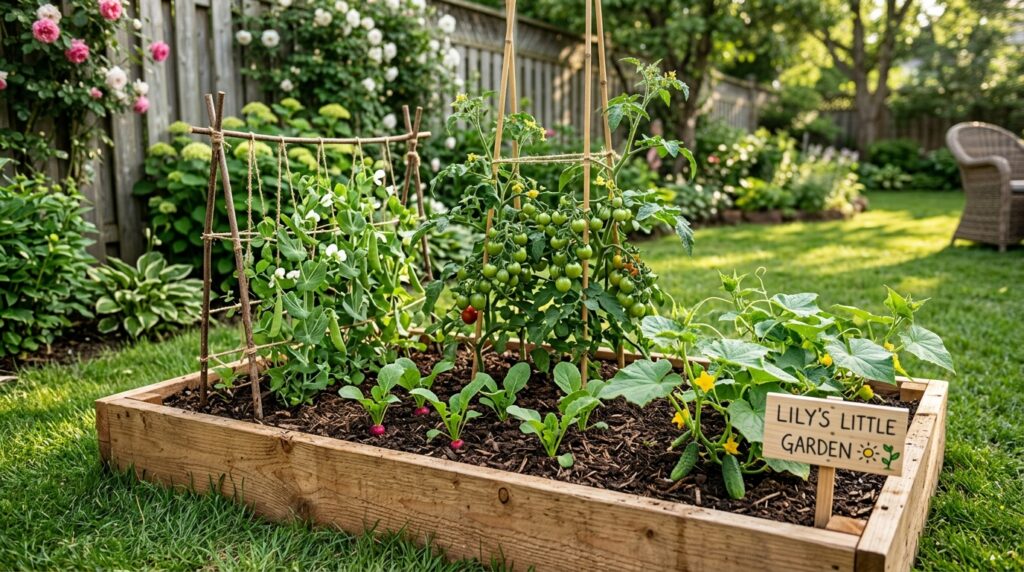
Size the children’s garden at 2 by 4 feet maximum so it is manageable without adult help for daily watering and weeding. Let the child choose three to four plants from the garden center, steering toward productive, quick-maturing varieties like cherry tomatoes, snap peas, radishes, and cucumbers, which produce visible results within weeks rather than months. Mark the bed with a small sign bearing the child’s name. The sense of ownership is more important to sustained engagement than any specific plant choice.
11. Create a Backyard Bug Hotel for Science Discovery
A bug hotel made from stacked sections of bamboo, pine cones, bark pieces, straw, and hollow stems provides shelter for beneficial insects and gives children a nature observation station where they can watch insects come and go across the full summer season. A bug hotel combines craft activity, science education, and ongoing outdoor engagement in a single structure.
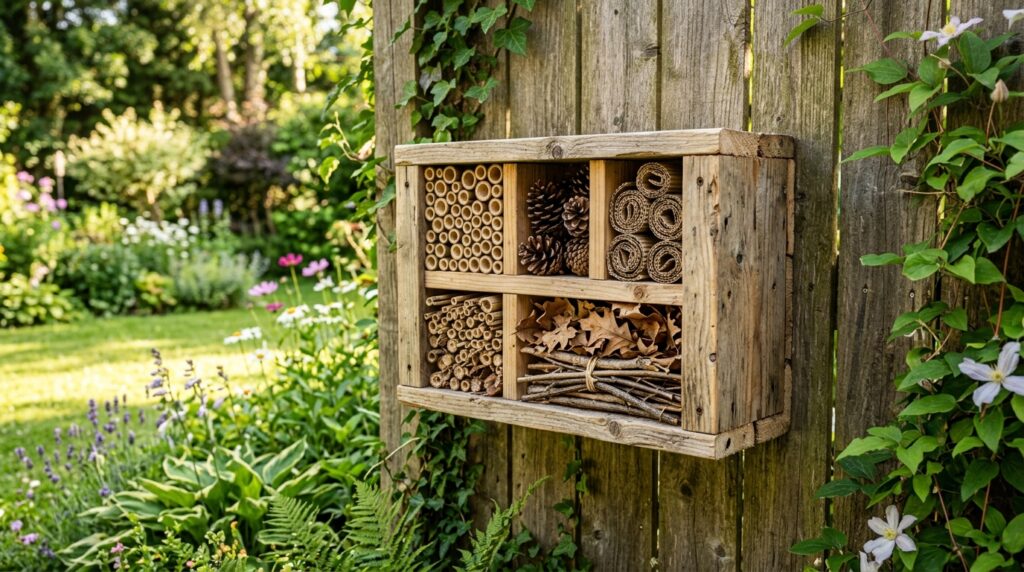
Build a simple wooden box frame from scrap 1 by 6 lumber at approximately 12 by 18 inches and 8 inches deep. Divide the interior into sections using short lengths of 1 by 2 lumber. Fill each section with a different natural material: bamboo tubes cut to 8-inch lengths in one section, pine cones in another, rolled corrugated cardboard in a third, dried leaves in a fourth, and thin twigs bundled tightly in a fifth. Mount the bug hotel on a south or east-facing wall or fence at child viewing height and check weekly with the children for new insect residents.
12. Build a Backyard Fort from PVC Pipe and Fabric
A backyard fort frame built from 3/4-inch PVC pipe in a cube or A-frame configuration and covered with outdoor fabric panels creates a summer play structure that gives children an enclosed private space in the yard where they can read, play pretend, or simply exist outside the visual range of adult supervision, which is something children value highly.
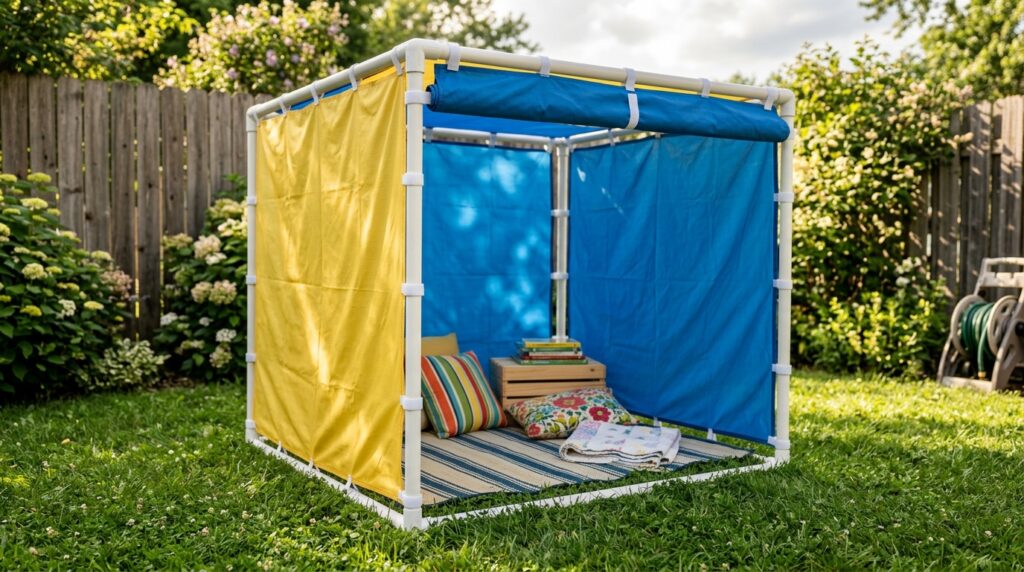
Build a 4 by 4 by 5-foot cube frame from 3/4-inch PVC pipe connected with elbow and T-joints at each corner and midpoint. Sew or purchase outdoor fabric panels to clip or velcro onto three sides of the frame, leaving one side open as the entry. A waterproof ripstop nylon or outdoor canvas in a bright color that children choose creates a fort that reads as specifically theirs. Disassemble at the end of the season for compact garage storage and reassemble the following summer.
13. Backyard Ideas for Kids Use a Slip-and-Slide on a Gentle Slope
A backyard slip-and-slide on a gentle grass slope with a garden hose connected to the water inlet produces the most reliably enthusiastic outdoor play response from children aged 4 to 12 during hot summer days. The activity requires no instruction, generates immediate physical excitement, and keeps children outside and active through the hottest part of the day when heat would otherwise drive them inside.
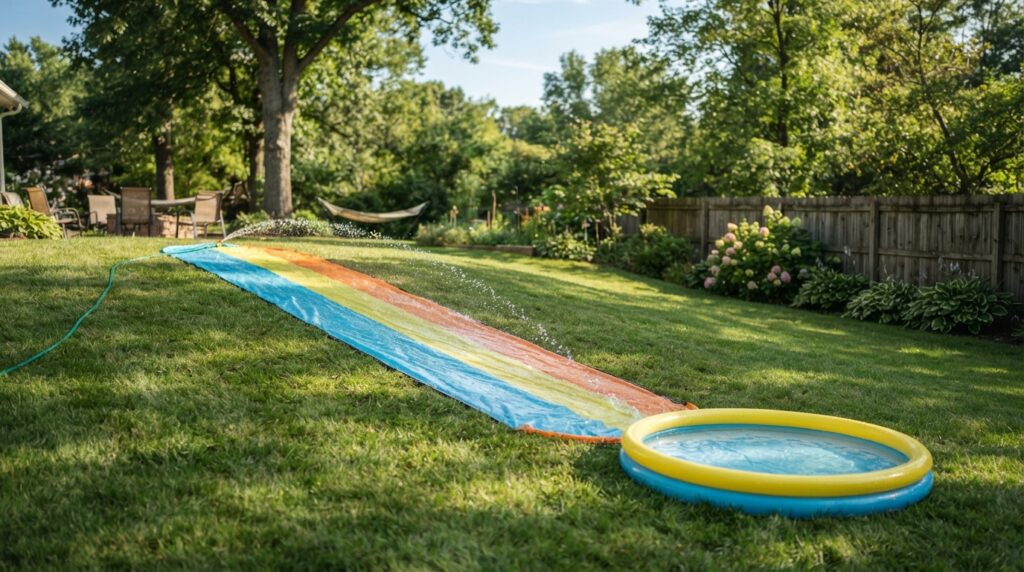
Use a commercial slip-and-slide from the Wham-O Slip N’ Slide Classic or the H2OGO Backyard Water Slide rather than a DIY plastic sheet version, which is significantly less safe at the edges and landing zones. Select a grass slope with at least 3 to 4 degrees of natural incline for adequate speed and clear the area of any rocks, roots, or hard objects before setting up. A small kiddie pool at the landing end adds a splash finish zone that extends the play value.
14. Set Up a Backyard Archery or Target Zone
A backyard archery setup with foam-tipped arrows and a standing foam target gives older children aged 7 and above a skill-based outdoor activity that requires concentration, builds coordination, and sustains engagement for extended periods because the improvement trajectory, getting progressively closer to the target center, provides continuous motivation.
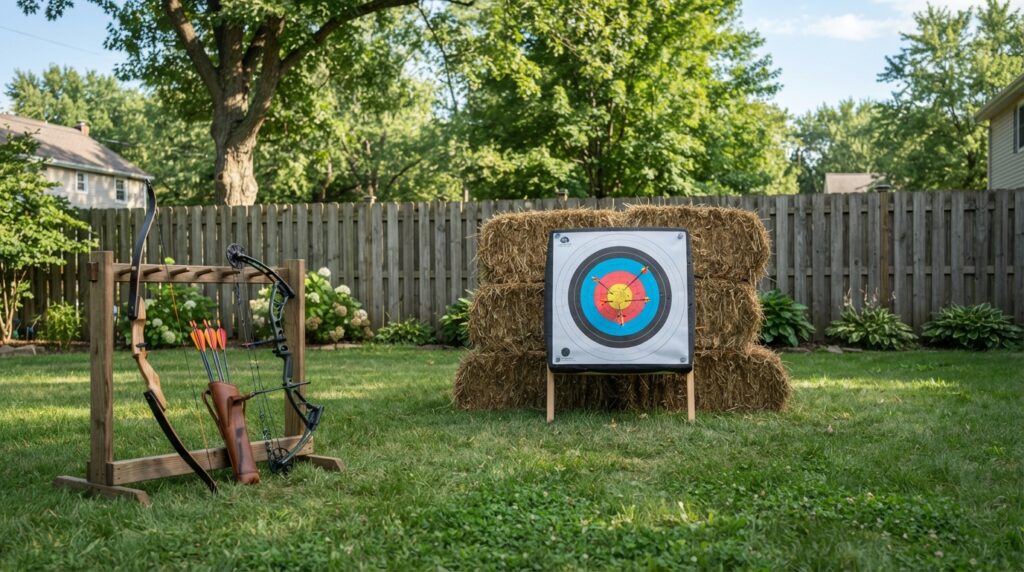
The Genesis Youth Archery Set and the Crosman Elkhorn Junior Compound Bow both provide beginner archery equipment at the appropriate draw weight for children aged 7 to 12. Set up the foam target at 10 feet initially and move it to 15 or 20 feet as accuracy improves. Position the target against a solid backing, a bale of hay, a wooden fence panel, or a foam backing board, to stop any arrows that miss the target entirely. Always establish a clear safety rule that arrows are only drawn when no person is in front of the target.
15. Build a Backyard Treehouse Platform on Low Posts
A treehouse platform built on four low wooden posts rather than in an actual tree is safer, more structurally controllable, and achievable in a backyard without a suitable tree. A platform at 4 to 5 feet above the ground with a railing on three sides and a rope ladder or wooden steps for access gives children the elevated outdoor space and the private overhead territory that makes the treehouse concept compelling to kids.
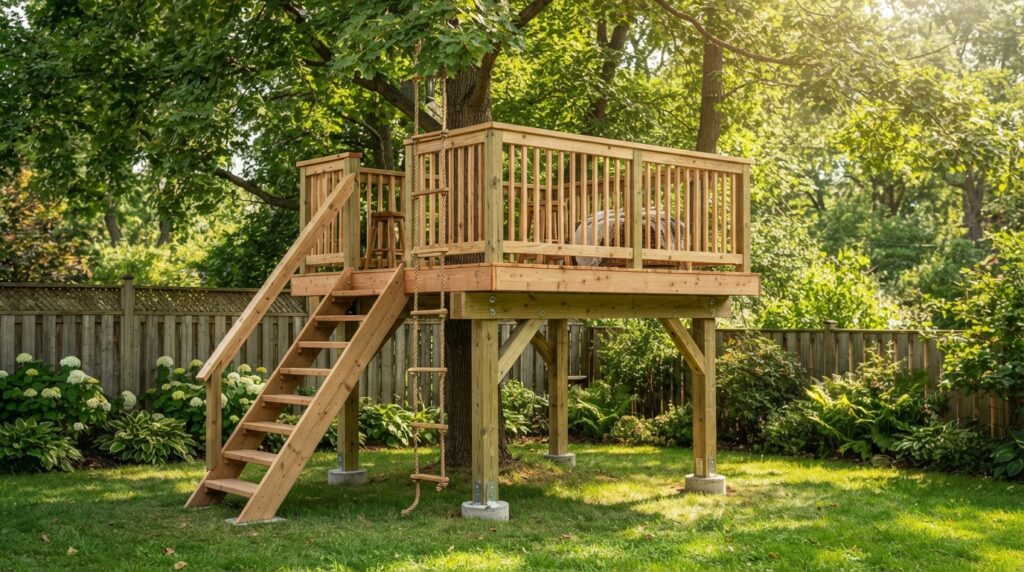
Set four 6 by 6 pressure-treated posts in concrete at the four corners of a 6 by 8-foot platform at a post height of 5 to 6 feet above ground. Frame the platform with 2 by 8 pressure-treated joists and surface with 2 by 6 cedar deck boards with quarter-inch gaps for drainage. Add a railing at 36 inches above the platform surface on three sides using 2 by 4 rails and 2 by 2 balusters spaced no more than 4 inches apart. The total material cost runs 300 to 500 dollars for a properly built low-post platform structure.
16. Create a Backyard Nature Art Station
A small table and two chairs set up in a shaded corner of the backyard as a nature art station, stocked with watercolor paints, blank paper, collecting bags, and a small magnifying glass, gives children a creative outdoor activity that connects them to the natural environment of the yard rather than playing alongside it. Children who draw and paint what they observe in nature look more carefully at their outdoor surroundings than those who simply play in them.
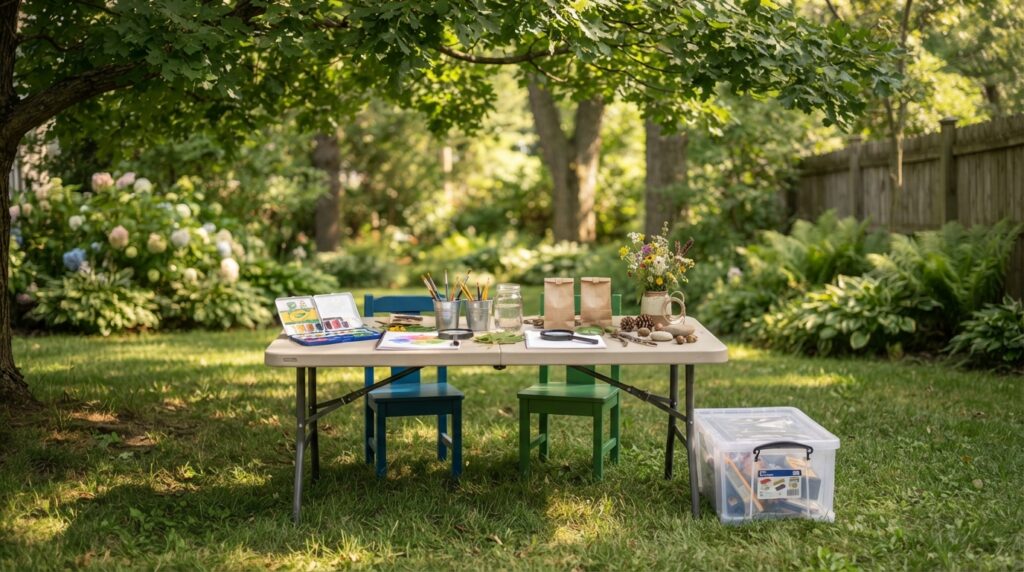
Use a weatherproof plastic folding table and two child-sized chairs. Store the art supplies in a sealed plastic bin beside the table to protect from rain and humidity. Stock with Crayola Washable Watercolors, a set of watercolor paper blocks rated for outdoor use, a set of colored pencils, magnifying glasses for leaf and insect observation, and small paper bags for collecting interesting natural objects to draw from. Replace the supplies as they run out through the summer rather than setting up with a finite amount that runs dry early in the season.
17. Backyard Ideas for Kids Include a Sprinkler Run Zone
A dedicated sprinkler run zone with an oscillating sprinkler set up in a consistent position on the grass gives children a reliable cool-down play option on hot days without any additional equipment, structure, or preparation beyond turning on the hose. What makes this work as a consistent play feature rather than a one-time novelty is the consistency: the sprinkler is always in the same spot and always works the same way, which means children know it is available without any adult setup required.
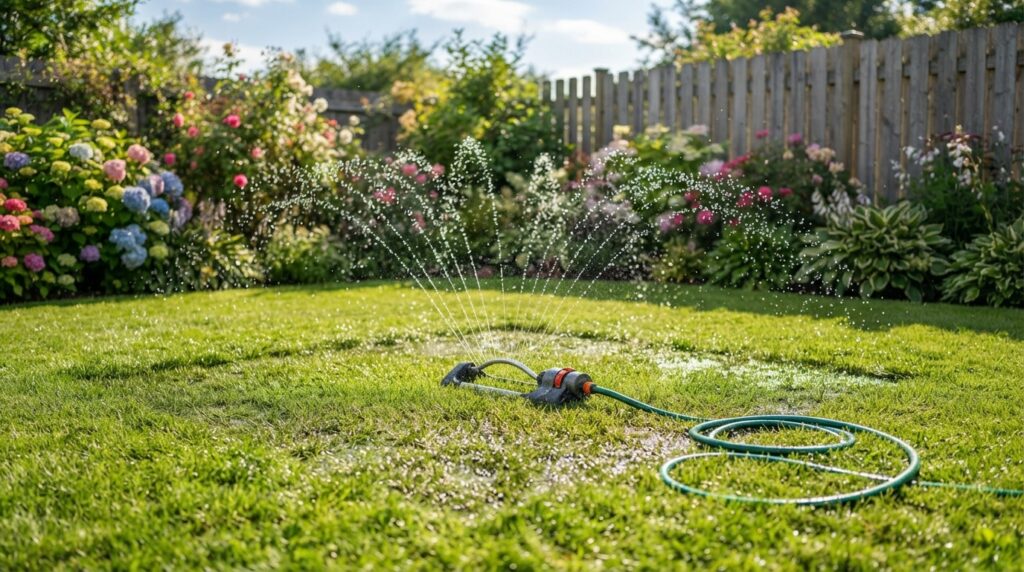
Use the Melnor Oscillating Garden Sprinkler or the Rain Bird 25PJDAC Adjustable Sprinkler, which both provide a consistent oscillating spray pattern with adjustable width and range. Connect to an outdoor timer so the sprinkler activates automatically during the hottest afternoon hours. Designate a 10 by 10-foot grass area as the sprinkler zone and keep it free of toys and objects that would create tripping hazards when the area is wet. Replace the grass section annually with overseeding if wear becomes significant.
18. Install a Backyard Tetherball Pole
A tetherball pole set in concrete in a flat section of the backyard provides a physical play structure that works for one or two players, requires no adult facilitation, generates genuine physical exercise, and holds the interest of children aged 6 and above through repeated play sessions across the full summer. Tetherball is one of the few backyard games that does not require teams, equipment setup, or rules explanation for a child experiencing it for the first time.
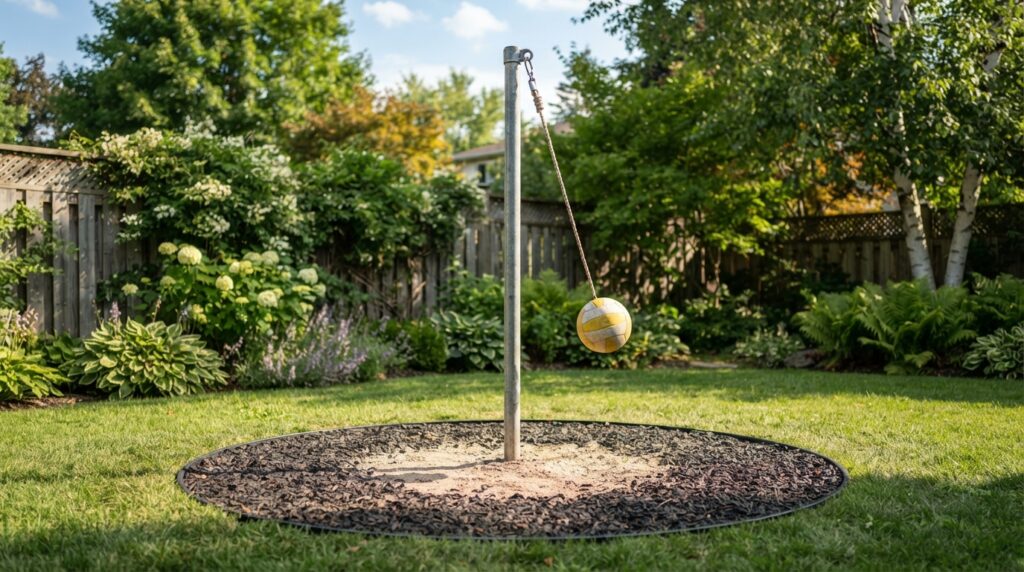
Set a 10-foot steel tetherball pole in a post hole filled with quick-set concrete at a depth of 30 inches. Attach a standard tetherball with a 7-foot rope to the eyebolt at the top of the pole. The full installation cost runs under 80 dollars for the pole, concrete, and ball. Clear a 10-foot circle around the base of the pole of any trip hazards and cover the immediate base area with rubber mulch or sand for safe falls during active play.
19. Build a Backyard Chalk Art Zone with a Smooth Concrete Pad
A dedicated 6 by 8-foot concrete slab in the backyard specifically for chalk art, separate from any driveway or walkway, gives children a blank creative canvas that is always available and always ready. A concrete slab in the yard that exists specifically for kids to draw on communicates that their creative play has a dedicated place in the family’s outdoor space.
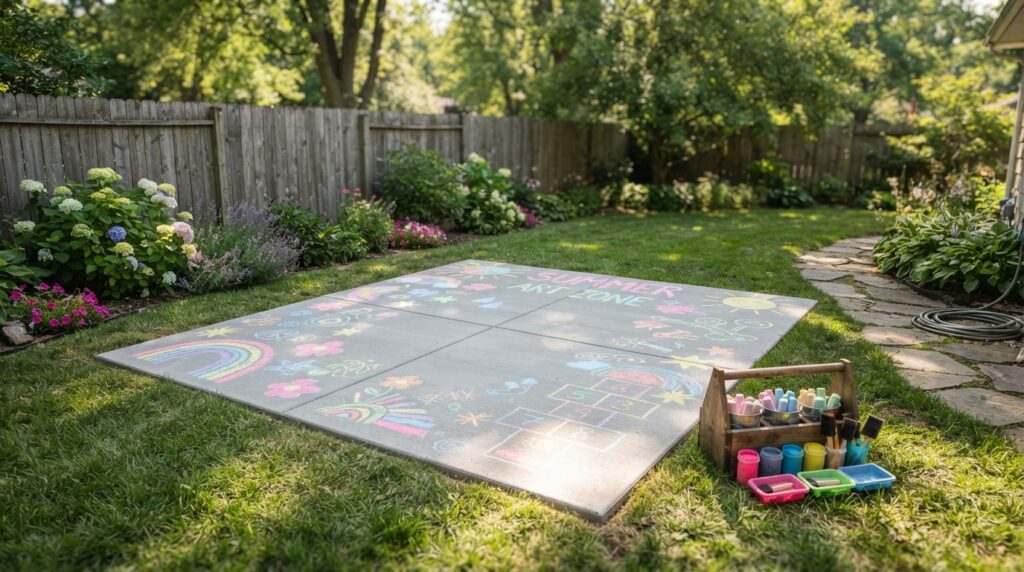
Pour a 4-inch thick concrete slab with a smooth steel-troweled finish using ready-mix concrete from a home improvement store. A 6 by 8-foot slab requires approximately 15 to 18 cubic feet of concrete. Install control joints at 3-foot intervals to manage cracking. Stock with Crayola Outdoor Sidewalk Chalk in large bucket sets and Crafty Crown Washable Sidewalk Chalk Paint for a broader range of creative options. Replace chalk supplies as they deplete through the summer rather than rationing, which limits the spontaneity of use.
20. Create a Backyard Birdwatching Station
A dedicated birdwatching station in the backyard, meaning a comfortable chair positioned near a bird feeder and a bird bath with a field guide and a pair of child-sized binoculars nearby, gives children an outdoor observation activity that develops patience, identification skills, and a connection to the natural environment of the yard that active physical play does not provide.
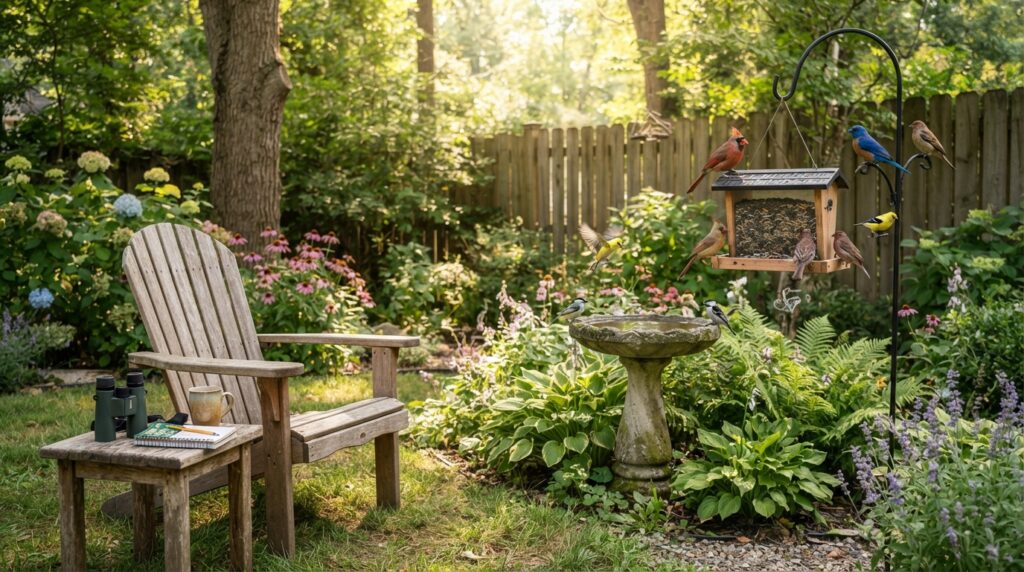
Position the bird feeder and bird bath at a distance of 10 to 15 feet from the observation chair so birds are visible without being disturbed by the child’s presence. Use the Merlin Bird ID app from Cornell Lab of Ornithology, which identifies birds by photograph or sound recording and is specifically designed for children learning to identify species. Stock the feeder with a sunflower and safflower seed mix, which attracts the widest range of songbird species in most North American regions.
21. Backyard Ideas for Kids Use a Balance Beam and Stepping Stone Path
A balance beam made from a 4 by 4 lumber section laid flat or raised 4 inches above the ground on two timber blocks, paired with a stepping stone path through the garden area, gives younger children a physical coordination challenge that develops proprioception and gross motor skills through play that does not feel like exercise.
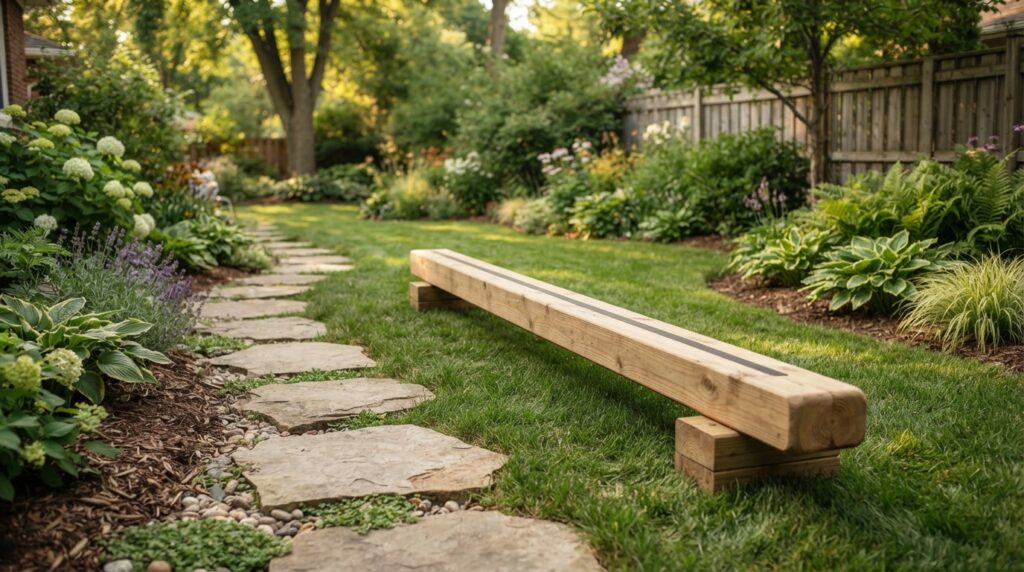
Lay a 12-foot length of 4 by 4 pressure-treated lumber flat on two 2 by 4 timber riser blocks to raise it 3 to 4 inches above the ground. Sand all surfaces smooth and apply a non-slip exterior paint or grip tape to the top surface. Space stepping stones through the garden at irregular intervals and at varying distances to create a path that requires children to judge and adjust their step length, which is the coordination challenge that makes the stepping stone path more engaging than a regular garden path.
22. Set Up a Backyard Science Station
An outdoor science station stocked with basic experiment supplies, baking soda and vinegar, food coloring, cornstarch and water for oobleck, measuring cups, pipettes, and small containers, gives children directed outdoor activity that is both educational and genuinely entertaining. Outdoor science experiments allow for the mess that indoor experiments cannot accommodate.
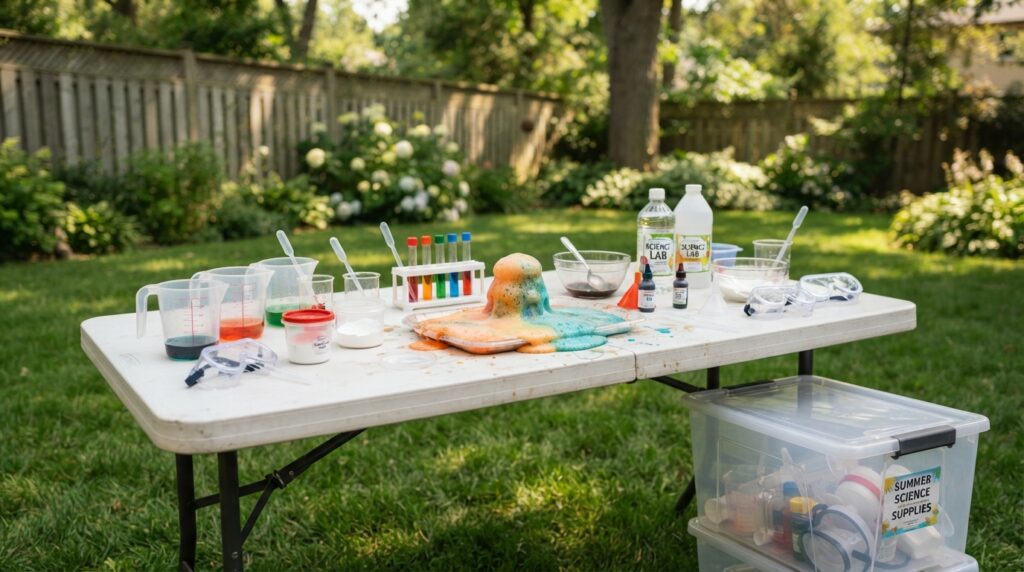
Use a plastic folding table stored in the garage and brought out specifically for science session days. Keep the experiment supplies in a sealed storage bin. The Steve Harrington Backyard Science Kit and the National Geographic Ultimate Outdoor Science Kit both provide structured experiment instructions for children aged 6 and above. Supplement with bulk baking soda, white vinegar, and food coloring from the grocery store for the unlimited volcano experiments that most children want to run continuously once they discover the reaction.
23. Build a Backyard Lean-To Reading Nook
A simple lean-to structure in the backyard shade, built from four 2 by 4 posts and a corrugated polycarbonate roof panel with a salvaged wooden bench inside, gives children a private outdoor reading space that is separate from the house and specifically theirs. Children who have an outdoor space designated for quiet activity use it more than those who are simply told to go outside and read.
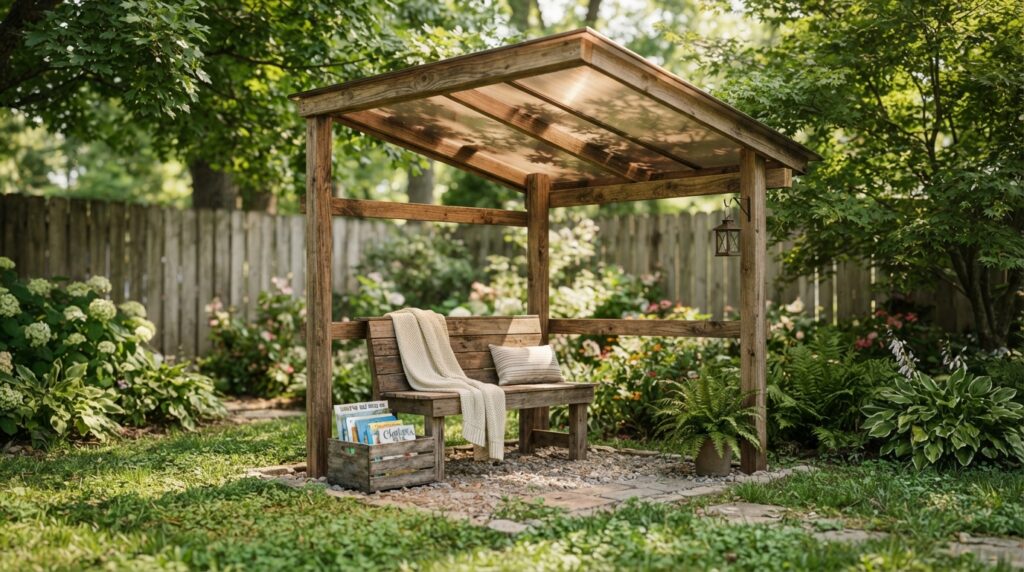
Build a simple lean-to structure at 6 by 4 feet with two back posts at 7 feet and two front posts at 6 feet to create the roof slope for rain runoff. Cover the roof frame with a single Palram Twin-Wall Polycarbonate Roofing Panel in a bronze tint that provides shade and rain protection simultaneously. Place a salvaged wooden bench or a child-sized outdoor chair inside and stock with a milk crate of books and a small blanket. The lean-to structure provides a genuinely sheltered outdoor reading environment that works through light rain and full sun.
Final Thoughts
A backyard designed around how kids actually play rather than how adults imagine kids should play is one that gets used consistently through every summer day rather than occasionally on weekends when parents have time to facilitate activities. The ideas that work best are the ones that remove adult facilitation from the equation: a sandbox that is always ready, a rope swing that is always there, a mud kitchen that is always stocked, a sprinkler that comes on automatically.
Start with one feature that matches the current age and interest of the children who will use the backyard most. These backyard ideas for kids work best when they are chosen specifically for the actual kids in the actual yard rather than installed as a complete outdoor play program all at once. One well-chosen feature that gets used daily beats five ambitious projects that collect cobwebs by mid-August.