
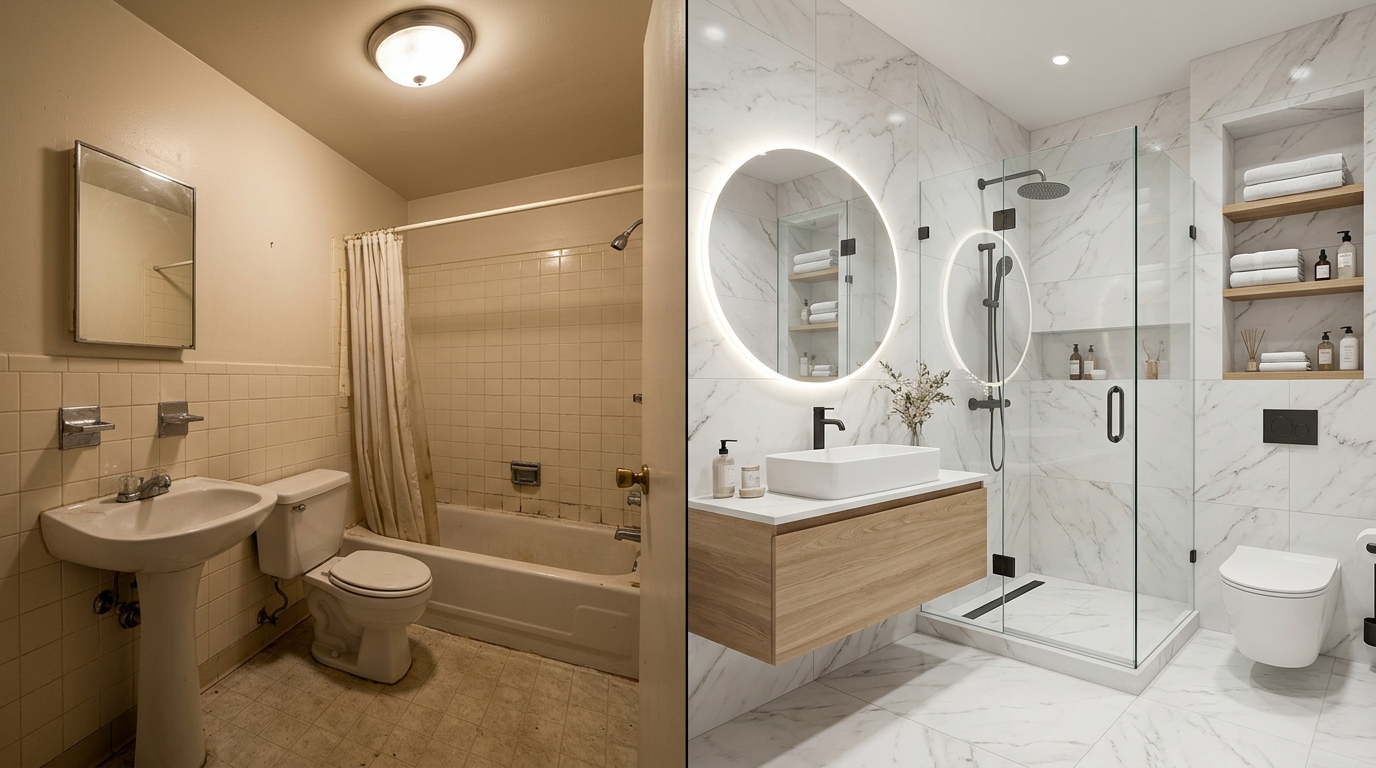
A full bathroom remodel is not always realistic, whether because of budget, time, or a rental situation that does not allow major changes. But some of the most dramatic before and after transformations come from a handful of targeted updates rather than tearing the whole room down to studs.
This article focuses on the changes that tend to make the biggest visual difference relative to the effort involved, the kind of updates that show up clearly in a before and after comparison even when the bones of the bathroom stay exactly the same.
Below are nineteen ideas for transforming a bathroom, covering the elements that tend to date a space the most and the changes that bring the biggest visual payoff.
1. Paint the Vanity for an Instant New Look
An outdated wood toned vanity, especially in a honey oak or dark cherry finish, is one of the most common things that makes a bathroom feel stuck in another decade. A coat of paint in white, navy, or sage green can transform it completely without any new cabinetry.
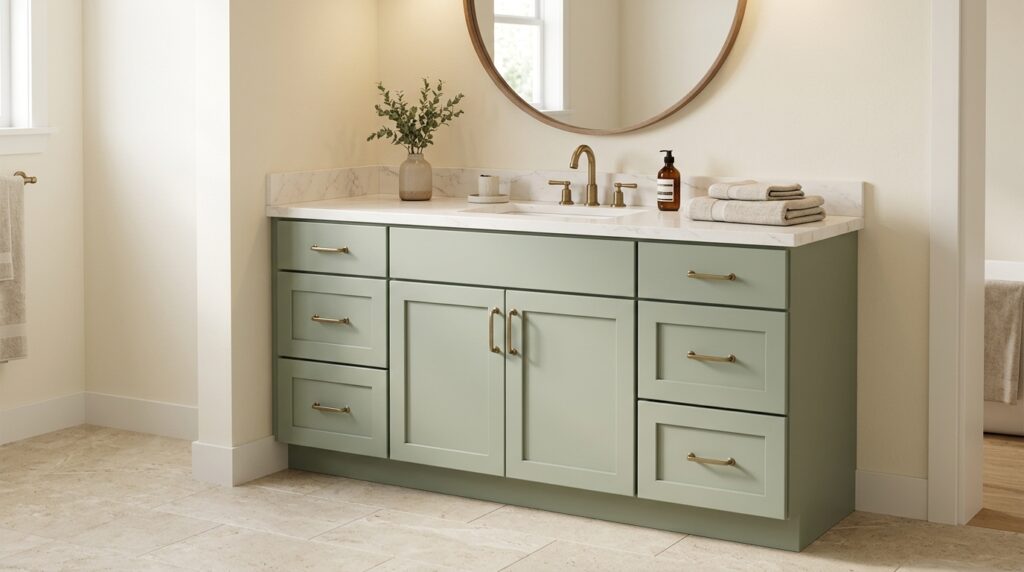
This is one of the highest impact, lowest cost changes on this list, since the vanity is usually the largest single piece of furniture in the room and sets the tone for everything around it.
Before painting, sand the surface lightly and use a bonding primer made for cabinets, since regular wall paint will not hold up to daily moisture and handling. A water based enamel in a satin or semi gloss finish wipes clean easily and resists the humidity that bathroom cabinets deal with constantly.
2. Swap a Builder-Grade Mirror for a Framed One
The plain rectangular mirror that comes standard in most builder-grade bathrooms rarely adds anything to the room. Replacing it with a framed mirror, in wood, brass, or black metal, gives the space an immediate sense of style.
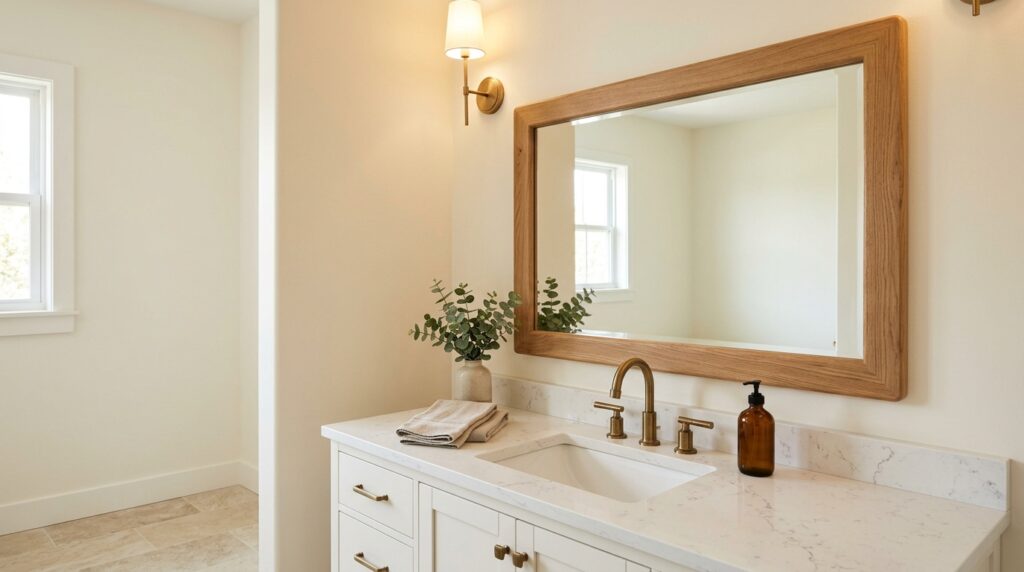
Even a mirror the same size and shape as the original, just with a frame around it, can make the whole vanity area look intentional rather than like it was never finished. Many framed mirror kits are designed to fit directly over an existing builder-grade mirror, which keeps the project simple and avoids dealing with the original mounting clips at all.
3. Replace Outdated Light Fixtures
Old vanity light fixtures, especially the kind with multiple exposed bulbs in a row, are one of the clearest signs of an outdated bathroom. Swapping these for a modern sconce, a single statement fixture, or warmer bulb toned lighting changes both the look and the feel of the room.
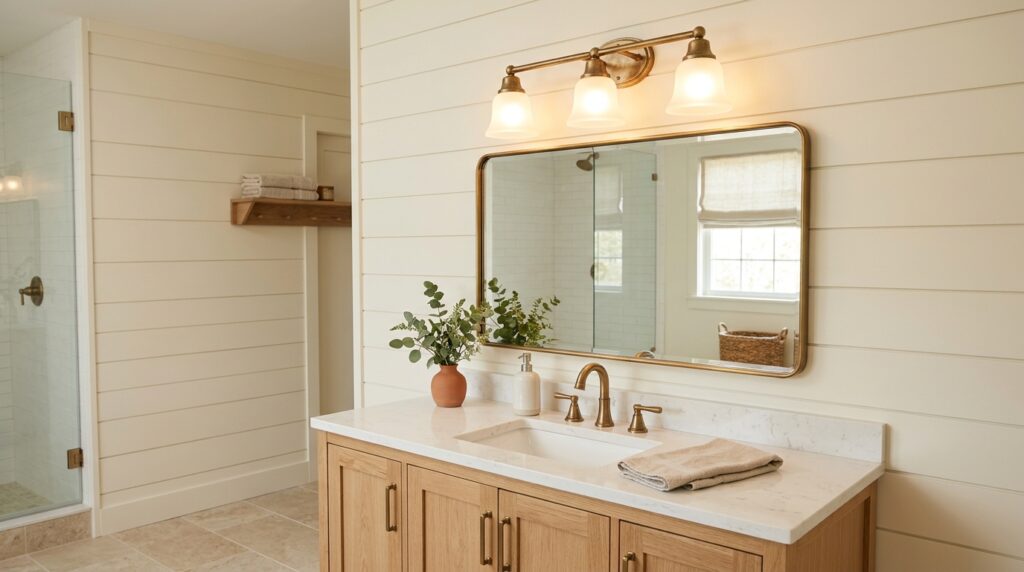
Lighting also affects how the rest of the bathroom photographs and how flattering it feels day to day, which makes this update worth prioritizing even on a tight budget.
Pay attention to the color temperature of the new bulbs as well as the fixture itself. A warm white bulb, somewhere around 2700K to 3000K, tends to flatter skin tones at the mirror far better than the cool, bluish light older fixtures often came with.
4. Update Faucet and Hardware Finishes
A faucet in a worn chrome or brass finish can make an otherwise nice vanity look dated. Replacing the faucet, along with matching the finish across towel bars, cabinet pulls, and the shower head, creates a cohesive look that ties the whole room together.
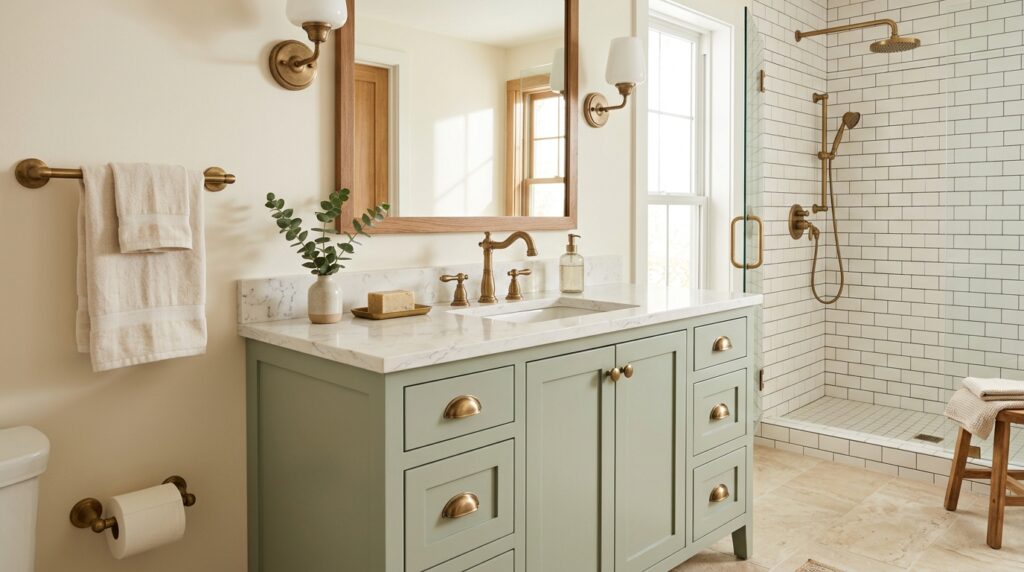
This update works especially well when paired with a painted vanity, since new hardware in a finish like matte black or brushed gold reads as a deliberate design choice against the fresh paint. Sticking to one finish across all the hardware in the room, rather than mixing several, is what makes this kind of update read as cohesive rather than piecemeal.
5. Add a Fresh Coat of Paint to the Walls
Wall color has an enormous effect on how a bathroom feels, and a fresh coat of paint is one of the most affordable ways to change that. Moving from a dated beige or stark builder white to a soft, intentional color can make the whole room feel updated.
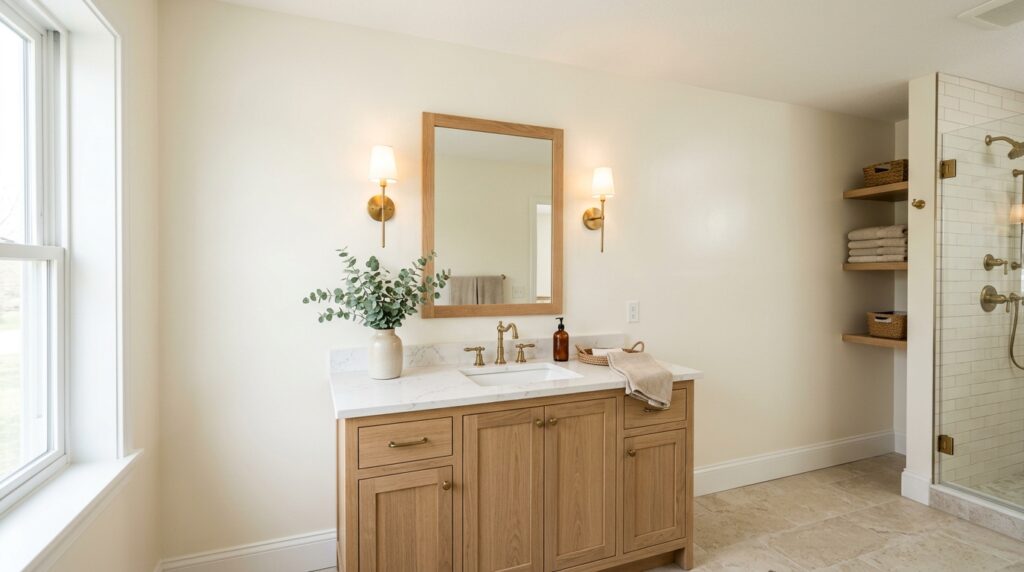
This is also a good opportunity to address any patchy or uneven paint from years of moisture exposure, giving the walls a clean, even finish as part of the update. Choose a paint formulated for bathrooms, since these are designed to resist mildew and hold up better in a room with frequent humidity changes.
6. Replace a Shower Curtain with a Glass Door
A glass shower door, even a simple frameless one, immediately reads as more modern and higher end than a shower curtain. It also makes the bathroom feel more open, since a curtain visually divides the room in a way glass does not.
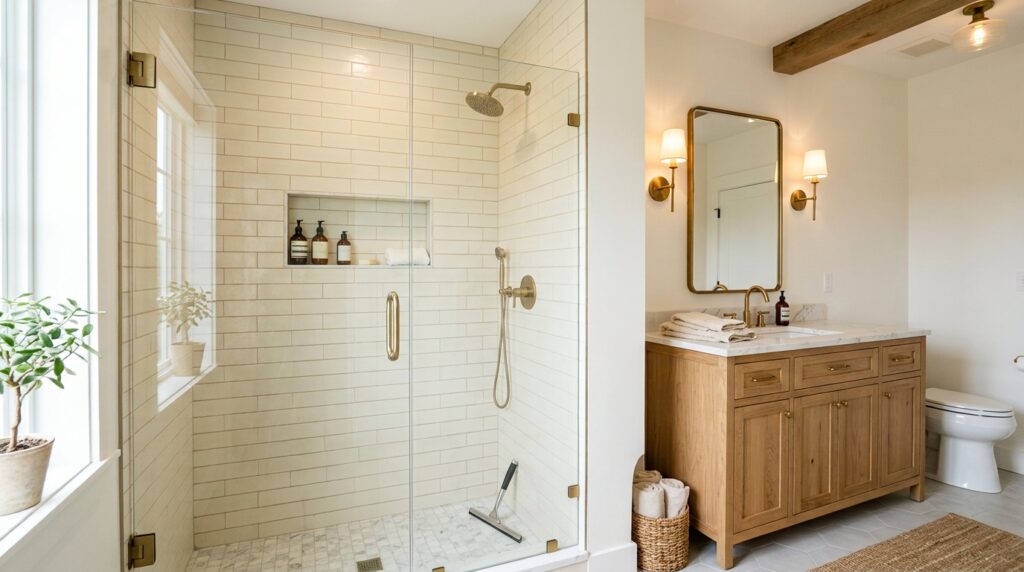
This is a bigger investment than most items on this list, but it consistently ranks as one of the changes that has the most visible impact in before and after photos.
If a full custom door is out of budget, semi frameless options with minimal hardware still give most of the same open, modern look at a lower cost. Either way, a squeegee kept nearby helps the glass stay clear without water spots building up over time.
7. Add Open Shelving for Storage and Style
Open shelves, whether added above a toilet, beside a vanity, or in an unused corner, give a bathroom both functional storage and a place to add personality through folded towels, plants, or small decor items.
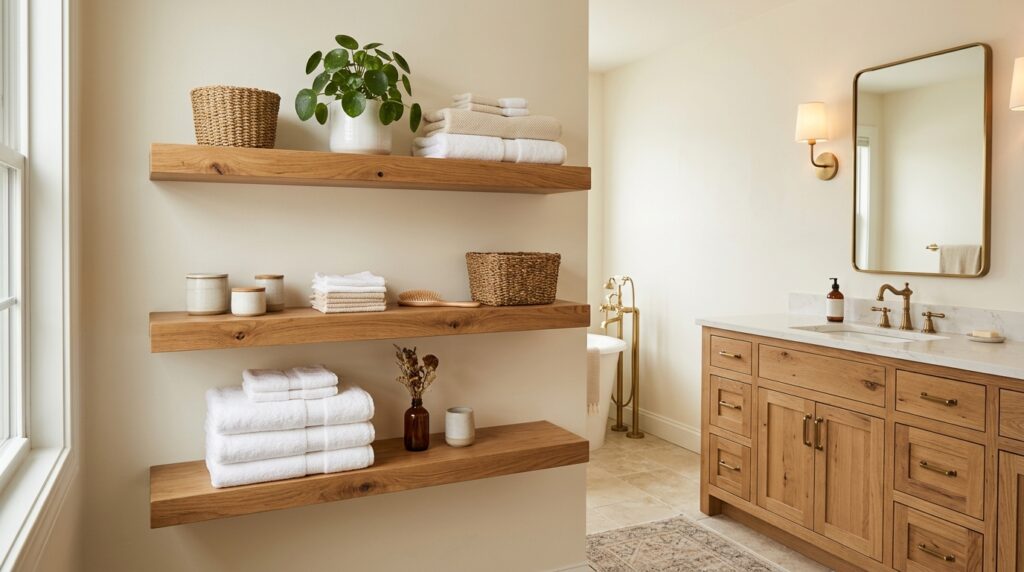
This works particularly well in bathrooms that previously had no storage solution at all, turning a blank wall into one of the more styled areas of the room. Floating shelves in a wood tone or simple painted finish tend to blend in with most existing color schemes, making them an easy addition regardless of the rest of the room’s style.
8. Swap Out the Toilet for a Modern Style
An old toilet with a bulky tank and rounded bowl can look noticeably dated next to an otherwise updated bathroom. A newer toilet with a more streamlined shape and elongated bowl looks more current and often takes up slightly less visual space.
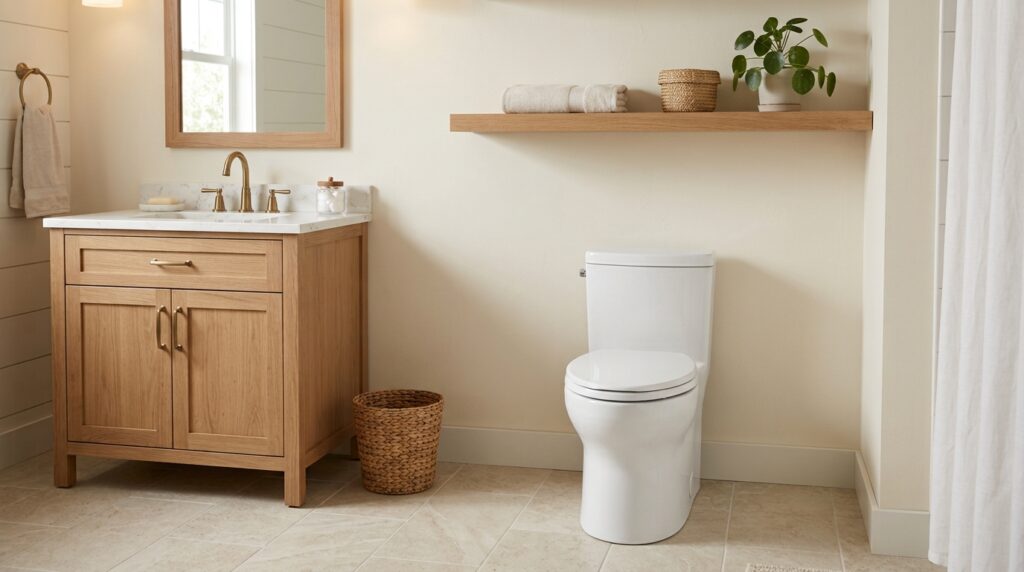
While this is a more involved update than most on this list, it is often one of the last pieces needed to make a remodeled bathroom feel fully cohesive rather than partially updated.
9. Add a Statement Light Above the Mirror
Beyond simply replacing a vanity light, choosing something with more presence, an oversized round fixture, a row of small sconces, or a pendant light if the ceiling height allows, turns the lighting itself into a design feature rather than just a functional necessity.
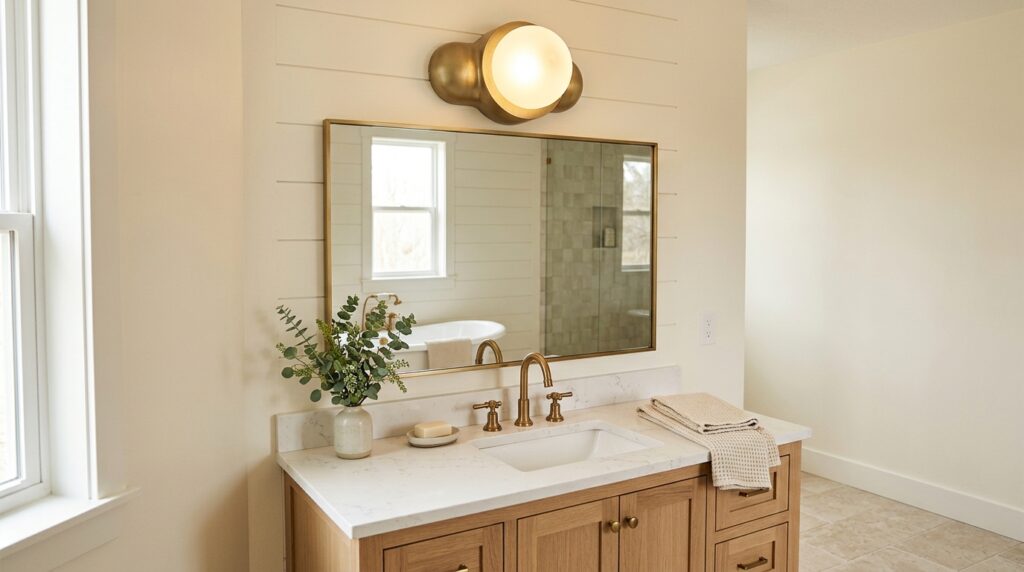
This works especially well above a single large mirror, where the light fixture and mirror together become the focal point of the entire vanity wall. The combination of a bold light fixture and a simple mirror often looks more deliberate than an ornate mirror paired with a plain light ever does.
10. Replace Cabinet Hardware
If a full vanity repaint is not in the budget, simply swapping the knobs and pulls on the cabinet can still make a noticeable difference. Old brass or plastic hardware replaced with simple matte black or brushed nickel pulls updates the look of the cabinetry without touching the cabinets themselves.
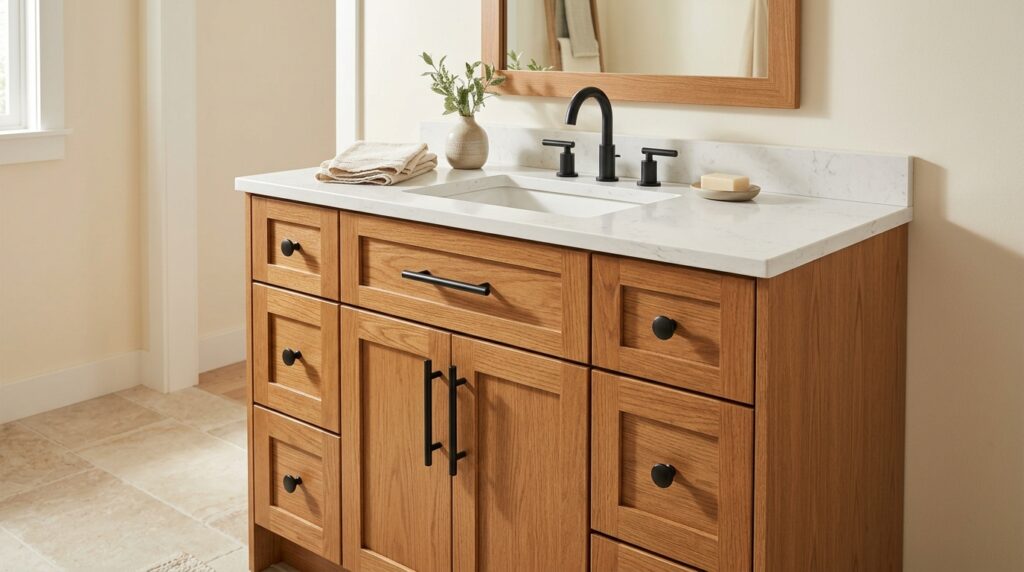
This is one of the fastest changes on this list, often taking less than an hour for an entire vanity, and it pairs well with almost any other update on this list as a finishing touch.
11. Add a Backsplash Behind the Vanity
A vanity with no backsplash, or one with a plain painted wall directly behind the sink, can gain a lot of character from a tile backsplash. Even a simple subway tile or a small patterned tile section adds texture and definition to the area that gets the most water exposure.
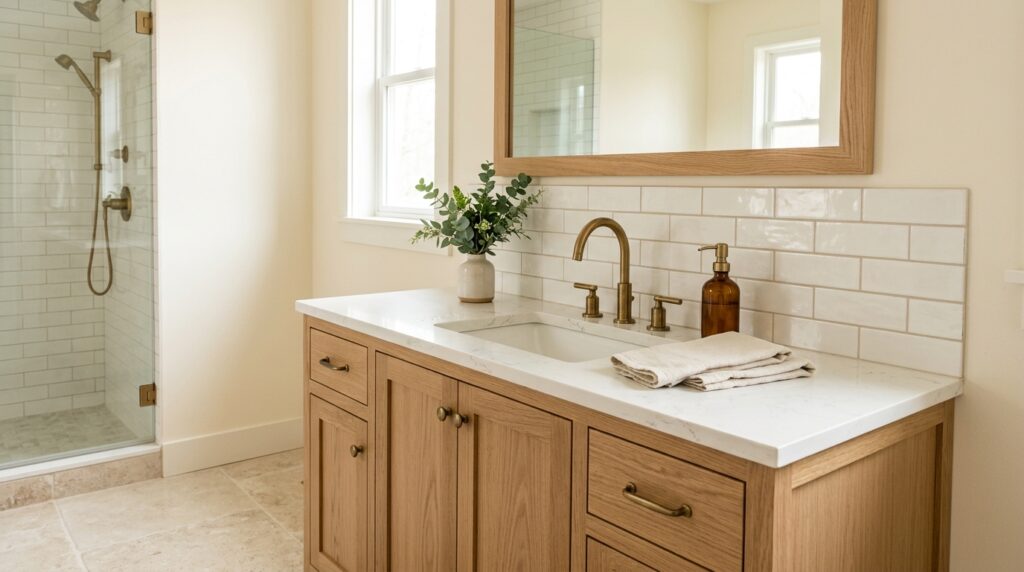
This update also protects the wall from splashes, combining a practical benefit with a visual one. Peel and stick tile is a realistic option here too, since the area behind a vanity is usually small enough that even a temporary material holds up well and can be replaced easily if it starts to lift at the edges.
12. Reglaze an Old Bathtub
A bathtub with worn, stained, or chipped enamel can make an entire bathroom look neglected, even if everything else is in good condition. Reglazing the tub restores a smooth, glossy surface without the cost or disruption of replacing it entirely.
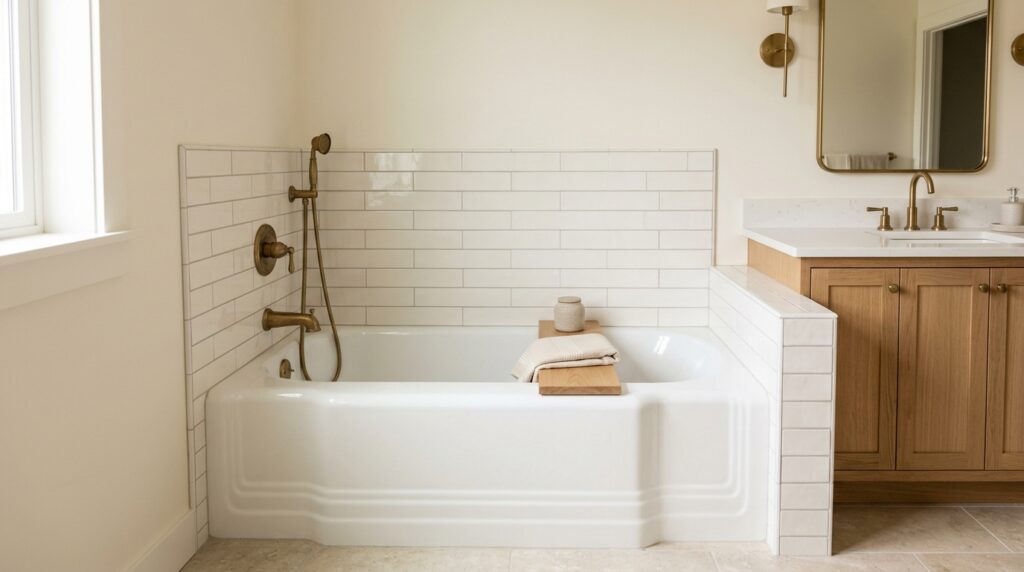
This is one of those changes that, while not visually dramatic in the way a new vanity is, removes one of the most noticeable signs of wear in an older bathroom, and it is usually far less expensive than a full tub replacement.
13. Add Wallpaper to One Wall
A single wallpapered wall, often the wall behind the toilet or the back wall of a vanity area, introduces pattern and color into a bathroom without the cost or commitment of wallpapering the entire room. Moisture resistant wallpapers are designed specifically for this kind of use.
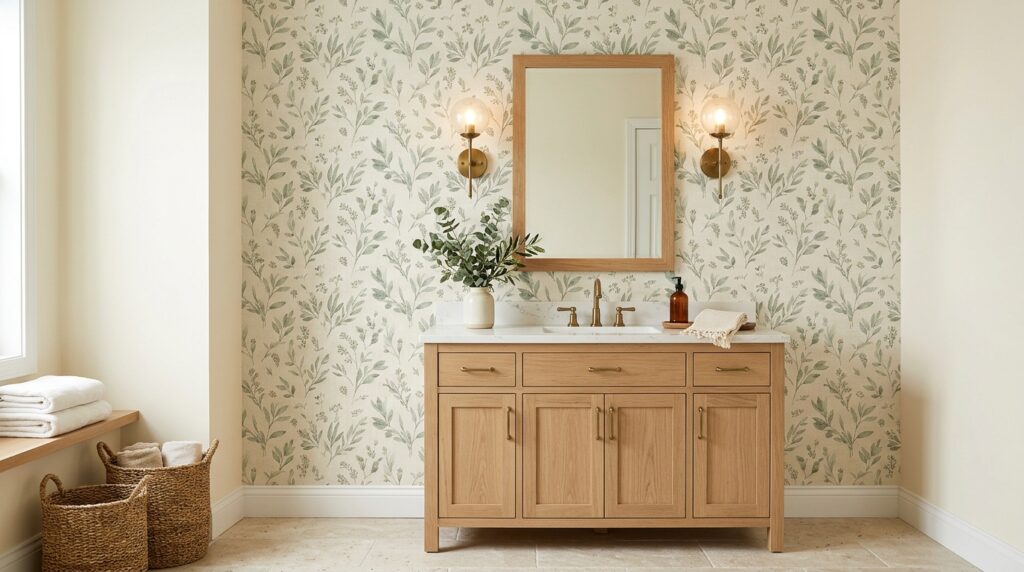
This update pairs particularly well with simple white tile or paint on the remaining walls, letting the wallpapered wall stand out as the focal point rather than competing with other busy elements in the room.
14. Replace an Old Exhaust Fan
An exhaust fan is rarely something people notice until it is loud, weak, or visibly outdated, but replacing an old, noisy fan with a quieter, more efficient model improves both the function and the ceiling’s appearance, since newer fans often have a lower profile and cleaner cover design.
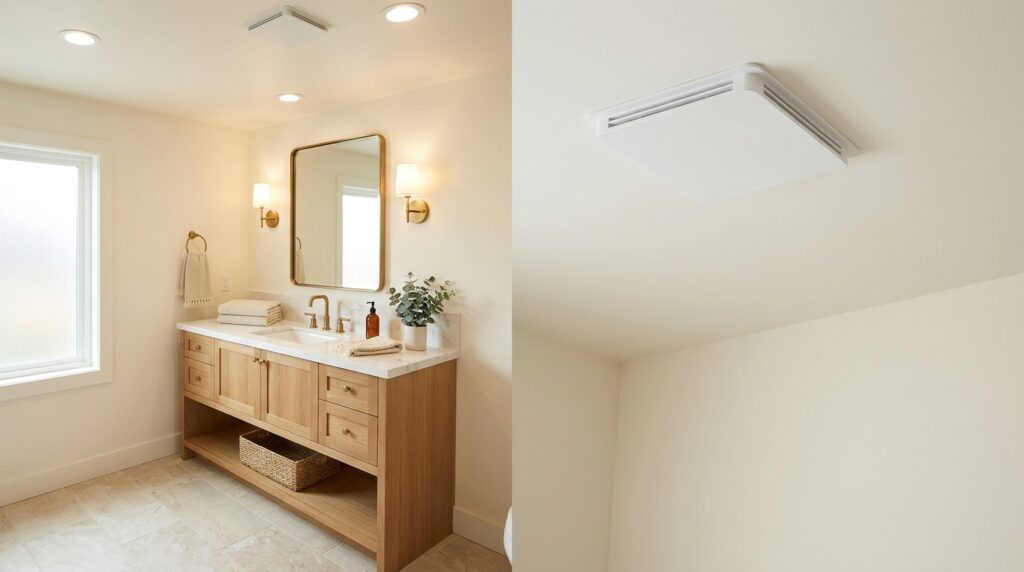
This update does not show up dramatically in photos, but it addresses one of the most common complaints about older bathrooms, excess noise and poor ventilation, both of which matter more in daily use than they do in a single snapshot.
15. Add Crown Molding or Trim
Crown molding along the ceiling line, or simple trim around doors and windows, adds a level of finish that many builder-grade bathrooms skip entirely. This kind of detail makes a space feel more like the rest of a finished home rather than a separate, more utilitarian room.
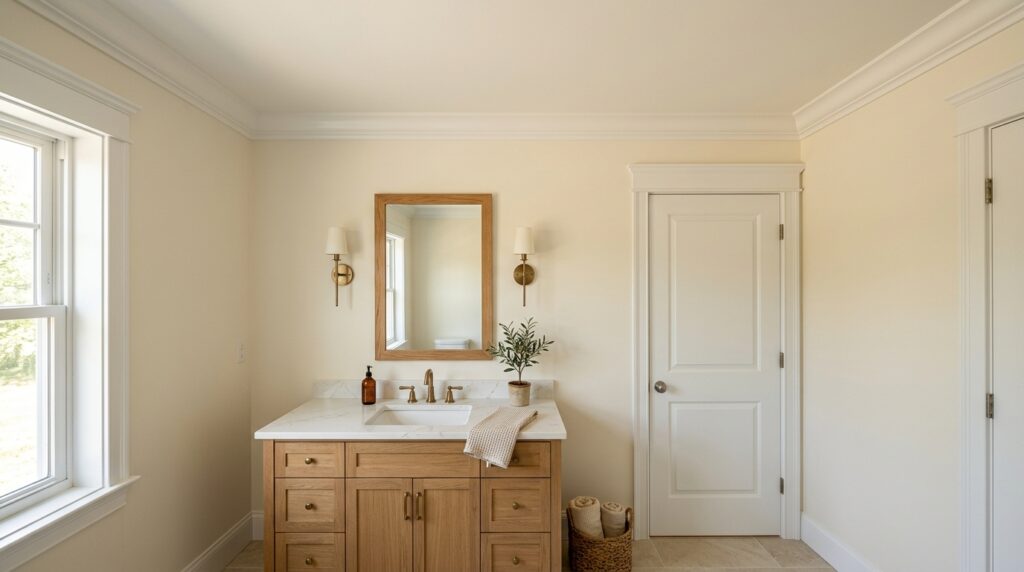
Painting the trim a crisp white, even if the walls are a different color, creates definition between the wall and ceiling that a plain painted box does not have, and it is one of those details that quietly elevates everything else in the room.
16. Swap Towel Bars and Rings
Old towel bars, often in a tarnished or mismatched finish, are an easy swap that coordinates with other hardware updates. A new towel bar, ring, and toilet paper holder in a matching finish ties the smaller details of the bathroom together.
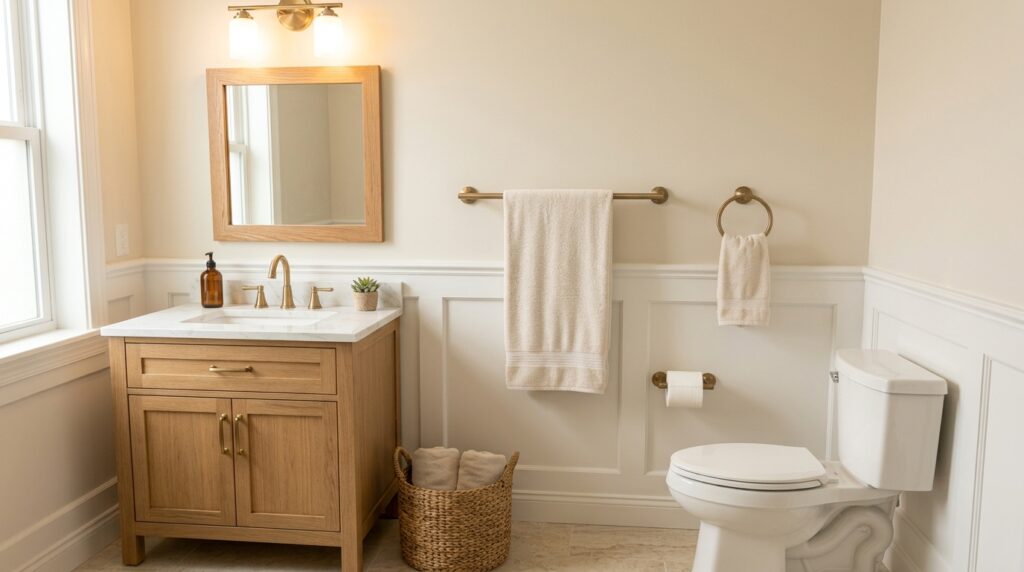
This update is inexpensive and quick, but it removes one of the small inconsistencies that can otherwise make an updated bathroom feel slightly unfinished, especially once other larger changes have already been made.
17. Add a New Shower Curtain and Rod
If a glass door is not in the budget, a new shower curtain on an upgraded rod, particularly a curved rod that creates more shower space, can still make a noticeable difference. The curtain itself is one of the largest fabric elements in the room and affects the overall color scheme significantly.
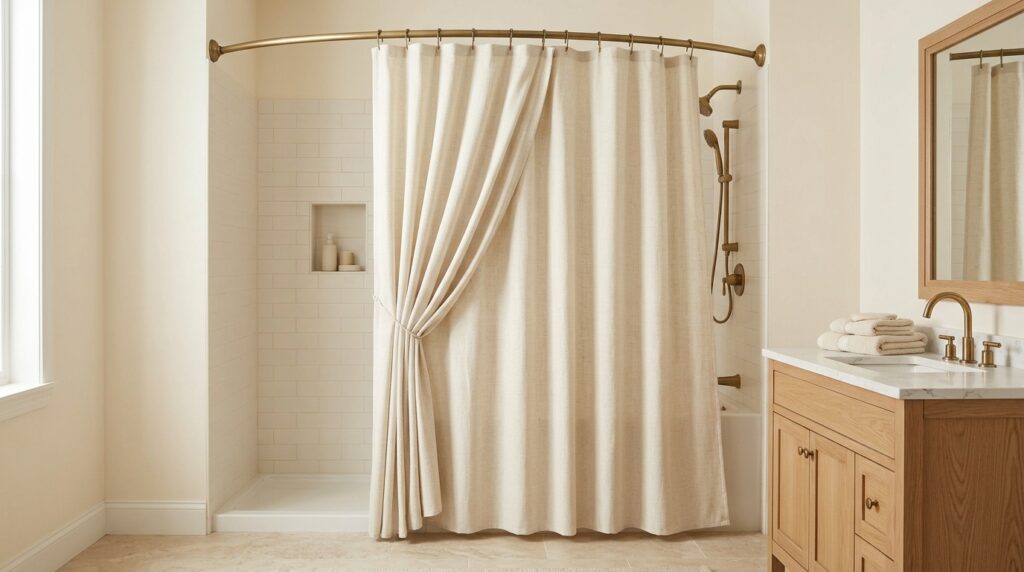
A curtain in a solid color or subtle texture, paired with a rod in a finish that matches the rest of the room’s hardware, looks far more intentional than a mismatched, purely functional setup.
18. Update Window Treatments
A bathroom window with an old blind or no covering at all can benefit from a simple update, whether that is a woven shade, a frosted film for privacy, or a small curtain in a moisture resistant fabric. This detail is easy to overlook but affects both privacy and the overall finished look of the room.
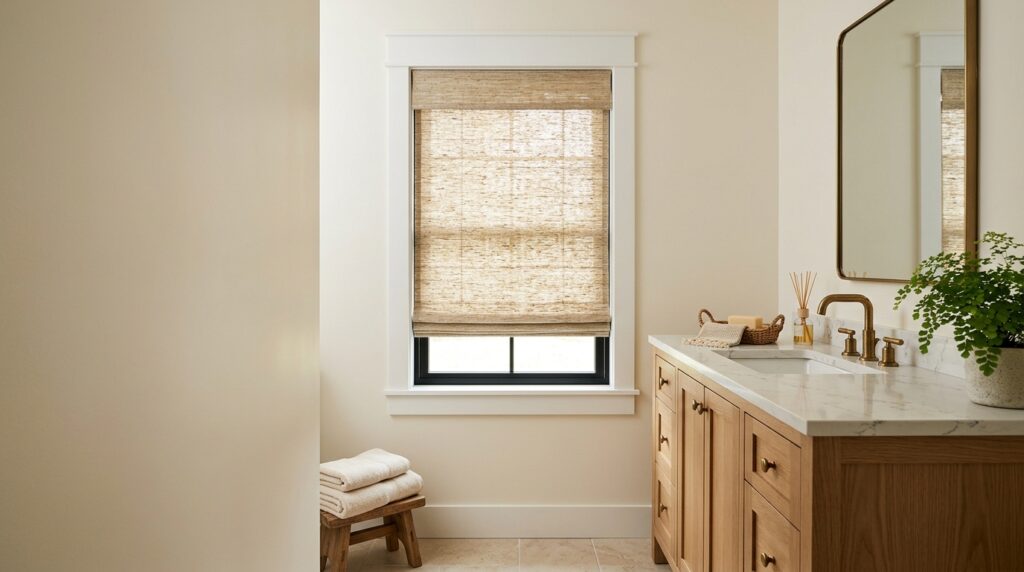
Choosing a window treatment that coordinates with the room’s color palette, rather than defaulting to plain white, adds one more layer of intentional design to the space and ties the window into the rest of the updates around it.
19. Add Plants and Decor for the Final Touch
Once the bigger updates are in place, plants, a few framed pieces of art, and small decor items like a tray for the vanity or a new soap dispenser bring the whole space together. These final touches are often what separates a bathroom that looks renovated from one that looks lived in and styled.
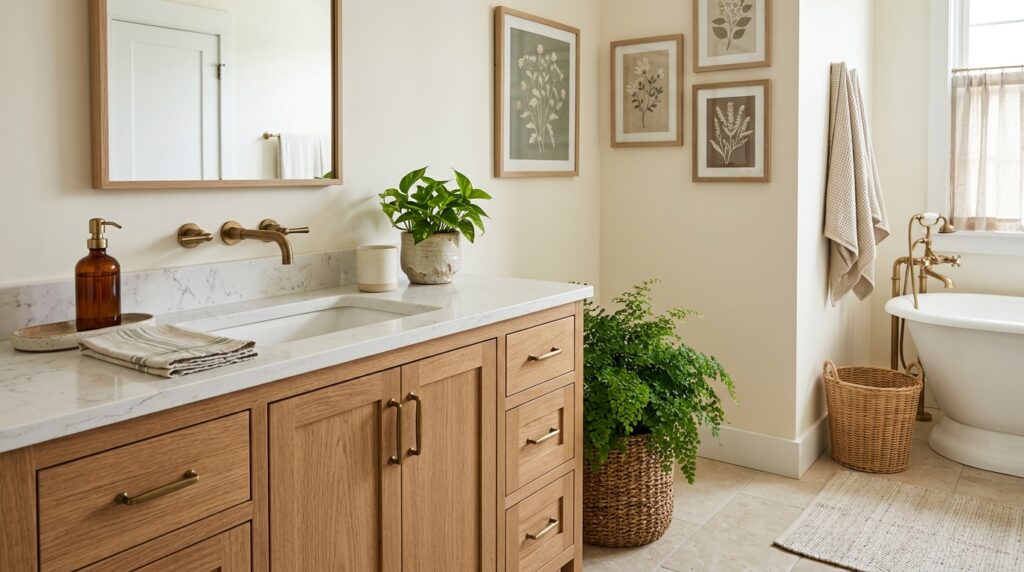
A plant that tolerates humidity well, like a pothos or a fern, also adds life to a room that otherwise has mostly hard surfaces. Even small details like swapping a plastic trash bin for a woven basket, or replacing a worn bath mat with a new one in a coordinating color, add to the overall sense that the room has been thought through rather than just updated piece by piece.
Conclusion
The most dramatic before and after bathroom transformations rarely come from a single massive change. More often, they come from a combination of smaller updates, paint, hardware, lighting, and a few key fixtures, that together shift the entire feel of the room.
Prioritizing changes based on cost and impact makes sense for most people working through a remodel gradually. A painted vanity, new hardware, and updated lighting alone can completely change how a bathroom looks and feels, long before any bigger structural changes happen.
Whatever the budget or timeline, the goal of a before and after transformation is the same, a bathroom that no longer looks like it belongs to whoever lived there before, but to whoever lives there now.