
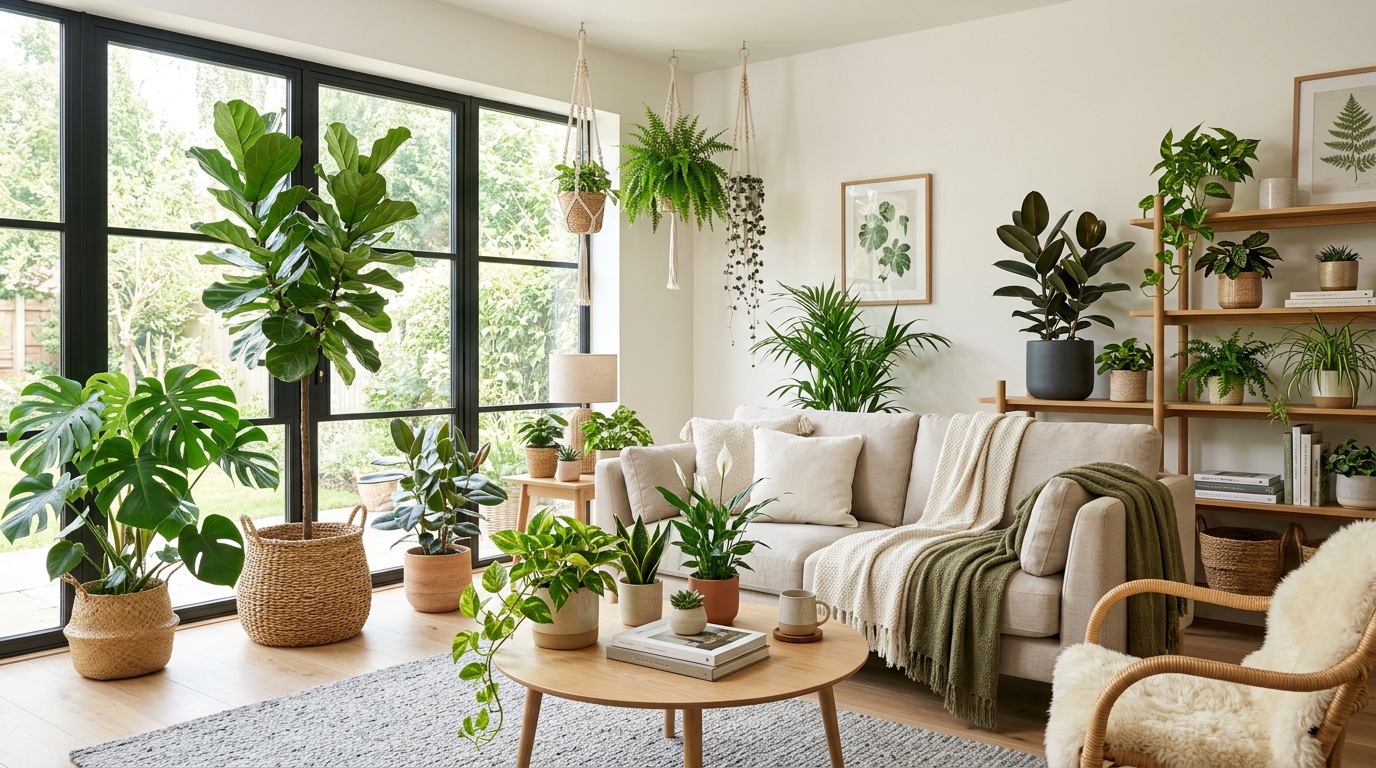
A living room without plants is a room that is missing something even when everything else is right. Plants bring a quality of life and movement to a space that no object, no artwork, and no piece of furniture can replicate. These 20 indoor plant ideas for living rooms will show you how to use greenery intentionally to make your living room feel fuller, fresher, and genuinely more alive.
The ideas here cover every style of living room and every level of plant experience, from complete beginners to people who already have a growing collection and want to take it further. Below are 20 ways to bring plants into your living room in a way that actually works.
1. Use a Large Fiddle Leaf Fig as a Focal Point
A tall fiddle leaf fig in a living room corner does more visual work than almost any other single plant. The large glossy leaves, the upright form, and the way it fills vertical space without spreading horizontally make it the ideal plant for a living room that needs a focal point but has limited floor space to spare. Position it in a corner that receives bright indirect light and it will anchor the entire room around itself.
Plant it in a large ceramic planter in white, terracotta, or matte black depending on your color palette and give it a basket or pot cover that complements your existing furniture. Wayfair and Target both carry oversized planters in the right scale for a mature fiddle leaf fig. The plant itself is available at most garden centers and Home Depot for around thirty to fifty dollars for a well established specimen.
2. Create a Plant Shelf Along One Wall
A dedicated plant shelf running along an entire wall creates a living installation that changes as the plants grow and as you add or rotate pieces throughout the year. Use floating shelves at varying heights to accommodate plants of different sizes and trailing varieties that spill over the edge. The combination of plant forms, pot colors, and leaf textures across a single wall creates visual richness that no art collection or book arrangement can quite match.
Mix trailing pothos or string of pearls on the upper shelves where they can hang freely with compact upright plants like snake plants and ZZ plants on the lower shelves. Keep the pot colors consistent, all terracotta, all white, or all a single neutral tone, to prevent the display from looking chaotic regardless of how many different plant varieties are on the shelf.
3. Hang Trailing Plants from the Ceiling
Hanging plants bring greenery into the upper zone of a living room that floor and shelf plants never reach. A collection of hanging planters at different heights in a window corner or above a seating area creates a layered canopy effect that makes the whole room feel more lush and enveloping. Trailing pothos, string of hearts, spider plants, and burro’s tail are all excellent hanging plant choices for a living room because they grow quickly and look increasingly dramatic as their trails lengthen.
Use ceiling hooks rated for the weight of a fully watered plant and choose hanging planters in materials that complement your living room style. Macrame hangers in natural cotton work beautifully in a bohemian or organic modern room. Simple ceramic hanging pots or woven rattan hangers suit a more contemporary or Scandinavian aesthetic. Water hanging plants by taking them down and watering in a sink or using a long spouted watering can to reach the soil without soaking the ceiling.
4. Place a Monstera Deliciosa Beside the Sofa
A monstera deliciosa positioned at the end of a sofa creates a relationship between the plant and the furniture that makes both look better. The large split leaves frame the seating area without enclosing it and the scale of a mature monstera is perfectly proportioned to the height of a sofa back. It is one of those plant and furniture combinations that photographs as well as it works in person.
Monsteras are relatively forgiving plants that tolerate lower light conditions than most large leaved tropicals, though they grow faster and produce larger leaves in bright indirect light. A moss pole inserted into the pot gives the plant something to climb and encourages the production of larger, more dramatically split leaves over time. Expect to repot into a progressively larger container every year or two as the plant establishes and grows.
5. Group Plants in Odd Numbers
Single plants can look isolated and lost in a large living room. Grouping three, five, or seven plants together in a corner or along a wall creates a display that reads as an intentional composition rather than individual objects placed separately around the room. The odd number grouping is a design principle that applies as naturally to plants as it does to any other decorative arrangement and the visual mass of a grouped plant display makes a much stronger statement than the same plants distributed individually throughout the space.
Vary the heights within each grouping so the tallest plant stands at the back, medium plants fill the middle, and low compact plants anchor the front. This layering mimics how plants grow in nature and gives the arrangement a sense of depth and organization that a flat row of same height plants cannot achieve.
6. Use Snake Plants for Low Light Corners
Every living room has at least one corner that does not receive enough light for most plants to thrive. Snake plants, also known as sansevieria, are the solution to that corner. They tolerate low light, infrequent watering, and neglect at a level that makes them virtually indestructible and their upright, architectural form reads as sculptural and deliberate in a way that most low light tolerant plants do not.
A tall snake plant variety like Sansevieria trifasciata in a sleek pot is a living room plant that looks intentional rather than like a compromise. A cluster of three snake plants in varying heights grouped together in a dark corner creates a striking low maintenance display that holds its visual quality through every season regardless of how much attention it receives.
7. Try a Statement Banana Plant
A banana plant in a living room makes an immediate and confident statement. The enormous paddle shaped leaves in bright tropical green create a sense of abundance and lushness that is difficult to achieve with any other houseplant at a similar price point. A well positioned banana plant beside a large window or in a light filled corner fills the space in a way that feels genuinely tropical without requiring any additional styling around it.
Banana plants grow quickly in good light and require consistent watering during the growing season. They are not low maintenance plants but the visual payoff for the effort they require is significant. A mature banana plant in a large terracotta pot in a white walled living room is one of those plant and room combinations that looks effortlessly right regardless of the surrounding furniture or decor style.
8. Line a Window Ledge with Smaller Plants
A deep window ledge lined with a row of smaller plants in coordinating pots creates a living window treatment that filters the light coming into the room in a way that blinds and curtains cannot. Succulents, small cacti, trailing string of pearls, and compact pothos varieties all work well on a window ledge because they enjoy the bright light and stay compact enough not to block the view entirely.
Keep the pot sizes and colors consistent along the ledge for a tidy, organized look. A row of small white ceramic pots or a collection of terracotta pots in graduating sizes creates a display that looks considered and cohesive rather than like a random collection of plants placed wherever they happened to fit. The light passing through and around the plants casts interesting shadows into the room throughout the day that change as the light moves.
9. Add a ZZ Plant for Effortless Glossy Greenery
The ZZ plant is one of the most underrated living room plants available. The deep, almost lacquered green of its leaves catches light in a way that makes it look more expensive and considered than its very affordable price tag suggests. It tolerates low light, infrequent watering, and extended periods of neglect without showing any signs of stress, which makes it the ideal plant for a living room that needs greenery but does not always get consistent attention.
A ZZ plant in a matte black or dark charcoal pot suits a modern or contemporary living room perfectly. The contrast between the glossy deep green leaves and a dark matte pot creates a combination that looks deliberately styled. Place it in a corner beside a floor lamp or on a low plant stand beside the sofa and it brings a quality of dark, glossy greenery to the room that lighter leaved plants simply do not provide.
10. Build a Plant Corner with a Floor Plant Stand
A tiered floor plant stand in a living room corner allows you to display multiple plants at different heights within a relatively small footprint. The stand itself becomes a piece of furniture with a functional purpose and the collection of plants it holds creates a corner that serves as a genuine design feature of the room. Bamboo, rattan, and dark metal tiered stands all work well in a living room context depending on your overall aesthetic.
Style the stand with plants that complement each other in form and color: a tall upright plant on the top tier, a bushier mid size plant on the middle tier, and a compact trailing plant on the bottom tier that spills slightly over the edge. The vertical layering within a single corner footprint is the most space efficient way to create a significant plant display in a living room that does not have unlimited floor space to dedicate to greenery.
11. Use Pots as Decor Elements
The pot a plant lives in contributes as much to the overall look of a living room as the plant itself. A beautiful plant in a basic plastic nursery pot looks like an oversight. The same plant in a hand thrown ceramic pot, a woven seagrass basket, or a textured concrete planter looks like a design decision. Investing in pots that work as decorative objects in their own right elevates every plant in the room regardless of its variety or size.
Build a collection of pots in a consistent material family, all ceramics in earthy tones, all terracotta in varying sizes, or all woven natural fiber baskets, and the variety of plant forms within them will provide all the visual interest you need without the pot choices competing with each other. A cohesive pot palette is the single easiest upgrade available to anyone who already has plants in their living room but feels like the overall display is not quite working.
12. Grow a Pothos Cascade from a High Shelf
A pothos planted on a high shelf and allowed to trail downward over time creates one of the most dramatic and low maintenance plant displays available in a living room. As the trailing vines grow longer they create a cascade of green that can eventually reach several feet below the shelf, filling an entire wall section with living greenery that requires almost no effort to maintain beyond occasional watering and the patience to let it grow.
Golden pothos, marble queen pothos, and neon pothos all trail beautifully and the variation in leaf color and variegation gives you options that work in everything from a warm earthy living room to a cool contemporary one. Mount the shelf high enough that the trailing vines have room to grow without immediately reaching the floor and the display becomes more impressive with every passing month.
13. Try an Olive Tree for a Mediterranean Feel
An indoor olive tree in a large terracotta or aged cement pot brings a quality of warmth and Mediterranean character to a living room that no other plant quite replicates. The silvery green foliage, the gnarled trunk of an older specimen, and the overall form of an olive tree are immediately distinctive and the plant works beautifully in both contemporary and traditional living room settings without looking like it belongs to either specifically.
Olive trees require bright light to thrive indoors so position yours near your largest south or west facing window. They are drought tolerant once established and prefer to dry out between waterings rather than sitting in consistently moist soil. A mature specimen olive tree in a large aged terracotta pot is one of those living room plants that looks like it took years to find even when you bought it at a local nursery last weekend.
14. Add a Bird of Paradise for Tropical Drama
A bird of paradise plant in a living room makes a statement that is difficult to overstate. The enormous paddle shaped leaves on tall upright stems create a tropical silhouette that fills a corner or a large wall section with genuine drama. In a bright living room with large windows a bird of paradise grows vigorously and the leaves get progressively larger over time as the plant establishes in its pot.
The bird of paradise works in contemporary, bohemian, and organic modern living rooms equally well because its form is dramatic enough to define the aesthetic of its corner regardless of what surrounds it. Plant it in an oversized planter in a neutral color, give it the brightest spot in your living room, and water it consistently during the growing season. Within two to three years a well cared for bird of paradise becomes one of the most impressive living room plants you will ever own.
15. Cluster Succulents on a Coffee Table
A tray of small succulents on a coffee table creates a living centerpiece that requires almost no maintenance and looks freshly styled every time you look at it. Group five to seven small succulent varieties in a shallow tray or on a flat wooden board, mix forms and colors within the same warm green and dusty blue palette, and the arrangement reads as a considered design object rather than a collection of houseplants.
Succulents need bright light to maintain their compact form and rich color so a coffee table arrangement works best in a living room with strong natural light. Rotate the tray every week or so to ensure all sides of the plants receive even light exposure. Replace any succulent that starts to etiolate, stretch toward the light and lose its compact form, with a fresh compact specimen and the arrangement stays looking its best indefinitely.
16. Use a Rubber Plant for Bold Dark Foliage
The rubber plant, Ficus elastica, has deep burgundy to almost black leaves that bring a dark, moody quality to a living room plant display that most other houseplants cannot provide. In a living room with a light neutral palette the deep coloring of a rubber plant creates a striking contrast. In a darker, moodier living room it deepens the overall atmosphere in a way that is genuinely compelling.
Burgundy rubber plants and the newer black prince variety are the most dramatic options available. Both grow into substantial plants over time and the large glossy leaves stay looking polished with minimal care beyond occasional wiping with a damp cloth to remove dust. A tall rubber plant in a matte white pot creates a contrast of dark glossy leaf against light matte ceramic that looks deliberately and skillfully styled.
17. Install a Living Wall Panel
A modular living wall panel mounted on a living room wall creates a vertical garden that serves as art, air purification, and living texture simultaneously. Modular systems from suppliers like Woolly Pocket or Plantwall allow you to create a custom configuration of plant pockets that fits any wall section. Fill the pockets with pothos, ferns, philodendrons, and peperomias and the wall fills in over several months into a dense, layered surface of overlapping greenery.
A living wall requires a water management system to prevent dripping onto the floor and wall behind it and the installation is more involved than placing a plant on a shelf. The visual result however is incomparable and a well established living wall in a living room is one of those features that redefines the character of the entire space rather than simply adding to it.
18. Choose Plants That Suit Your Light Honestly
The most common reason living room plants fail is that they are chosen for their appearance rather than their compatibility with the actual light conditions of the room. A fiddle leaf fig bought because it looks beautiful in a north facing living room with one small window will struggle and decline within months regardless of how carefully it is watered. Matching the plant to the light available is the single most important decision in creating a living room plant display that actually works over time.
Assess your living room honestly before buying. Bright indirect light suits most tropical plants. Low light suits snake plants, ZZ plants, pothos, and cast iron plants. Direct sun through a south facing window suits succulents, cacti, and herbs. Buying the right plant for your actual conditions rather than the plant you wish your conditions would support is the difference between a living room plant display that thrives and one that slowly declines no matter what you do.
19. Rotate Your Plants Seasonally
A living room plant display that never changes starts to become invisible after a while because the eye stops registering what it sees every day without variation. Rotating plants in and out of the living room seasonally, bringing in plants that are at their most visually interesting and moving others to brighter or less prominent spots around the house while they rest or recover, keeps the display feeling fresh and considered throughout the year.
This approach also allows you to match the plant display to the seasonal mood of the room, bringing in lush tropical specimens in summer and transitioning to darker, moodier foliage plants in autumn and winter. The living room plant display becomes a curated, evolving element of the room rather than a fixed installation and the ongoing decision making it requires keeps you engaged with both your plants and your room in a way that a static arrangement never does.
20. Let One Plant Grow Without Intervention
Every living room plant collection benefits from having one plant that is simply allowed to do what it wants without being pruned, shaped, staked, or contained. A pothos allowed to trail wherever it reaches, a monstera allowed to spread its leaves without being tied back, or a spider plant allowed to produce and extend its runners until they touch the floor creates a quality of wildness and genuine life within the room that perfectly maintained plants cannot provide.
The contrast between the curated elements of a living room and one plant that is clearly growing on its own terms is one of those details that makes a space feel genuinely inhabited rather than styled. It signals that the plants in this room are actually alive and actually growing, which is the quality that makes indoor plants so valuable in a living room in the first place.
Final Thoughts
Indoor plants in a living room work best when they are chosen with the same intention you bring to any other element of the room. The right plant in the right spot in the right pot contributes to the overall design in a way that is difficult to achieve through any other means. A living room with well chosen, well placed plants feels categorically different from one without them and these 20 indoor plant ideas for living rooms give you the framework to build that difference deliberately.
Start with one or two plants that suit your light conditions and your level of attention, place them thoughtfully, and let the collection grow from there. The best living room plant displays are never finished and never the same twice and that ongoing quality of life and growth is exactly what they bring to the rooms they inhabit.