
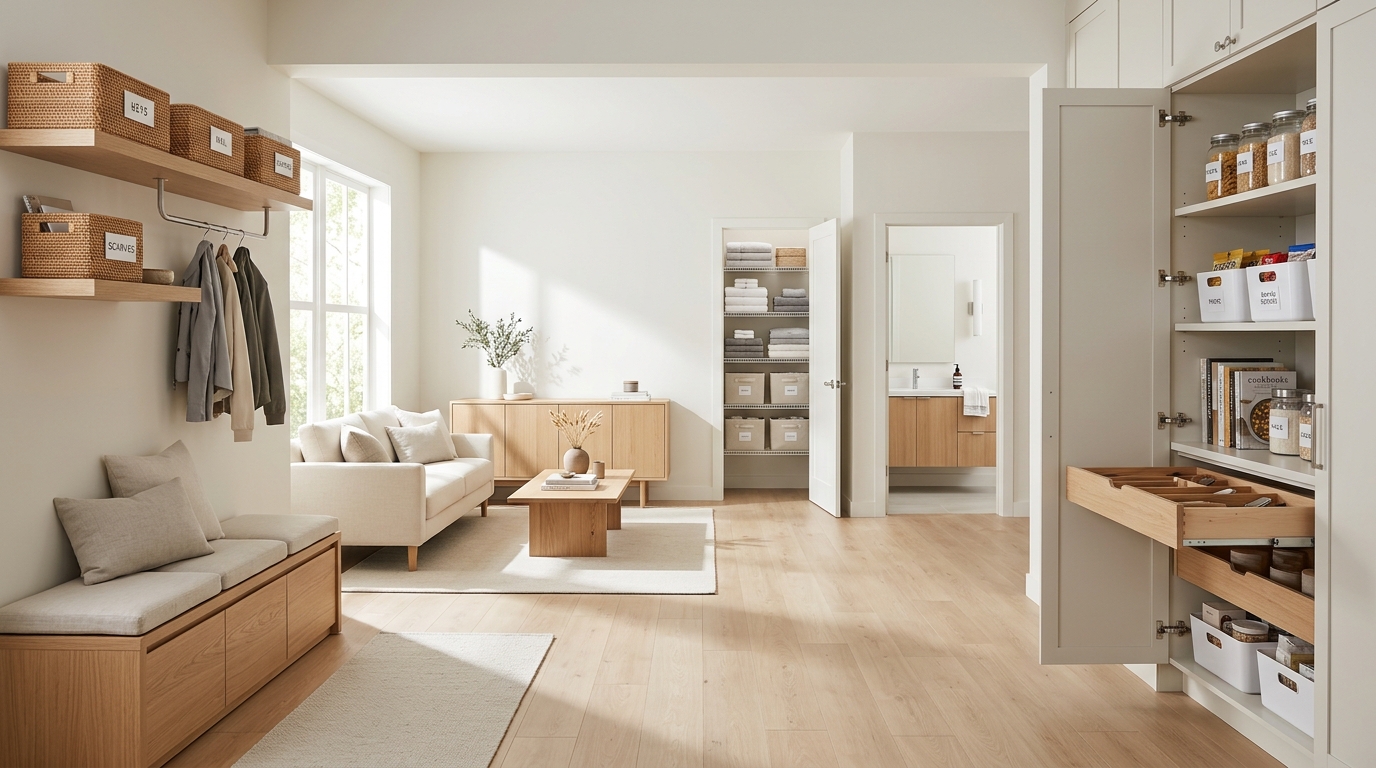
You have cleaned this house more times than you can count and it still does not feel organized. That is because cleaning and organizing are two completely different things. Cleaning moves the mess. Organizing removes the reason the mess keeps coming back.
These home organization ideas are built around the whole house, not just one drawer or one pretty shelf. Pantry, entryway, junk drawer, closet, laundry room: every area that tends to quietly fall apart over time gets addressed here. The goal is not a magazine-worthy home. The goal is a home that is easier to live in every single day.
You will find 19 specific ideas below, each one focused on a different part of the house. No two overlap. Start with the area that frustrates you most and work outward from there.
1. Give Every Item in Your Home One Designated Spot
The reason things pile up on counters and tables is not laziness. It is the absence of a home for each item. When something does not have a designated spot, it lands wherever there is space, which is usually in the middle of wherever you are trying to live. Fix the system and the clutter fixes itself.

Walk through your home and identify the items that are always out of place. For each one, decide where it actually belongs and create a spot for it there. A hook by the door for keys. A drawer in the kitchen for chargers. A basket on the shelf for remote controls. The spot does not need to be fancy. It just needs to exist and be consistent.
This one habit change does more for long-term home organization than any product you can buy.
2. Use Clear Bins in Every Pantry Shelf
A pantry with opaque bins requires you to open each one to find what you need. A pantry with clear bins tells you exactly what is running low and what needs to be used up, every time you open the door. The difference in daily function is significant.
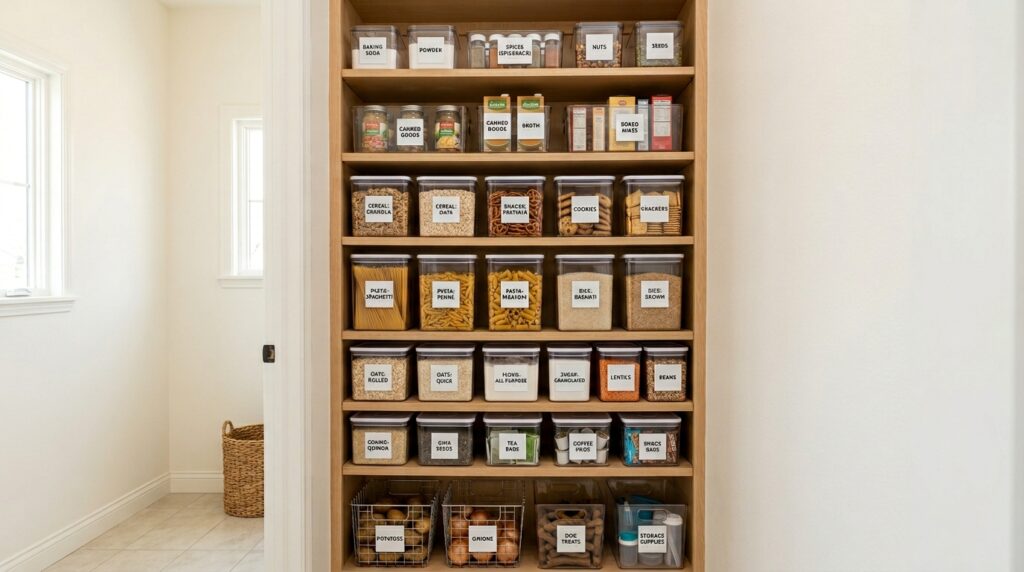
Use clear stackable bins from OXO, Rubbermaid Brilliance, or the IKEA 365 line for dry goods like pasta, rice, oats, and snacks. Decant items out of their original bags and into the bins so the shelf looks uniform and you can actually see the quantities. Label each bin with a label maker or even masking tape and a marker.
A well-organized pantry also reduces food waste because nothing gets buried and forgotten at the back.
3. Install a Command Center in Your Entryway
The entryway is where the chaos of daily life enters your home. Bags get dropped, shoes get kicked off, mail gets stacked, and keys go missing. A dedicated command center in this area intercepts all of that before it spreads to the rest of the house.
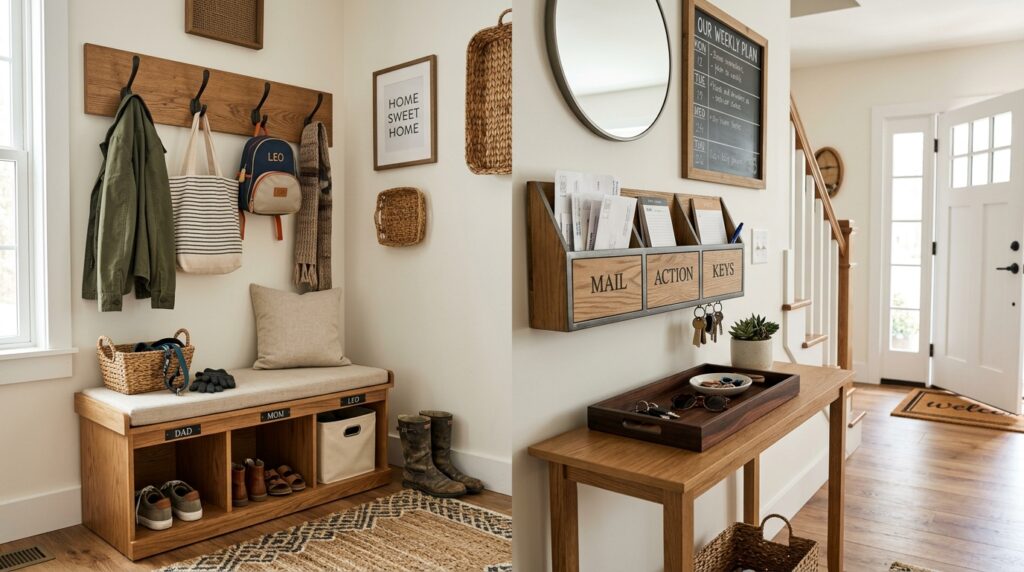
What does a command center need? A row of hooks at adult and child height for bags and coats, a small tray or bowl for keys and sunglasses, a shelf or cubby for shoes, and a simple bin or folder for incoming mail. The IKEA KALLAX unit with a bench seat on top works well for this. So does a simple wall-mounted pegboard with hooks and small baskets.
Keep it edited. A command center with too many things in it stops working just as fast as no command center at all.
4. Home Organization Ideas for the Junk Drawer Start with a Purge
Every home has a junk drawer and most of them contain things that have not been touched in three years. The problem is not the drawer. The problem is that the drawer has no categories, so everything goes in together and nothing comes out usefully.
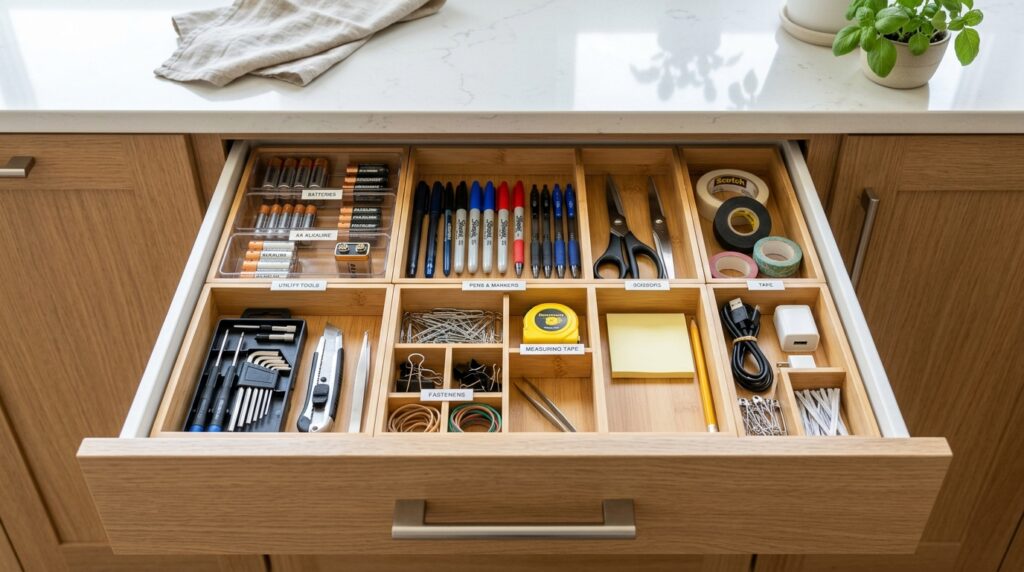
Empty the drawer completely. Throw away anything broken, expired, or truly unidentifiable. What remains usually falls into a few clear groups: batteries, pens and markers, small tools, tape and scissors, takeout menus or coupons. Get a simple drawer organizer with compartments sized for these categories. The Bamboo Expandable Drawer Organizer from Amazon Basics or the OXO Good Grips Drawer Organizer both work well and fit standard kitchen drawers.
Once everything has a section, the drawer stays organized because each thing has somewhere to go back to.
5. Use the Back of Cabinet Doors for Hidden Storage
The inside of cabinet doors is some of the most overlooked storage space in any kitchen or bathroom. A door that swings open and shows nothing on its back is a missed opportunity for organized, invisible storage.
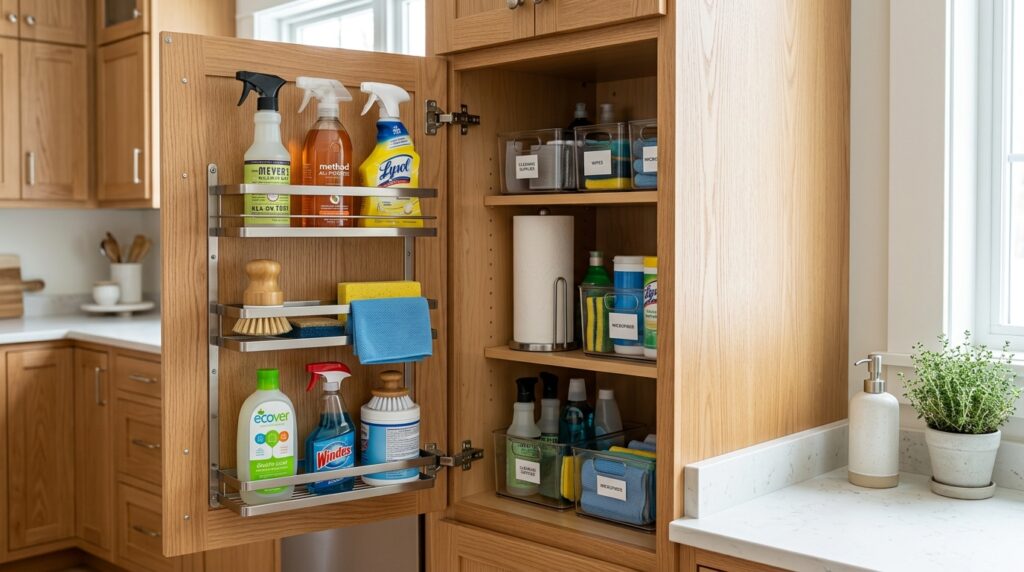
In the kitchen, mount a small rack on the inside of the cabinet under the sink for cleaning spray bottles and sponges. Add a spice rack to the inside of a pantry door. In the bathroom, add a small organizer to the inside of the cabinet under the sink for extra toiletries or hair tools. Command adhesive strips work for lightweight items and leave no damage behind, which makes this a good option for renters as well.
6. Fold Clothes Vertically in Drawers
Most people stack clothes horizontally in drawers, which means you see only the top item and dig through the rest to find what you want. The bottom items get ignored, the drawer stays messy, and things never actually get put away properly. Fold clothes vertically instead.
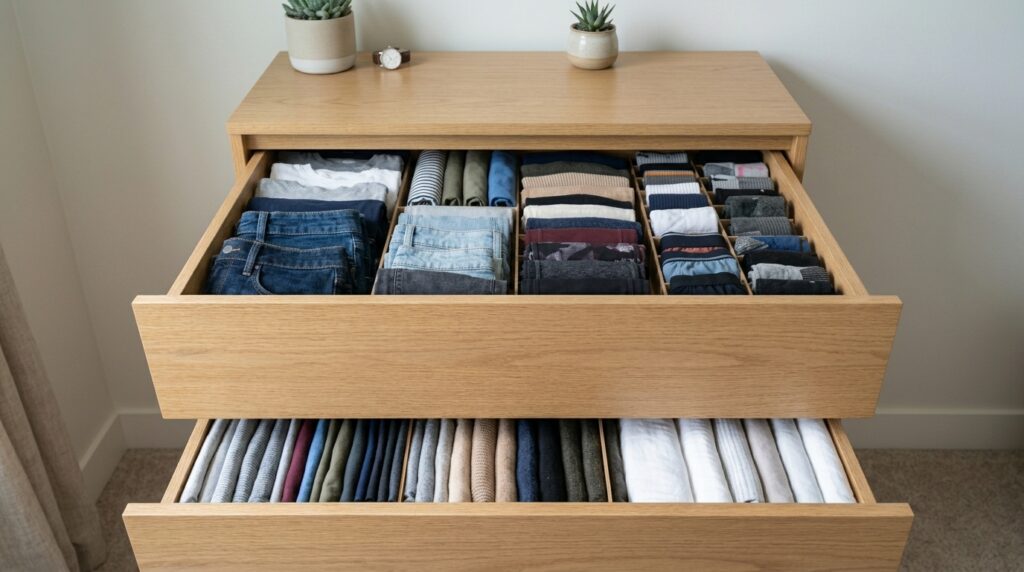
The Marie Kondo file-fold method stands each item upright so you can see every piece at a glance, like files in a filing cabinet. Fold shirts, jeans, leggings, and even socks this way. The drawer holds the same number of items, but everything is visible, accessible, and easier to put back in the right spot. No more digging. No more mystery pile at the bottom.
7. Assign One Laundry Basket per Person
One shared laundry basket for the whole household creates a system where clean and dirty get mixed, sorting takes extra time, and putting clothes away becomes a group project that nobody wants to do. Give each person their own basket and the system simplifies immediately.
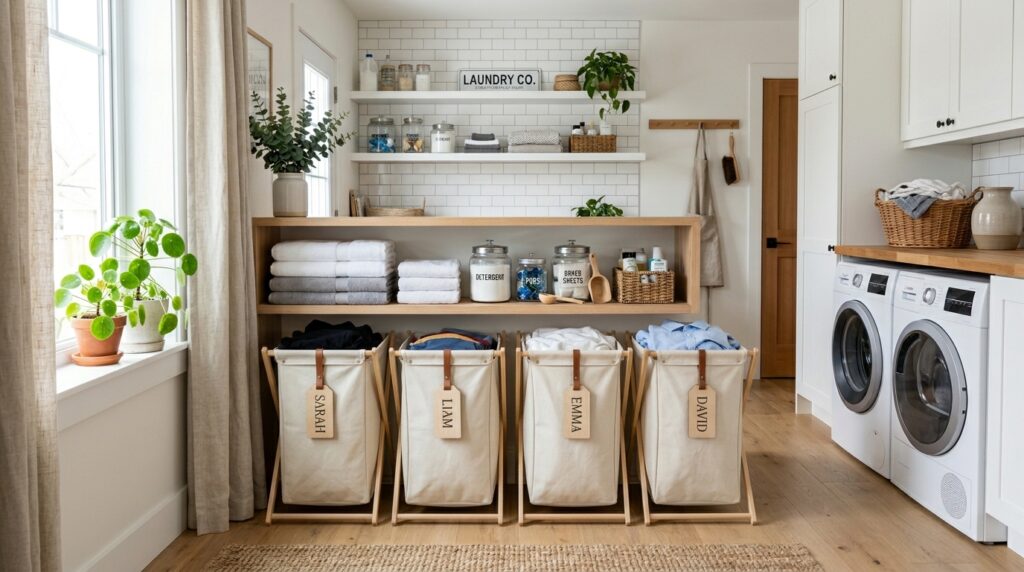
Each person is responsible for their own basket, their own laundry, and their own clothes being put away. For young children, a small handled basket they can carry themselves works well. For adults, a collapsible fabric hamper that folds flat when empty saves space. The Mdesign Fabric Laundry Hamper and the IKEA SKUBB hamper are both good options in the affordable range.
This also makes it easier to see who actually has laundry to do and who is just contributing noise to the pile.
8. Label Everything in the Linen Closet
A linen closet without labels becomes a closet where you pull three things out to find one thing and put nothing back neatly. Labels create a system that works even when you are tired, in a hurry, or someone else is putting things away.
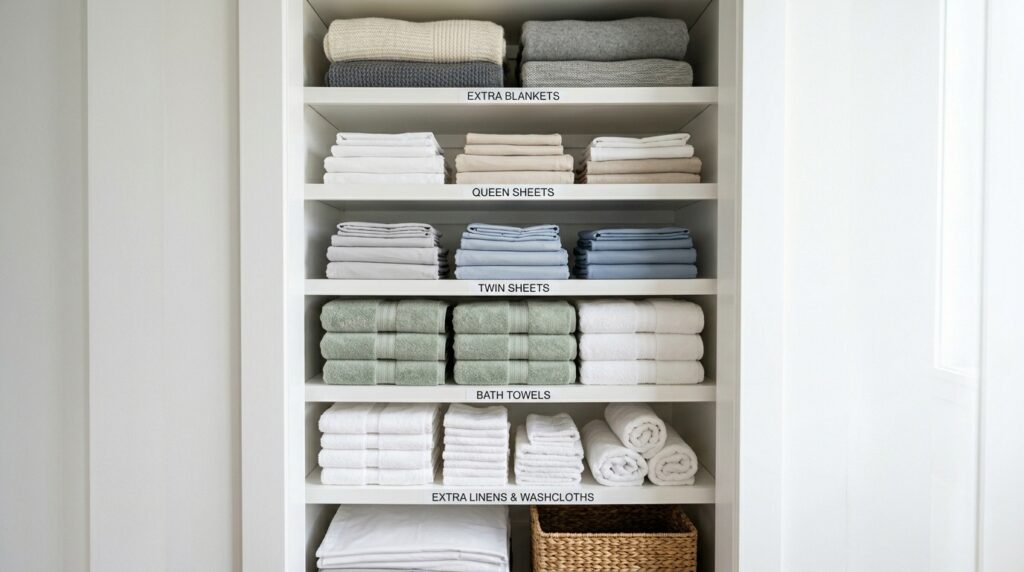
Stack towels and sheets by category and add a simple label to each shelf: bath towels, hand towels, queen sheets, twin sheets, extra blankets. Use a label maker for a clean look or cut strips of cardstock and tape them to the shelf edge. The categories matter more than the label material. When everyone in the house knows where things go, they go back there.
9. Use Drawer Dividers in Every Kitchen Utensil Drawer
A kitchen utensil drawer without dividers turns into a jumbled pile within a week of being organized. Spatulas, tongs, peelers, and whisks end up sideways and tangled and the drawer requires two hands to close. Drawer dividers end this permanently.
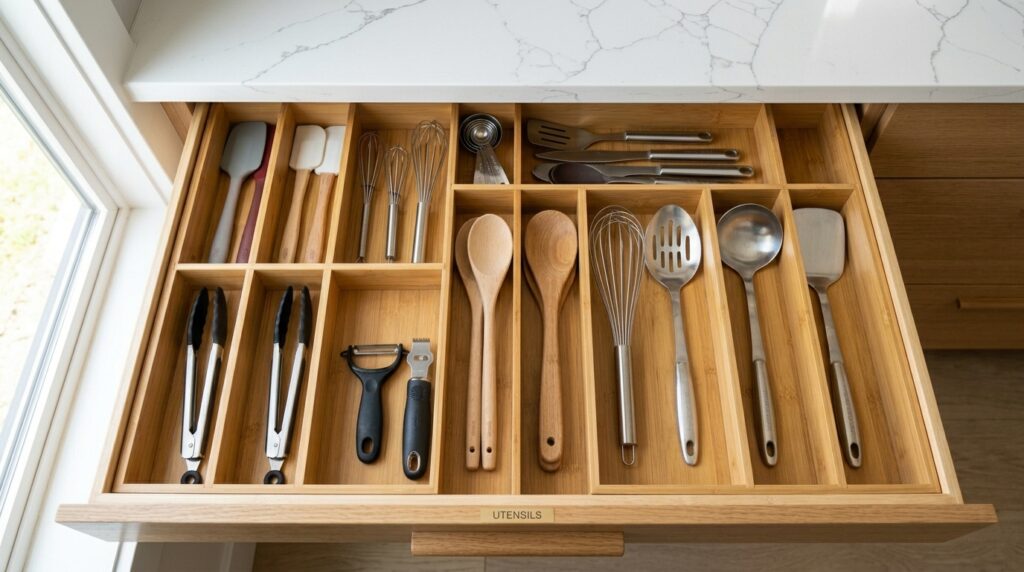
Adjustable bamboo drawer dividers from brands like Greenco or Sorbus let you create custom compartments sized for what you actually own. Group items by function: stirring and flipping tools together, cutting tools together, measuring tools together. The drawer should open and close easily and you should be able to grab what you need without moving anything else.
10. Create a Drop Zone for Bags and Backpacks
School bags, gym bags, work bags, grocery totes: they all land on the floor or the kitchen counter because there is nowhere specific for them to go. A dedicated drop zone fixes this with almost no effort.
Install a row of wall hooks in a hallway, mudroom, or just inside the door. Place them at a height that works for every person in the household. If hooks on walls are not an option, a freestanding coat rack or an over-the-door hook system works just as well. The important thing is that the spot is close to where people naturally enter and leave, so the habit of using it requires almost no extra effort.
11. Home Organization Ideas for the Bathroom Include a Tiered Shelf
A bathroom vanity counter collects things fast. Skincare products, hair tools, toothbrushes, makeup, and a rotating cast of things that do not belong there at all. A tiered shelf gives you vertical space that the counter does not naturally have and keeps products accessible without spreading them flat across every inch of surface.
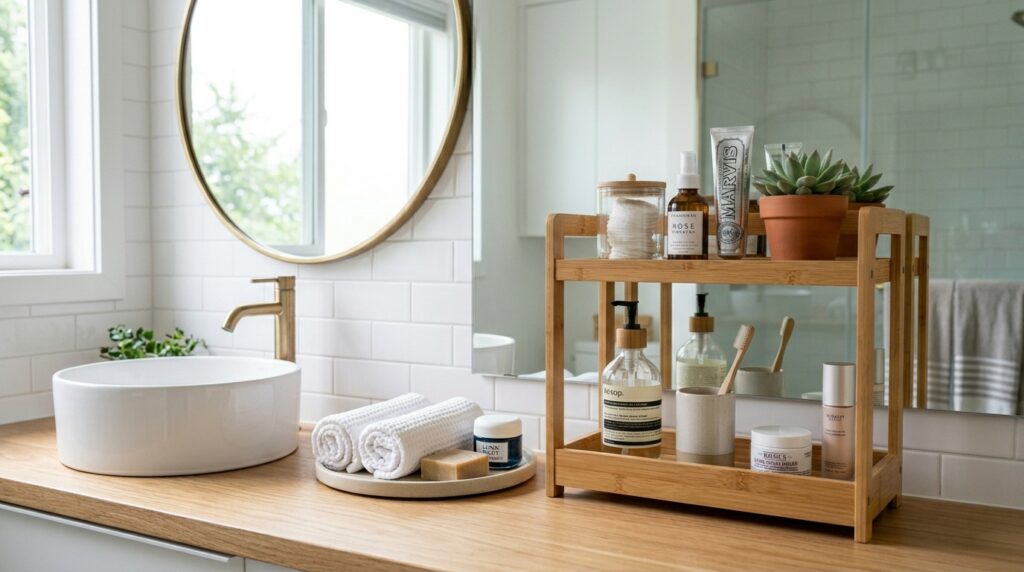
A two or three-tier bamboo shelf or acrylic riser sits on the counter and immediately doubles your usable surface area. Put the items you use every morning at the top where they are easiest to reach. Store backup products, less-used items, or cotton balls and swabs on the lower tiers. The counter around the shelf stays clear and the whole vanity looks more intentional.
12. Use Magazine Files to Organize Vertical Spaces
Magazine files are not just for magazines. They are one of the most versatile organization tools available and most people have never thought to use them anywhere but a home office. A magazine file can hold cutting boards vertically in a kitchen cabinet, organize baking sheets and muffin tins, store cleaning products under the sink, or keep cluttered papers off a desk surface.
Place two or three IKEA Knuff magazine files inside a lower kitchen cabinet and stand your cutting boards, baking trays, and cooling racks upright inside them. Everything is visible and accessible without stacking or digging. The same approach works inside closets for storing wrapping paper rolls vertically, or on a shelf for grouping notebooks and books by category.
13. Store Like Items Together Everywhere in the House
This sounds obvious. It is not practiced nearly as often as it should be. In most homes, batteries live in three different places, scissors are in four rooms, and tape is never where you need it. The rule is simple: one category, one location, always.
Go through the house and collect every duplicate category. Every pen and marker goes into one drawer. Every battery goes into one bin. Every piece of gift wrap goes into one bag or box. Every medicine goes into one cabinet. When categories are consolidated, you stop buying duplicates of things you already own, and you stop losing things because they could be anywhere.
14. Put a Small Basket Inside Every Cabinet Door
This is a variation on tip 5 but deserves its own space because the basket version is more flexible and requires no drilling. A small wicker or wire basket hung on the inside of a cabinet door with an over-the-door hook holds things that otherwise end up loose on shelves: snack bags, foil and plastic wrap boxes, small cleaning cloths, or extra sponges.
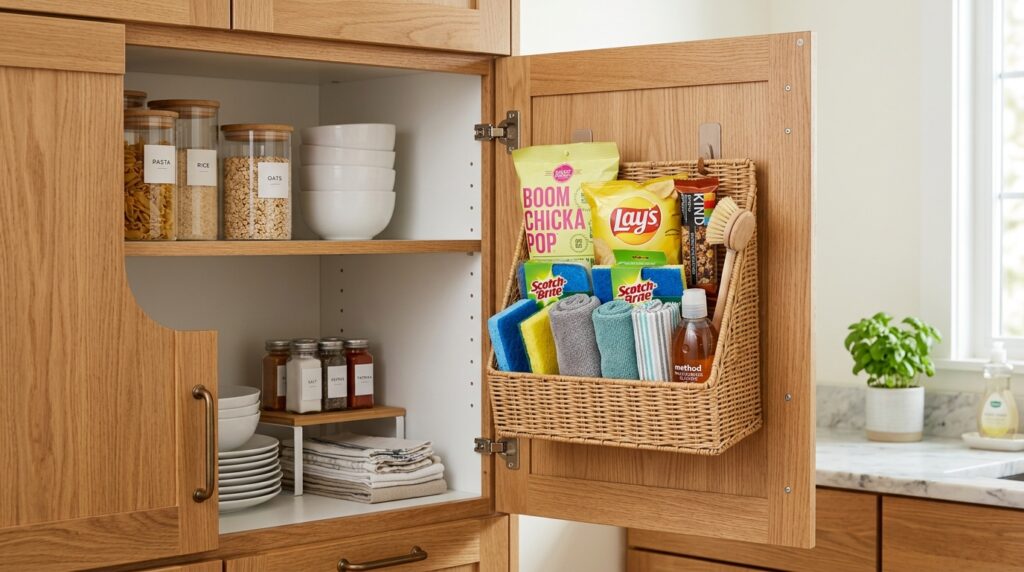
In the bathroom, a small hanging basket on the inside of the under-sink cabinet door is perfect for extra soaps, razors, or hair ties. The basket keeps items contained so they do not fall over or slide to the back of the shelf every time the door opens.
15. Create a Weekly Reset Habit Instead of a Cleaning Day
A cleaning day once a week means living in increasing disorder for six days and then spending one full day catching up. A 15-minute daily reset habit means the house never gets far enough from organized to require a full recovery session.
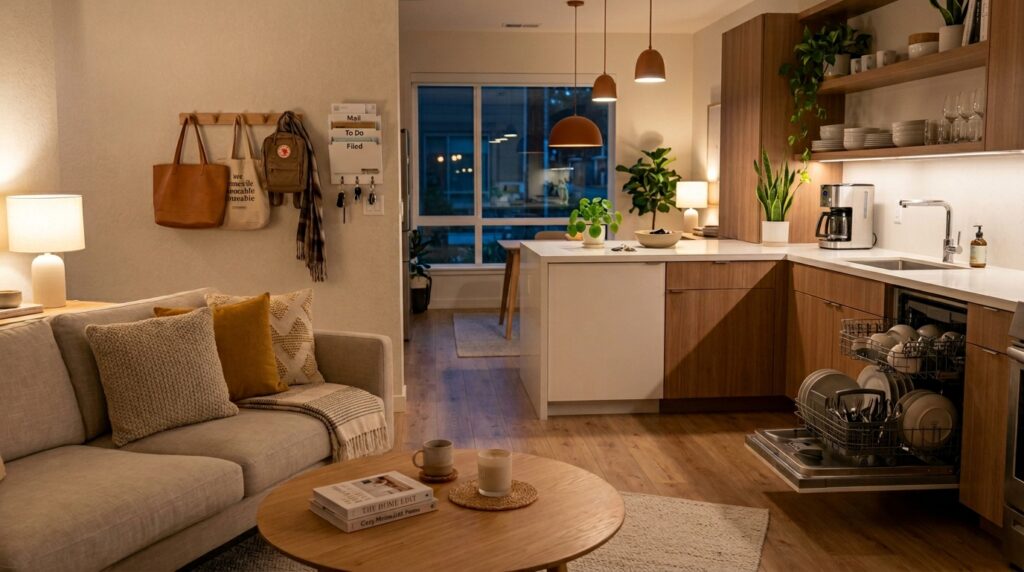
Pick a time that works naturally, usually after dinner or before bed, and spend 15 minutes returning everything to its designated spot. Dishes go into the dishwasher, bags go on their hooks, mail gets sorted, surfaces get cleared. It takes less time than you expect and the house maintains a baseline level of order that makes the weekend cleaning routine faster and less exhausting.
16. Use Stackable Bins in the Linen and Hall Closets
Closet shelves hold a fixed amount of stuff and when that stuff is in irregular containers it stacks badly and falls over. Uniform stackable bins solve this by letting you use the full vertical height of the shelf without the pile collapsing every time you pull something out.
The Sterilite Stacking Shelving Unit Drawers, the IRIS USA Stackable Storage Bins, or the basic Rubbermaid Cleverstore totes all work well in hall and linen closets. Use one bin per category: one for extra toiletries, one for cleaning rags, one for seasonal items, one for first aid supplies. Label each bin on the front edge so you never pull the wrong one off the shelf.
17. Organize the Refrigerator with Zones
A refrigerator without zones becomes a place where leftovers disappear behind condiment jars and produce wilts in the back of the drawer. Zones make the refrigerator work the same way a well-organized pantry works: you can see everything, you know where it belongs, and nothing gets forgotten.
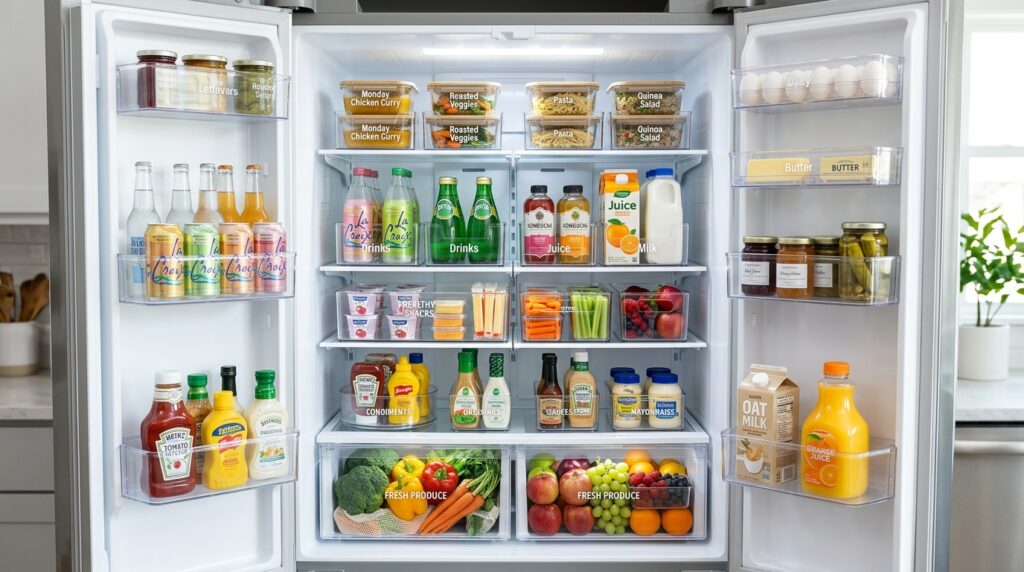
Assign a dedicated area for leftovers, always in the same spot at eye level so they get eaten. Keep drinks together on one shelf or in the door. Group condiments in one area rather than scattered across shelves. Use a small clear bin for snacks so kids can reach in and help themselves without rearranging everything else. The OXO Good Grips Fridge Bins set is designed specifically for this and fits most standard refrigerator shelves.
18. Hang a Pegboard in the Kitchen or Garage
A pegboard is one of the most adaptable organization tools available. It turns a flat wall into a fully customizable storage system with hooks, bins, and shelves that you can rearrange as your needs change. What goes on it depends entirely on where it lives.
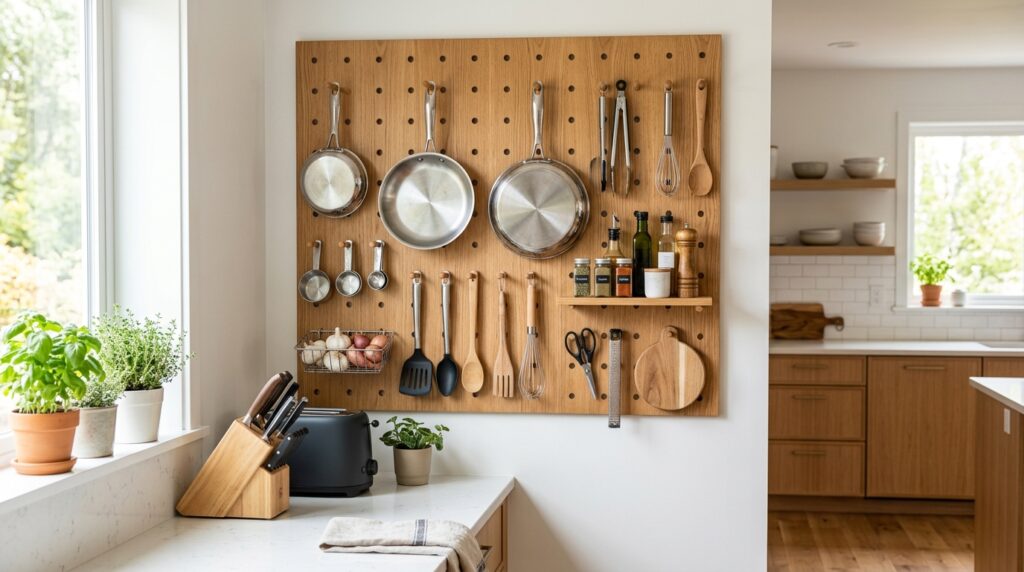
In the kitchen, a pegboard mounted near the stove holds frequently used pans, utensils, and small tools right where you need them. In the garage, a pegboard holds hand tools, extension cords, and gardening gloves in a visible, accessible arrangement that keeps them off the workbench. A 2 by 4 foot pegboard from Home Depot costs under 15 dollars and the hook sets are inexpensive and interchangeable.
Install it with proper wall anchors so it holds weight reliably, and paint it the wall color if you want it to blend in rather than stand out.
19. Do a Monthly Purge of One Area at a Time
Organization systems break down over time not because the systems are bad but because stuff accumulates faster than it gets removed. A monthly purge of one specific area keeps the balance from tipping too far in either direction without requiring a full weekend overhaul every few months.
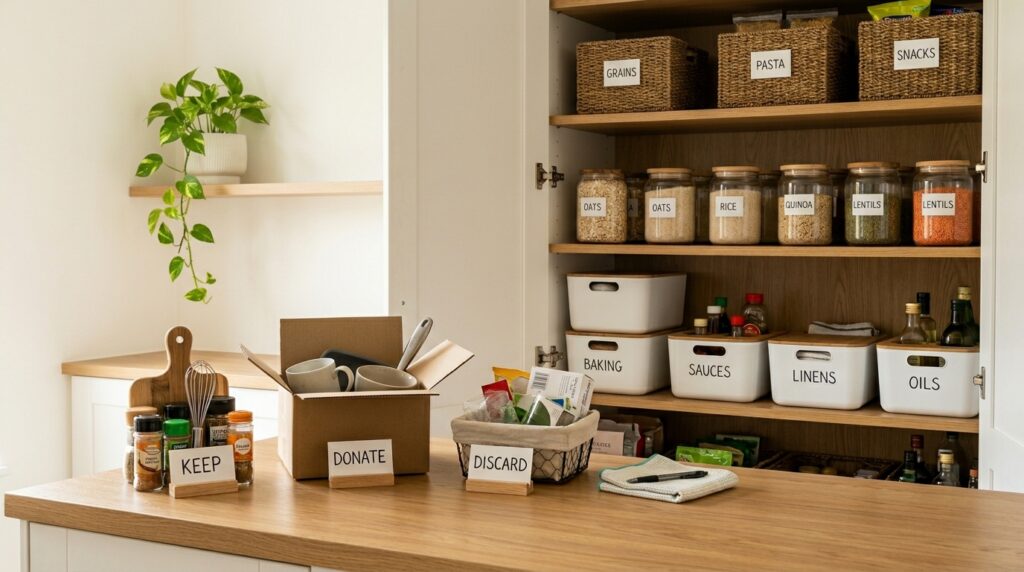
Pick one area each month and spend 20 to 30 minutes going through it. The pantry in January. The bathroom cabinet in February. The kids’ closet in March. The goal is not perfection. The goal is removing what is expired, broken, outgrown, or simply not being used so the organization system you already have can keep functioning. One area per month is manageable. All areas at once is the reason most people give up.
Final Thoughts
Home organization is not a project you finish. It is a habit you maintain. The ideas in this list are not meant to be done all at once in a single weekend. They are meant to be worked through one area at a time, at whatever pace fits your life.
The homes that stay organized are not the ones with the most storage products. They are the ones where every item has a place, every area has a system, and someone does a small reset often enough that nothing gets out of hand.
Start with the one area that bothers you the most every single day. Use these home organization ideas to fix that spot first and let the momentum carry you to the next one. That is how lasting change actually happens in a home.