
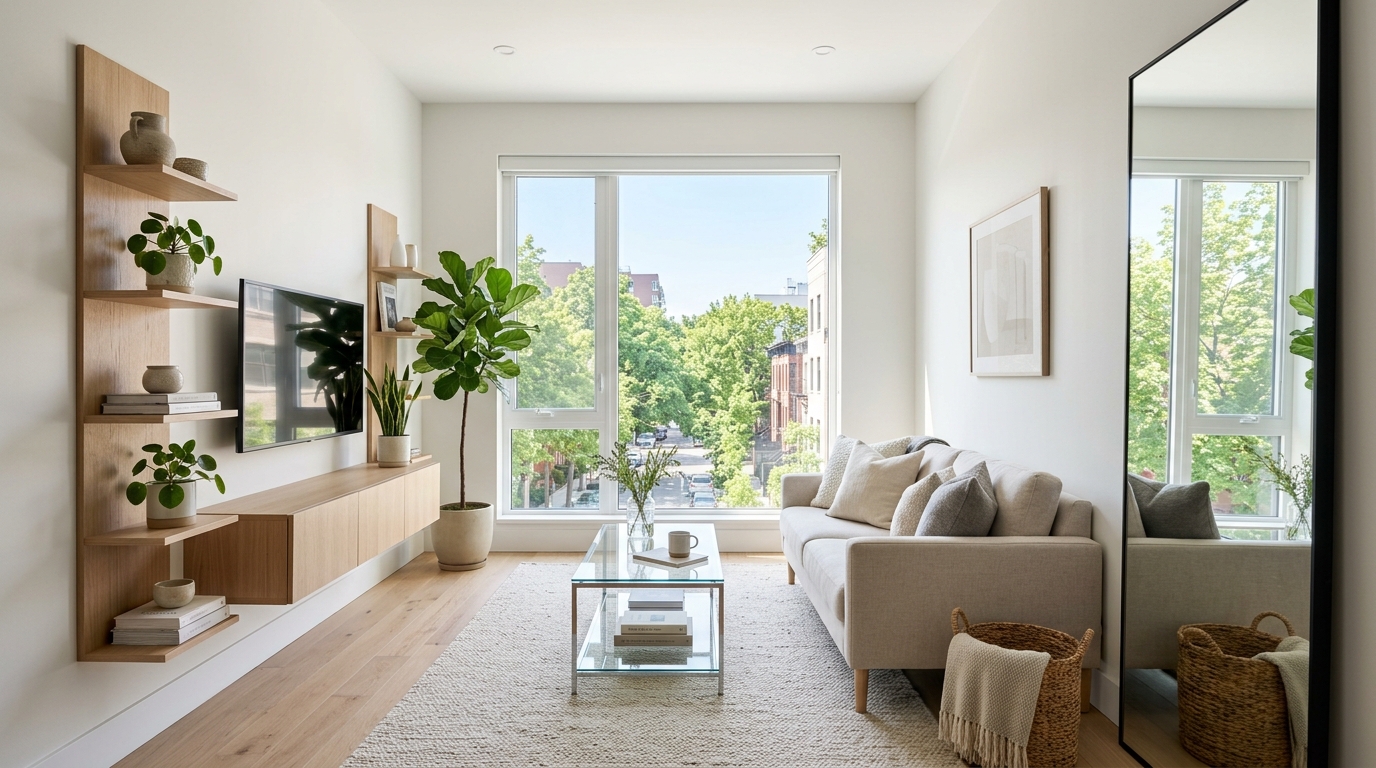
Your living room is small. That is not the problem. The problem is that nothing in it is working together to make it feel bigger than it is. The sofa is too wide, the coffee table blocks the walking path, the walls are the wrong color, and the curtains stop six inches above the floor where they create a visual chop that cuts the room in half. None of these are expensive problems to fix. They are decision problems.
These living room ideas for small spaces focus exclusively on space-opening strategies: light paint, mirrors, furniture arrangement, scale, and the specific choices that make a small living room read larger than its actual square footage. No cozy textiles, no accent wall art, no lighting purchases. Everything here is about how the room reads from the moment you walk in and whether it feels open or enclosed.
You will find 20 ideas here, each one a distinct approach to the same goal. Some require a can of paint. Some require moving a sofa. Some cost nothing at all. Work through the ones that apply to your room and the space will start feeling different before you have spent a significant amount of money.
Paint the Walls, Ceiling, and Trim the Same Light Color
Most small living rooms have white trim, a paint color on the walls, and a white ceiling, which creates three different tones that break the room into horizontal and vertical bands. Every band makes the room feel smaller because the eye stops at each transition. Painting the walls, ceiling, and trim the same light tone removes all those transitions and the room reads as one continuous, seamless space.
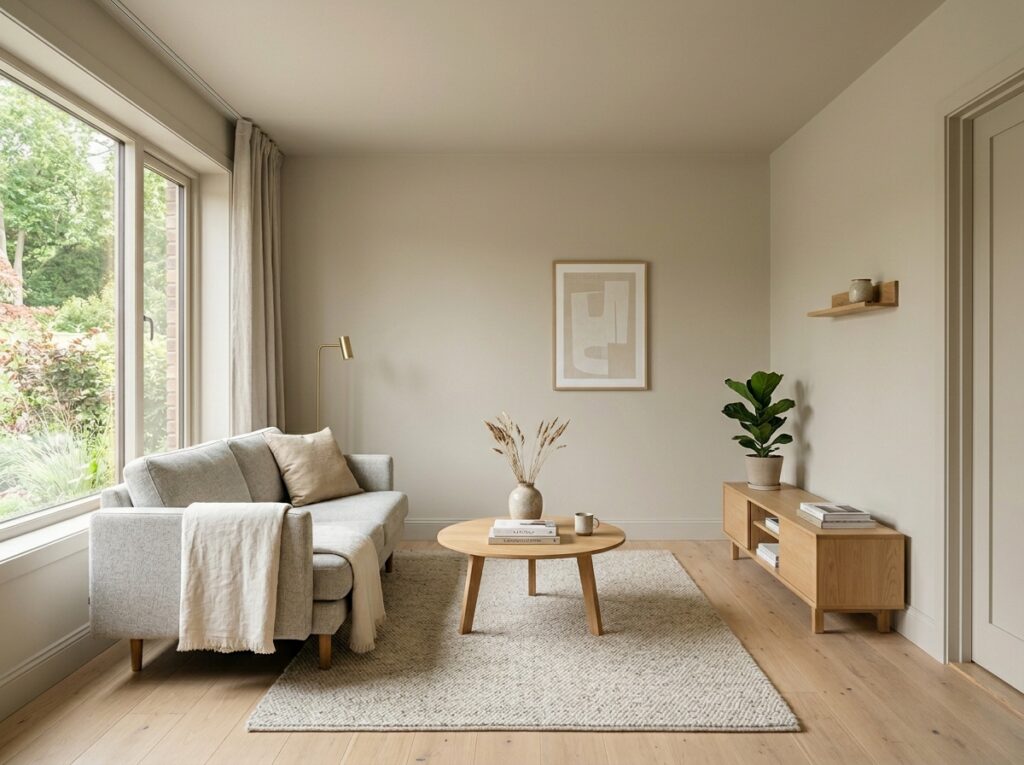
Choose a warm off-white or a soft greige rather than stark white. Sherwin-Williams Accessible Beige, Benjamin Moore White Dove, and Behr Sculptor Clay all read as warm neutrals that reflect light without the sharpness of bright white. Use the same tone on the ceiling and the trim in the same finish level, either all flat or all eggshell, so the surfaces read consistently rather than at different levels of reflectivity. The effect in a small living room is immediate and significant.
This single paint decision consistently surprises people with how much it changes the feel of a room they thought needed much more intervention.
Pull the Sofa Away from the Wall
The instinct in a small living room is to push all the furniture against the walls to maximize the open floor space in the center. This makes the room feel smaller, not larger, because it leaves a gap between all the furniture pieces and makes the arrangement look like the furniture is lining the walls of a waiting room. Pull the sofa forward and let it float in the room.
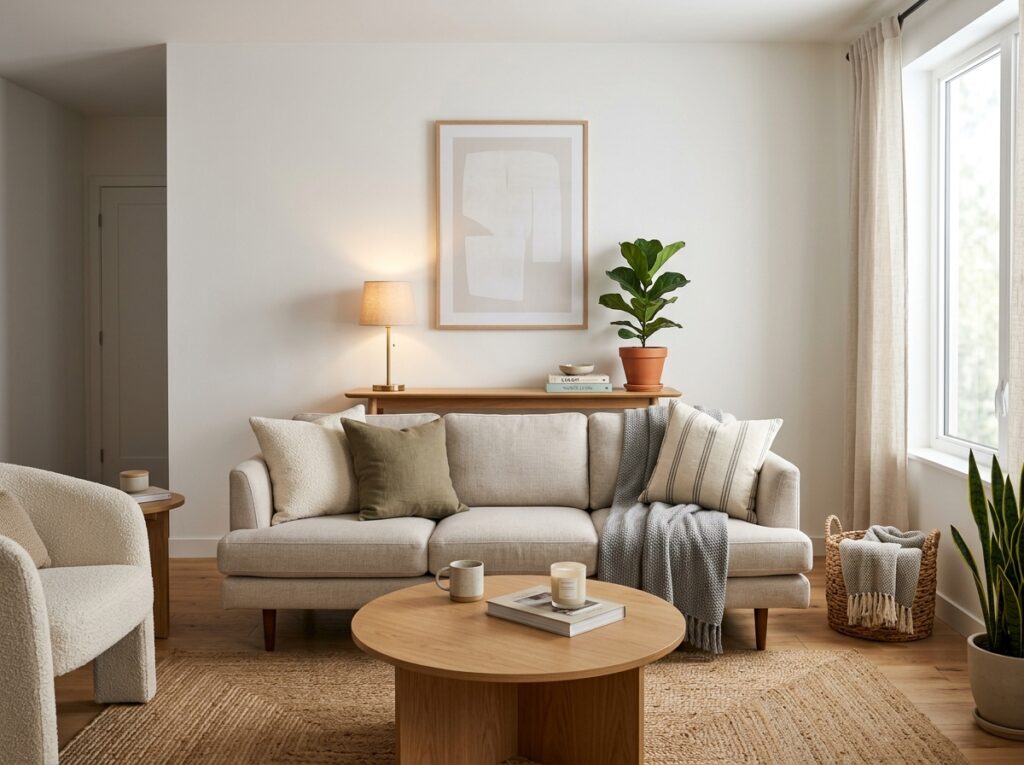
A sofa pulled 12 to 18 inches off the wall with a console table tucked behind it creates a defined seating zone that reads as purposeful and considered. The console table fills the gap visually and adds surface area for a lamp or plant without adding floor footprint in any meaningful way. The floor space between the sofa and the walls becomes part of the room’s breathing room rather than a visual gap that signals the furniture is afraid to commit to the center.
The floating sofa arrangement makes the room look larger in photographs and feel larger in person because it creates a spatial relationship between the furniture and the room rather than a furniture perimeter around an empty floor.
Living Room Ideas for Small Spaces Start with the Right Sofa Scale
An oversized sofa in a small living room is the single most common reason the room feels impossible to work with. A sofa that runs 90 or more inches wide in a room that is 12 feet across leaves no space for anything else and creates a visual mass that overwhelms the room from every angle. The right sofa for a small living room runs between 72 and 84 inches wide.

Measure the sofa wall before buying anything. The sofa should leave at least 18 inches of clear space on each side when placed, which means the maximum sofa width is the wall width minus 36 inches. Write that number down and hold to it regardless of how comfortable a larger sofa feels in the showroom. A sofa on legs rather than a solid skirted base also helps because visible floor under the sofa reads as open space even when the sofa itself takes up the floor area. The Article Sven at 83 inches, the IKEA Kivik at 87 inches, and the West Elm Andes at 81 inches are all well-proportioned options for rooms in the 12 to 14 foot width range.
Replace the Coffee Table with a Smaller or Transparent Alternative
A large solid coffee table in the center of a small living room consumes visual space that the room cannot afford. Every inch of solid surface between the sofa and the opposite seating is floor space the eye reads as blocked rather than open. Replacing a large wood coffee table with a smaller round table, a nest of two smaller tables, or a glass-top table on thin legs immediately opens the center of the room.
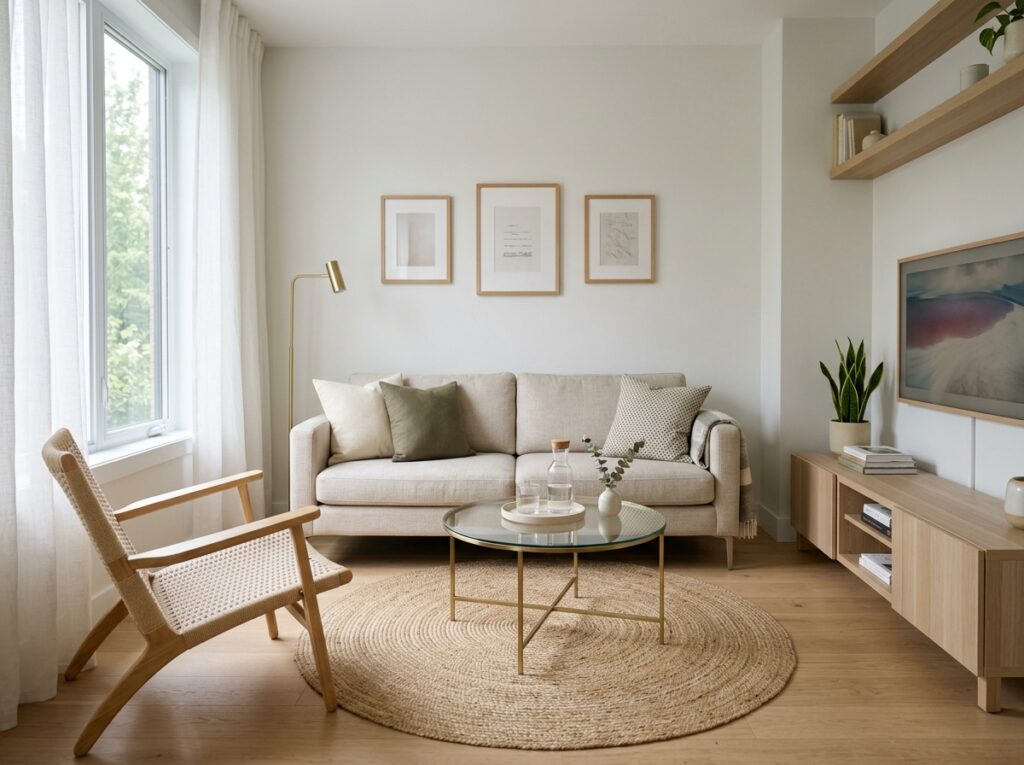
A round coffee table with a diameter under 36 inches takes up less visual weight than a rectangular one of similar surface area because it has no corners reaching into the walking paths on each side. A glass-top table on hairpin legs or a clear acrylic table takes up zero visual weight because you see straight through it to the floor below. The CB2 Peekaboo Acrylic Coffee Table and the IKEA VITTSJÖ glass table are both well-regarded options in the clear category that cost significantly less than their visual effect suggests they should.
Hang Curtains from Ceiling to Floor on Every Window
Where the curtain rod sits determines how tall the room feels. A rod mounted just above the window frame makes the window look small and the wall above it look wasted. A rod mounted two to three inches below the ceiling makes the same window look full height and the room feel significantly taller than it is.
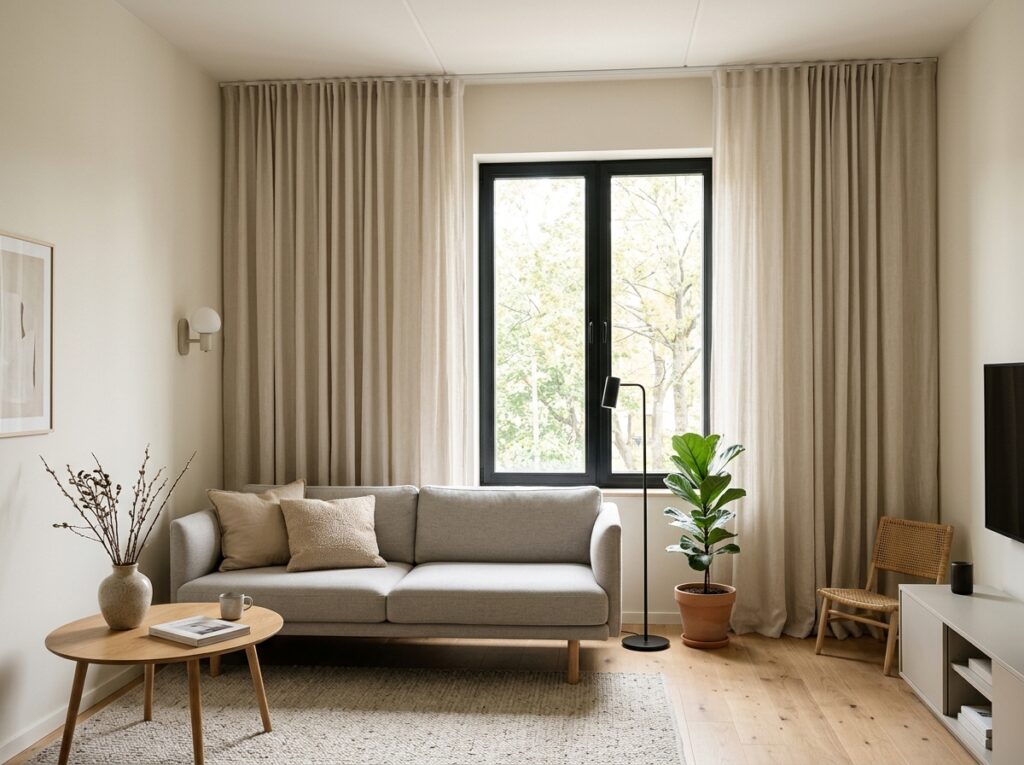
Use curtains in a color close to the wall tone rather than contrasting sharply with it. When the curtain and wall share the same general tone, the window becomes part of the wall rather than an interruption in it, and the room reads longer and taller. Let the curtains touch or just break on the floor rather than hovering above it. Hovering curtains cut the room horizontally at the floor level, which is the last place a small room needs another visual break. IKEA RITVA in off-white and the H&M Home linen curtains in natural are both well-proportioned for this treatment at accessible prices.
Use a Large Single Rug Rather Than Multiple Small Rugs
Two or three small rugs in a small living room create visual zones that make the room feel choppy and divided. A single large rug that covers the seating arrangement treats the whole living area as one unified space and makes the room feel both larger and more intentional. The rug should be large enough for at least the front legs of every piece of seating to sit on its surface.
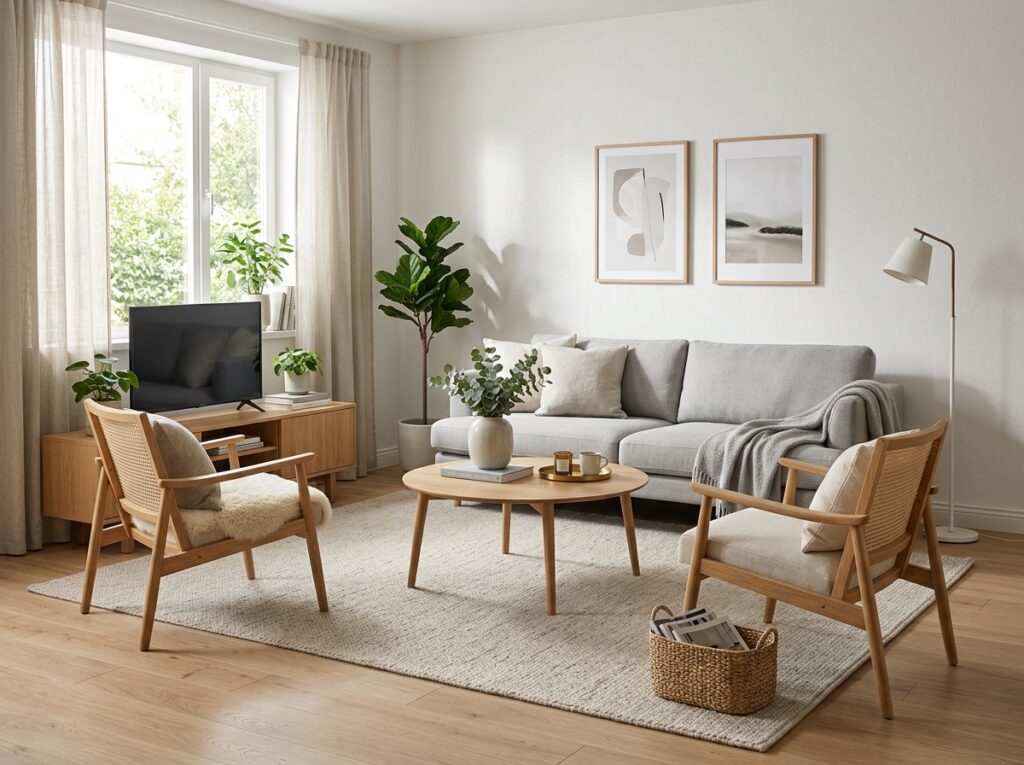
For a standard small living room with a sofa and two chairs, use a rug at least 8 by 10 feet. A rug that is too small for the furniture arrangement looks like a bath mat placed in the middle of the room rather than a foundational element of the layout. Choose a rug in a light solid tone or a very low-contrast pattern. A bold pattern on a small living room rug pulls the eye down and competes with the space rather than supporting it. Jute, flat-weave wool in natural tones, and low-pile solid rugs in cream or warm gray all work well.
Place a Large Mirror on the Wall Opposite the Main Window
A mirror placed on the wall opposite the primary light source in the room reflects daylight back across the space and makes the room appear twice as deep as it actually is. This is one of the oldest space-expanding tricks available and it consistently works because it is based on how light behaves rather than on perception alone.
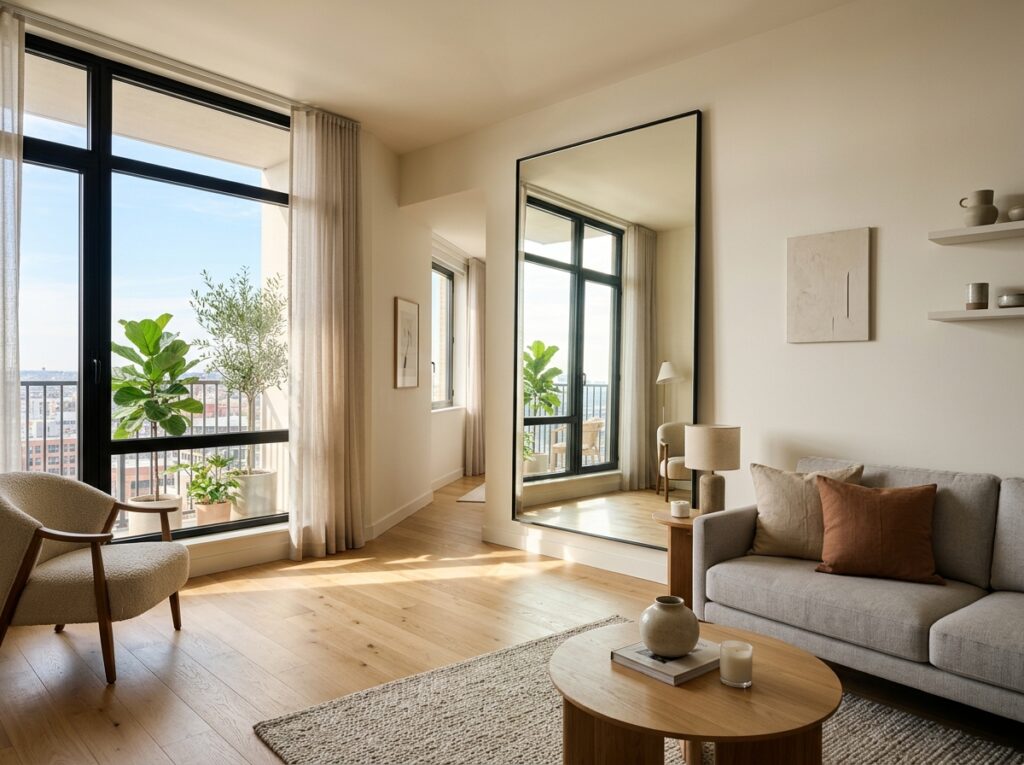
Go large. A mirror under 24 by 36 inches does decorative work but not spatial work in a living room. A mirror at 30 by 48 inches or larger does both. A full-length mirror leaning against the wall in the corner does the most work of any configuration because it reflects both the window and the room simultaneously across its full height. The IKEA HOVET aluminum-framed mirror at 30 by 77 inches is one of the best value large mirrors available and reads as finished and intentional rather than improvised.
Remove One Piece of Furniture That Is Not Earning Its Space
Most small living rooms have at least one piece of furniture that is taking up floor space without providing equivalent function or visual value. An accent chair nobody sits in, an oversized side table, a storage ottoman that collects clutter, a second sofa that reduces the walking path to a squeeze. Removing one piece of furniture from a small living room almost always makes the room feel larger immediately.
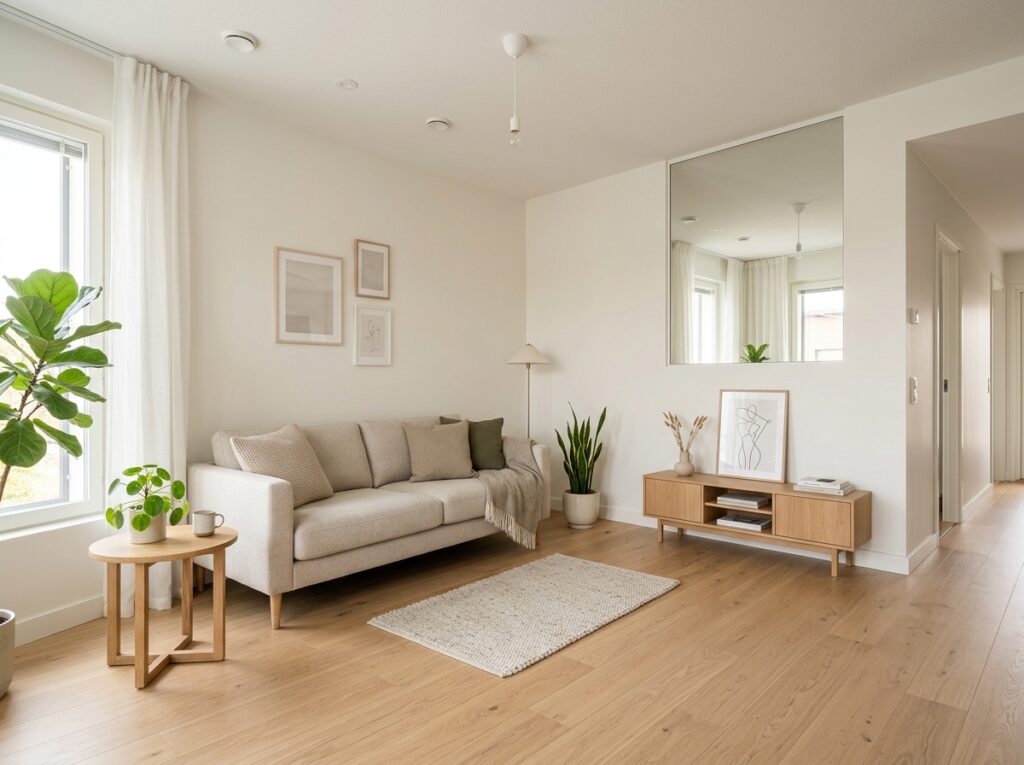
Walk through the room and identify which piece, if removed, would be missed the least functionally. That is the candidate. Remove it for two weeks and live with the open space where it was. If the room functions just as well without it, and it almost always does, keep it out. The most common candidates are accent chairs bought for visual balance that are never actually used and ottomans that function as a catch-all surface rather than as seating or useful storage.
Choose Furniture with Visible Legs Throughout the Room
Every piece of furniture with a solid base sitting flush with the floor blocks the sightline at ground level and makes the room feel heavier and more enclosed. Every piece with visible legs lets the eye see the floor underneath and read that space as open. In a small living room where every visual cue matters, furniture on legs throughout the room makes a measurable difference.
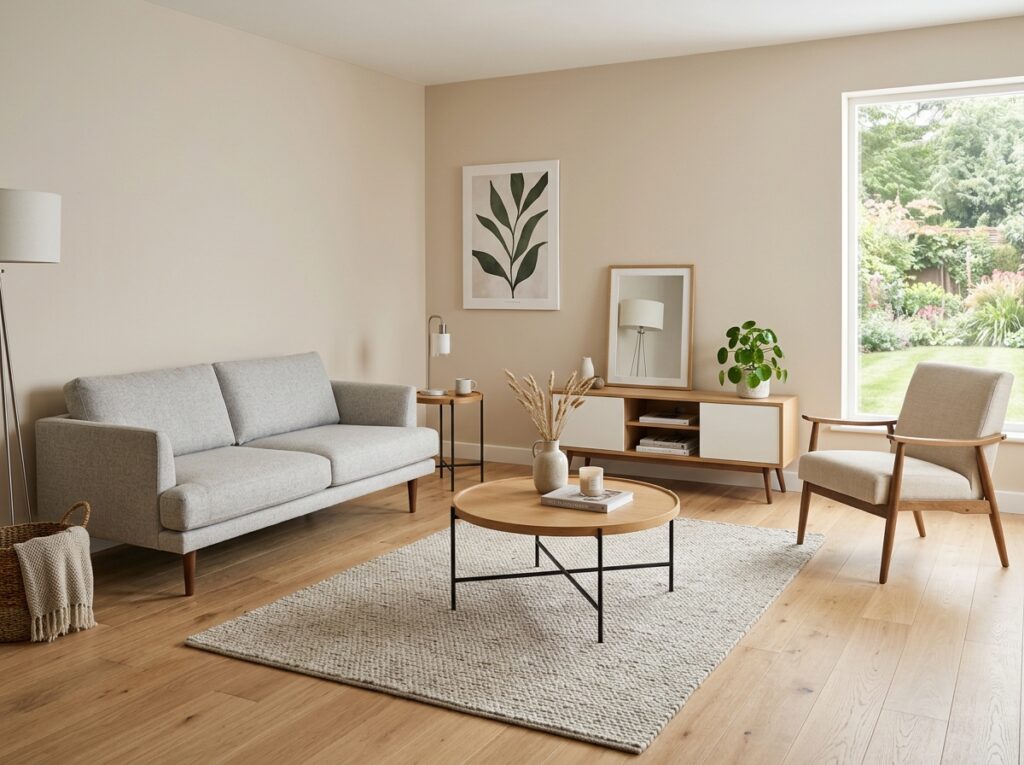
Replace or swap out any furniture with a solid skirted base for pieces on tapered wood or metal legs. A sofa on 6-inch wood legs, a coffee table on thin hairpin legs, a side table on slim turned legs, and a media console on a raised frame all contribute to a consistent ground-level openness that makes the room feel lighter and larger from every angle. The visual floor space created by 4 to 6 inches of clearance under each piece adds up across the full room to a significant spatial impression.
Living Room Ideas for Small Spaces Improve with a Monochromatic Color Scheme
A living room with too many colors stops the eye repeatedly as it moves through the space, and a small room cannot afford to have its limited square footage interrupted by visual noise. A monochromatic scheme using one color in several tones and textures removes the color interruptions and lets the eye travel smoothly from one end of the room to the other, which is the perceptual experience of a larger space.

Choose one warm neutral as the base and layer it in different tones across the walls, the sofa, the rug, and the furniture. Warm white walls, a cream sofa, an oatmeal rug, and natural wood furniture all exist within the same tonal family. The variety comes from texture rather than color contrast: linen against painted wood, flat-weave rug against smooth plaster walls. When everything in the room relates back to the same color story, the space reads as unified and open rather than divided into competing zones.
Arrange Seating to Face Each Other Across the Rug Rather Than Against Walls
Furniture pushed against walls creates a perimeter arrangement that leaves the center of the room open but disconnected. A conversation arrangement facing inward across the coffee table creates a defined seating zone within the room that reads as purposeful and actually makes the room feel more spacious by creating clear circulation paths around the outside of the arrangement.
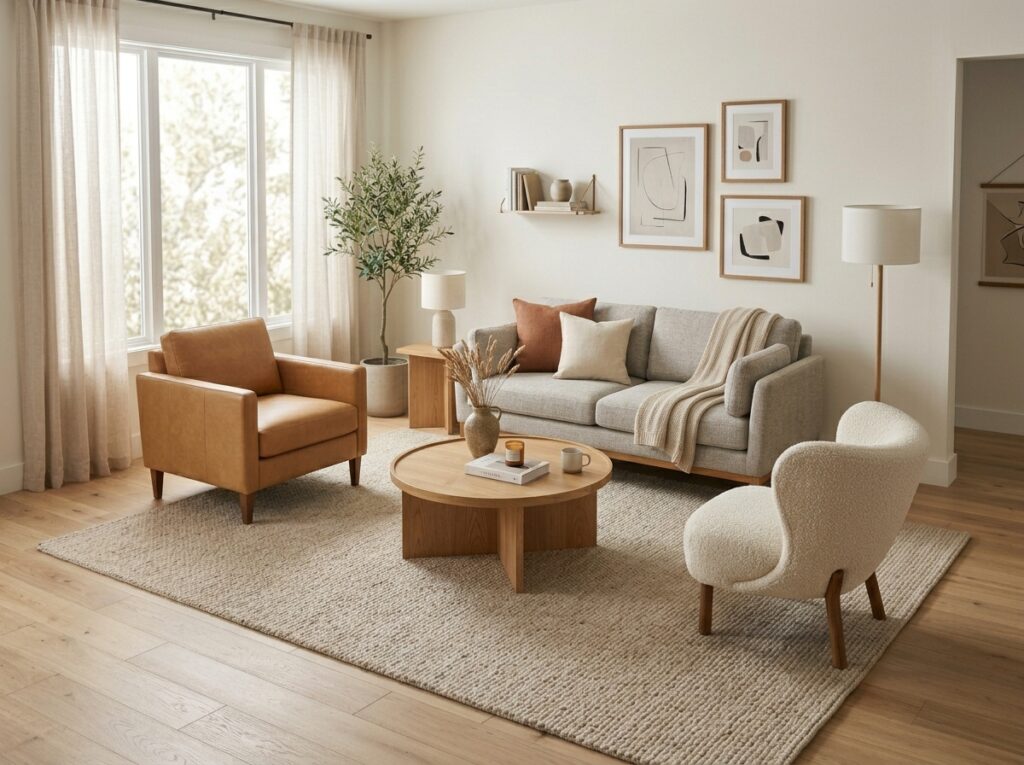
Position the sofa facing the room rather than facing a specific wall, with two chairs or a loveseat angled toward it across the coffee table. The arrangement should feel like it is organized around a central point rather than around the walls. Leave at least 18 inches of clear path around the perimeter of the seating arrangement to the walls. That circulation space makes the room feel walkable and open even when the seating zone itself is fairly compact.
Use Built-In or Wall-Mounted Shelving Instead of Freestanding Units
A freestanding bookcase or media unit in a small living room projects into the room and reduces the effective floor space on both sides. A wall-mounted shelving system or a built-in unit sits flush with the wall and uses the depth of the wall cavity rather than projecting into the room, which keeps the floor plan open while providing the same storage and display capacity.
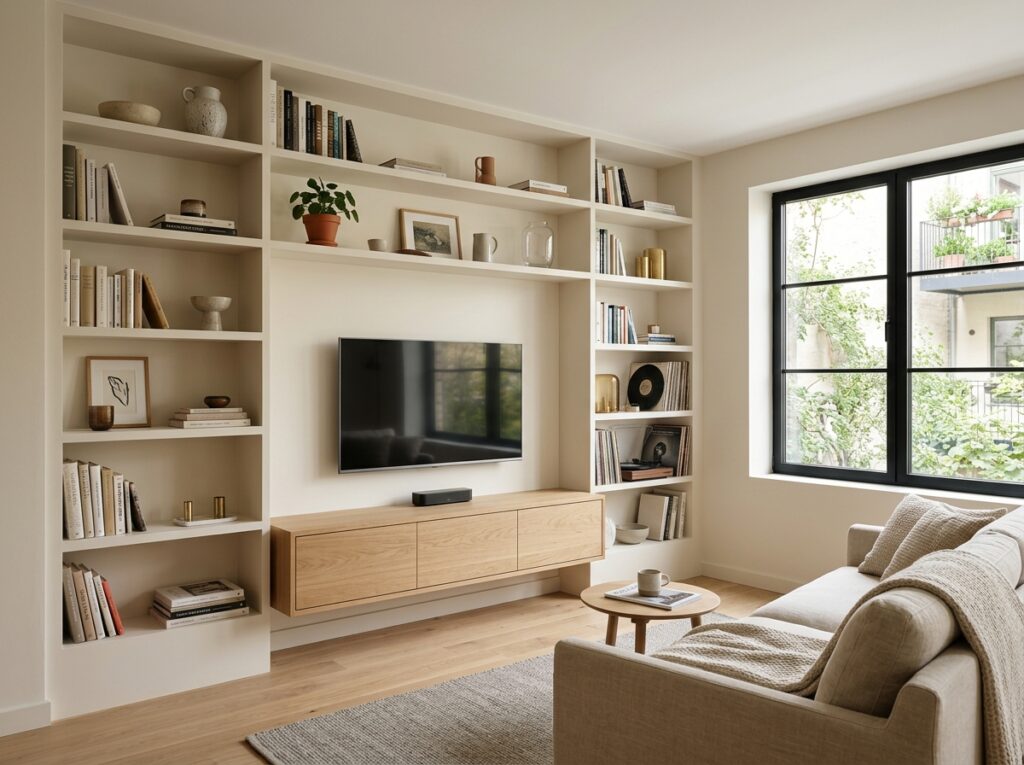
IKEA BILLY bookcases built into a wall alcove with trim added around them read as built-ins from across the room. The IKEA LACK wall shelf system mounts flat and holds books and objects without any floor footprint at all. A floating media console at 14 to 16 inches of depth mounted to the wall rather than sitting on the floor frees up the floor beneath it and makes the wall read as a continuous surface rather than a blocked lower section. All of these achieve the same result as a freestanding unit without reducing the walkable area of the room.
Replace Solid Room Dividers with Open Shelving or Nothing
A small living room with a partial wall, a bookcase used as a room divider, or a console table dividing the living area from the dining area creates a visual break that makes both zones feel smaller than they would if treated as a single connected space. Removing the divider or replacing a solid one with an open shelving unit that maintains the sightline through it makes both spaces feel larger immediately.
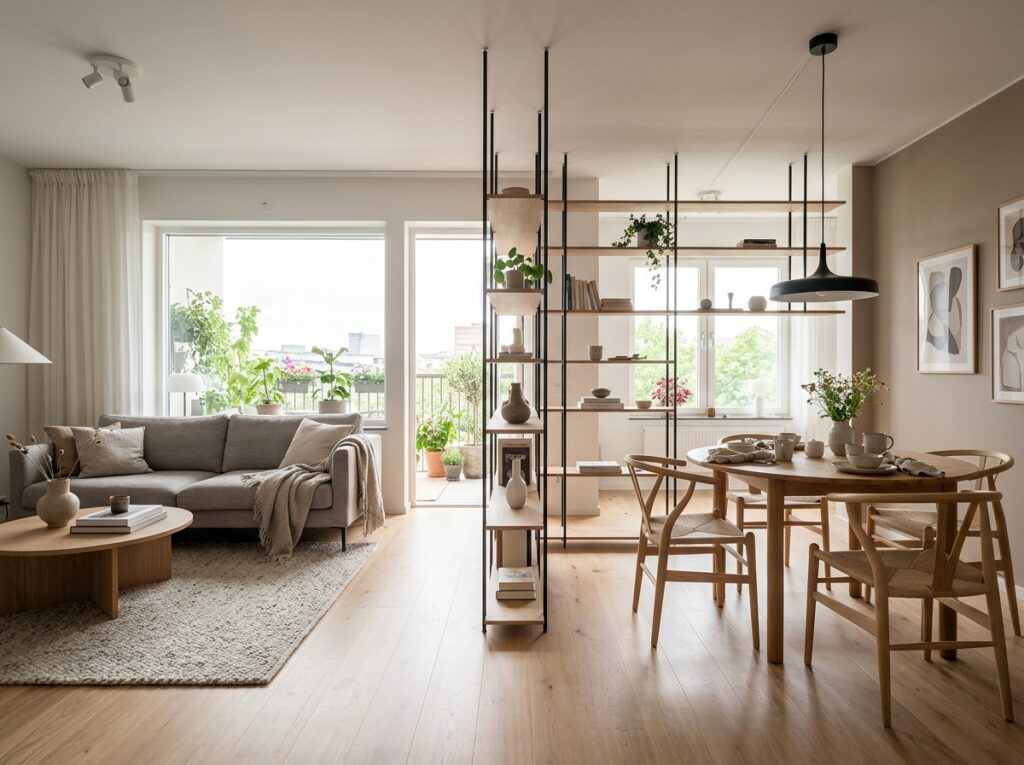
If the division between living and dining zones needs to be maintained for functional reasons, use an open shelving unit with no back panel rather than a solid bookcase. The IKEA KALLAX in an open back configuration allows visual continuity between the two spaces while still providing a physical and organizational separation. A console table with open legs and no lower shelf does the same at a lower height. The through-sightline, even partial, is what prevents the room from feeling divided.
Keep the Main Walking Path Completely Clear
The primary path through a living room, usually from the entry to the seating area or from the entry through to the kitchen or hallway, needs to stay clear of any furniture or object that requires a person to step around it. A blocked walking path makes a room feel small and cluttered even when the total square footage is adequate for the furniture in it.
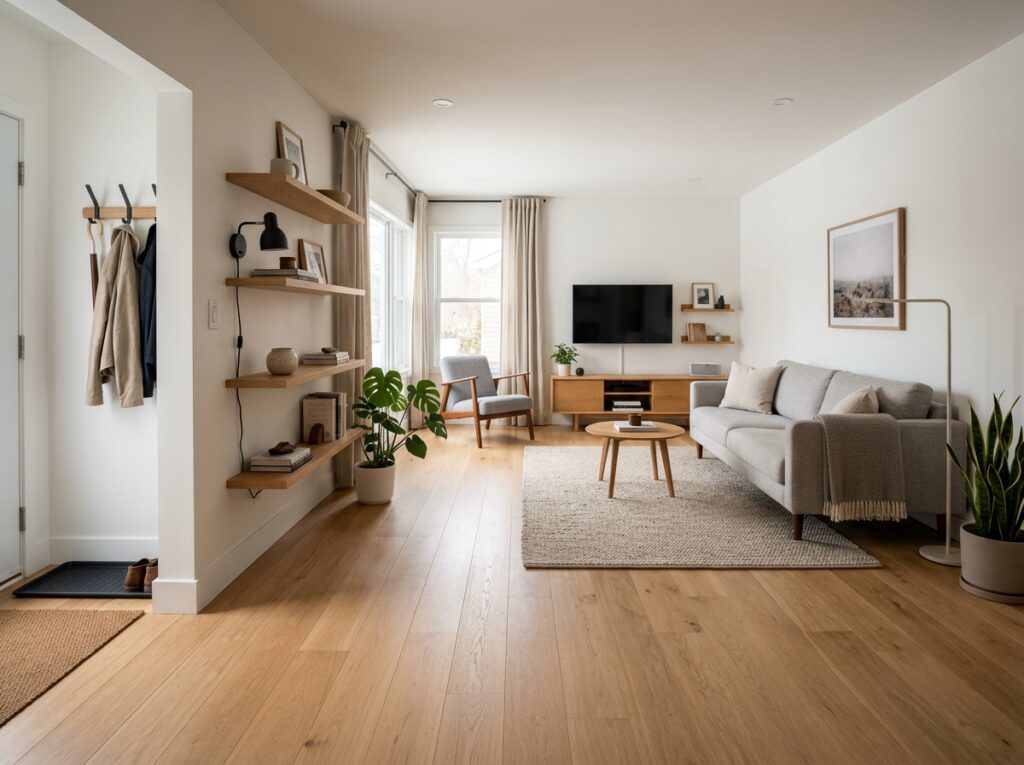
Identify the main traffic path through the living room and draw it mentally from entry to exit. Remove every item that encroaches on that path: a side table pushed too far into the walkway, a floor lamp in the corner of the route, a large plant on the floor that requires stepping around. The path should be at least 36 inches wide throughout its full length. A clear, uninterrupted walking path makes the room feel navigable and open in a way that no amount of light paint or strategic mirror placement can achieve if the path itself is blocked.
Use Vertical Storage to Keep the Floor Clear
Floor-level storage piles up fast in a small living room and every item on the floor reduces the visible open space that makes the room feel larger. Vertical storage solutions that move items off the floor and onto the walls keep the floor visually clear regardless of how much is actually stored. A room where you can see the floor from every angle always reads as larger than one where the floor is partly blocked by items.
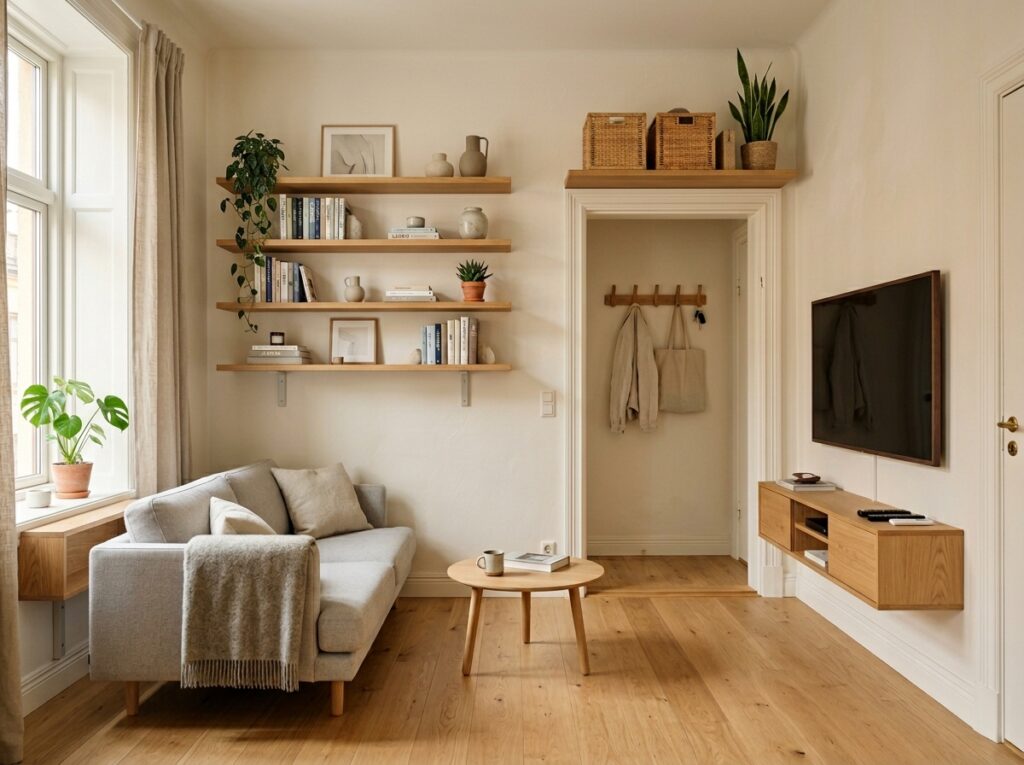
Mount floating shelves high on the walls for books and display items that currently sit on lower surfaces. Install hooks at door height for frequently used items rather than letting them accumulate on chairs or tables. Use the shelves above door frames for storage that does not need regular access. Every category of item that moves from floor level to wall level opens the floor plan in a visible way and the cumulative effect across a room is a space that looks more managed and more spacious than its actual dimensions suggest.
Living Room Ideas for Small Spaces Benefit from Furniture in a Light Finish
Dark furniture in a small living room advances visually toward the viewer, which makes the room feel smaller and the furniture feel heavier than the actual dimensions justify. Light-finish furniture in natural wood tones, white painted pieces, or natural rattan recedes visually and makes the room feel less filled even when the same square footage of furniture is present.
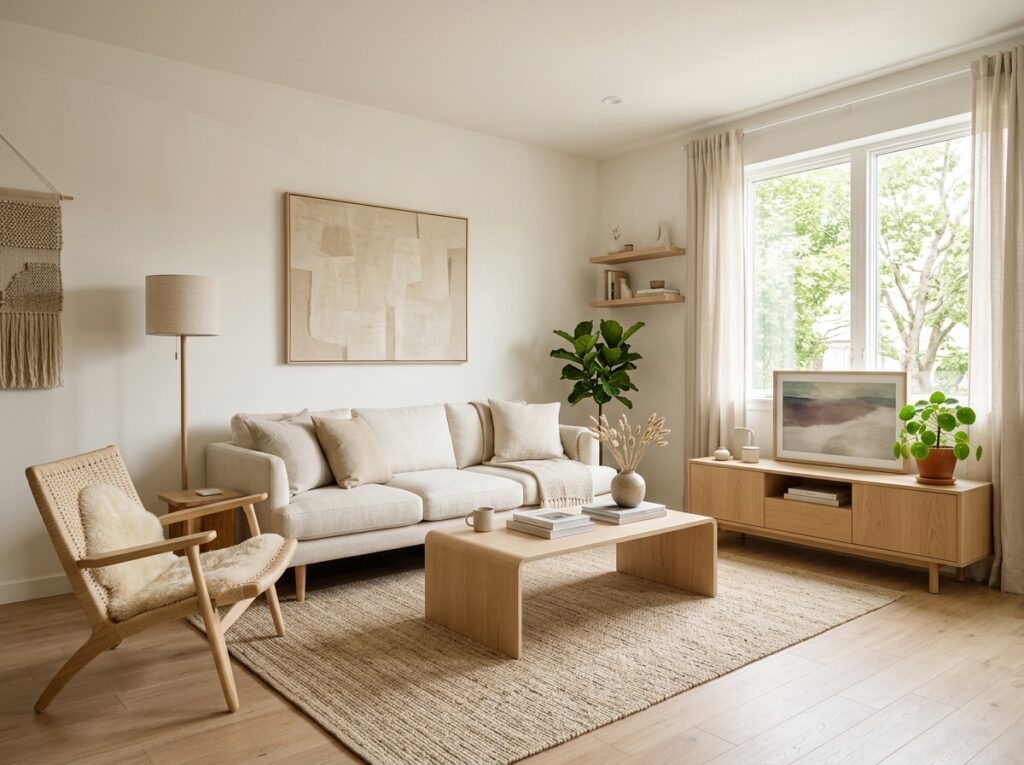
Swap or replace dark espresso or black furniture for pieces in natural oak, light walnut, birch, or a painted white or cream finish. The visual effect is not about removing mass but about reducing the perceived weight of the mass that is there. A natural oak media console and a cream-finished side table in a room where both pieces were previously dark wood read as occupying less space immediately, even though the physical dimensions are identical. The IKEA LISABO series in ash veneer and the West Elm Streamline collection in natural wood are both accessible options in the right finish range.
Eliminate Visual Clutter on Every Horizontal Surface
Every object on a horizontal surface in a small living room, the coffee table, the side tables, the console behind the sofa, adds visual noise that the eye processes as busyness, and a busy room always feels smaller than a calm one. Clearing horizontal surfaces to a minimal arrangement, one to three objects per surface with deliberate space between them, immediately makes the room feel larger and more intentional.
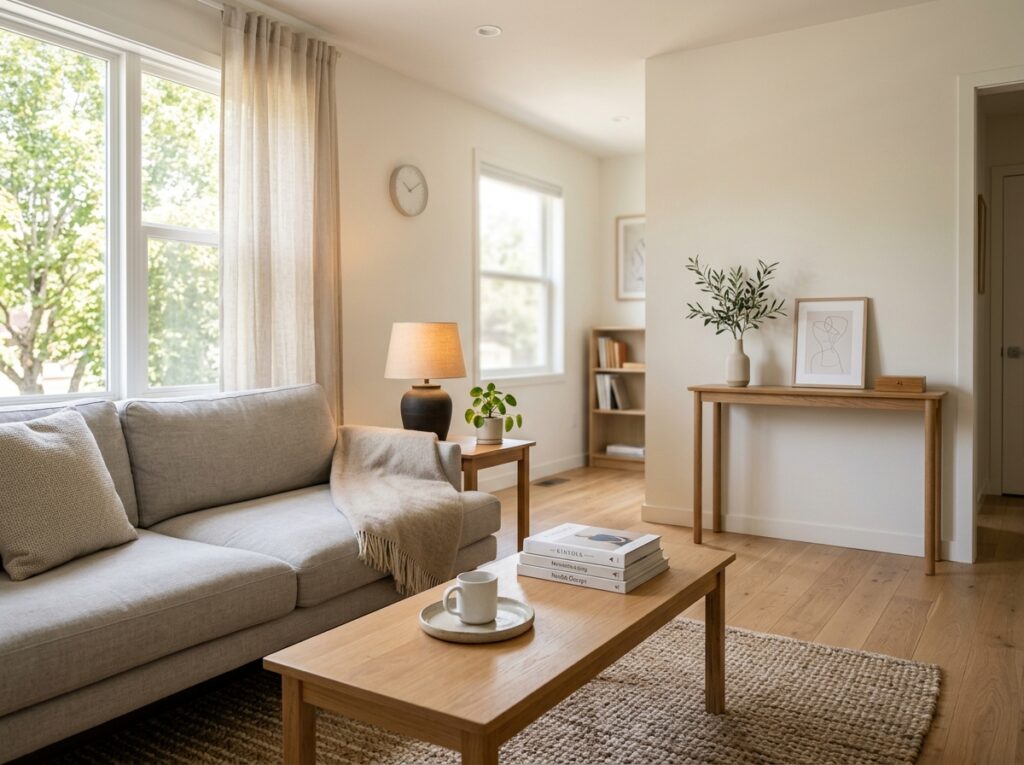
Clear every surface completely and return only the objects that are either functional or genuinely beautiful. A coffee table needs at most a tray with two objects on it and a single plant or stack of books. A side table needs a lamp and one other object. The console behind the sofa needs two or three items with enough space between them that the surface reads as clear rather than filled. The discipline required to maintain this level of surface editing is the same discipline that maintains the spatial quality of the room over time.
Choose a Smaller Sofa Configuration Over an L-Shape
An L-shaped sofa in a small living room typically takes up two full walls of floor space and leaves the remaining two walls with almost no room for other furniture or clear circulation. A standard sofa with a separate chair or loveseat across from it occupies the same seating capacity in a configuration that leaves the room far more flexible and visually open on the sides.
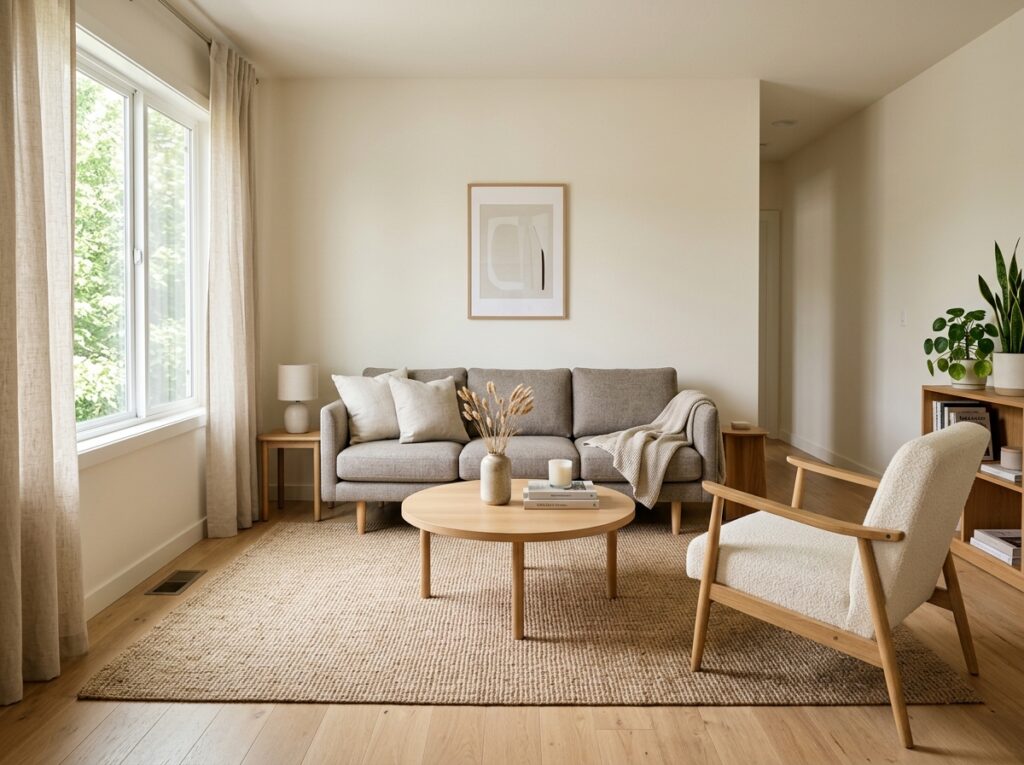
If the L-shape is already in the room and is not easily replaced, orient it so the shorter section points into the room rather than running along the wall, which creates more visible clear space on the dominant wall. The longer section should run along the back wall with the shorter section angling forward rather than continuing along the side wall. This orientation keeps the side wall completely clear and makes the room read as having an open side rather than being enclosed on three walls by sofa.
Add a Tall Plant in the Emptiest Corner
An empty corner in a small living room is a missed opportunity to add vertical interest that draws the eye upward, which is one of the visual tricks that makes rooms feel taller rather than small. A tall indoor plant, something reaching 4 to 5 feet, placed in the corner that currently holds nothing adds life, organic shape, and height to the room without adding floor mass the way a piece of furniture would.
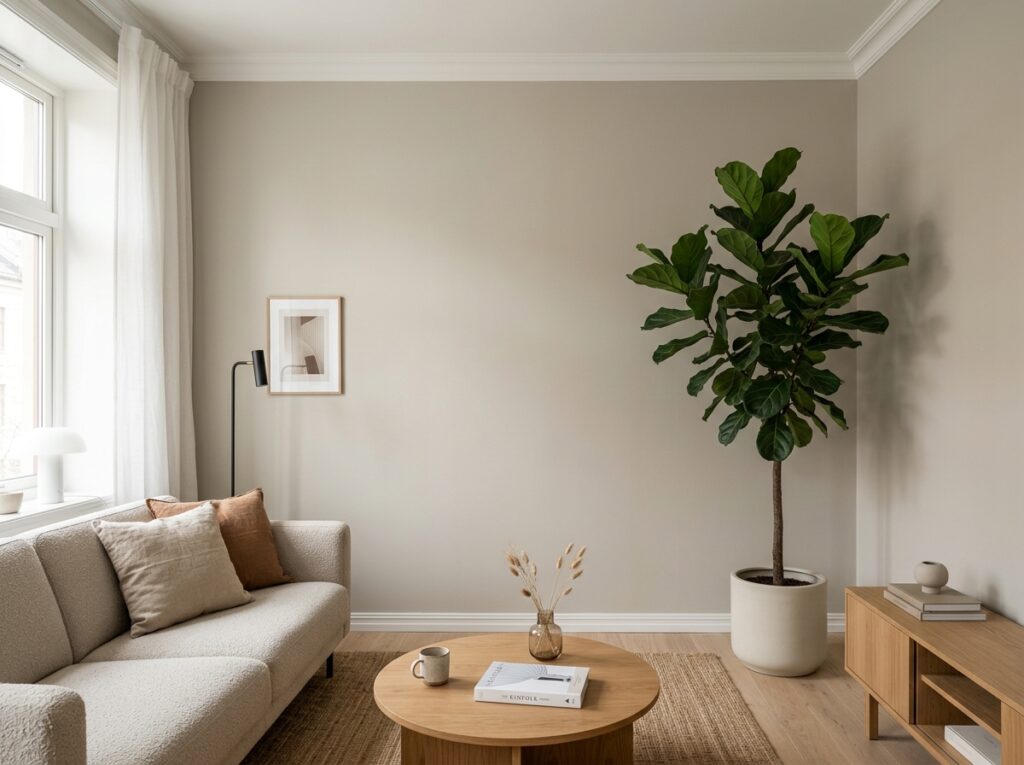
The fiddle leaf fig, the bird of paradise, and the large monstera deliciosa are the three floor plants most used in interior design photography specifically because they have a strong vertical silhouette that reads clearly from across a room. Place the plant in the corner with the most available indirect light and use a simple matte ceramic or concrete pot in a neutral tone that suits the room’s palette without competing with the plant’s natural shape for attention.
Use a Nesting Coffee Table Set Instead of a Single Large Table
Two nesting tables that slide together when not in use and separate when additional surface area is needed give a small living room the flexibility of a large coffee table without the permanent footprint. When both tables are nested, the footprint is the size of the larger table only, which can be significantly smaller than a standard coffee table sized to fill the full width of a sofa. When separated for use, they provide two distinct surface areas at different positions in the room.
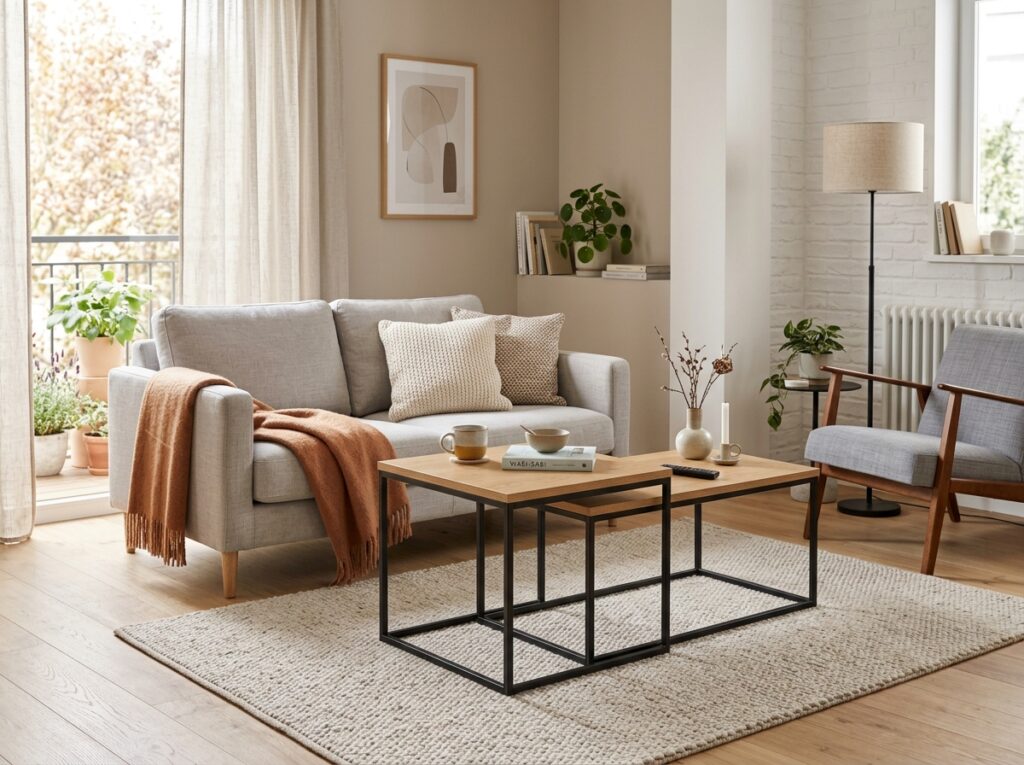
The CB2 Strand Nesting Coffee Tables, the IKEA SVALSTA nesting tables, and the Article Soft Nesting Tables all deliver this flexibility in proportions suited to a small living room. Choose a finish that suits the room: natural light wood for a warmer palette, glass or acrylic for maximum visual lightness, or painted white for a neutral surface that reads as open rather than present. Nesting tables also eliminate the visual obstruction of a large central table from the room’s sightlines when both pieces are slid together and positioned to one side.
Final Thoughts
A small living room opens up when the decisions inside it stop fighting the square footage and start working with it. Light paint that wraps the room continuously. Furniture scaled to the actual dimensions. A clear walking path. Mirrors that push the walls back. These are not design tricks. They are corrections to the common mistakes that make small rooms feel smaller than they need to.
Pick the one idea on this list that applies most directly to the biggest problem in your current room. Usually it is the sofa scale or the furniture arrangement, because those are the two decisions that affect everything else. Fix the largest problem first and the rest of these living room ideas for small spaces become easier to implement because the room will already be working better before you get to them.