
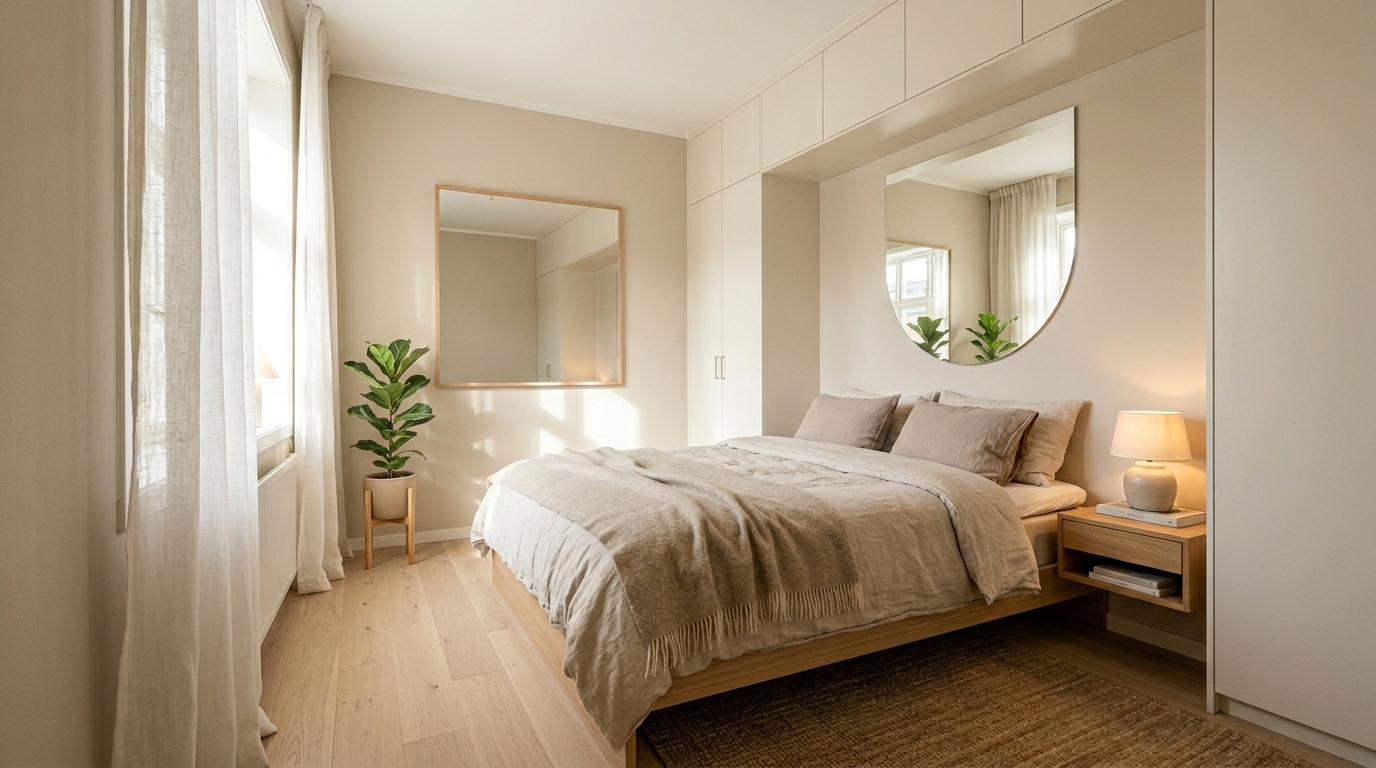
A neutral bedroom done poorly looks like a room that has not been decorated yet. A neutral bedroom done well looks like the most intentional room in the house. The difference is never about which beige was chosen or how many shades of cream are layered together. The difference is in the texture, the proportion, and the restraint that allows the palette to breathe rather than disappear.
These neutral bedroom ideas bring together everything that makes a beige, cream, greige, and linen bedroom feel genuinely designed rather than simply unpainted. Specific tones that work, textile combinations that create depth without color contrast, furniture choices in natural materials, and the kind of minimalist calm that makes a small room feel like a considered retreat rather than a plain box. No bold colors, no dark moody accents, nothing that belongs to another bedroom article. Just the neutral palette done at its full potential.
You will find 18 ideas here, each one focused on a distinct element of the neutral bedroom. Work through them and the room will start looking like something a designer made rather than something that happened gradually over several years of cautious purchasing.
Paint the Walls and Ceiling in a Warm Greige Tone
Greige is the neutral that does the most work in a small bedroom because it reads warm enough to feel intentional but light enough to keep the room feeling open. It is not gray and it is not beige, which means it avoids the coldness of the first and the flatness of the second. The best greiges shift subtly throughout the day as the light changes, which gives a small neutral room a quality that reads as layered even when the palette is limited.
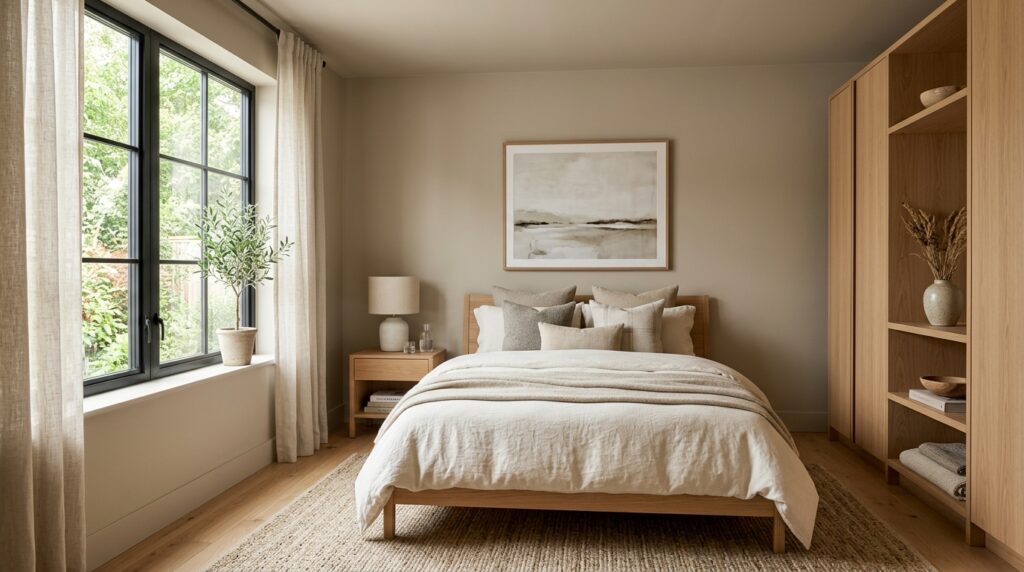
Sherwin-Williams Accessible Beige in LRV 58, Benjamin Moore Pale Oak in LRV 69, and Behr Sculptor Clay in LRV 62 are three of the most reliable greige tones available. All three sit in the warm middle ground that suits natural wood furniture, linen bedding, and cream textiles without pulling too yellow or too cool. Paint the ceiling the same tone as the walls or one shade lighter. That continuous treatment removes the horizontal break at the ceiling line and makes the room feel taller without any structural change.
Test the paint sample on the actual wall surface and live with it through different times of day before committing. Greige reads very differently in morning light versus evening and what looks perfect at noon can look surprisingly pink or green at other hours.
Layer Linen Bedding in Three Related Tones
Linen bedding is the material most associated with the neutral bedroom aesthetic because its natural texture, relaxed drape, and slight variation in tone give a monochromatic bed arrangement a richness that cotton at the same color cannot produce. Three layers in three related tones, not three identical ones, create depth that makes the bed look styled rather than simply made.
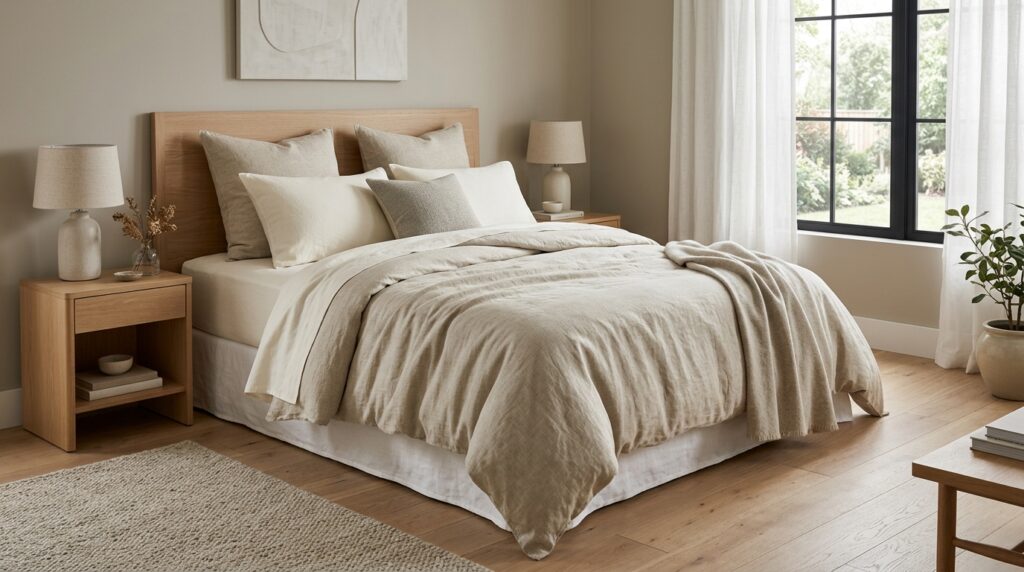
Start with a fitted sheet in warm white. Add a flat sheet in ivory, which sits one tone warmer than white without reading as yellow. Top with a linen duvet cover in oatmeal or natural flax, which is the undyed linen tone that photographs warmly and has a slightly heavier texture than bleached linen. Parachute, Quince, and Cultiver all produce linen bedding in these tones at a range of prices. Quince in particular offers European flax linen at about half the price of competitors with comparable quality in drape and texture.
Do not pull the duvet tight. Linen works because of how it falls. Let it sit with some movement and natural creasing at the top fold.
Choose Natural Wood Furniture in a Light Oak or Birch Finish
Dark wood furniture in a neutral bedroom creates too much contrast against the light walls and pale bedding, which interrupts the calm continuity of the palette. Light wood in natural oak, birch, or ash tones sits within the warm neutral family and reads as part of the room rather than in contrast to it. The furniture looks like it was chosen for the space rather than placed there from a different room.
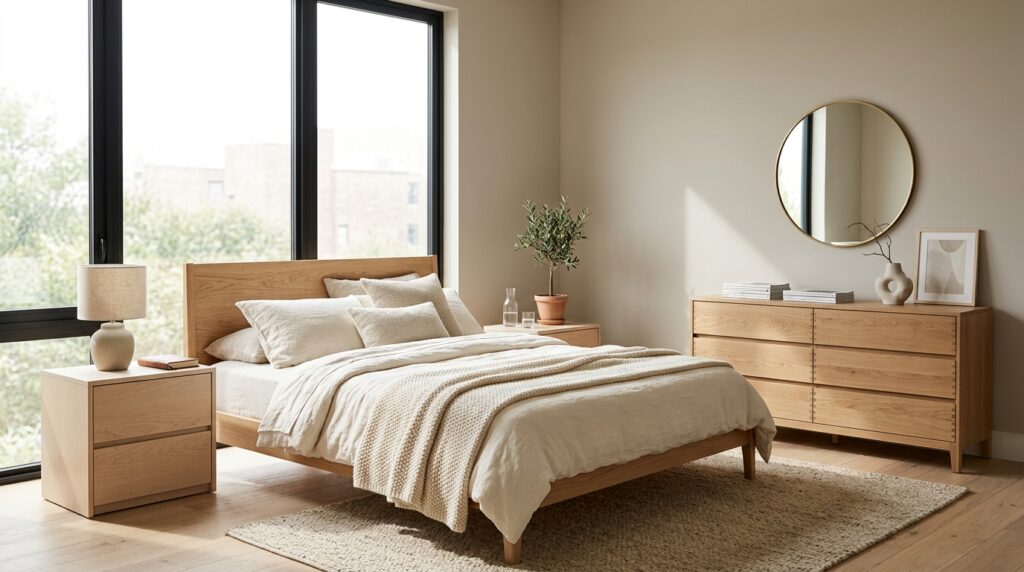
The IKEA MALM series in white-stained oak veneer, the IKEA HEMNES in white stain, and the Article Cami bedroom collection in natural walnut all sit within the light-to-medium wood range that suits a neutral bedroom palette without pulling toward dark or cold. Choose furniture with clean, simple lines rather than ornate detailing, which keeps the visual calm of the room intact. Carved details and heavy hardware introduce visual noise that the neutral palette has no other elements to balance.
Neutral Bedroom Ideas for Small Rooms Include Cream Linen Curtains Hung at Ceiling Height
Curtains in a neutral bedroom serve two purposes: they control the light quality in the room and they add a significant vertical fabric element that softens the walls and reinforces the warm, calm quality of the palette. The ceiling height installation makes both purposes more effective by stretching the window treatment from floor to ceiling and removing any horizontal break in the wall surface.
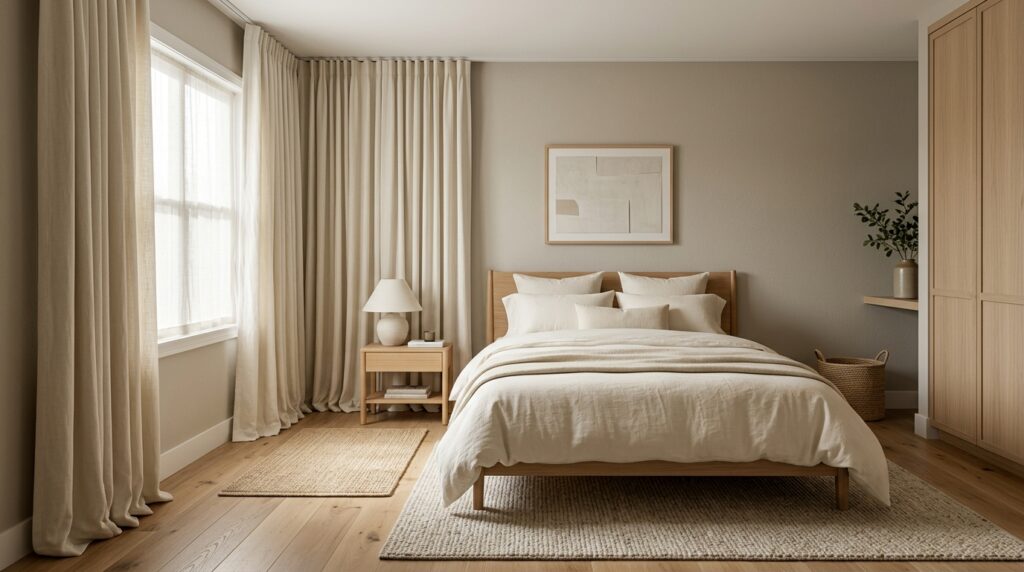
Choose curtains in a cream, natural linen, or warm ivory tone that sits close to the wall color. The narrower the tonal gap between the curtain and the wall, the more continuous the room reads. IKEA RITVA in off-white, the H&M Home Washed Linen Curtains in natural, and the Pottery Barn Belgian Linen Curtain in ivory all produce the right quality of drape and tone for a neutral bedroom at different price points. Mount the rod two to three inches below the ceiling and let the panels touch or just break on the floor for the fullest, most considered window treatment available without any custom work.
Add a Jute or Sisal Rug in a Natural Weave
A jute or sisal rug in a natural, undyed weave is the floor covering most aligned with the neutral bedroom aesthetic because it adds organic texture that no woven wool or synthetic rug replicates, it photographs warmly in natural light, and its color sits exactly within the beige and cream palette without needing to match anything specifically. It belongs in the room the way natural materials always do: organically.
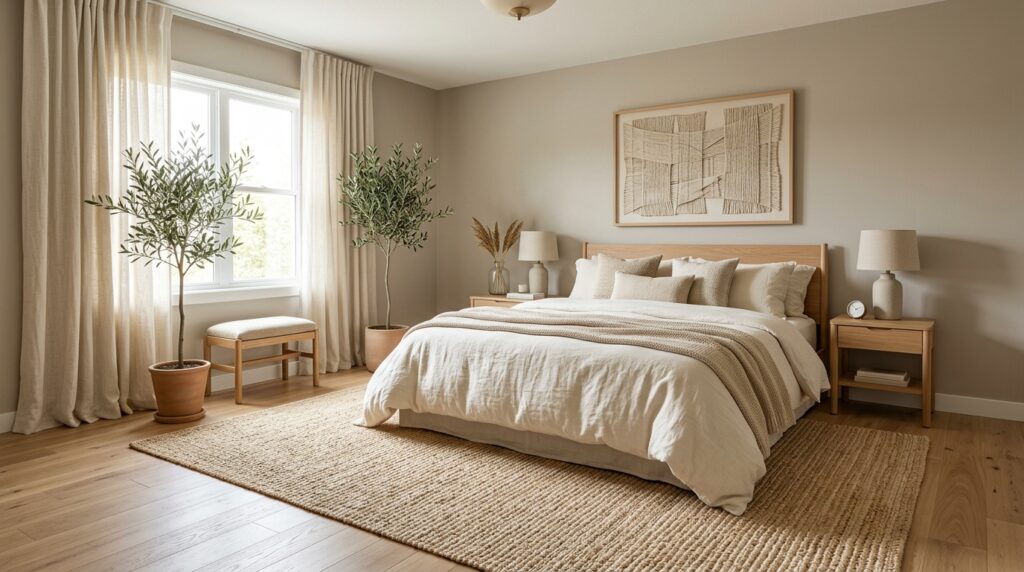
For a small bedroom with a queen bed, use a rug at least 8 by 10 feet so the rug extends beyond the bed on all three exposed sides. A rug that stops at the edge of the bed reads as a bath mat rather than a room anchor. The Pottery Barn Chunky Wool and Jute Rug, the Dash and Albert Herringbone Jute Rug, and the IKEA LOHALS flatwoven jute rug are all well-regarded options at different price points. Choose a flat weave over a deep pile for a small room because a flat weave keeps the floor looking open rather than textured to the point of visual weight.
Use a Boucle or Waffle Knit Throw at the Foot of the Bed
A single throw at the foot of the bed is one of the lowest-effort, highest-impact styling additions available for a neutral bedroom because it adds a third texture layer to the bed arrangement, breaks the horizontal plane of the duvet with a different material, and photographs well from every angle. The material matters more than the color because in a neutral palette the color relationship is already decided and the interest has to come from texture contrast.

Boucle in warm ivory or oatmeal draped across the foot of the bed adds a loopy, tactile surface that contrasts naturally with the smooth flat quality of linen. A waffle knit throw in cream or natural cotton adds a grid texture that reads as more structured. The Crate and Barrel Nubby Boucle Throw and the IKEA KNARDRUP throw are both accessible options. Drape the throw loosely across the lower third of the bed and fold one corner back slightly rather than laying it flat and even, which reads as styled rather than placed.
Neutral Bedroom Ideas Rely on Natural Materials Throughout
The consistency that gives a neutral bedroom its calm, considered quality comes from using natural materials throughout the room rather than mixing natural and synthetic finishes. A natural oak dresser, a jute rug, a linen duvet, a ceramic lamp base, a rattan mirror frame, and a cotton throw all belong to the same material family and read together as cohesive without any conscious matching effort. Synthetic materials in the same colors break that cohesion immediately.
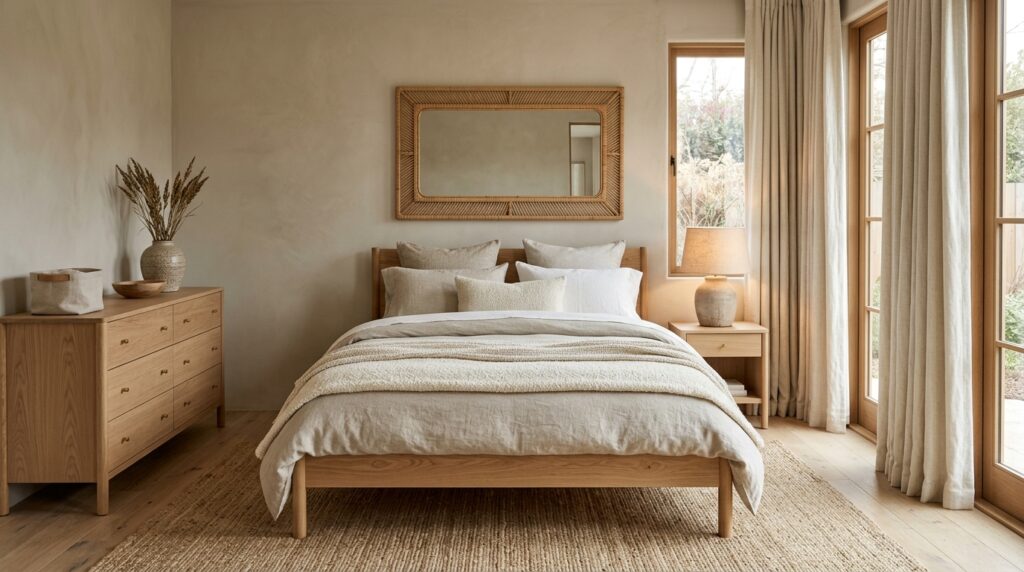
Audit the materials in the existing room and identify the synthetic pieces that interrupt the natural material story. A plastic lamp base in a beige tone reads differently than a ceramic one in the same tone. A polyester duvet cover in cream reads differently than a linen one in the same shade. These distinctions are subtle individually but they accumulate into the difference between a neutral bedroom that feels genuinely serene and one that feels like it is trying to be serene. Replace the most visible synthetic pieces first and the room quality shifts noticeably.
Choose a Low-Profile Bed Frame with a Linen Upholstered Headboard
A low-profile bed frame in a neutral upholstery keeps the visual mass of the bed close to the floor and lets the pale walls read fully above it. A tall, heavy headboard in a contrasting color or material competes with the neutral palette for visual attention and makes the room feel more furnished than calm. A linen upholstered headboard in warm white, cream, or oatmeal disappears appropriately into the wall behind it and adds texture without adding visual weight.
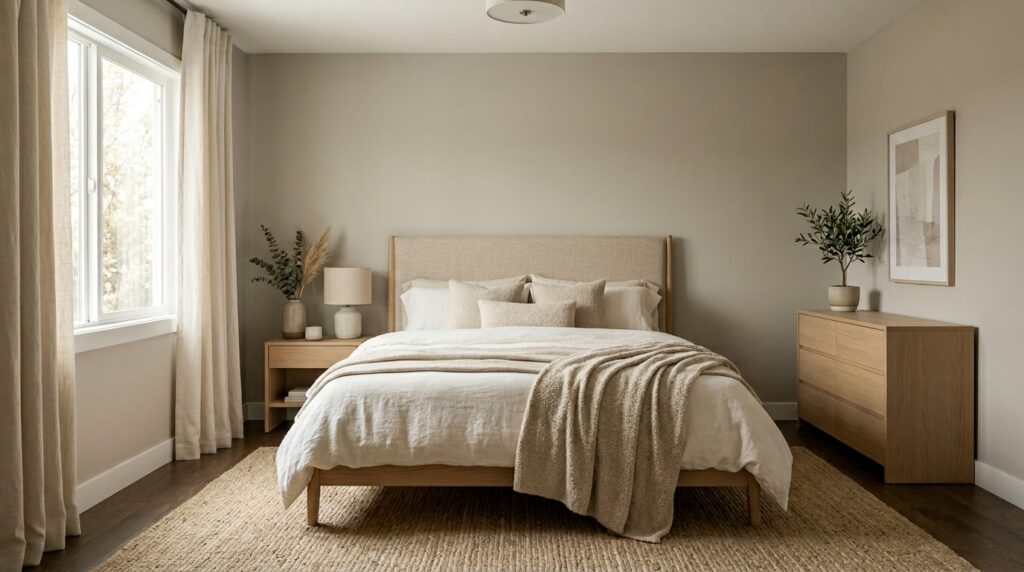
The West Elm Petal Low-Profile Bed in natural linen, the Thuma Platform Bed in natural wood with an upholstered headboard, and the IKEA NORDLI bed with a custom headboard panel in a natural linen fabric are all worth considering. For a small room, choose a headboard height between 40 and 50 inches, which fills the wall above the bed without making the bed feel outsized for the space. A headboard much taller than 50 inches in a small room reads as furniture filling the space rather than completing it.
Keep the Nightstand Surface to Three Items Maximum
A neutral bedroom communicates calm through restraint as much as through palette, and nothing undermines that calm faster than a nightstand surface cluttered with ten objects competing for visual attention. The restraint applied to what sits on the nightstand is the same restraint that gives the rest of the room its quality. Three items maximum: a lamp, one functional object, and one small decorative piece.
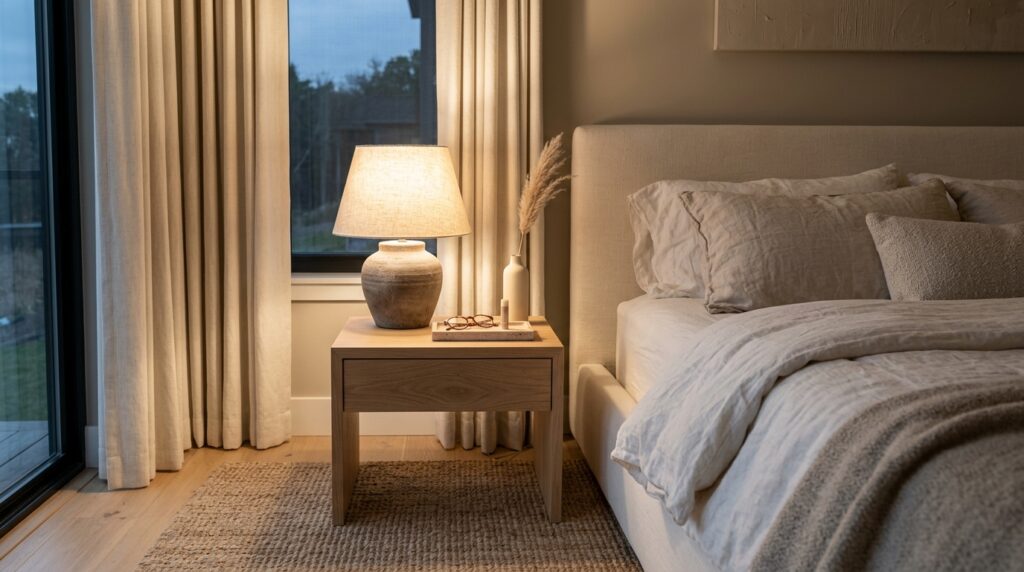
A ceramic lamp with a warm bulb at 2700K. A small ceramic or stone tray holding a pair of reading glasses and a lip balm. A single dried stem in a slim bud vase. That is a neutral bedroom nightstand. Every additional object beyond those three contributes visual noise that the neutral palette has no bold elements to absorb. The nightstand tells the room whether the restraint is genuine or just painted on.
Use Cream and Sand Tones in the Pillow Arrangement
The pillow arrangement on a neutral bedroom bed is where the tonal layering of the palette becomes most visible because the pillows are at eye level when you stand at the door and they are the first thing anyone sees when they look at the bed. Cream, sand, warm white, and natural linen tones layered against each other at close tonal proximity create a richness within the monochrome that reads as considered rather than safe.

Use euro shams in a tone slightly warmer or cooler than the duvet cover. Use sleeping pillow cases that match the flat sheet tone. Add two accent pillows in a complementary neutral, perhaps a sand tone against ivory bedding or a warm camel against a natural flax duvet. The variety should come from tone proximity and texture difference rather than from color contrast. A boucle pillow in cream beside a smooth linen pillow in warm white creates more visual interest than a bright or bold pillow in a different color family.
Add a Single Large Ceramic Vessel on the Dresser
One well-chosen ceramic vessel on the dresser surface does more for the quality of a neutral bedroom than a collection of smaller objects spread across the surface. A single large piece with an interesting form, a handmade quality, and a tone within the neutral palette sits on the dresser as a sculptural element rather than as a decoration, and the scale of it relative to the dresser surface reads as confident and intentional.
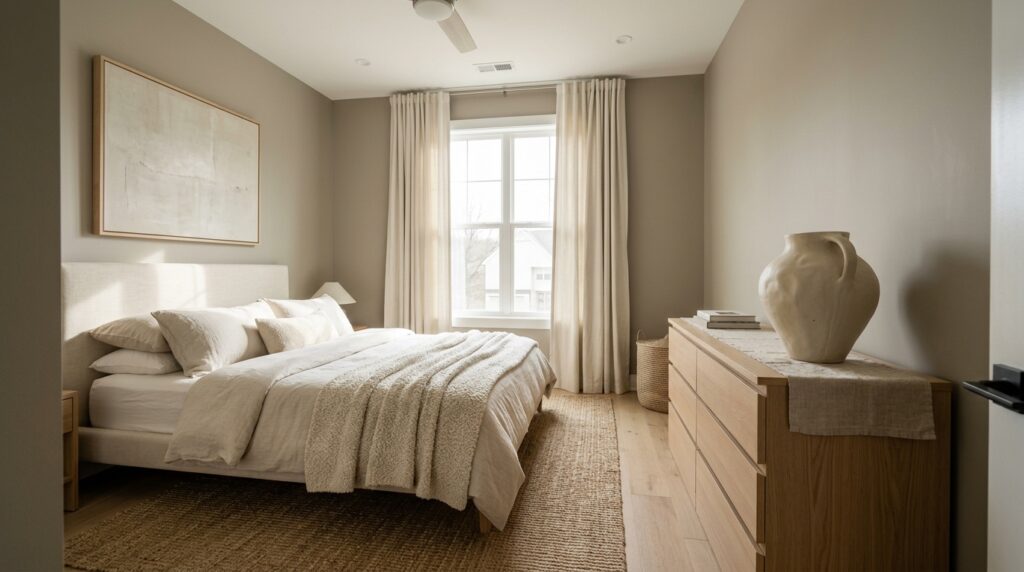
Look for large ceramic vases, vessels, or urns in matte finishes in warm white, natural stoneware, sand, or textured oatmeal glazes. Ferm LIVING, Hawkins New York, and the ceramic ranges from CB2 and West Elm all carry pieces in the right forms and finishes. Choose a vessel between 10 and 16 inches tall so it reads at the proper scale for a standard dresser surface. Place it toward one end of the dresser rather than centered, which gives the surface a natural composition rather than a symmetrical arrangement that reads as forced.
Neutral Bedroom Ideas for Small Rooms Benefit from a Linen Roman Shade
A linen Roman shade in place of curtain panels reads more structured and architectural than a flowing curtain, which suits the minimalist calm of a neutral bedroom while still reinforcing the natural material story of the room. In a small bedroom where curtain panels can feel heavy or can reduce the floor clearance at the window, a Roman shade sits flat against the window frame and occupies no visual space in the room when raised.
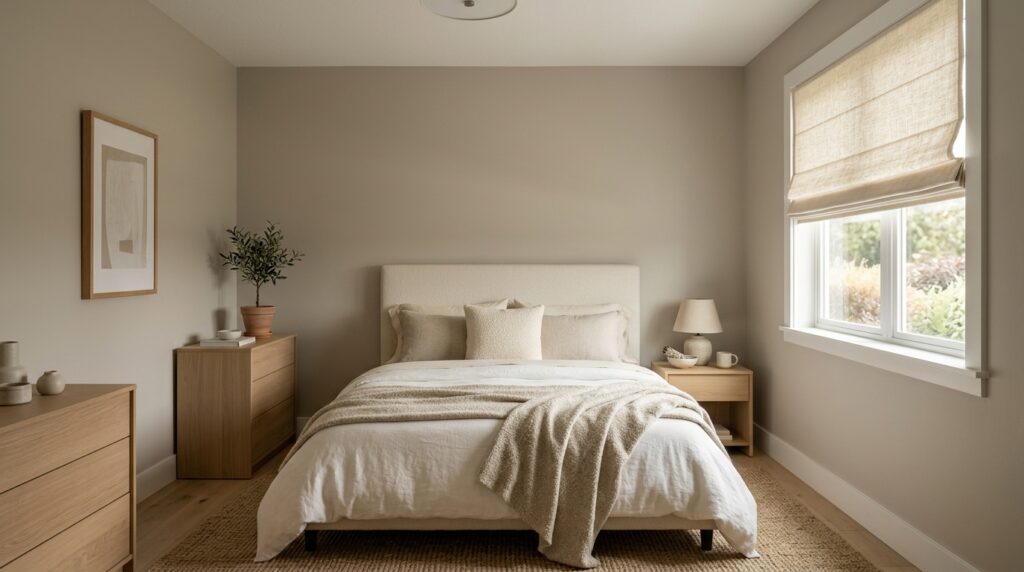
Choose a light filtering rather than a blackout linen Roman shade so some natural light filters through the fabric when the shade is lowered, which creates a soft, diffused quality in the room rather than a hard block of light or dark. The Smith and Noble Linen Roman Shade and the Pottery Barn Emery Linen Roman Shade both come in a range of natural linen tones and custom sizes that fit most standard bedroom windows. Hang the mounting bracket at the top of the window frame or just above it for a clean, trim finish that does not interrupt the wall surface with excess fabric.
Use Aged Brass or Brushed Gold Hardware Throughout
The metal finish used throughout a neutral bedroom, on drawer pulls, cabinet hardware, lamp bases, and mirror frames, either reinforces or disrupts the warm, natural quality of the palette. Aged brass and brushed gold sit within the warm tone family that complements cream, beige, and linen without the harshness of chrome or the heaviness of matte black. They read as warm and imperfect in a way that suits the organic, relaxed quality of a well-done neutral bedroom.

Replace all visible hardware in the room with a consistent aged brass or brushed gold finish. Drawer pulls, cabinet knobs, lamp hardware, picture hangers, and curtain rod finials all in the same metal finish create a visual continuity throughout the room that reads as designed. The hardware sets from Liberty Hardware, Amerock, and the Anthropologie hardware range all carry aged brass options at a range of prices and styles from simple cylindrical pulls to slightly more decorative bar handles.
Layer a Cotton Quilt Under the Linen Duvet
A cotton quilt folded and placed beneath the linen duvet adds a visible layer of texture at the lower third of the bed where the duvet is typically folded back. The quilt peeking out beneath the duvet fold creates a layered quality that makes the bed look more considered and more comfortable at the same time, and the cotton quilt texture contrasts naturally with the linen duvet above it.
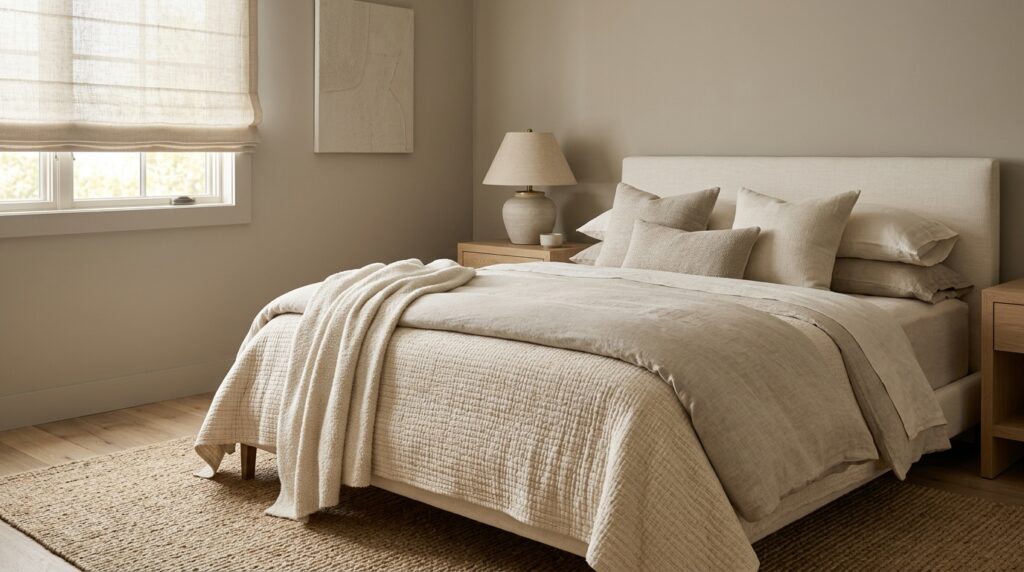
Choose a quilt in a solid neutral tone, warm white, cream, or a very pale natural cotton, rather than a patterned quilt, which introduces visual complexity that works against the simplicity the neutral palette is building toward. The Parachute Classic Coverlet in white, the Coyuchi Organic Cotton Quilt in undyed natural, and the IKEA STENKLOVER quilt cover in a natural cotton weave all sit within the right material and tone range for this layering technique.
Bring in Dried Botanicals Rather Than Fresh Flowers
Dried botanicals suit a neutral bedroom more naturally than fresh flowers because their faded, muted tones sit within the warm neutral palette rather than introducing saturated color that disrupts it. Dried pampas grass in a loose arrangement, a bundle of dried lavender tied with twine, or a few stems of dried lunaria in a slim ceramic vase all add organic life to the room without the color competition that fresh flowers bring.
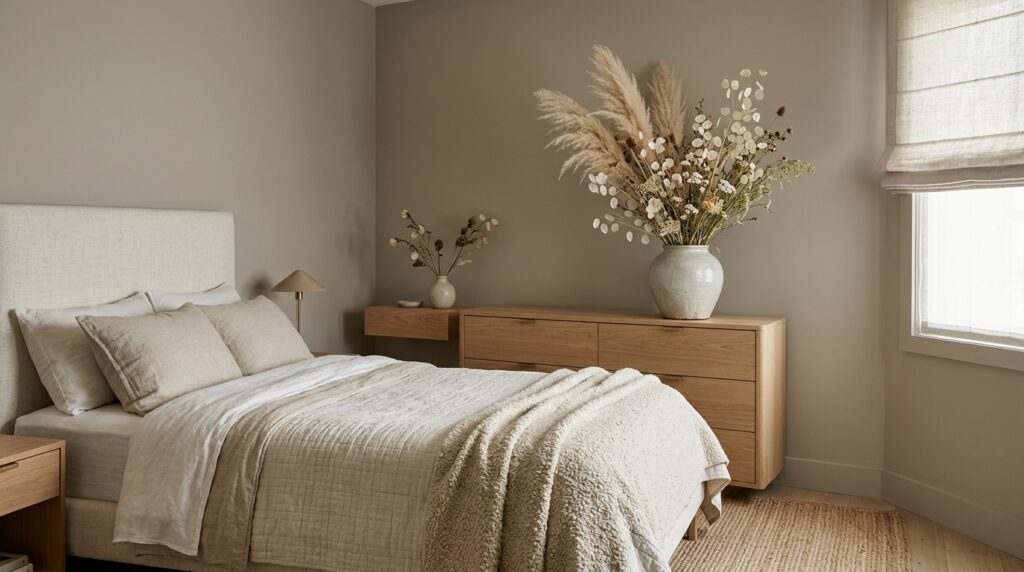
Place dried botanicals in one or two spots in the room: on the dresser alongside the large ceramic vessel, on a floating shelf beside a small stack of books, or in a slim floor vase in the corner beside the bed. Keep the arrangement loose and slightly imperfect rather than tightly composed. Dried botanicals look best when they appear gathered rather than arranged, and the naturalness of a loose stem cluster suits the relaxed, organic quality of the neutral bedroom aesthetic far better than a precise formal arrangement.
Use a Round Mirror Above the Dresser in a Thin Natural Frame
A round mirror above the dresser in a thin rattan, natural wood, or unfinished frame adds both the reflective quality that opens a small bedroom visually and the organic shape that suits the neutral material palette. The round form introduces a softness that rectangular mirrors do not have, which aligns with the gentle, unhurried quality of the neutral bedroom style.
Choose a mirror between 24 and 32 inches in diameter for the right proportion above a standard dresser. A mirror much smaller than 24 inches reads as decorative rather than functional and does not carry enough visual weight to anchor the dresser area properly. The IKEA KNAPPER full-length mirror in rattan, the Target Threshold Rattan Round Mirror, and the Umbra Trigg Round Mirror in natural wood all work well in this application at prices that do not require a significant commitment to a single decorative piece.
Keep One Wall Completely Empty
A neutral bedroom with art or objects on every wall reads as busy regardless of how calm the palette is. One completely empty wall, usually the side wall opposite the window or the wall behind a chair or bench, gives the palette room to breathe and prevents the calm from tipping into flatness by creating contrast through the absence of objects rather than through color.
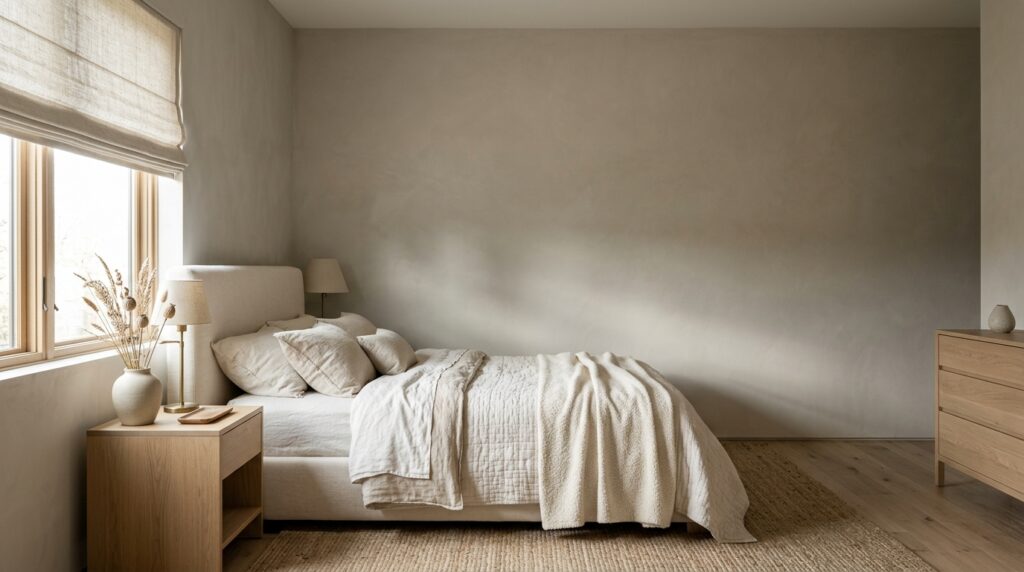
The empty wall is not a failure of decorating. It is the most confident decision in the room. It says that the palette, the textures, and the furniture are enough and that the room does not need every surface filled to justify itself. In a small neutral bedroom especially, one clear, uninterrupted wall makes the room feel larger and calmer than any arrangement of art or objects on that surface would.
Neutral Bedroom Ideas Come Together with Edited, Matching Storage
Storage that is visible in a neutral bedroom, an open closet, a shelf with folded items, a basket on the dresser, needs to participate in the palette rather than disrupt it. Mismatched storage containers, brightly colored bins, or storage items in a different material family interrupt the visual calm that the rest of the room has carefully assembled. Matching natural storage in consistent tones and materials keeps the room cohesive from the most decorative surfaces to the most practical ones.
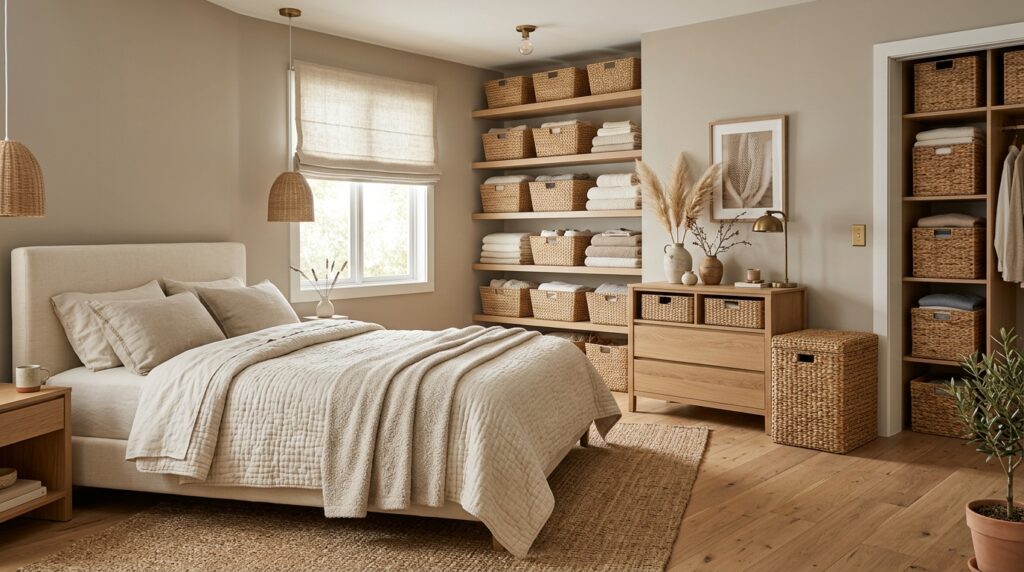
Use woven seagrass or rattan baskets in the same natural tone throughout the room for visible storage. Line closet shelves with a single consistent bin, the IKEA STORSTABBE woven basket or the Target Threshold Woven Basket in natural, rather than a mix of different containers. Fold visible textiles neatly and in a consistent direction so open shelves read as organized rather than stacked. When the storage elements of a neutral bedroom participate in the palette as deliberately as the decorative ones, the room achieves the kind of complete, considered calm that the neutral aesthetic is actually capable of.
Final Thoughts
A neutral bedroom does not ask much of you. It asks for restraint, for consistency across materials, and for the confidence to let a limited palette carry the full weight of the room without reaching for a bold accent to make up the difference. That restraint is harder than it sounds, and when it works, the room has a quality that nothing louder can replicate.
Start with the walls and the bedding because those two elements cover more surface area than anything else in the room and they establish the tonal foundation that every other decision builds on. From there, these neutral bedroom ideas layer naturally onto each other, each one reinforcing the calm that the previous decision started. The finished room will not look dramatic. It will look exactly right.